

A casual café needs about 1.4 to 1.7 square metres per seat. Counter and wall seating needs half that. In a 40 square metre room, that gap is the difference between a 20-seat café and a 28-seat one, and most fit-outs never do the maths.
We sell furniture and signs to cafés all day, so we went and read the studies from Cornell's hotel school. Some of what they found backs up what every good operator already knows. Some of it surprised us.
How is café revenue actually calculated?
Daily revenue is seats, multiplied by how many times each seat turns over in a day, multiplied by the average spend. Three numbers. Every layout decision you make nudges one of them up or down, and usually nudges another one down while it's at it. Pack in more seats and service slows. Turn tables faster and people don't order the second coffee. There's no perfect layout, just a balance that suits how your café actually trades.
How much space does each café seat need?
The industry rule of thumb is around 1.4 to 1.7 square metres per seated customer for a casual café, once you count the table, the chair, and the room to get in and out. So a 40 square metre floor tops out somewhere around 25 seats before people are eating with their elbows tucked in.
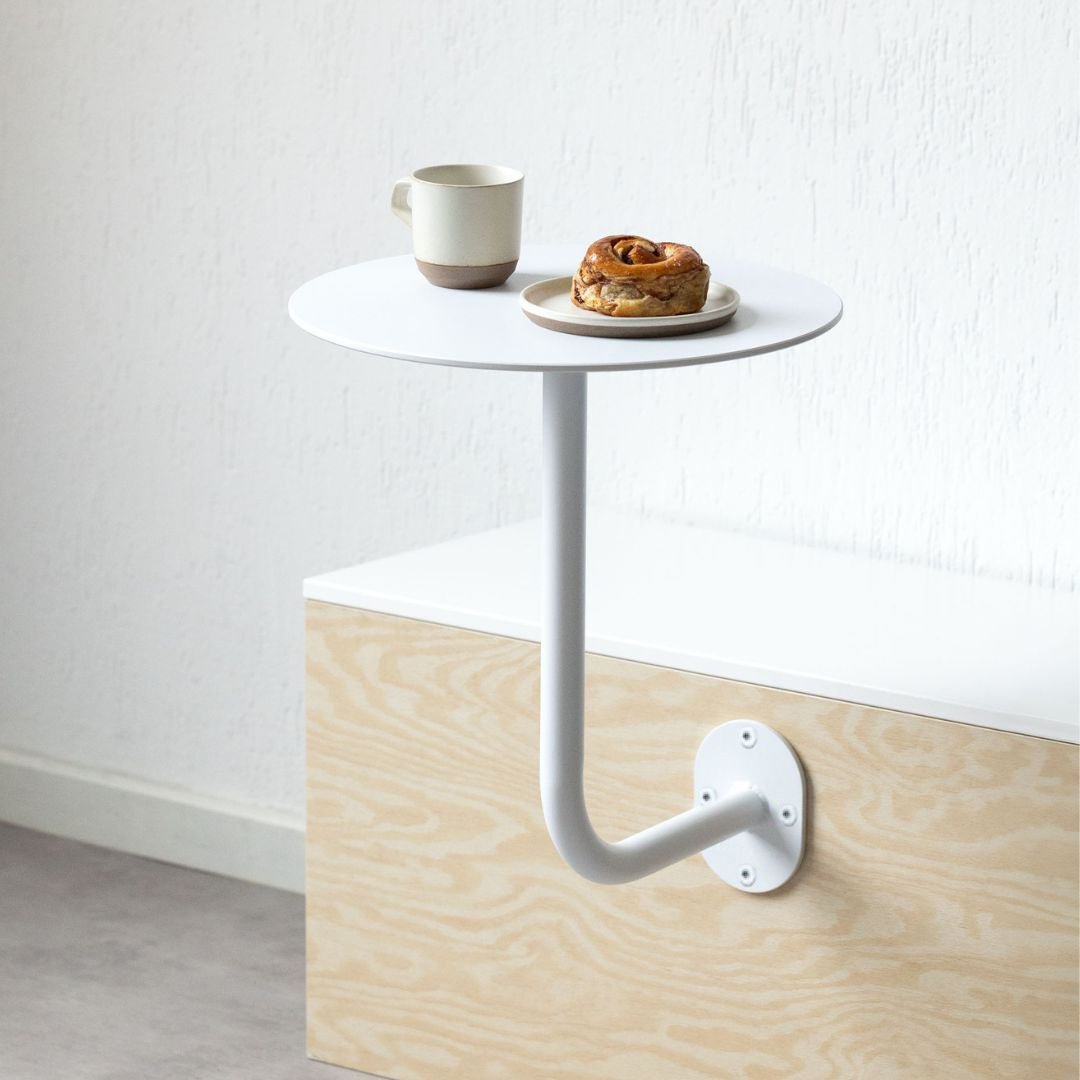
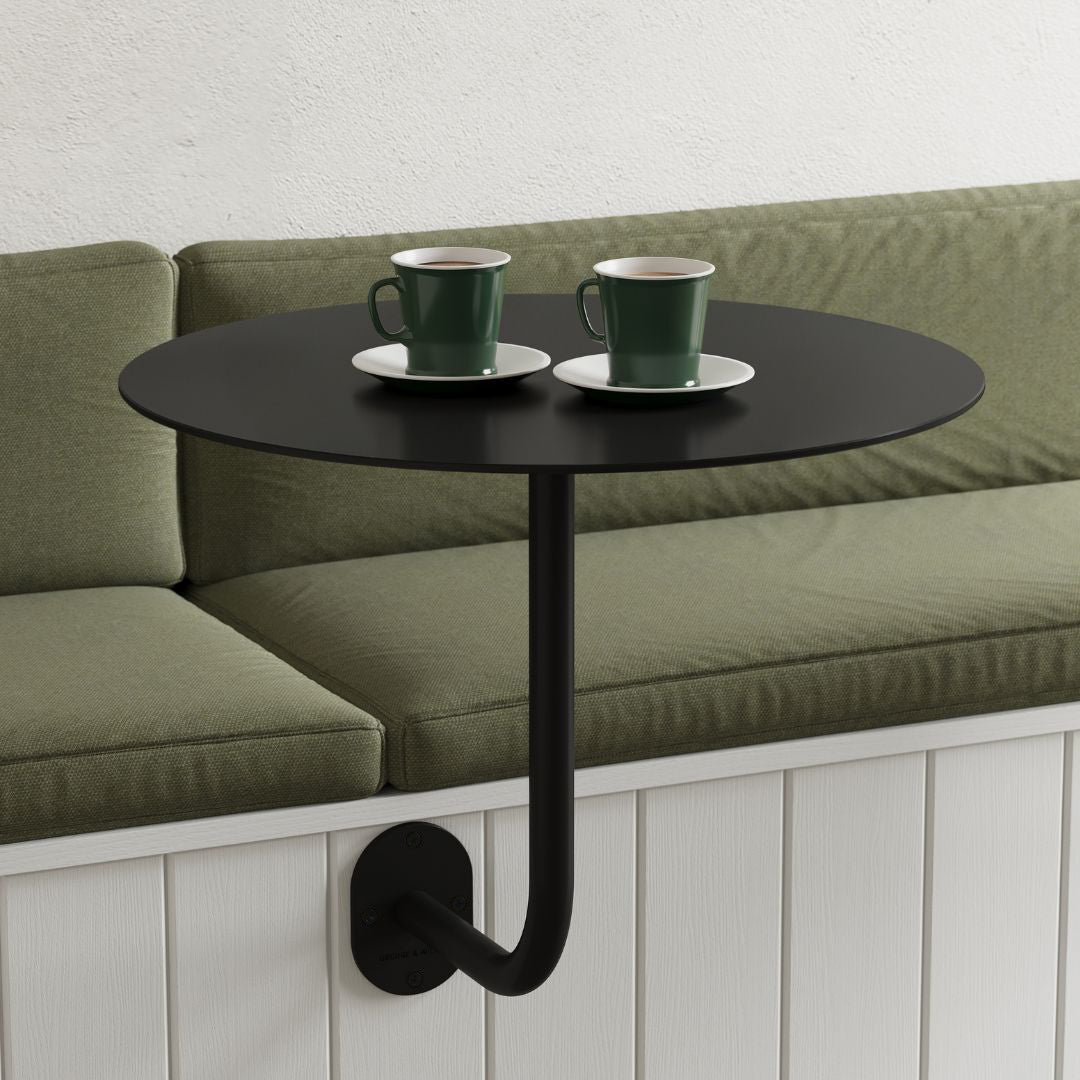
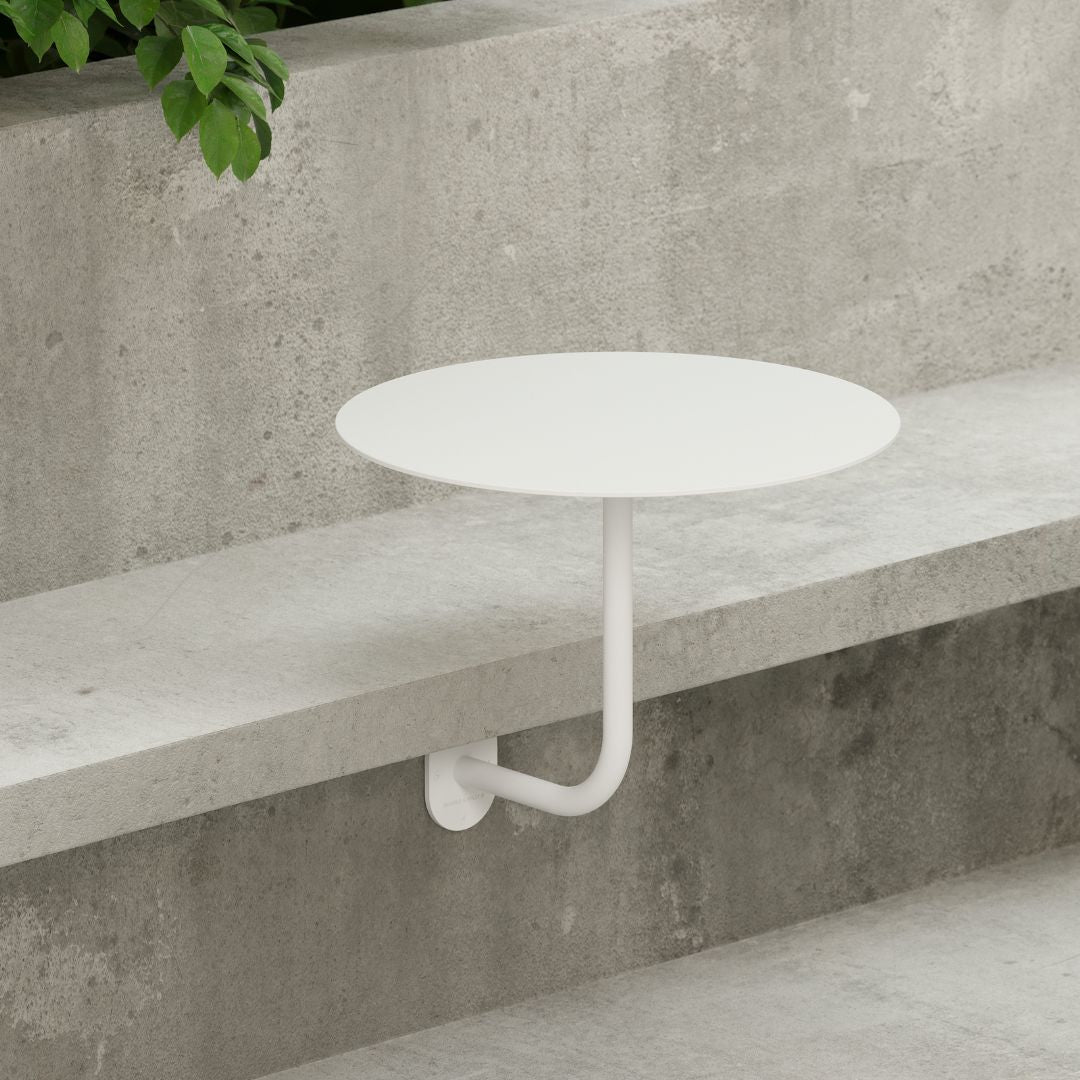
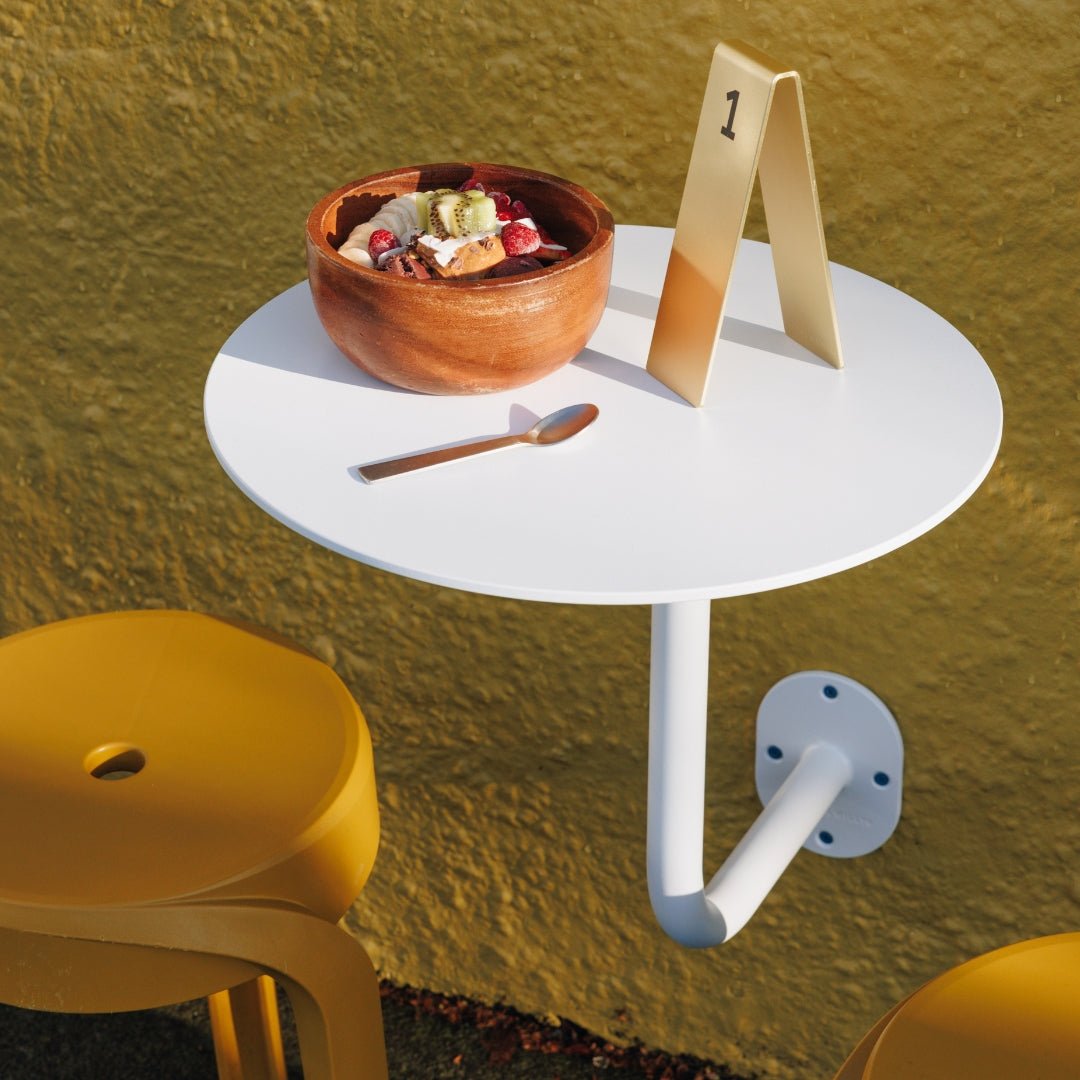
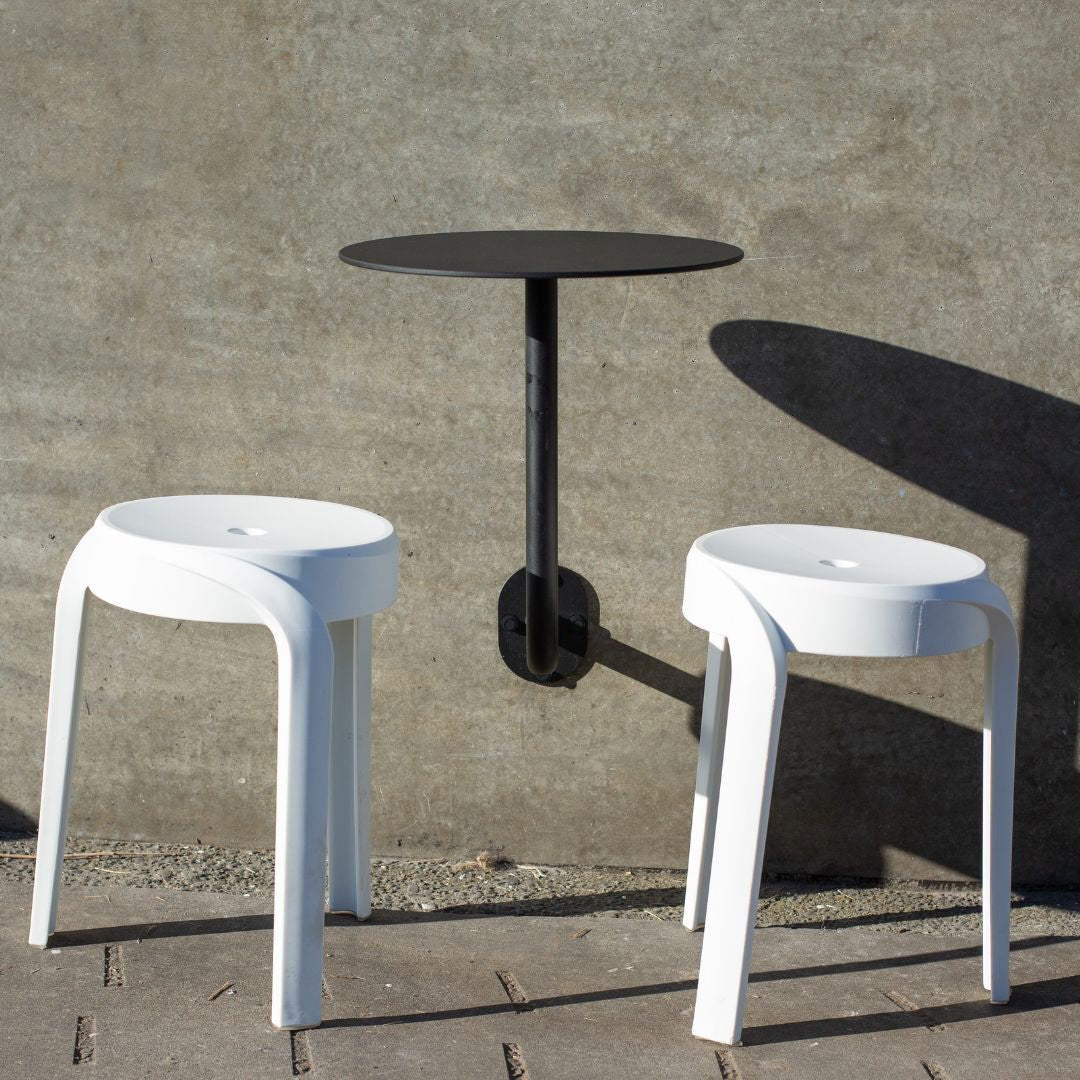
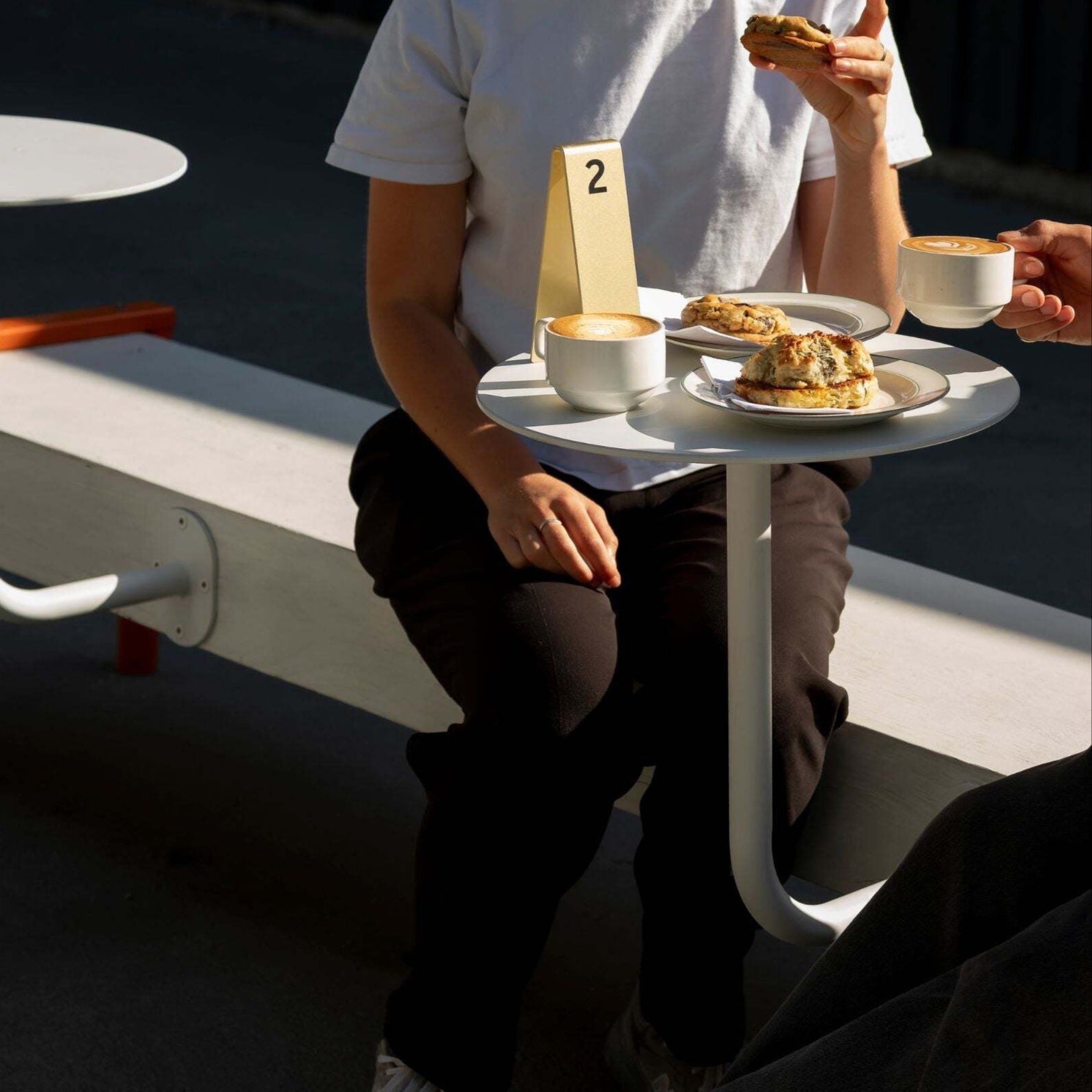
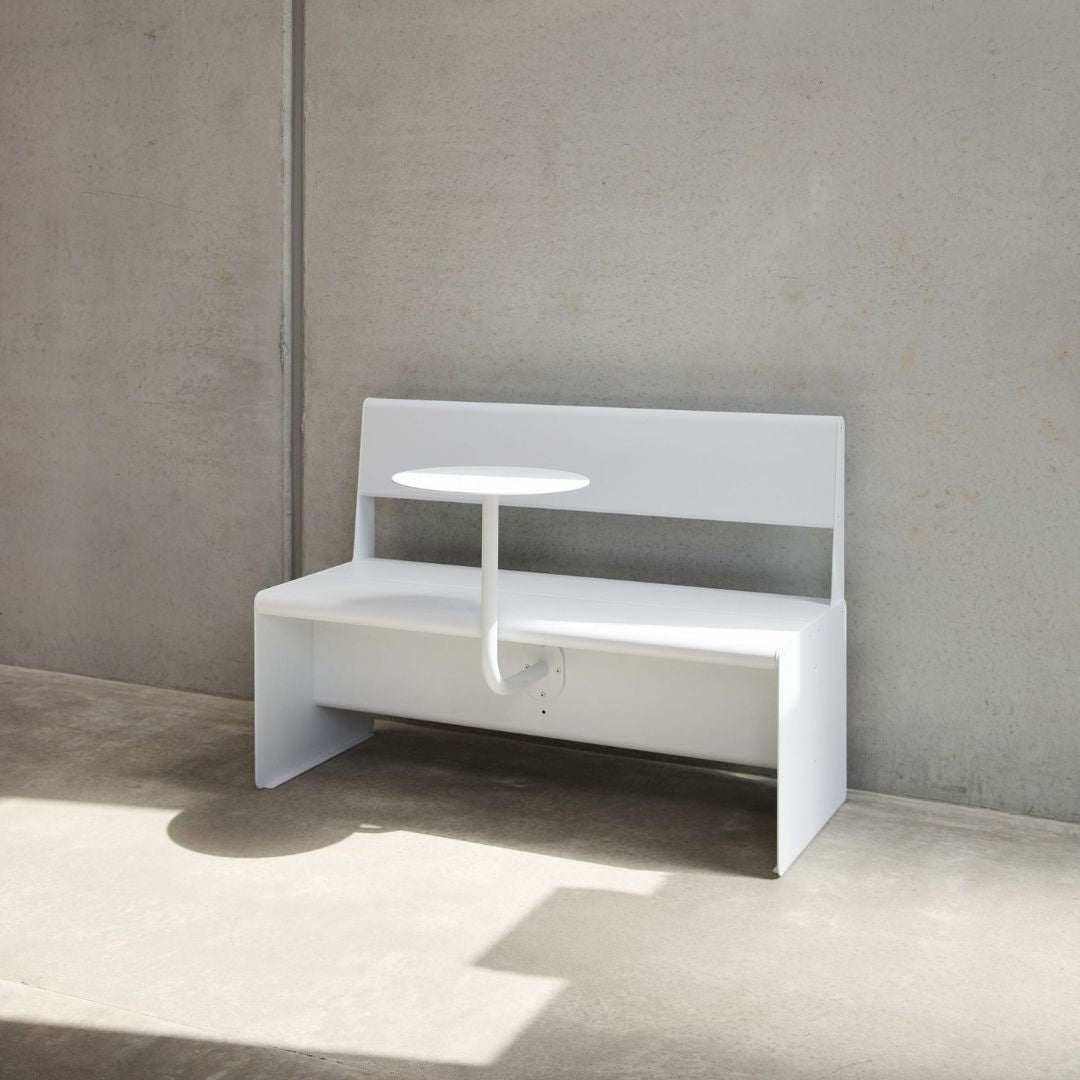
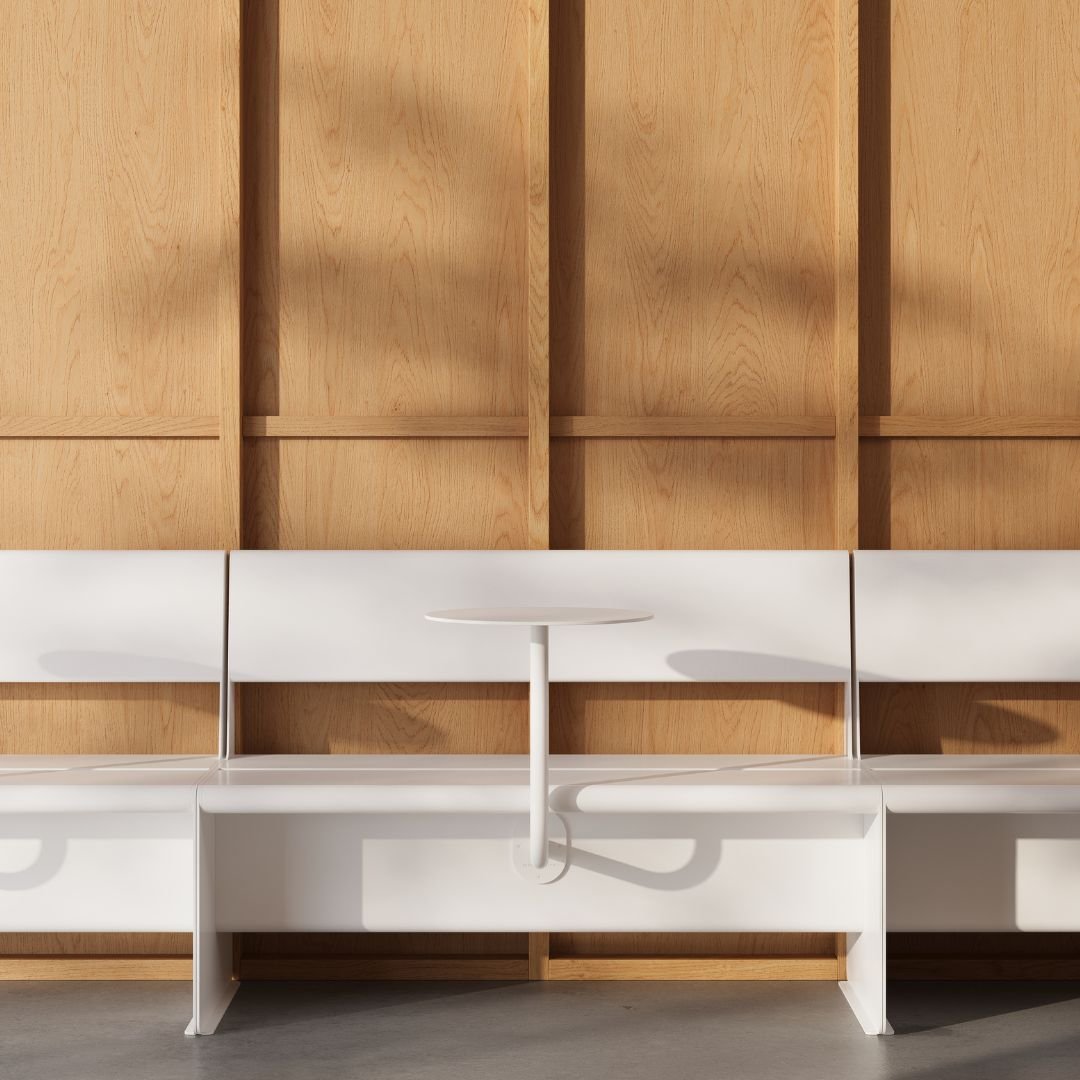
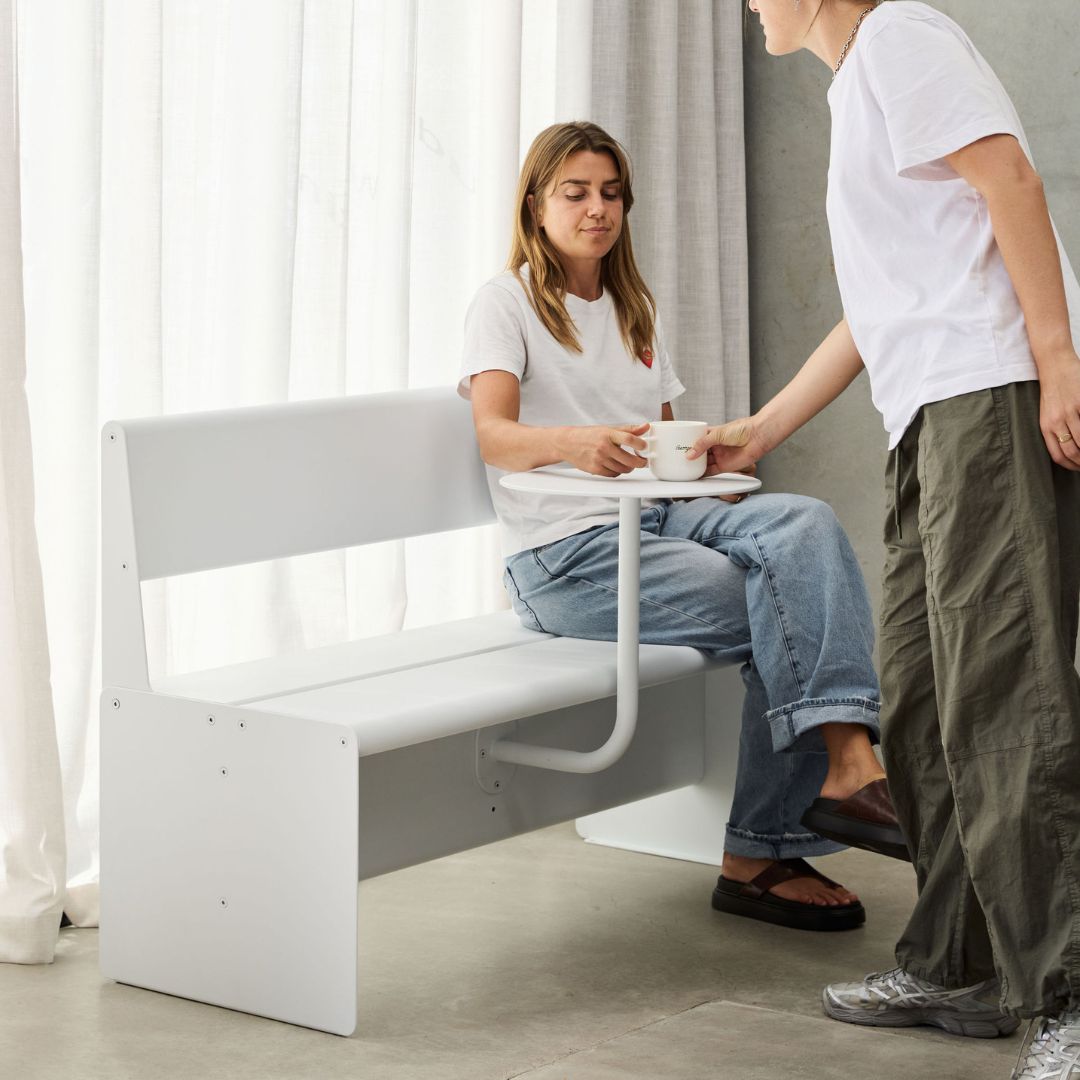
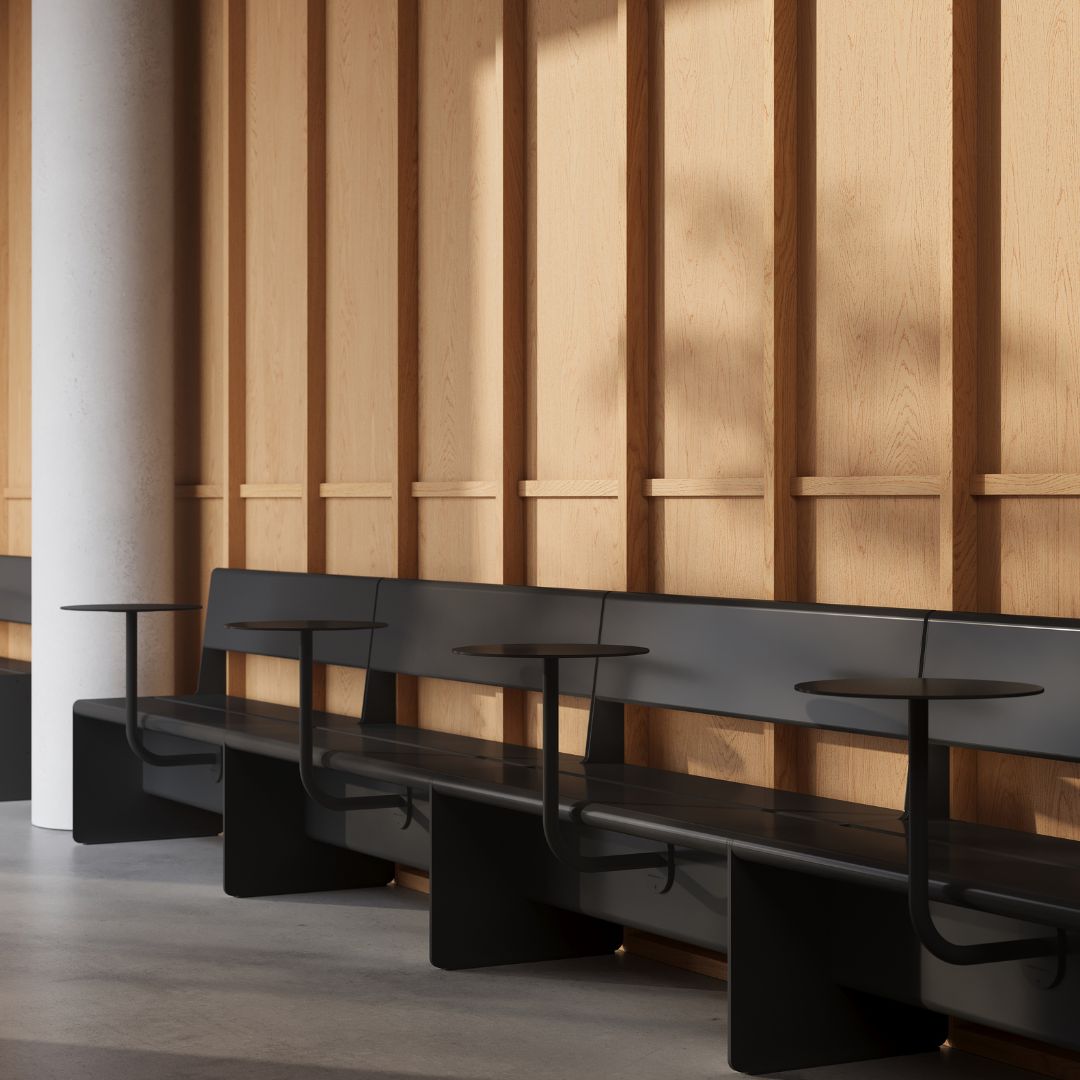
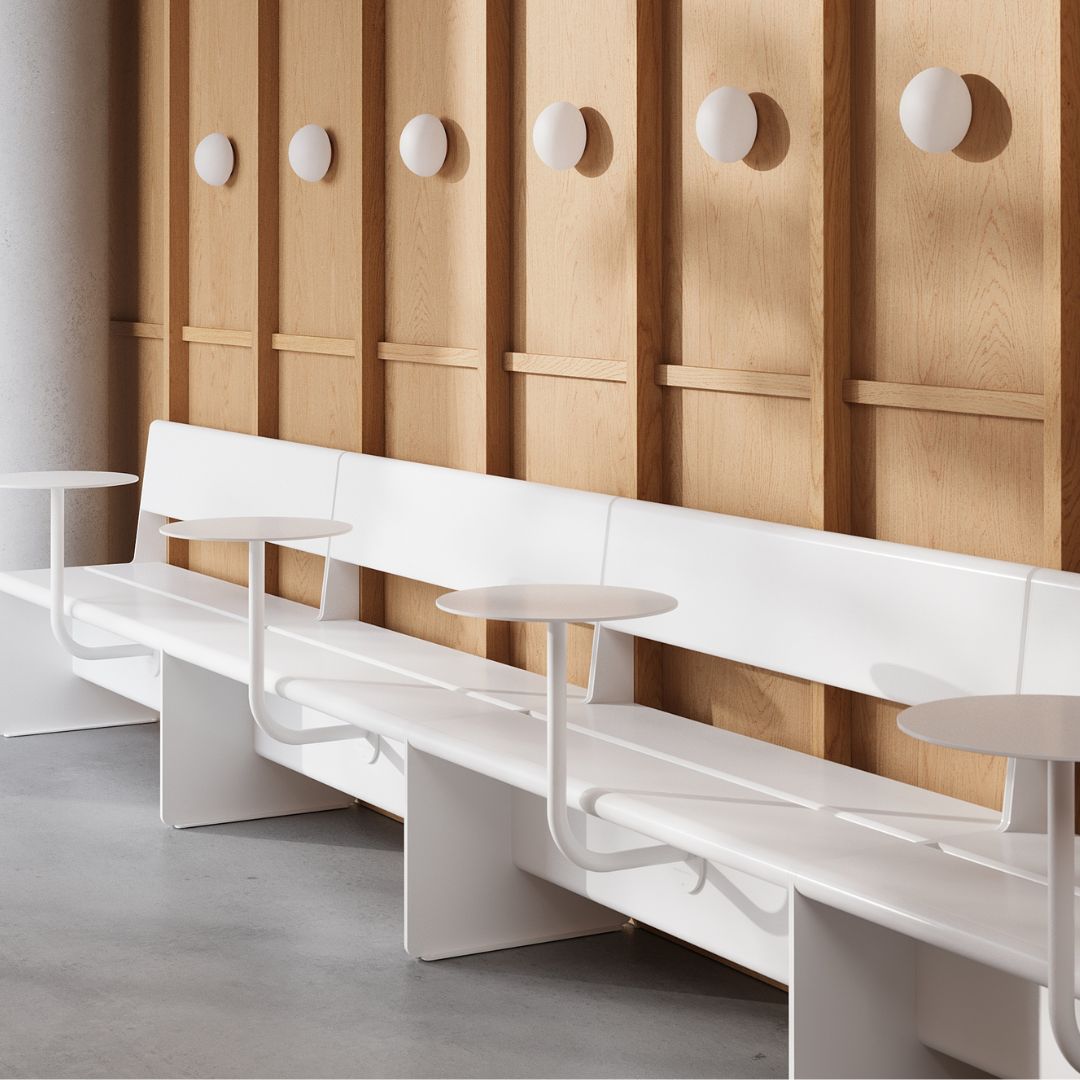
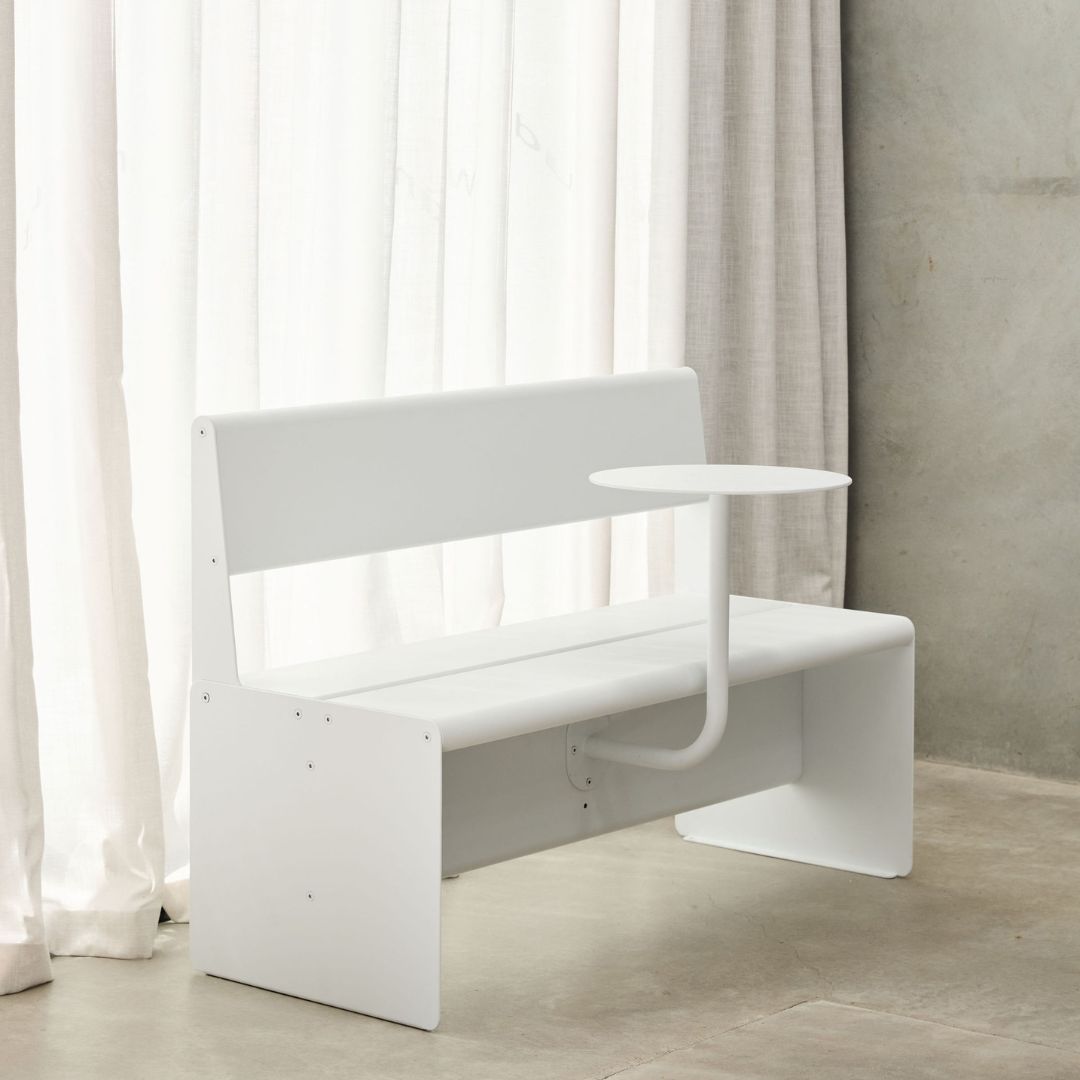
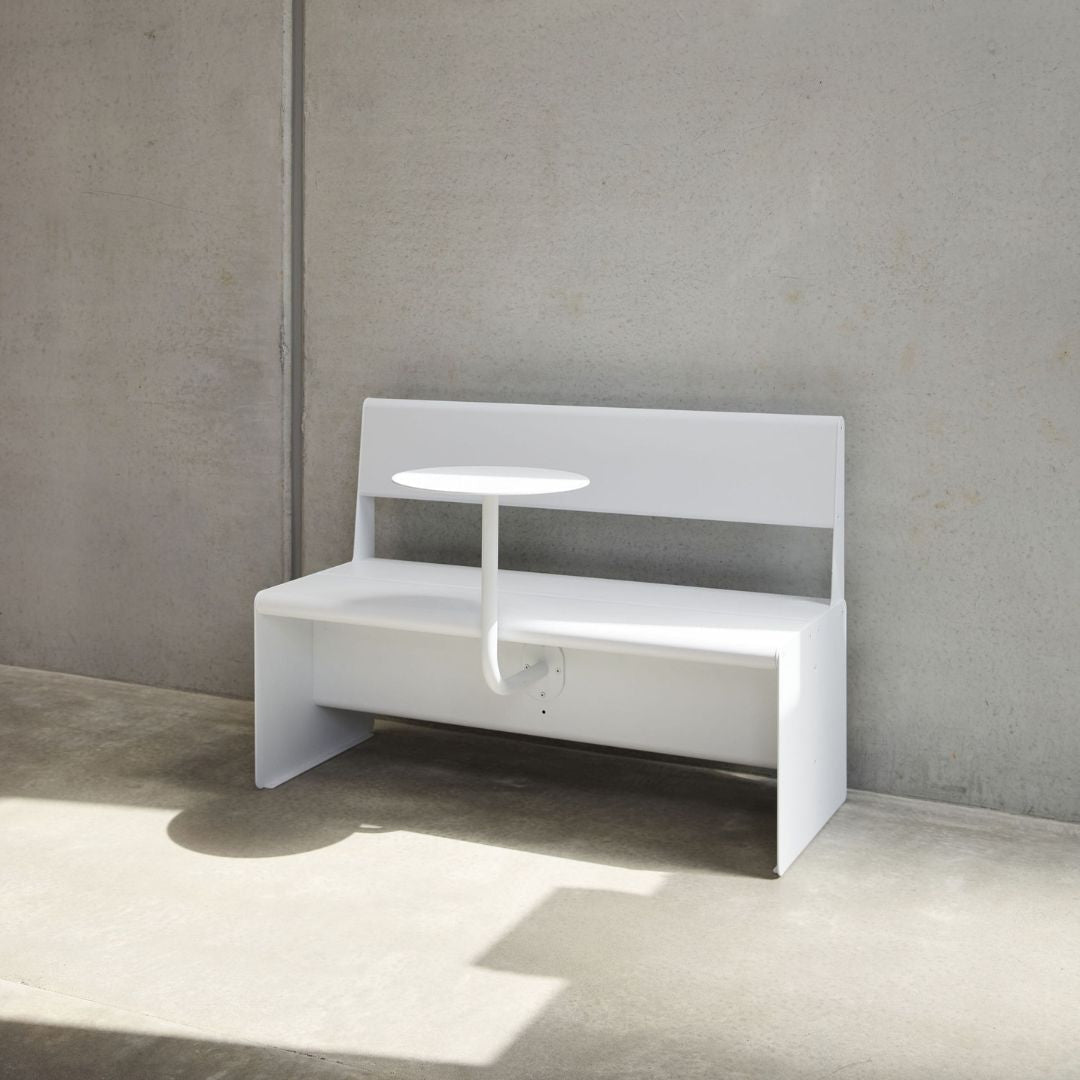
Counter and wall seating is the exception. It needs roughly half that — call it one square metre a person. A run of tables fixed along a wall will seat six or eight people in the room two standard four-tops would take up, because nobody needs a walkway behind a wall. This is most of the reason we make the Wall Mounted Cafe Table. No legs, no wasted circulation space, and the floor in front stays clear for the morning queue.
What's the right table mix for a café?
Cornell's table mix research found that at most casual venues, parties of one or two make up somewhere between 40 and 60% of all visits. Think about that next time a solo laptop worker settles into your best four-top. Three of those chairs are earning nothing, and you're paying rent on all of them.
The fix isn't complicated. Count your party sizes for a couple of weeks, then build the floor around what actually walks in: mostly two-tops (ones you can push together when a group shows up), a wall run for the solos, and only as many big tables as your numbers justify.
Does spacing tables closer together increase revenue?
This was the finding that surprised us. A 2011 Cornell study put diners at tables spaced various distances apart and found that tight spacing made people finish their meals faster without spending any less. Faster turns, same check. On paper, cramming the tables in is free money.
The catch is in the same study. People hated it. Even at gaps wider than what most restaurants use, diners reported being uncomfortable, and uncomfortable people are less likely to come back. Women disliked tight spacing considerably more than men did. So density pays this week and costs you regulars next month, and only you know which side of that trade your café should sit on.
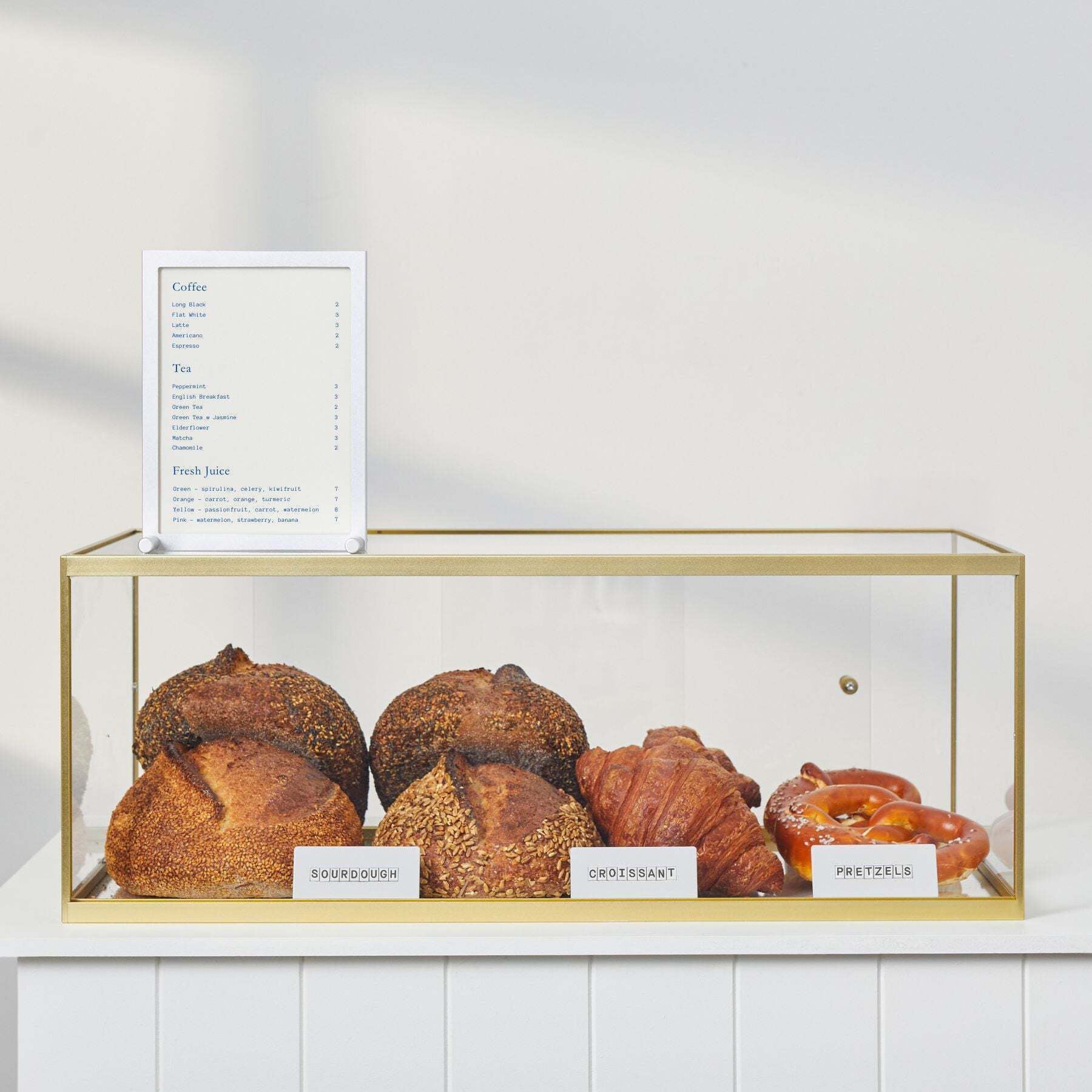
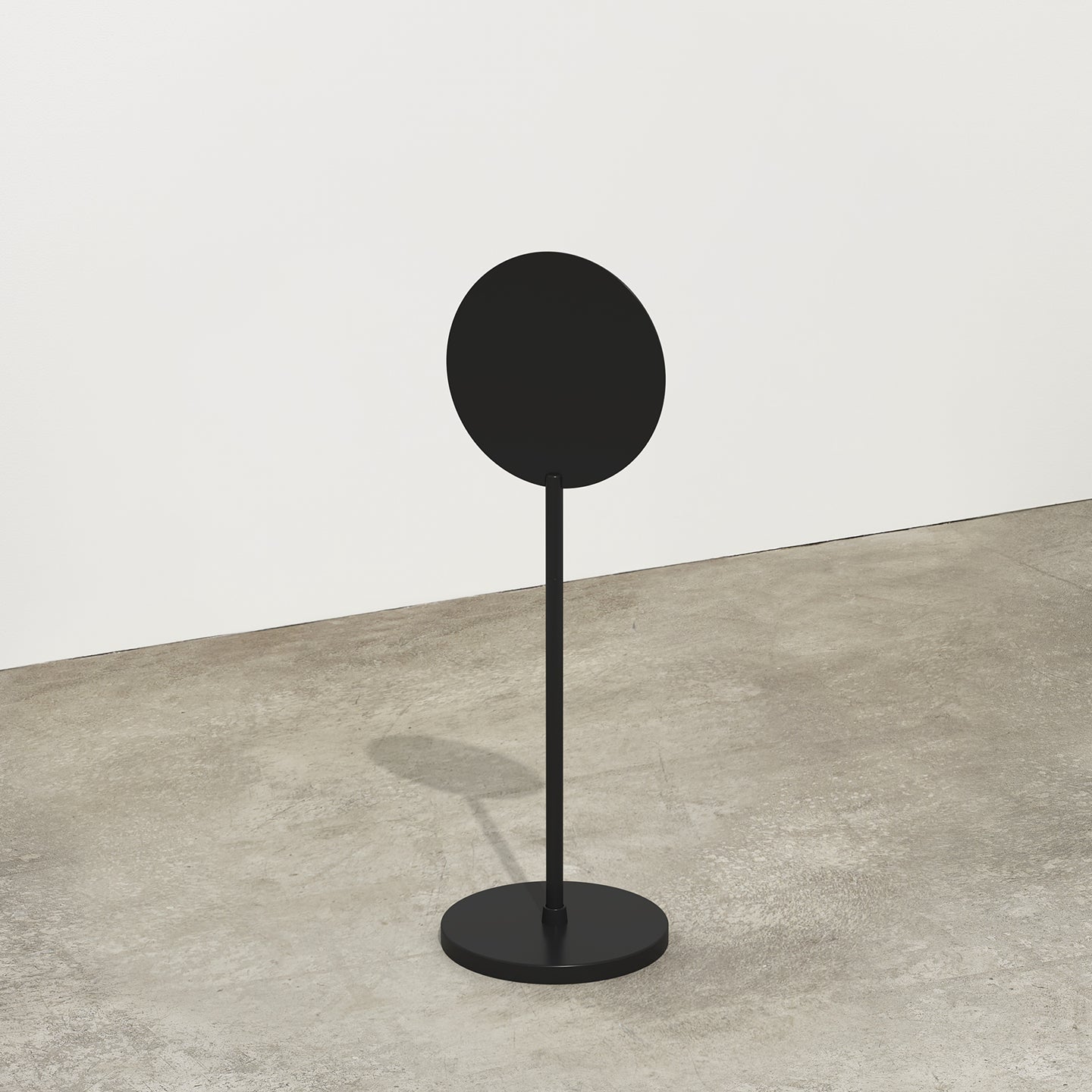
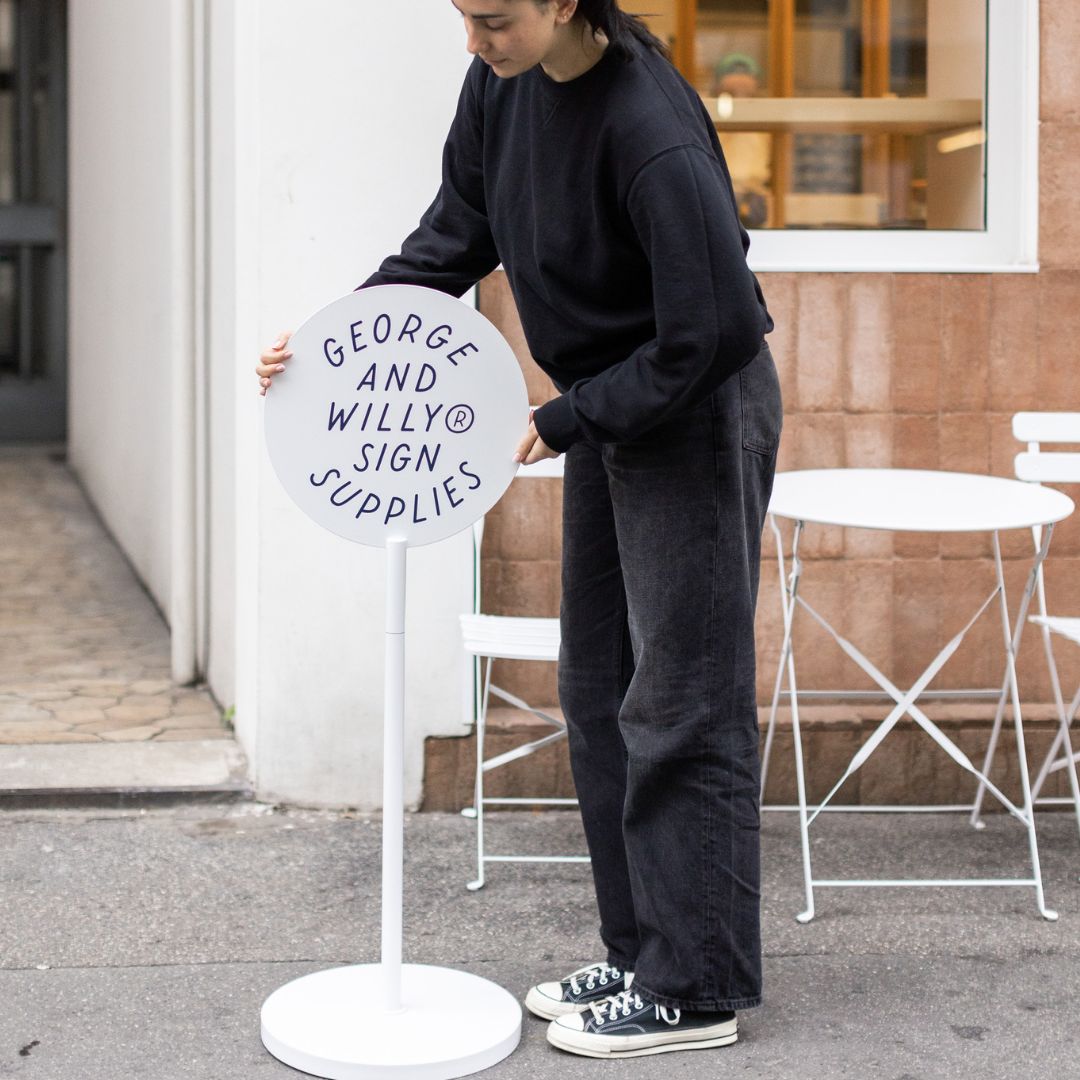
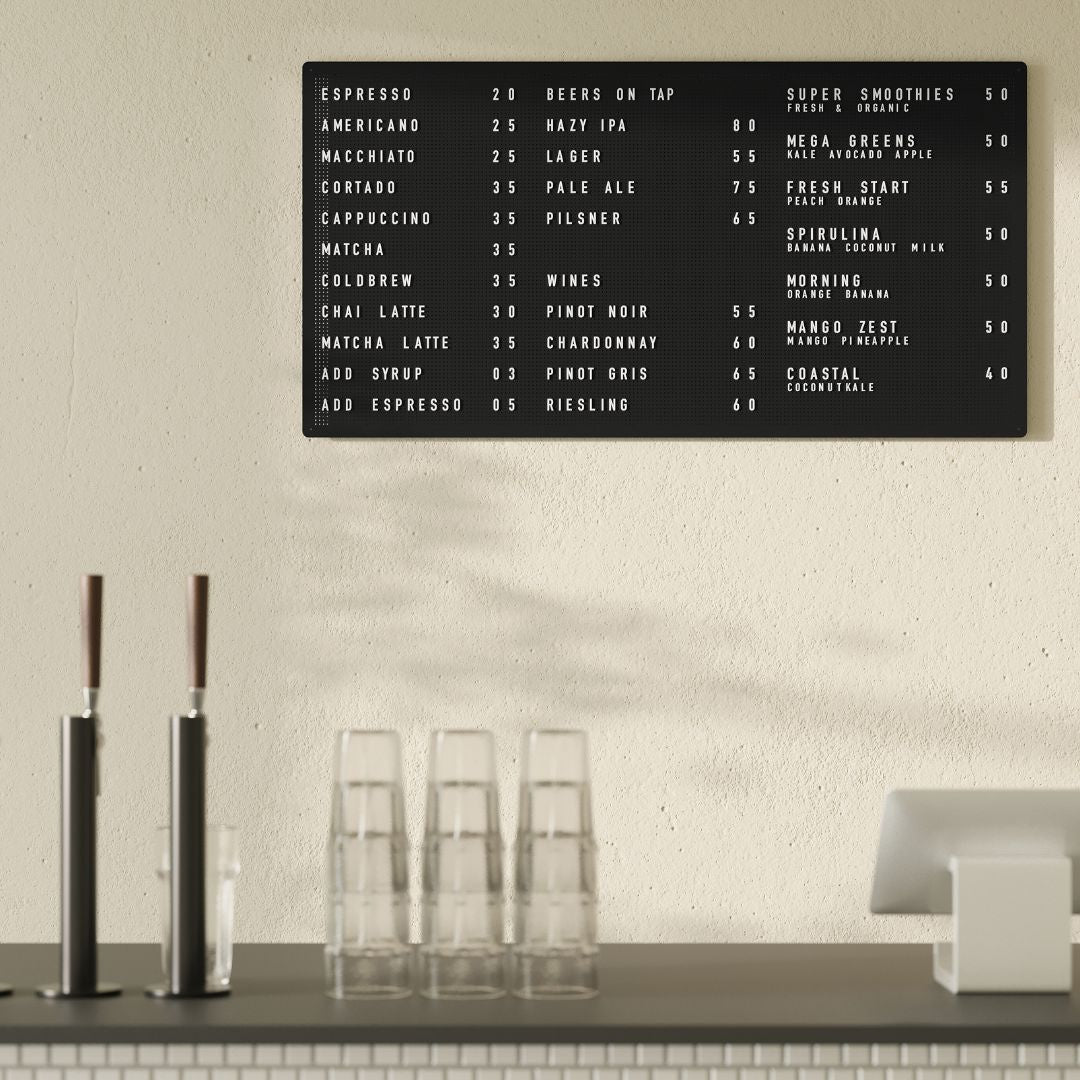
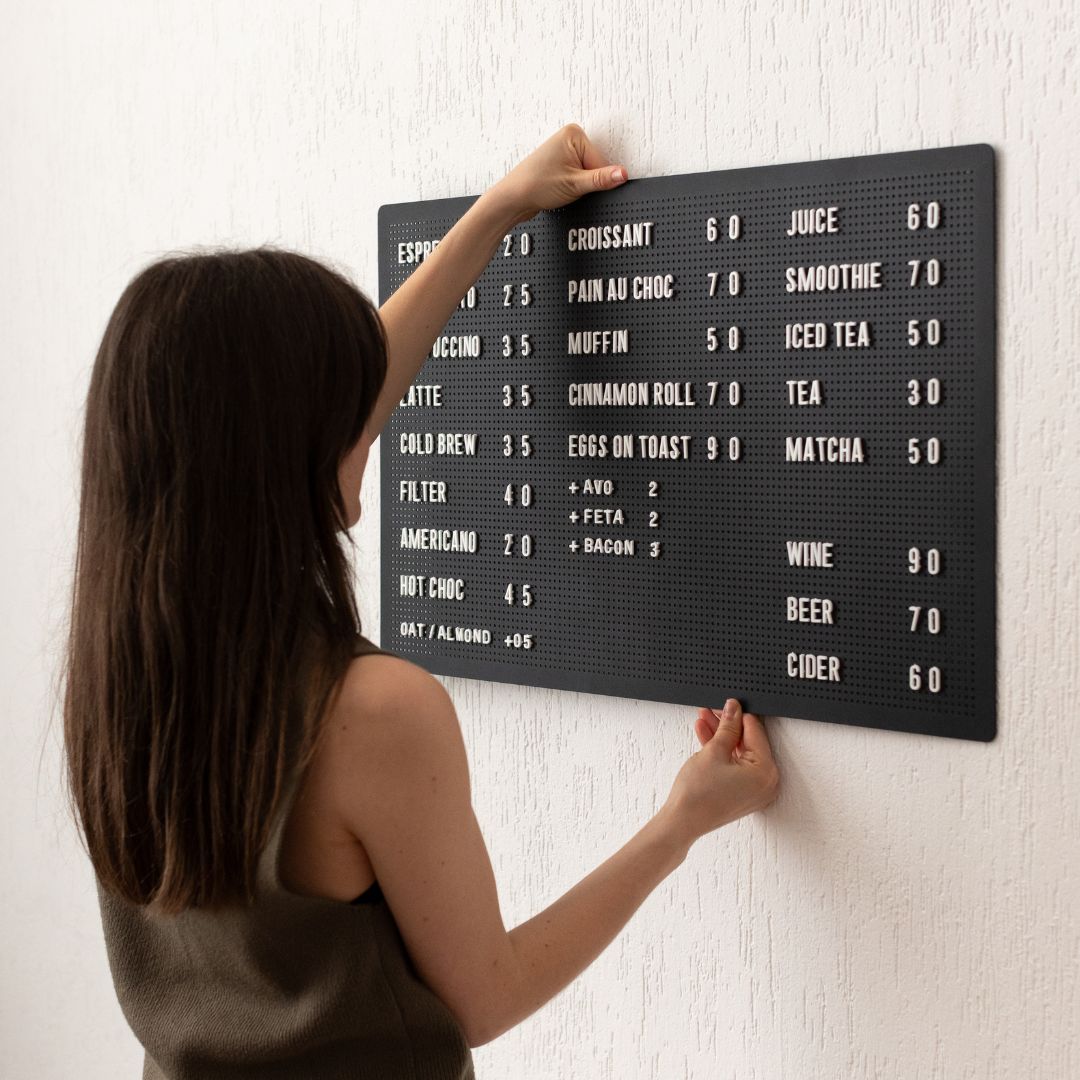
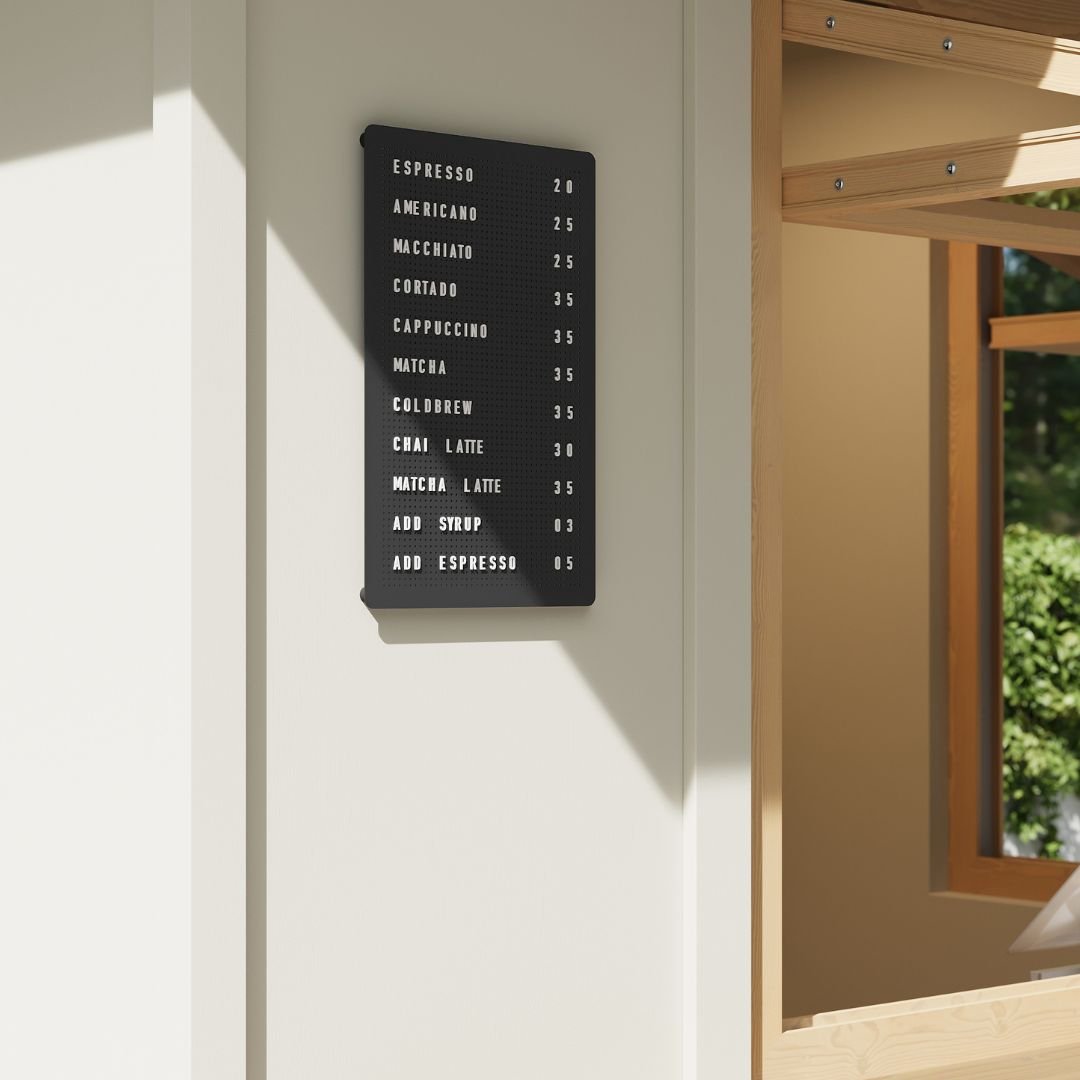
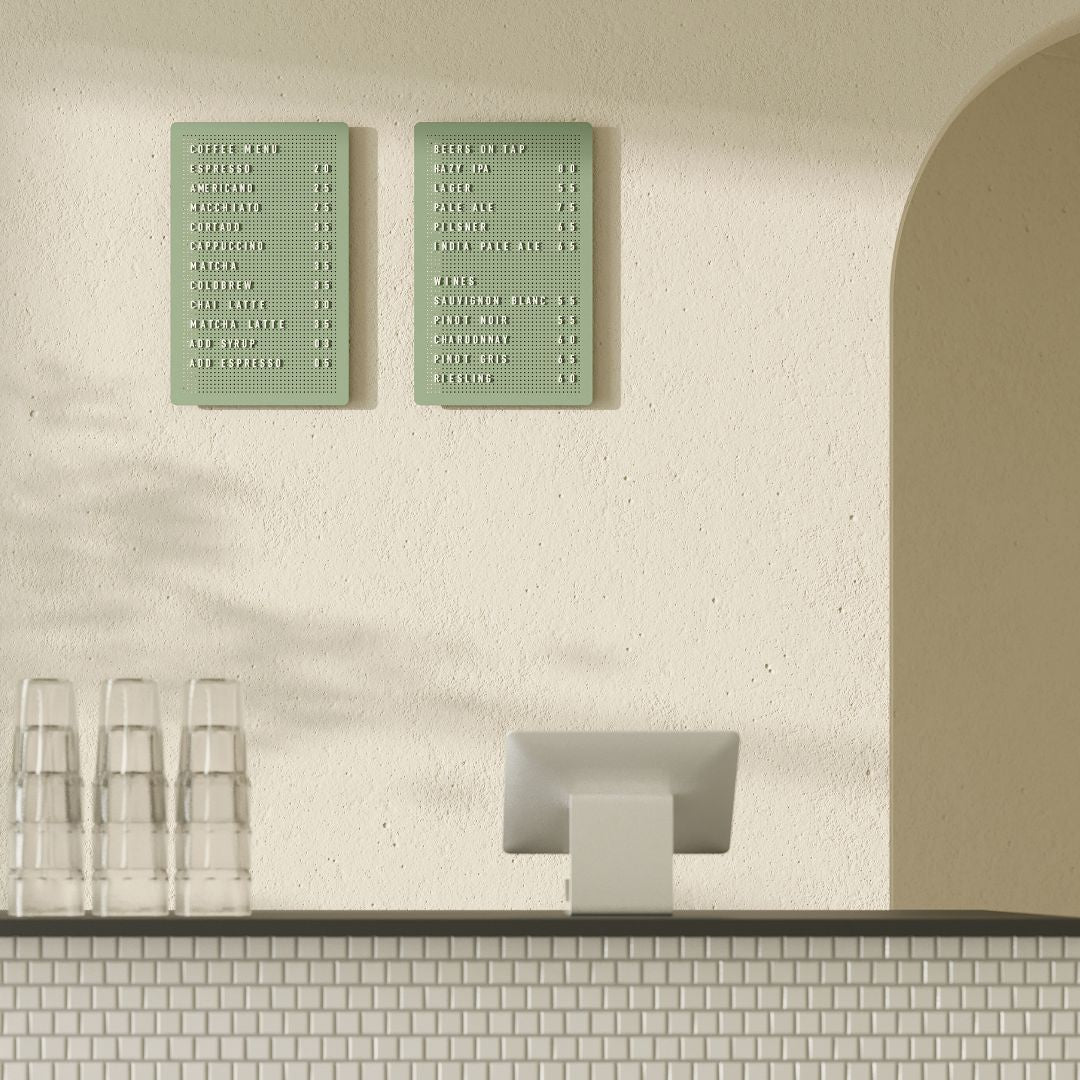
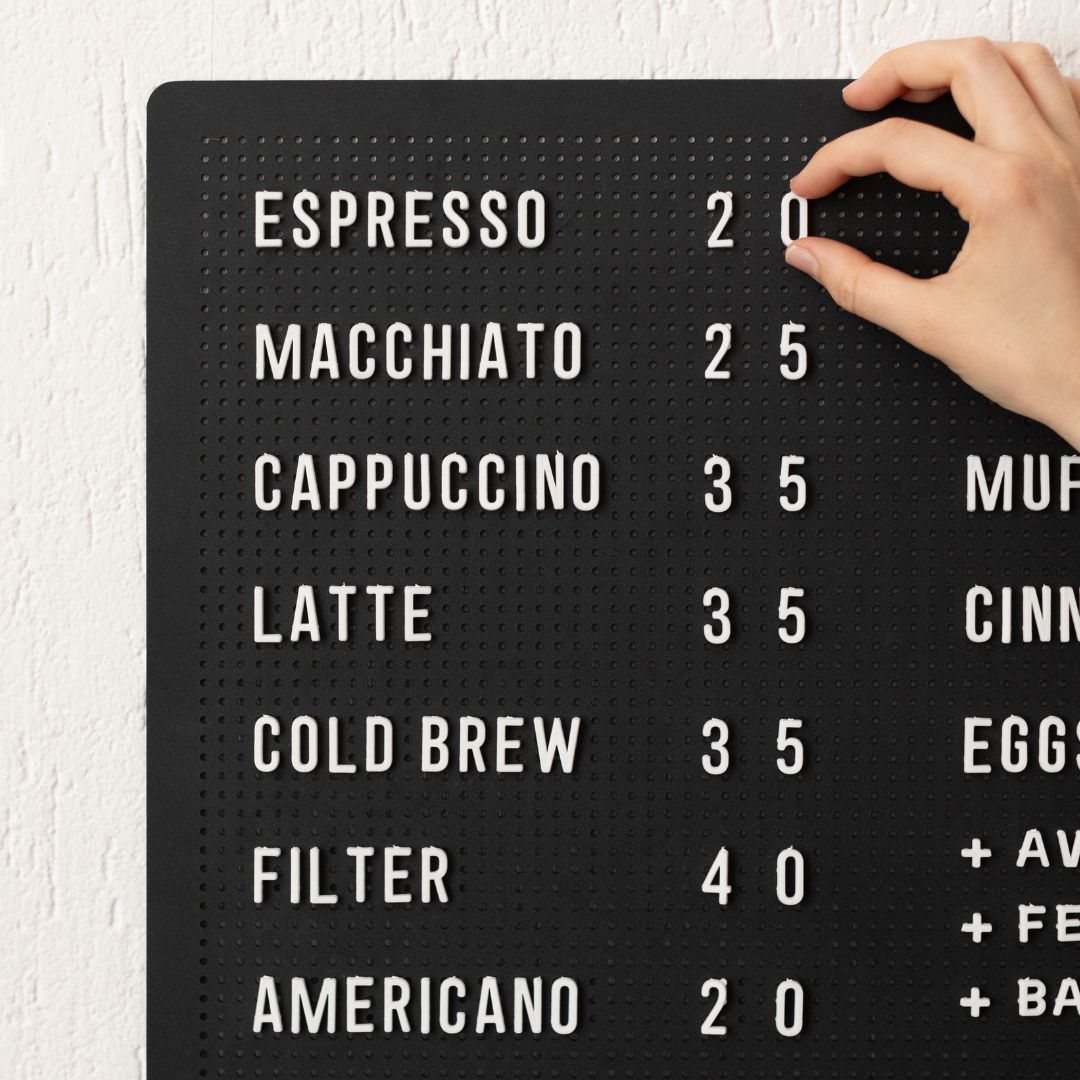
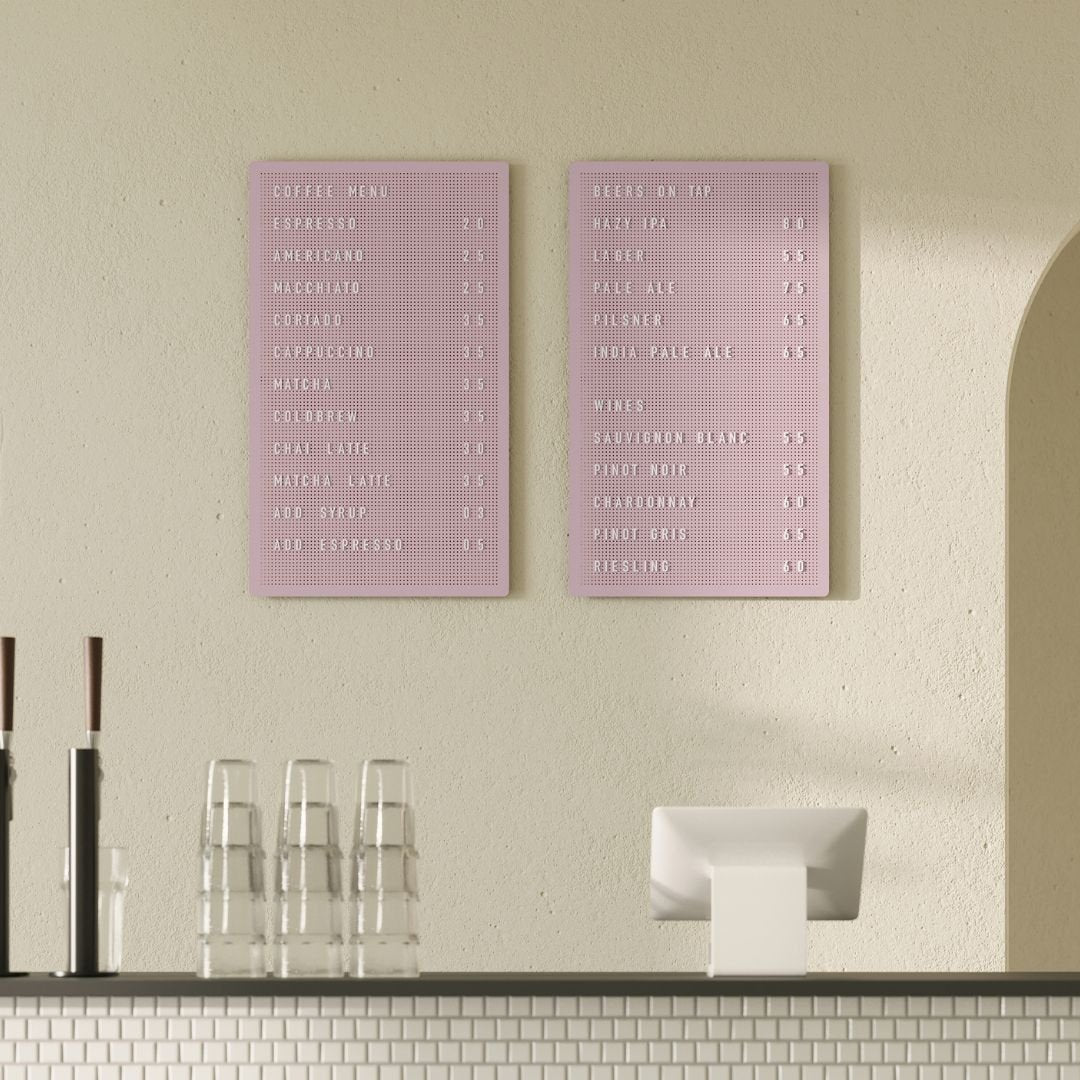
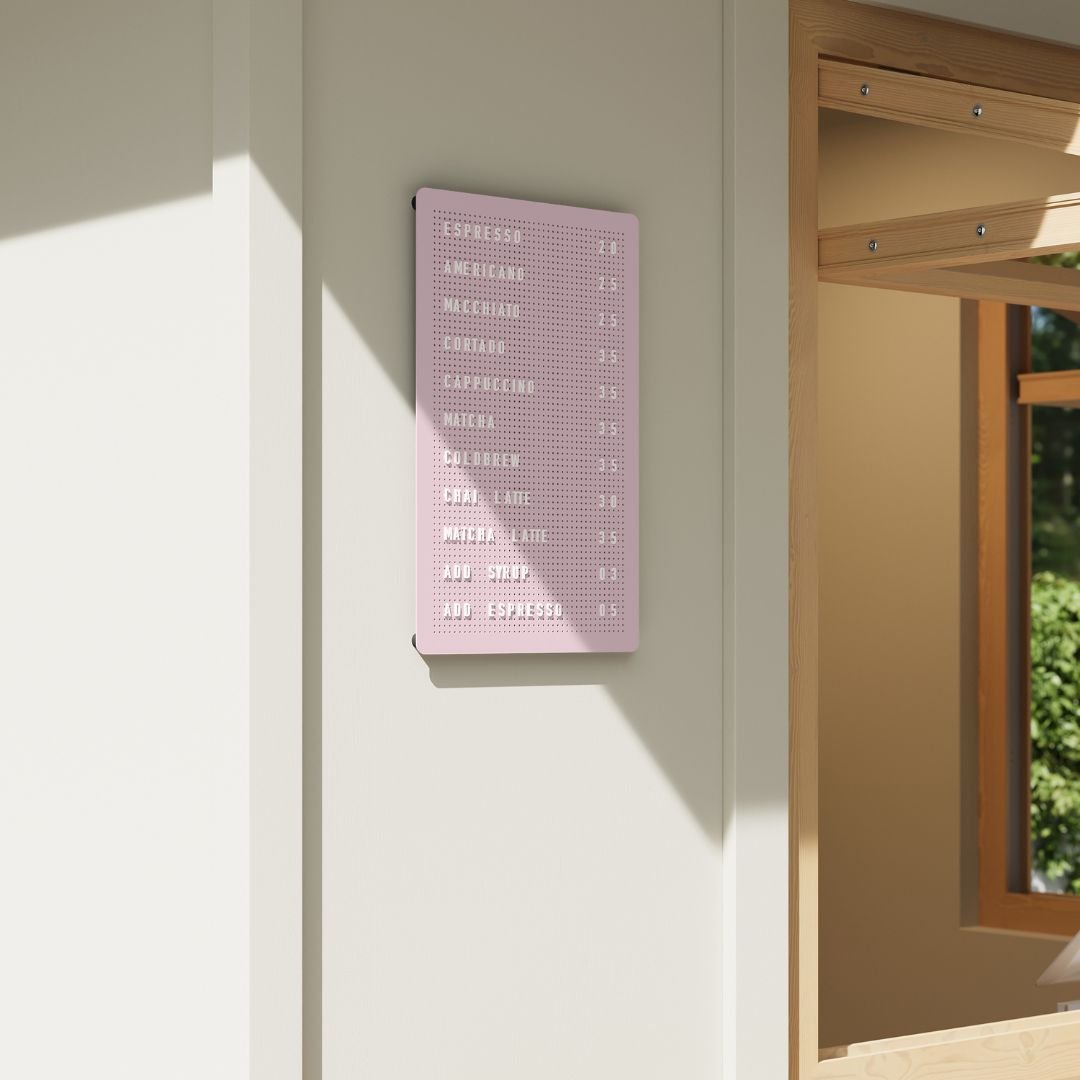
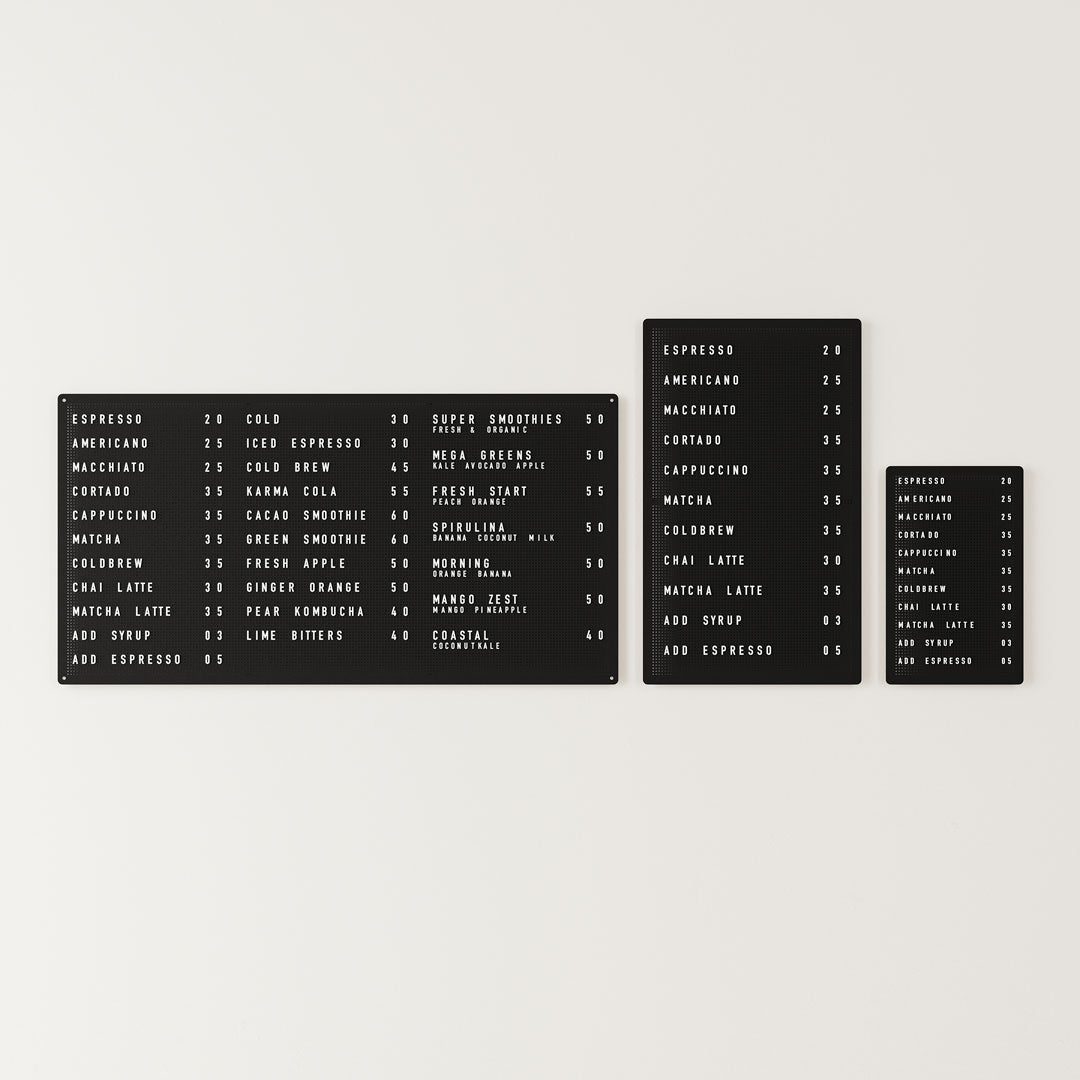
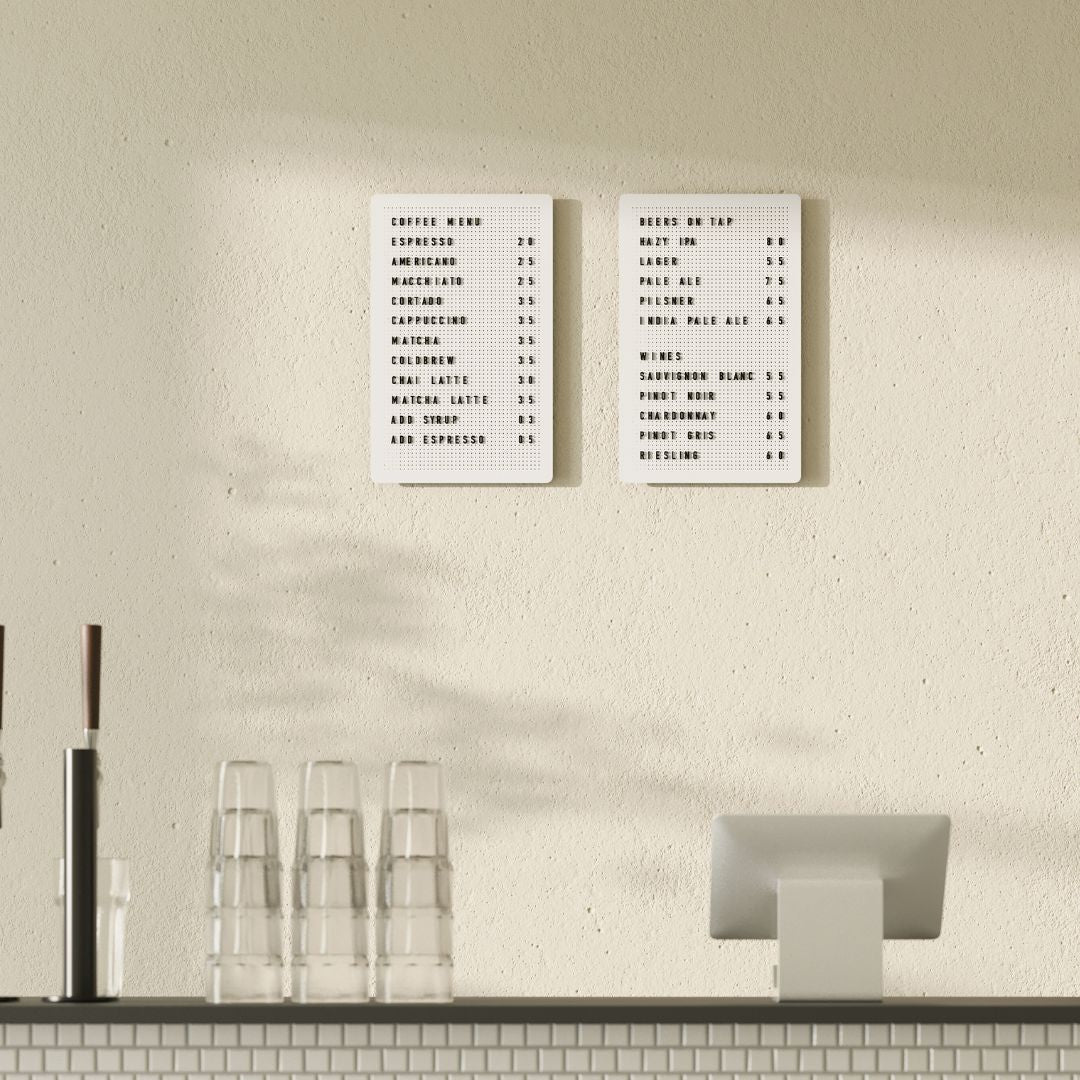
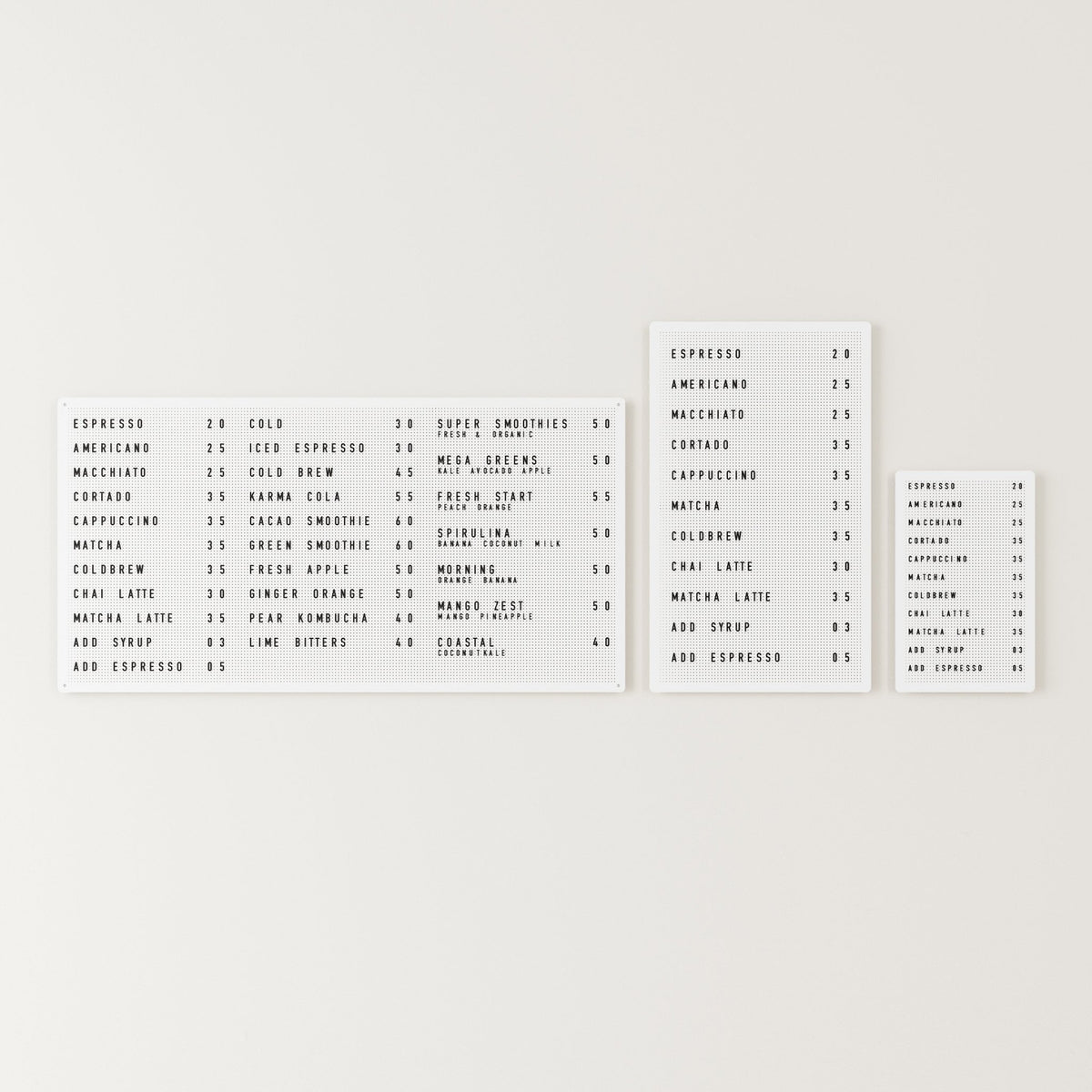
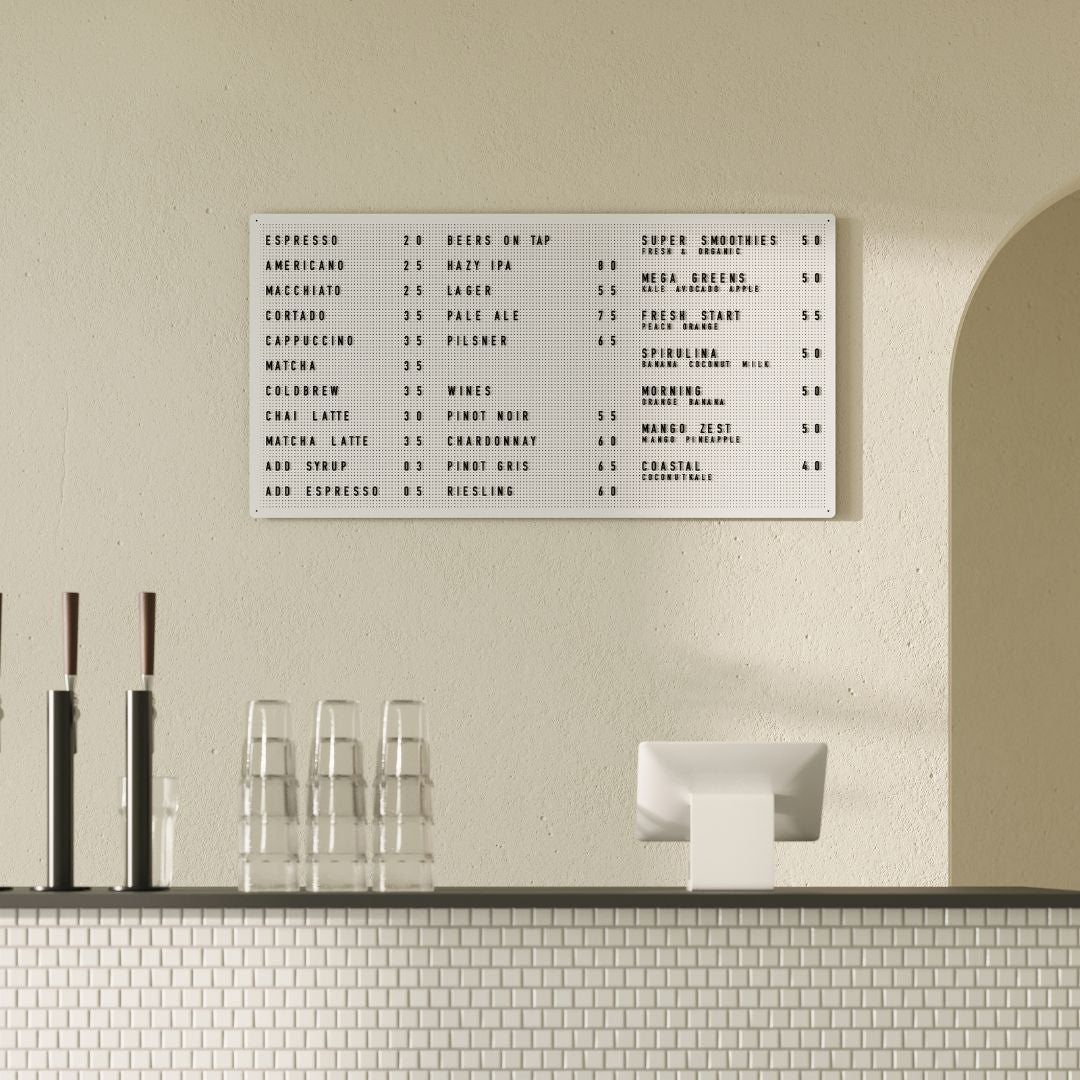
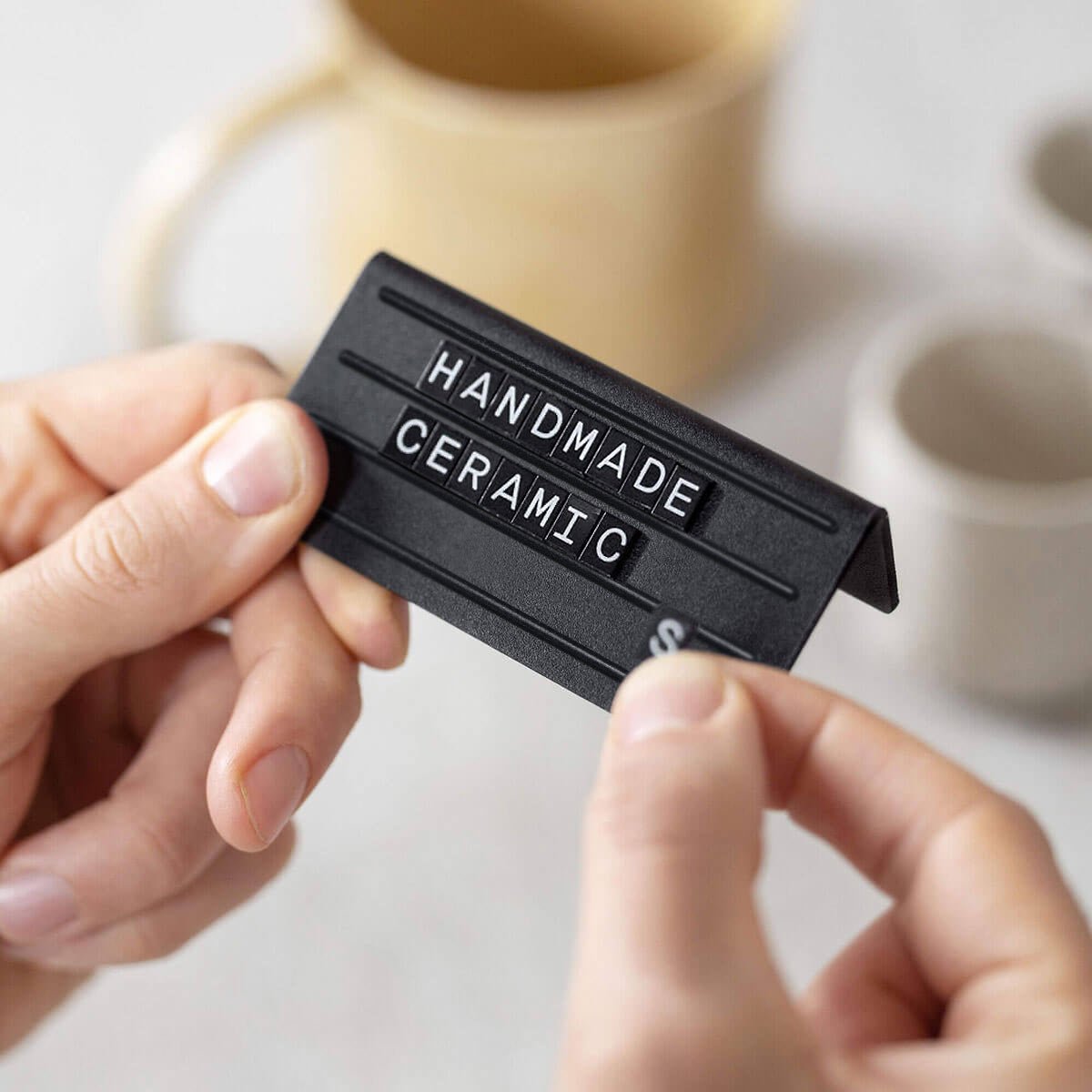
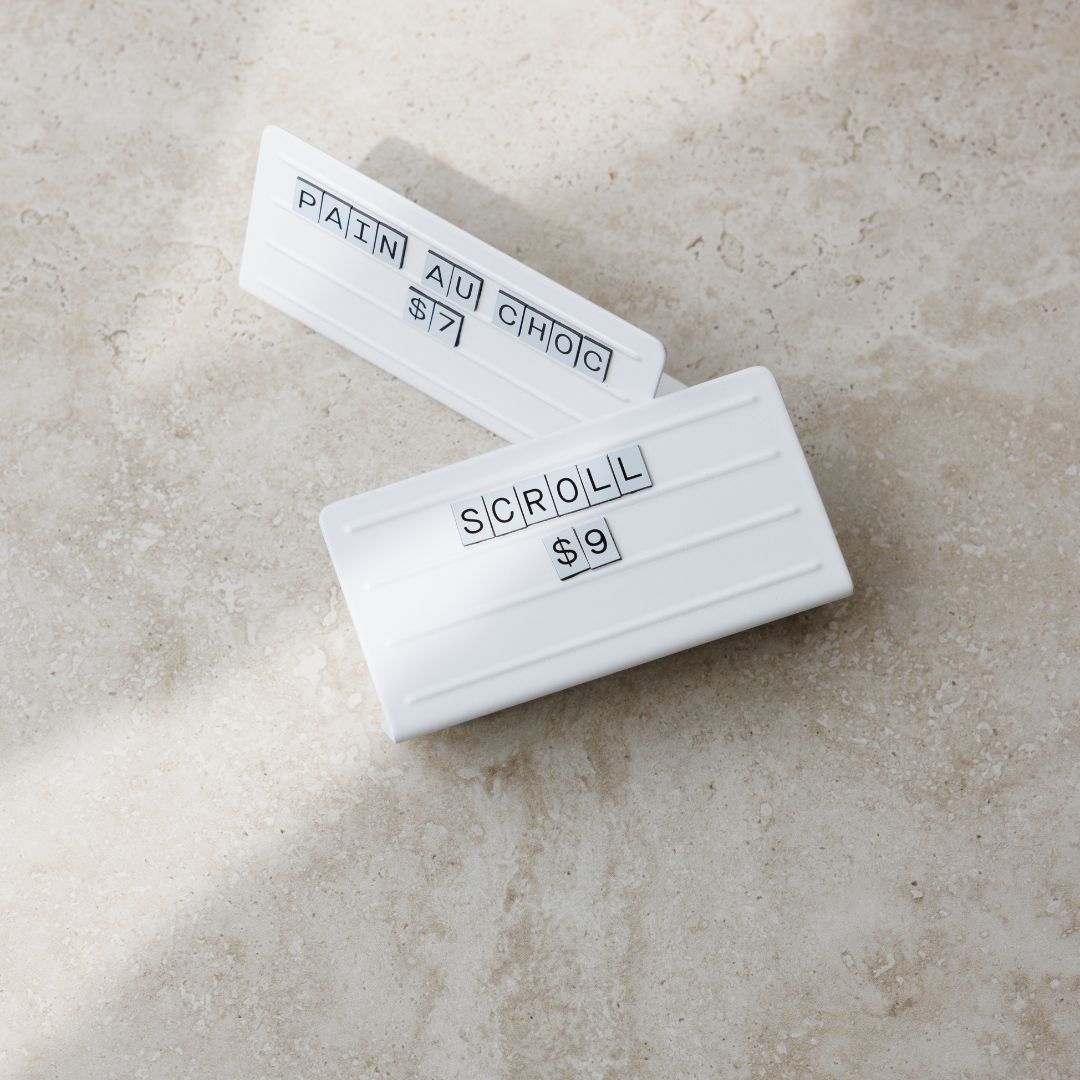
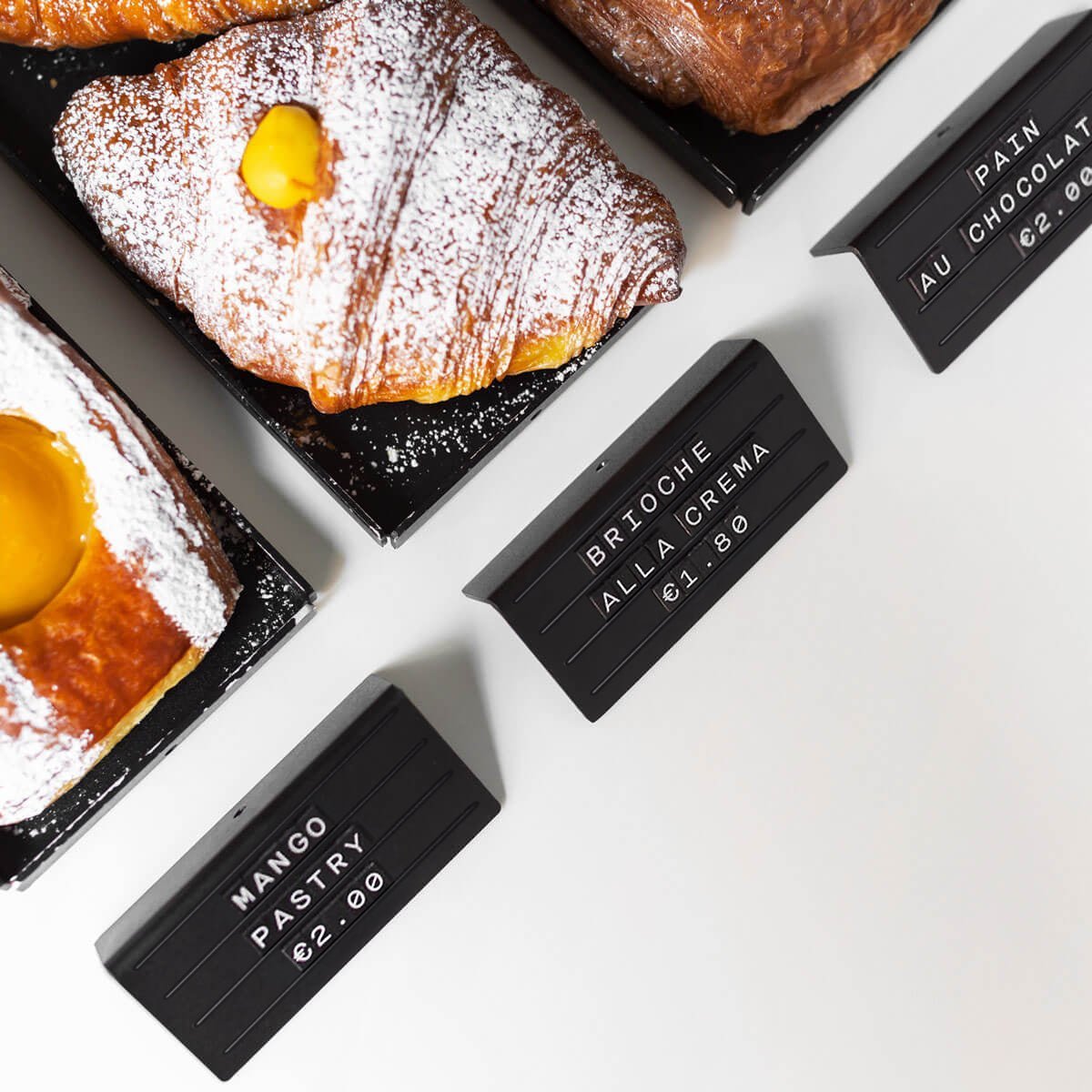
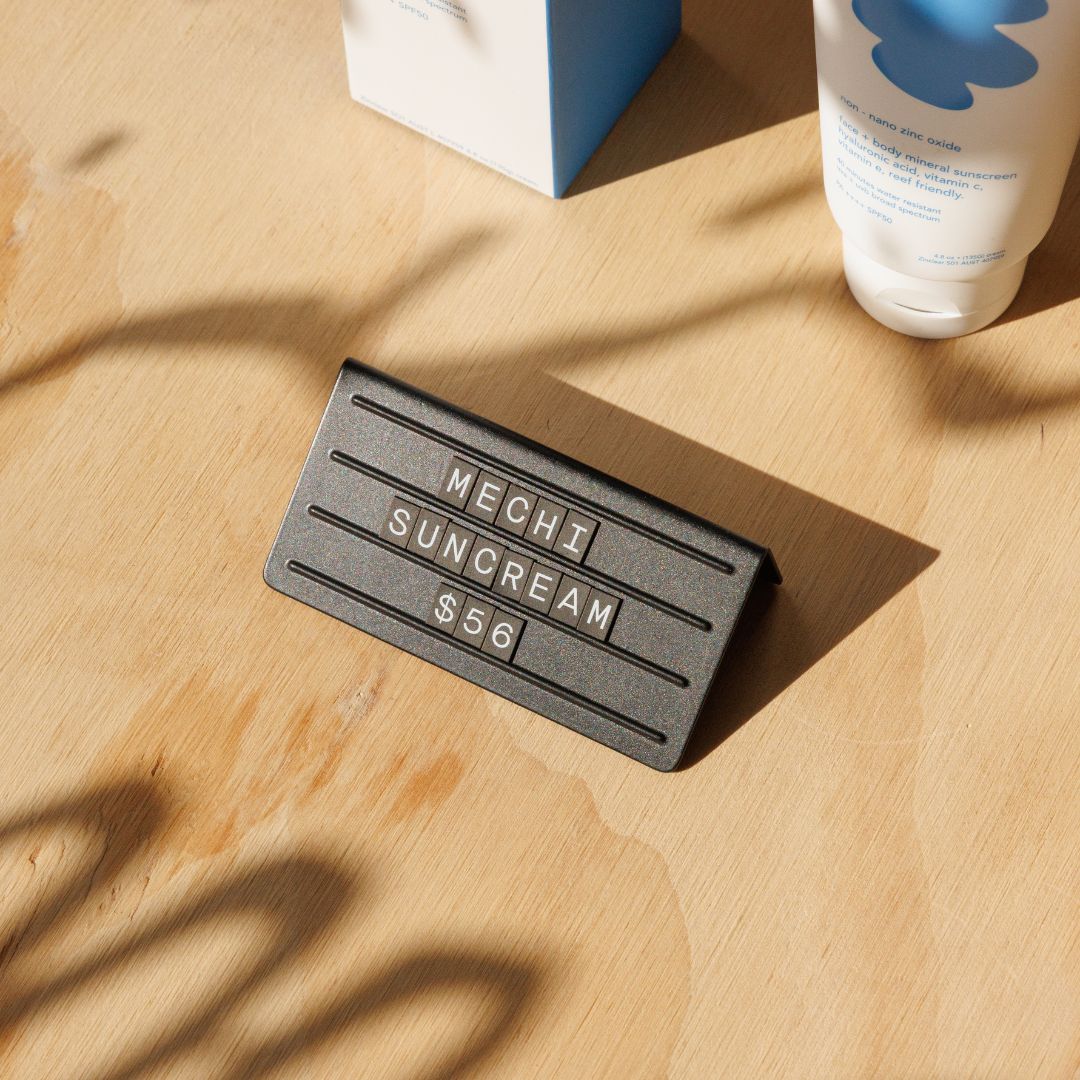
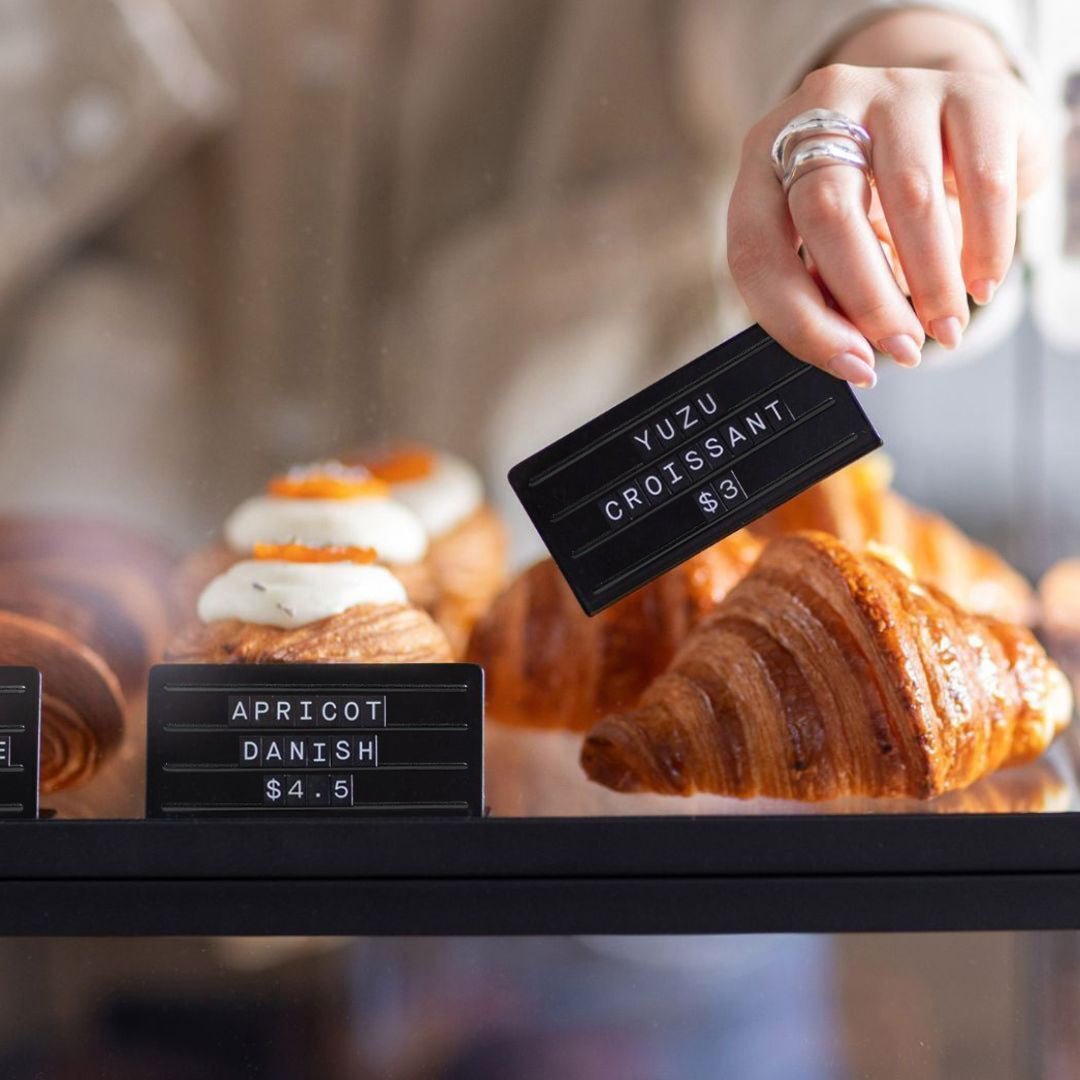
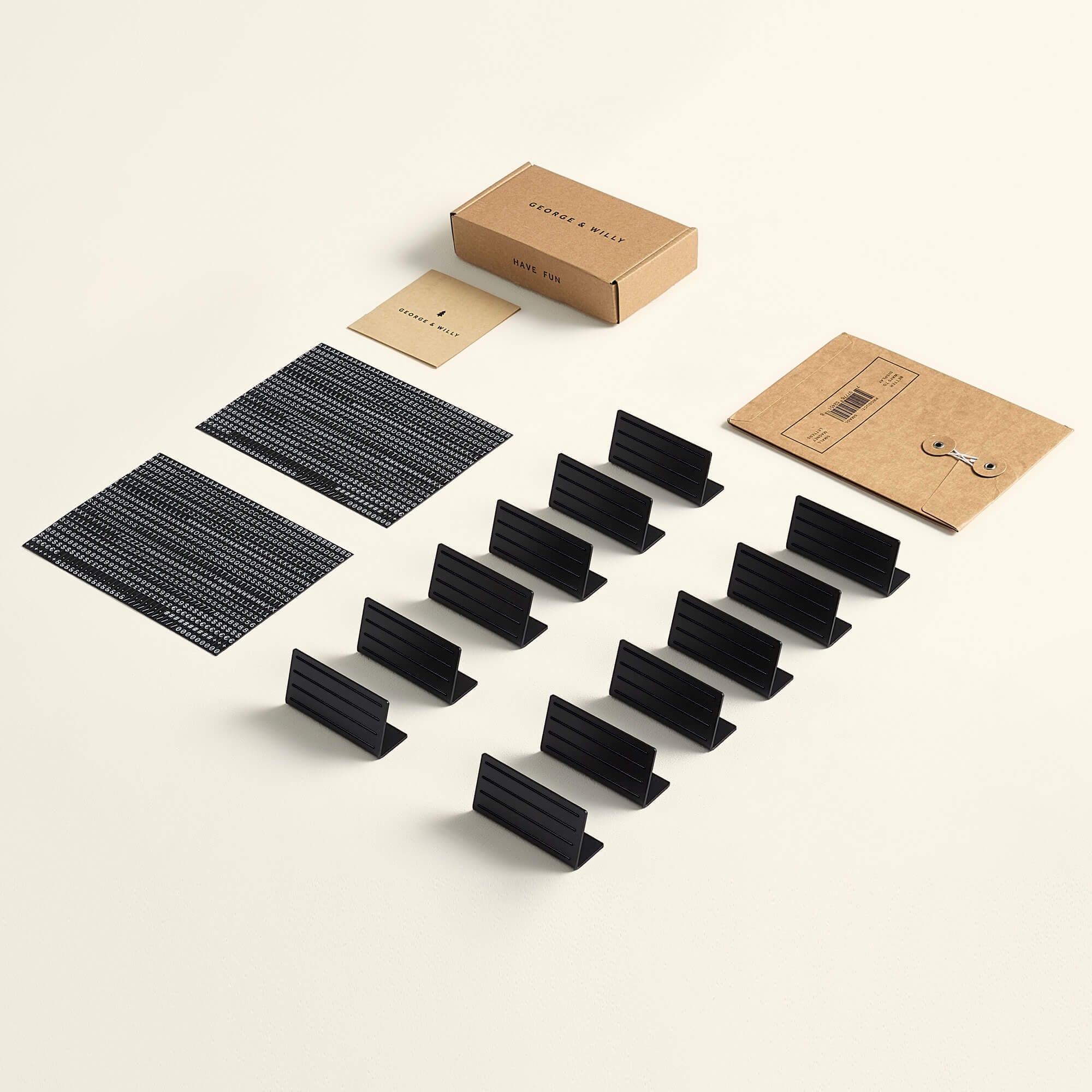
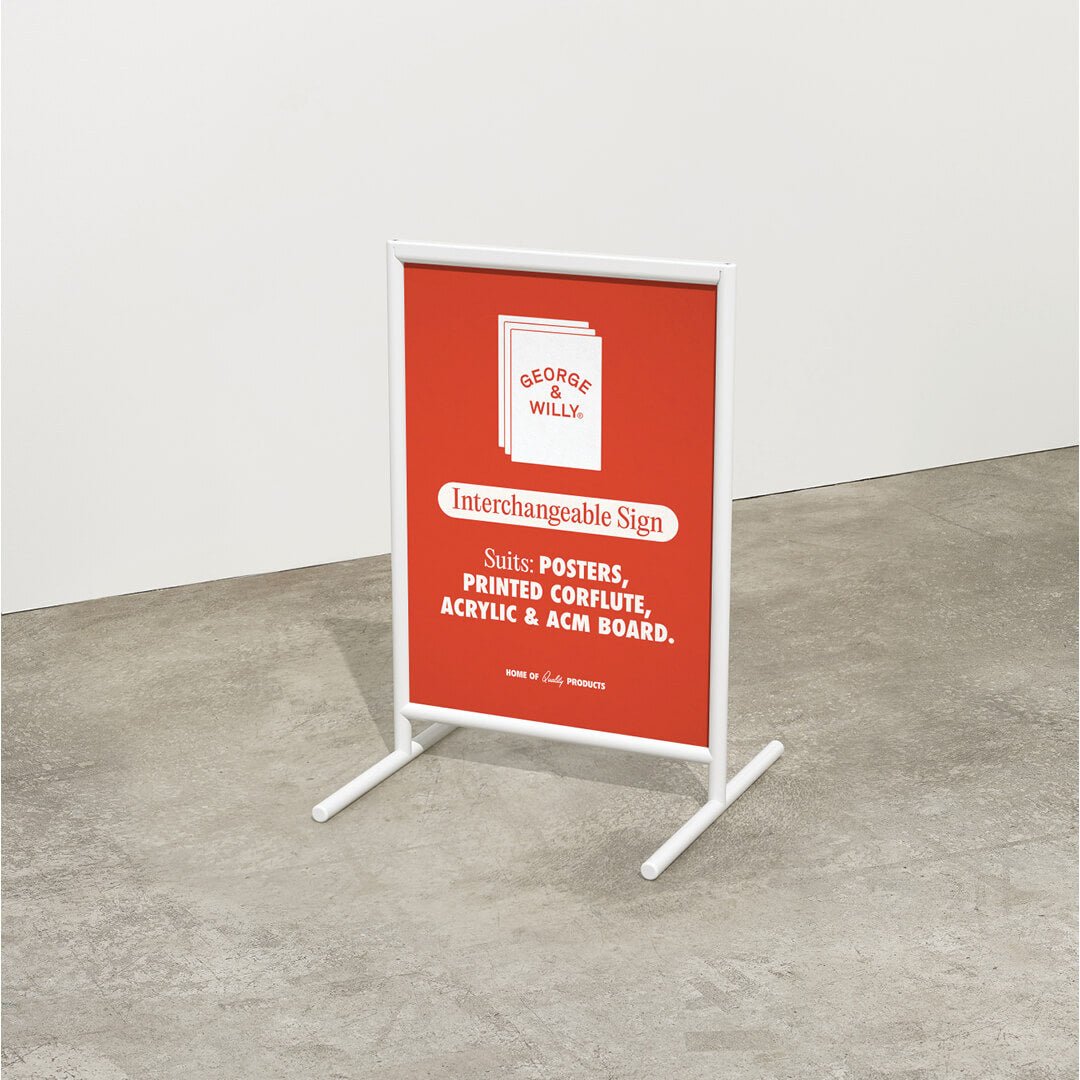
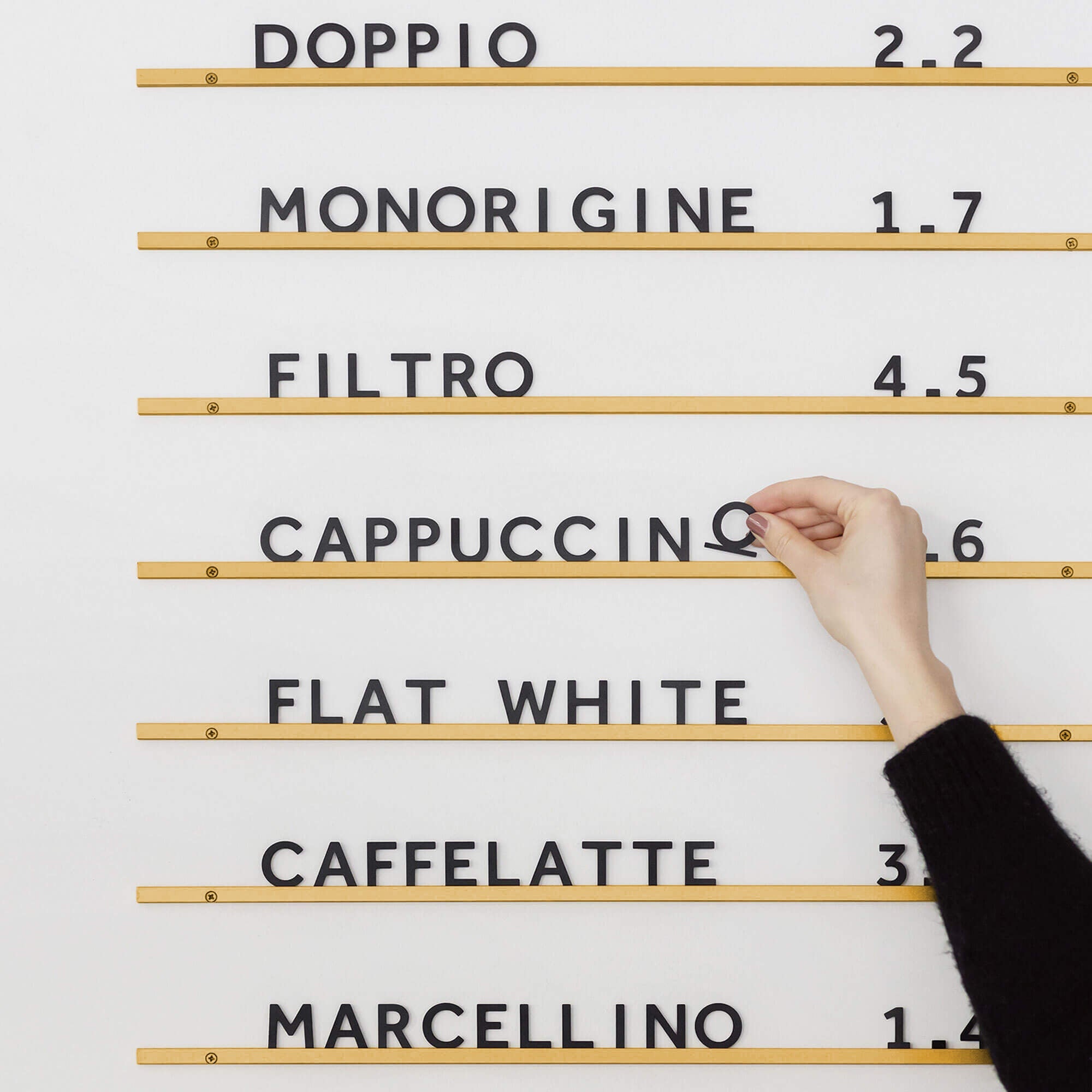
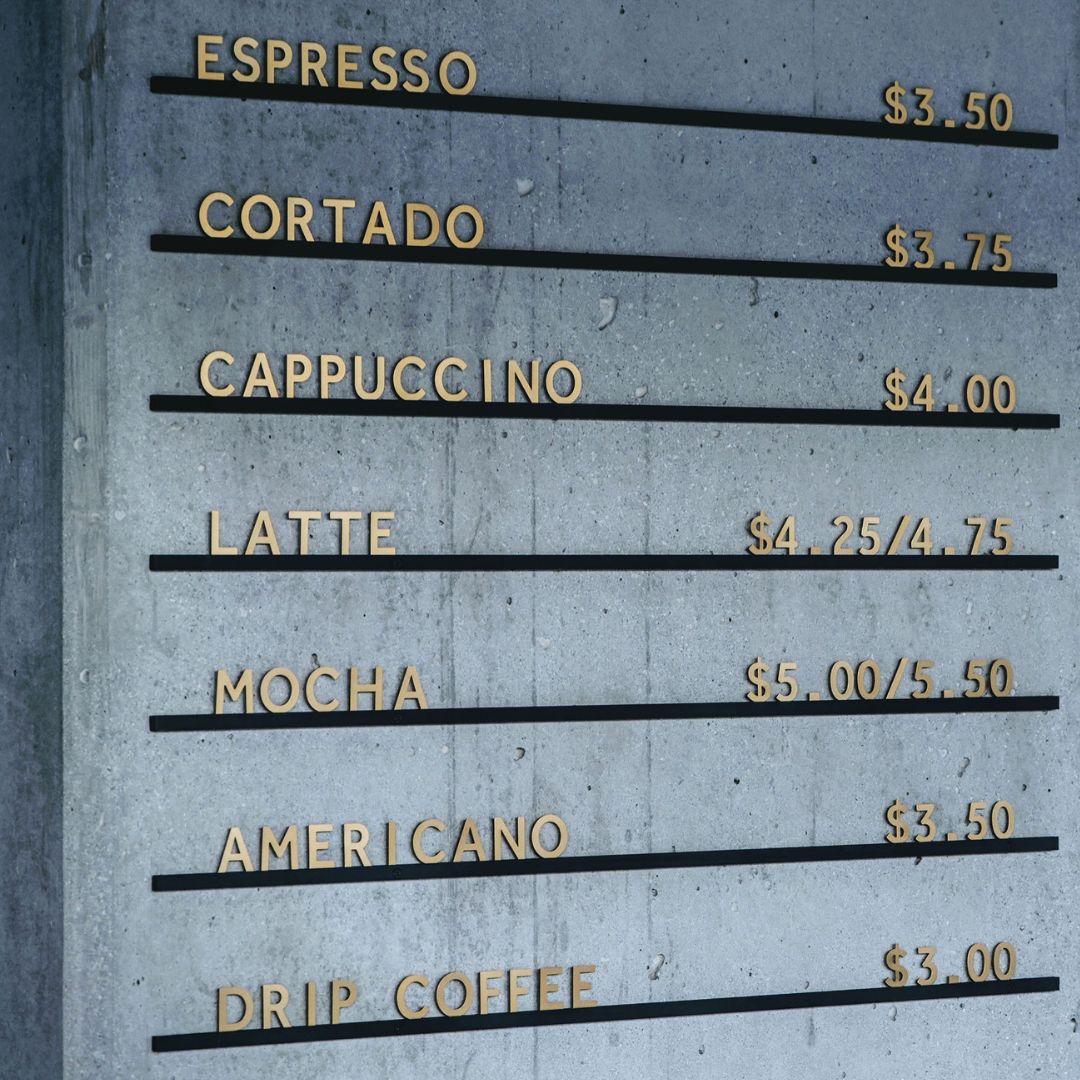
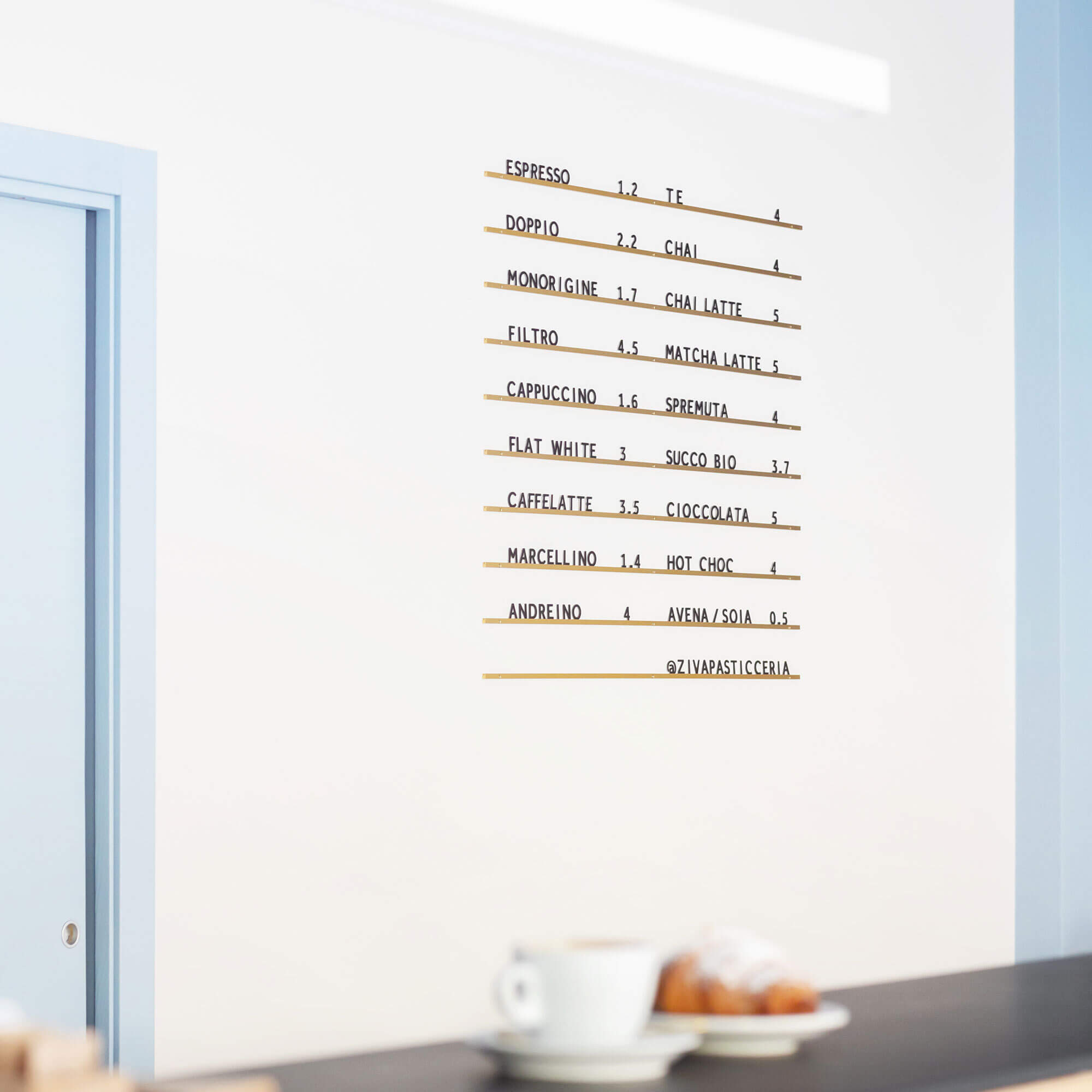
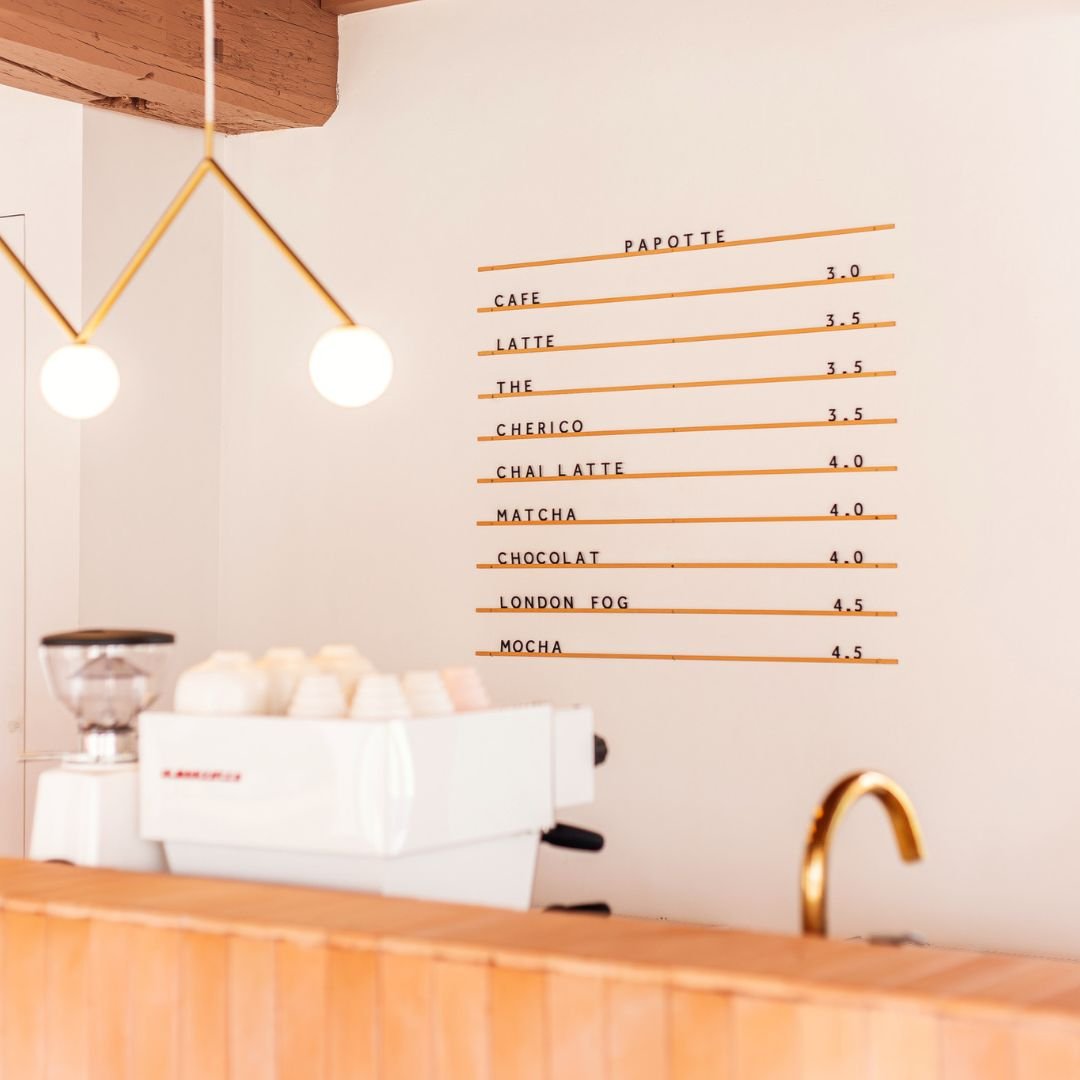
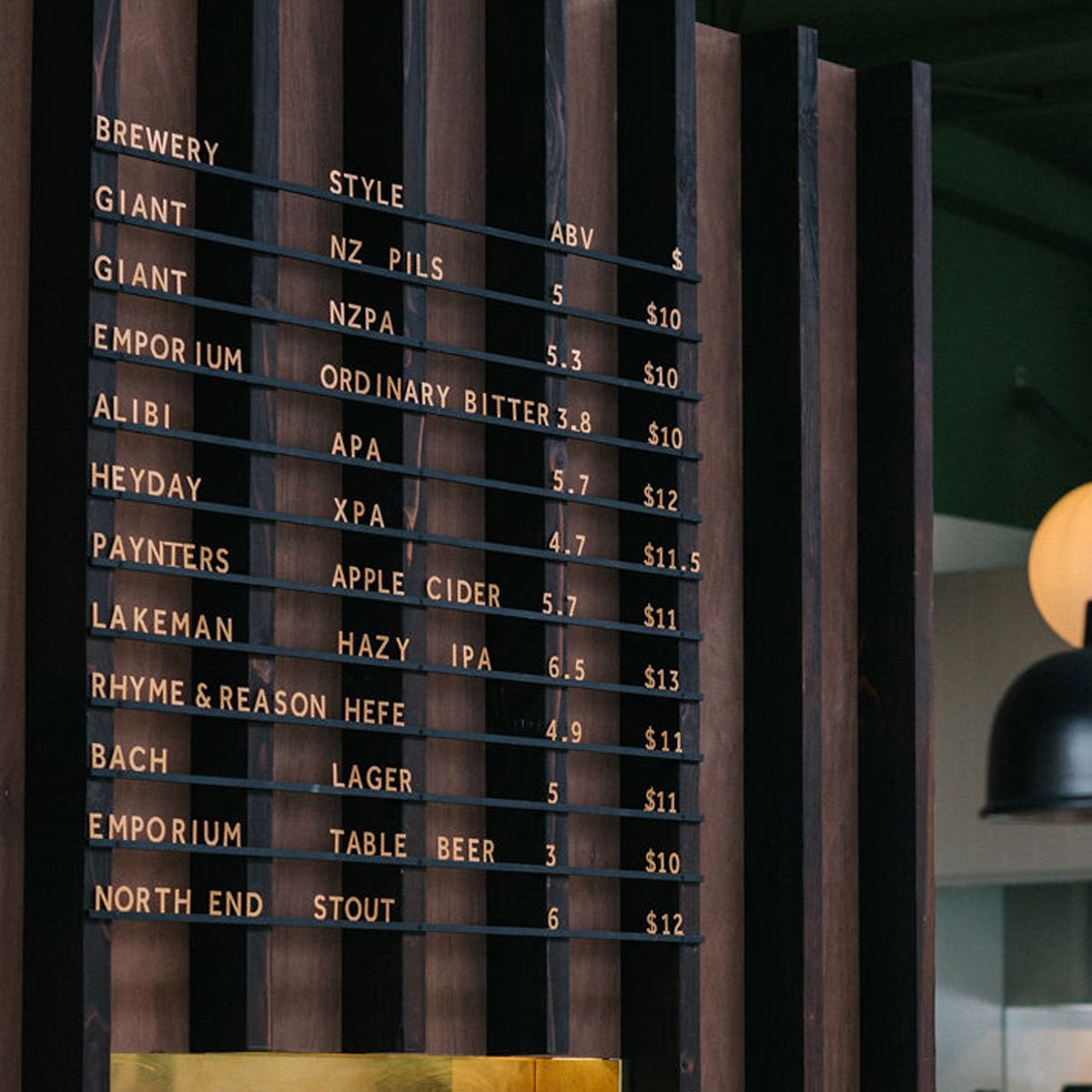
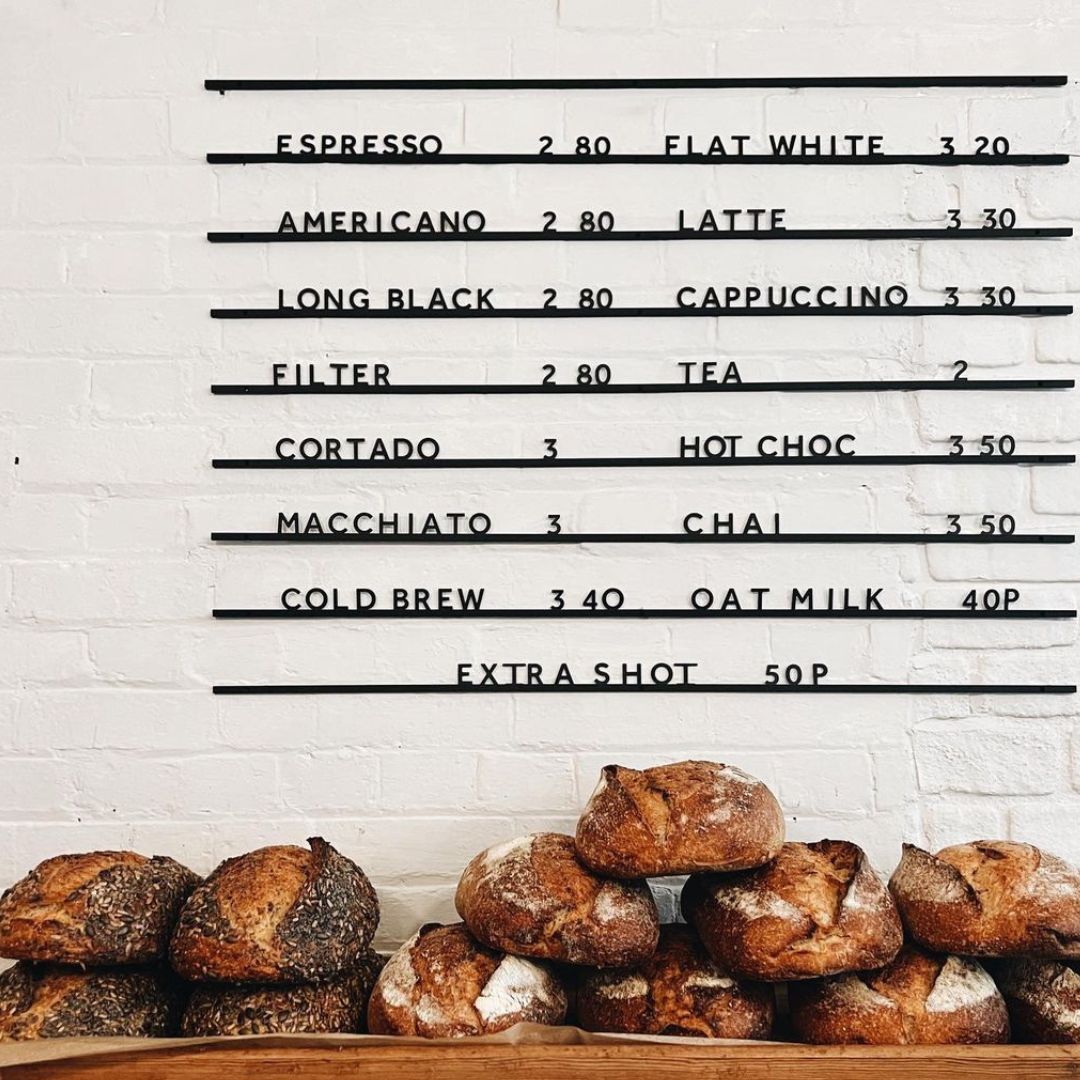
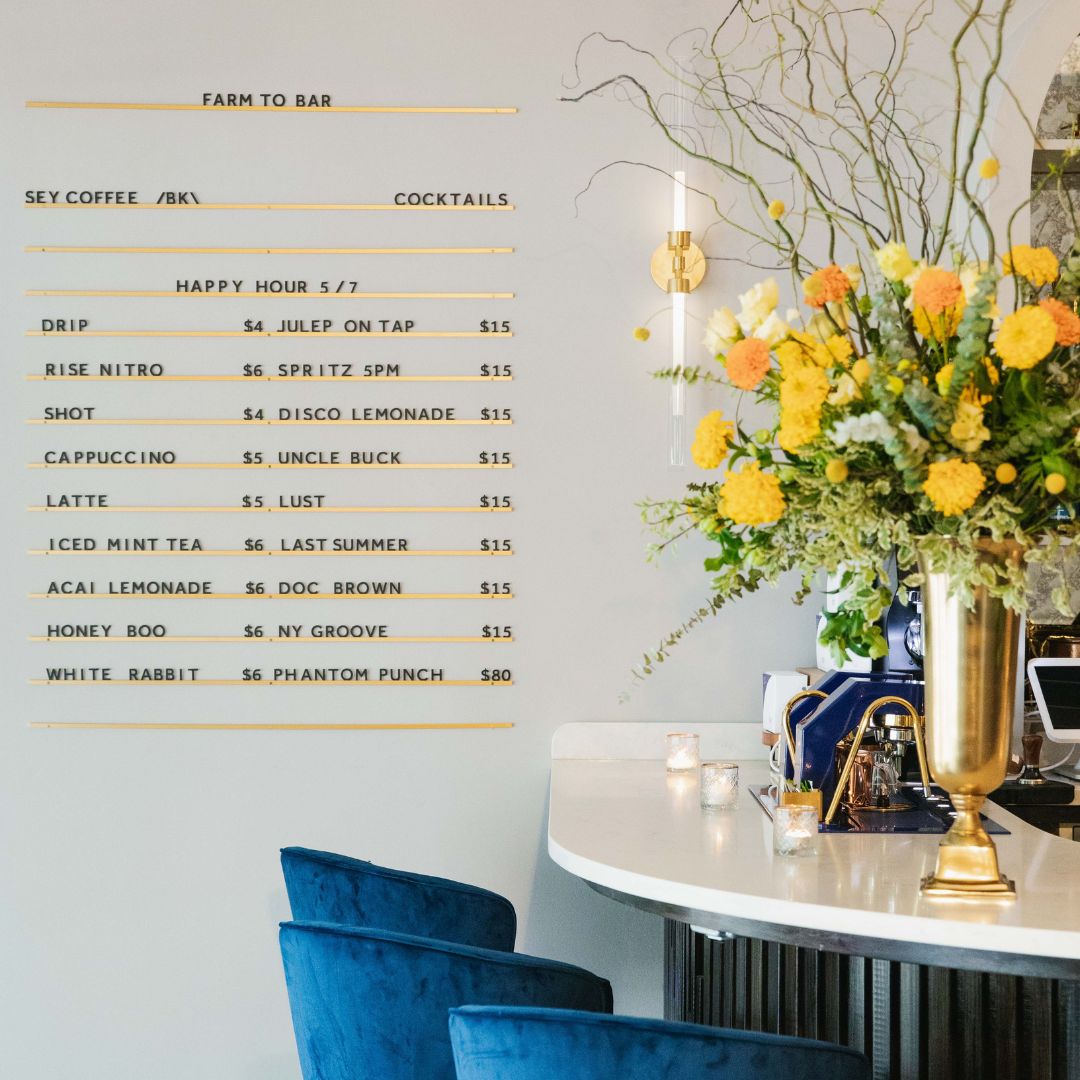
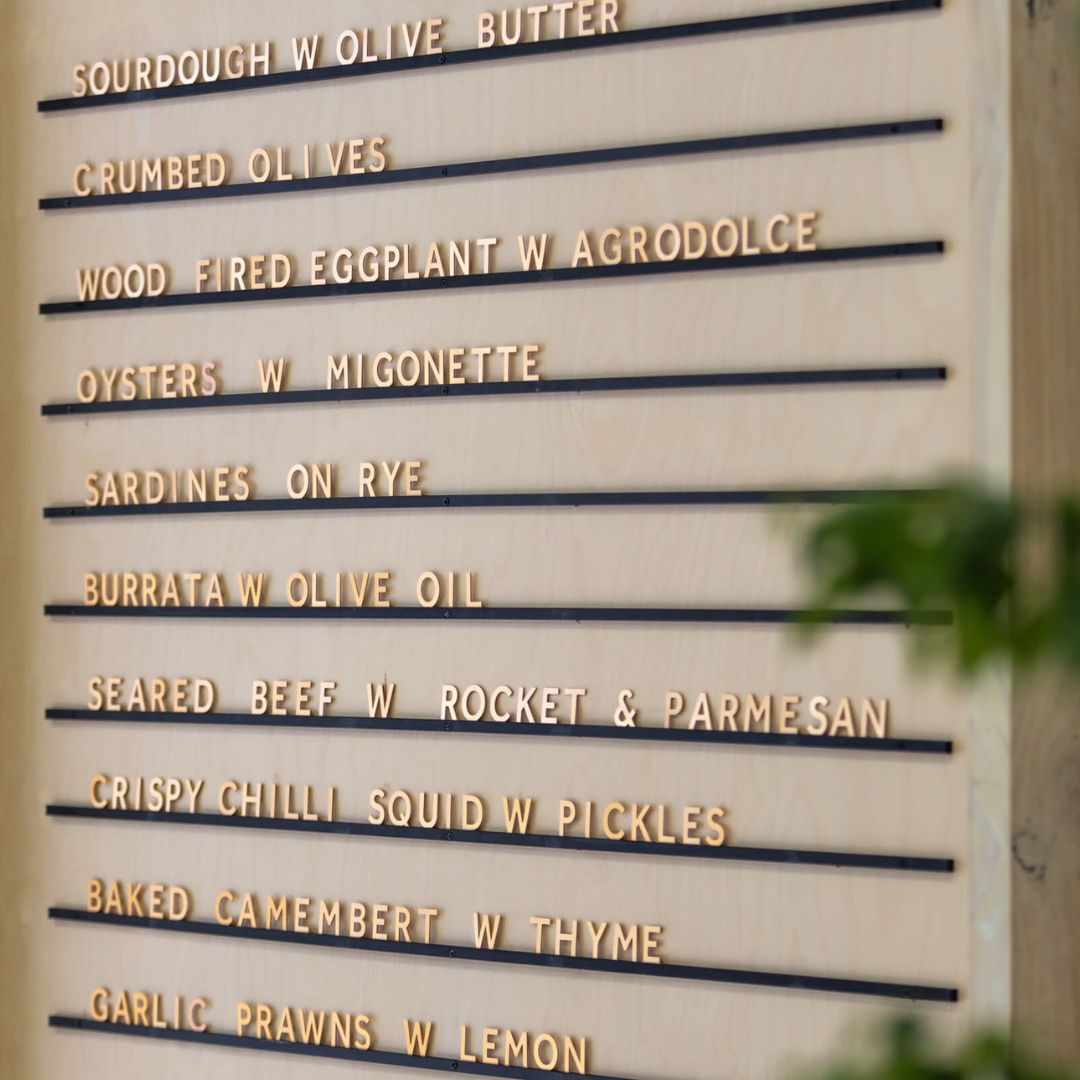
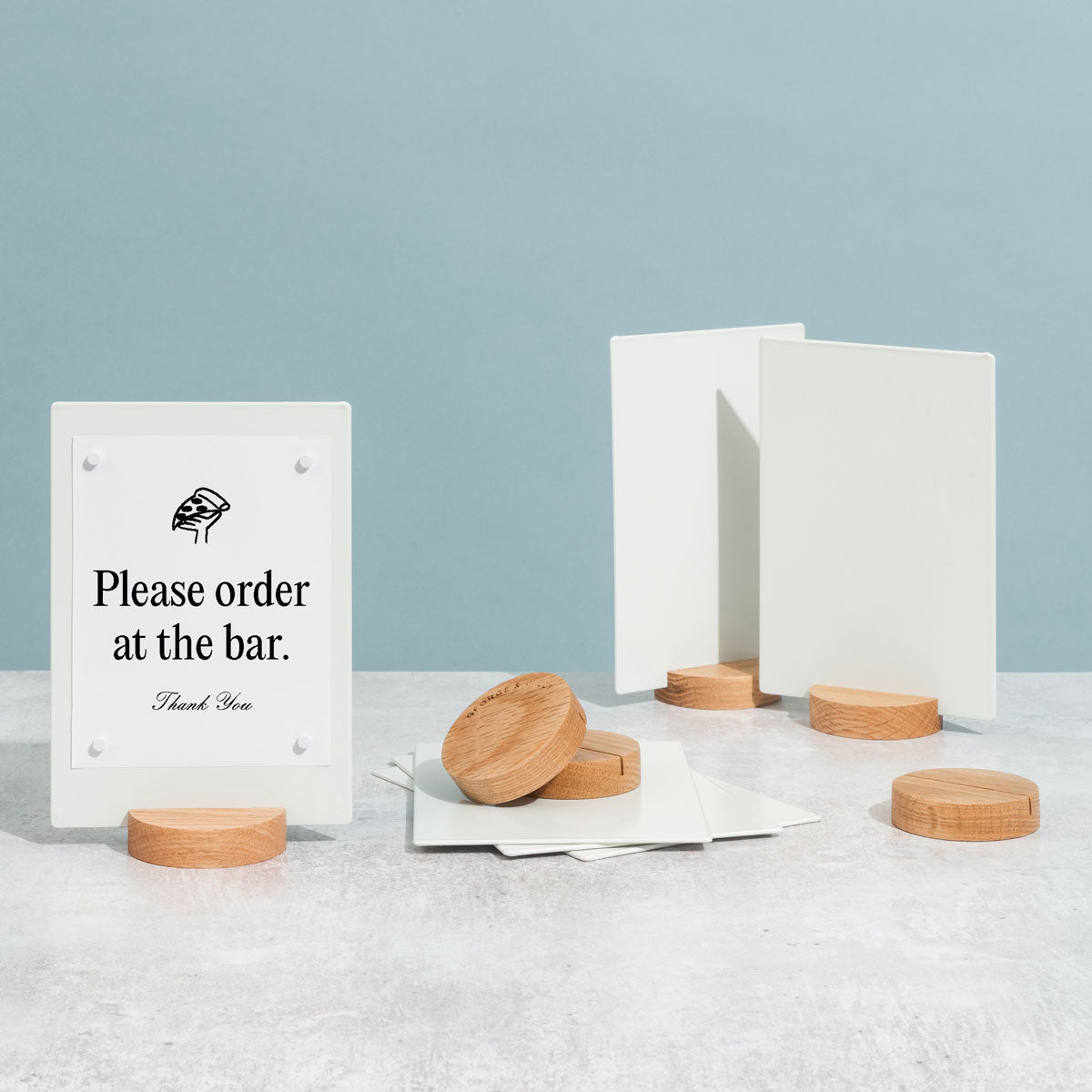
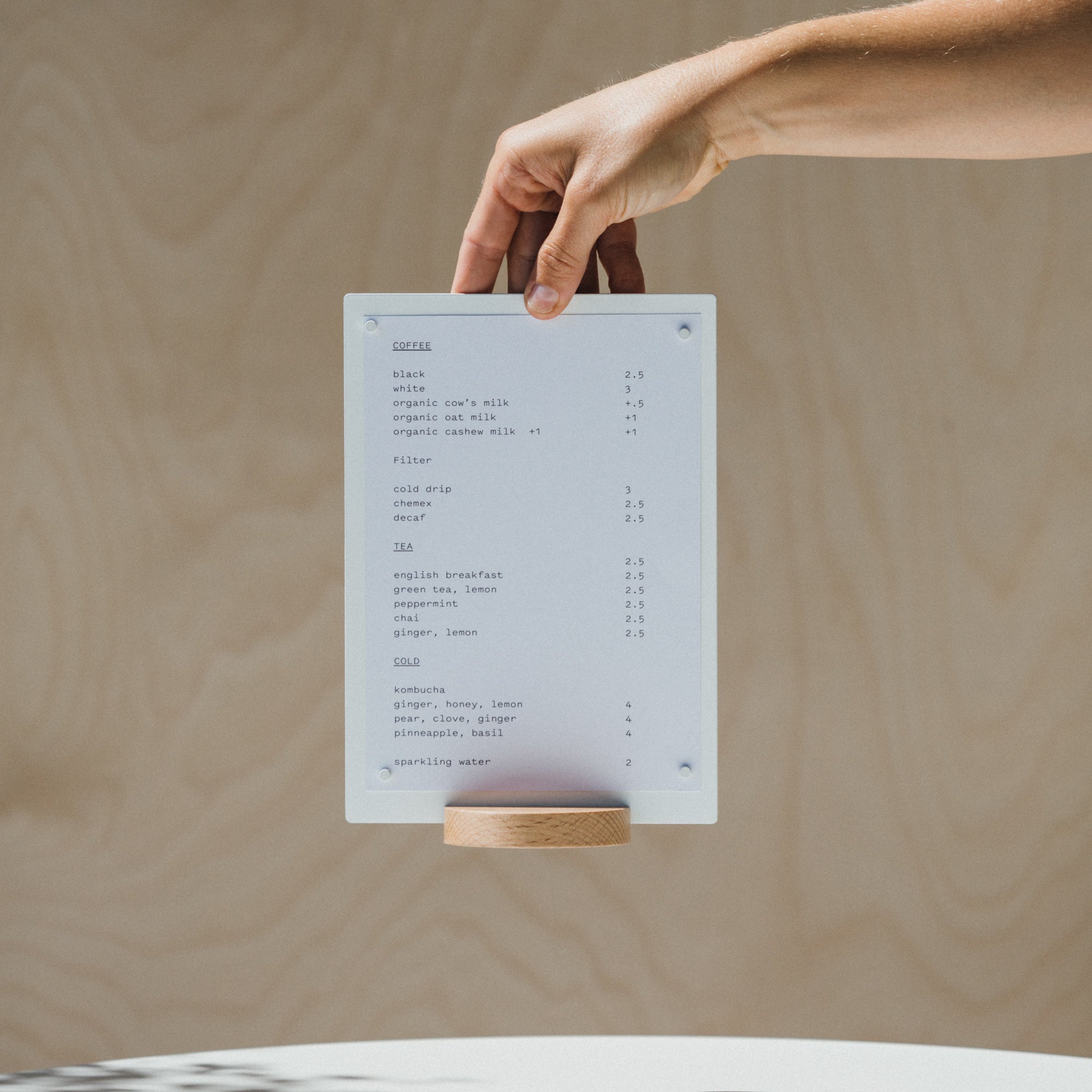
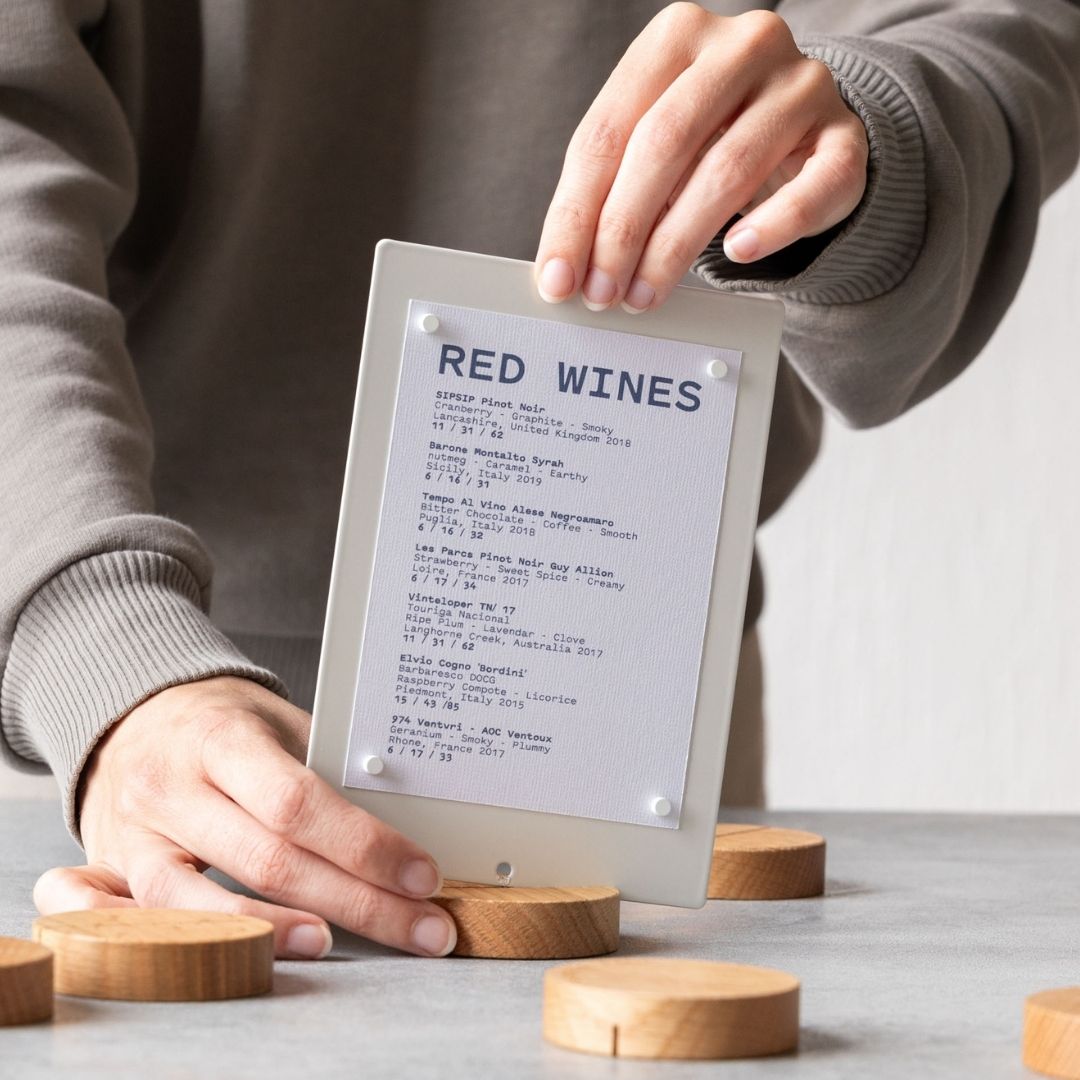
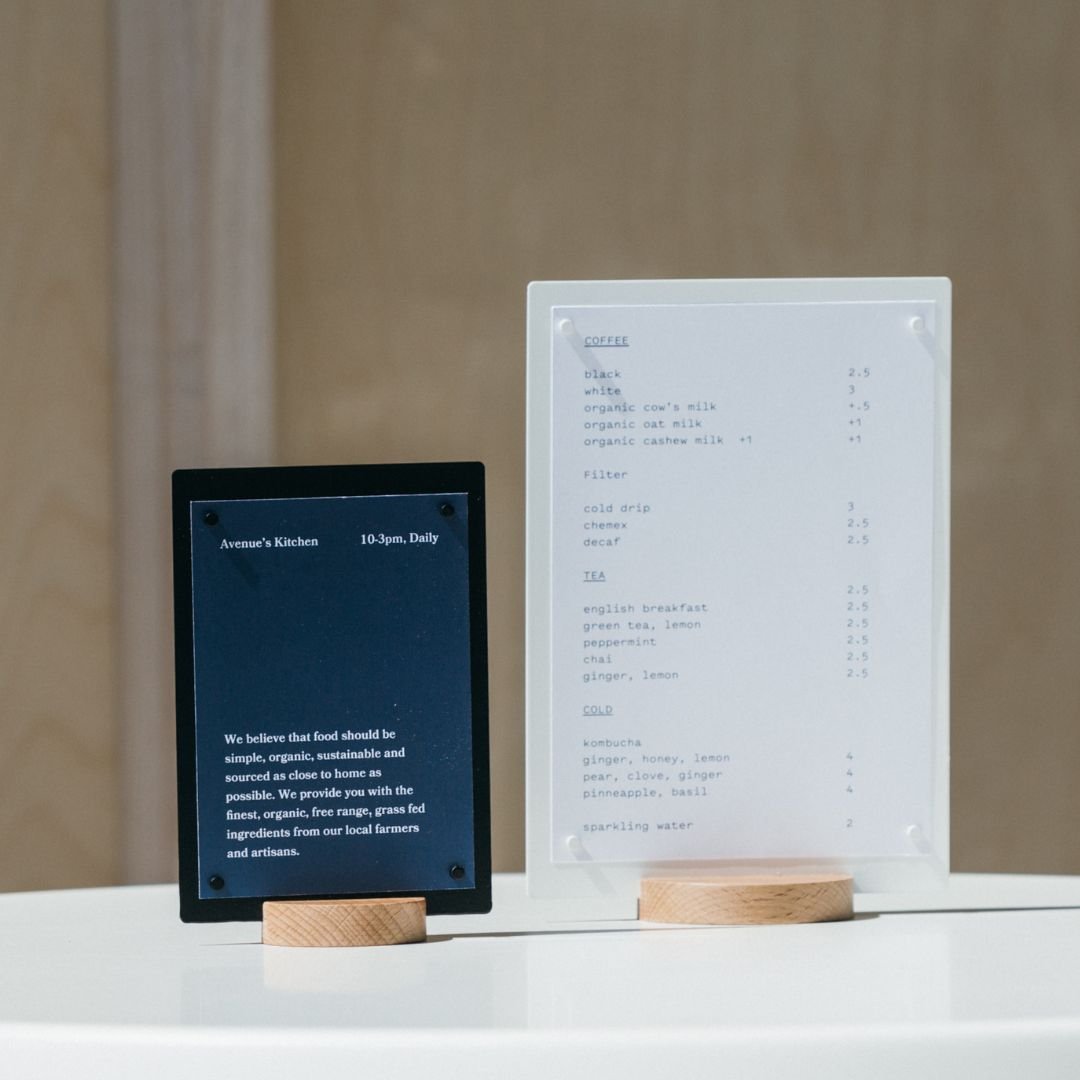
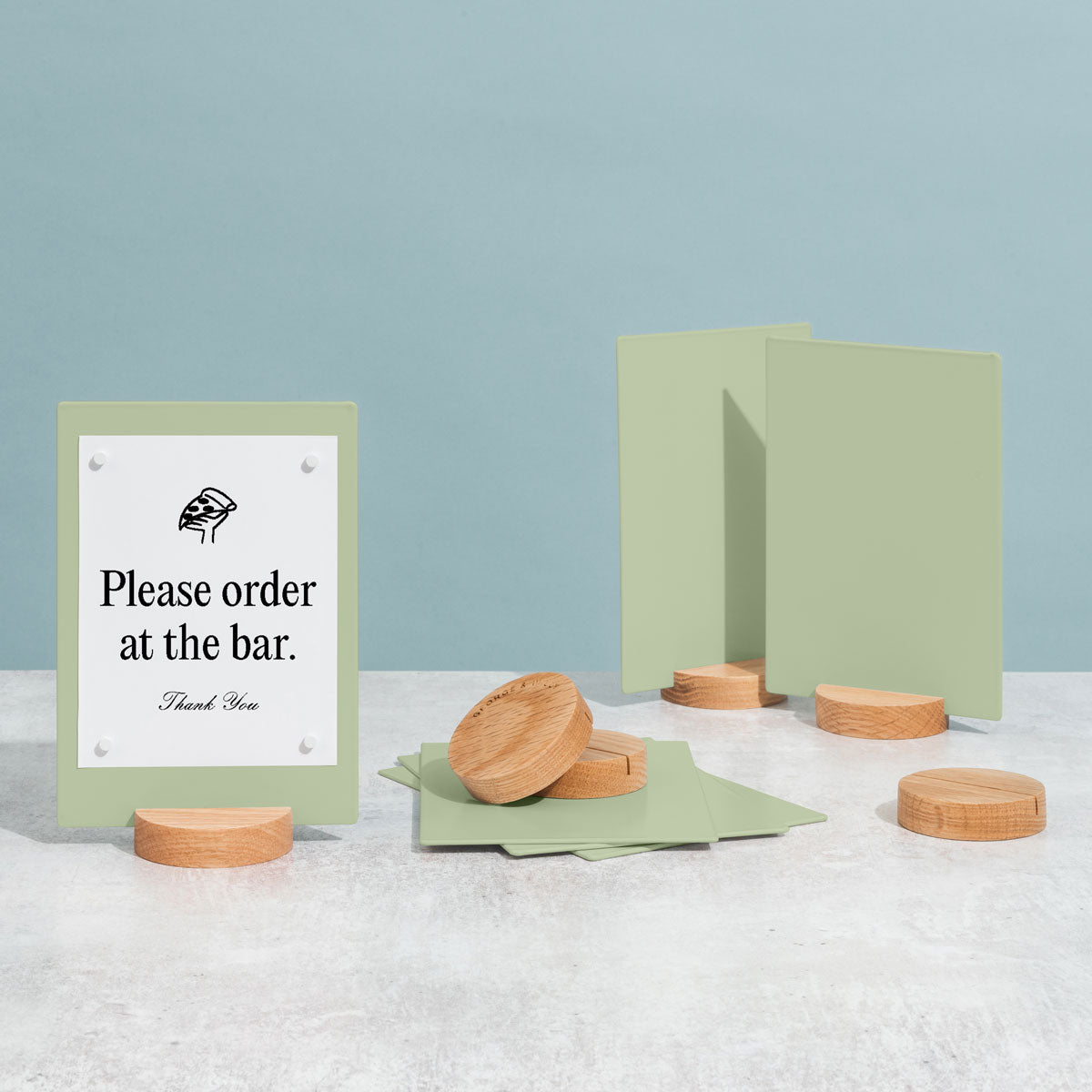
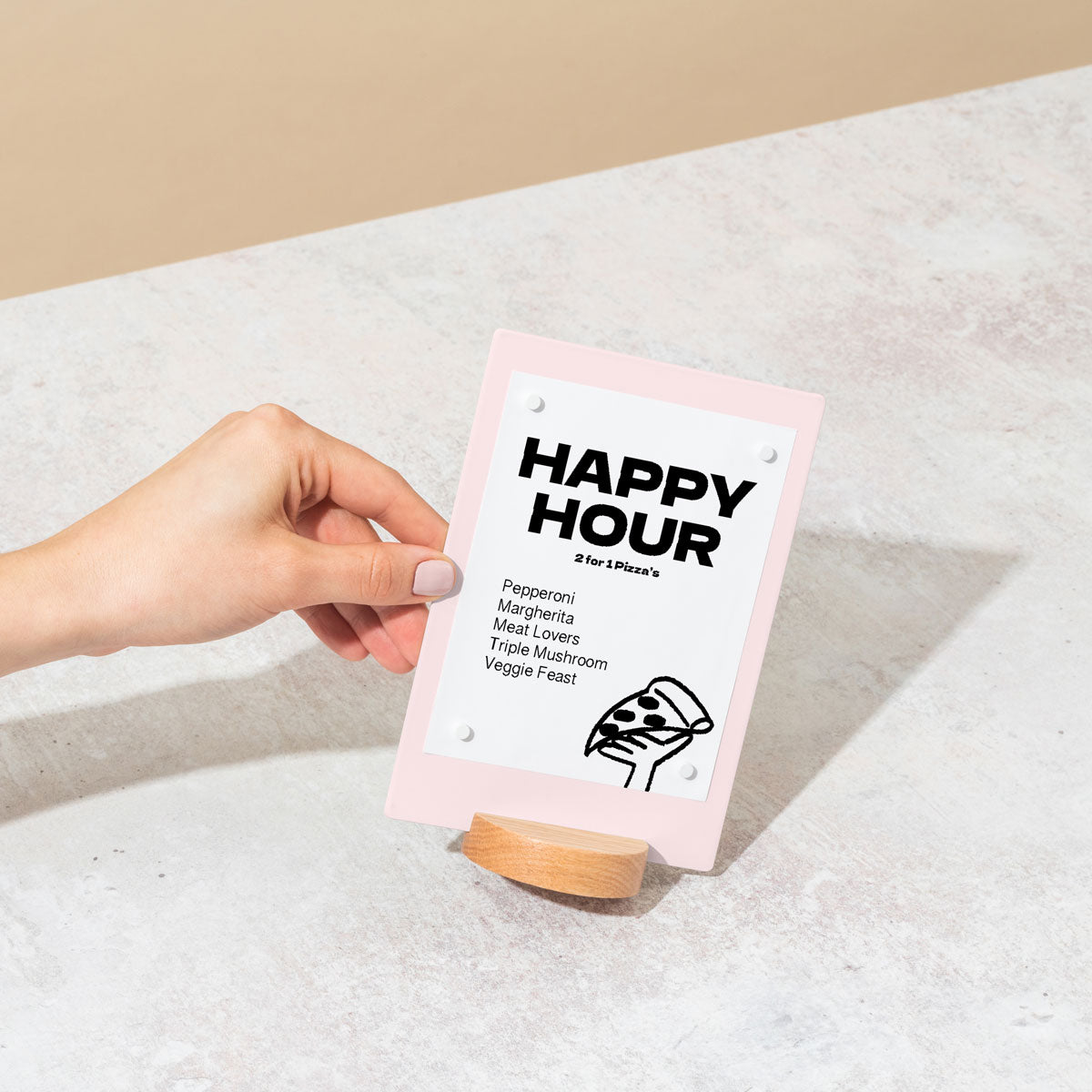
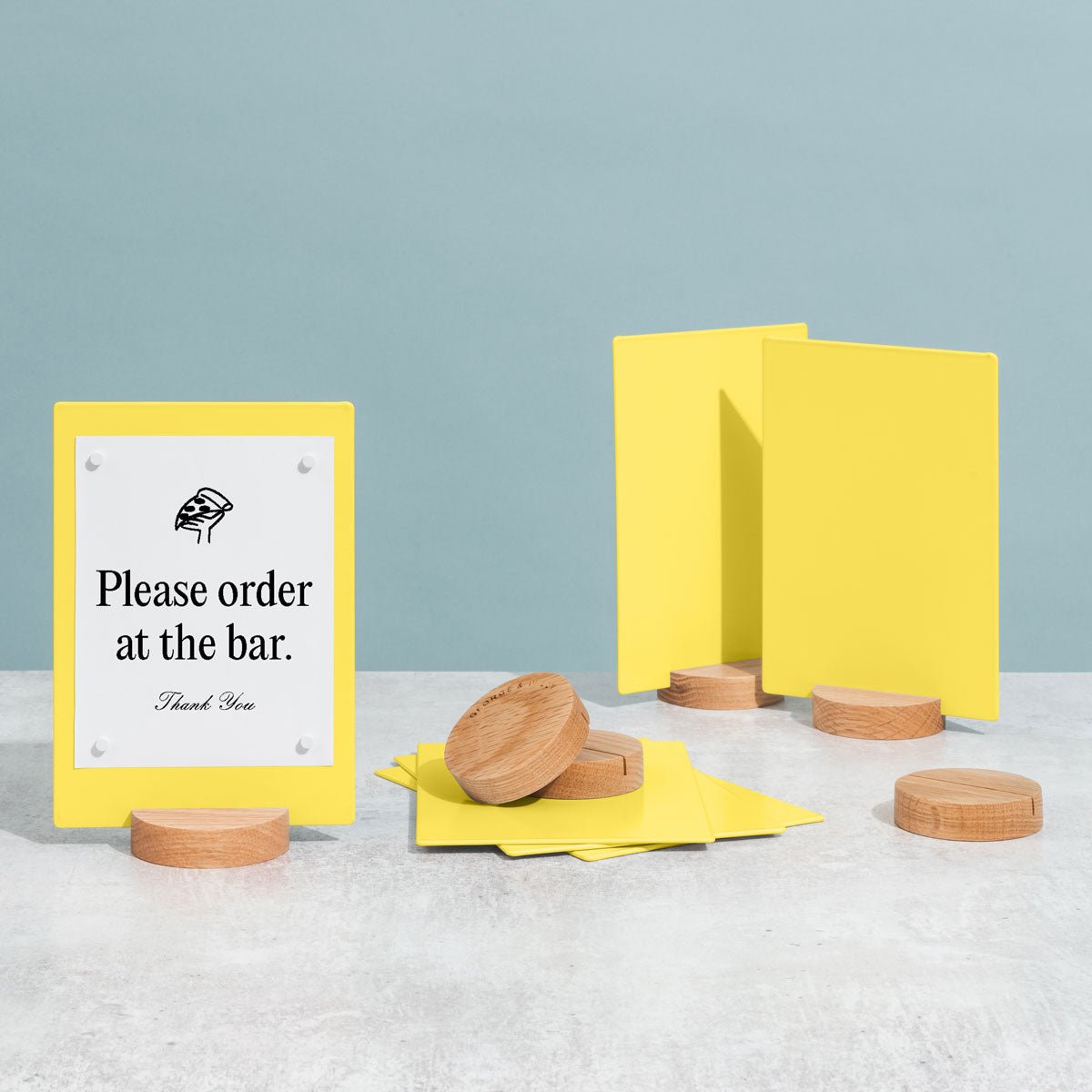
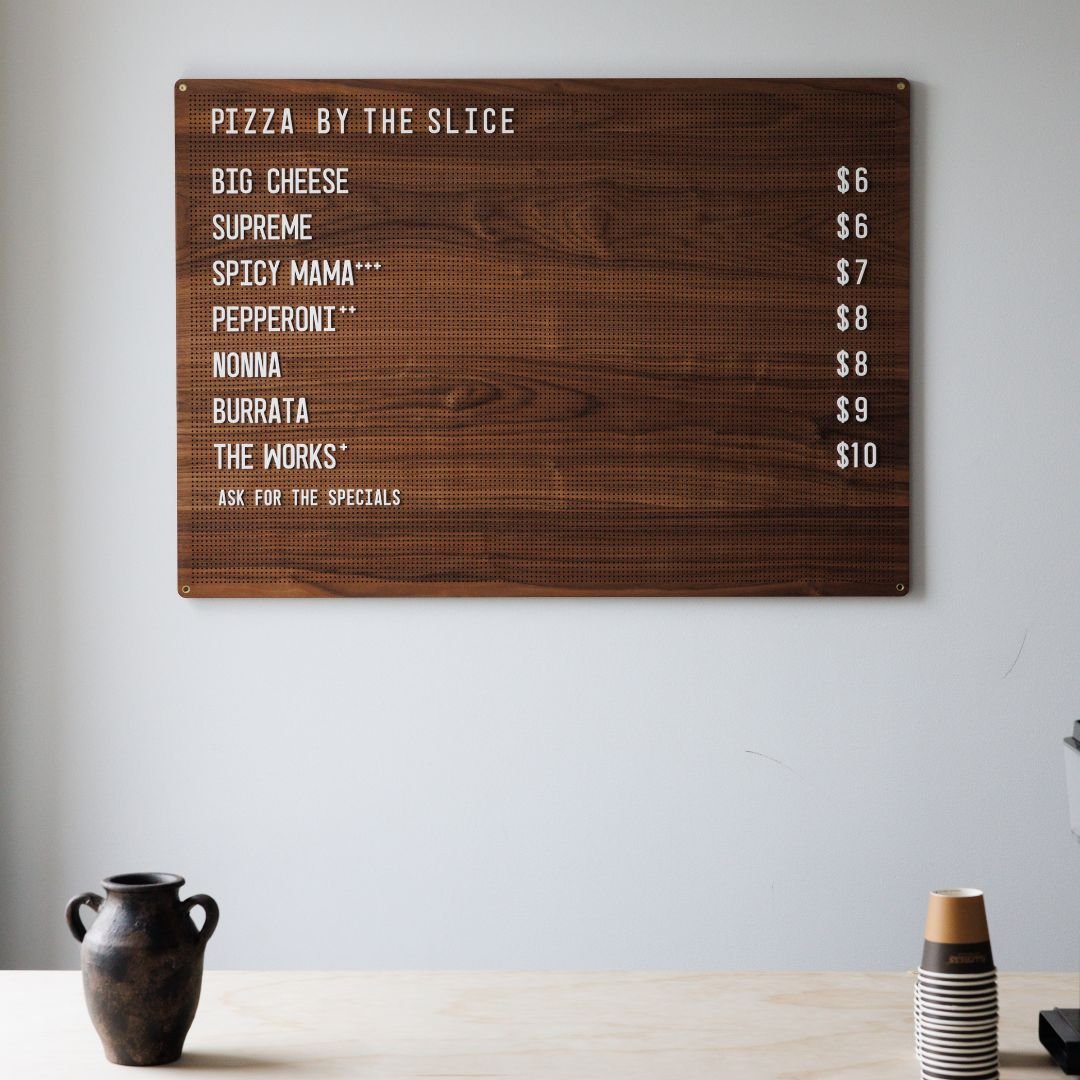
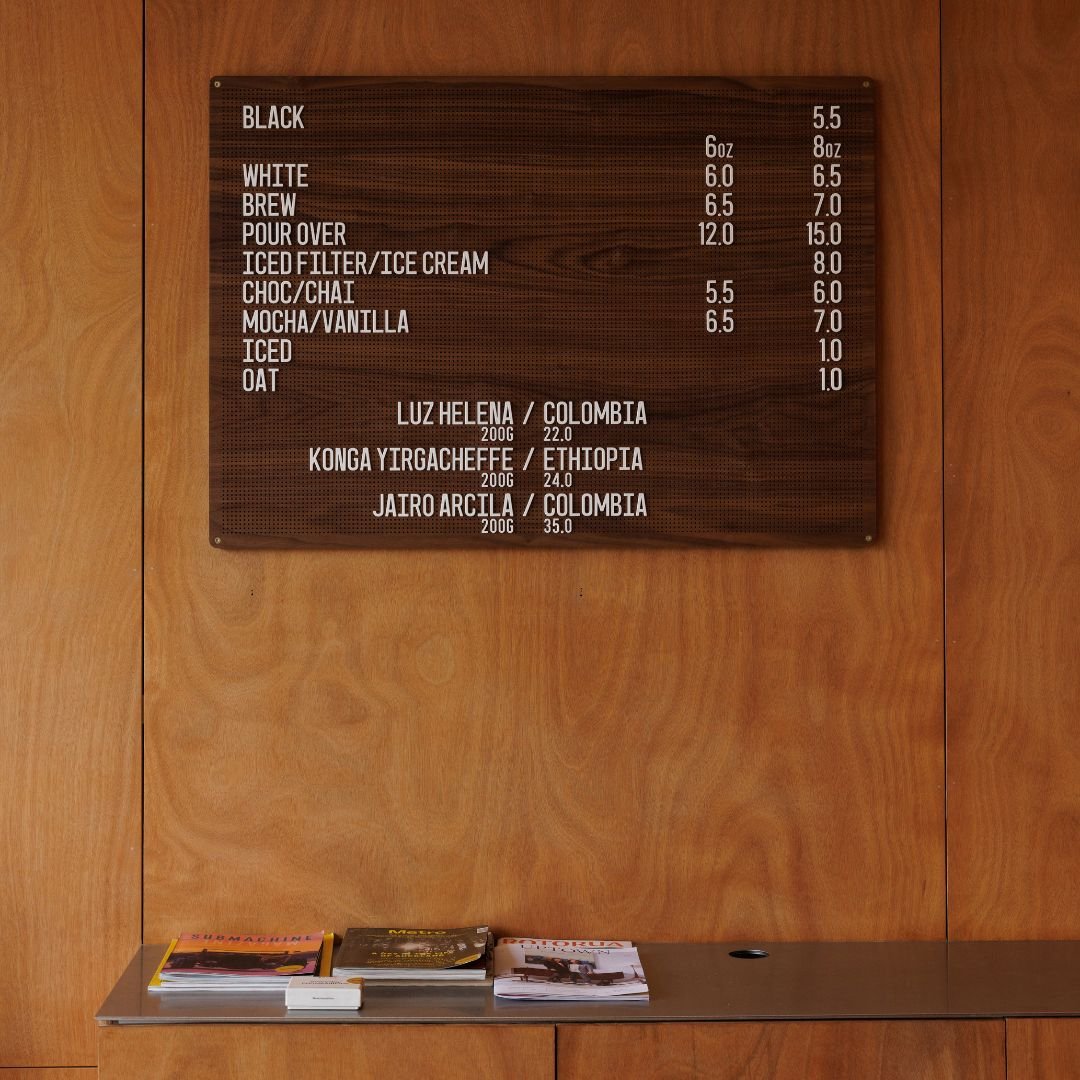
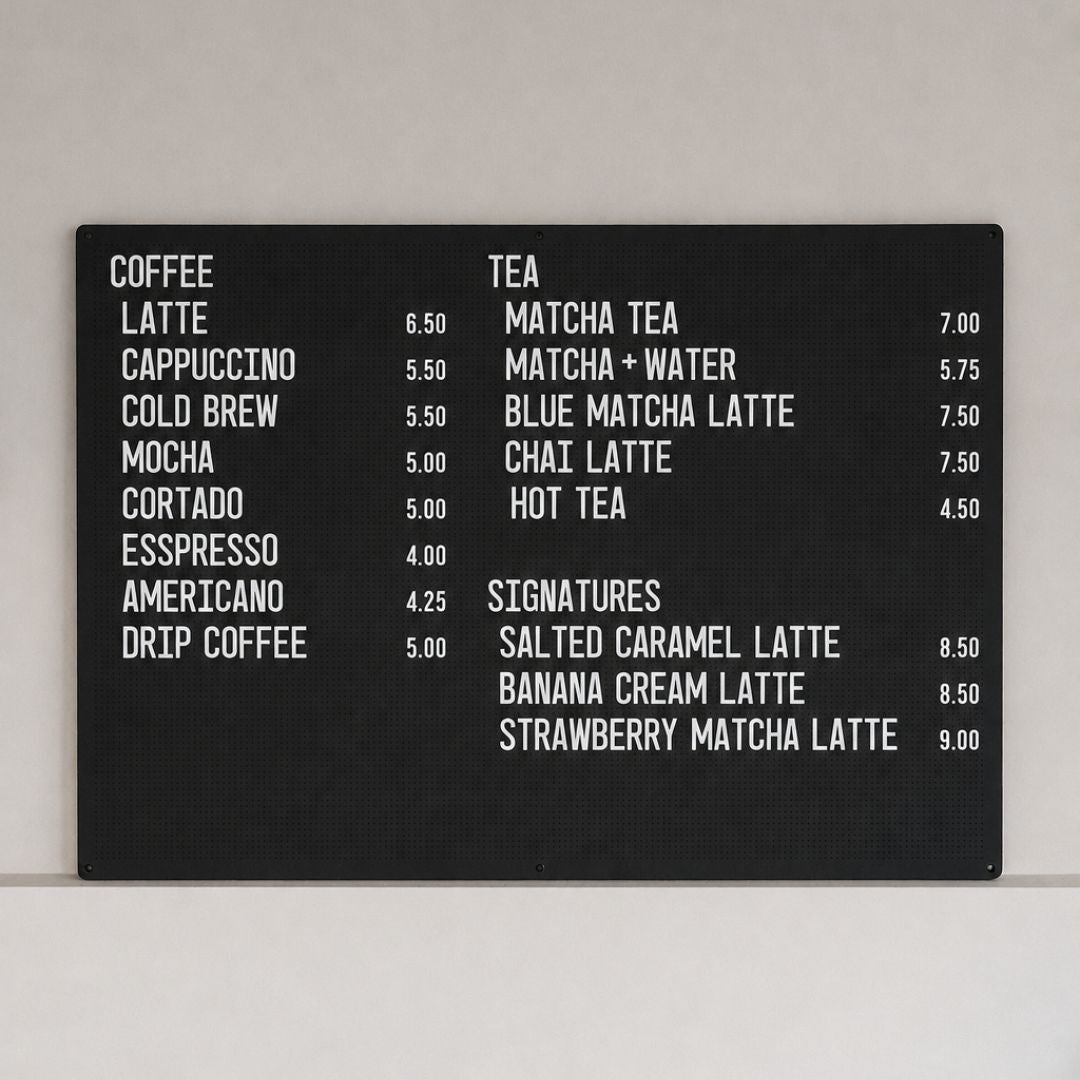
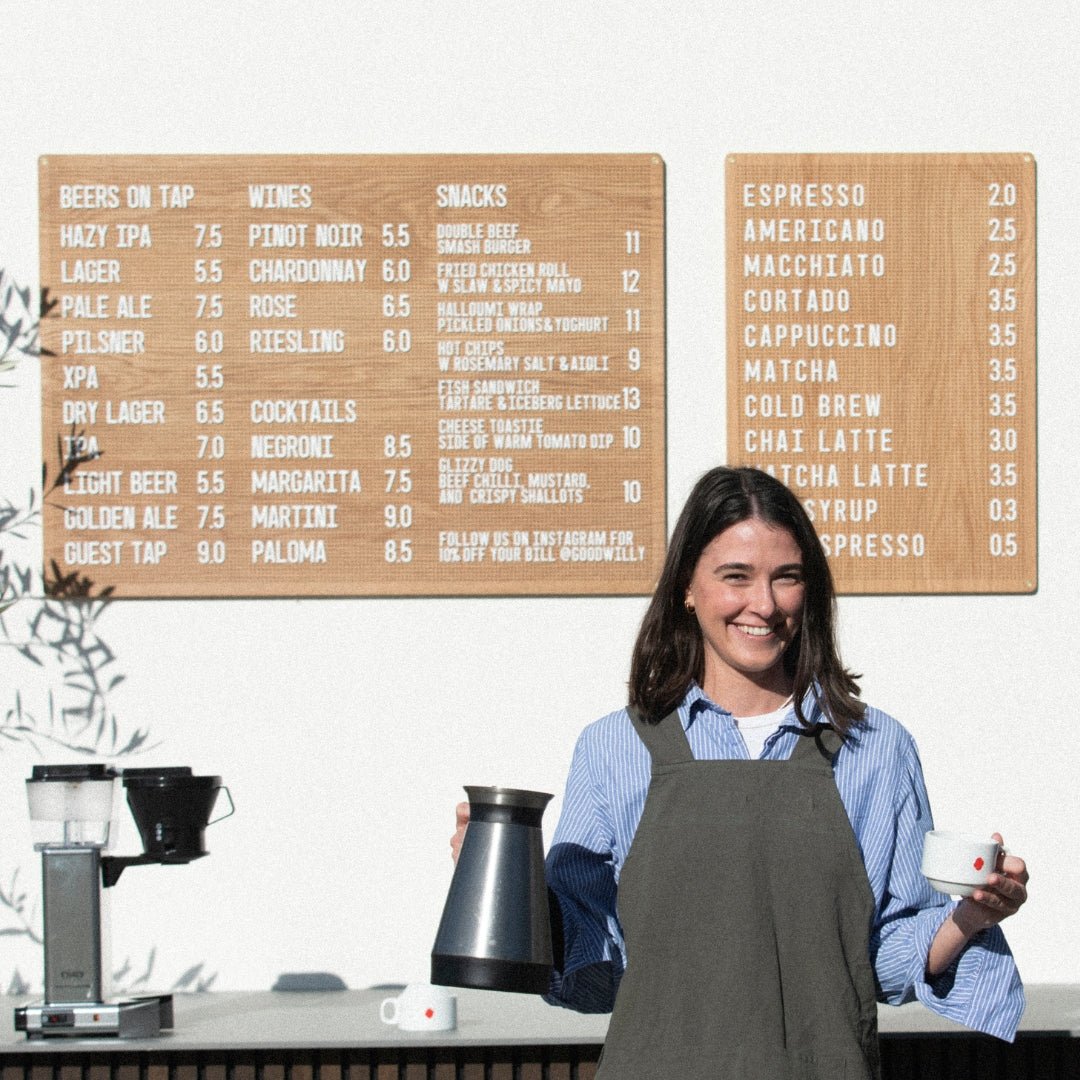
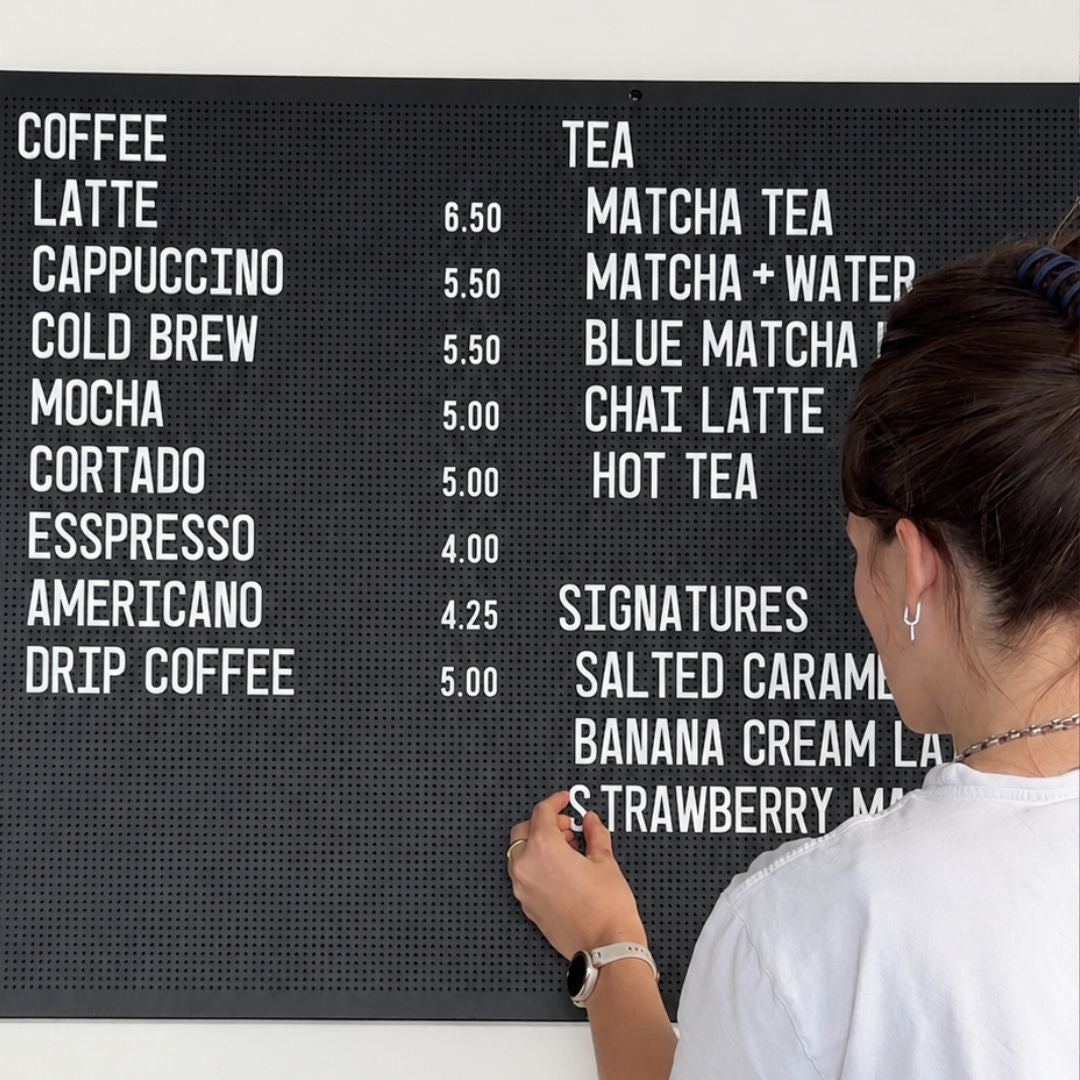
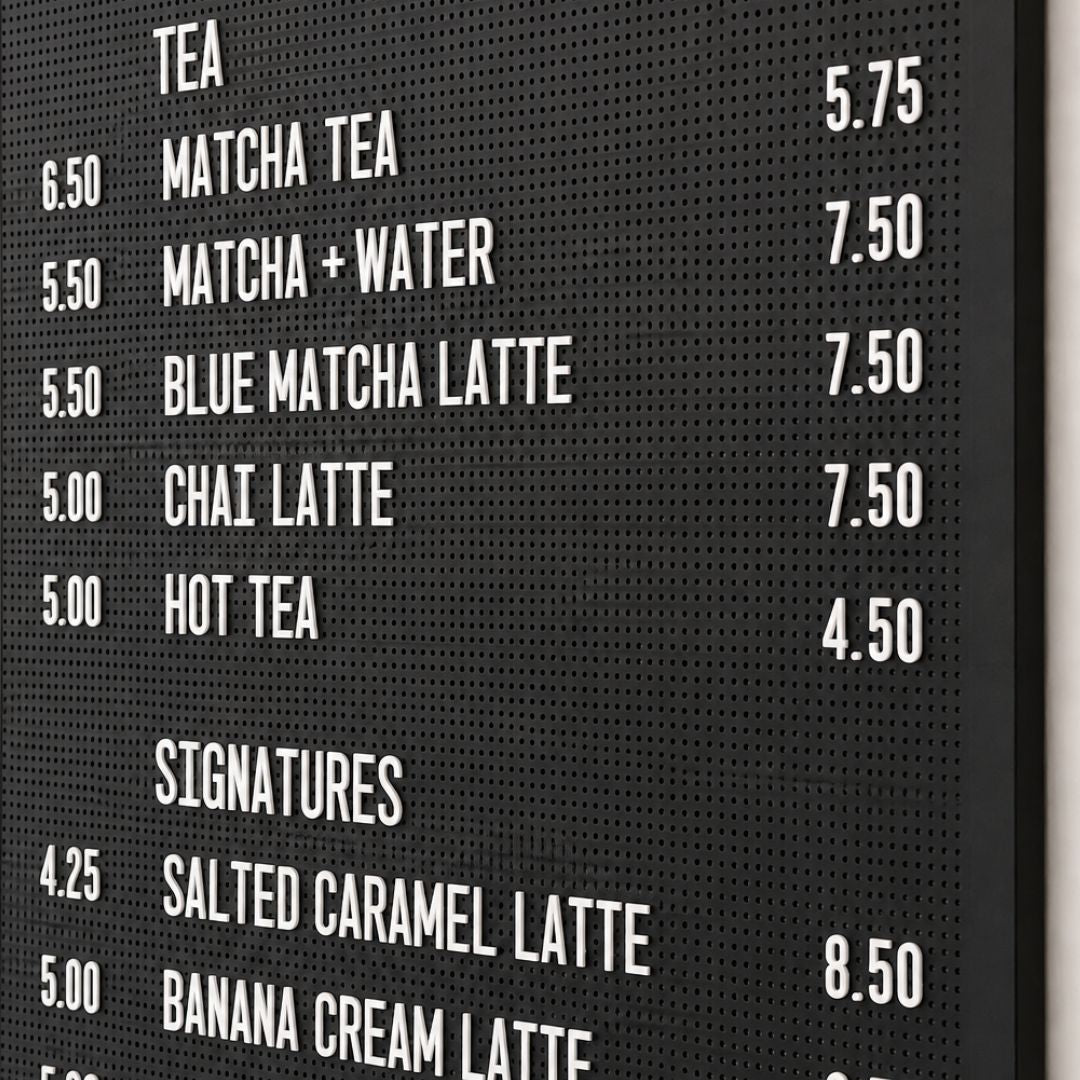
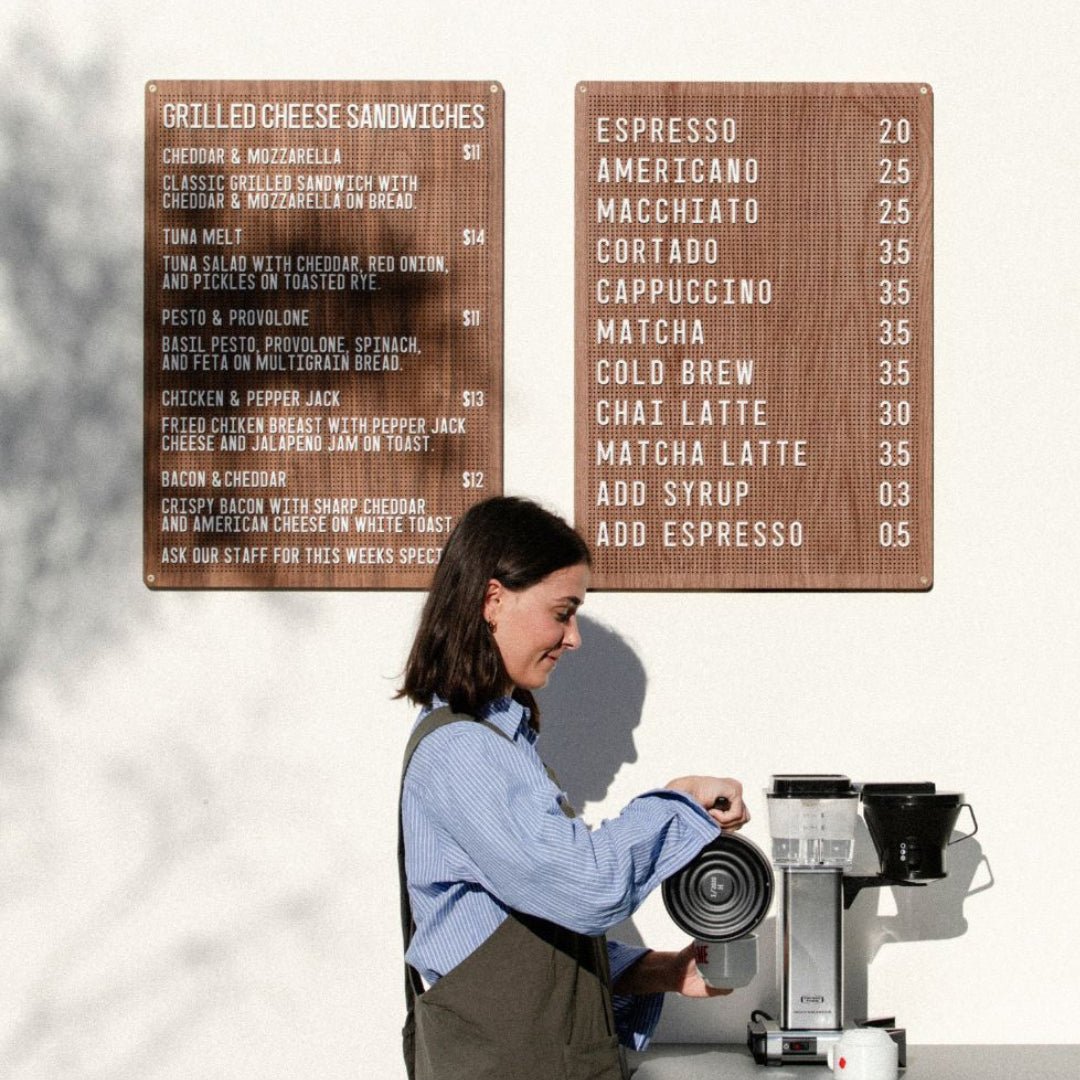
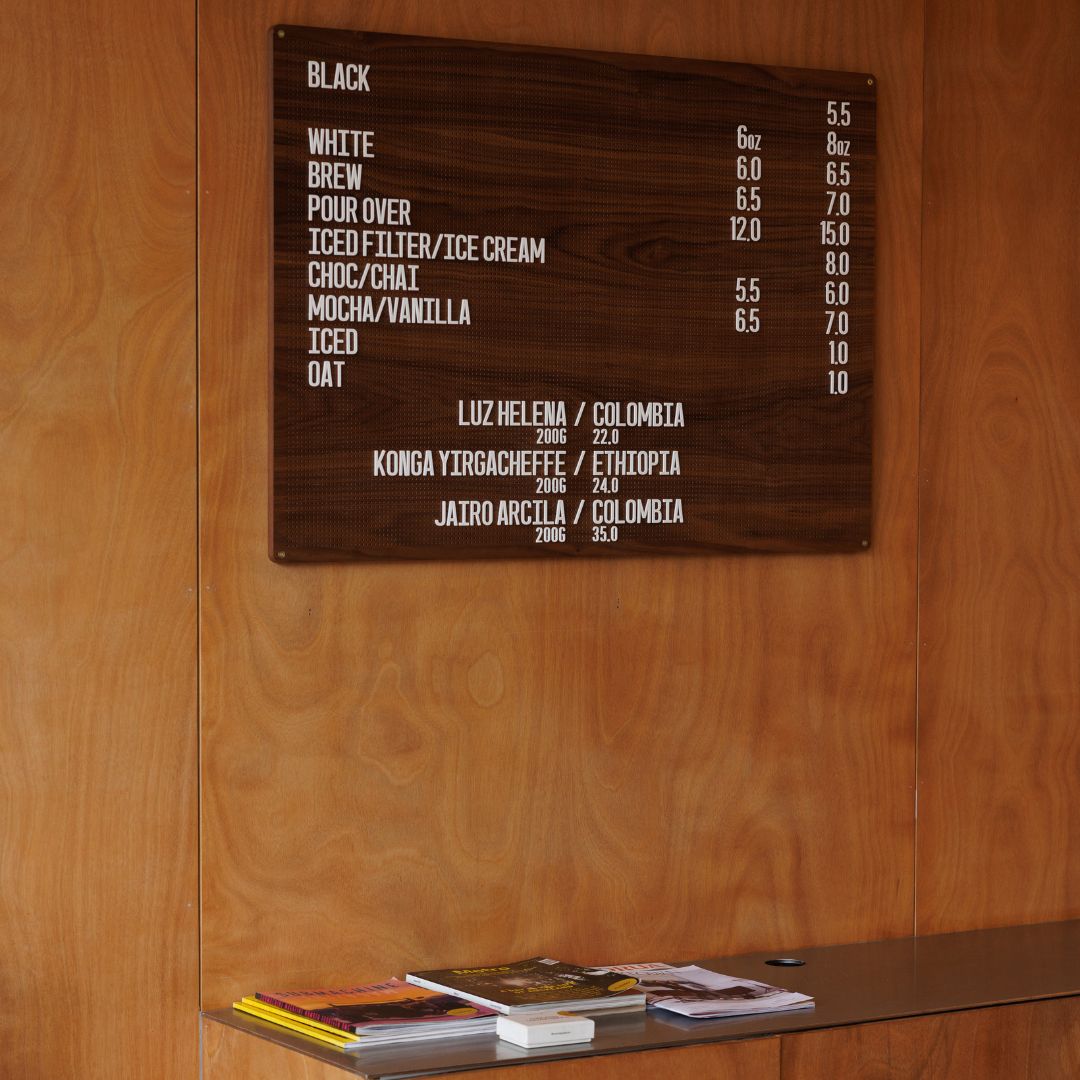
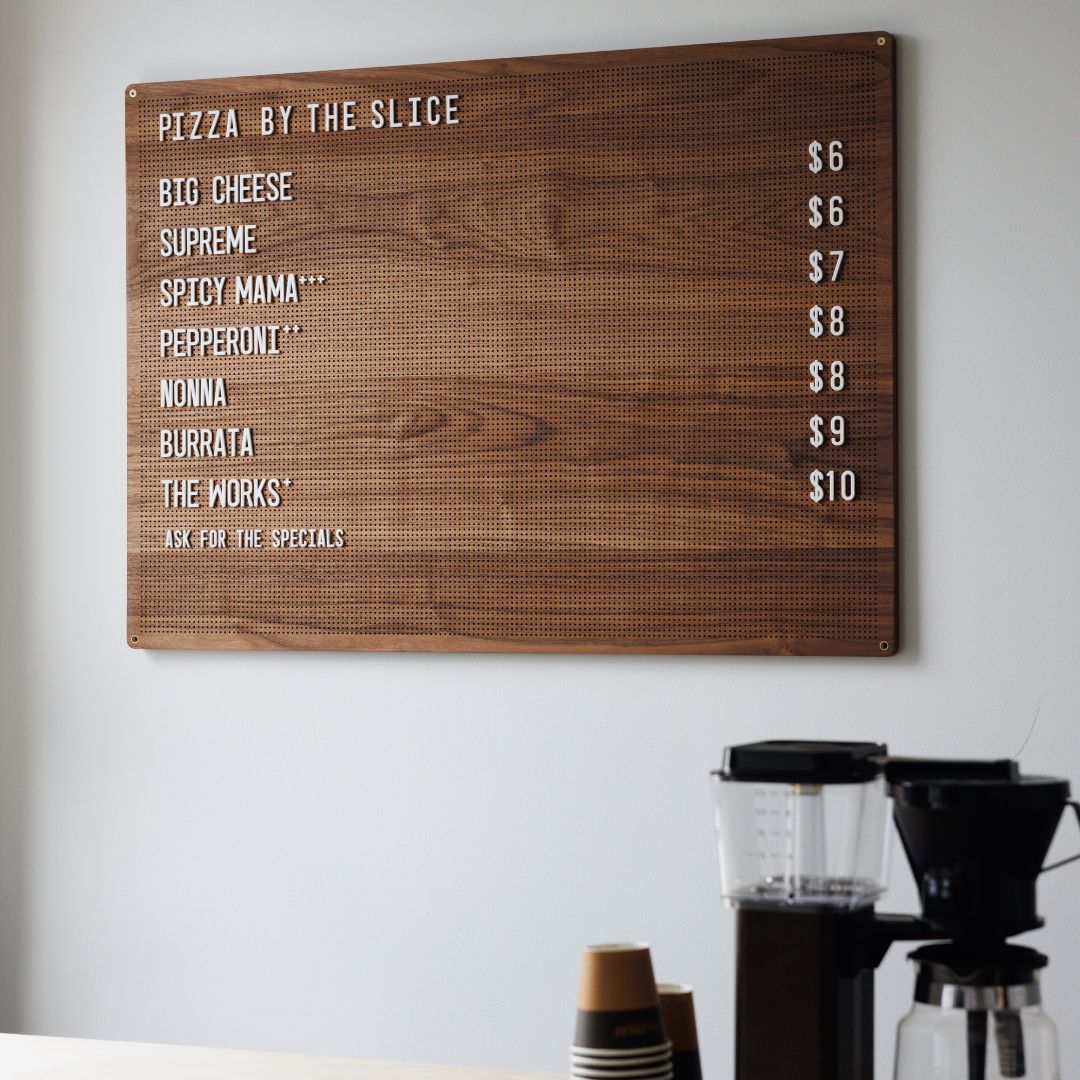
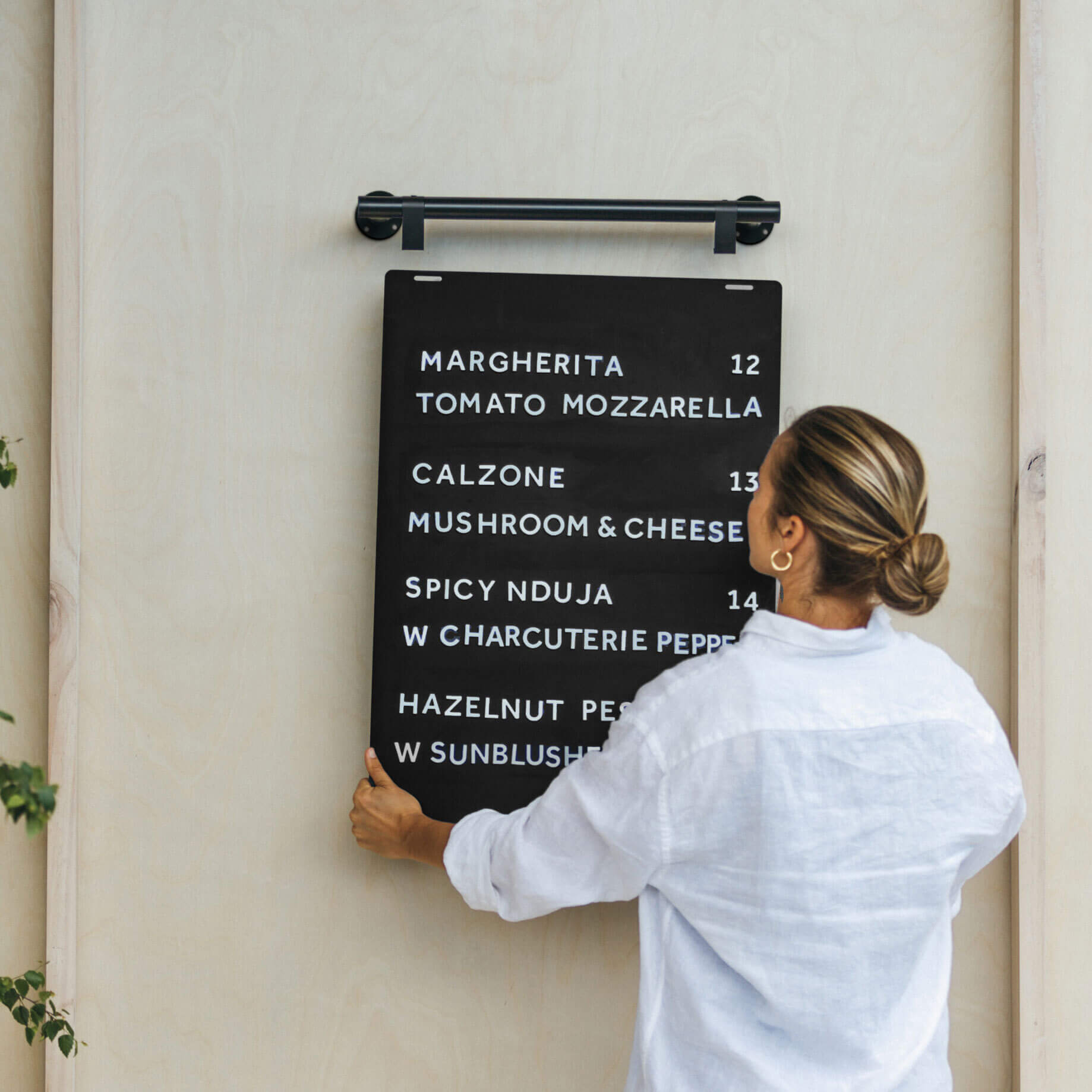
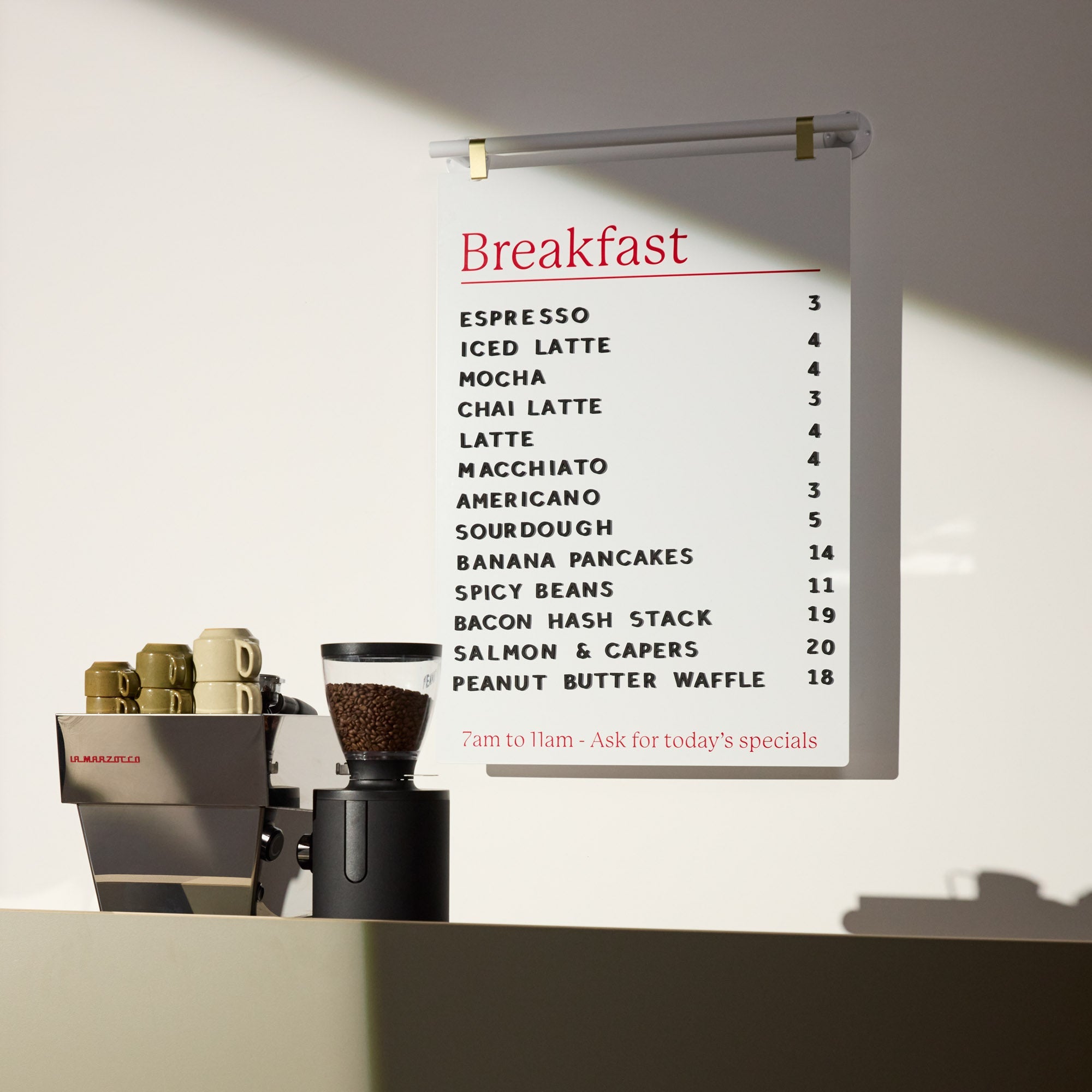
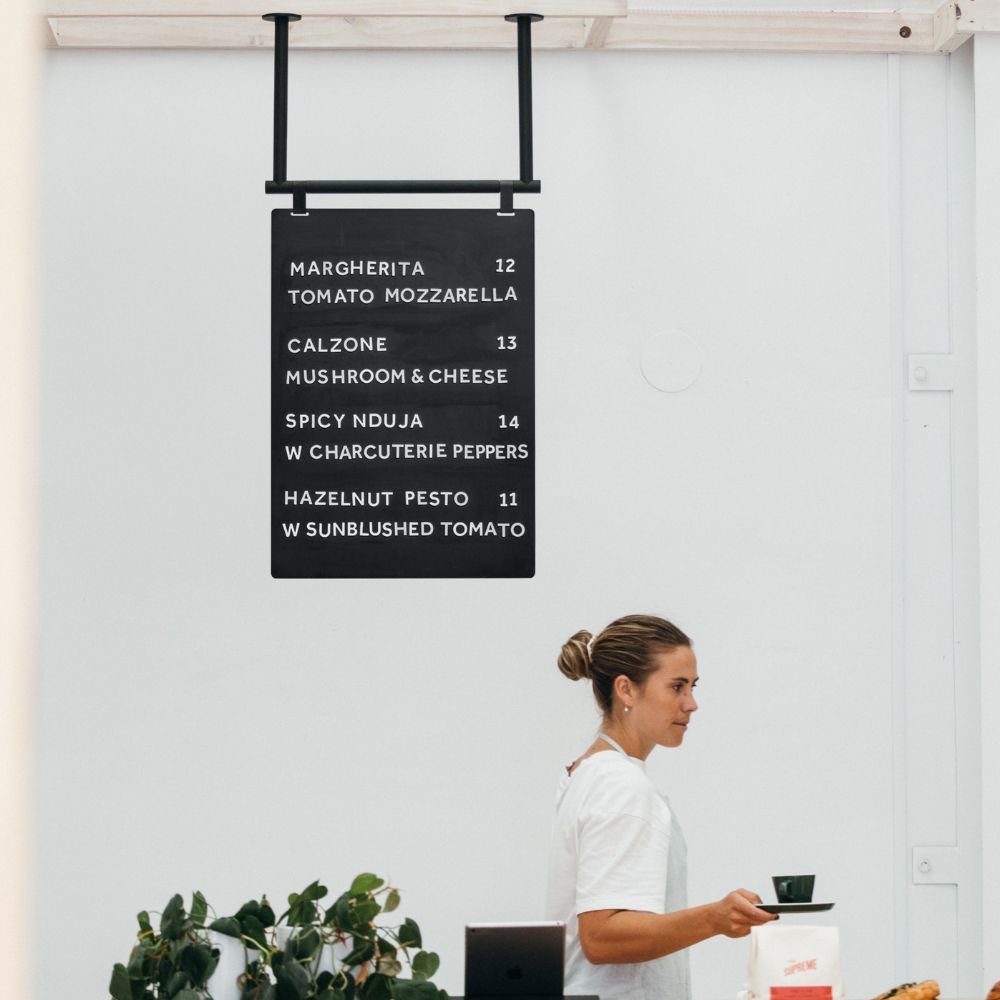
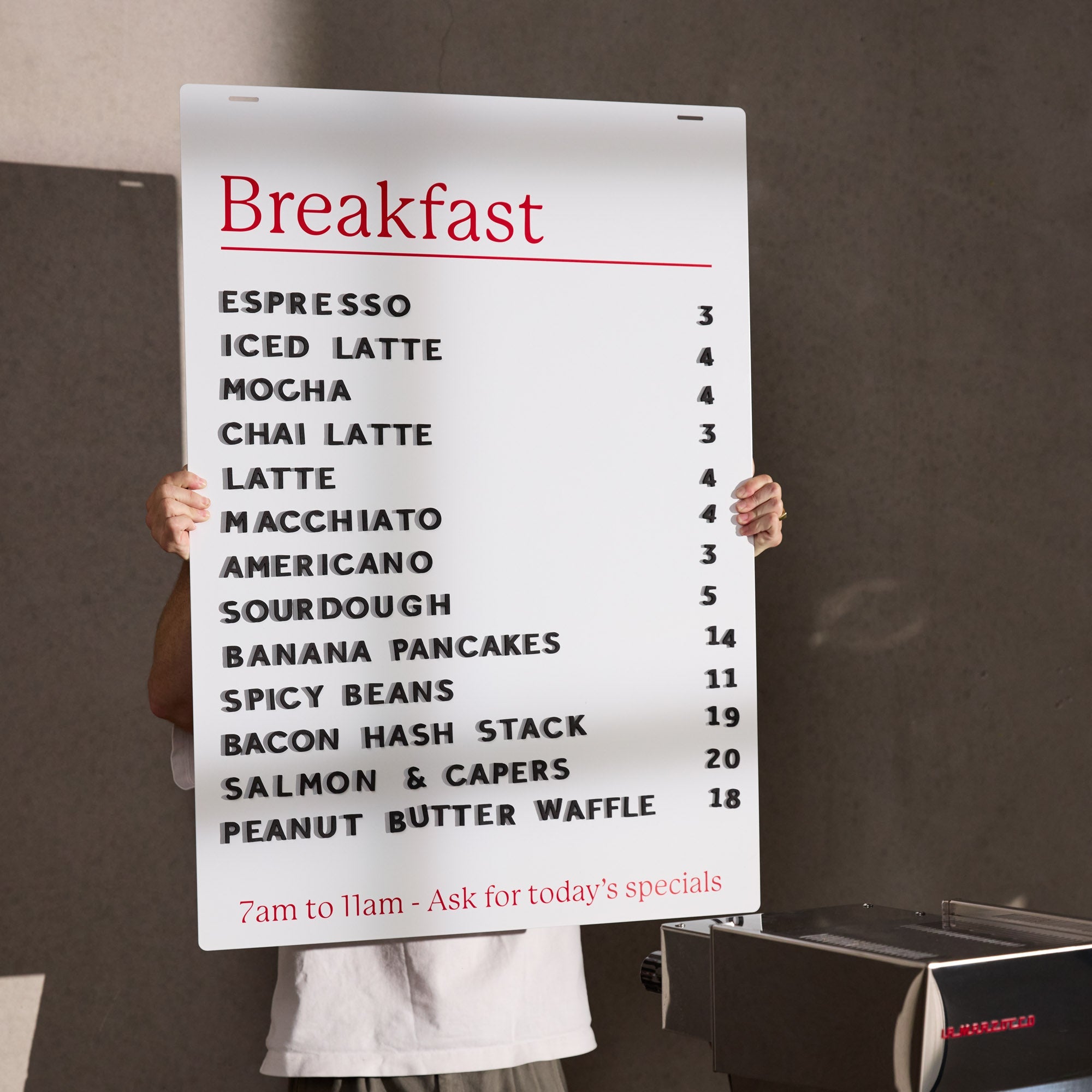
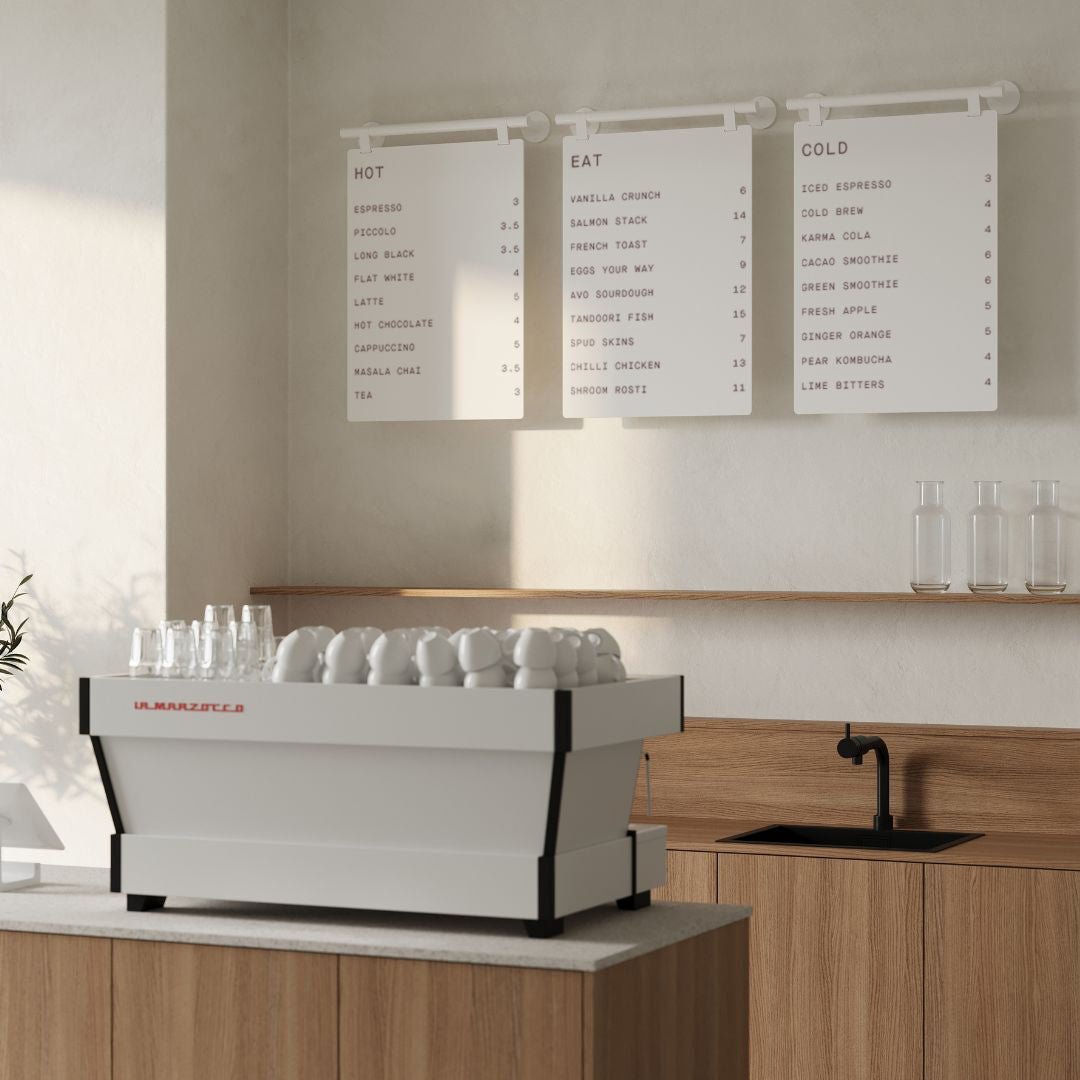
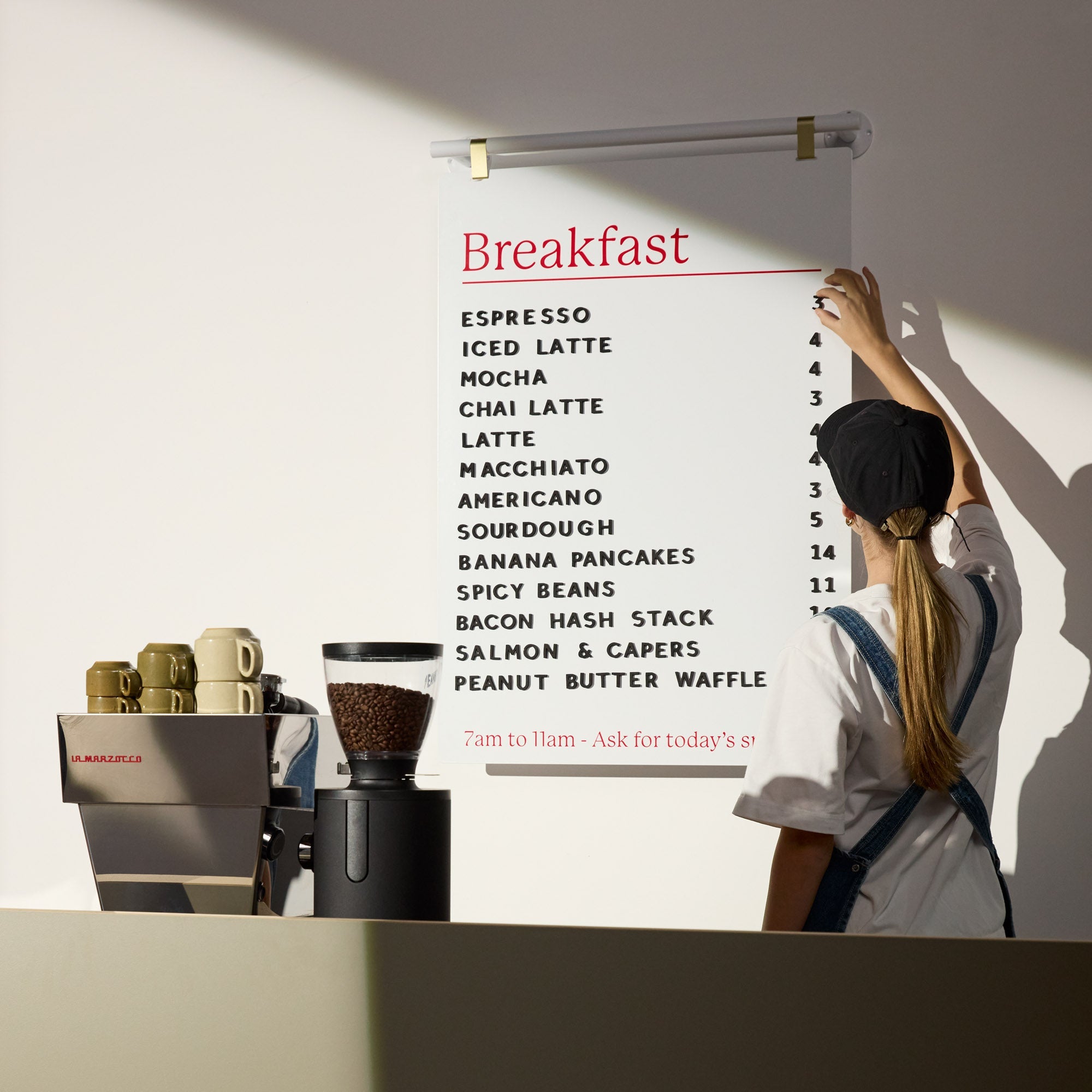
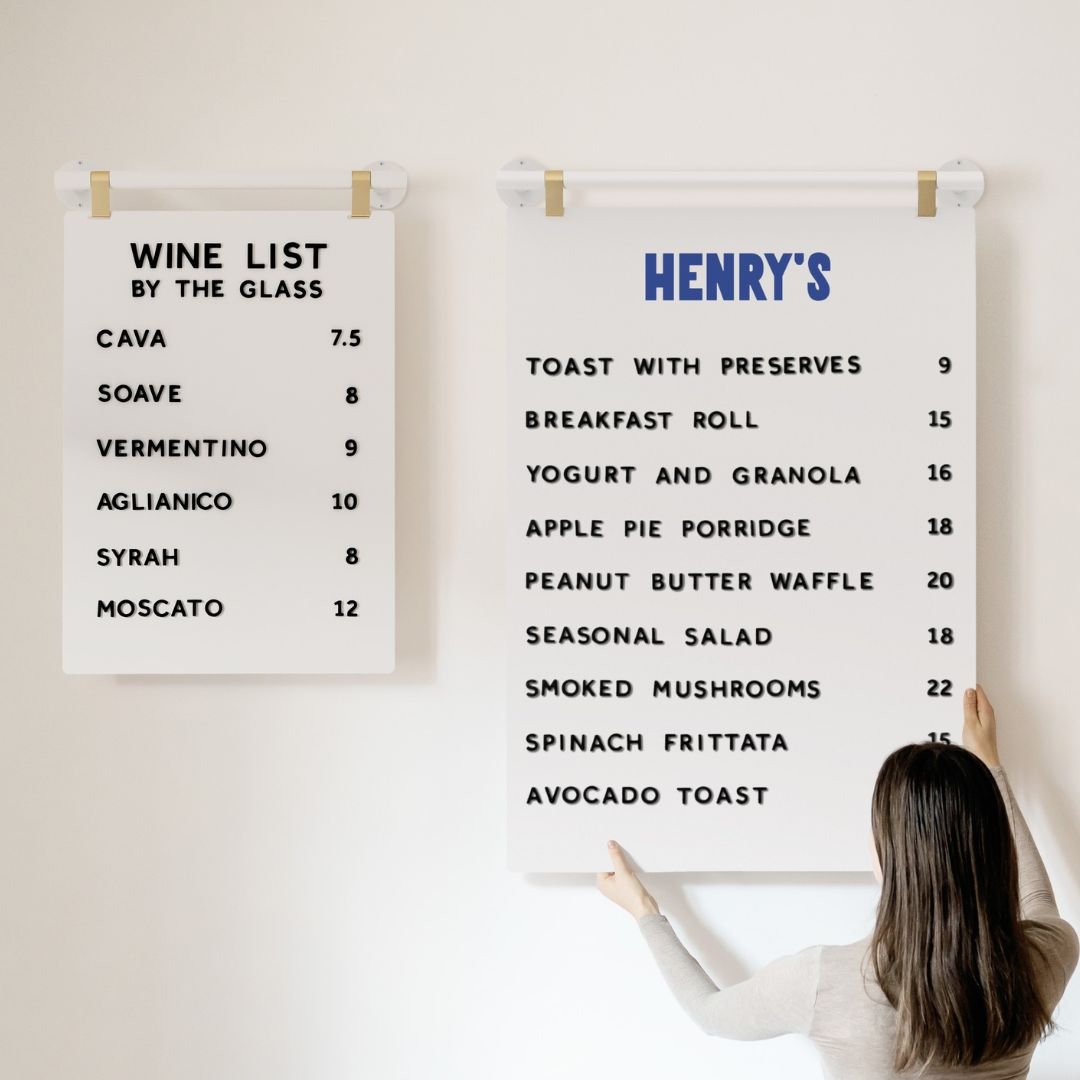
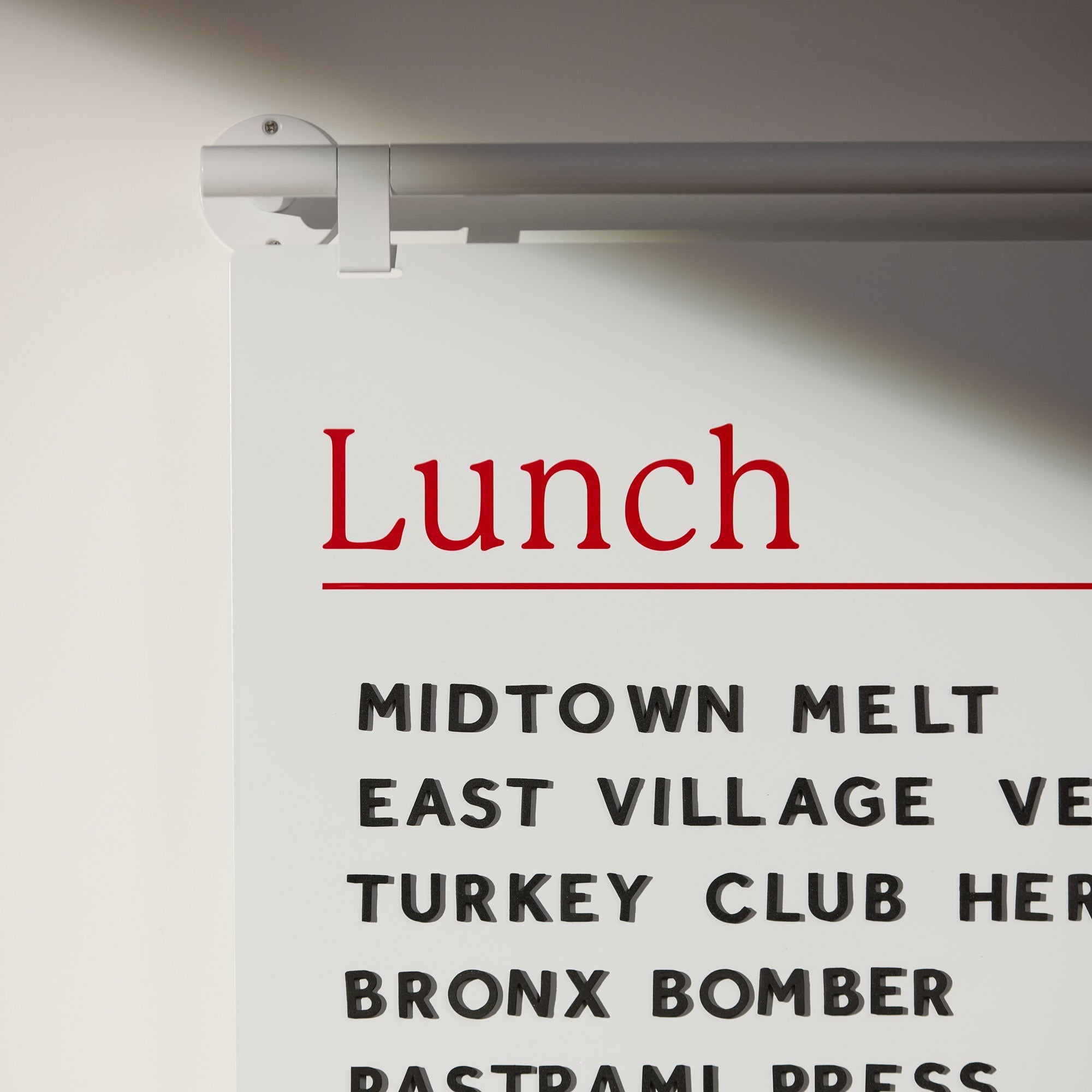
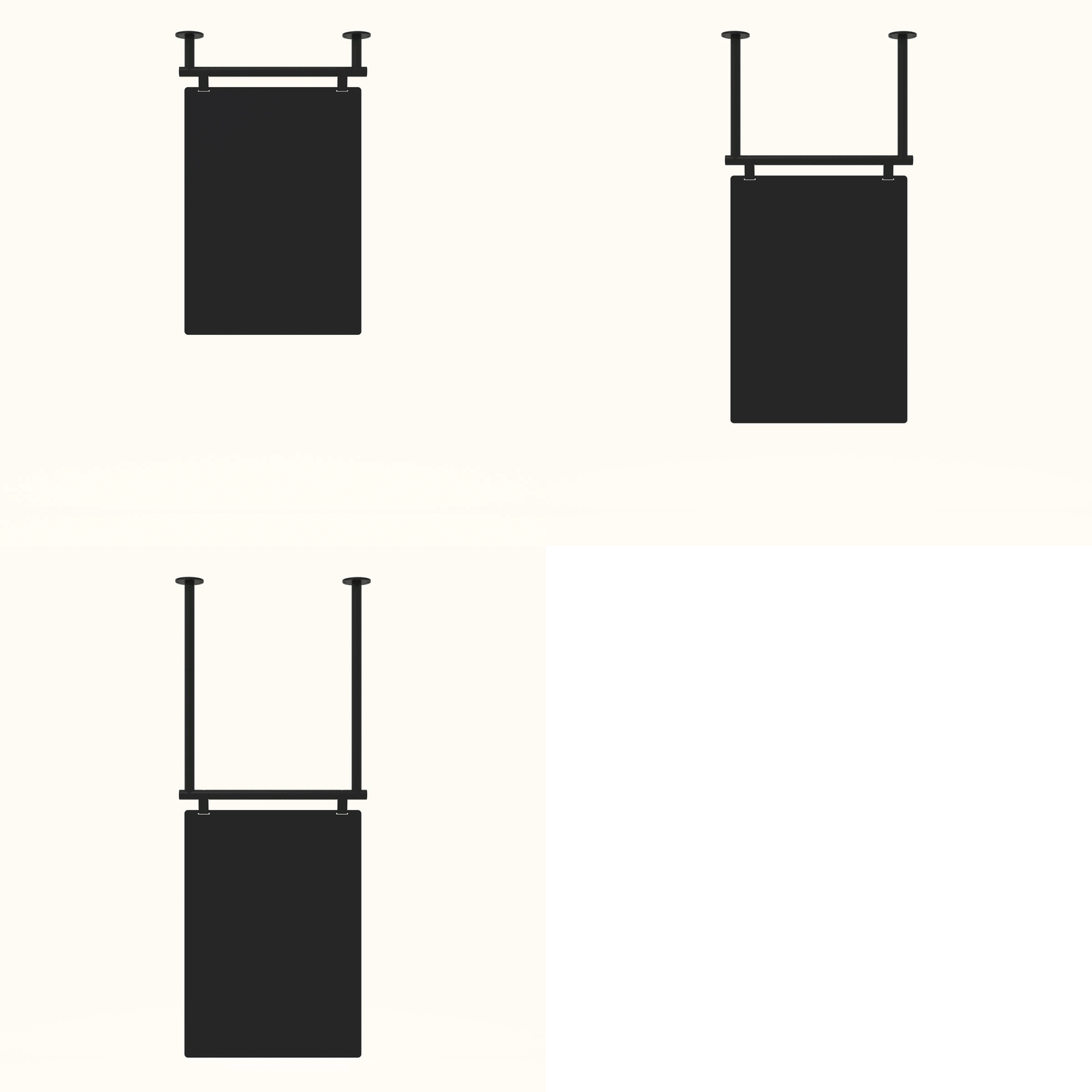
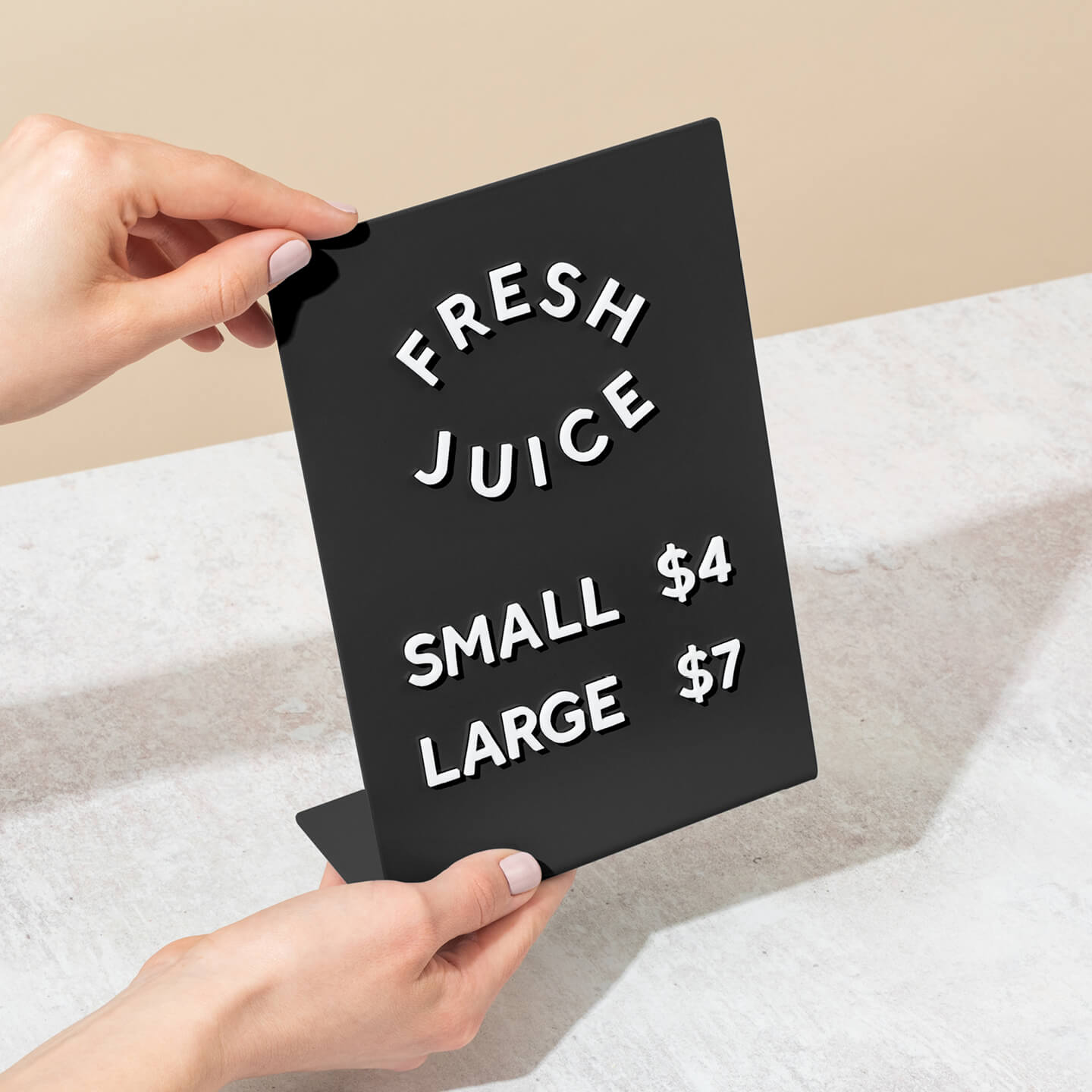
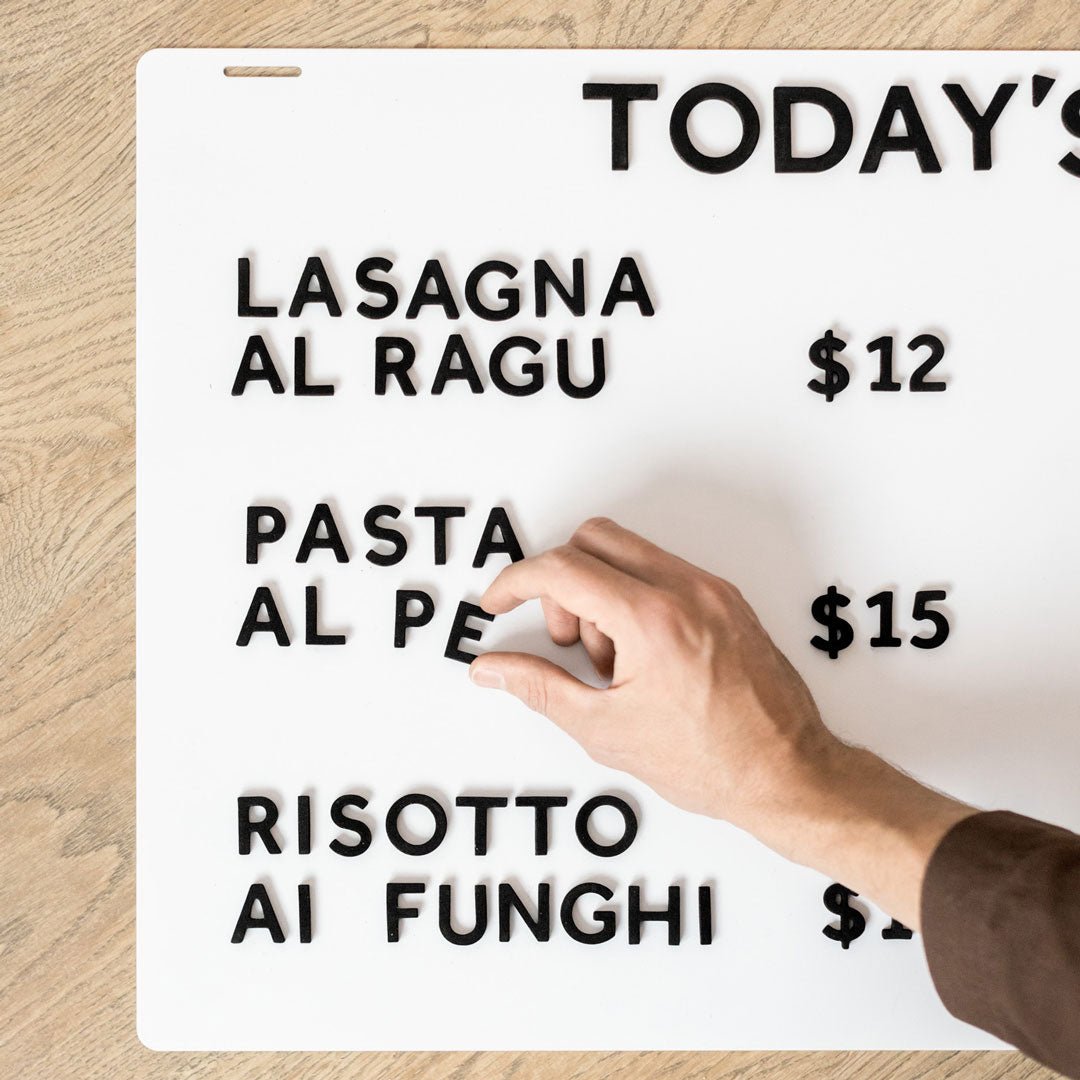
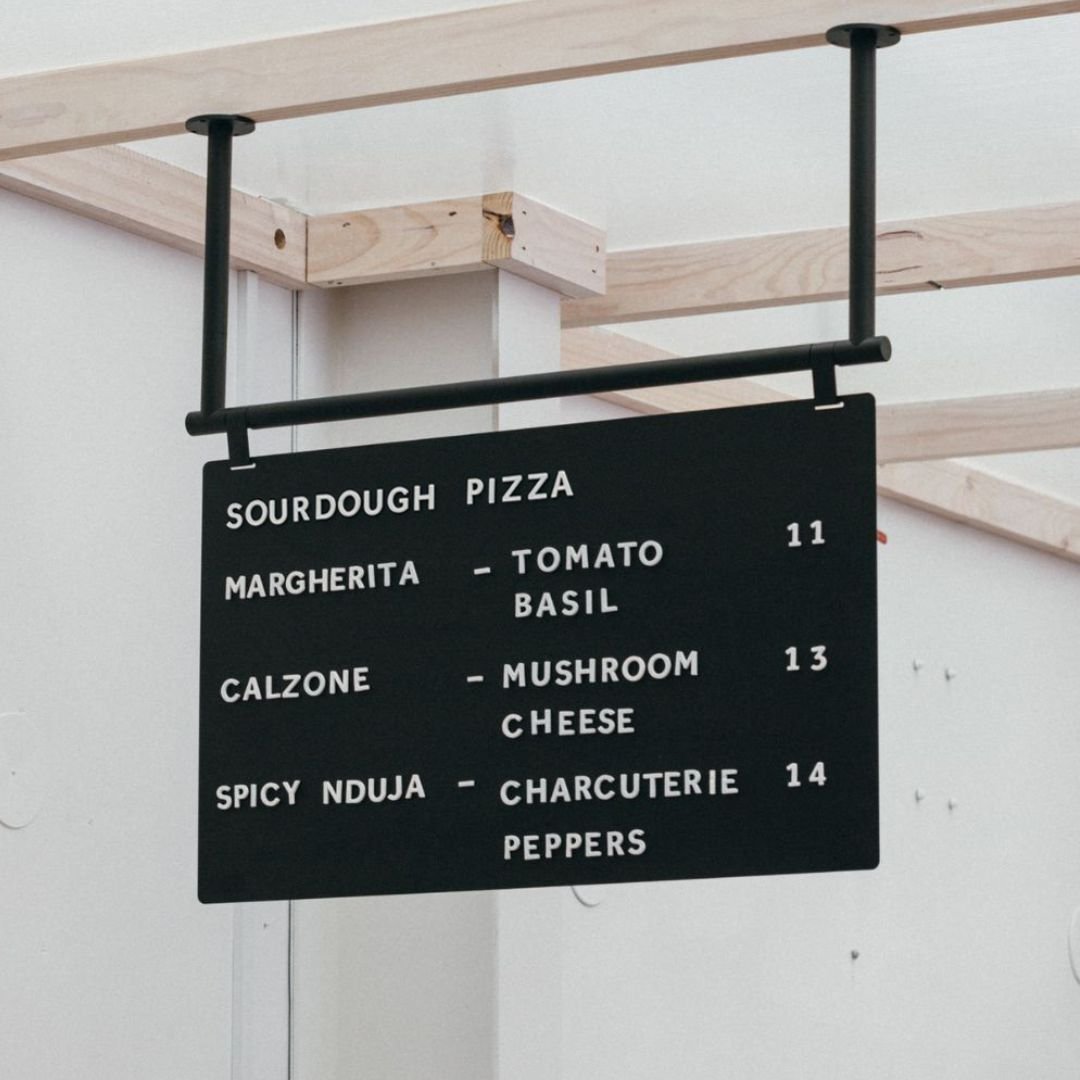
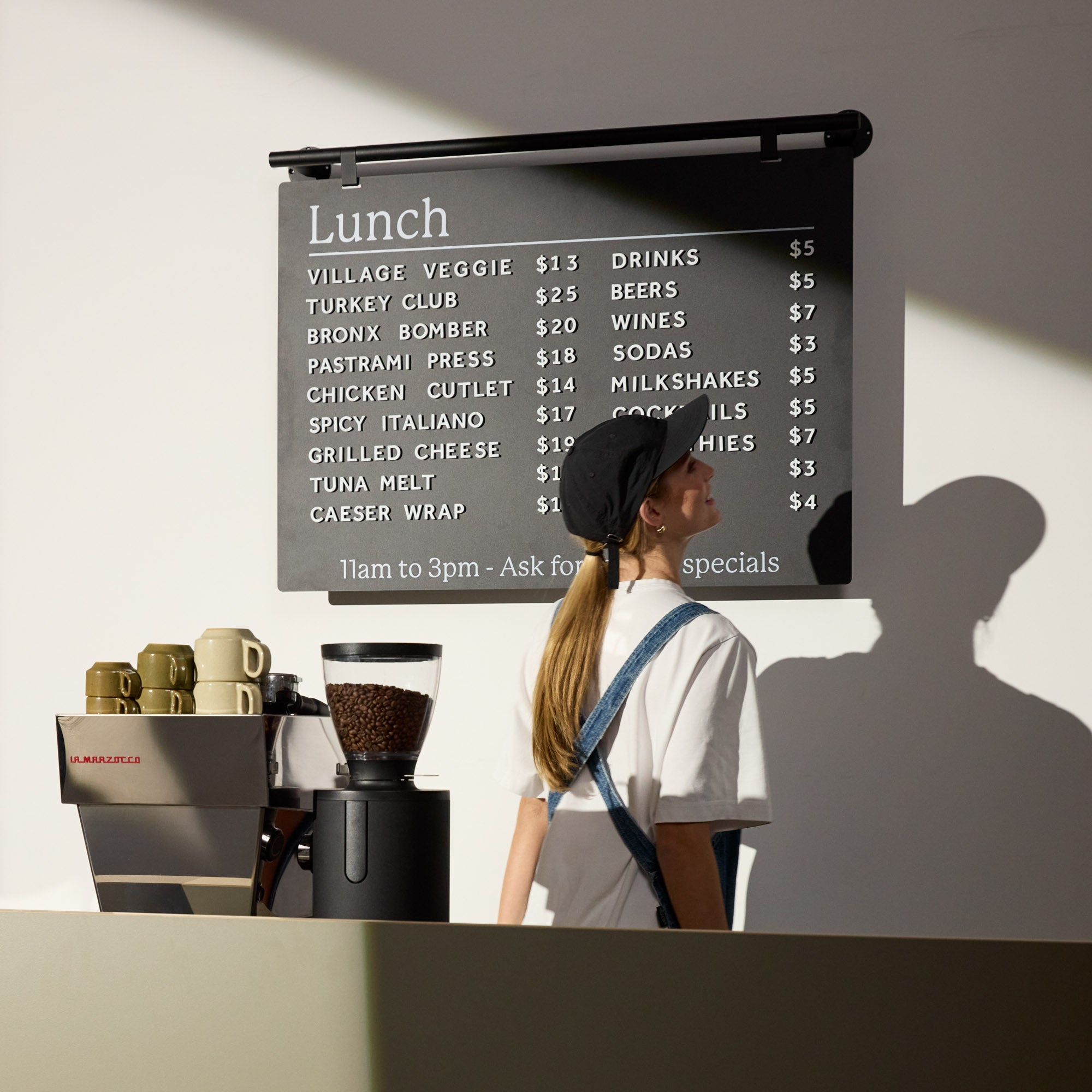
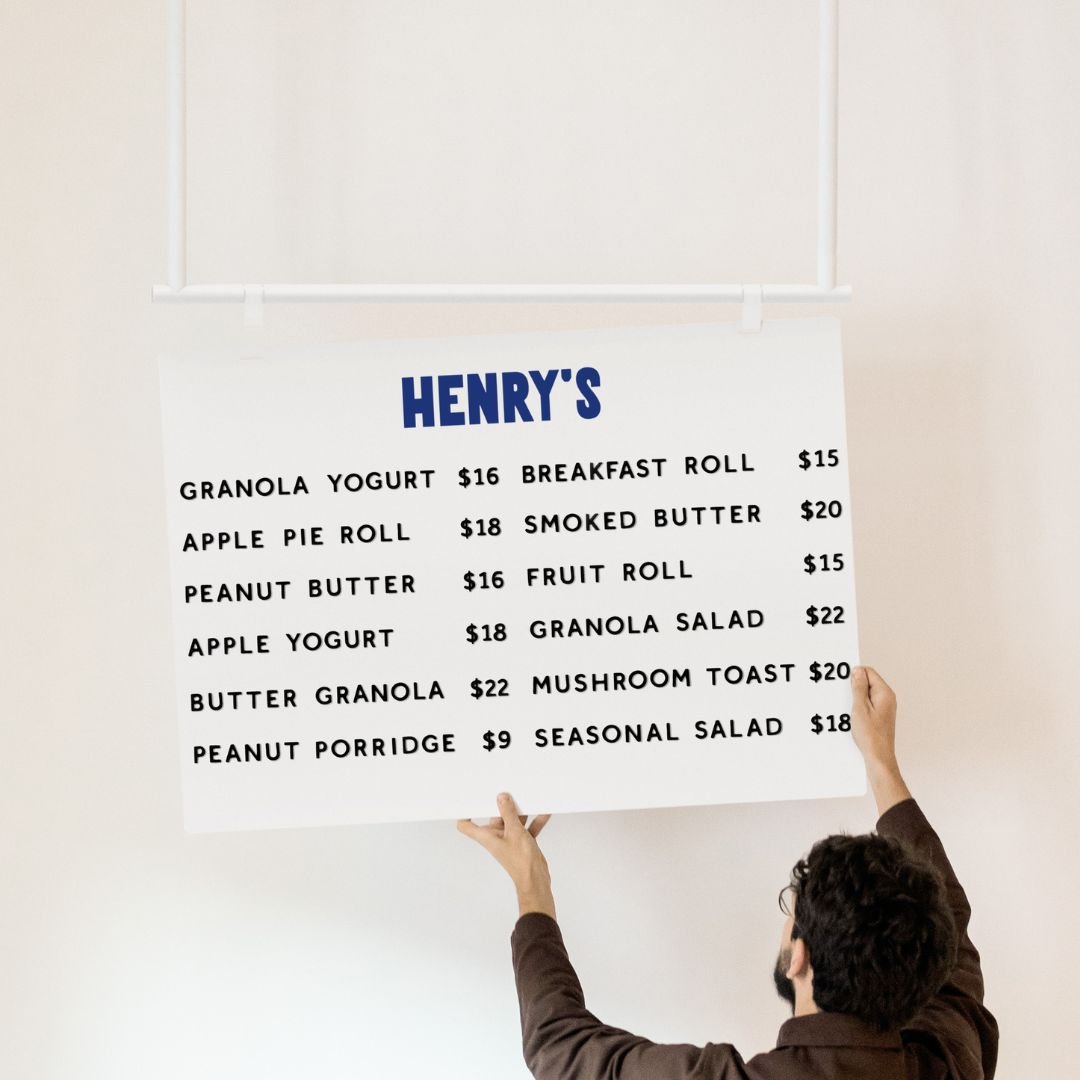
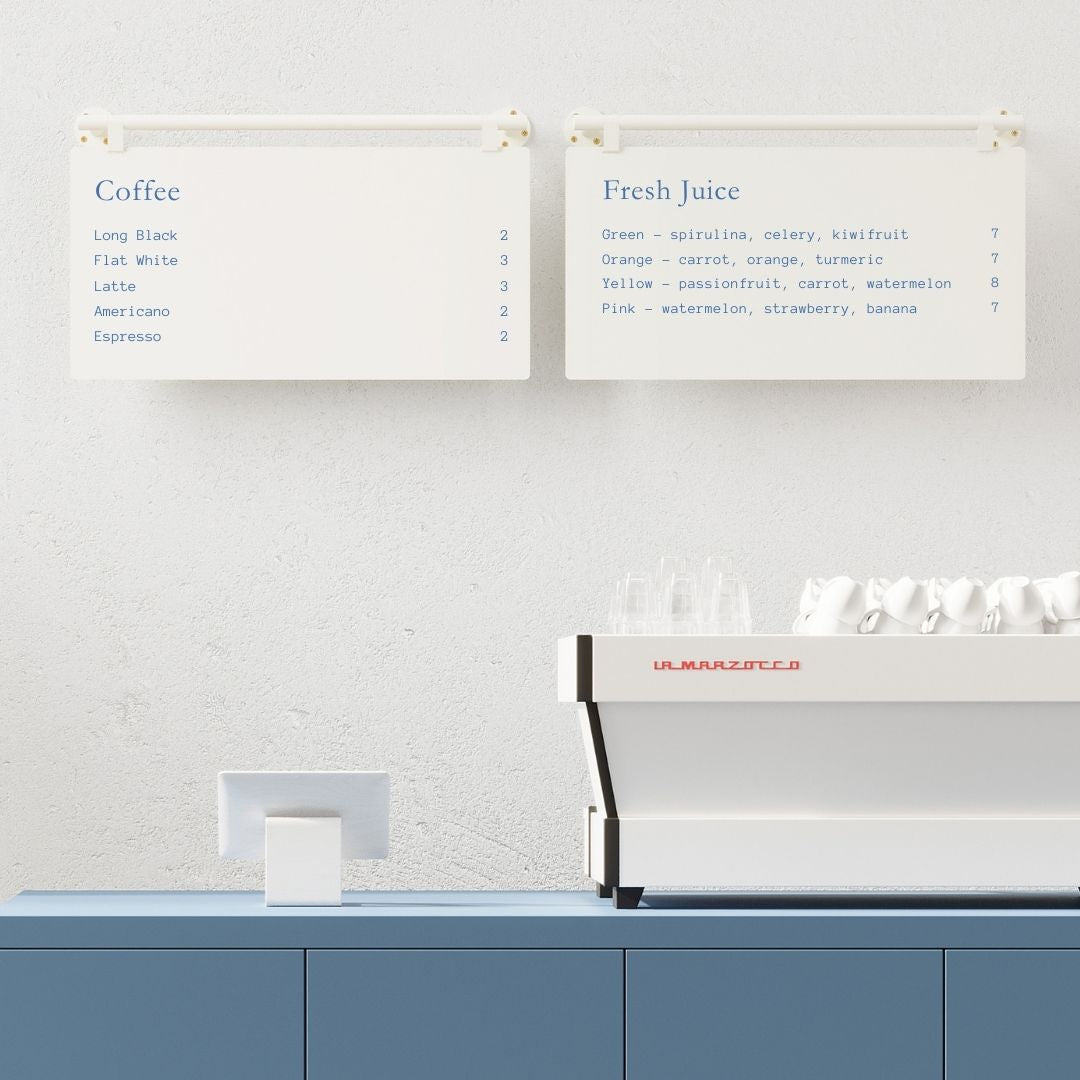
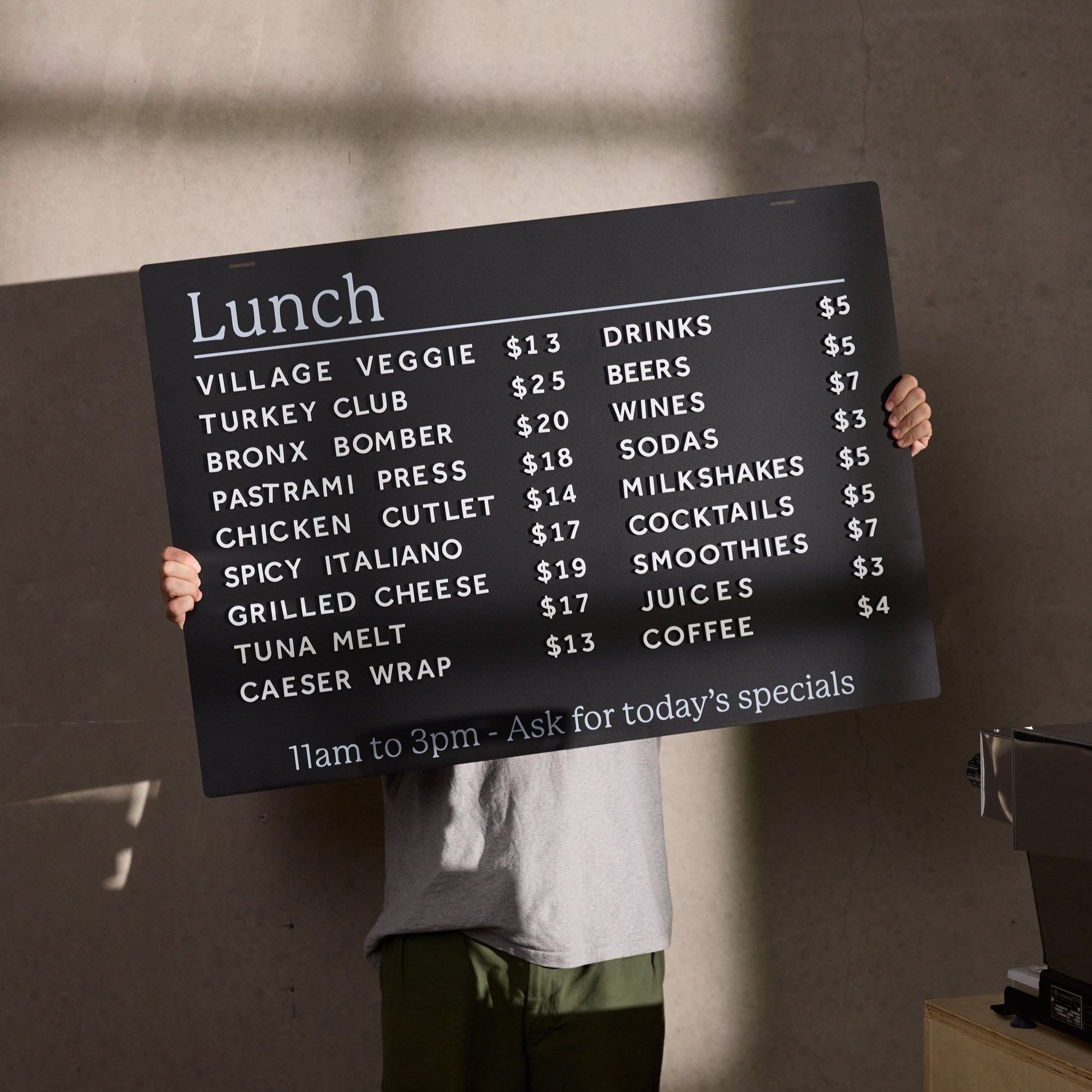
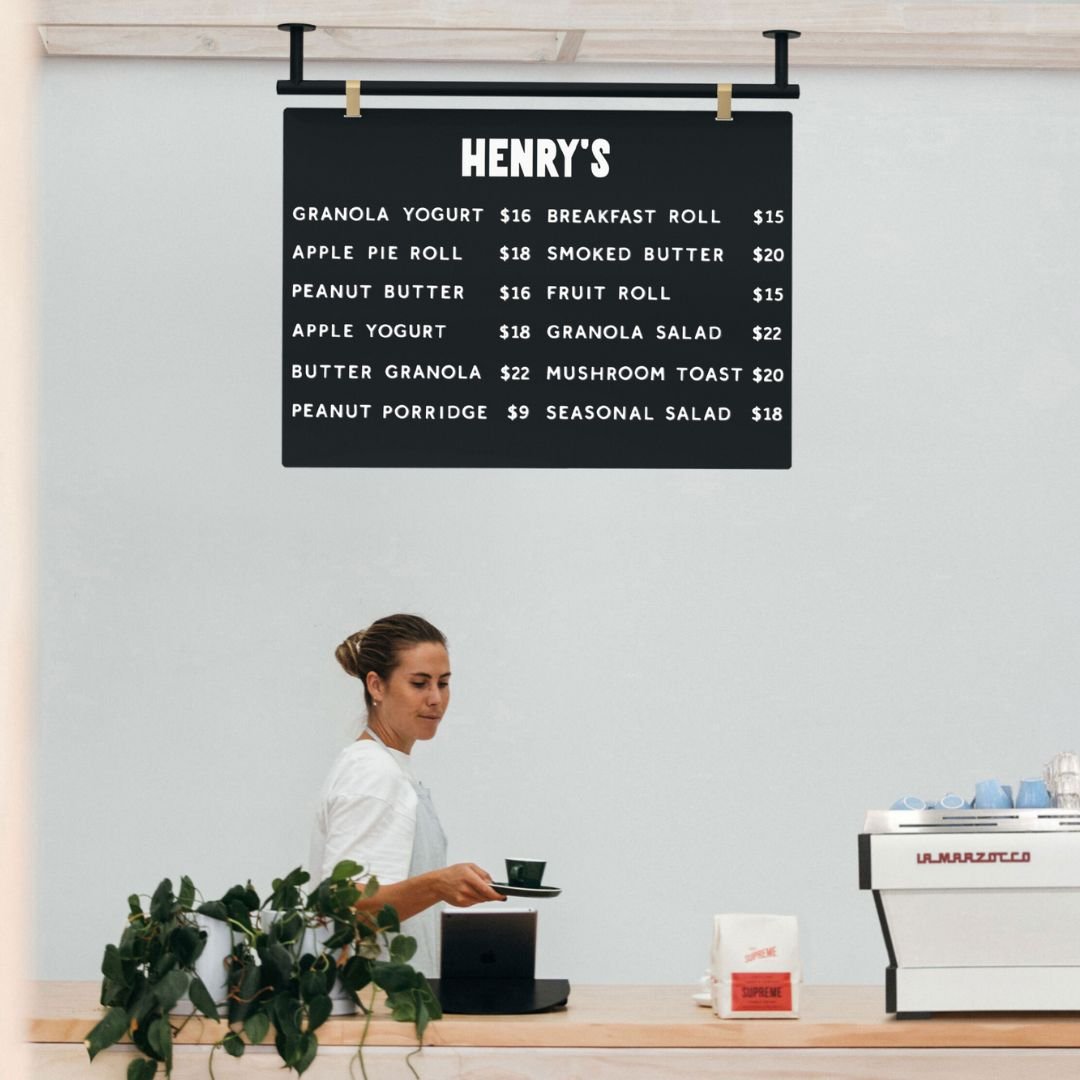
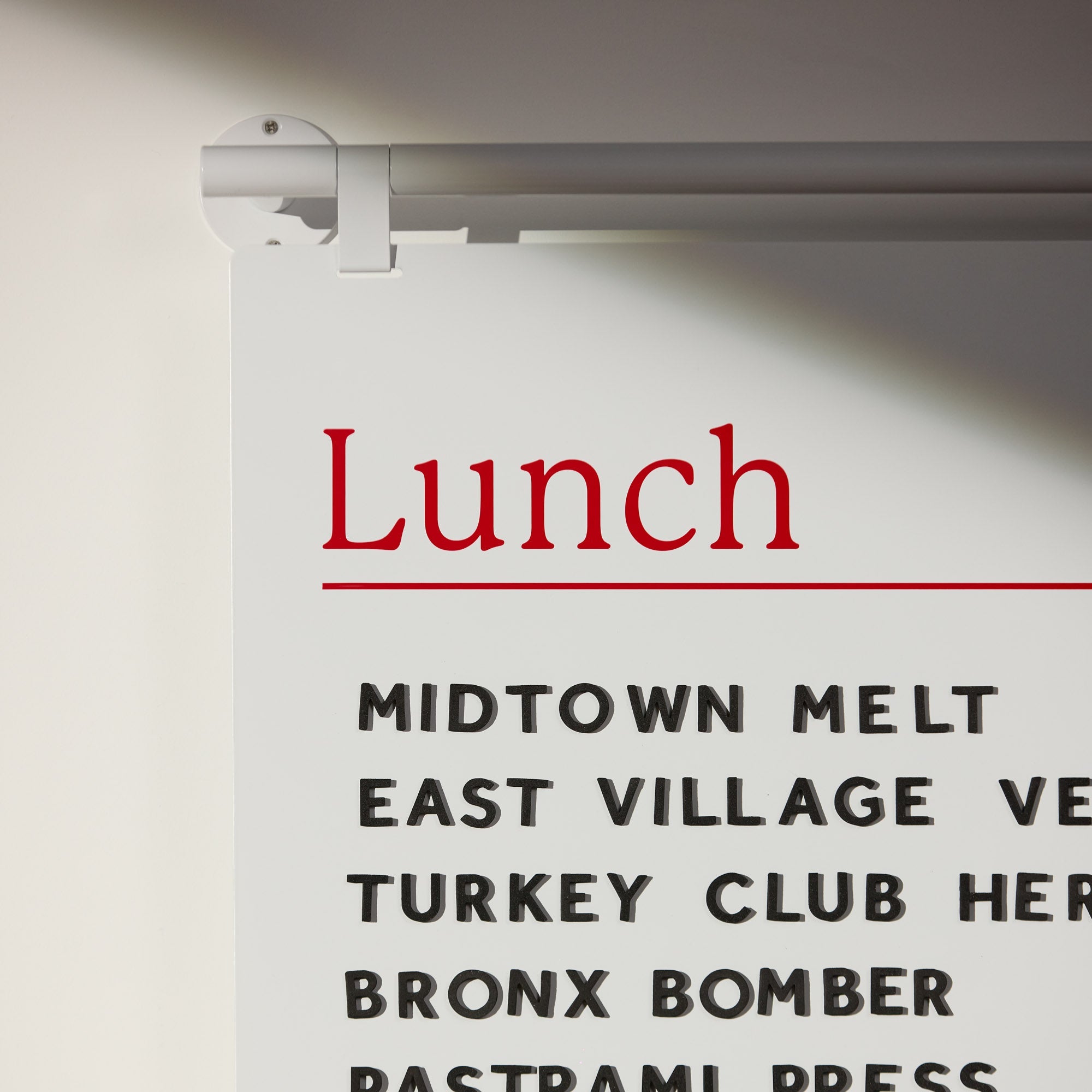
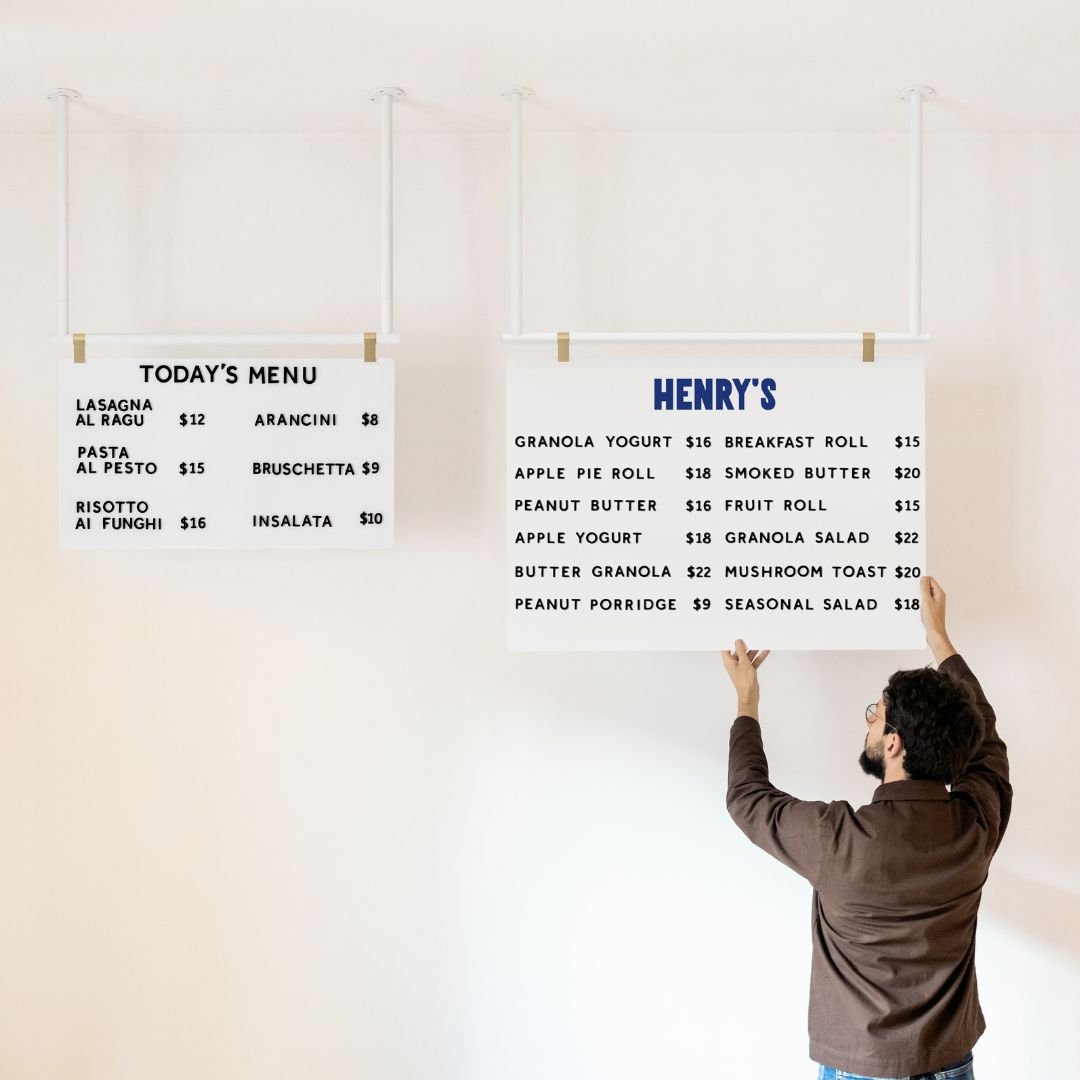
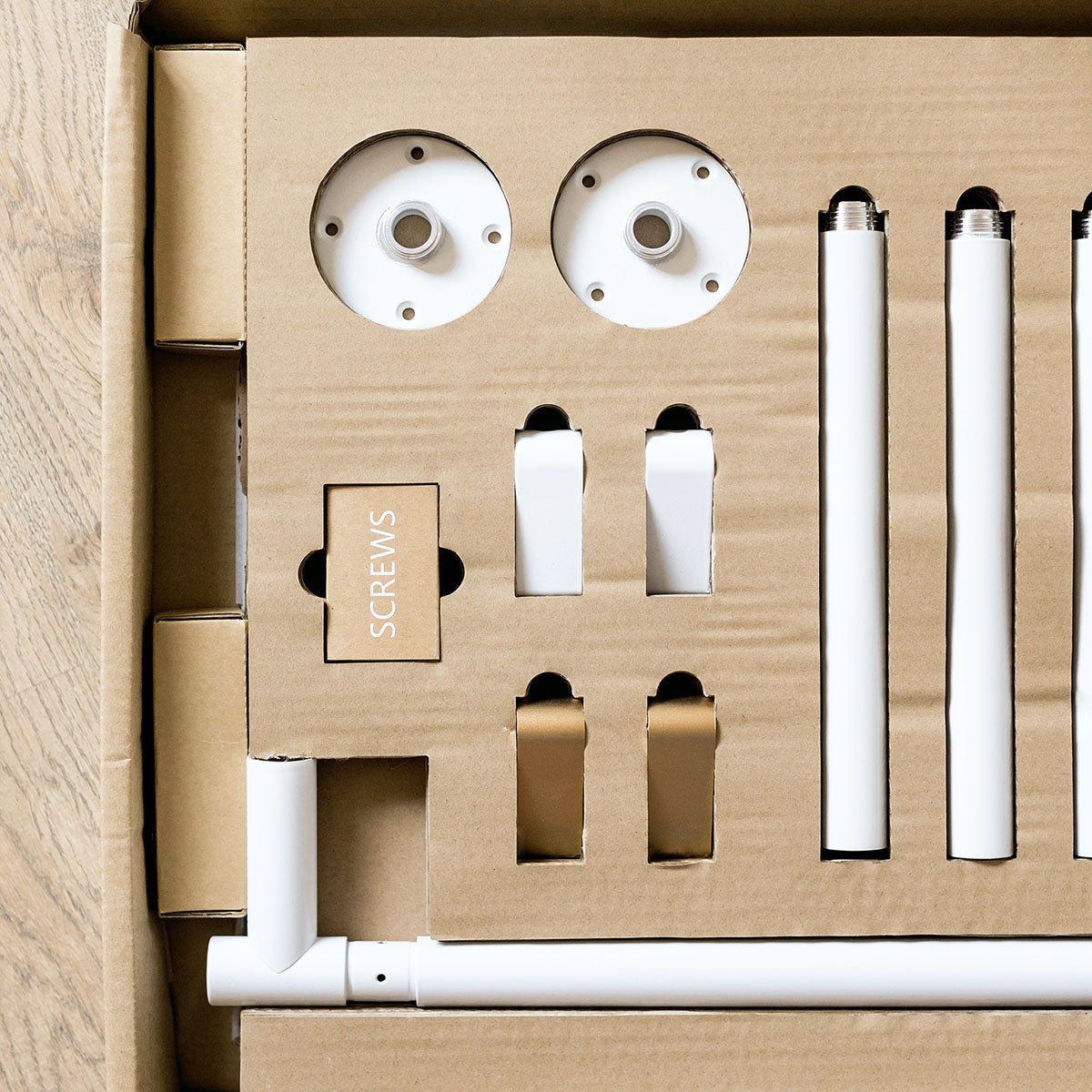
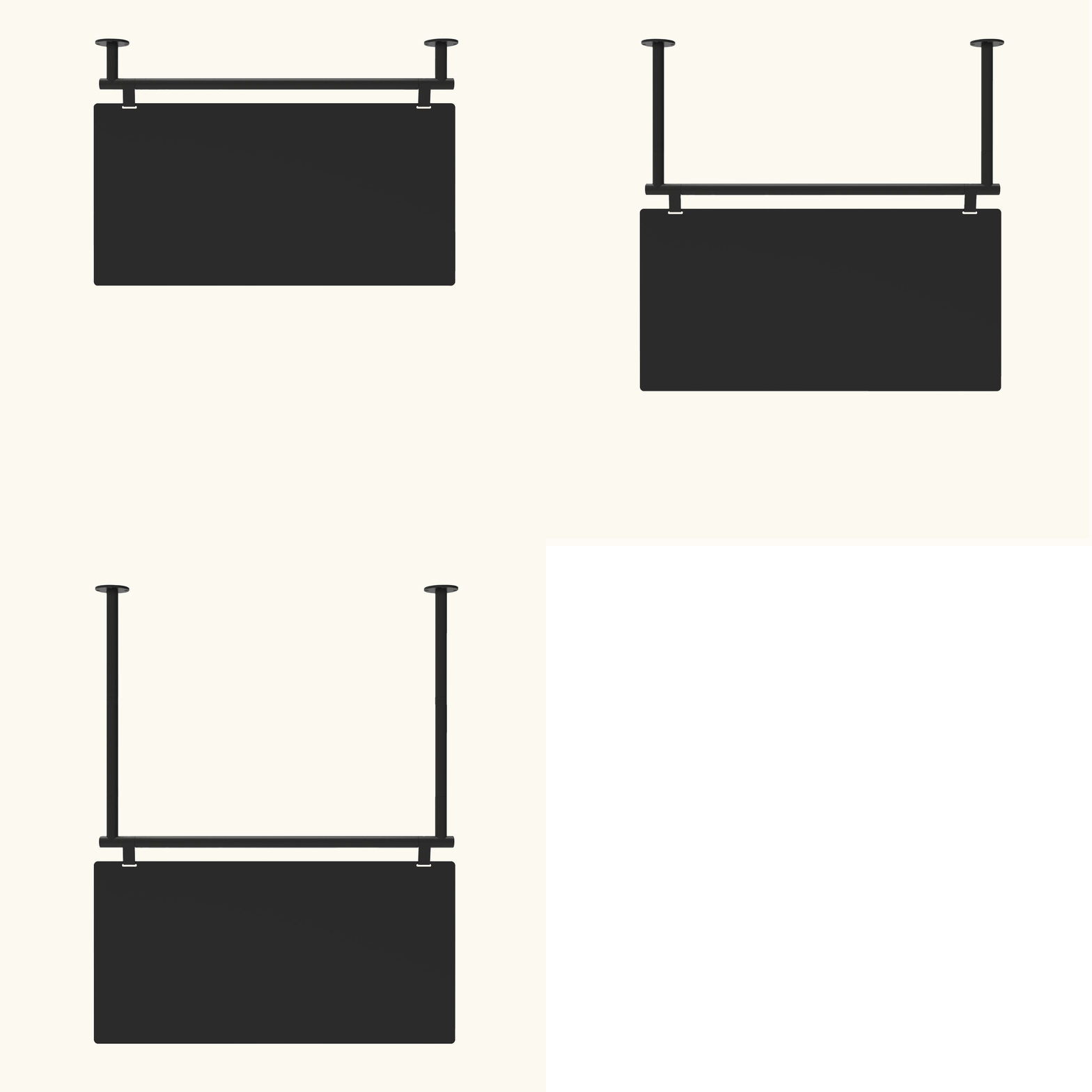
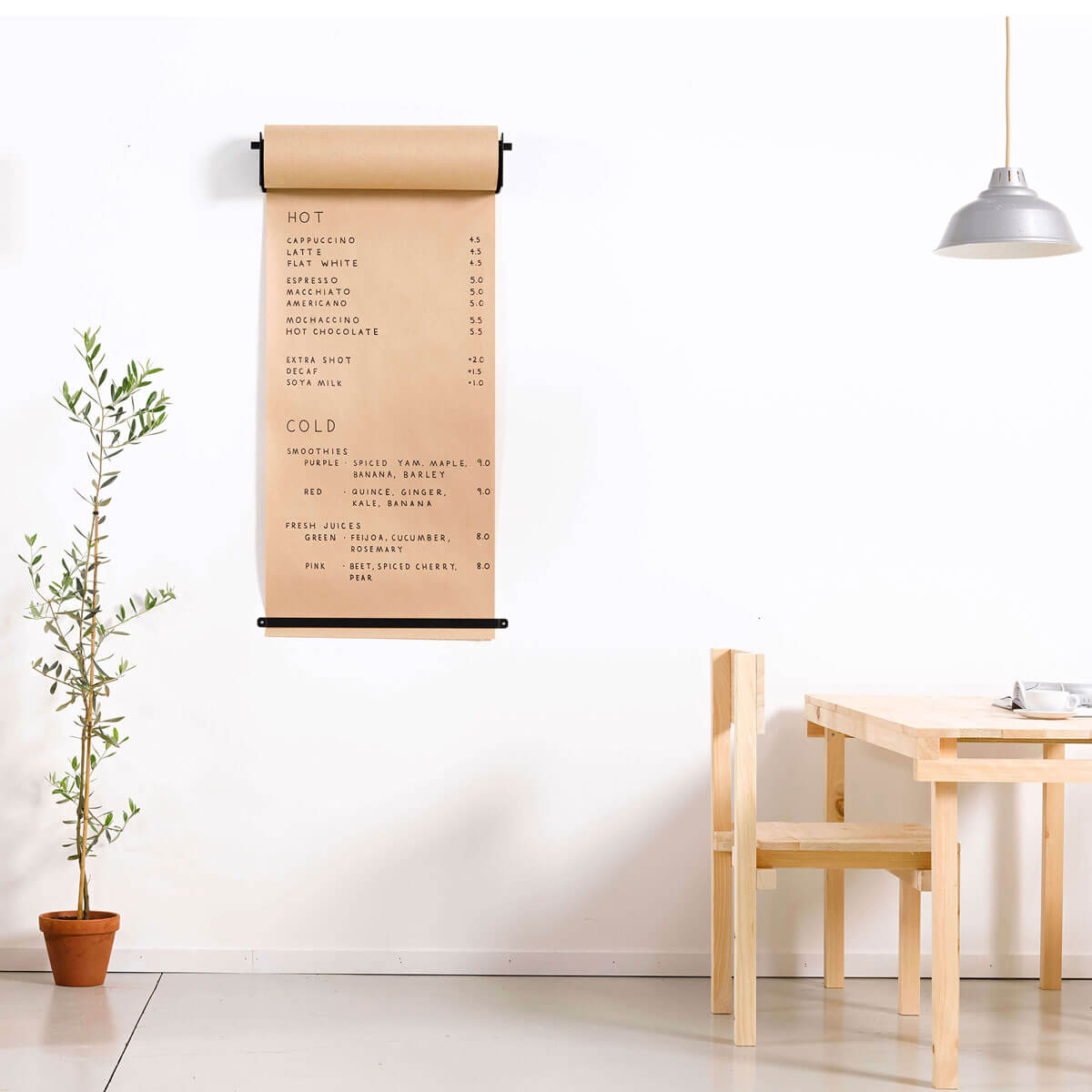
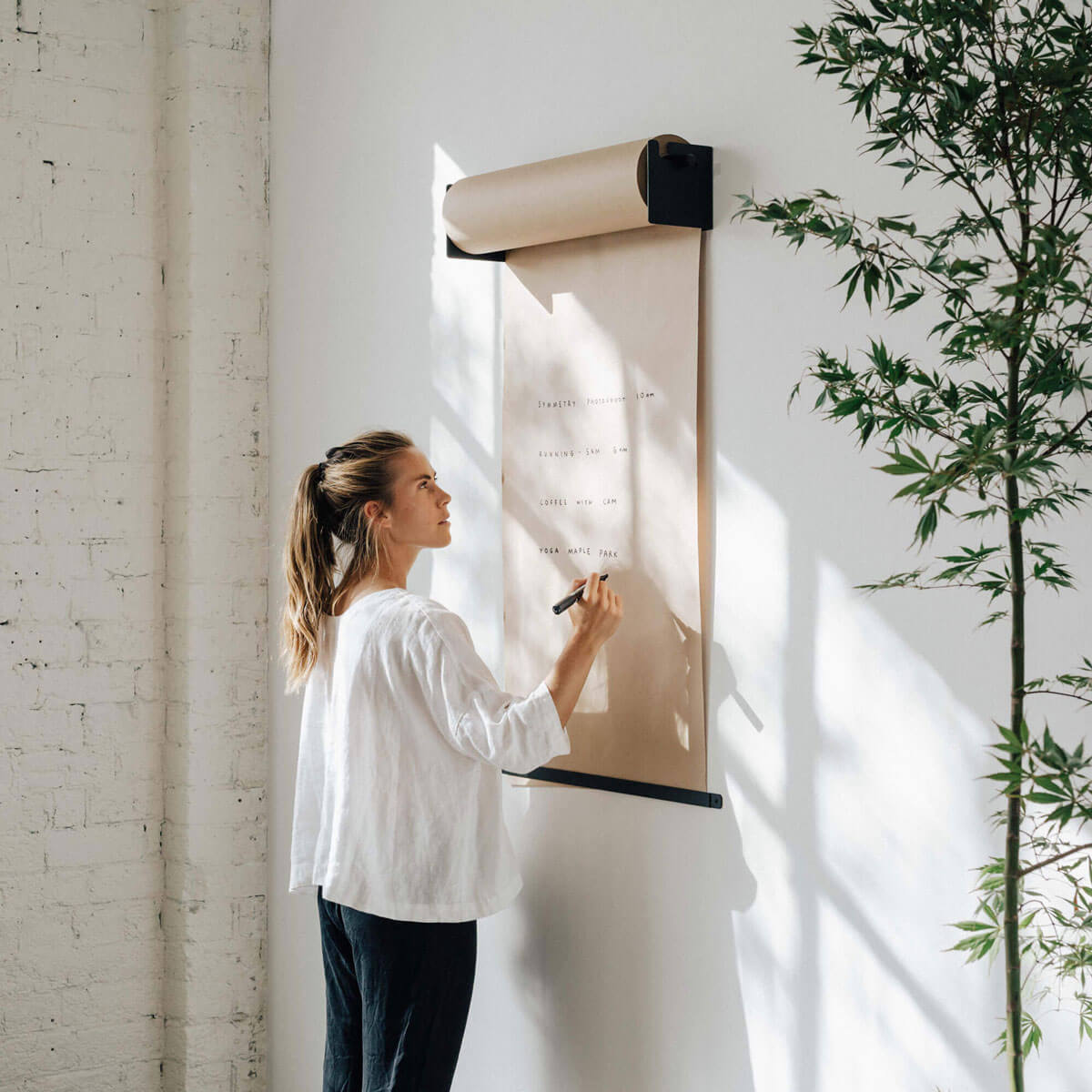
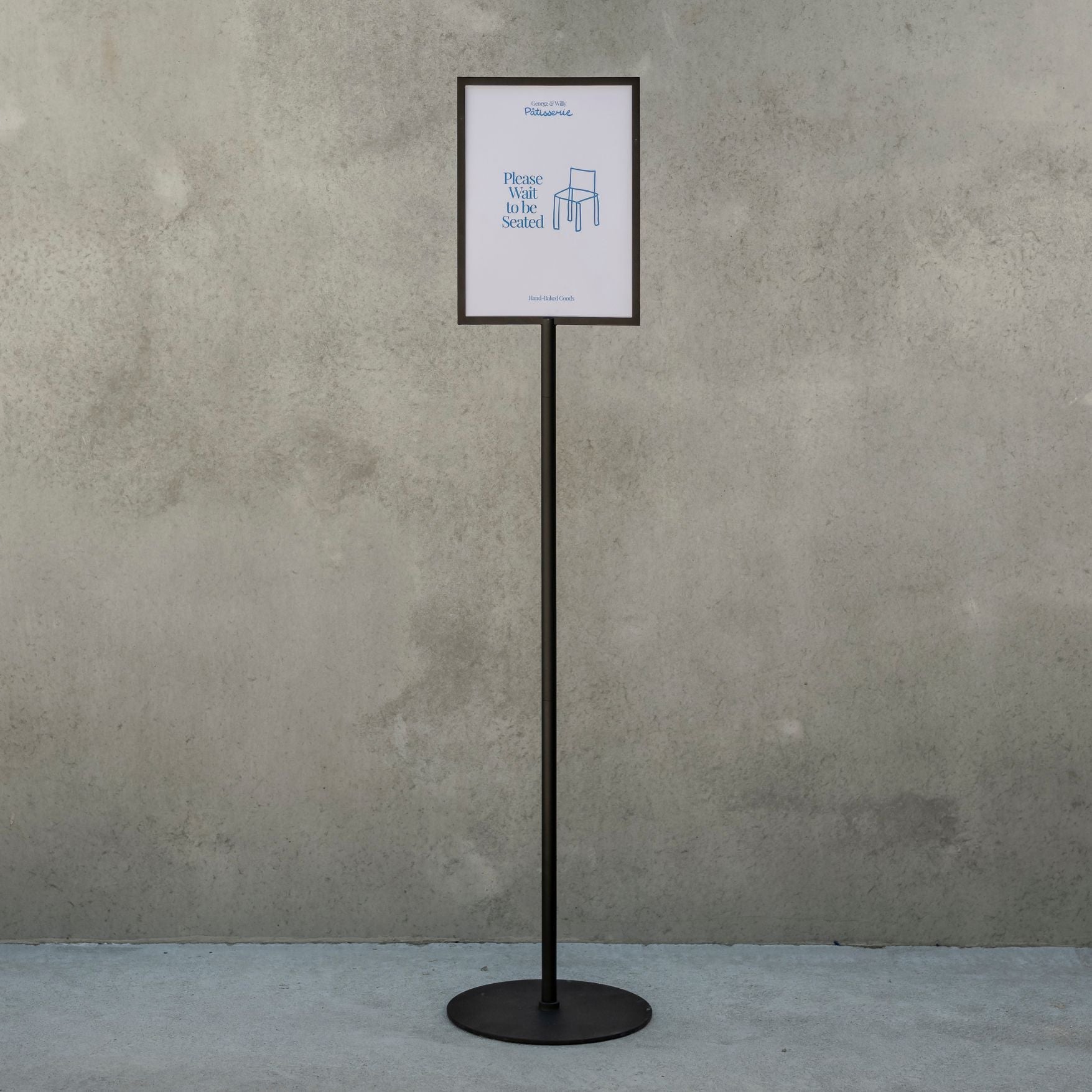
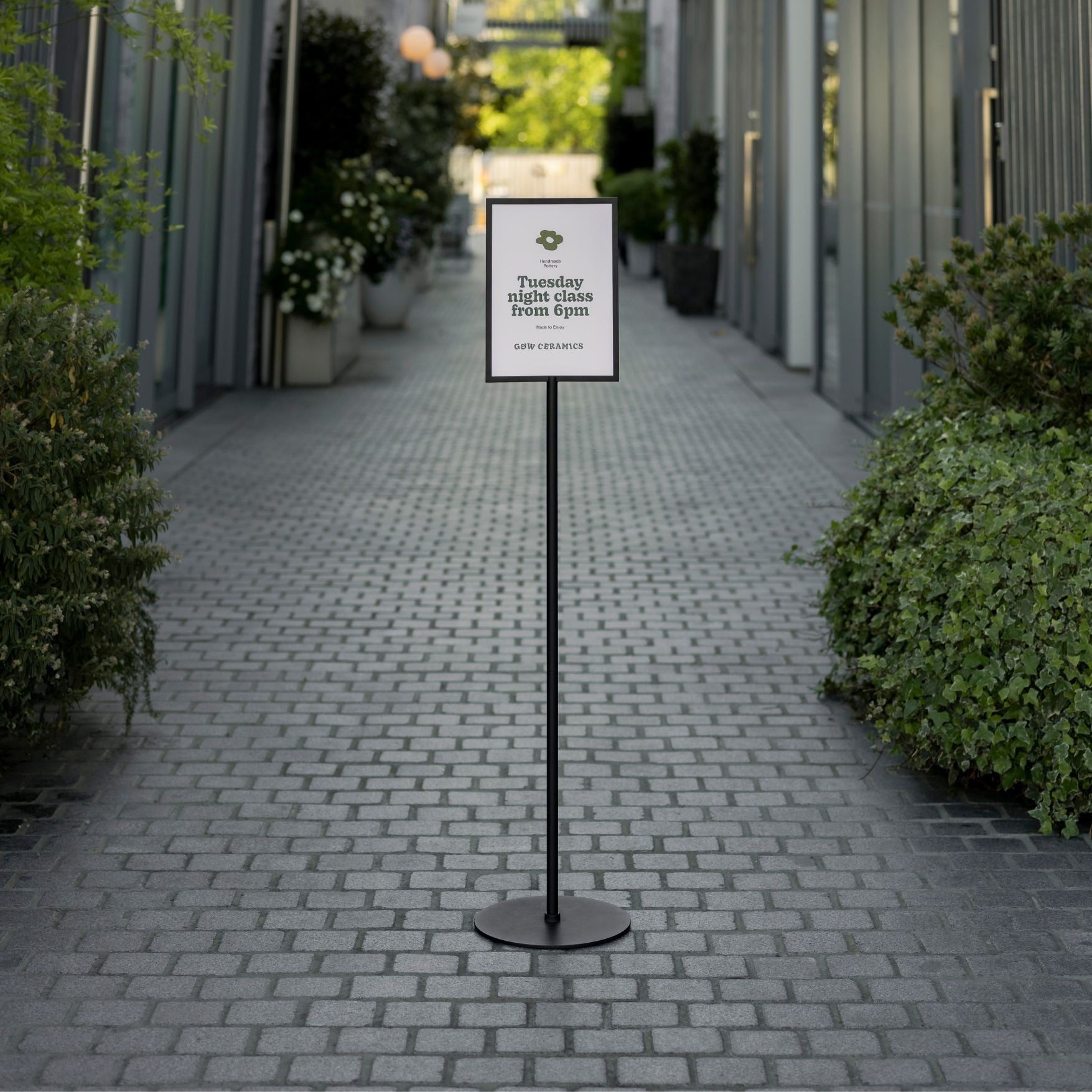
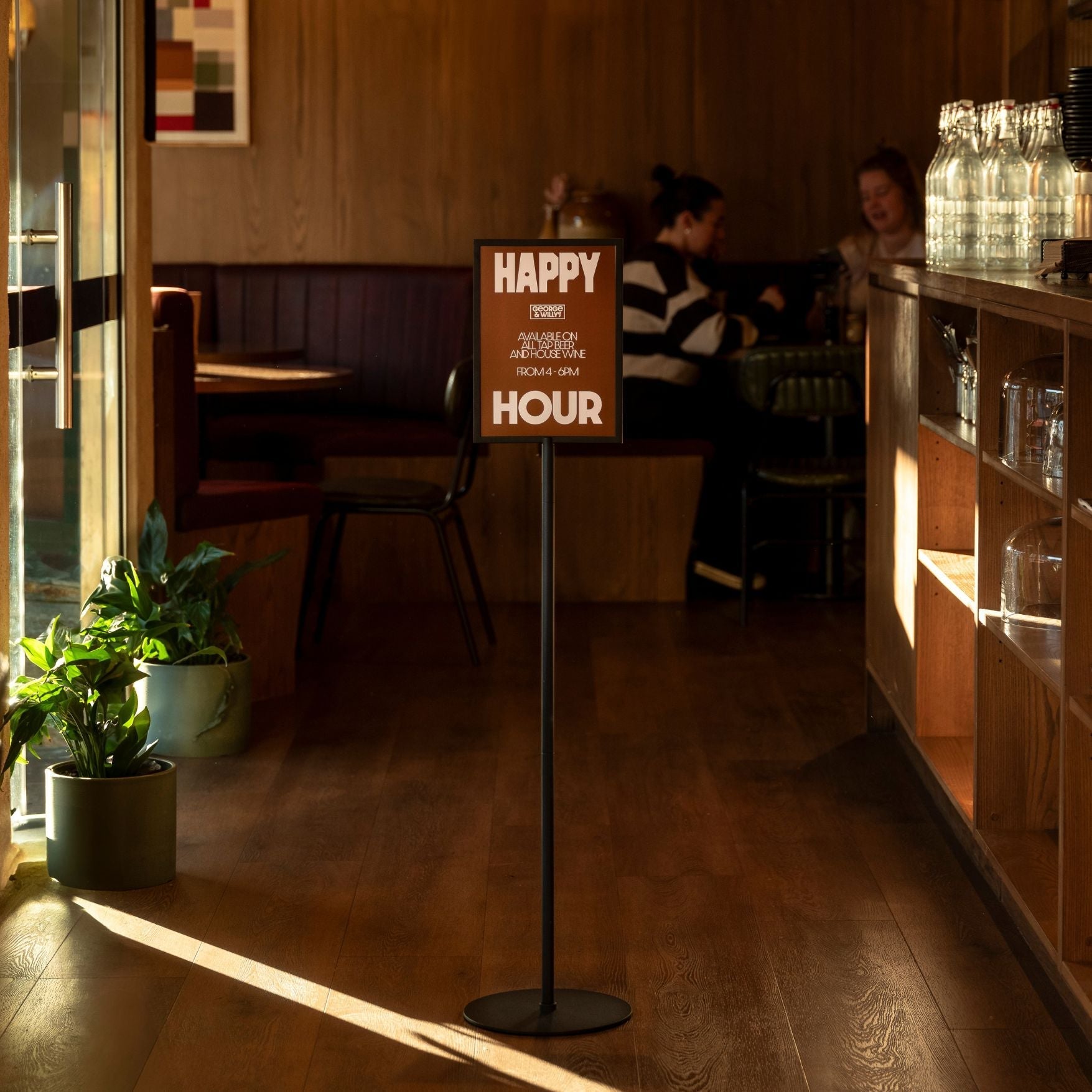
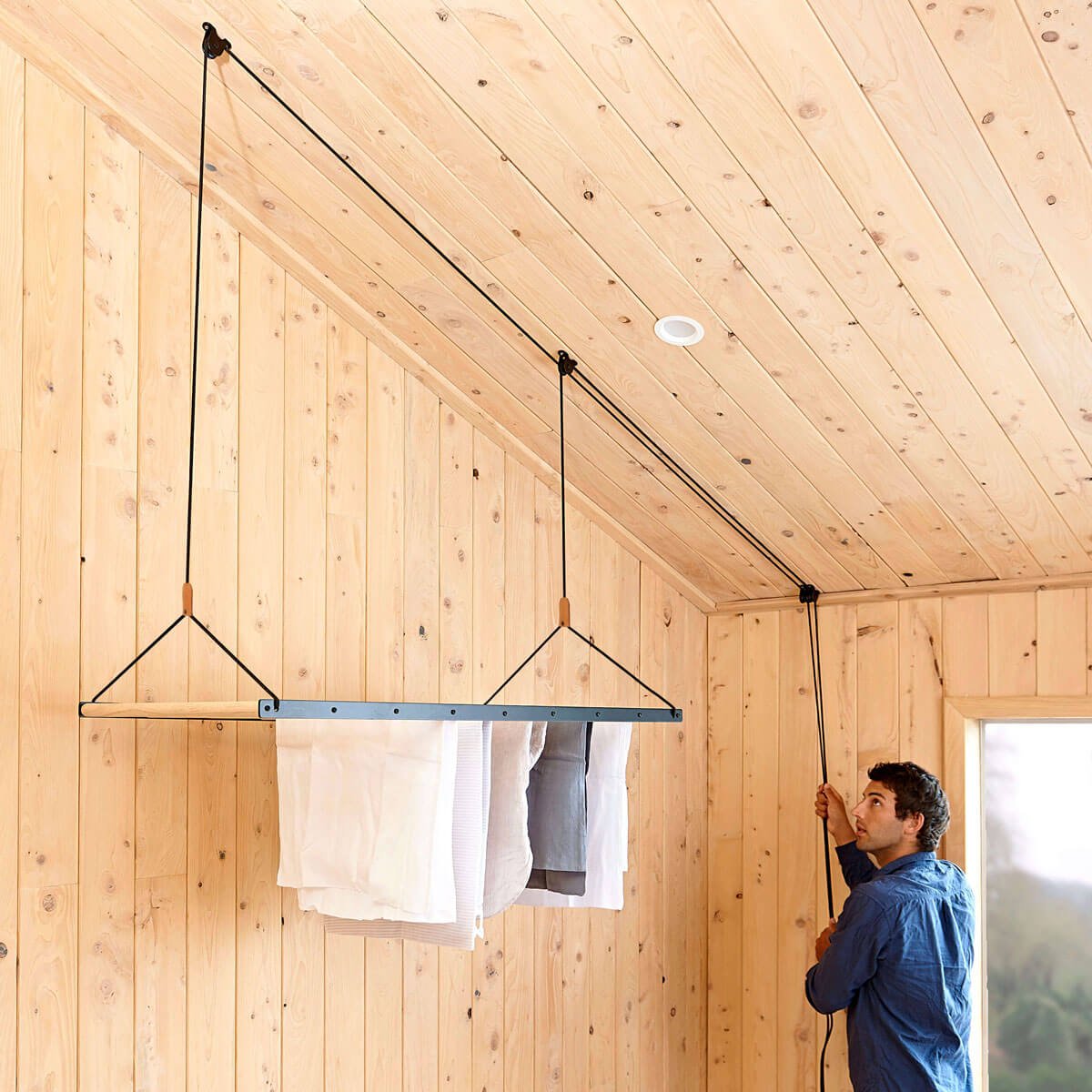
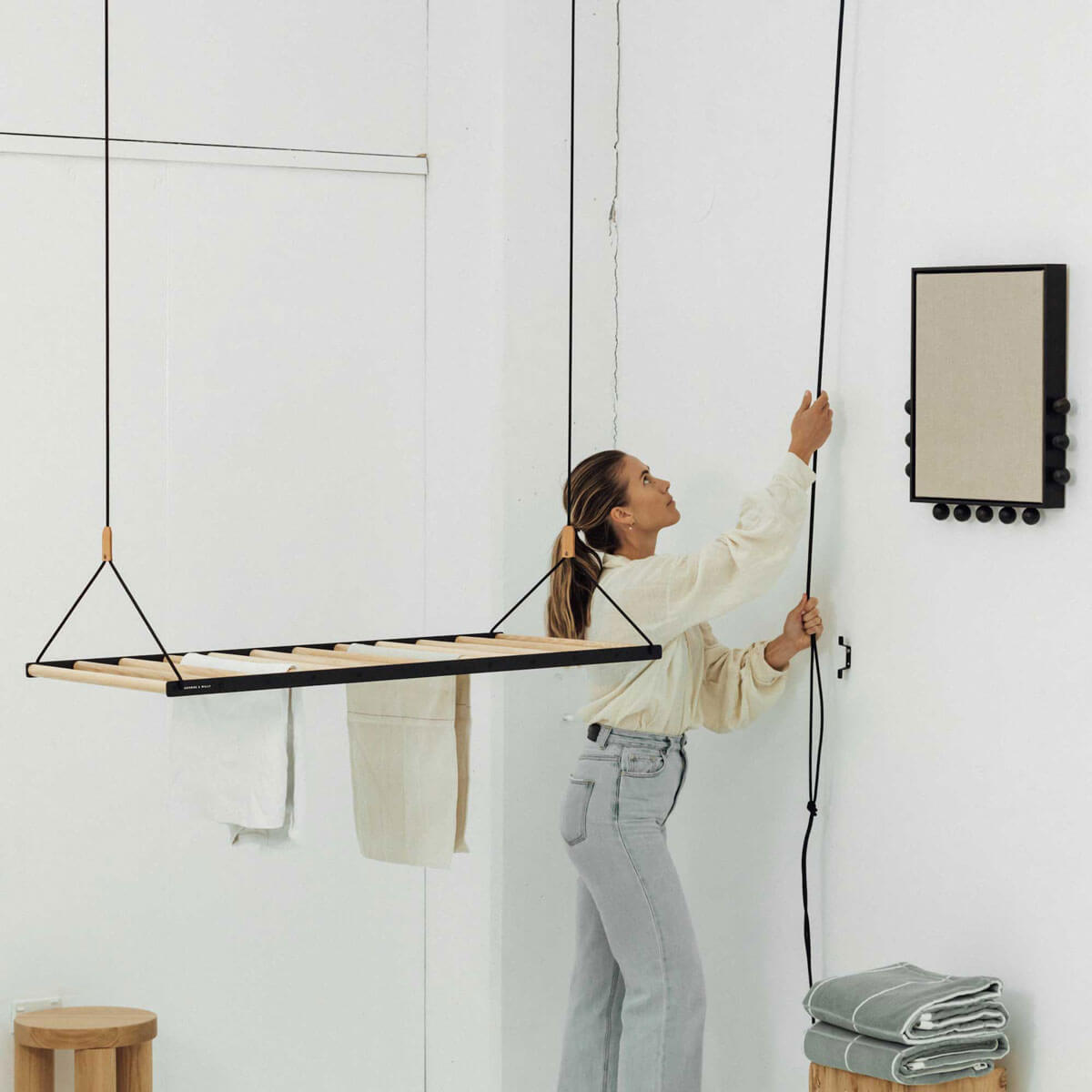
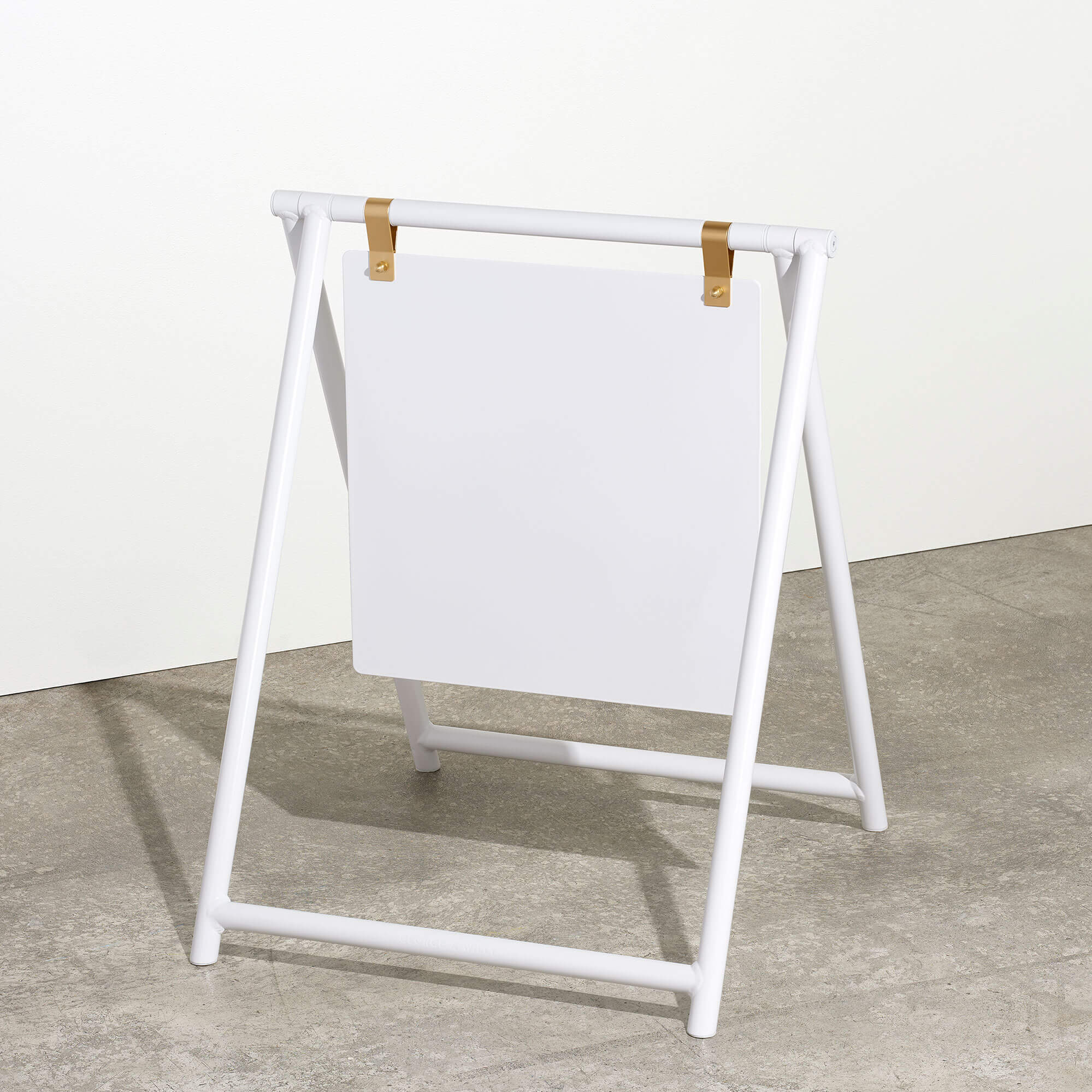
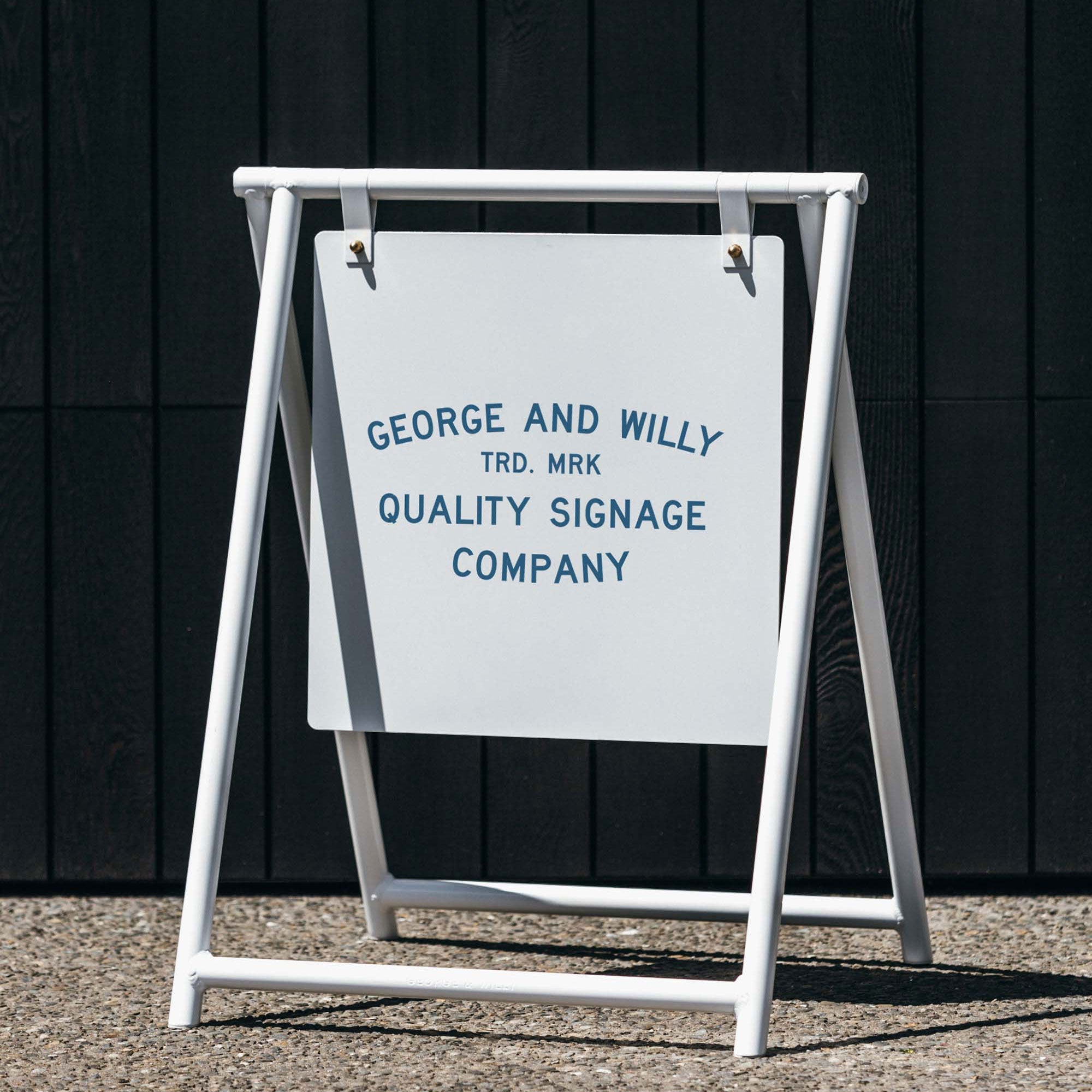
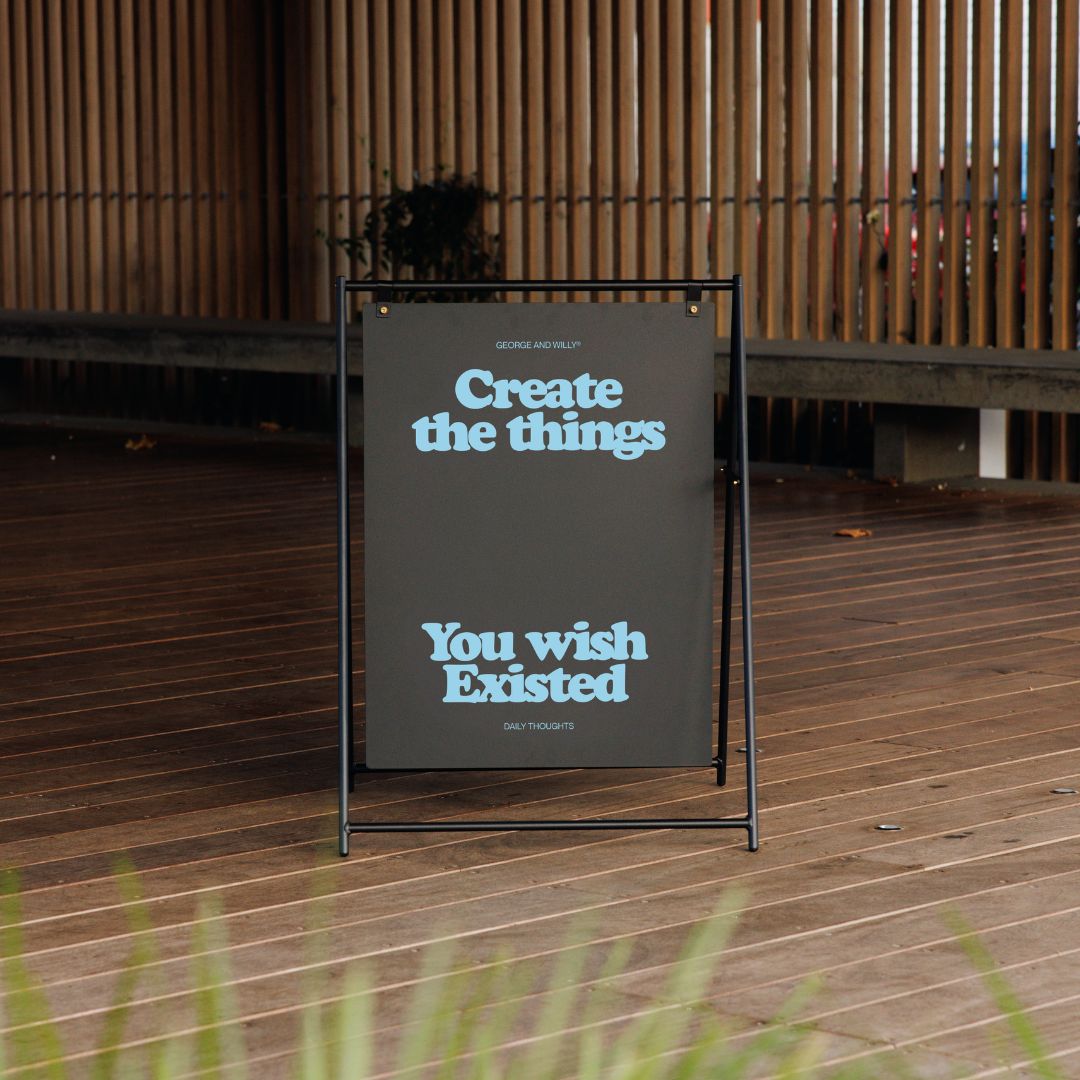
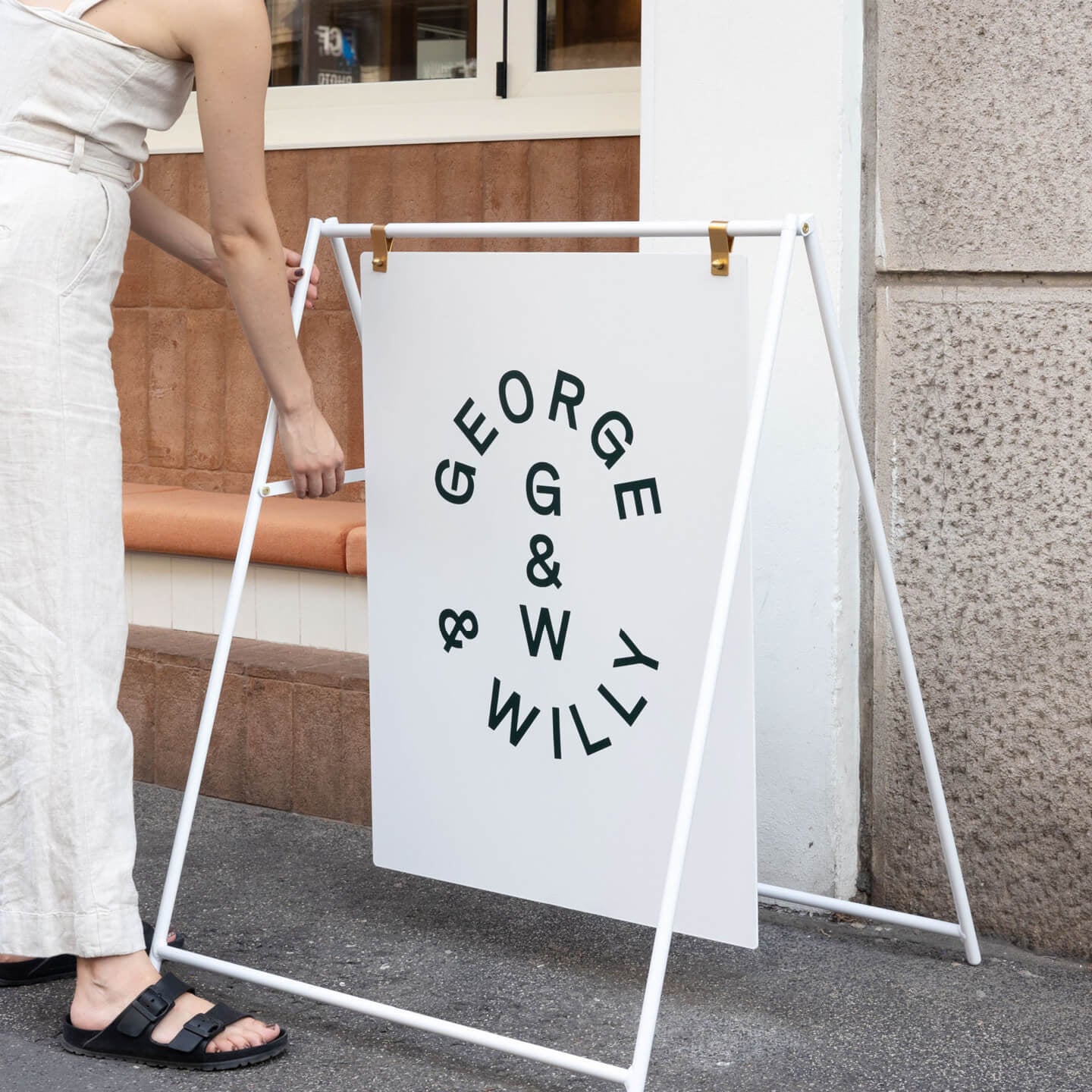
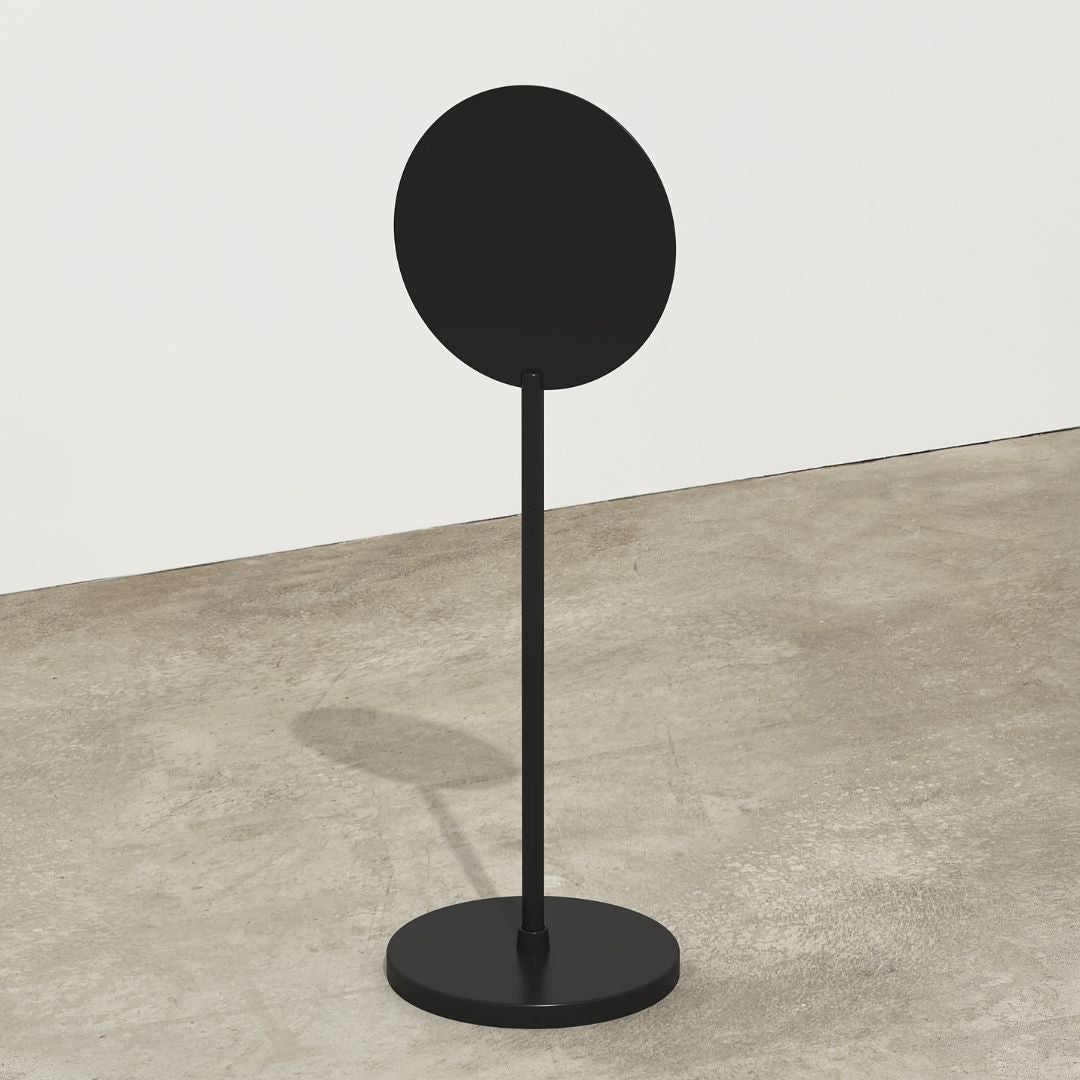
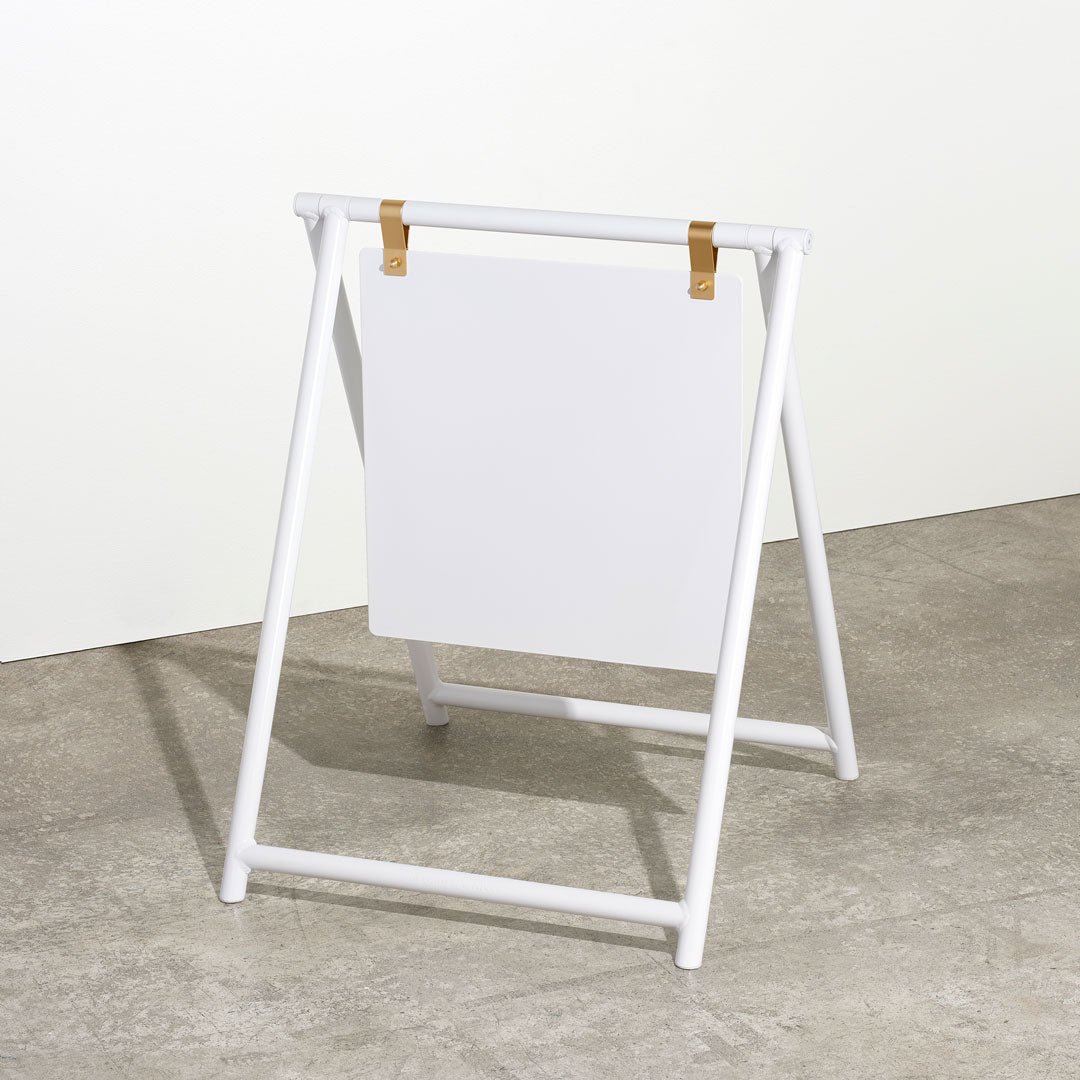
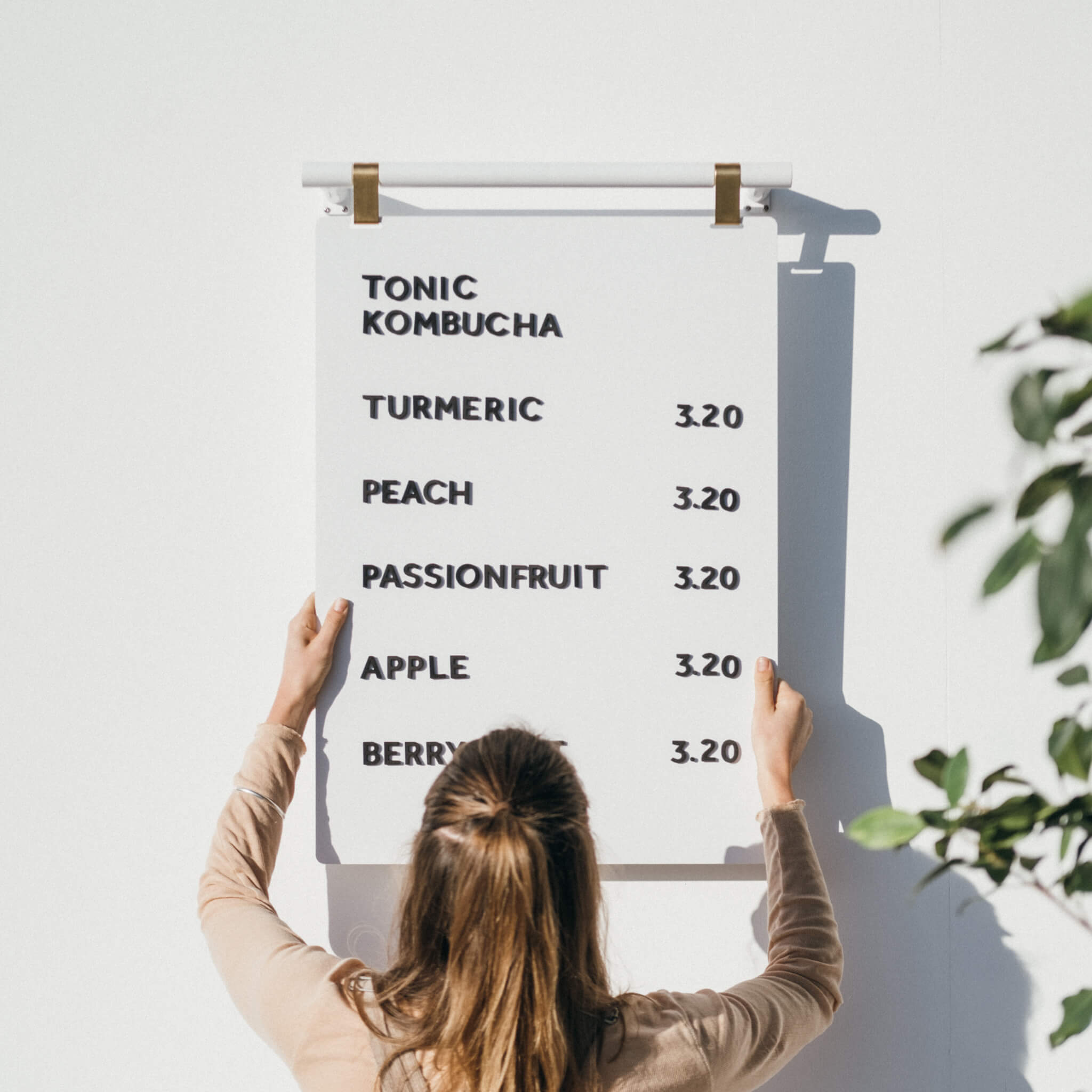
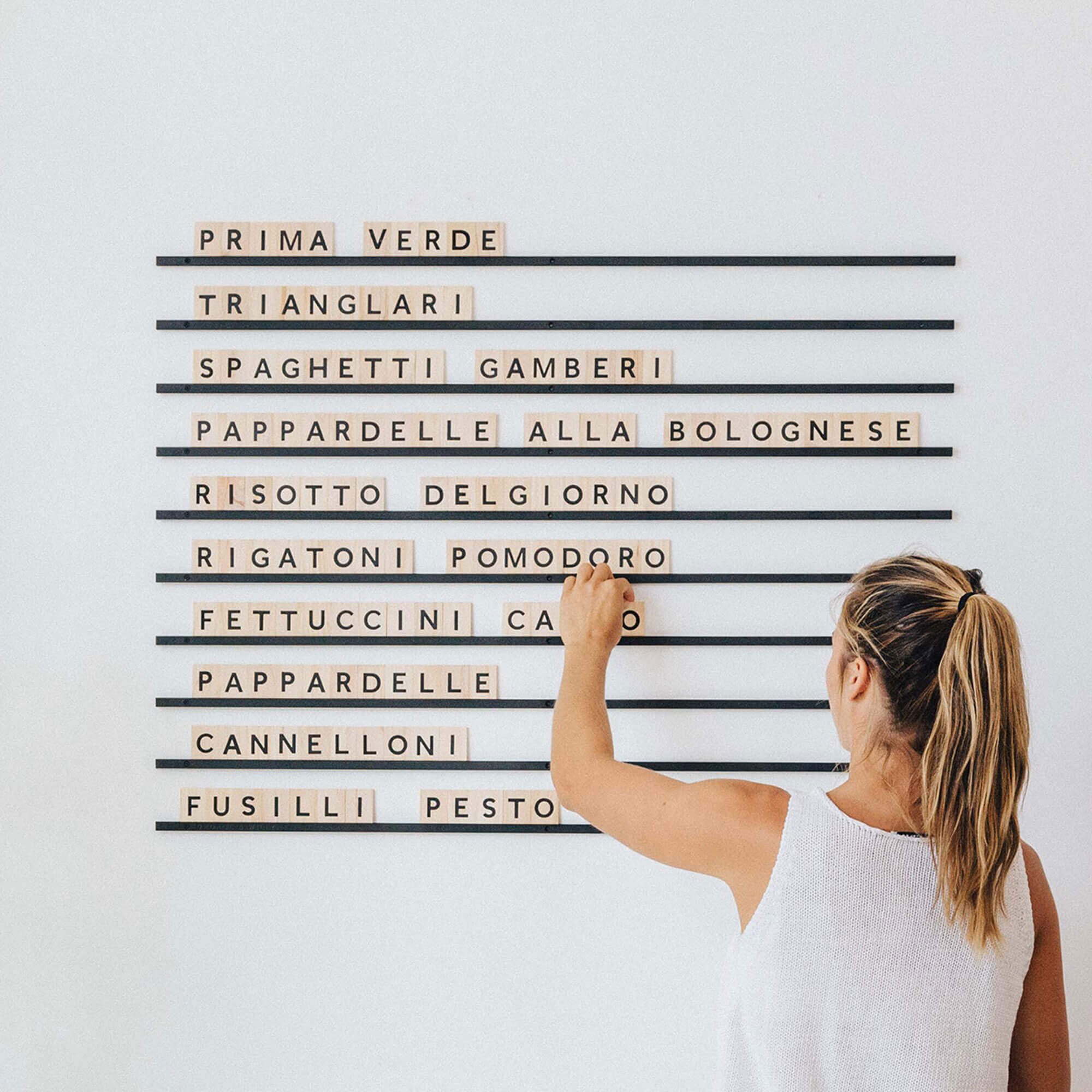
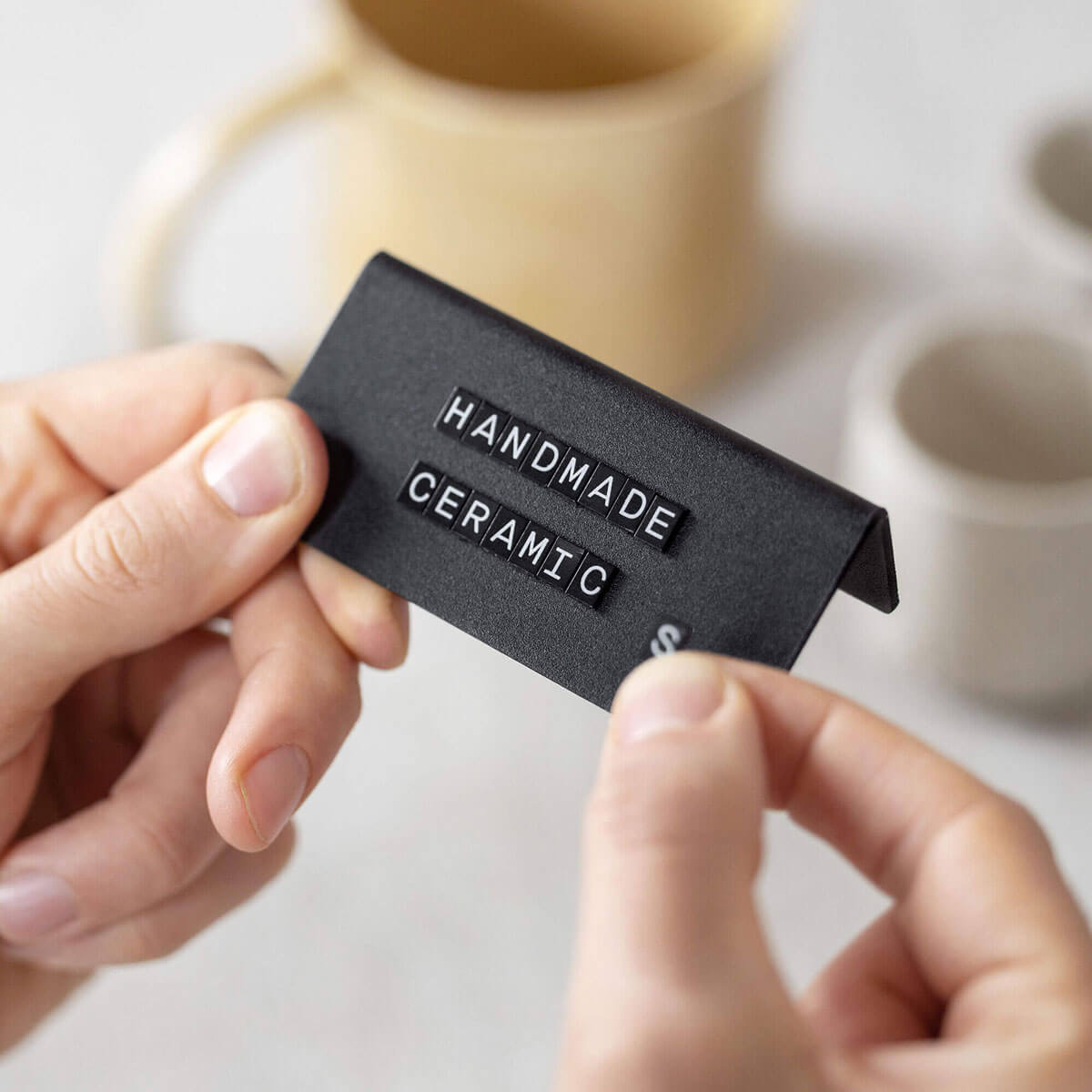
One thing that helps is giving people a wall. Diners settle in better when their table is anchored to something solid, which is a point for wall-mounted seating and against the lonely table floating in the middle of the room. Getting clutter off the floor helps too. A menu hung from the ceiling (Hanging Menu Board or Ceiling Menu Board) frees up counter space and sightlines, and a few tabletop signs will do the talking without adding another piece of furniture to walk around.
Where should a bakery display case go?
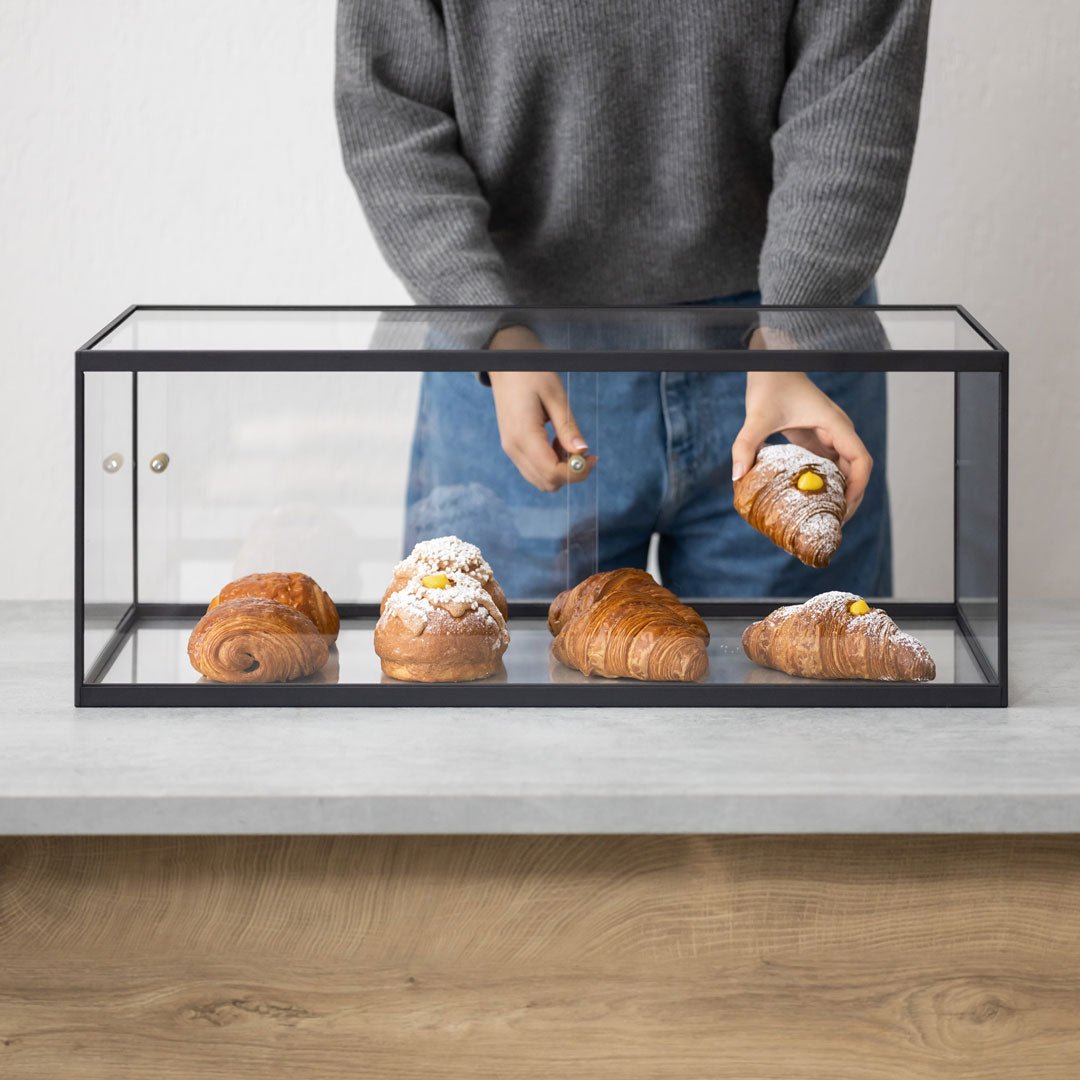
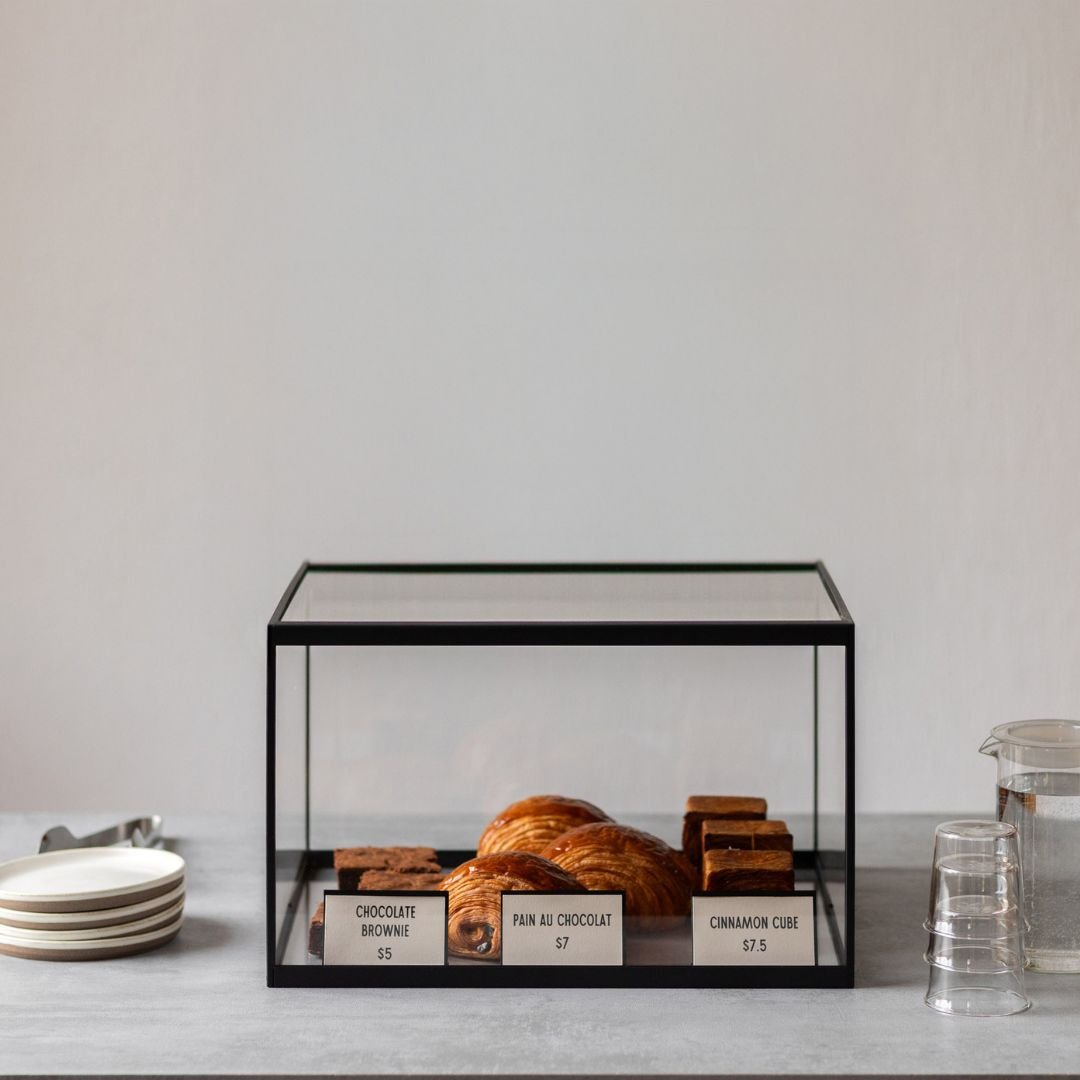
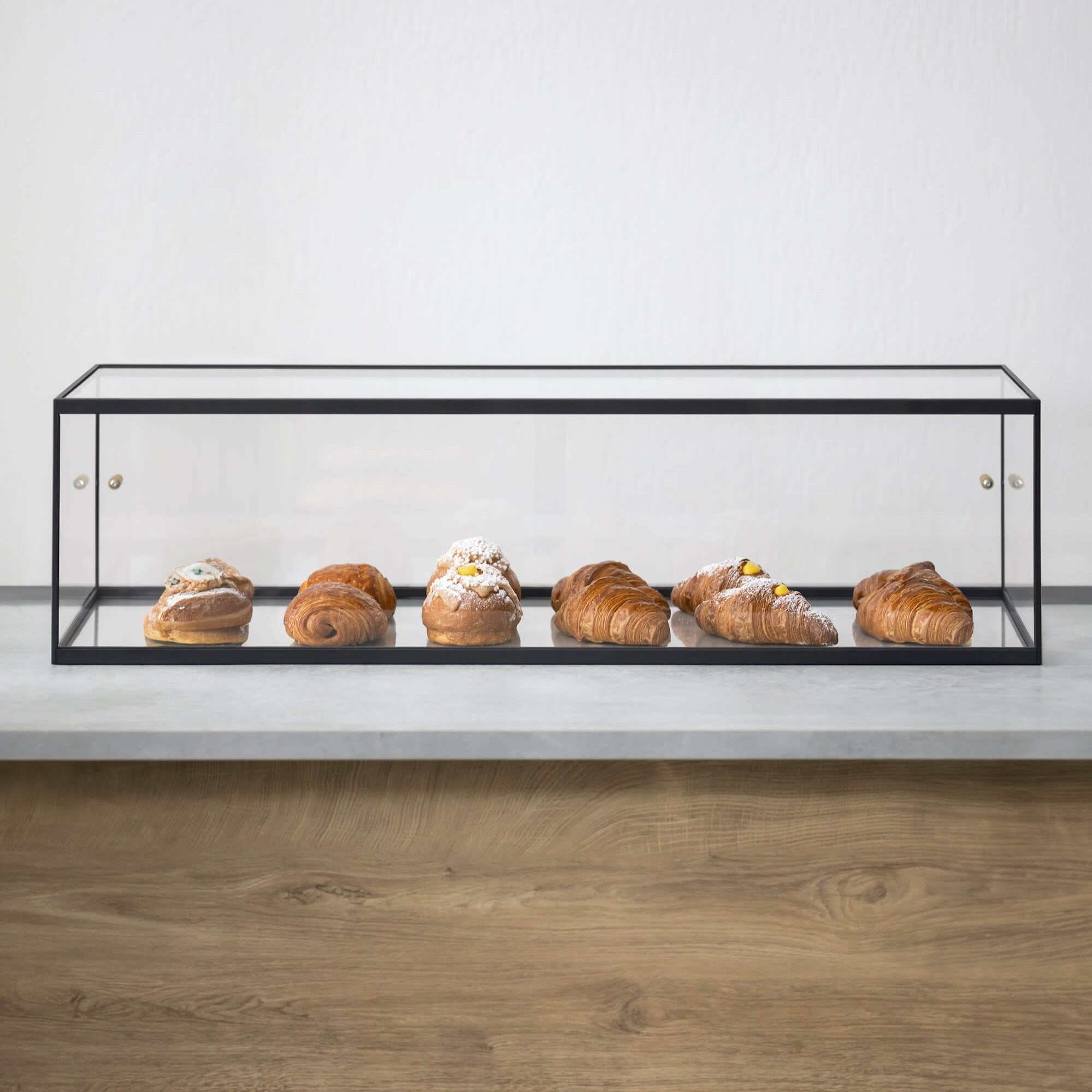
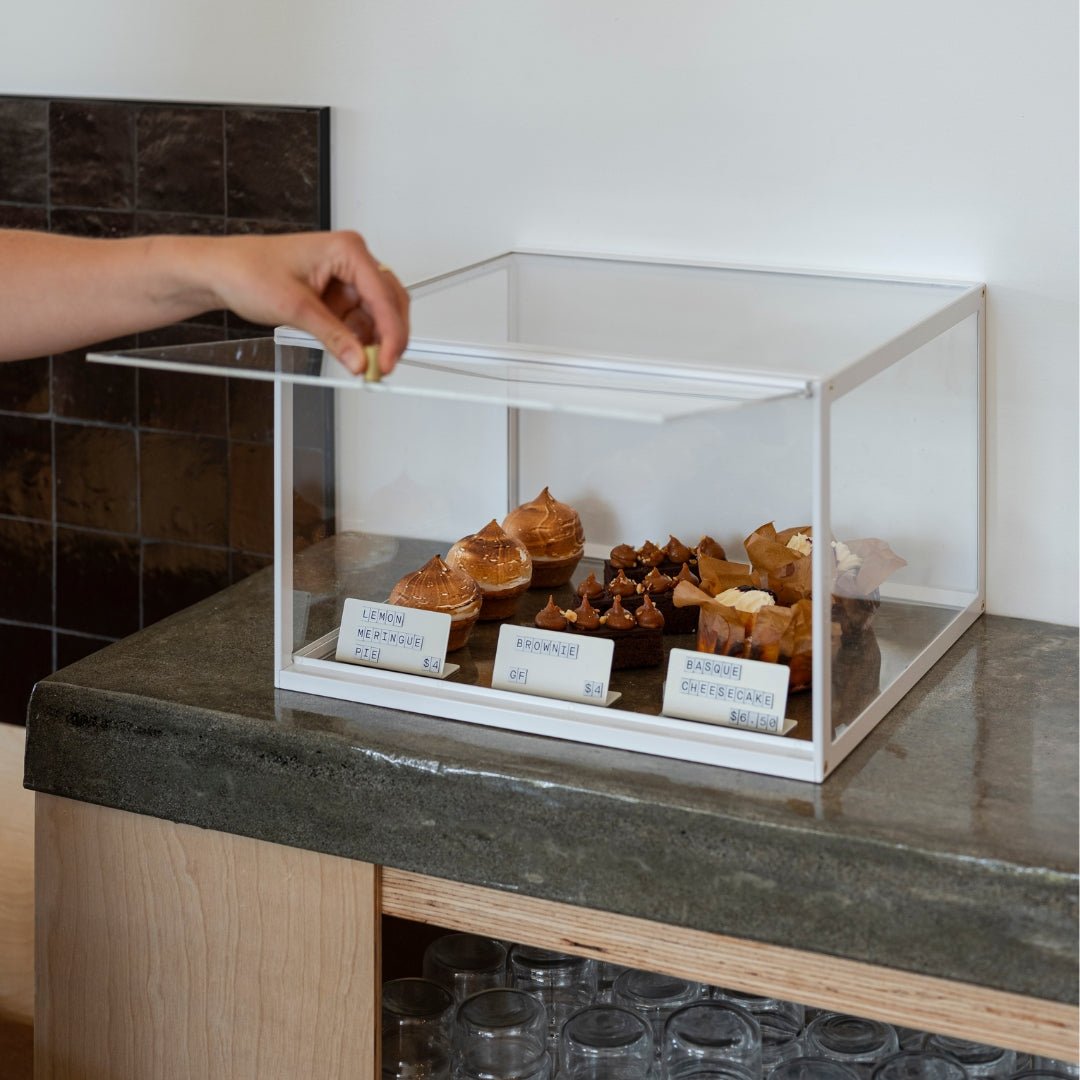
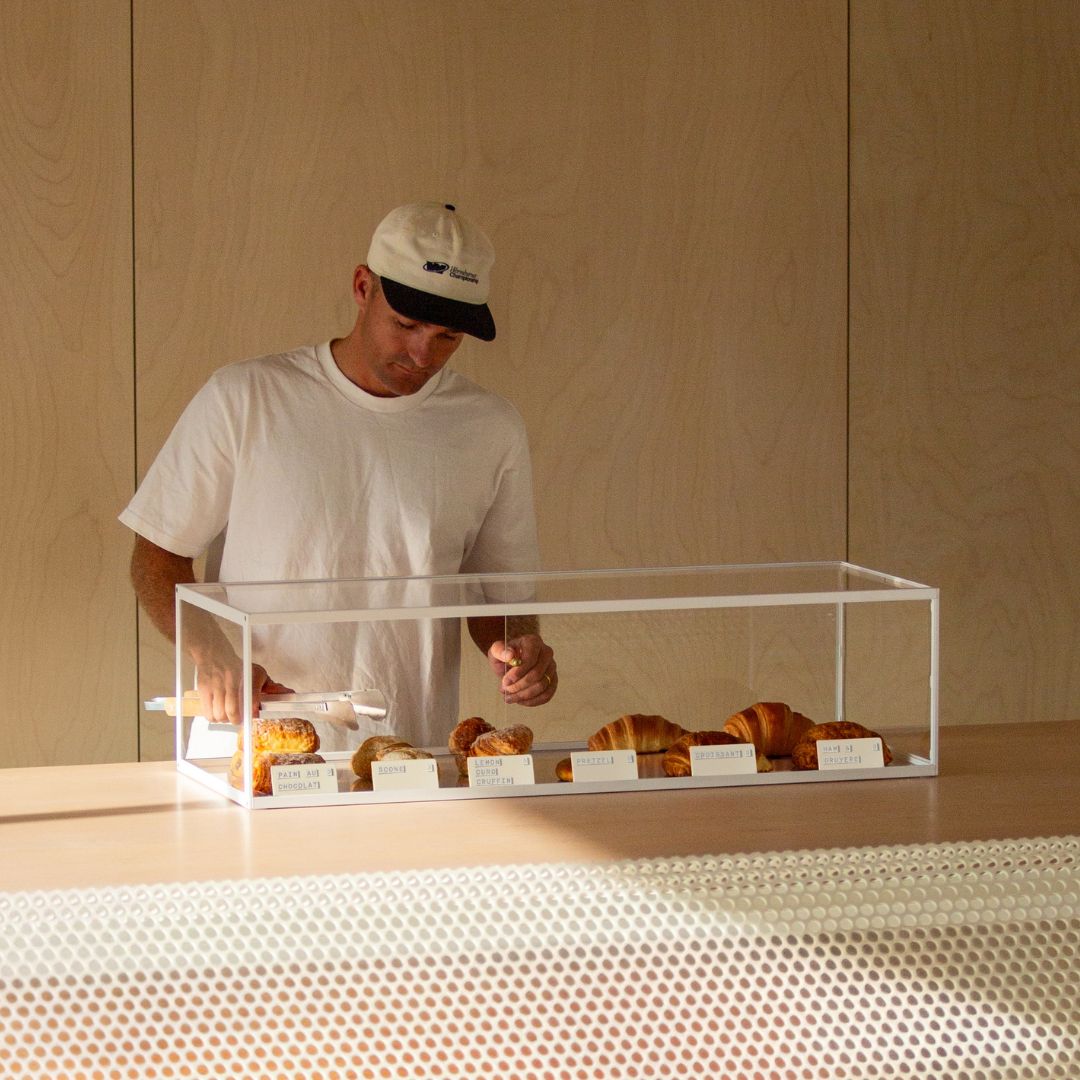
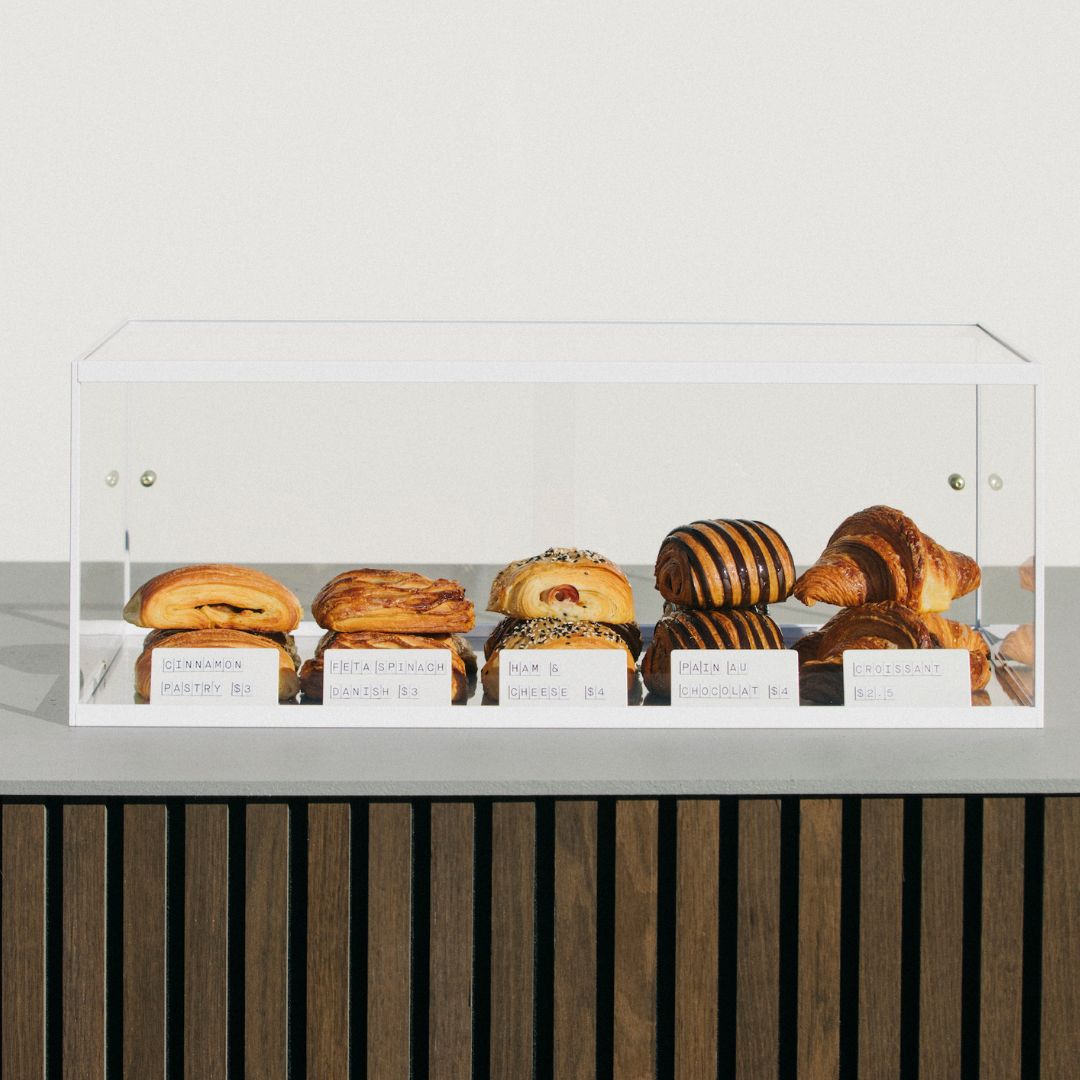
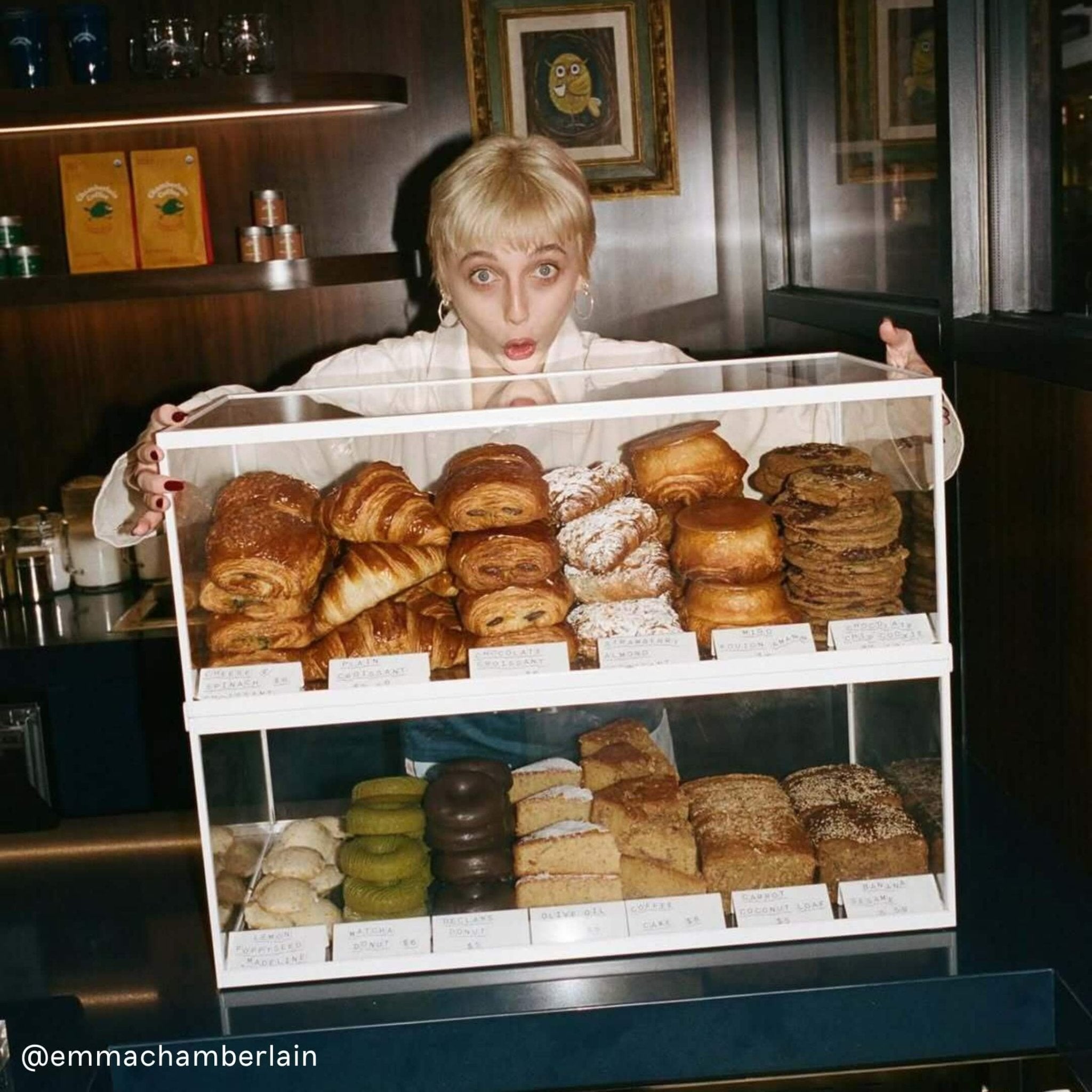
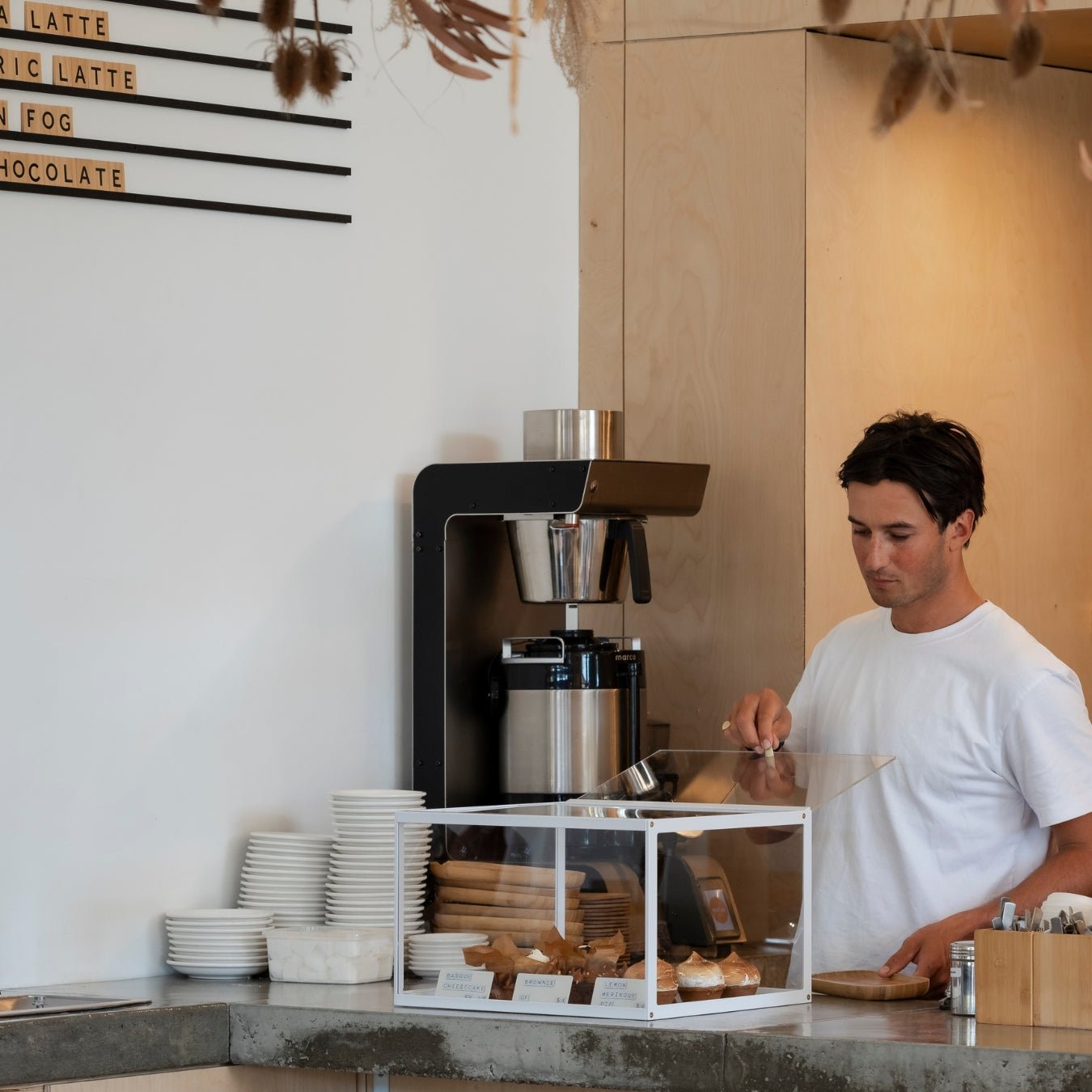
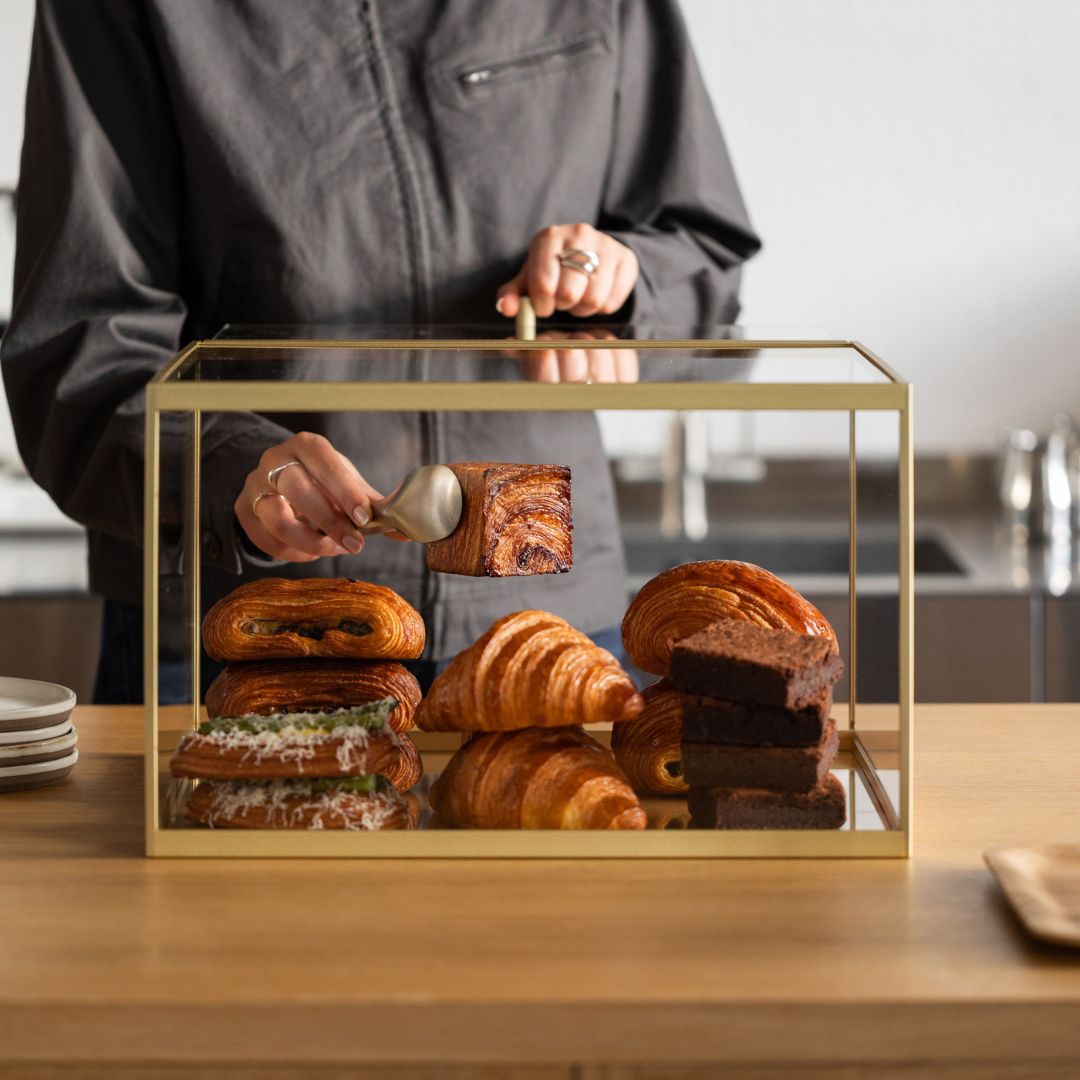
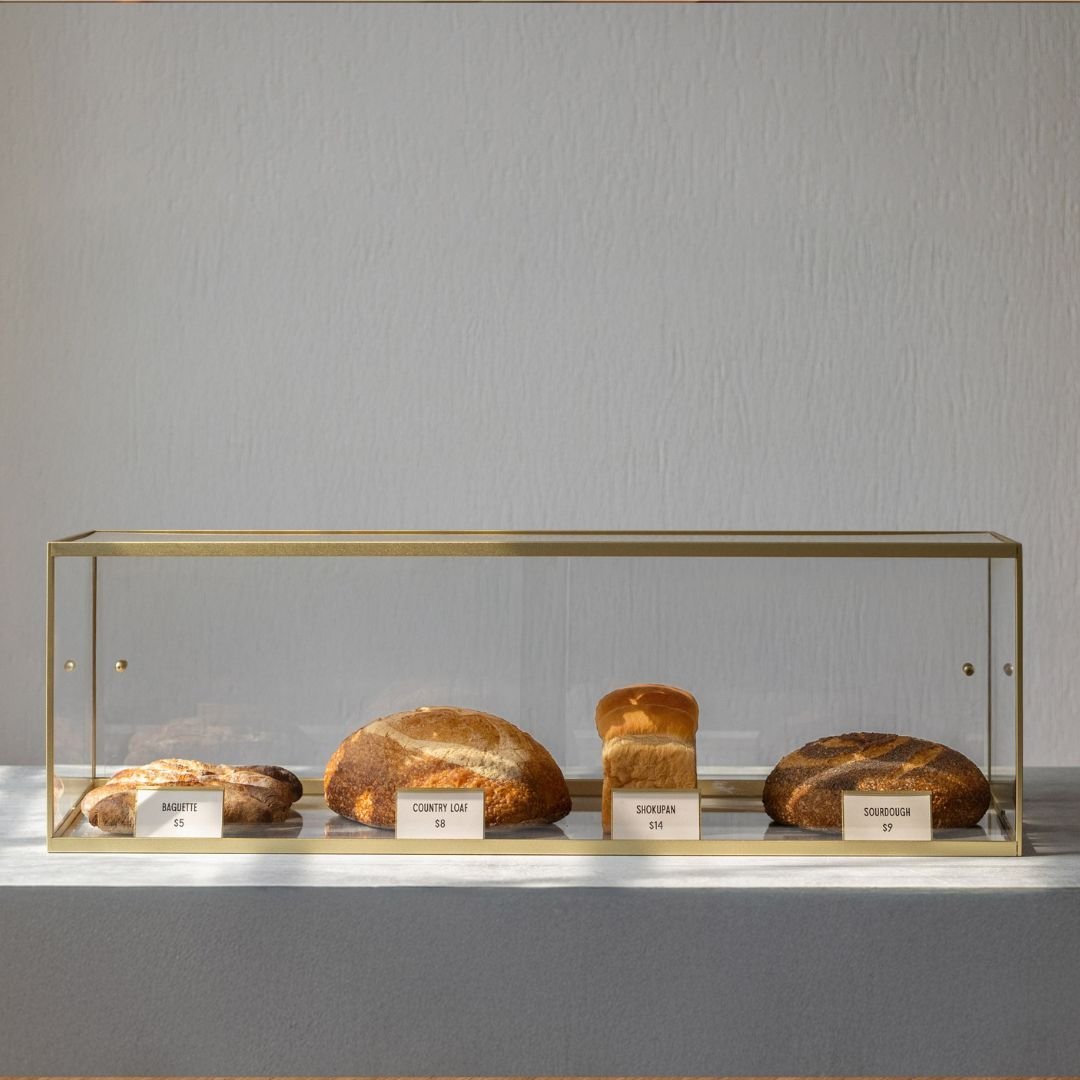
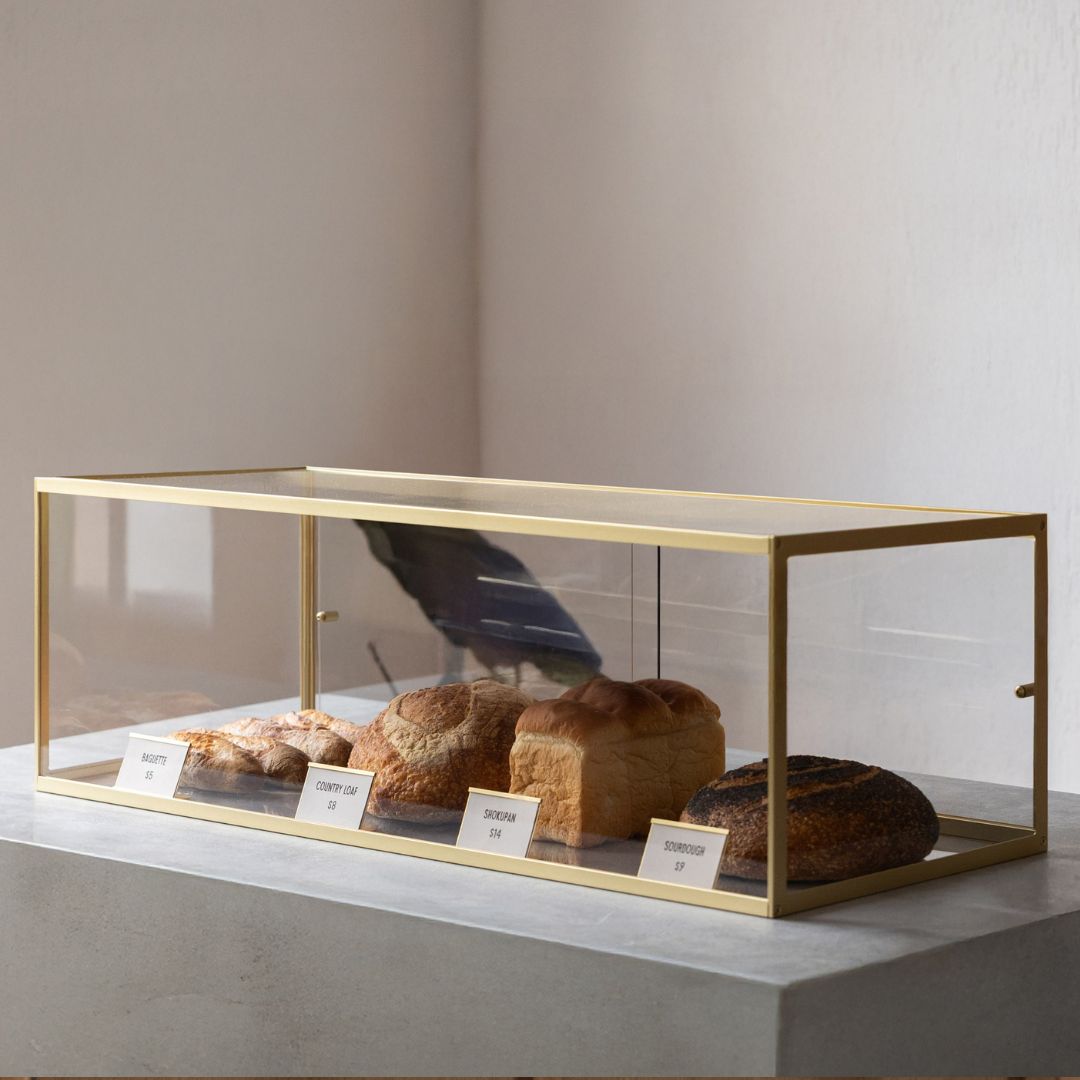
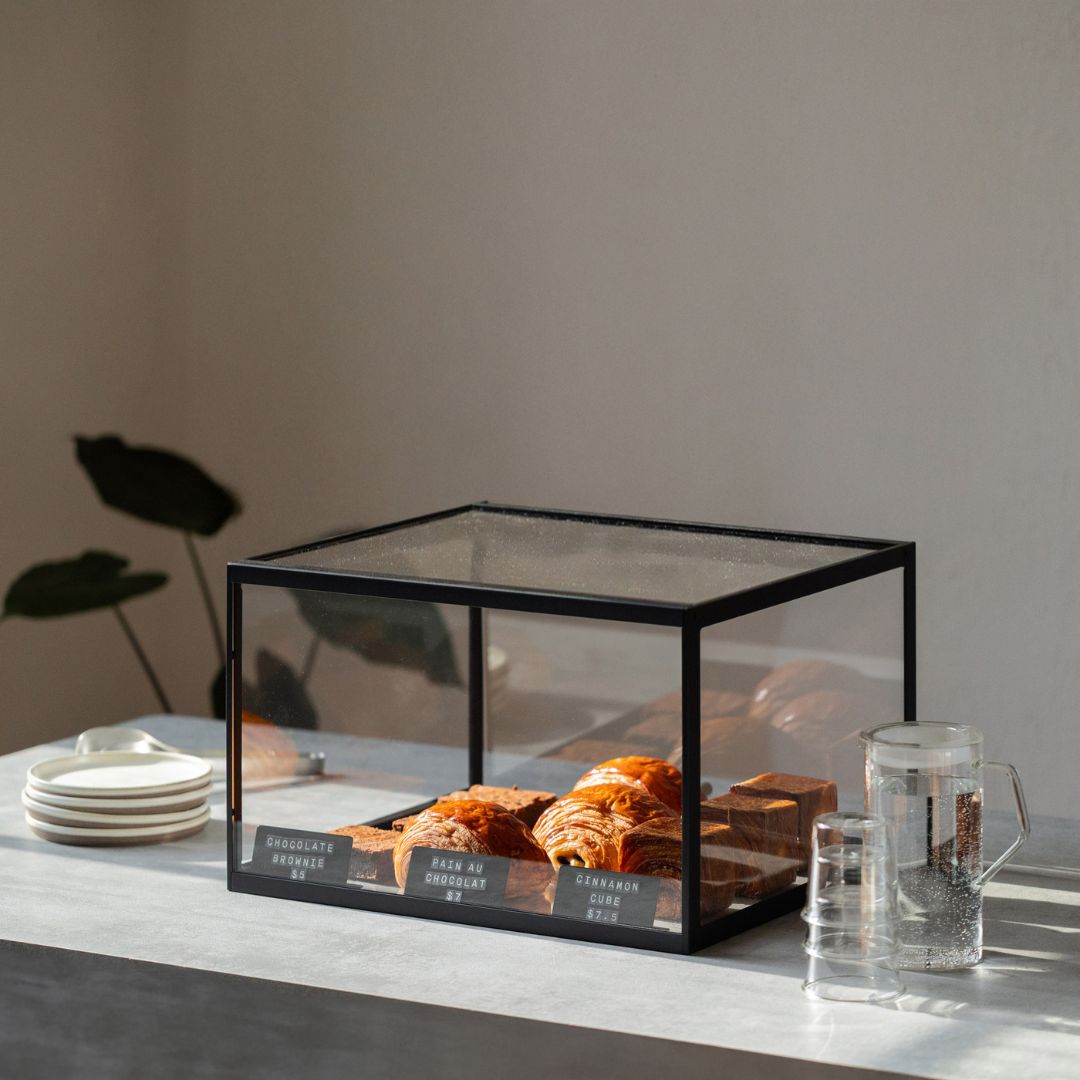
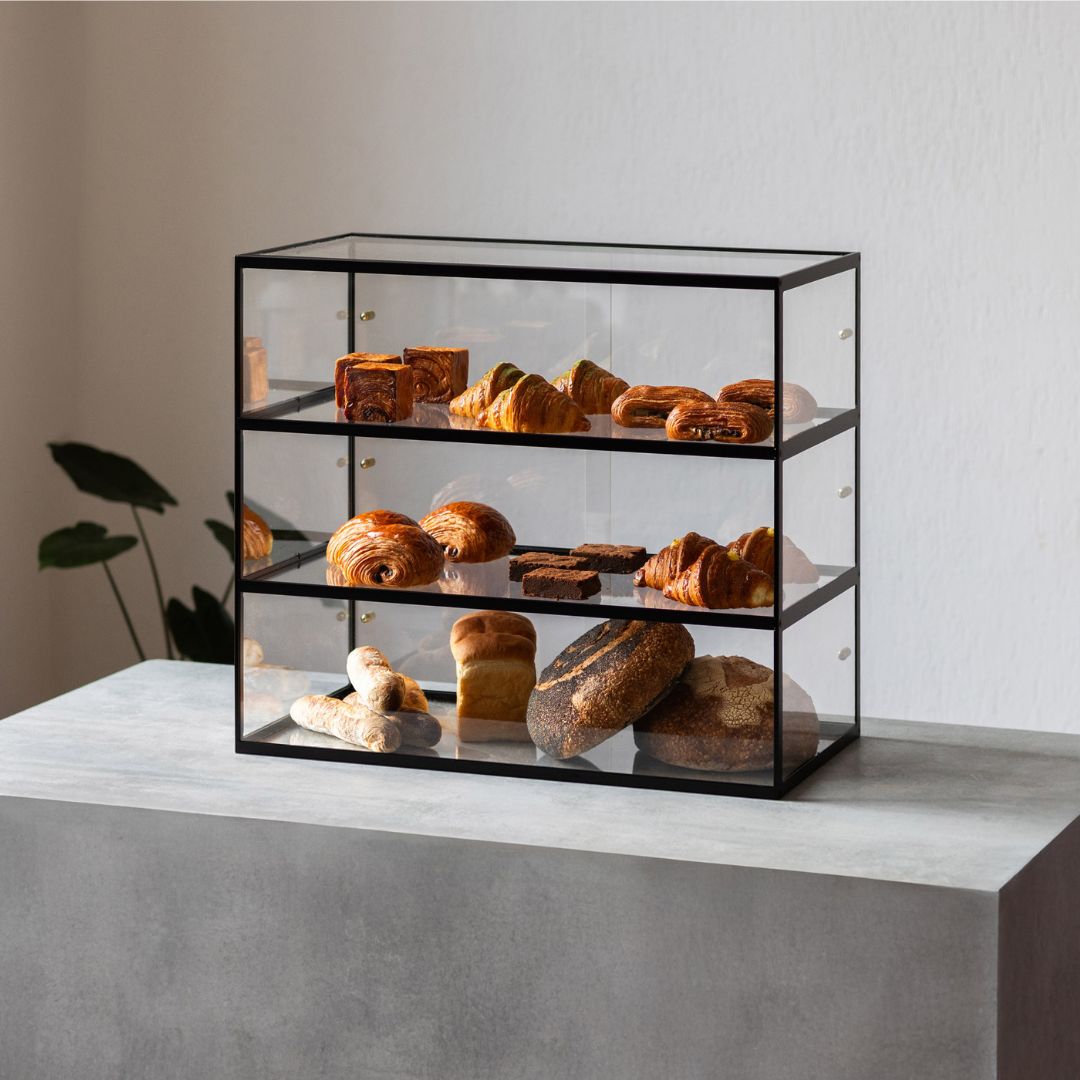
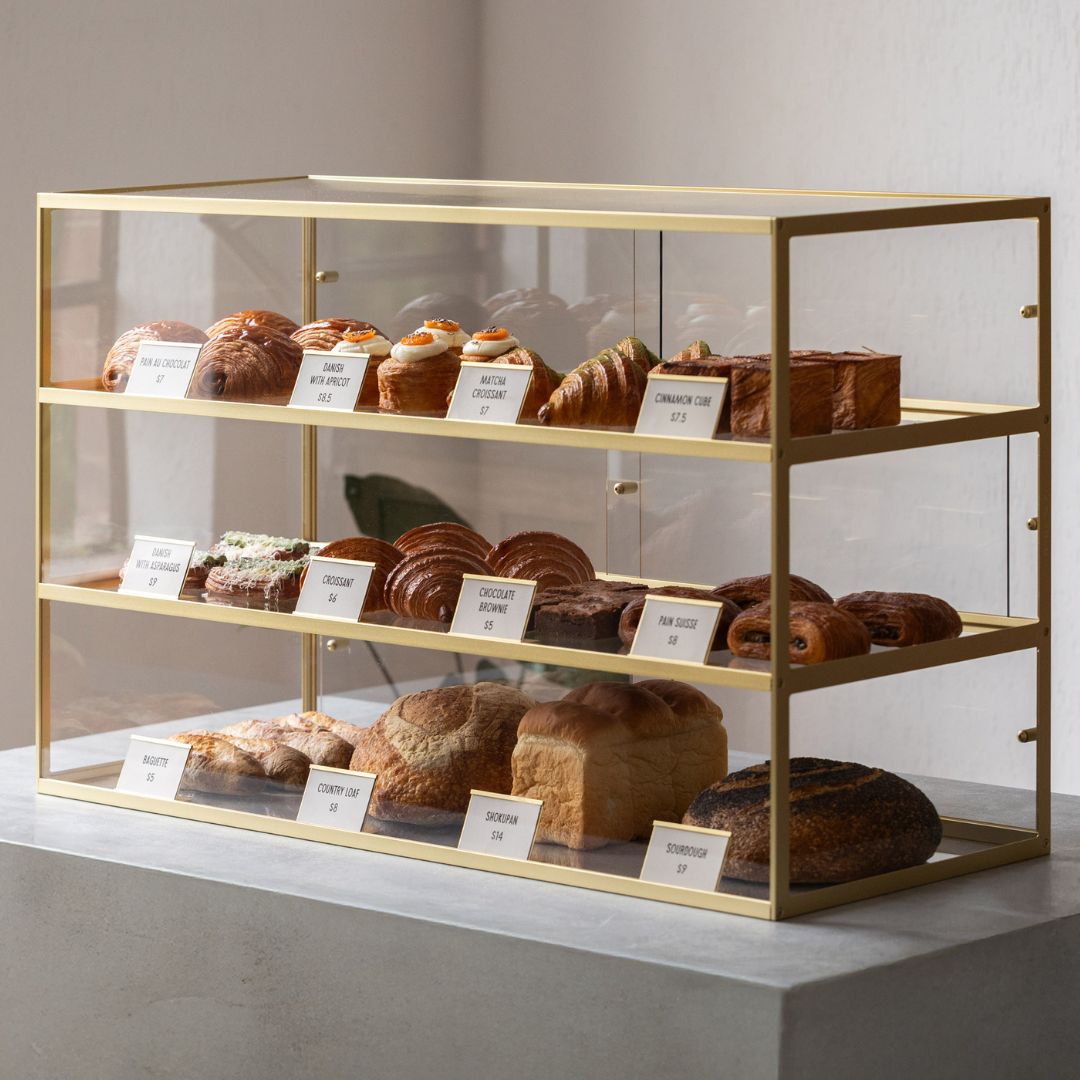
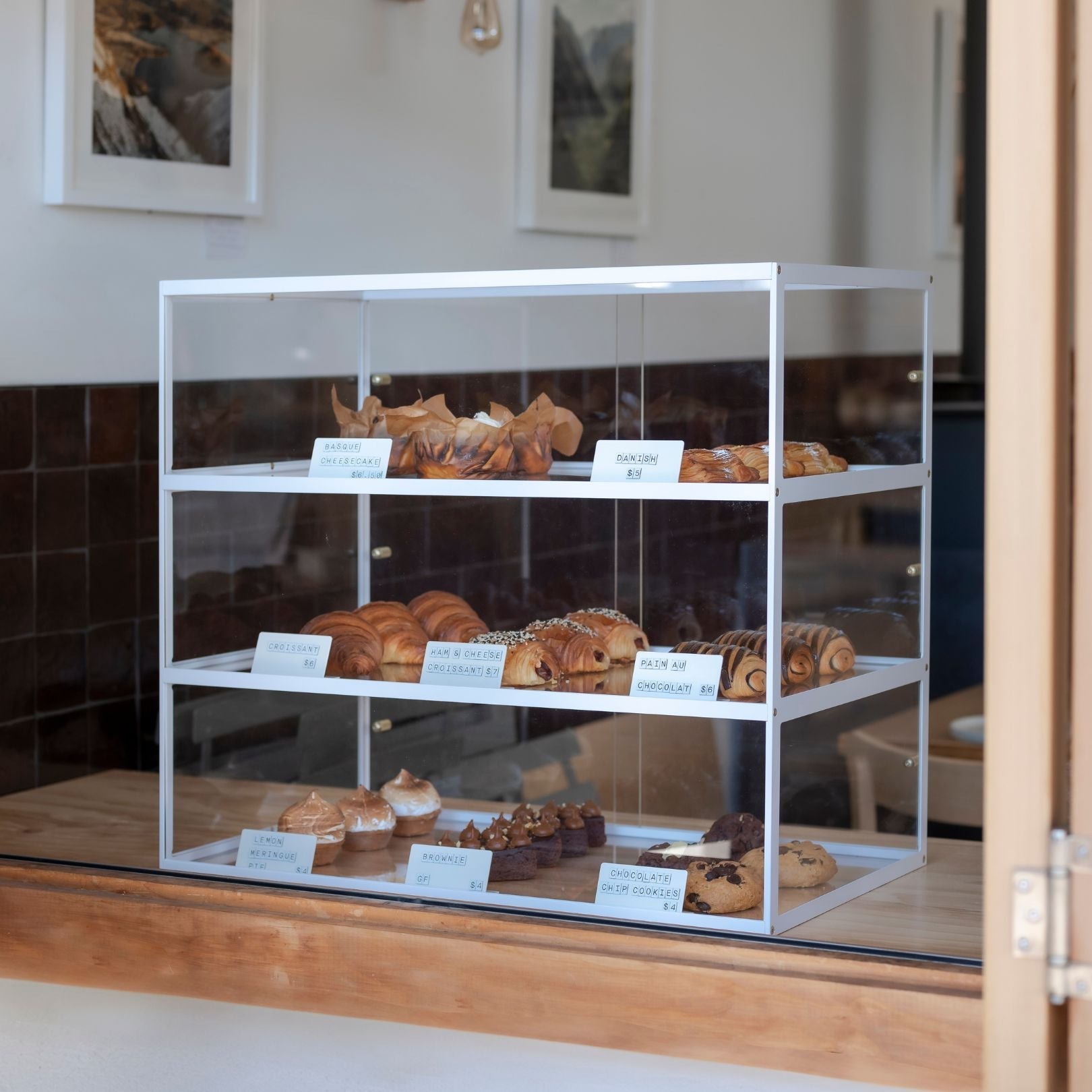
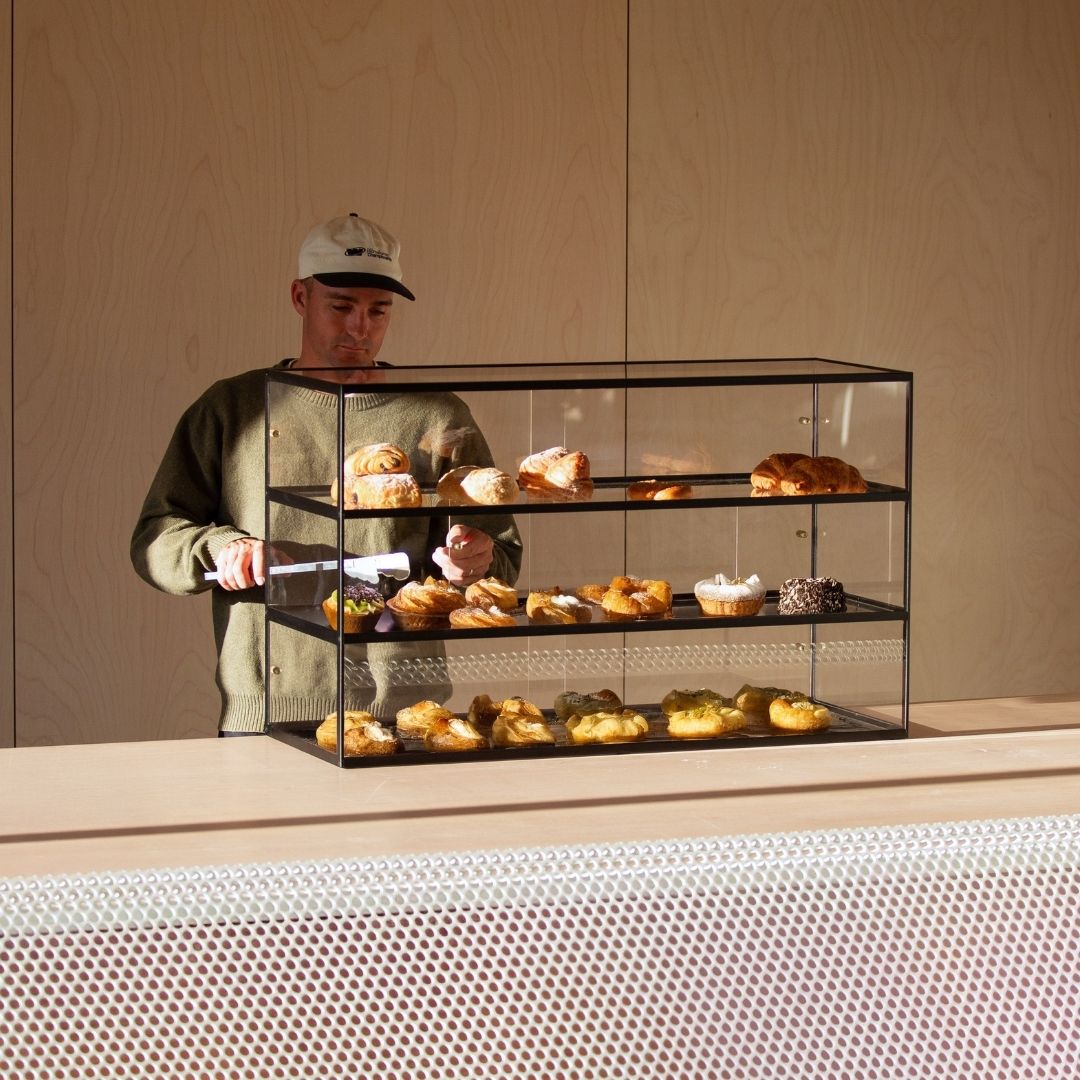
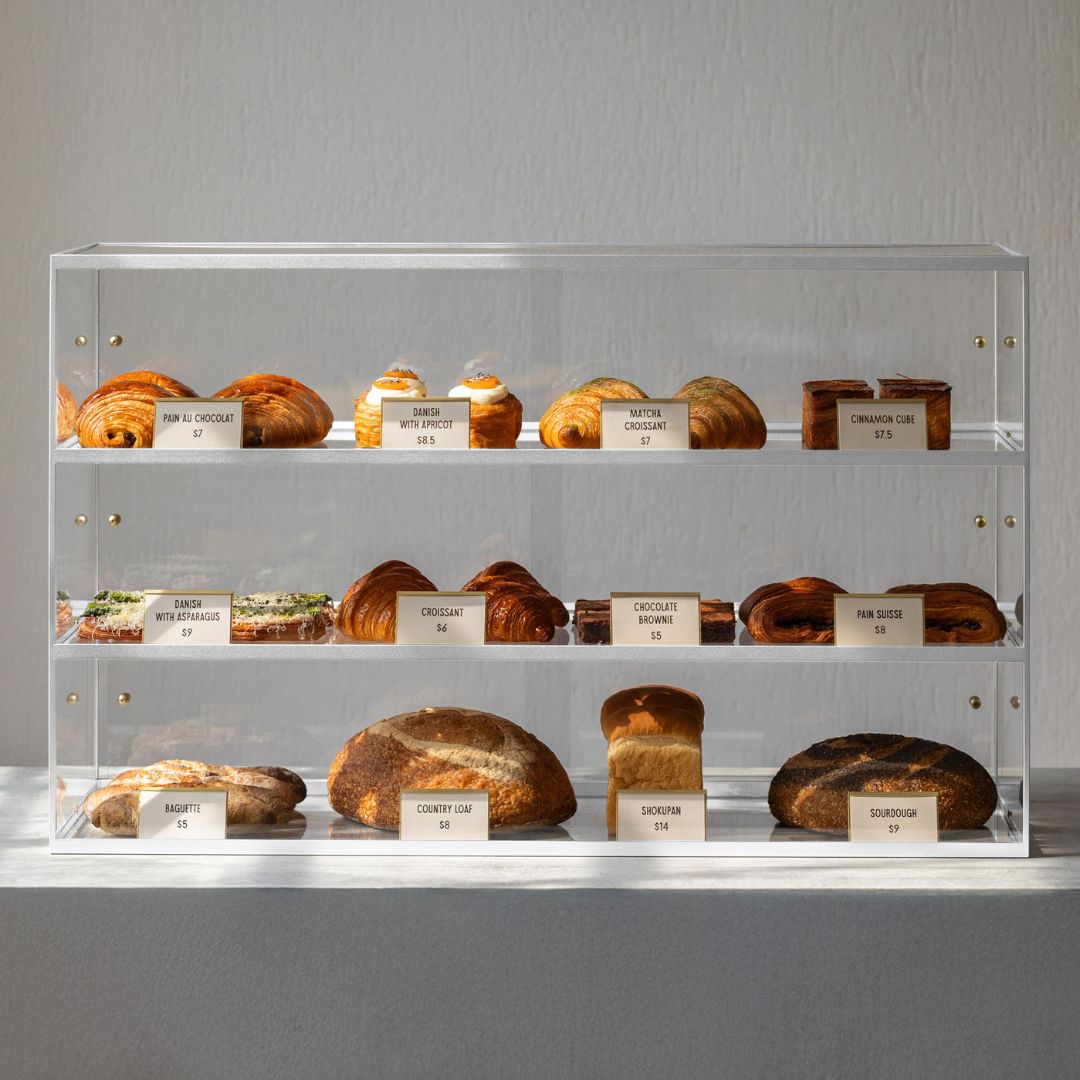
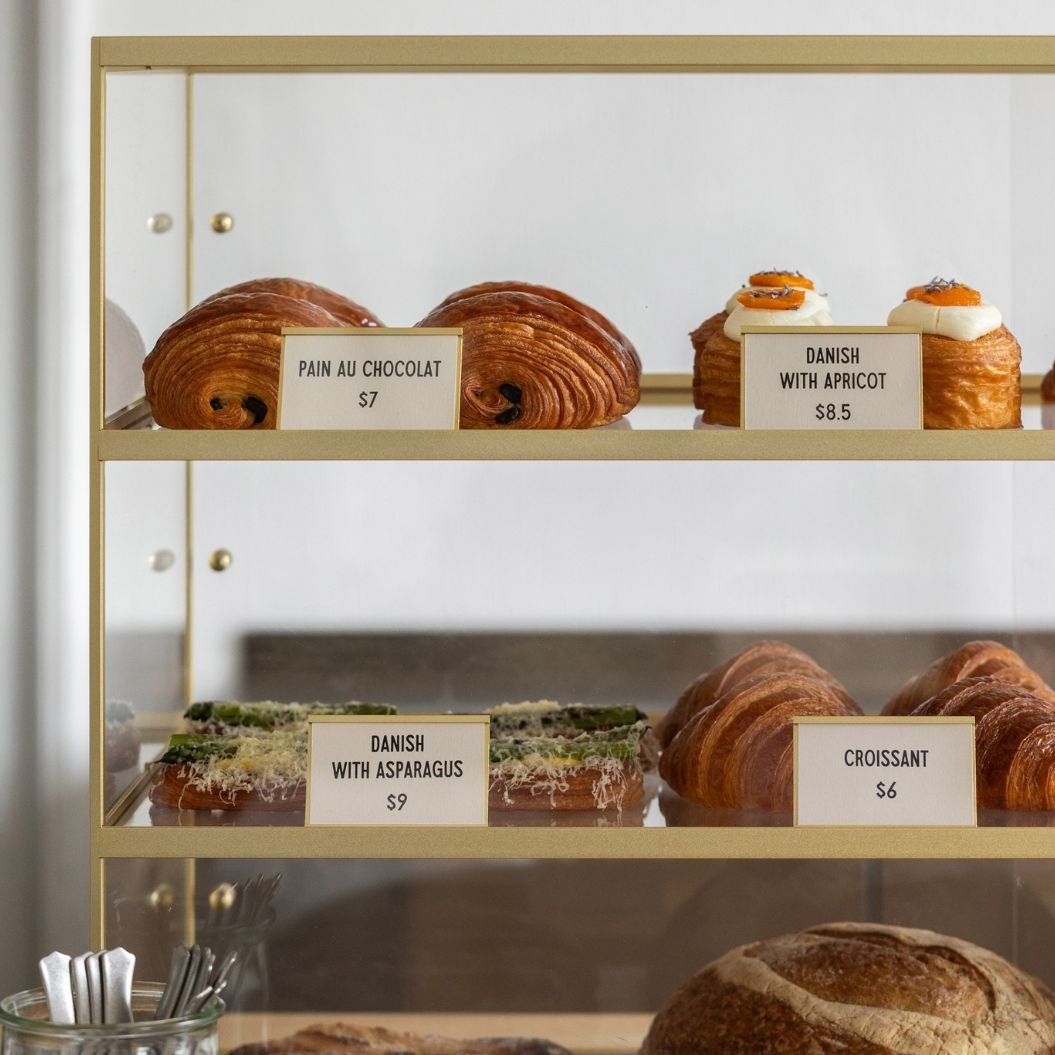
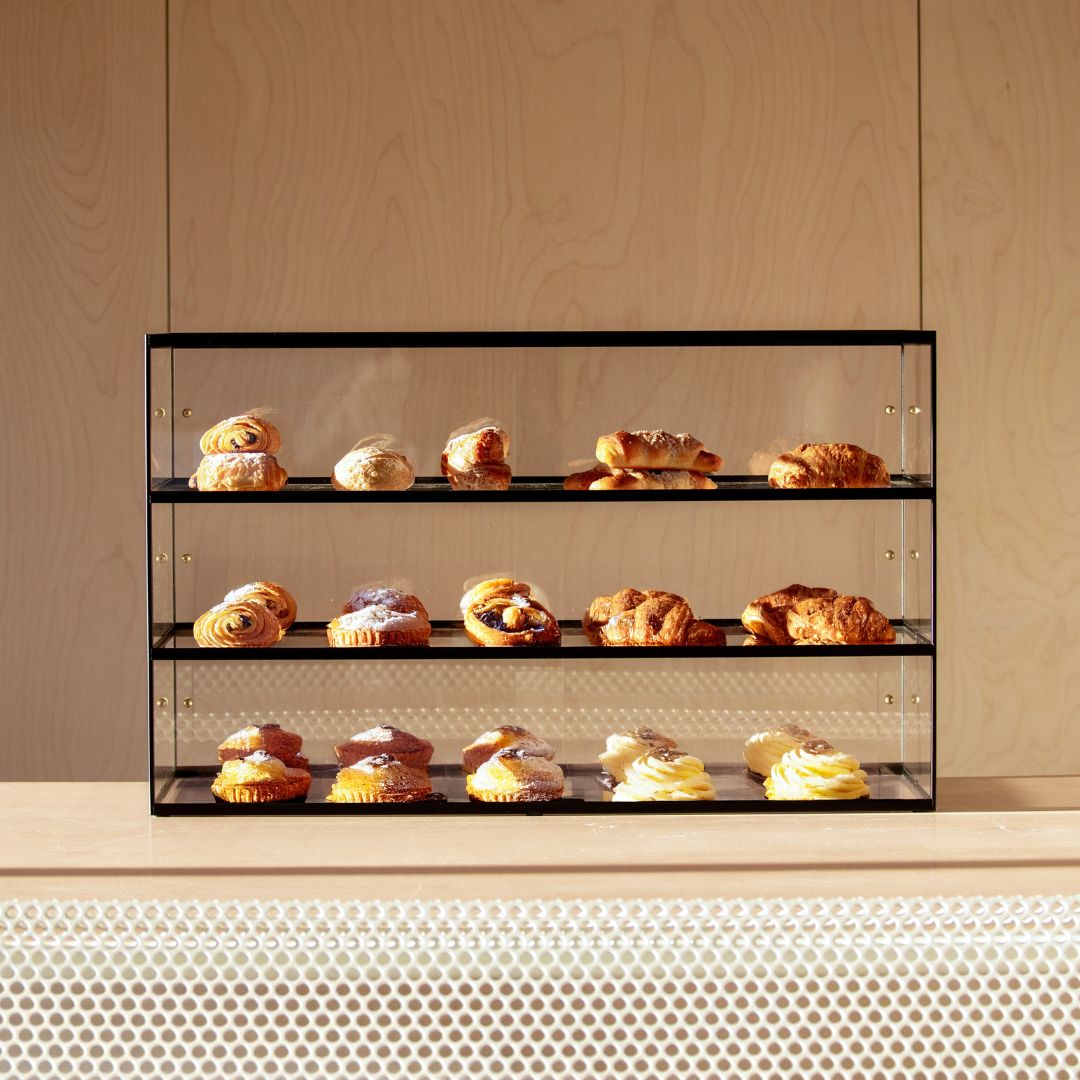
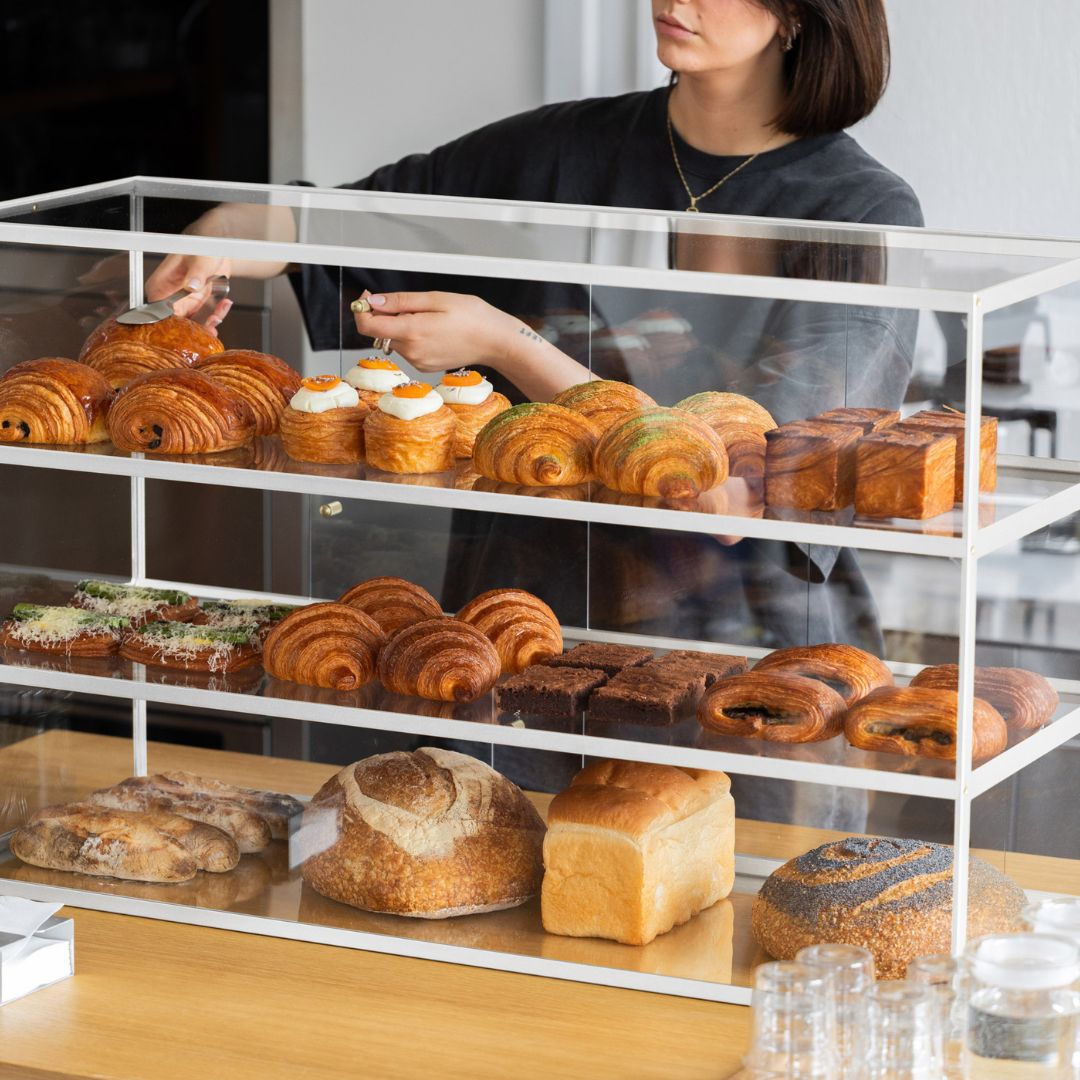
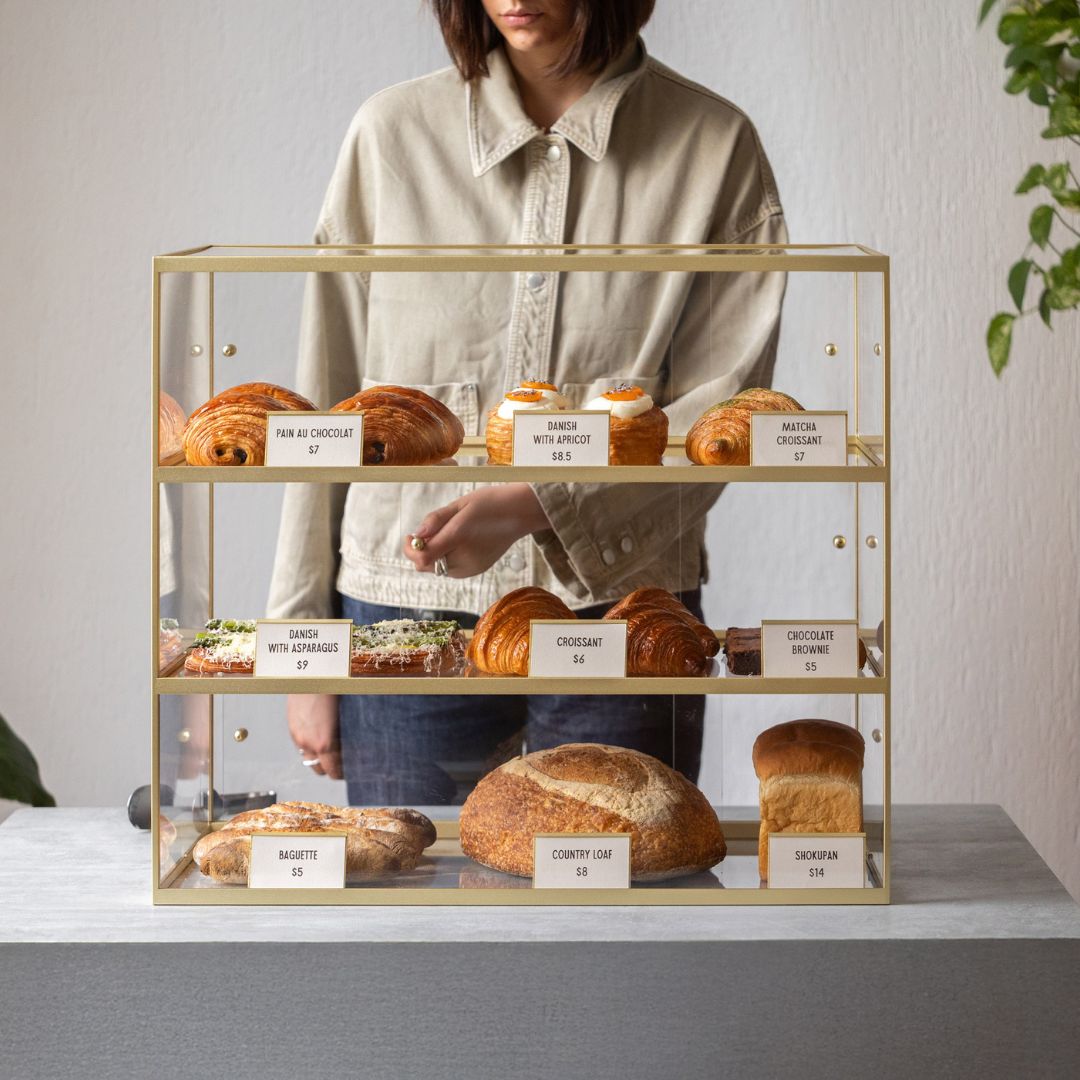
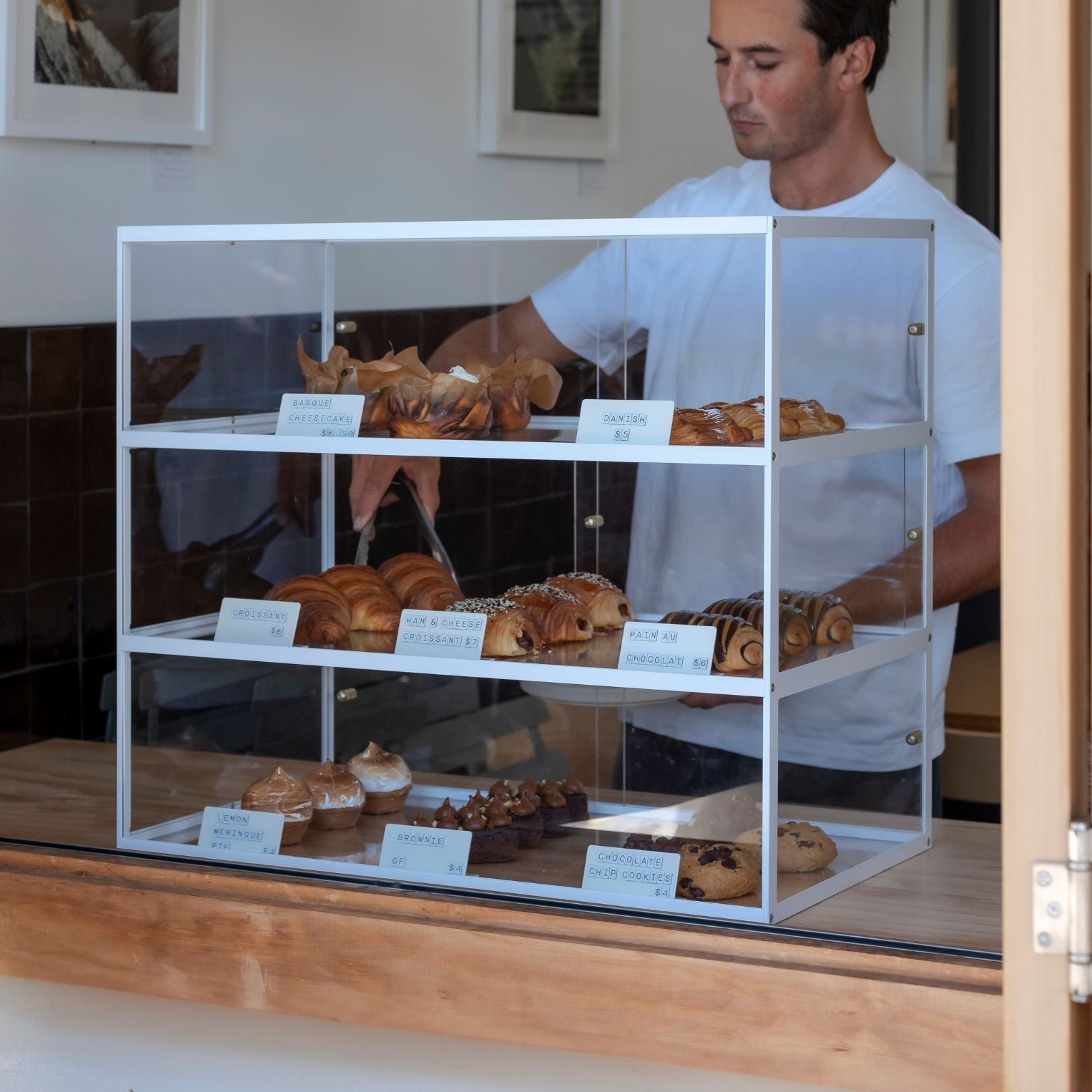
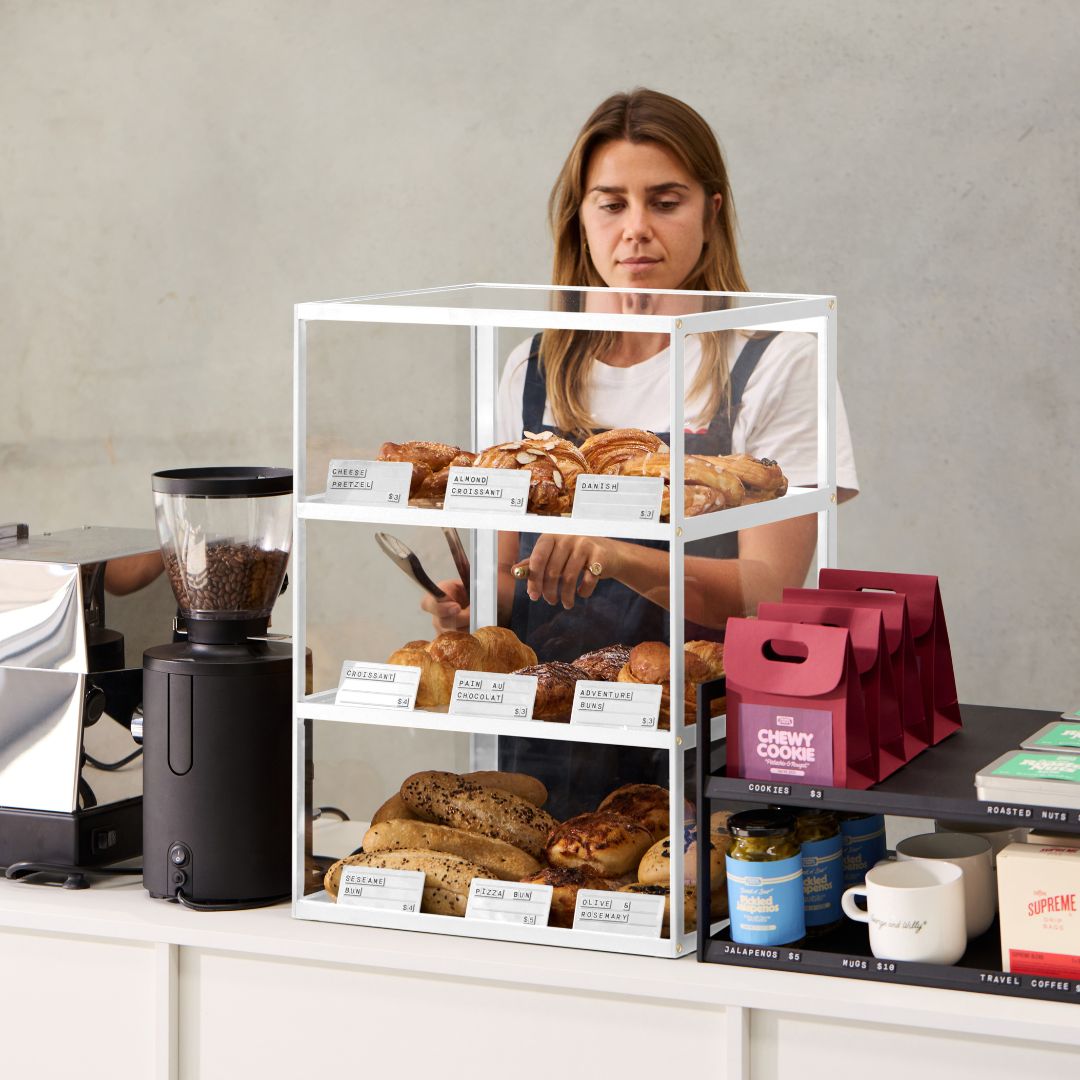
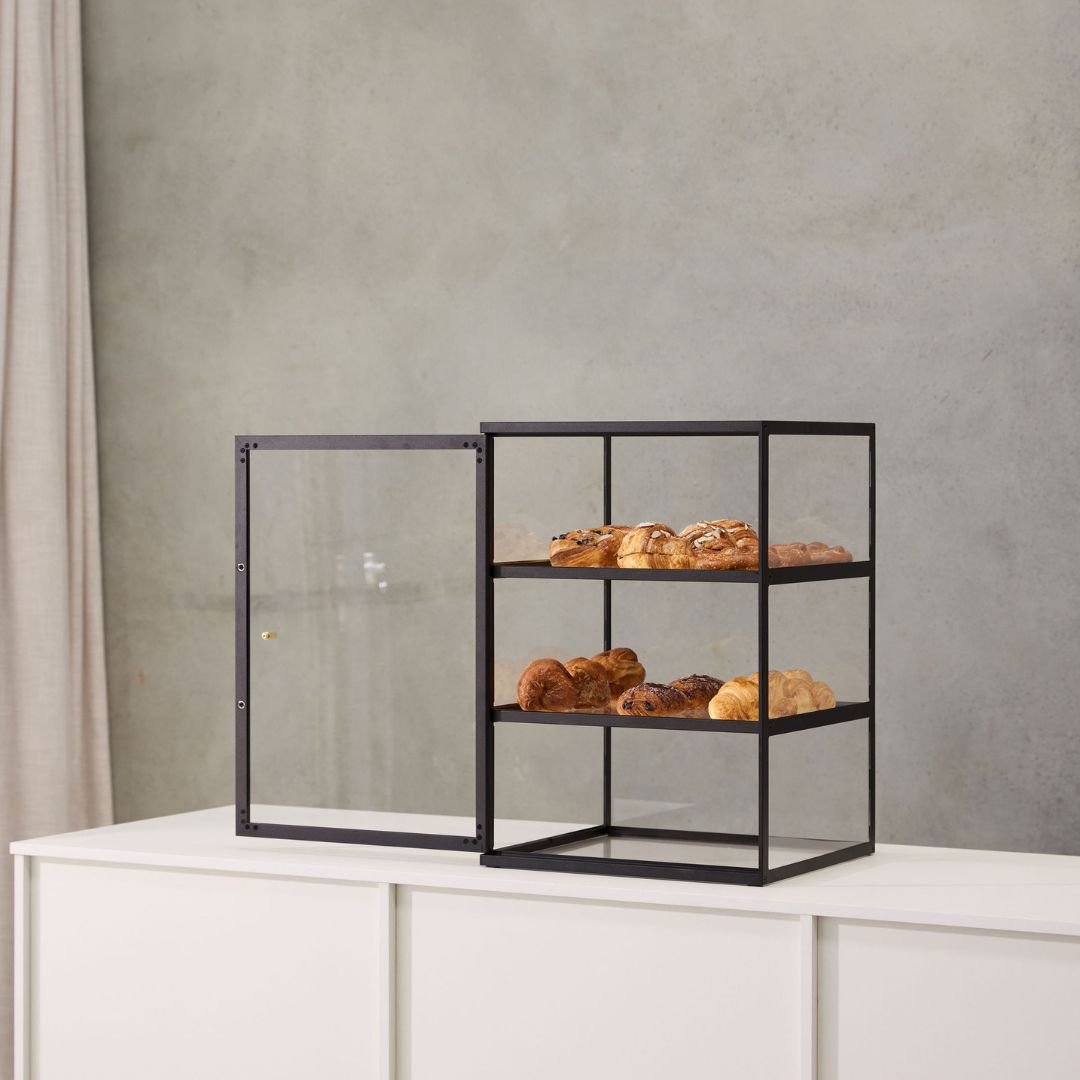
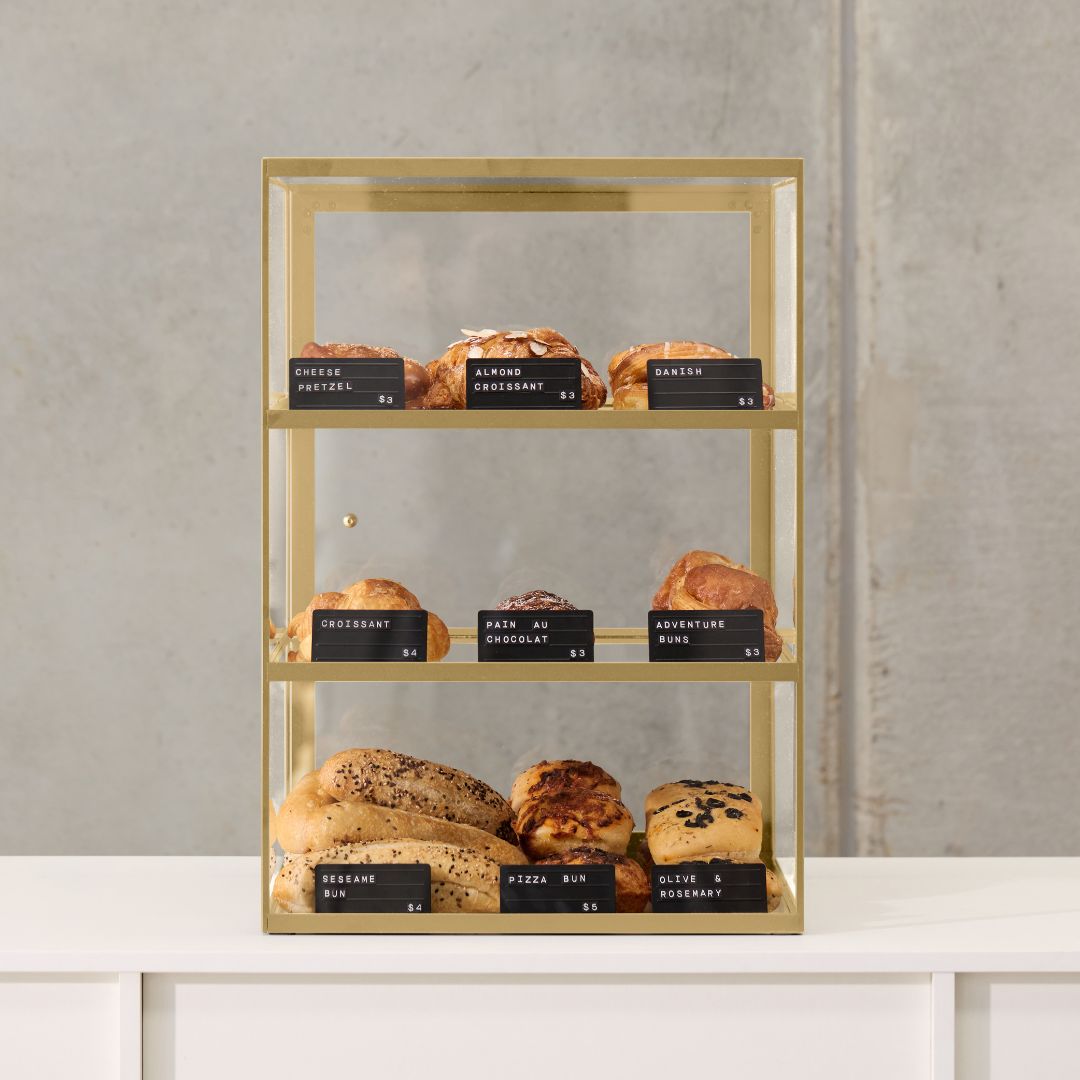
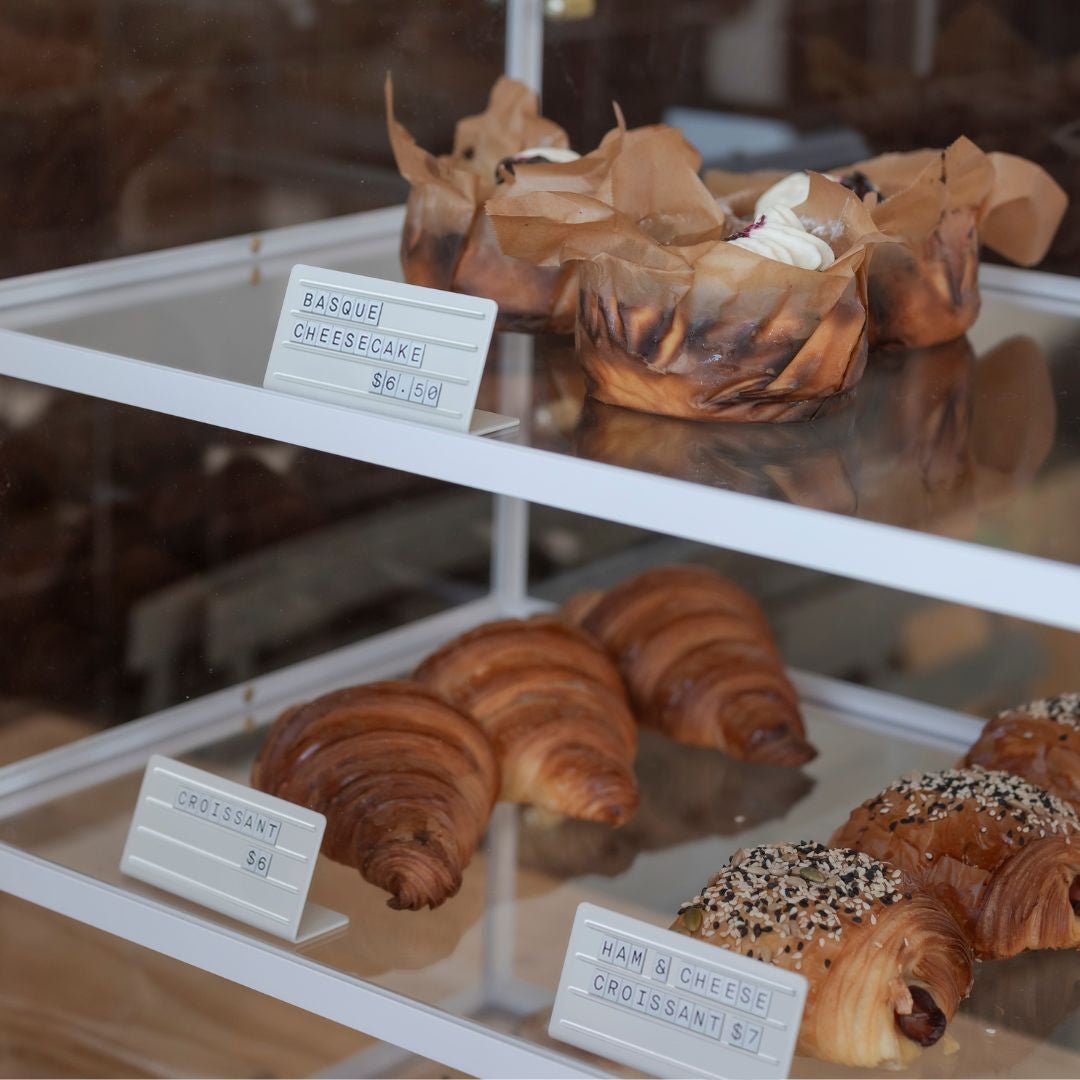
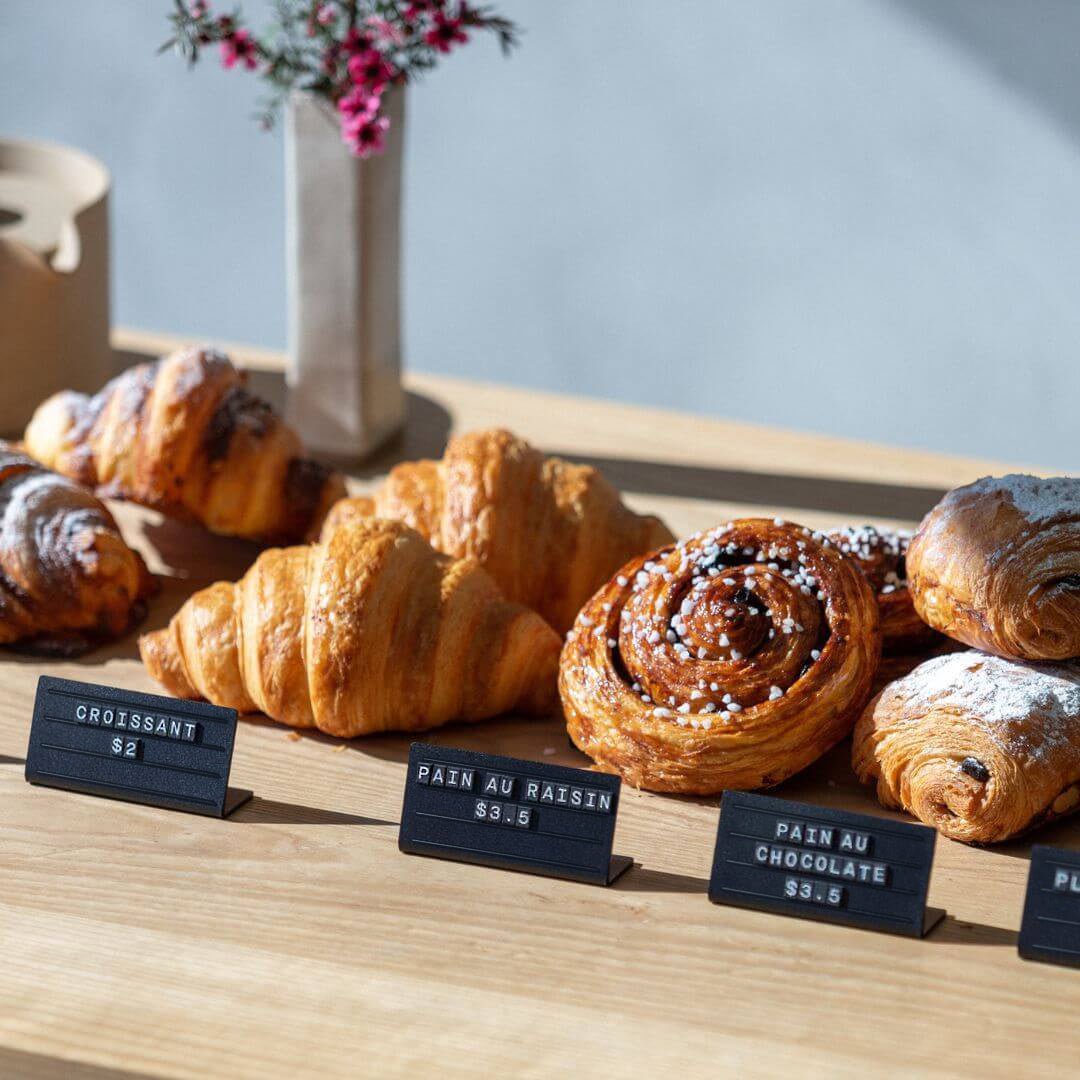
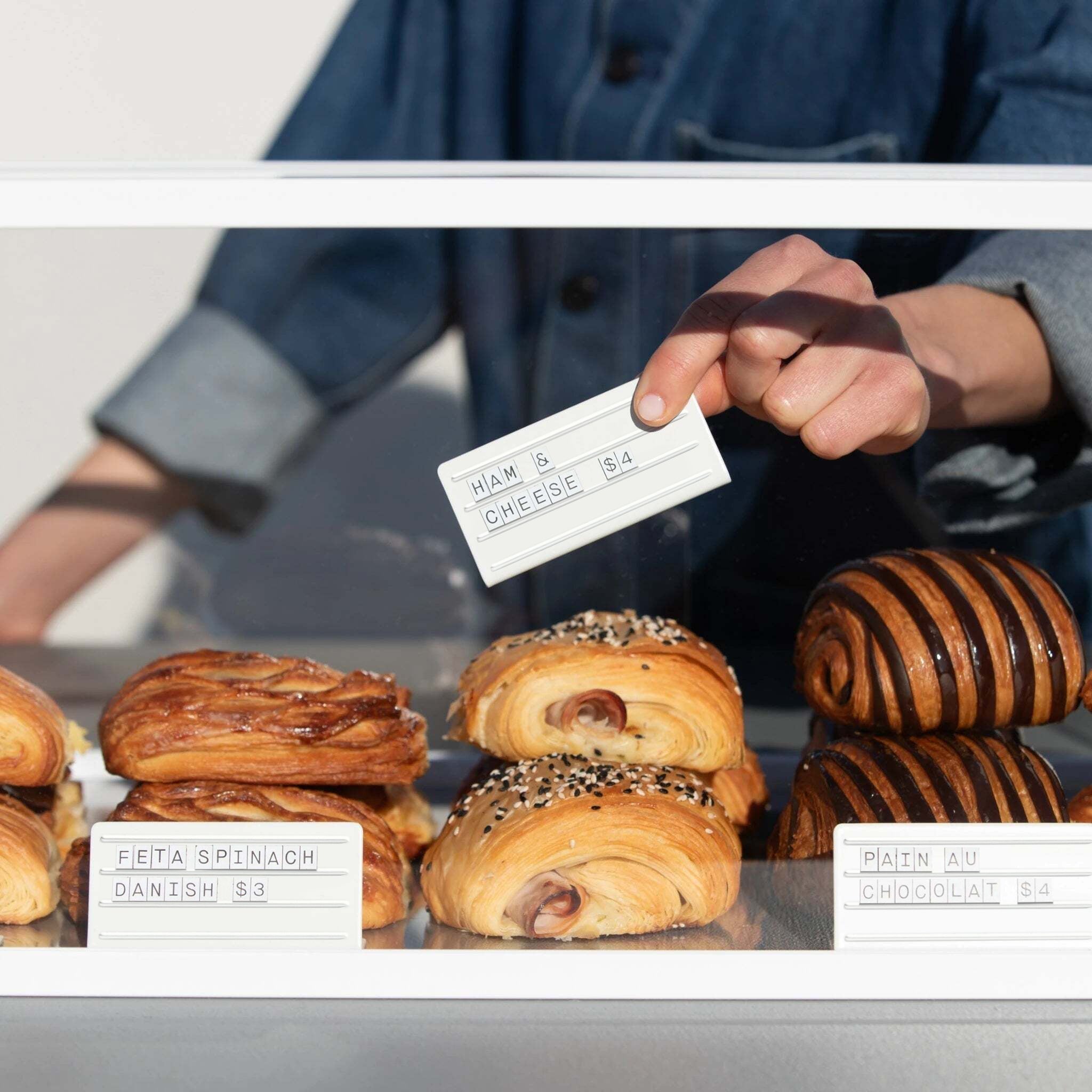
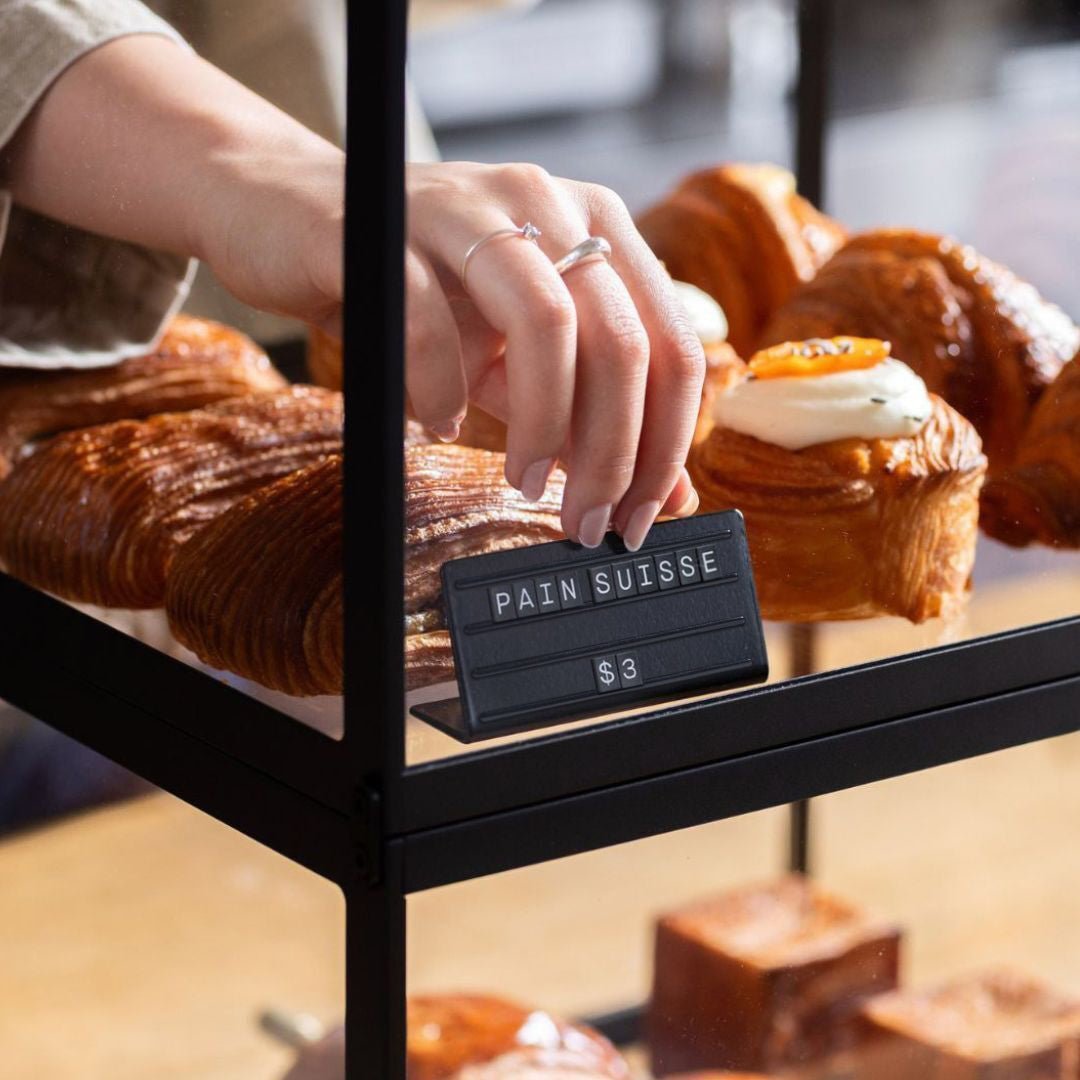
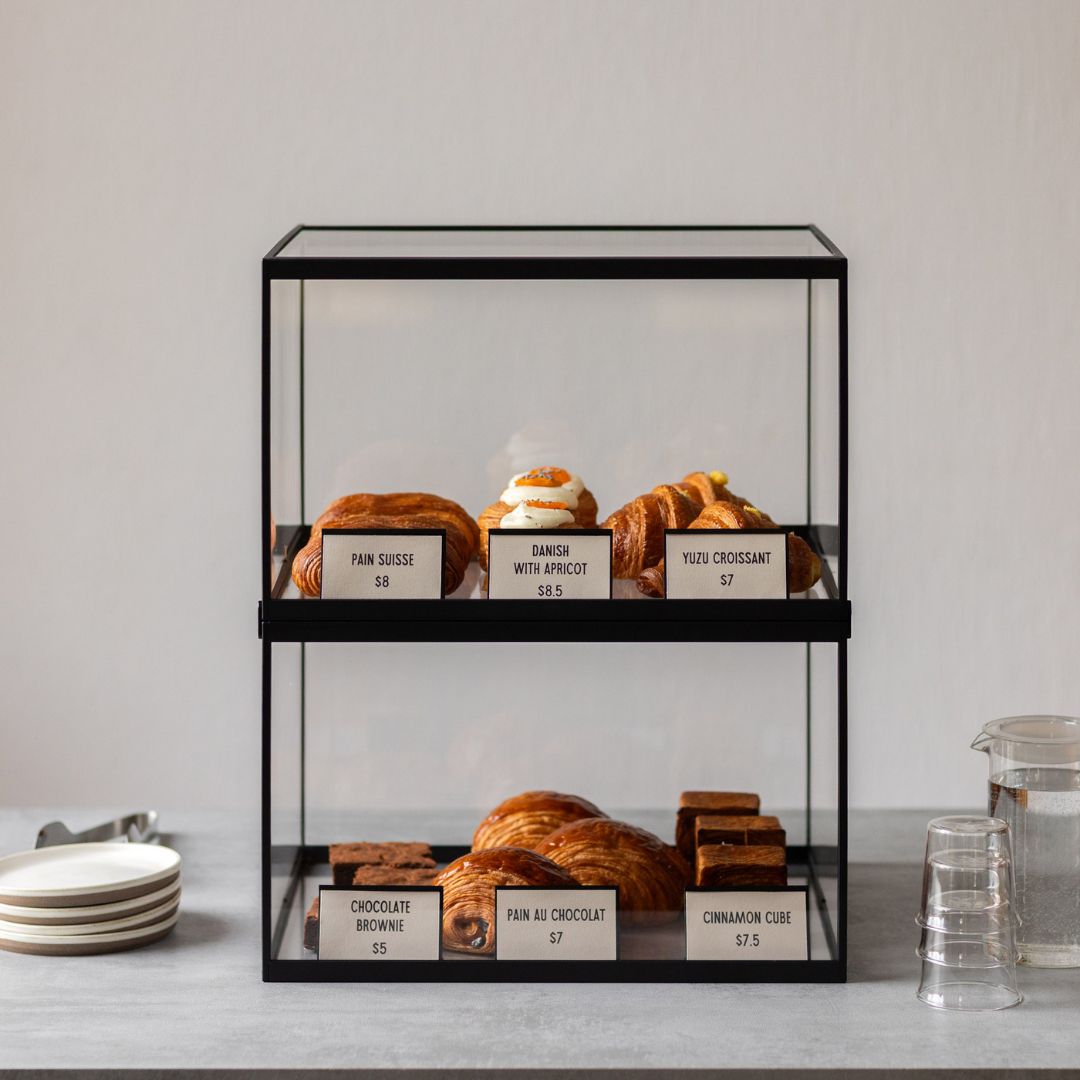
Where the queue is, not where it looks tidiest. People standing in line are still on your floor plan, and they're staring at whatever you've put in front of them. It might as well be croissants. A Bakery Display Case parked where the queue naturally forms, pastries at eye level, will quietly upsell every person who walks in. Getting a pastry onto even a fraction of your coffee orders moves the average spend more than most furniture decisions ever will.
The one-question test
Walk your floor and ask of every square metre: is it seating someone, moving someone, or selling something? If it's doing none of the three, it's decoration, and you're paying rent on it.
The studies, if you want to go down the rabbit hole: Kimes & Robson, "The Impact of Restaurant Table Characteristics on Meal Duration and Spending," Cornell Hospitality Quarterly (2004), and Robson, Kimes, Becker & Evans, "Consumers' Responses to Table Spacing in Restaurants," Cornell Hospitality Quarterly (2011).