

Choosing a sign for your business is a big deal. It’s the first hello, a silent salesperson, and a landmark for your customers. But with so many options out there, figuring out the best material for outdoor signs can feel overwhelming. You need something that looks great, represents your brand, and most importantly, can stand up to whatever Mother Nature throws at it. While the “best” material for your outdoor business sign depends on your specific needs and budget, aluminum and its composites are often the top contenders for their superb balance of durability, versatility, and value.
This guide breaks down the most popular sign materials, from tough metals to versatile plastics, to help you make a smart investment. We’ll explore what makes each material tick, so you can find the perfect match for your storefront, café, or studio.
The Metal Champions: Durability and a Premium Look
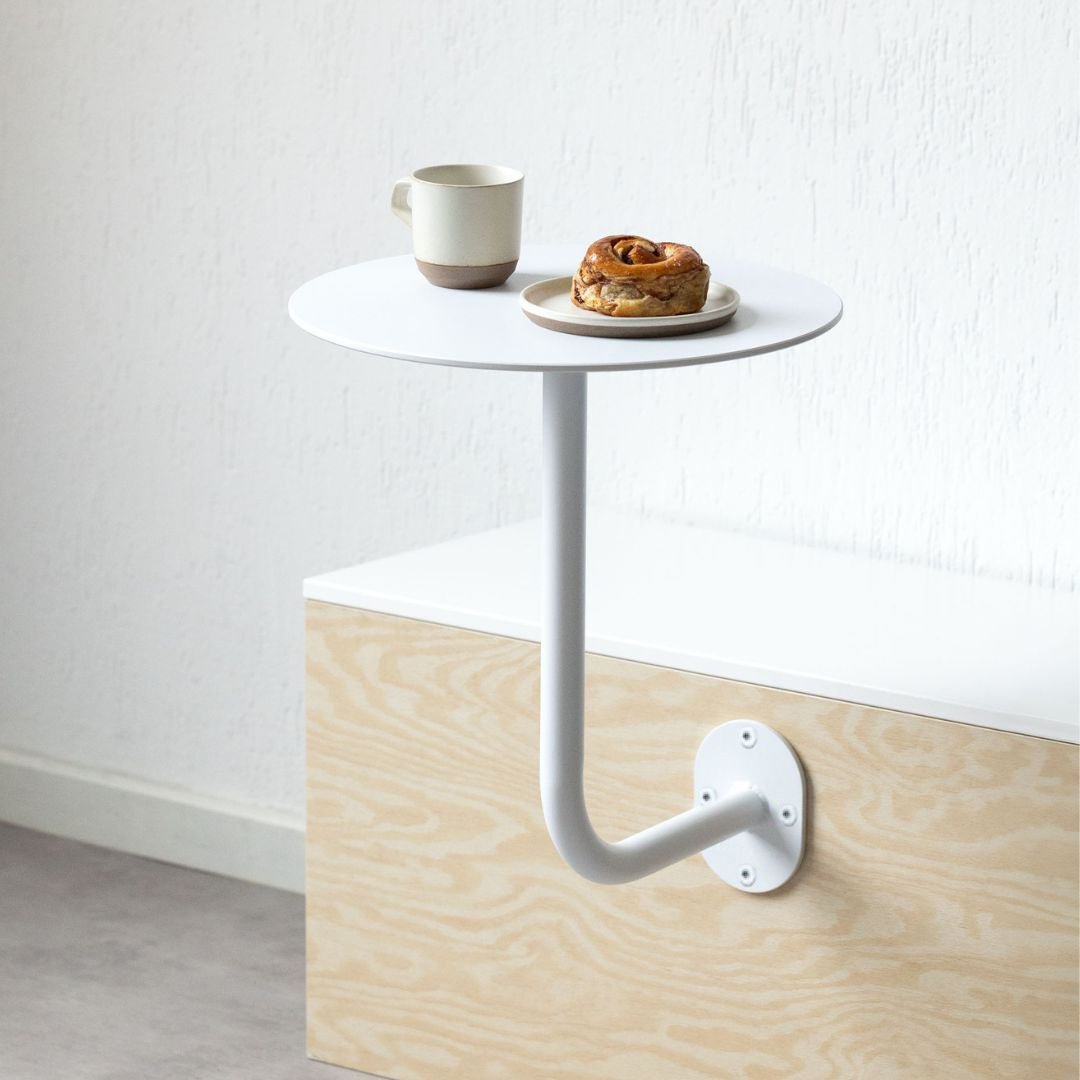
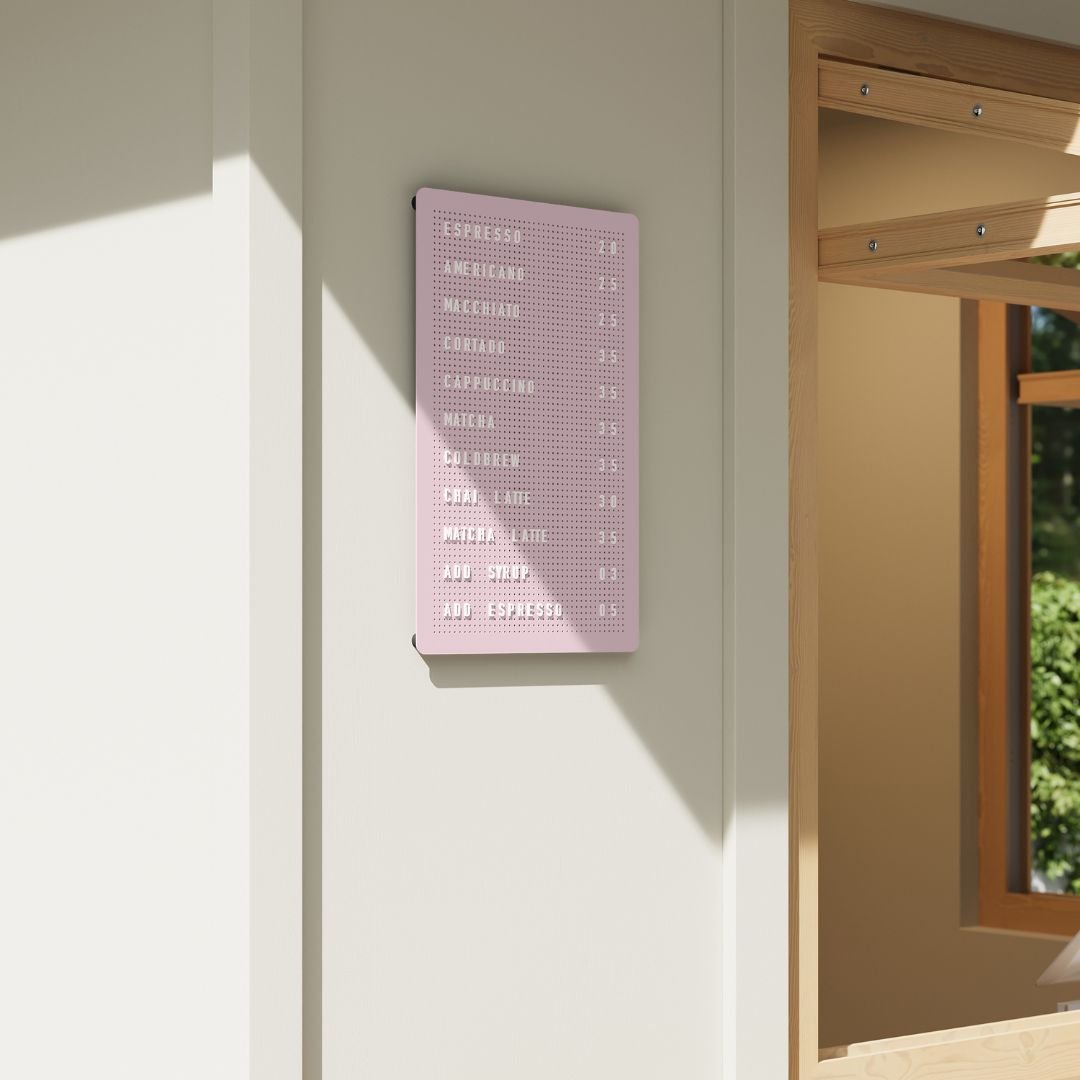
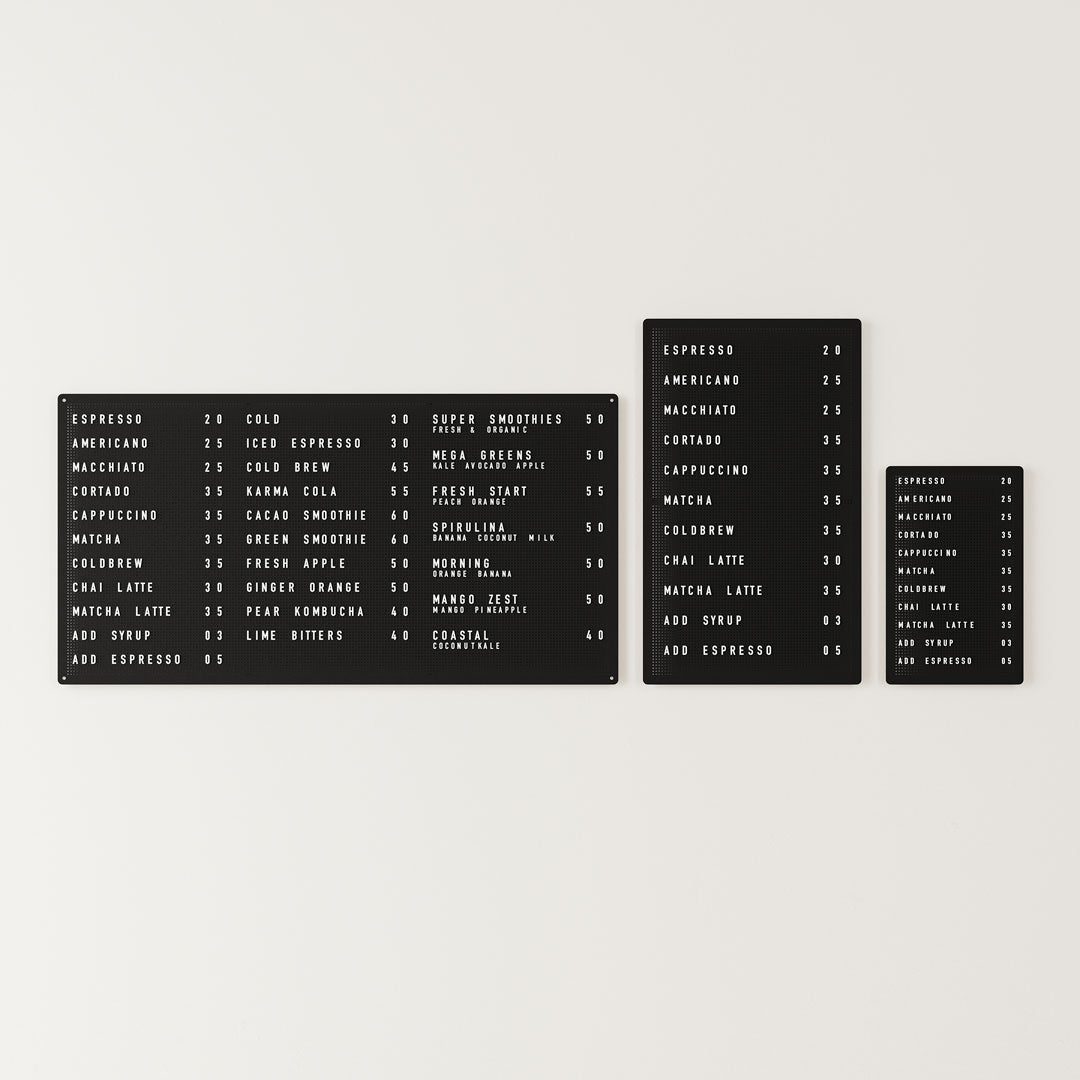
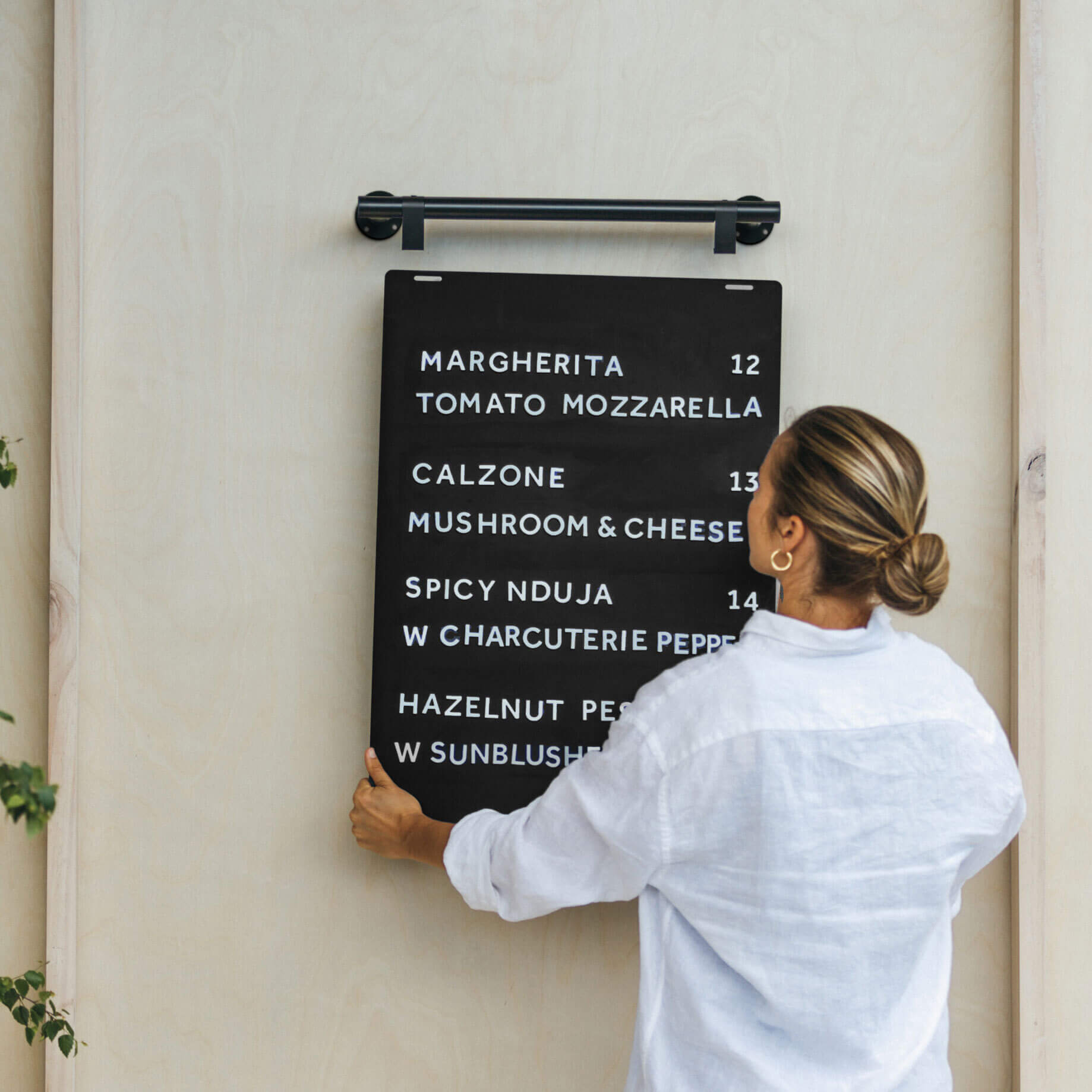
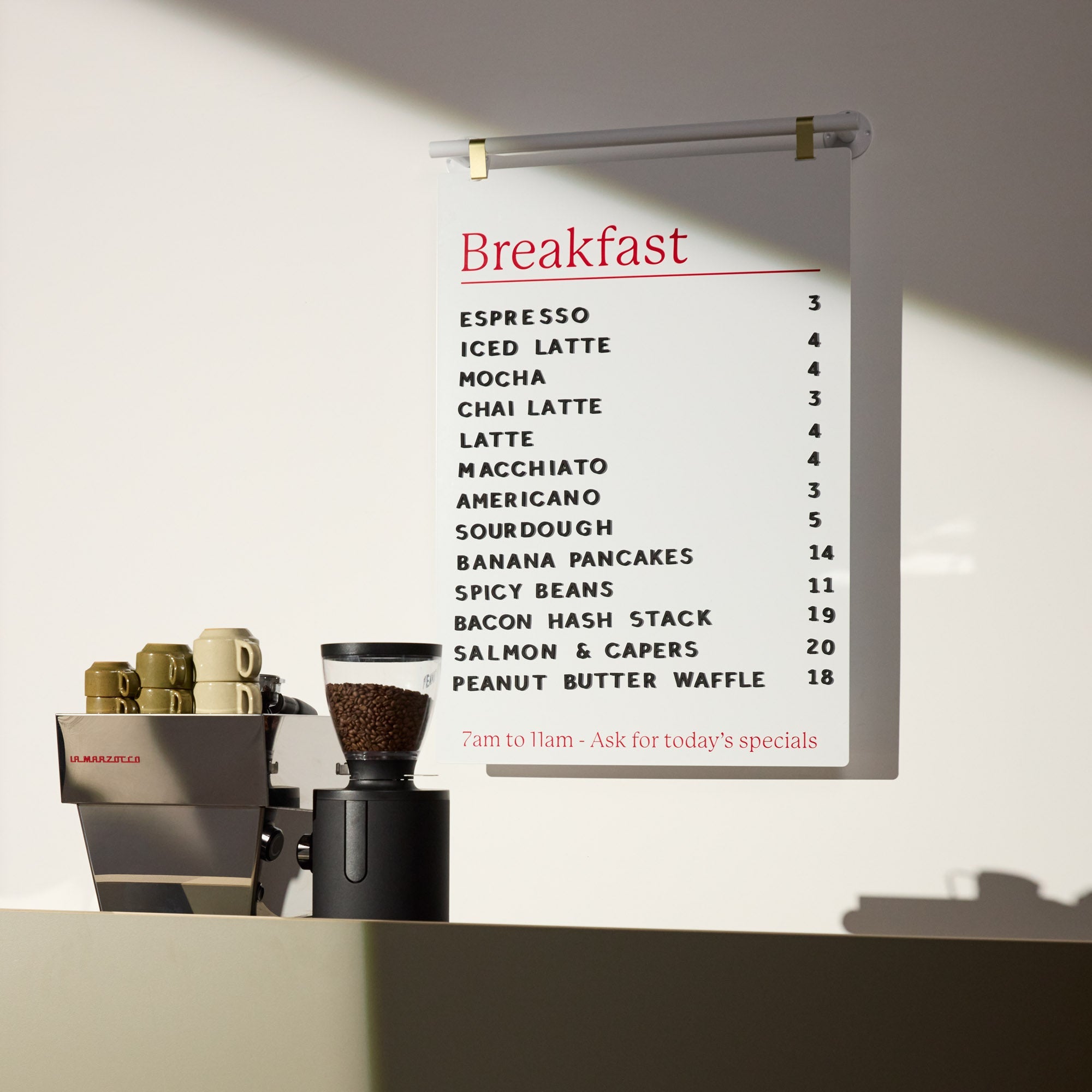
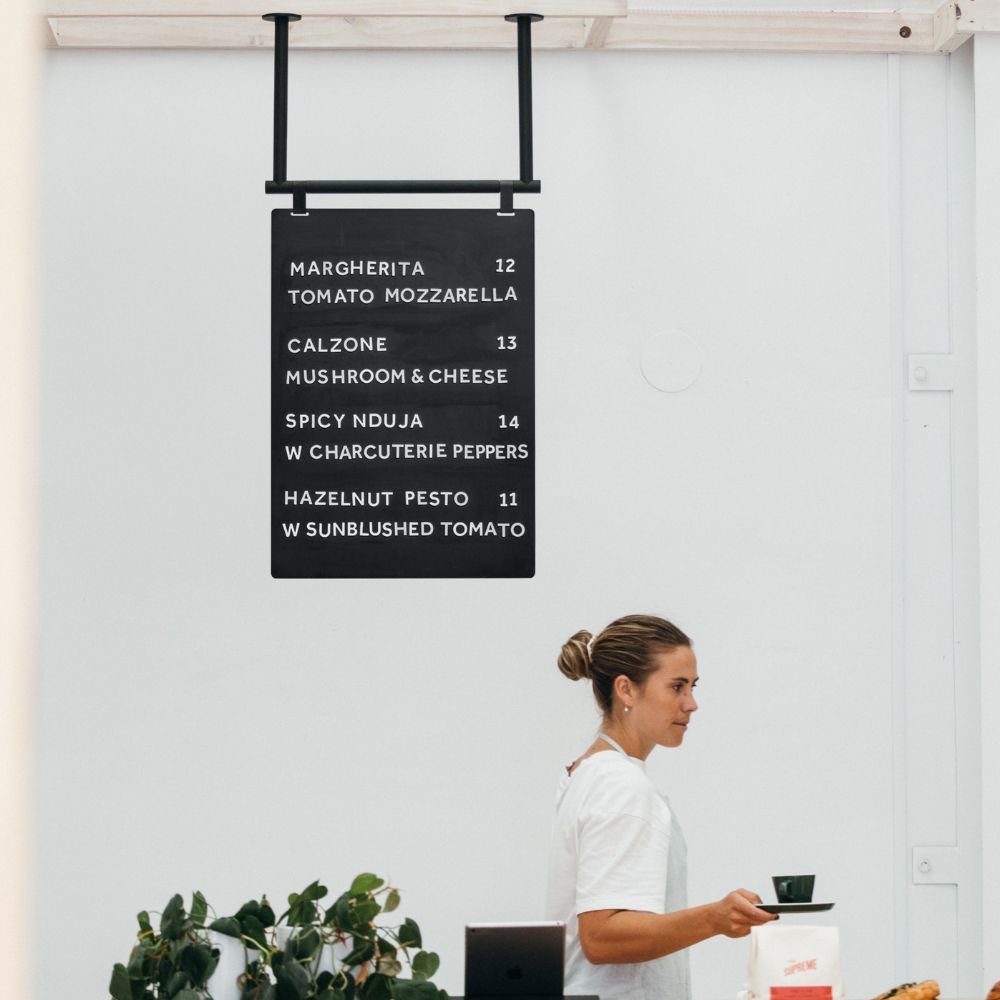
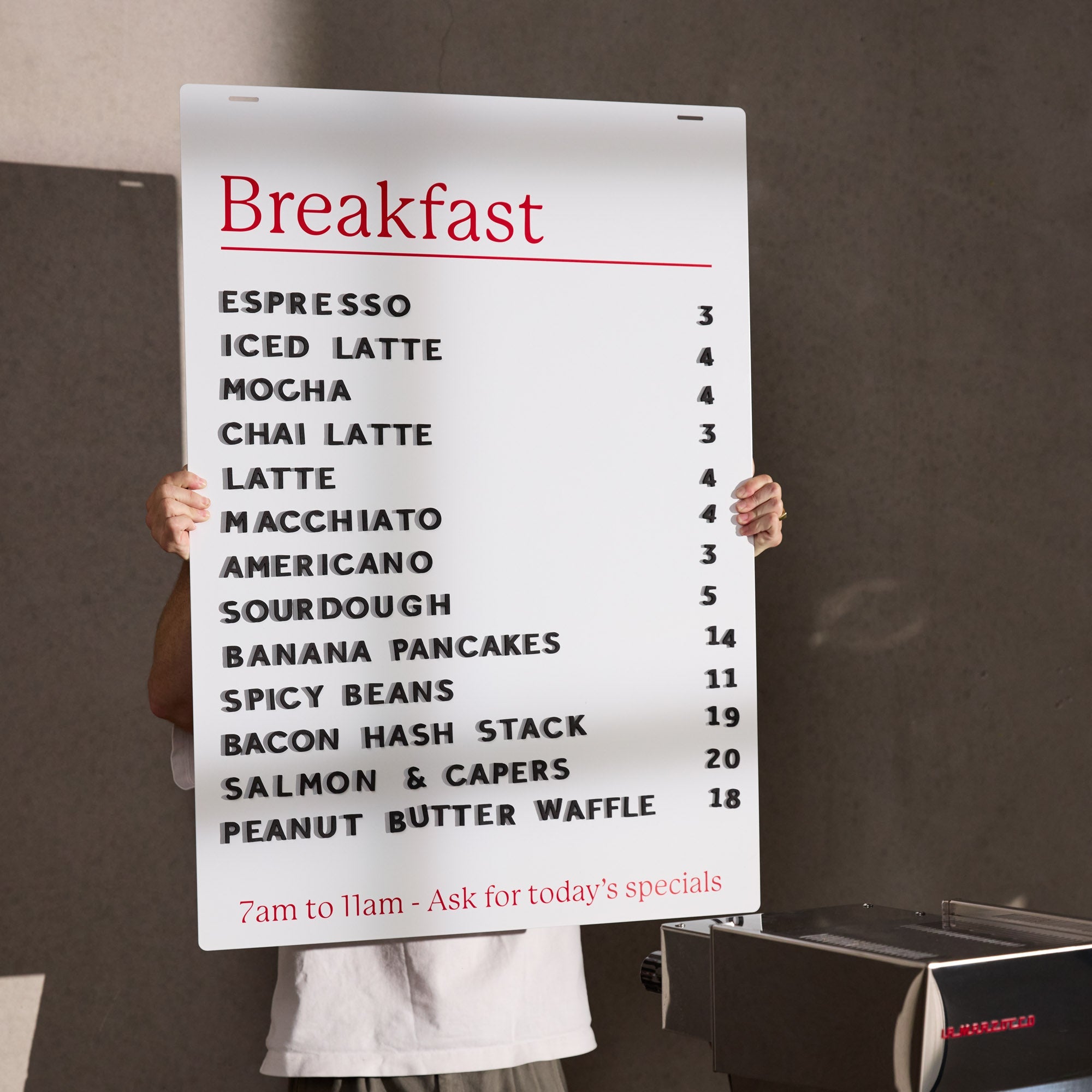
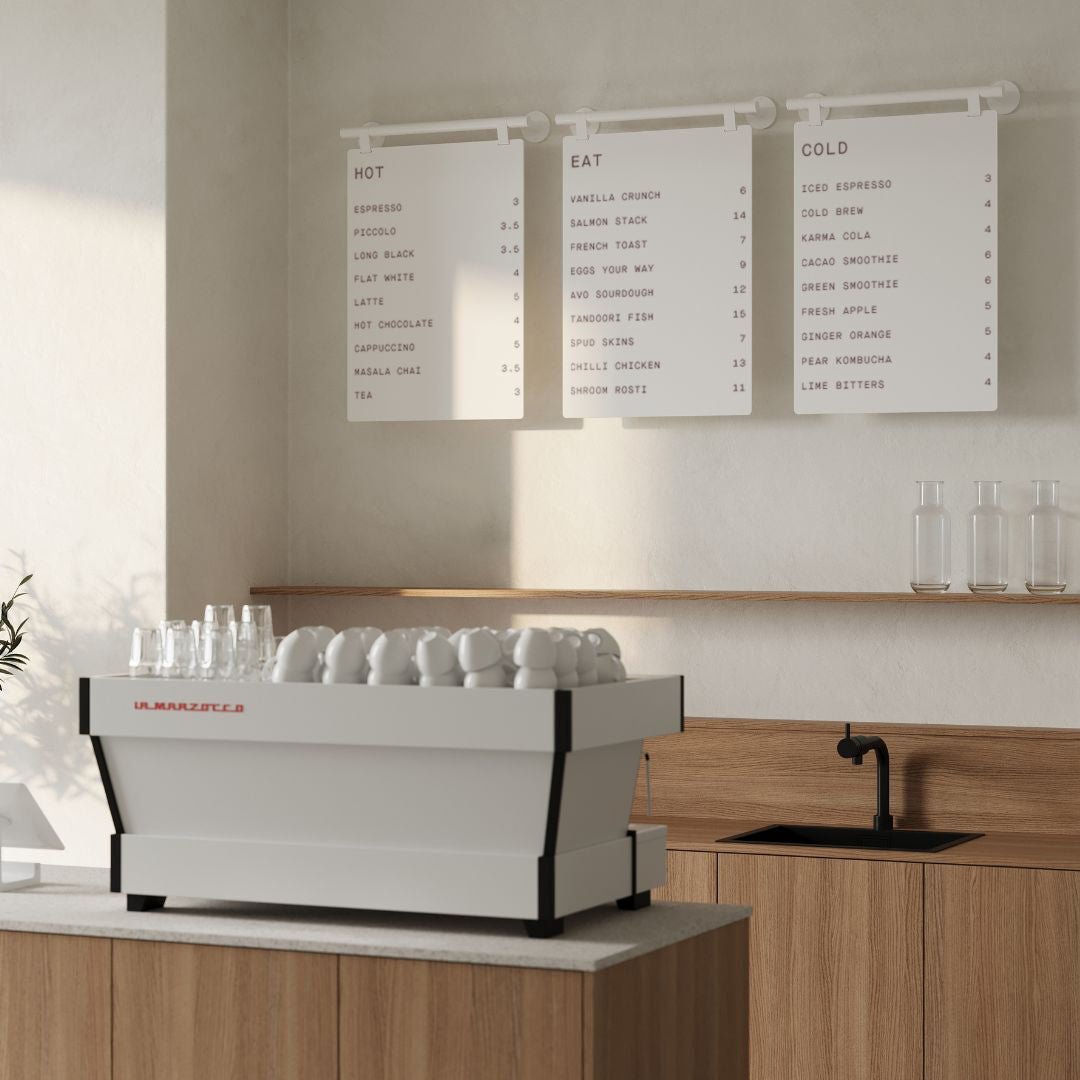
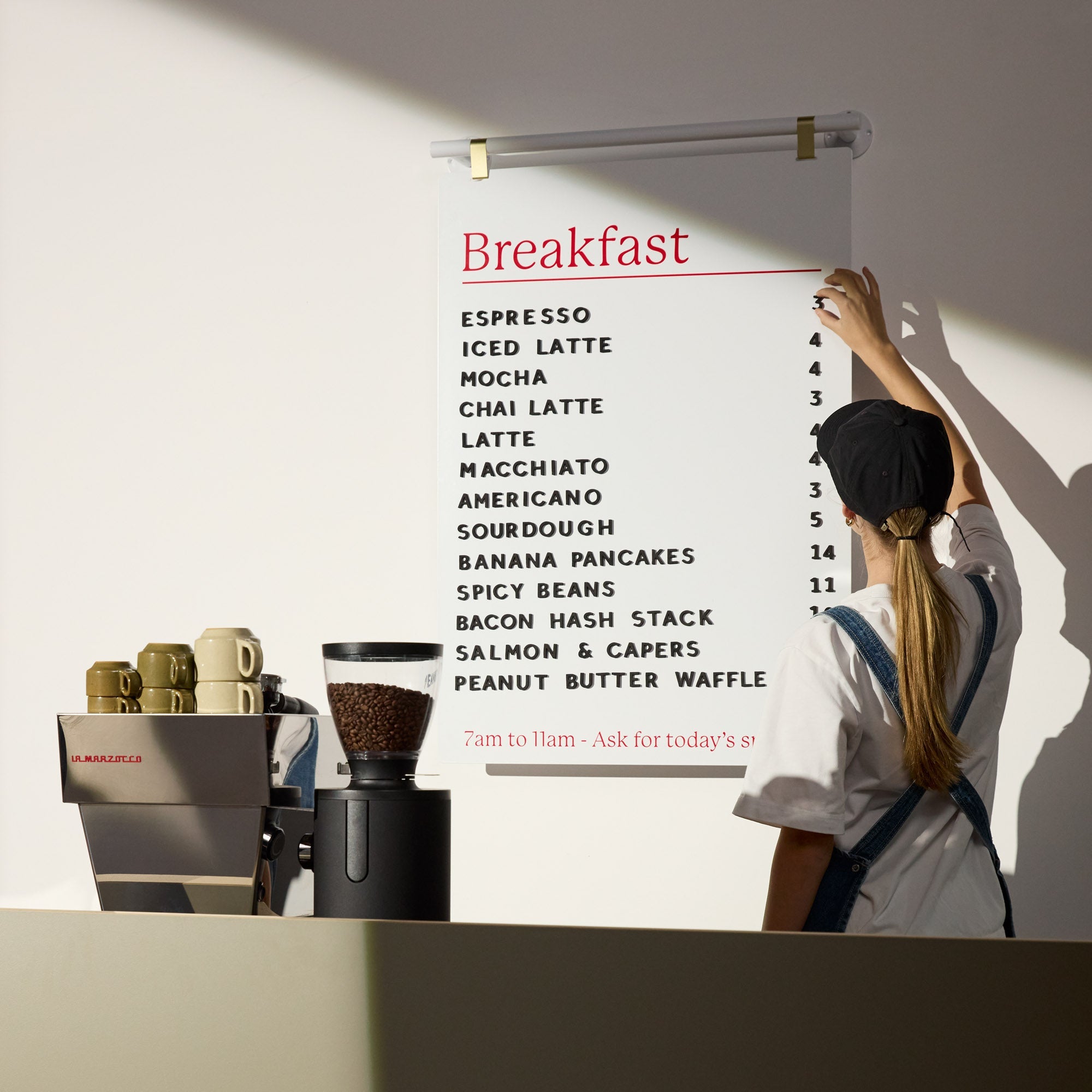
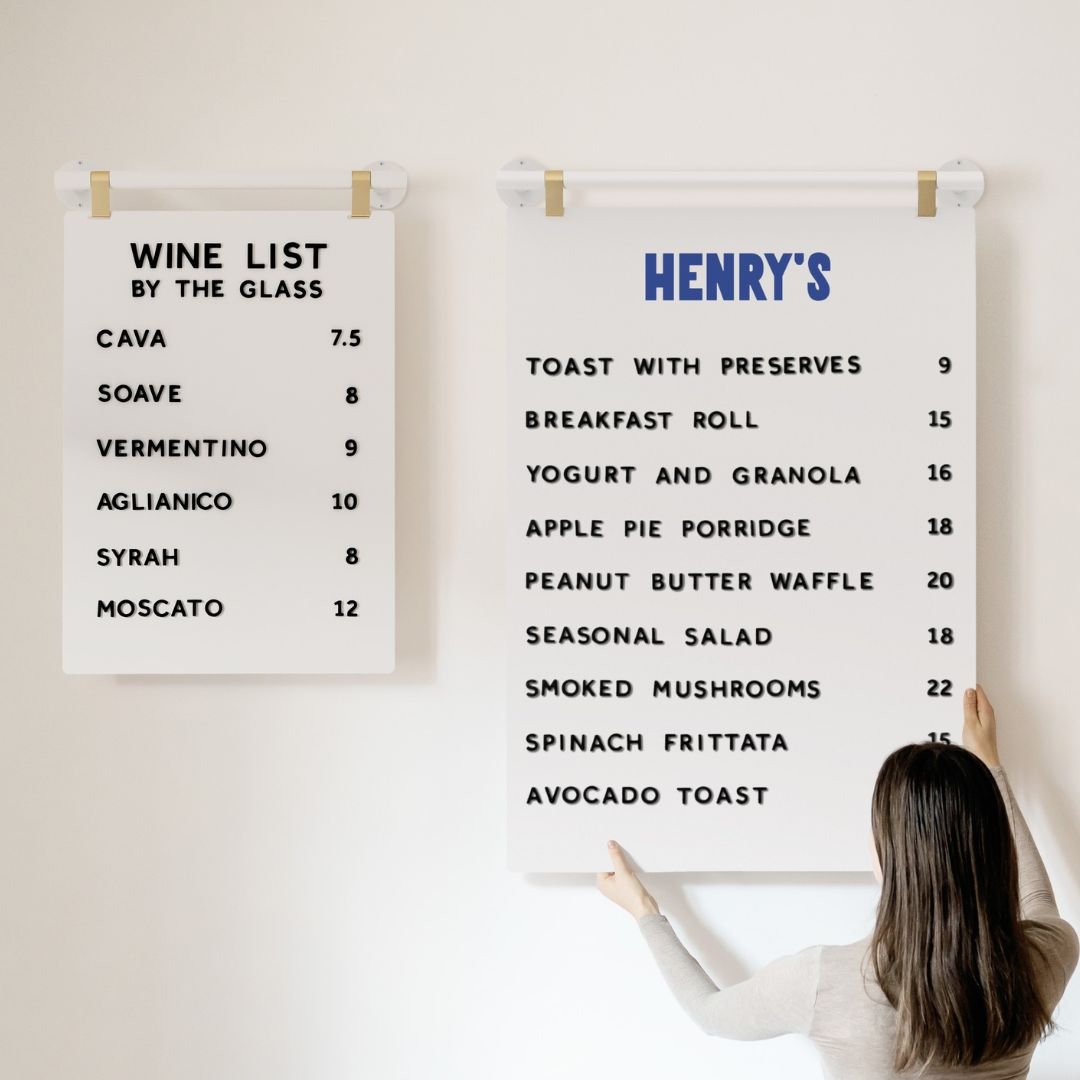
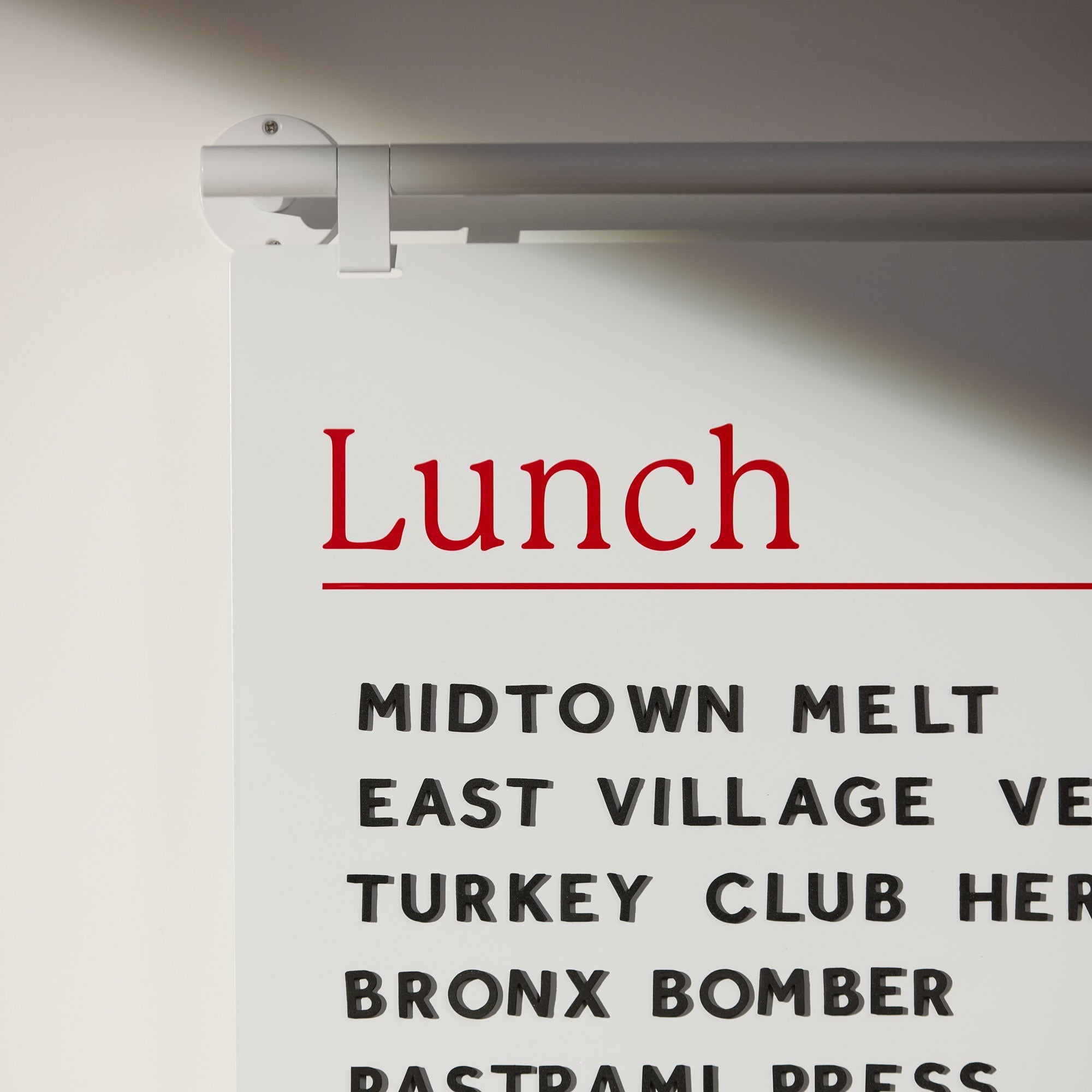
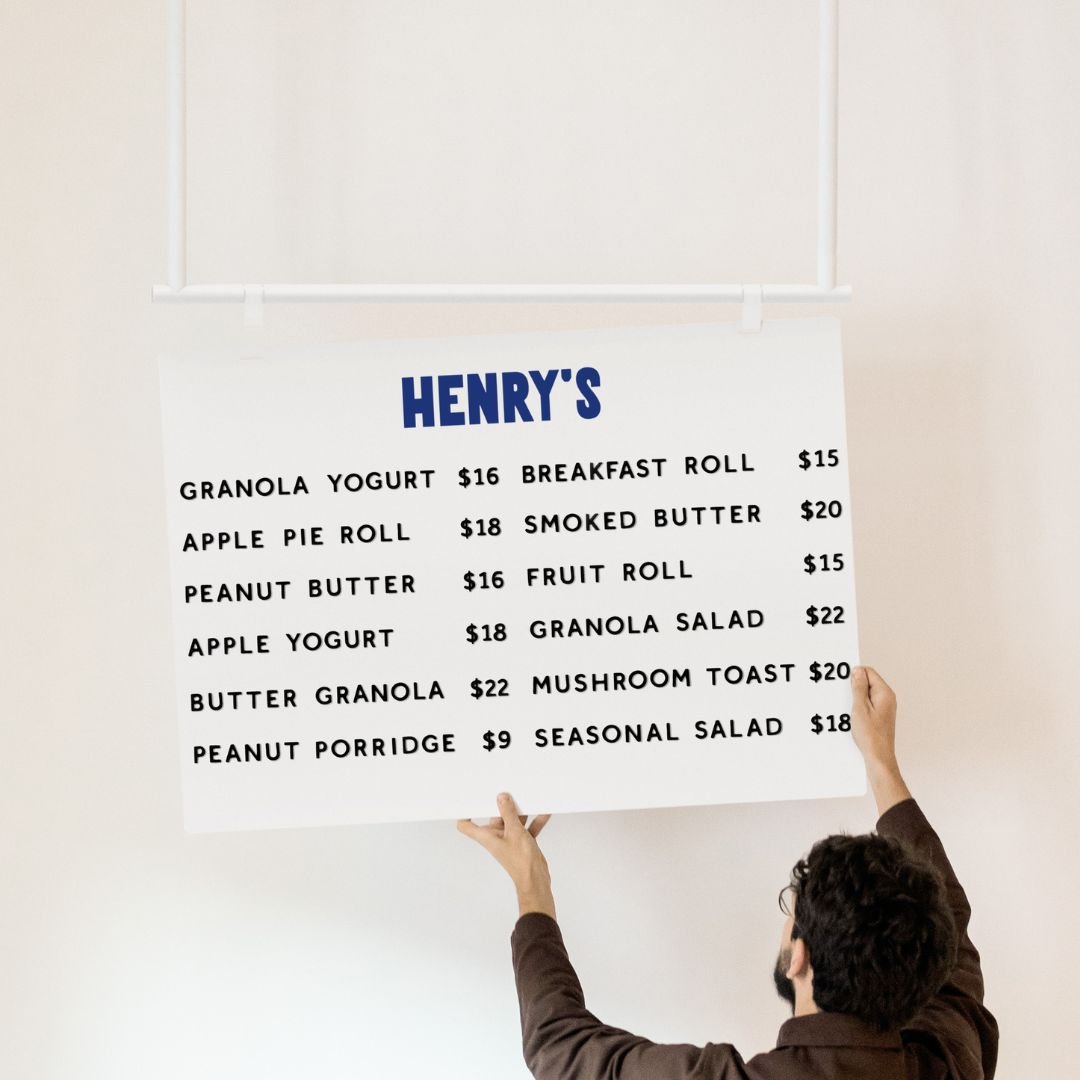
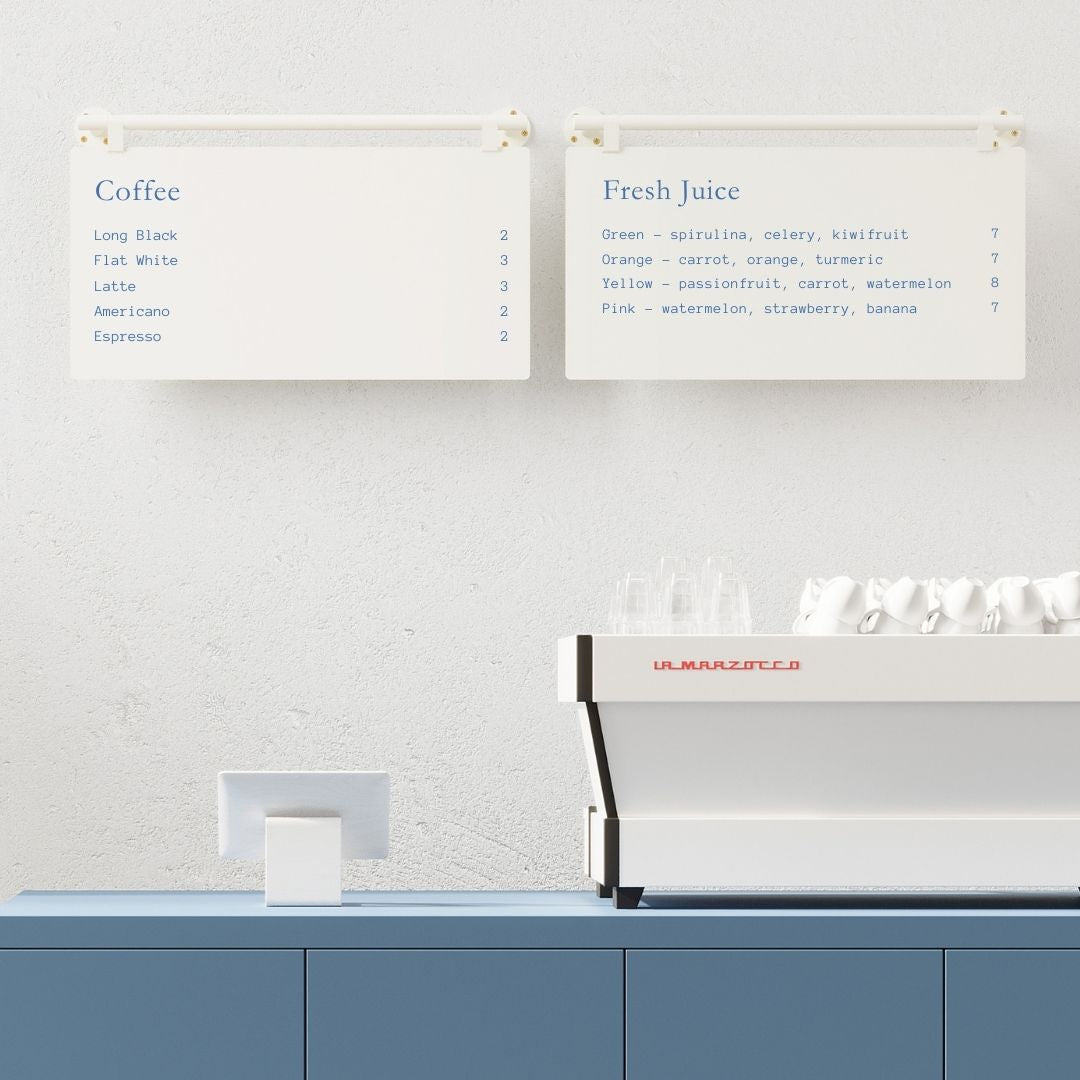
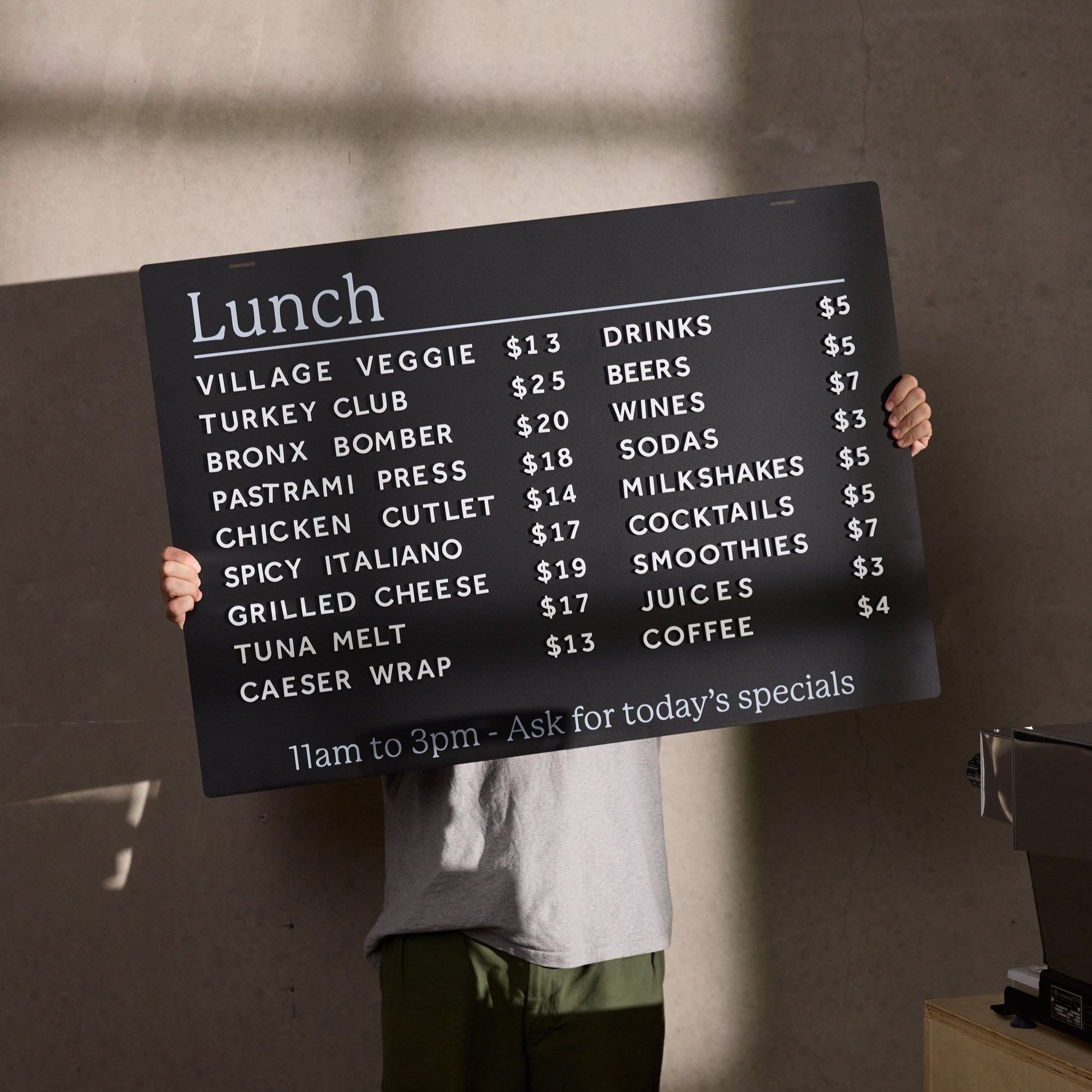
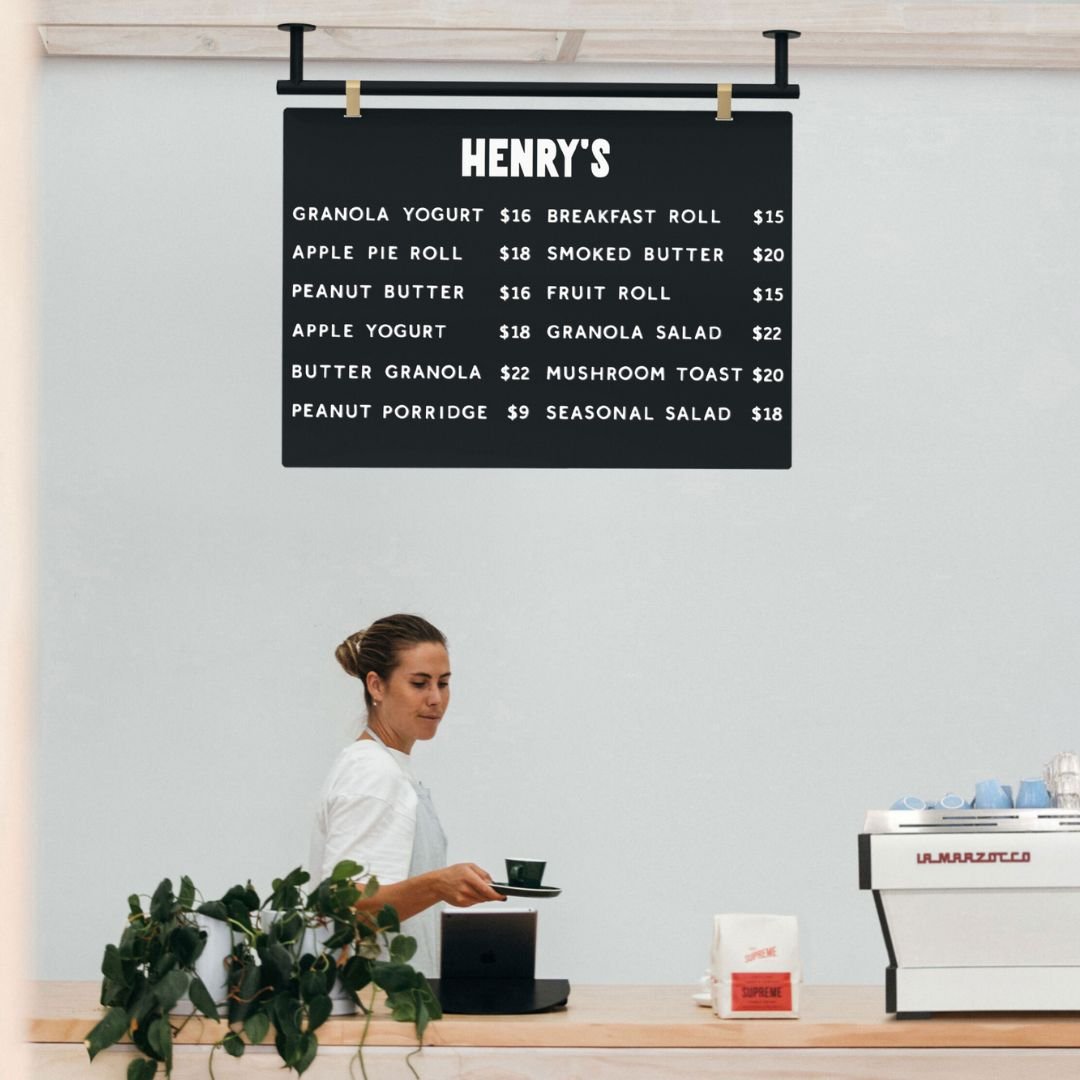
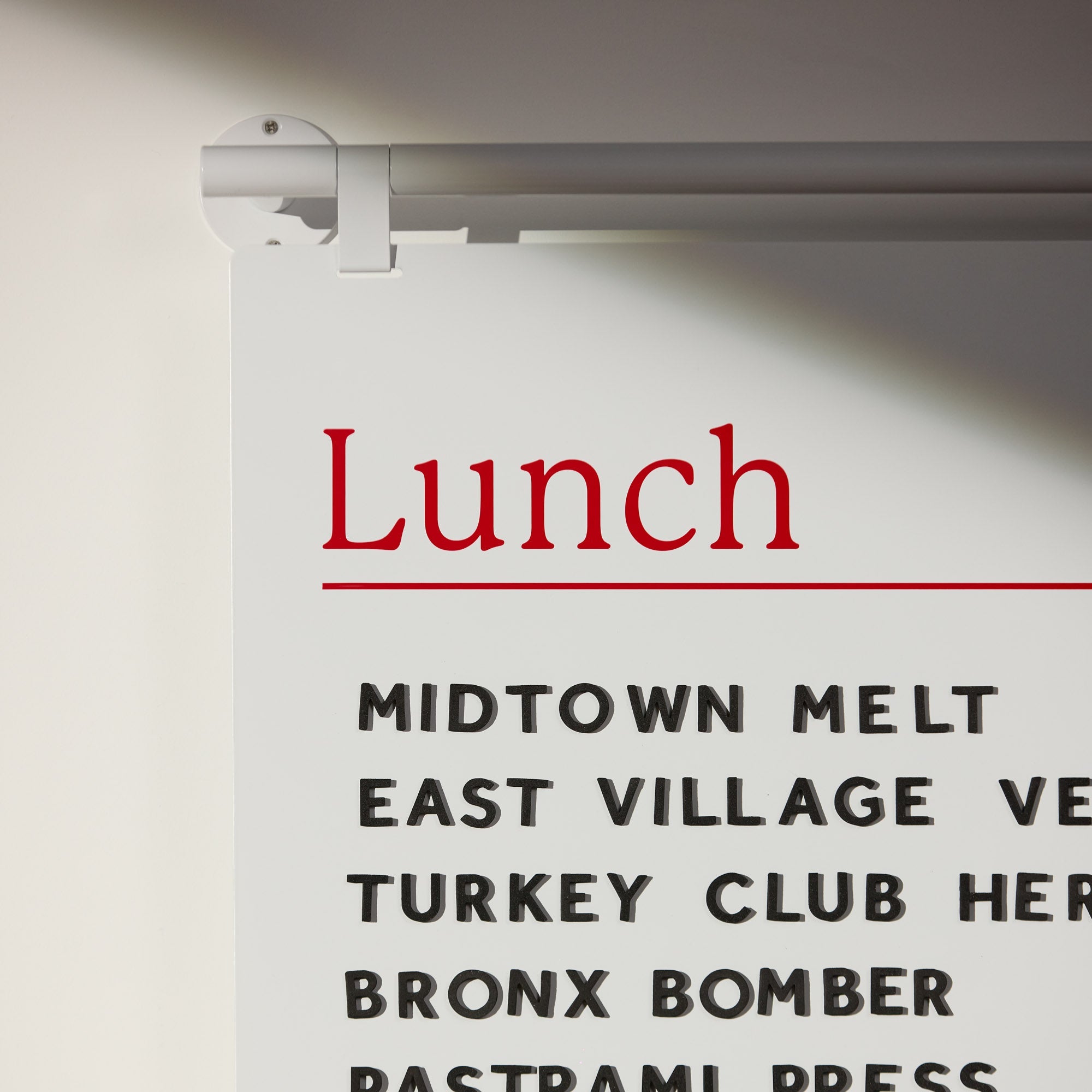
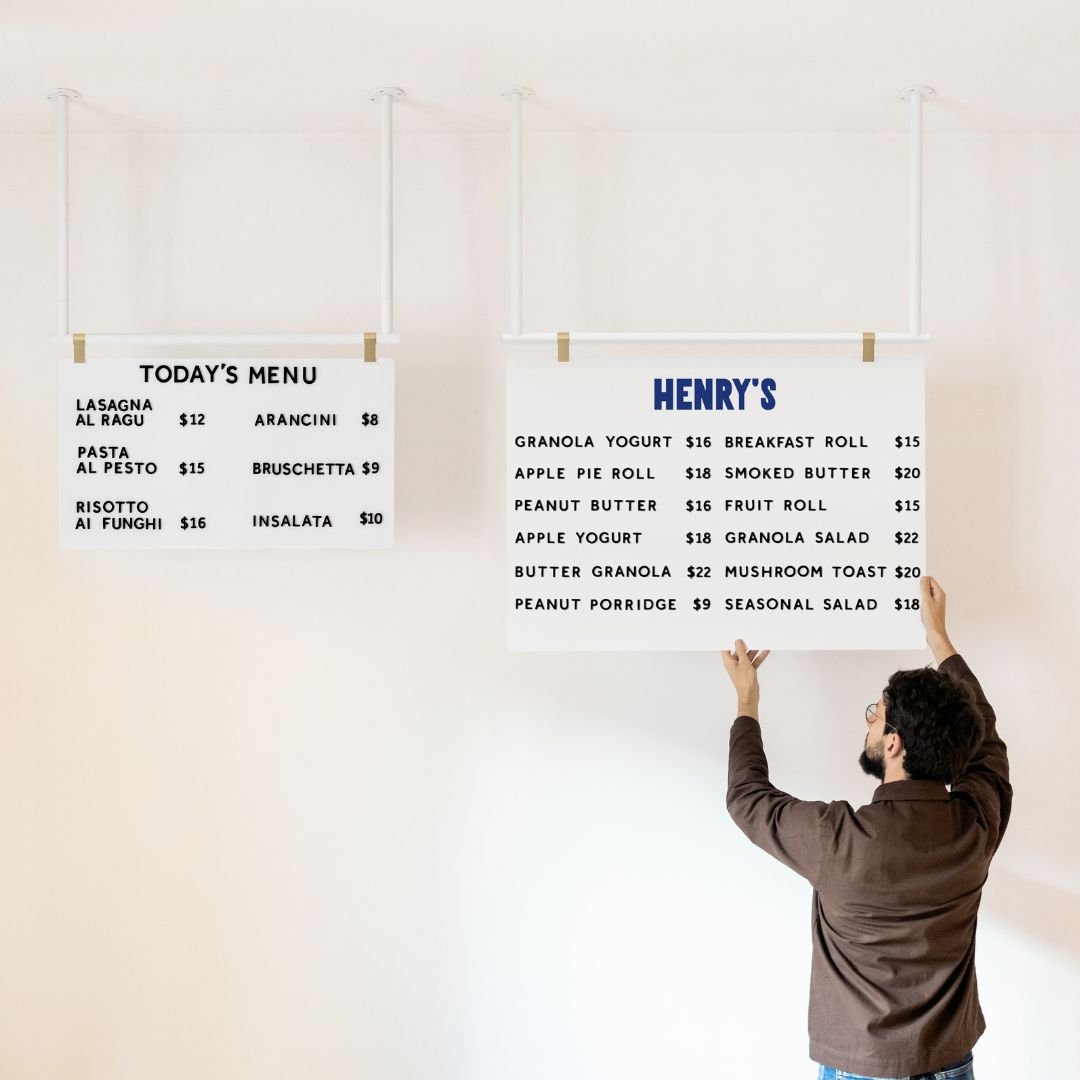
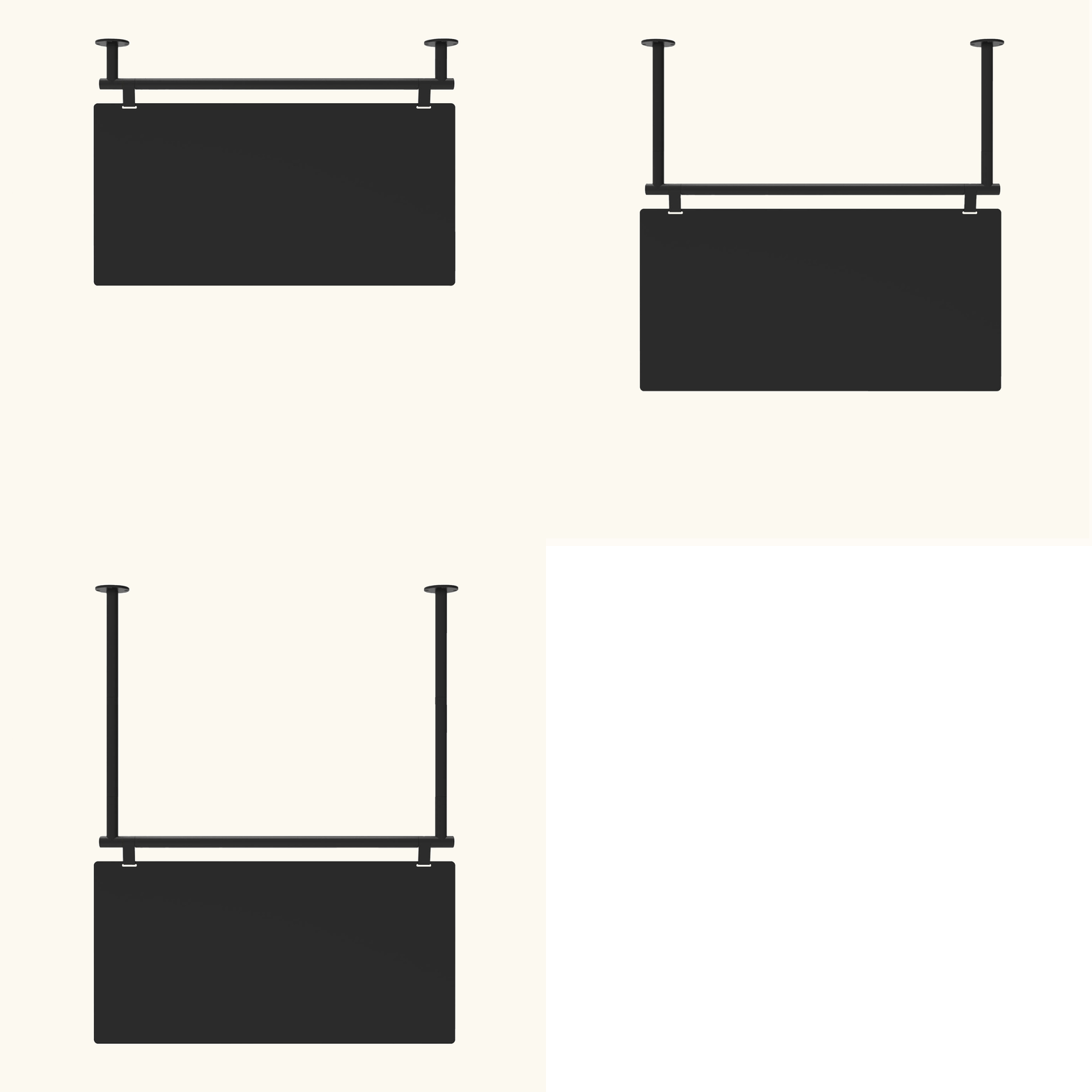
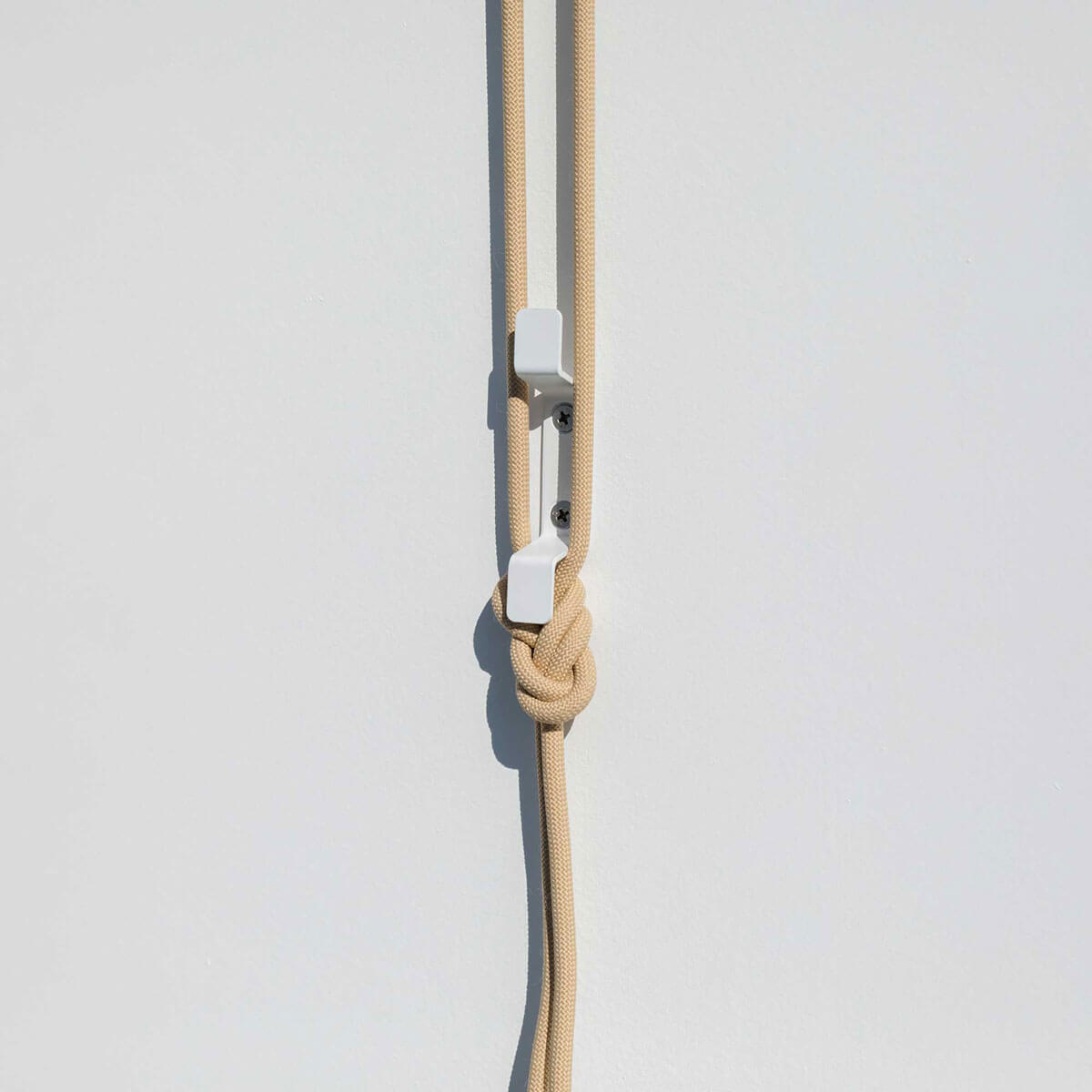
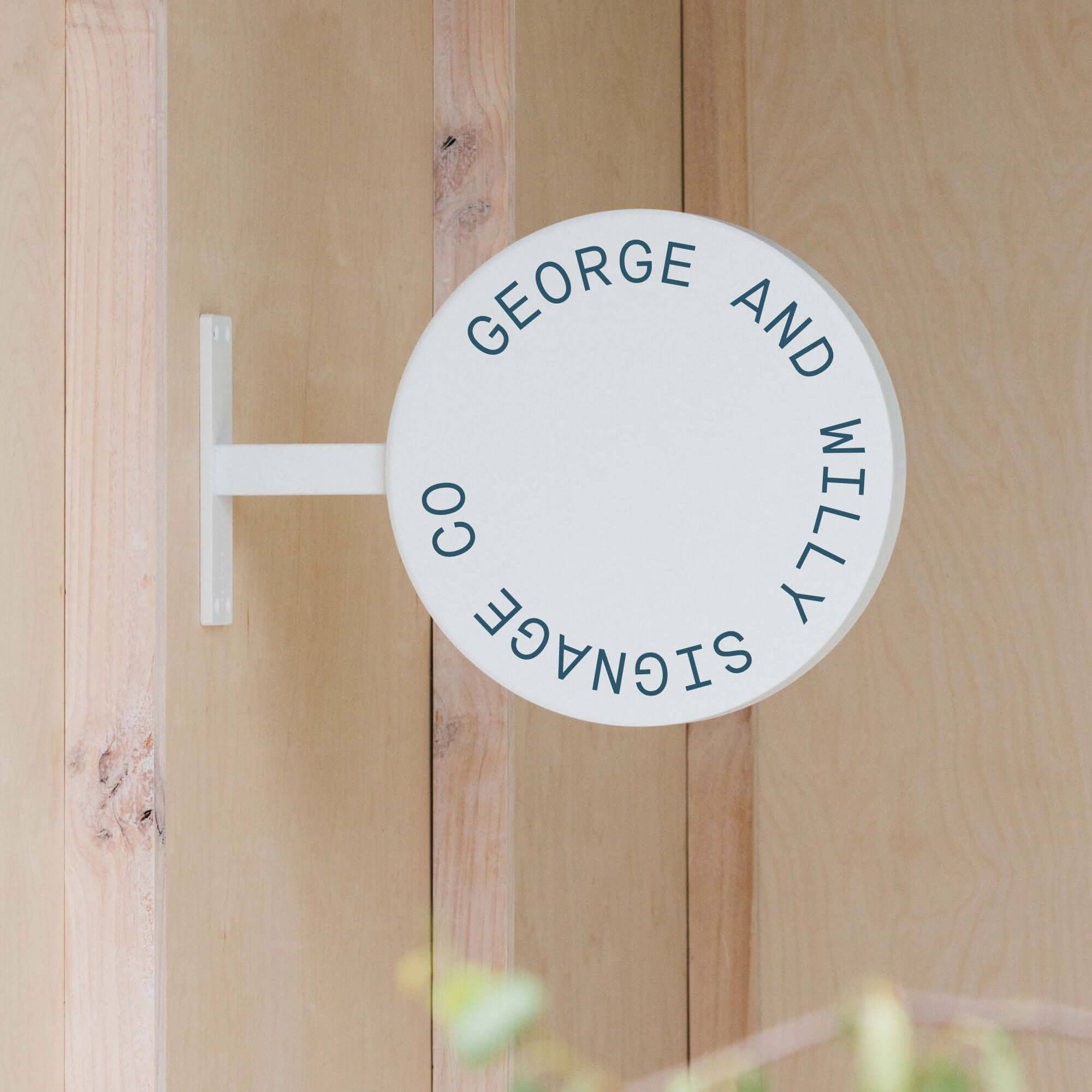
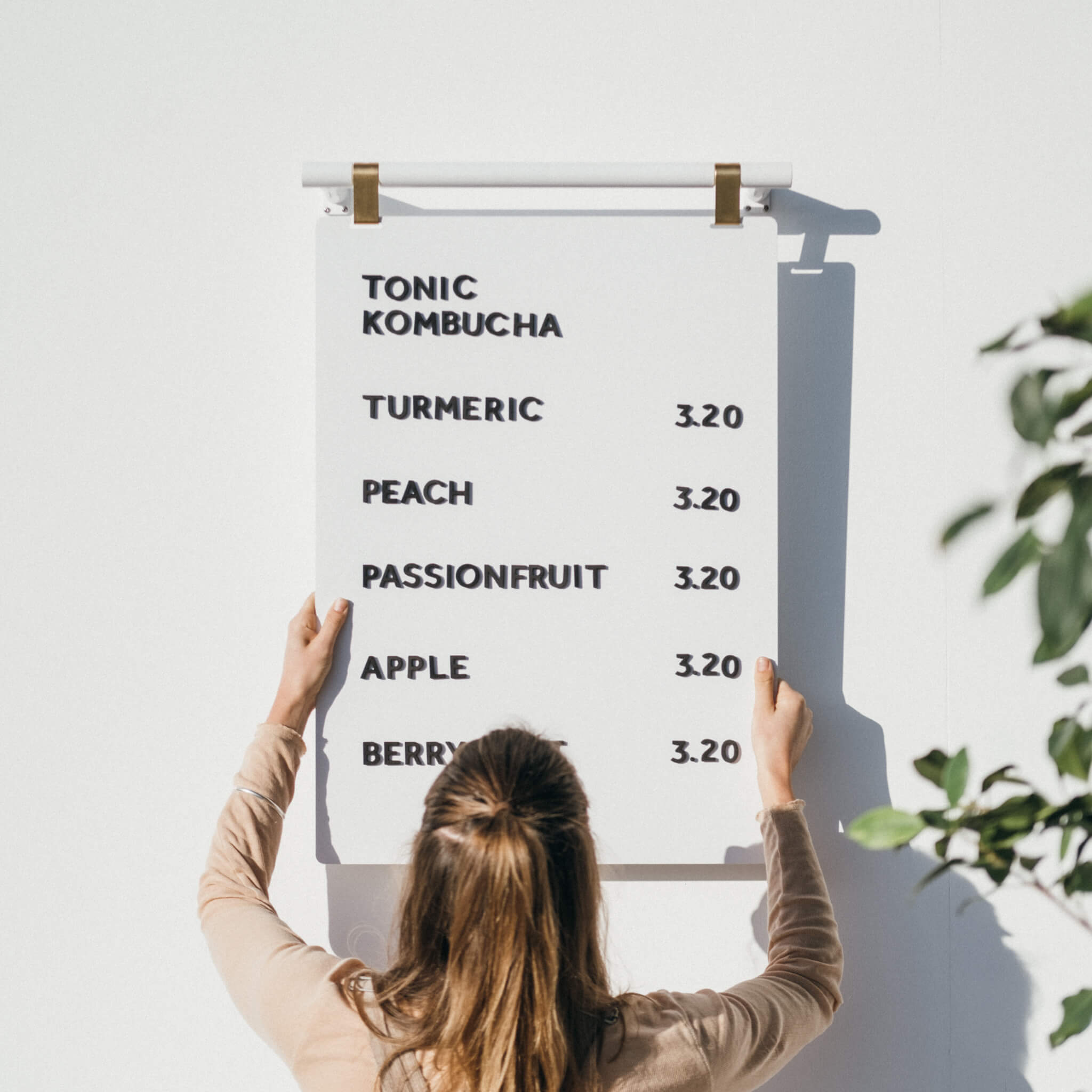
When longevity and a professional appearance are your top priorities, metals are often the best material for outdoor signs. They offer unmatched strength and a classic feel that signals quality. For projecting storefront visibility, wall hanging signs like the Rectangle Blade Sign are a smart aluminum option.
Aluminum and Aluminum Composite Material (ACM)
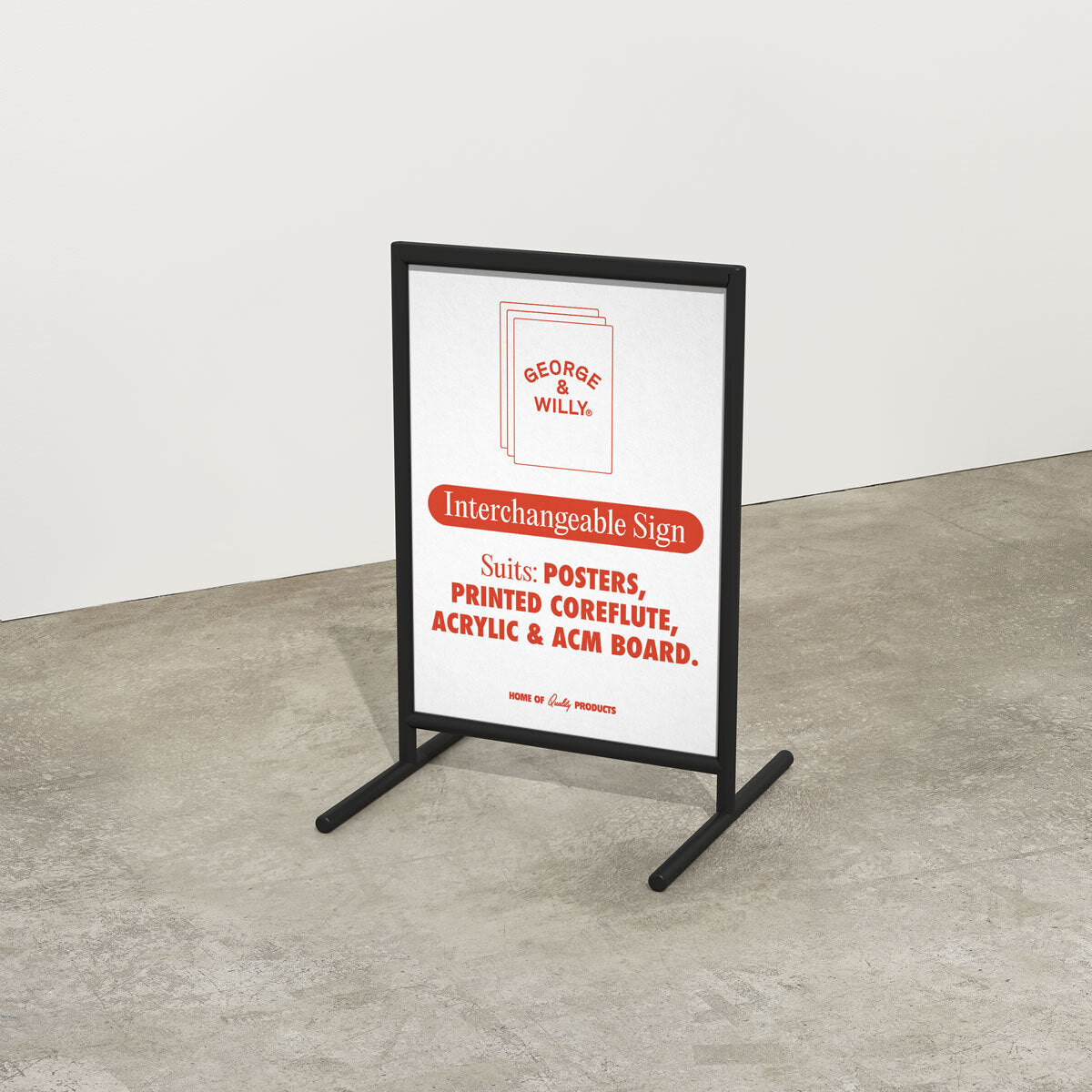
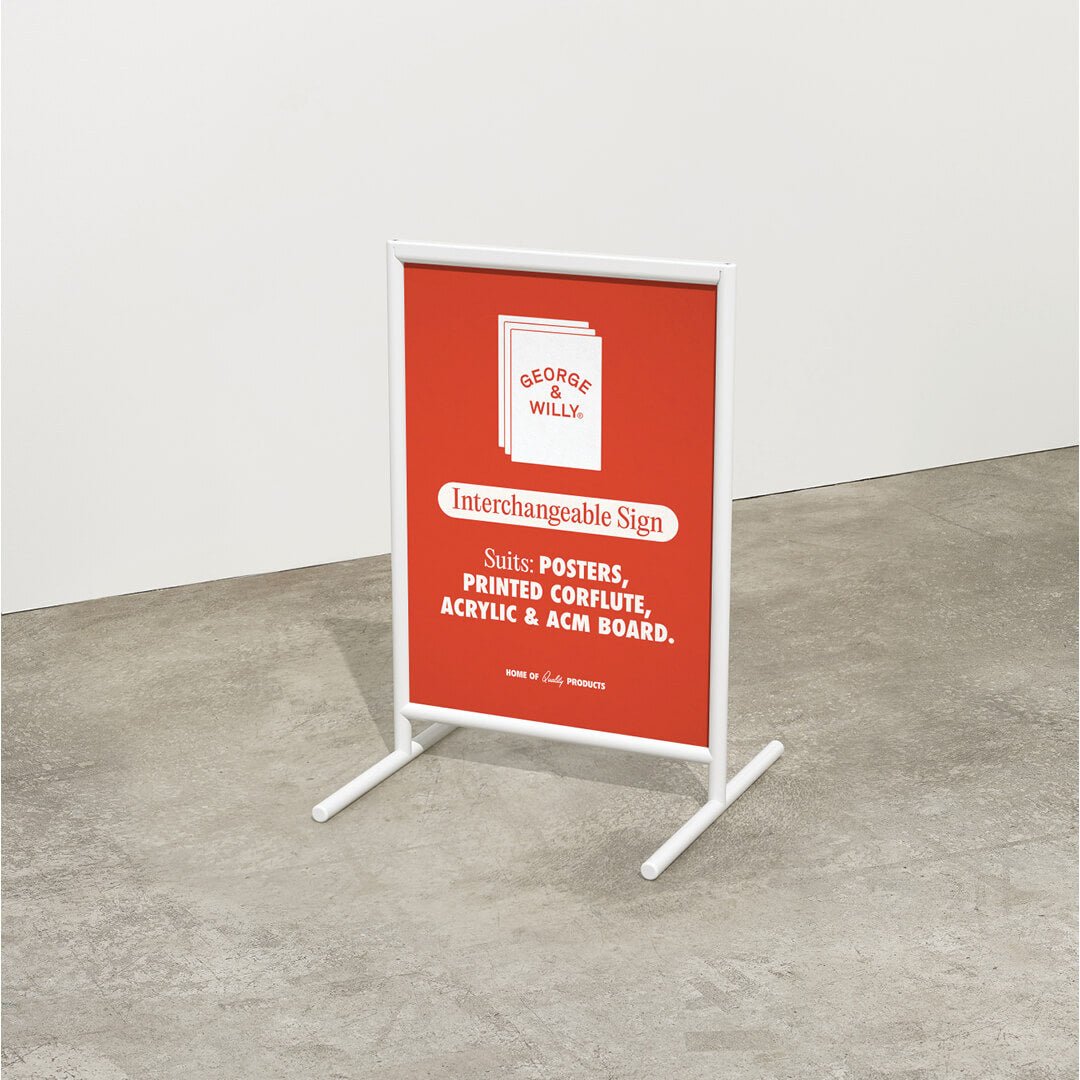
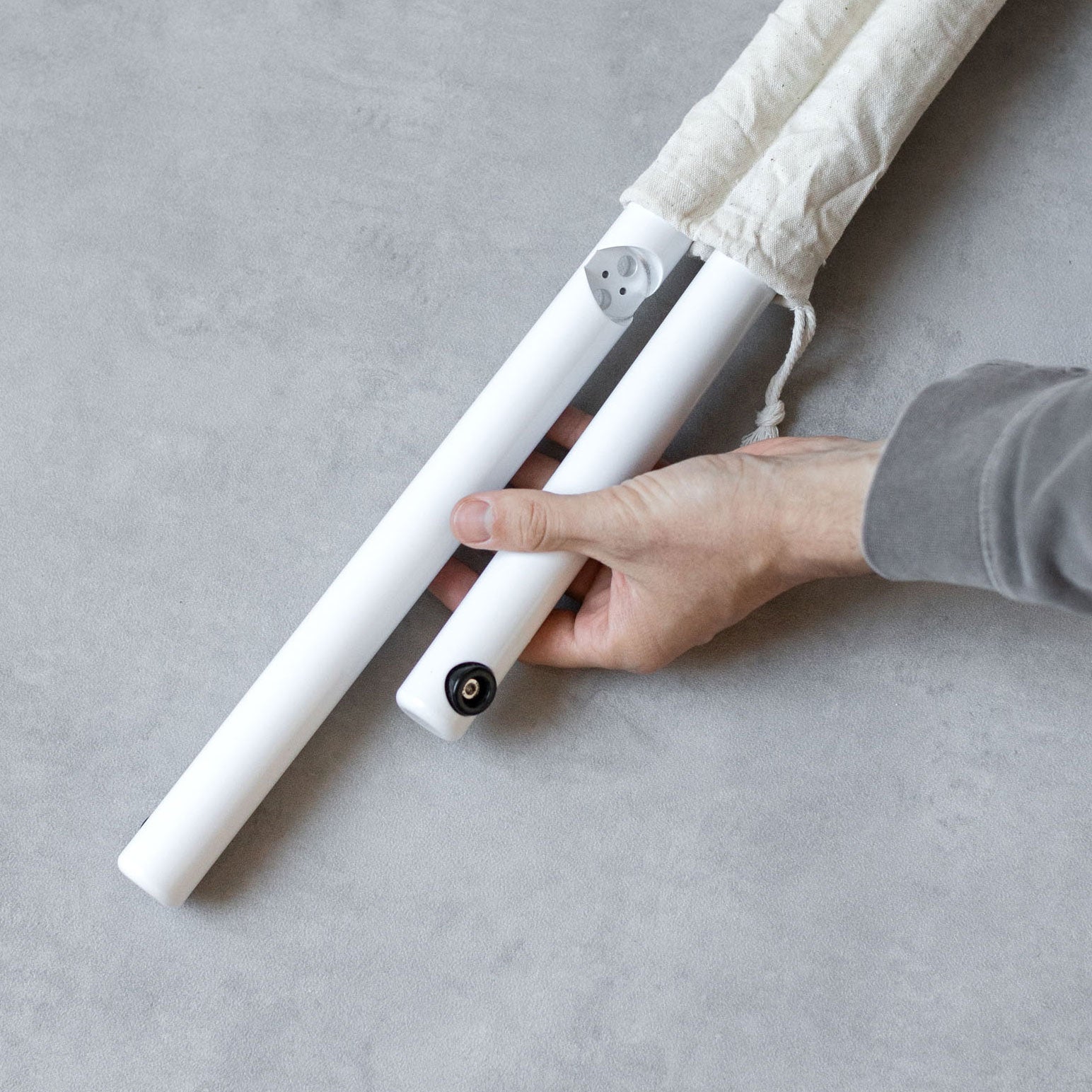
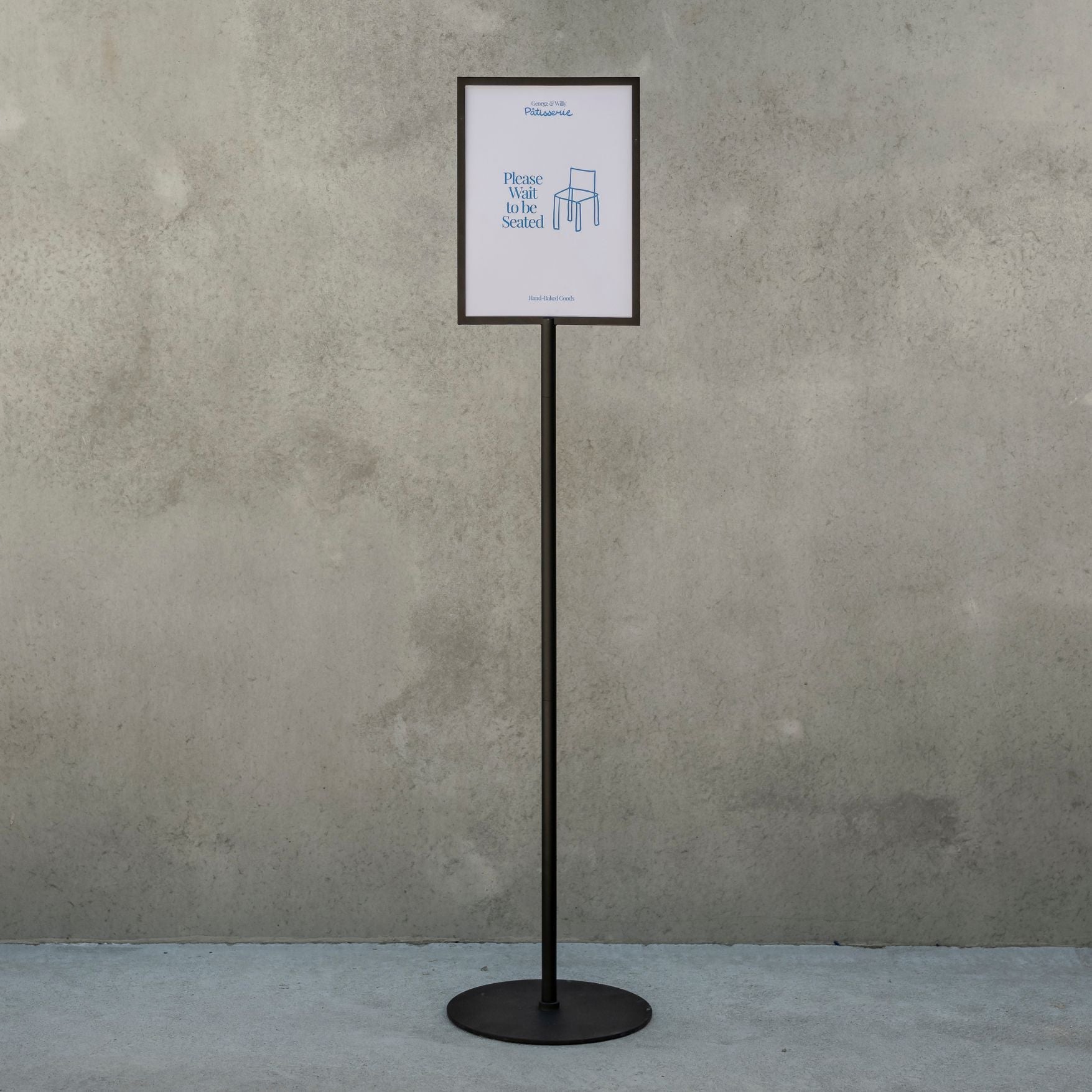
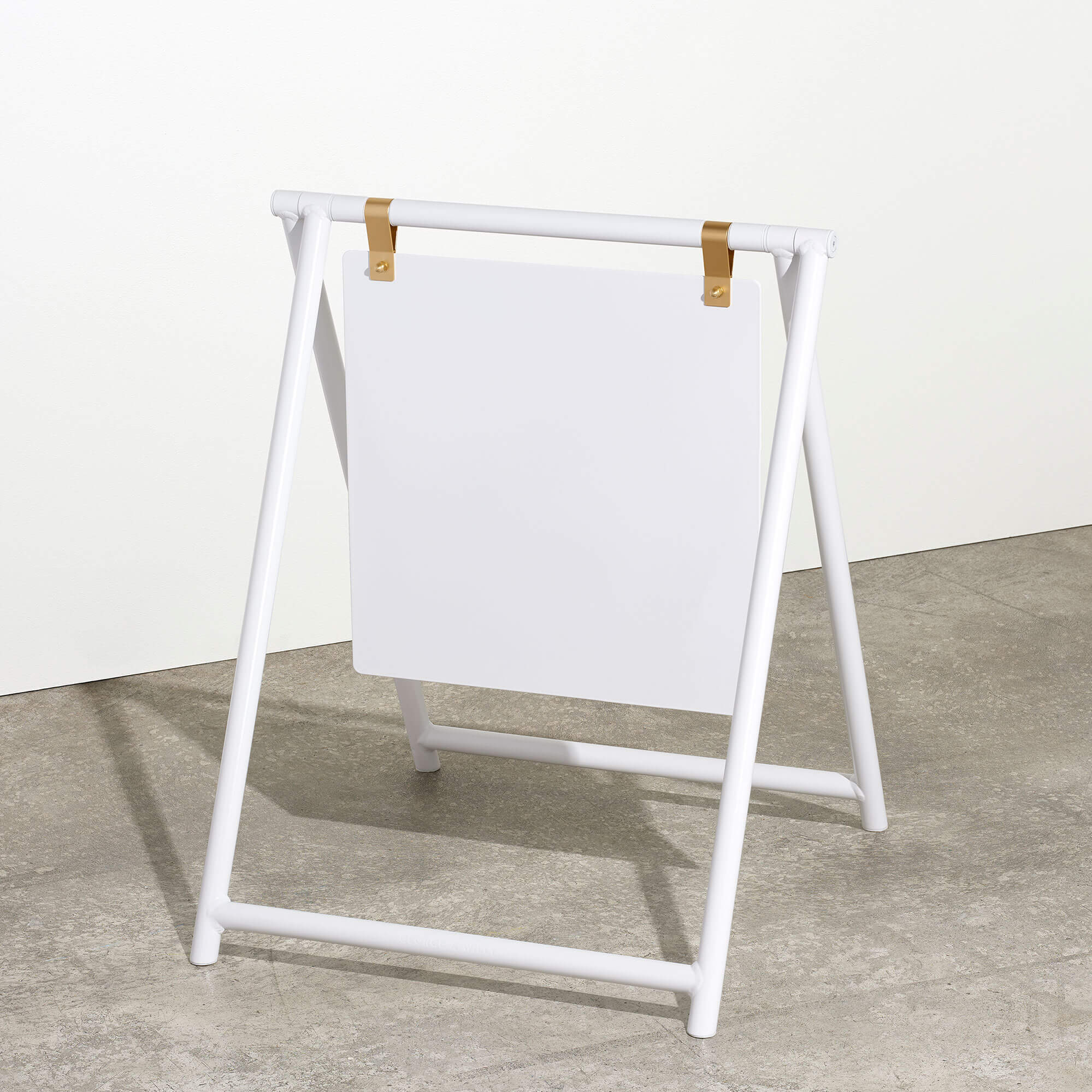
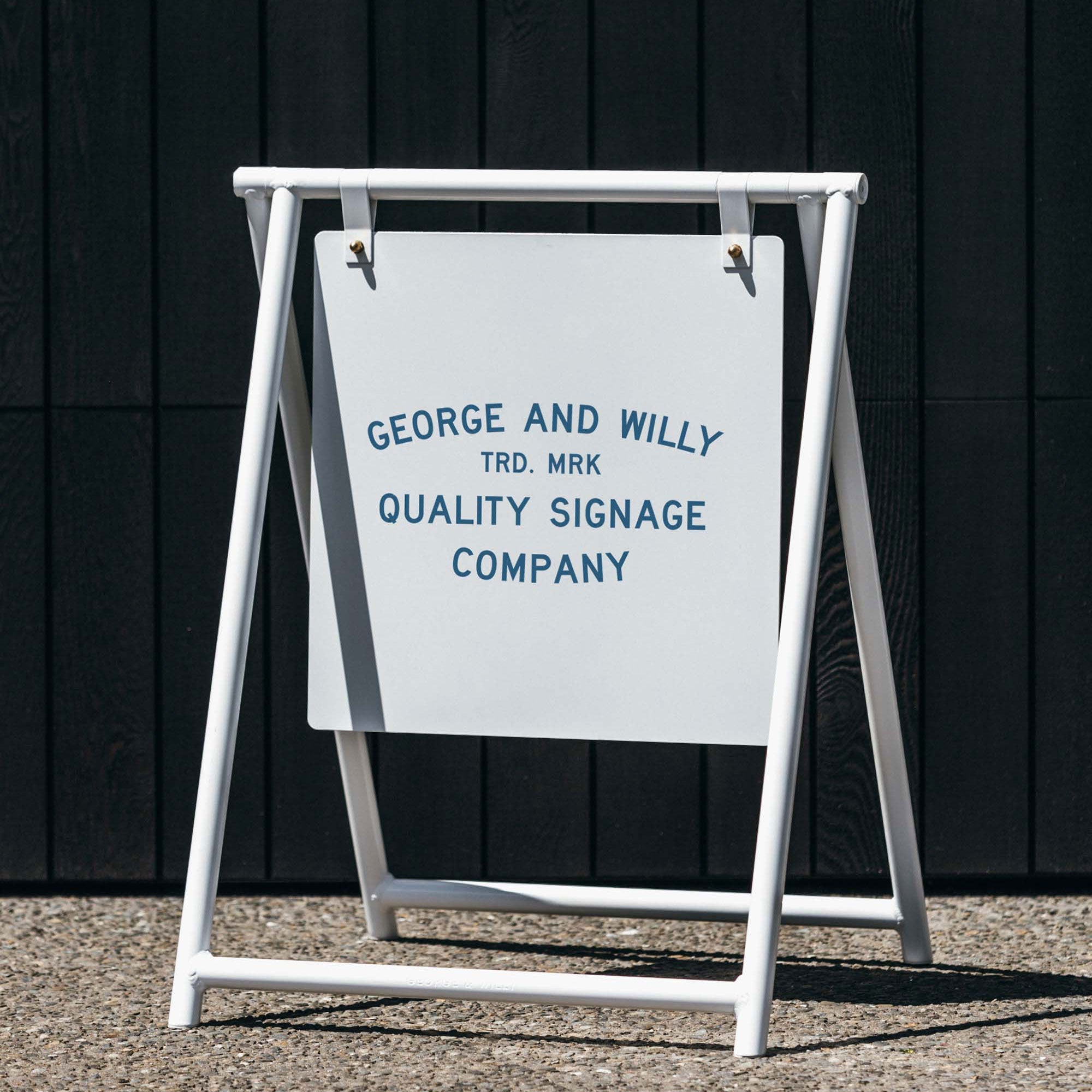
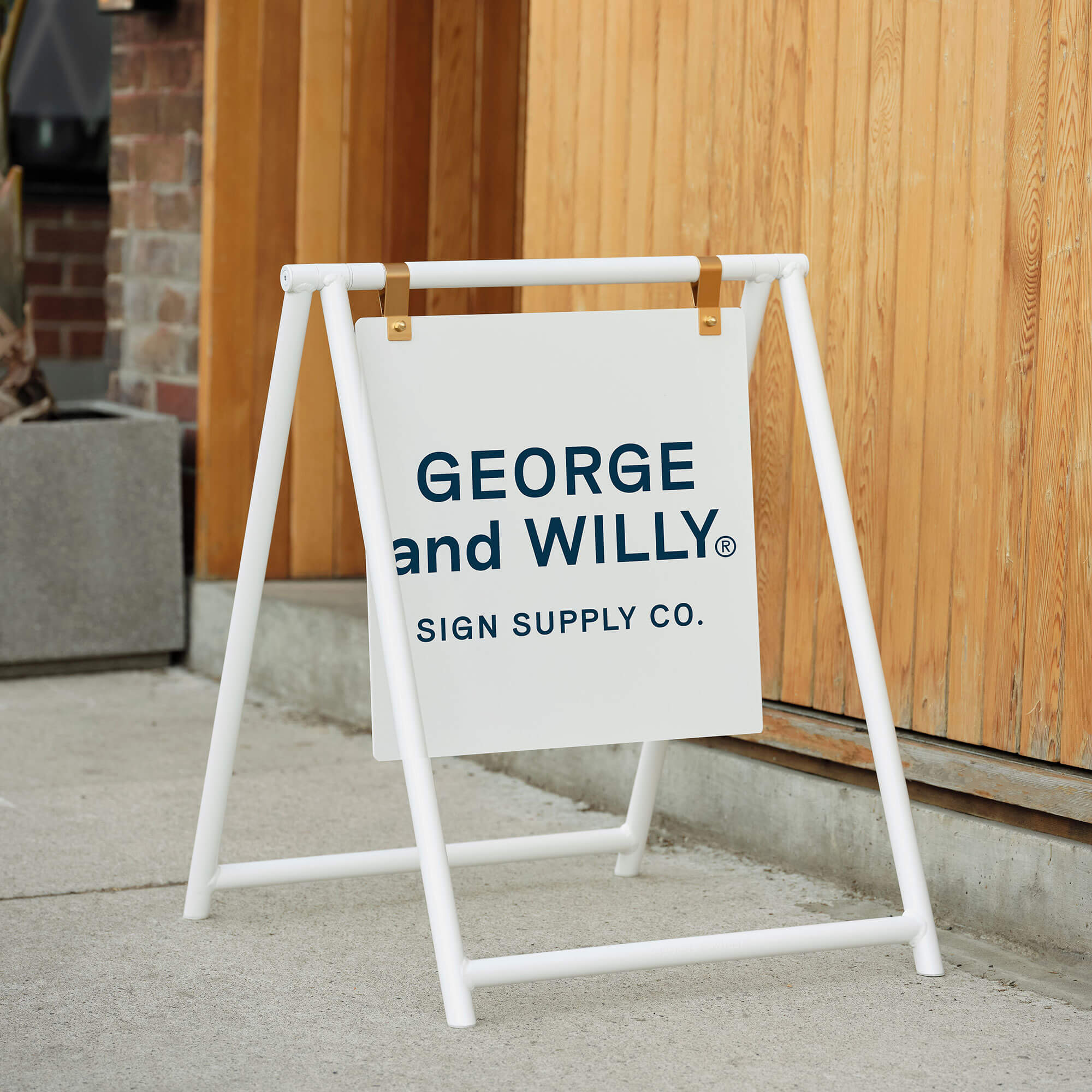
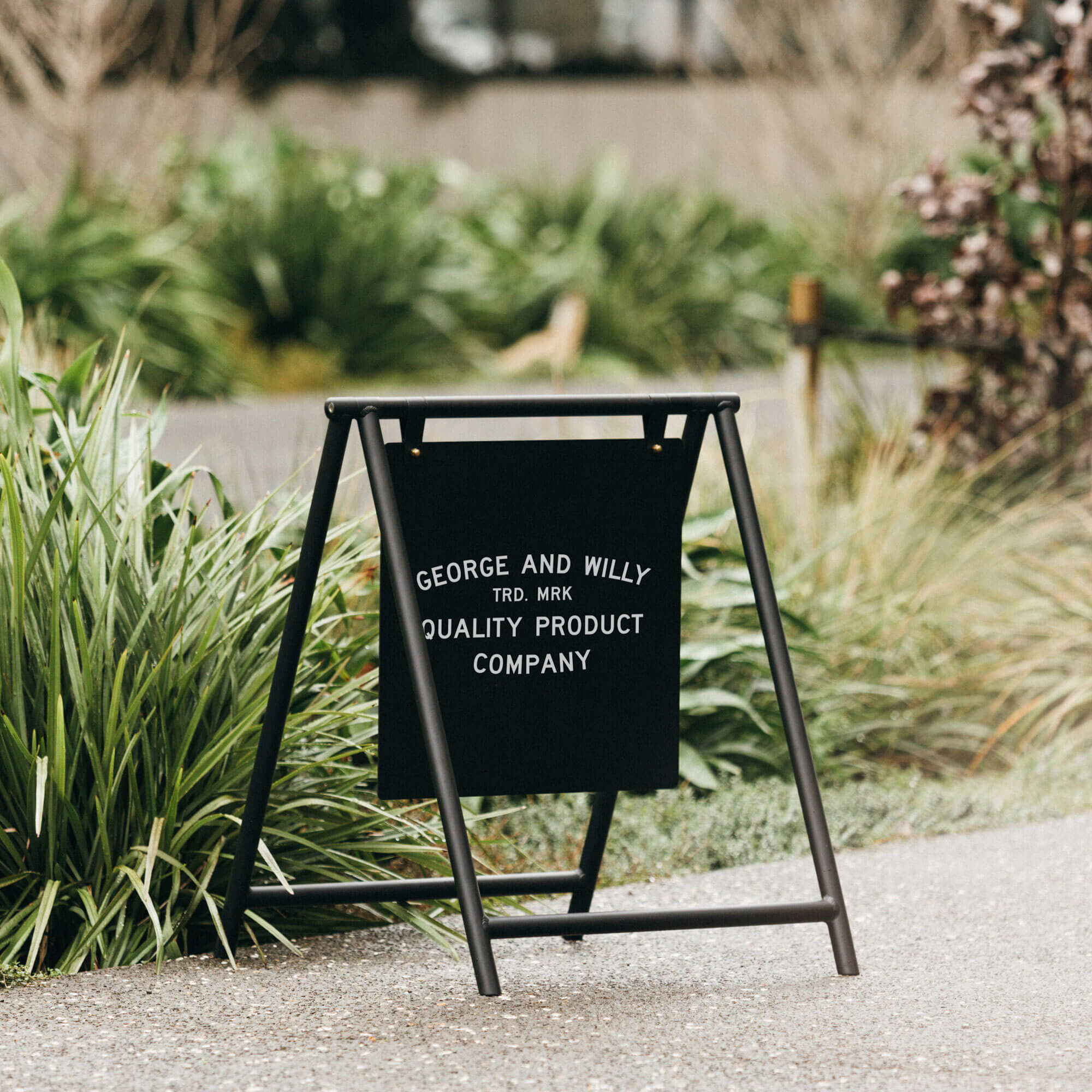
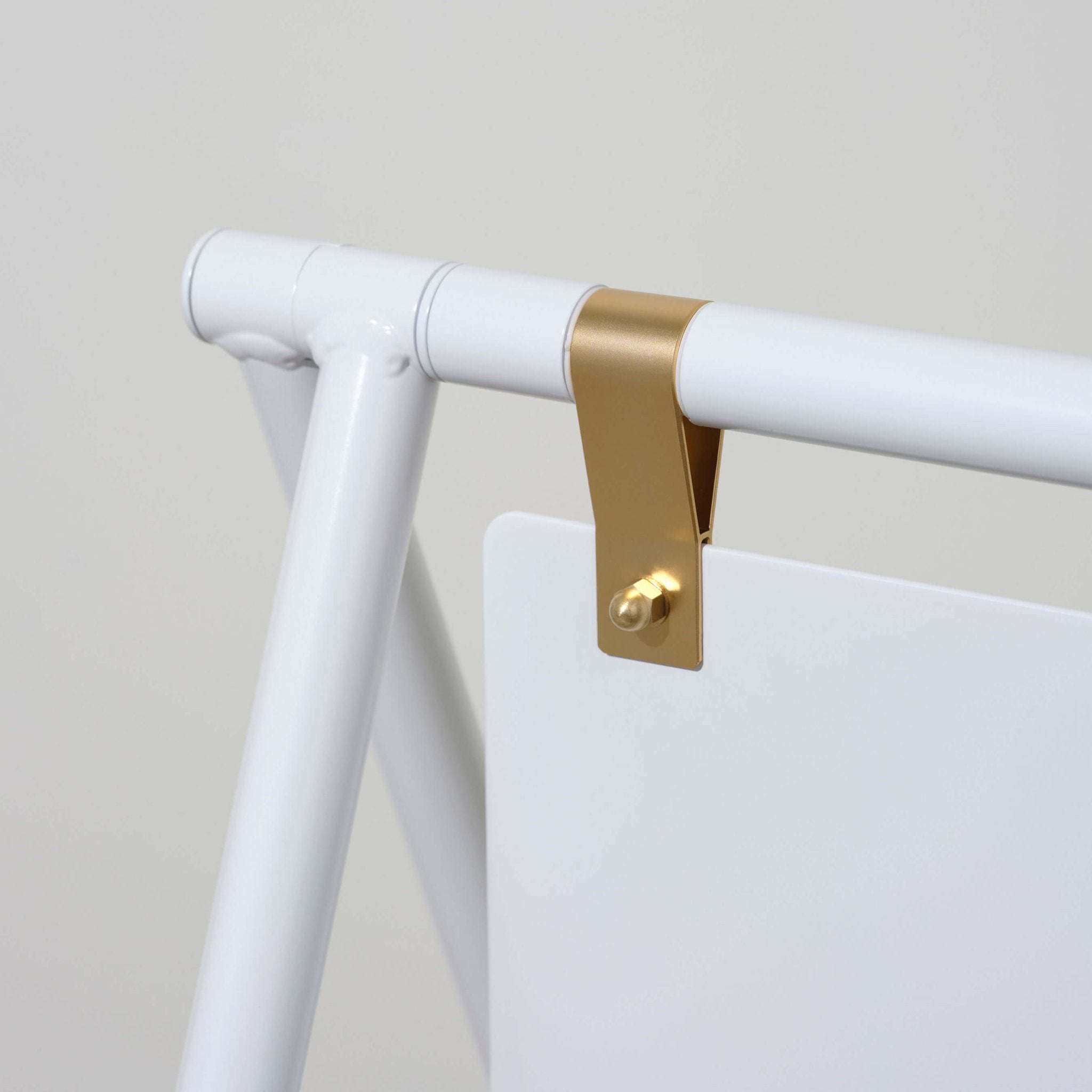
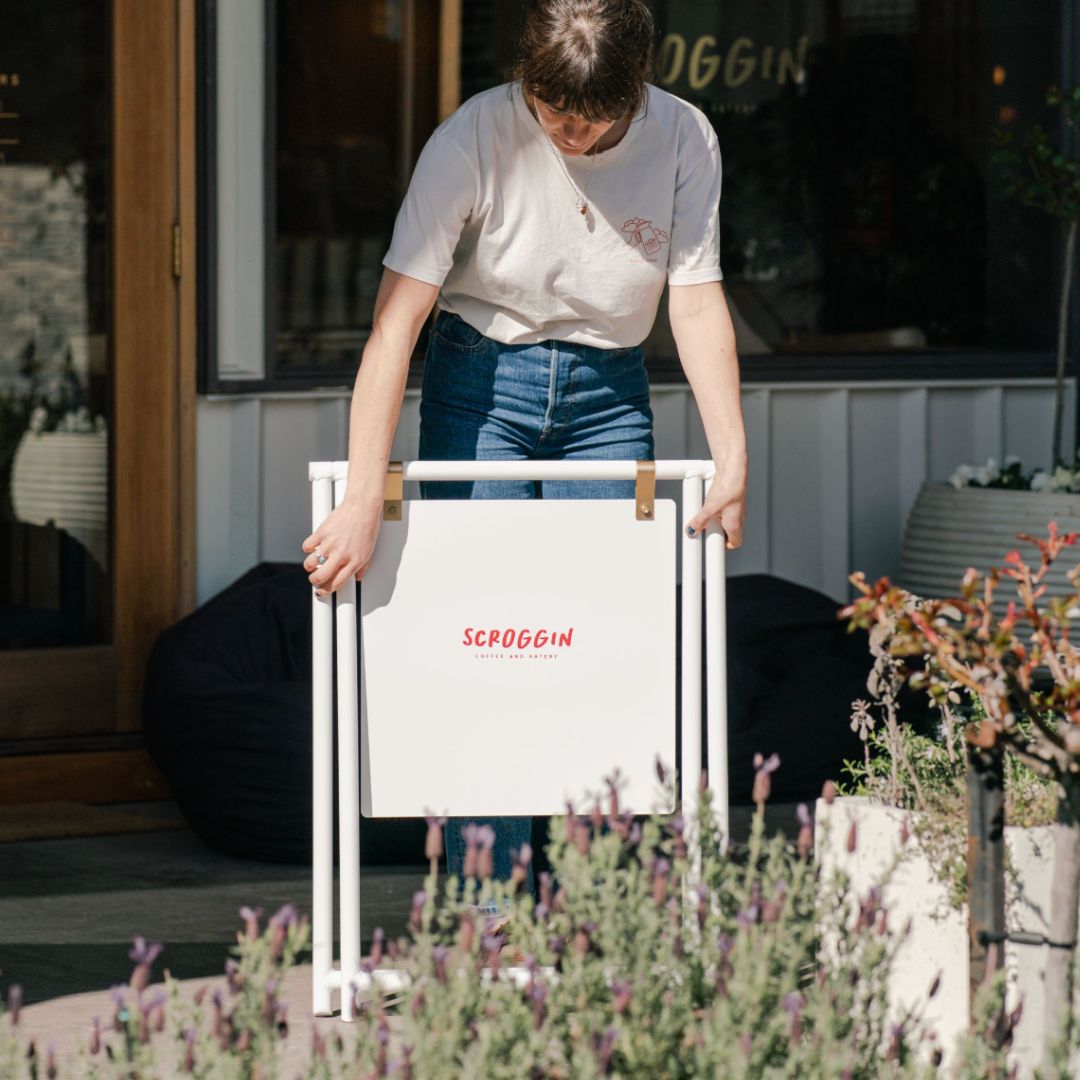
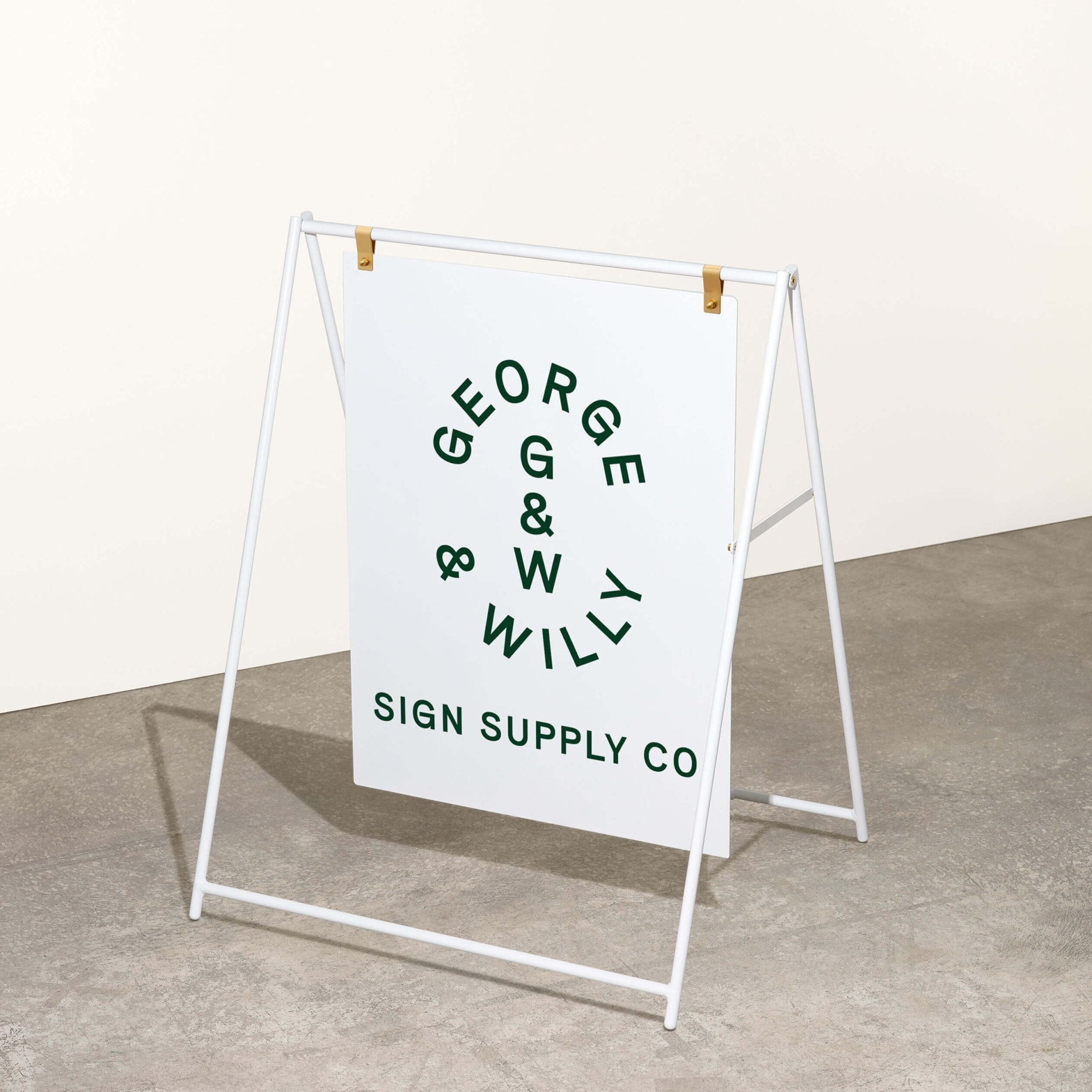
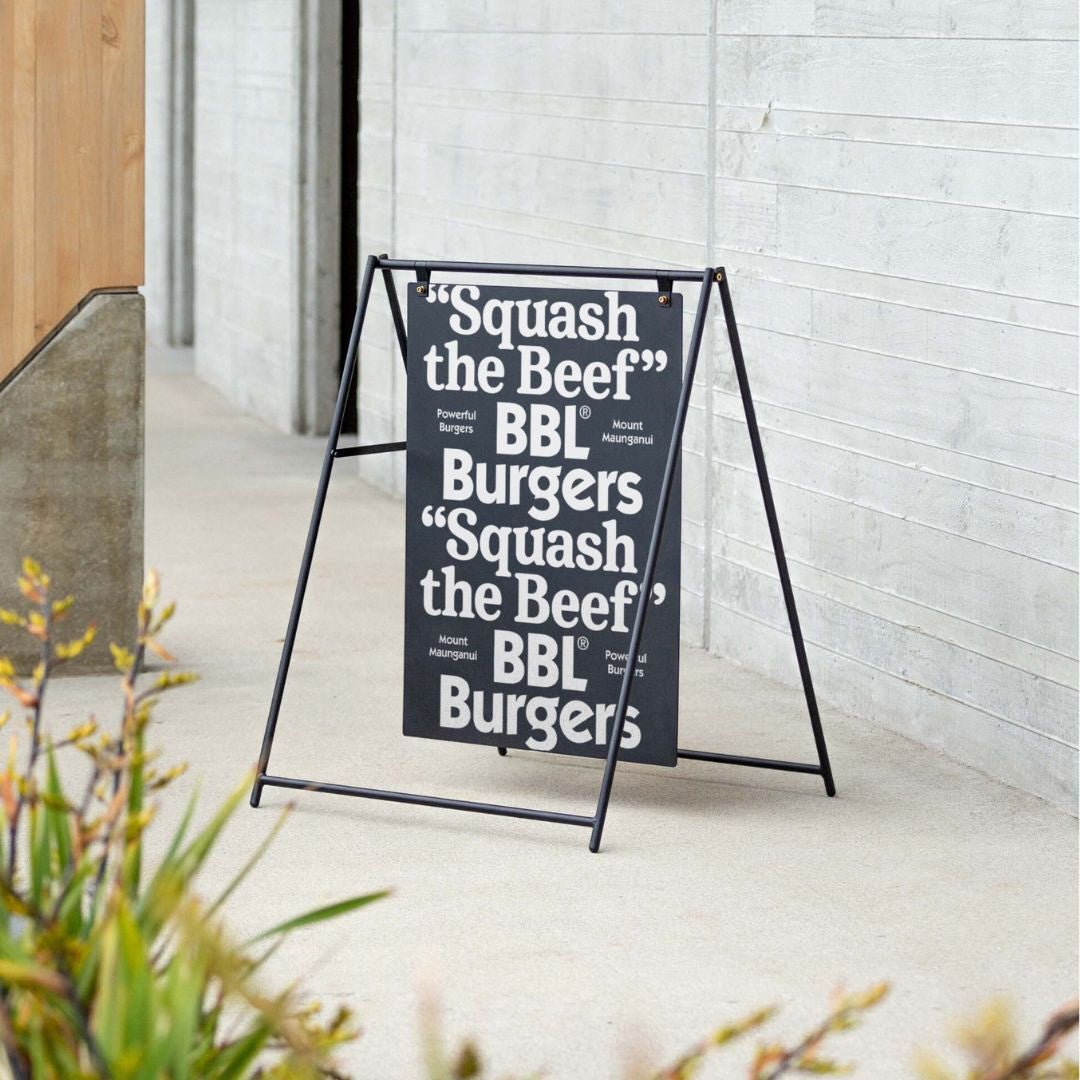
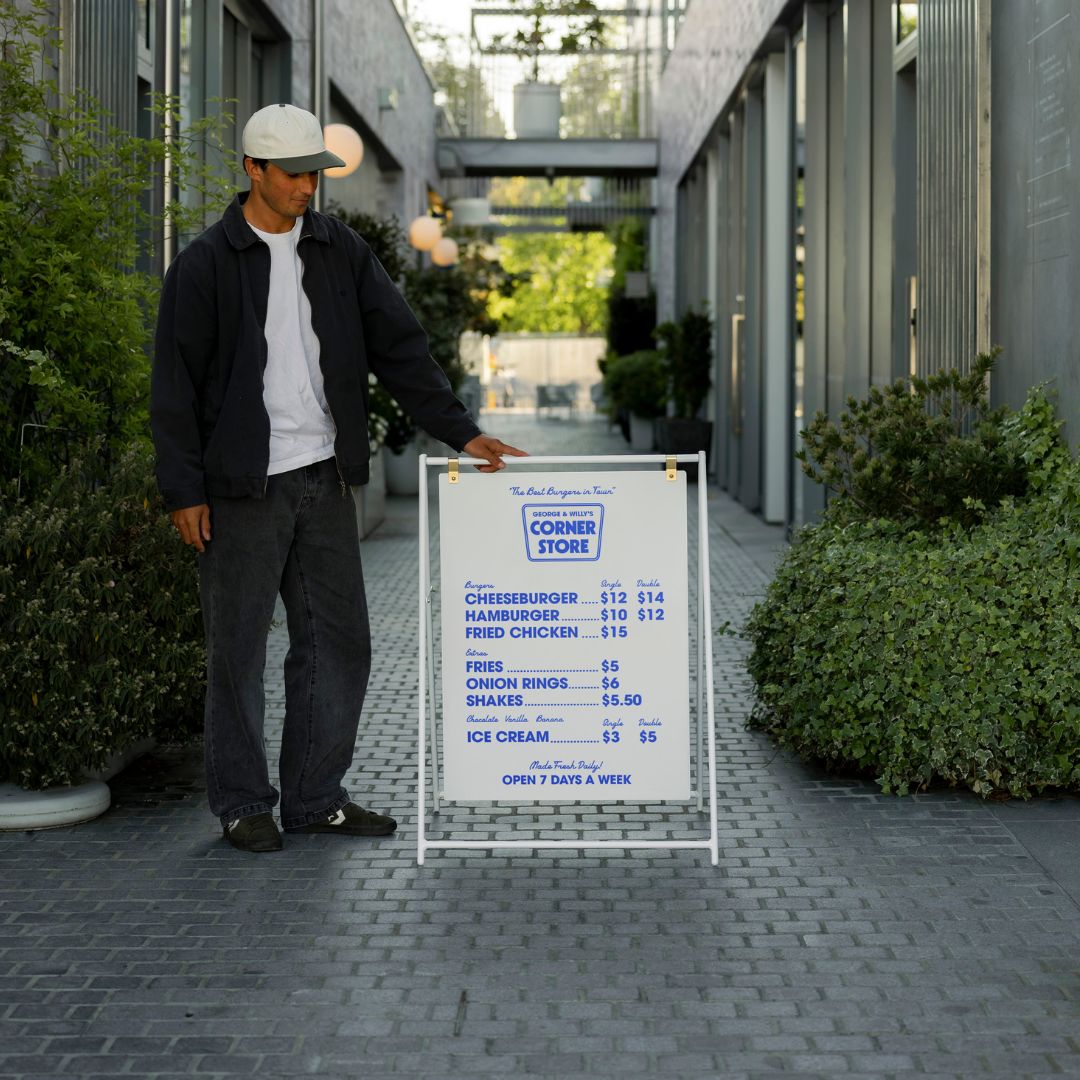
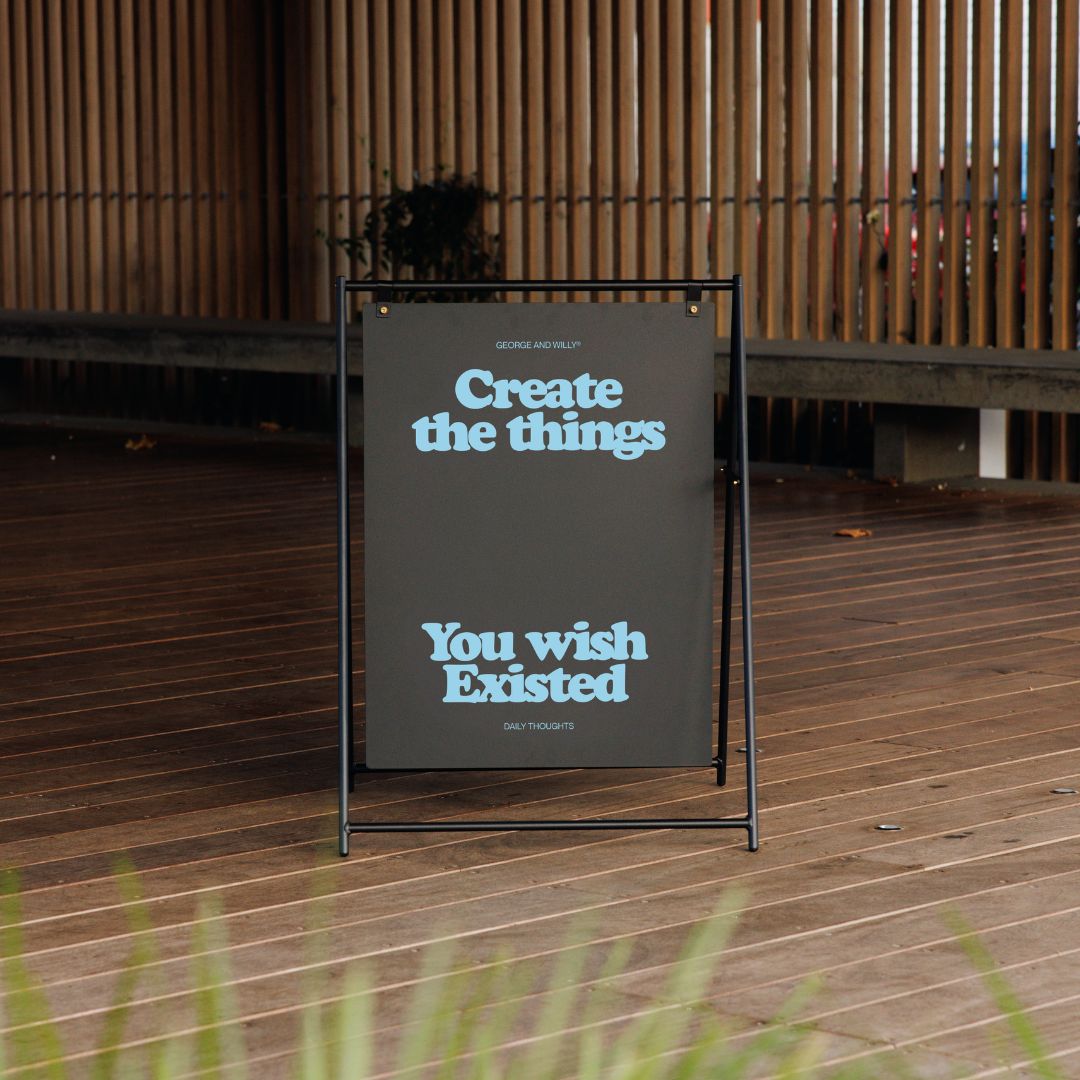
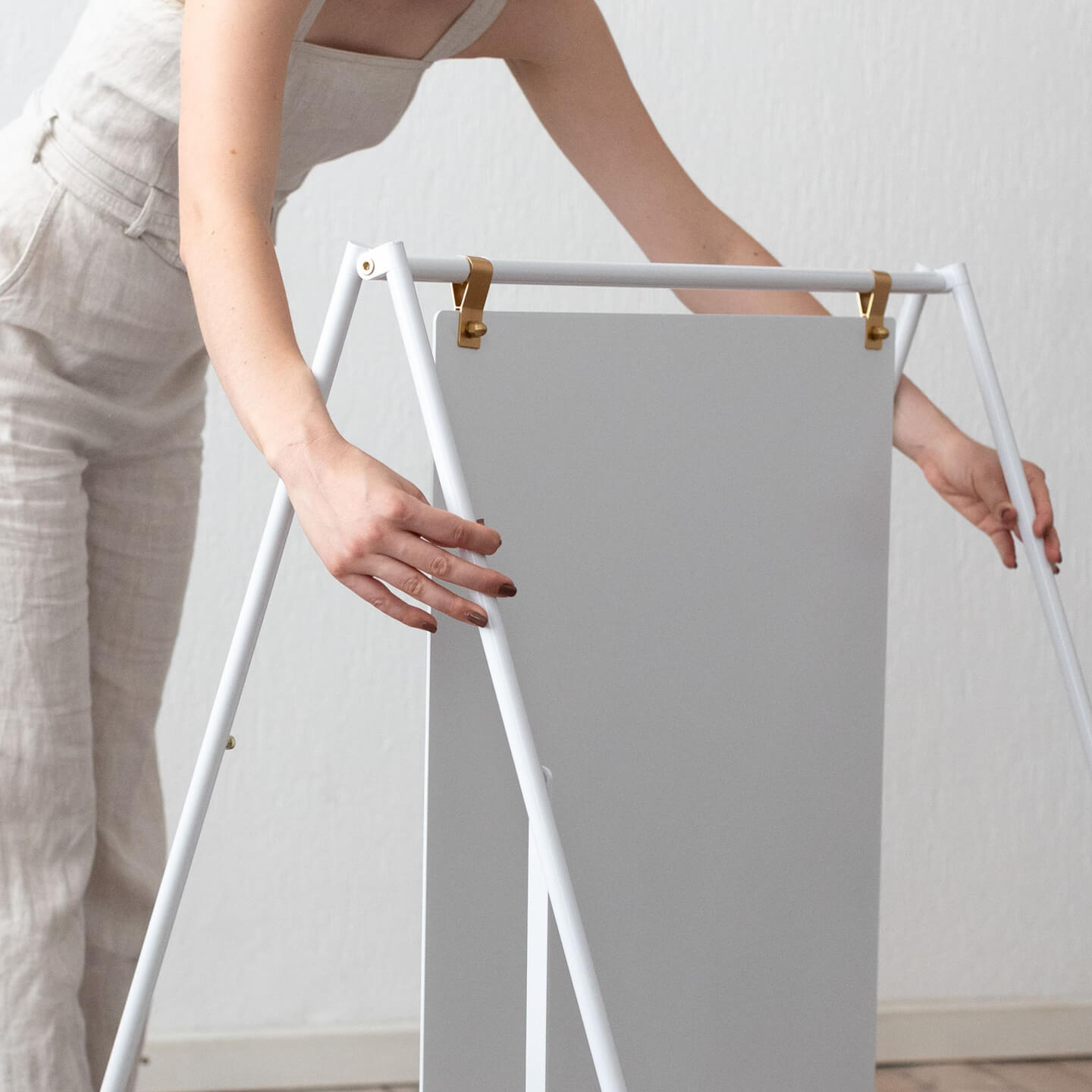
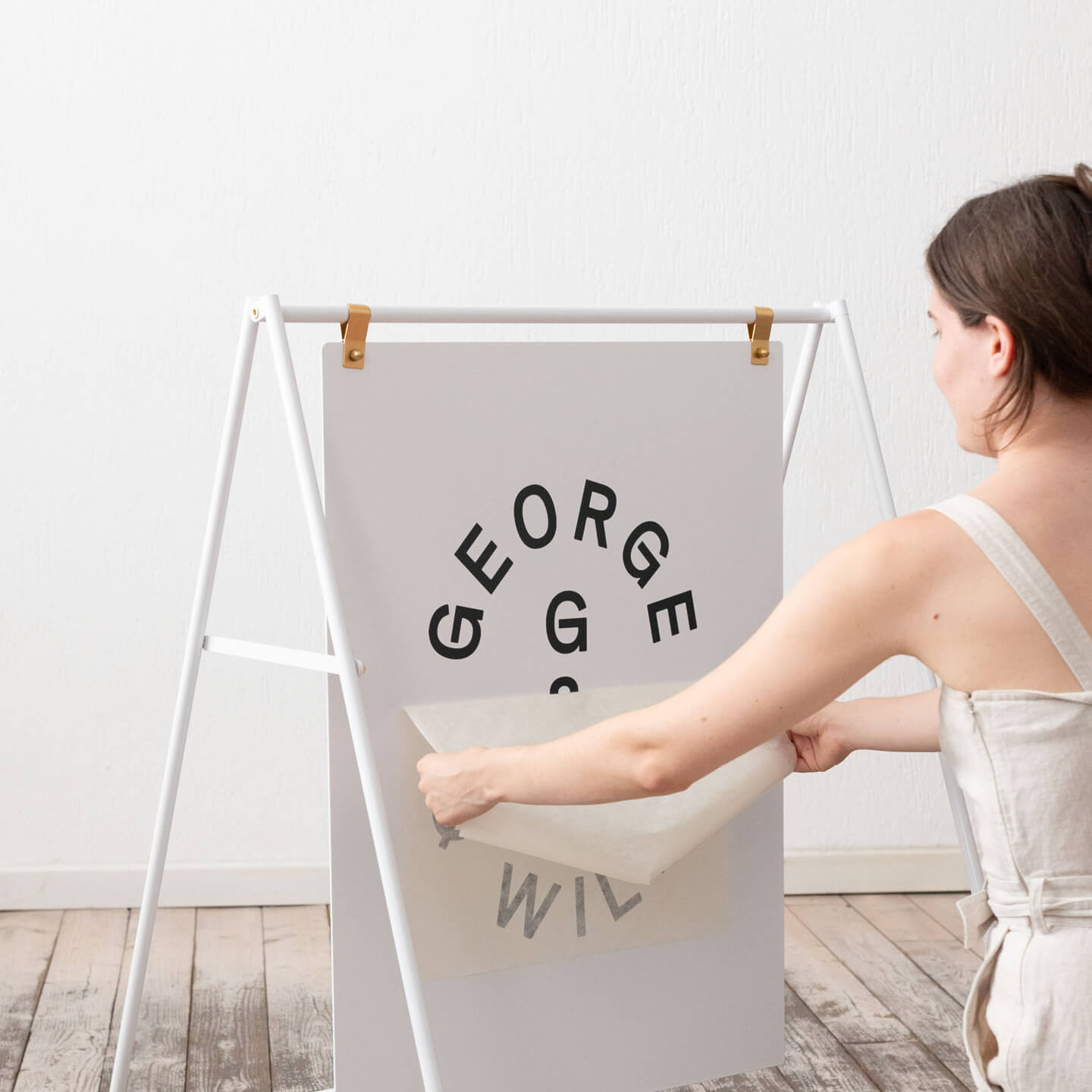
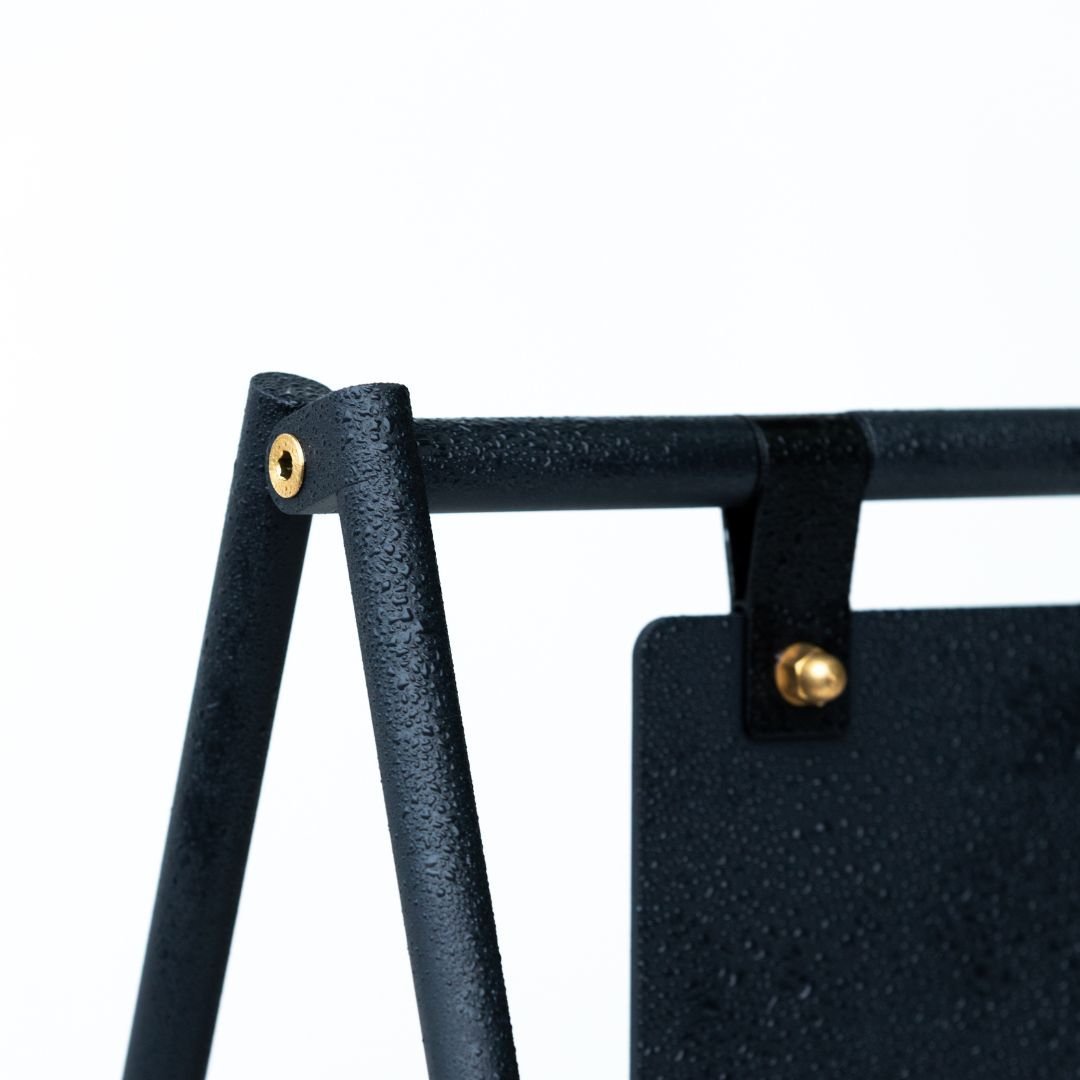
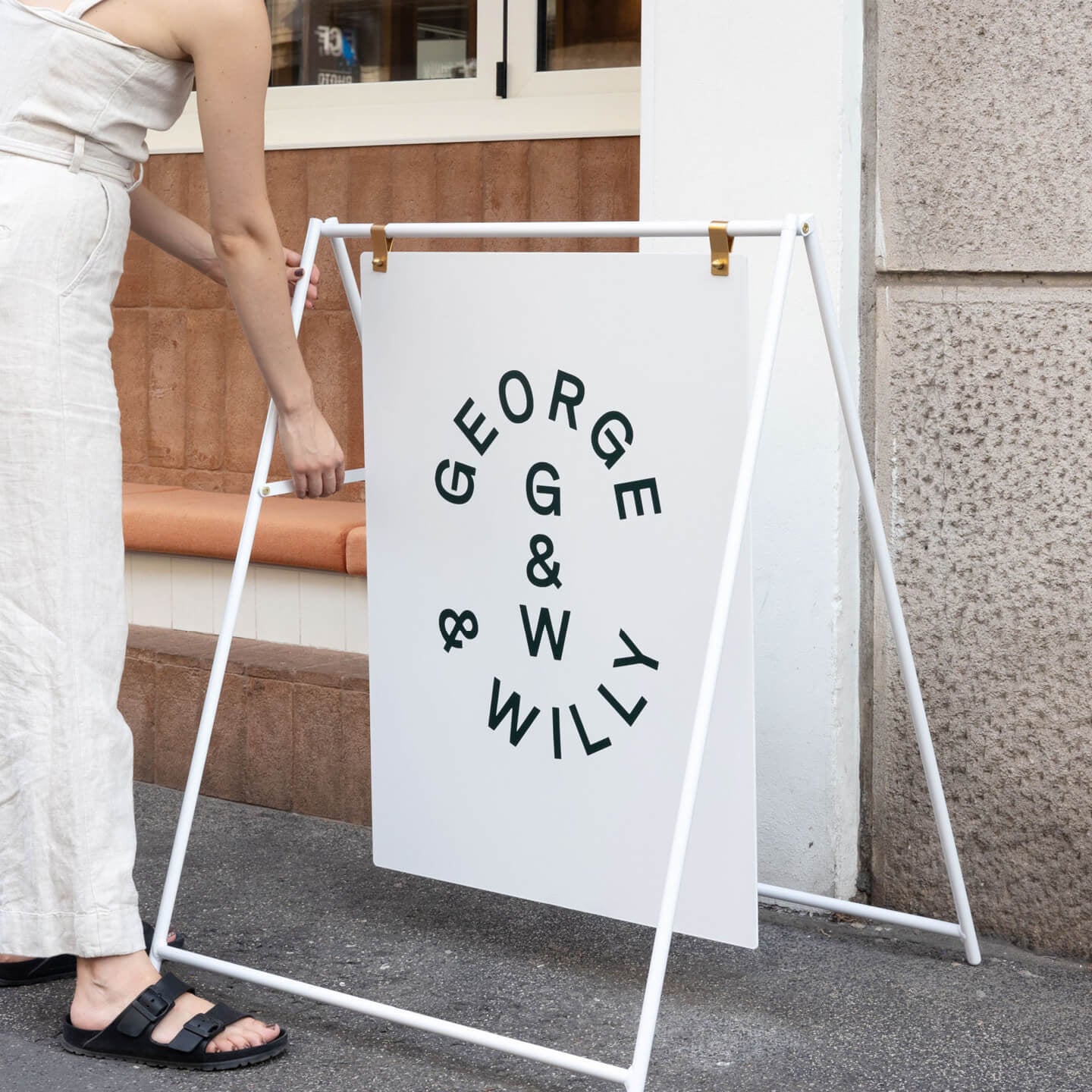
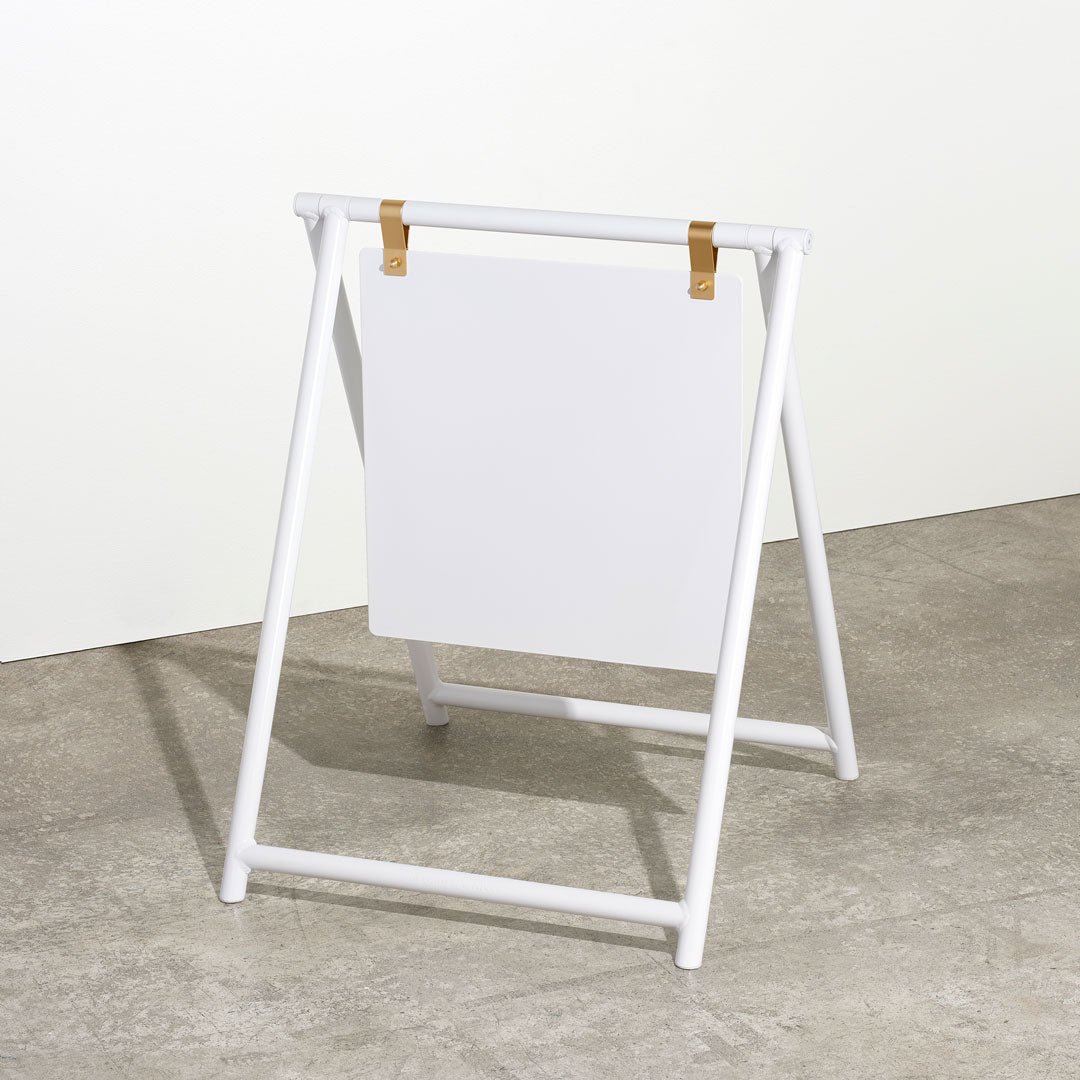
Aluminum is a crowd favorite for a reason. It’s strong, lightweight, and naturally resistant to rust. Unlike iron or steel, aluminum forms a protective oxide layer that shields it from corrosion, making it perfect for rainy or humid climates. High quality aluminum signs, especially those with a protective powder coated finish like the ones used for George & Willy’s A Frame Signs, can last for many years with minimal fuss.
Even better are Aluminum Composite Materials, often called ACM. These are sandwich panels with two thin aluminum sheets bonded to a solid plastic core. This construction makes them incredibly rigid and flat, so they won’t warp or bubble over time.
- Alumalite: A brand of ACM with a corrugated plastic core, making it lightweight yet strong enough to resist swelling or delaminating, even when exposed to water.
- Dibond: A well known ACM that is roughly ten times stronger than a solid aluminum sheet of similar thickness, while weighing about half as much.
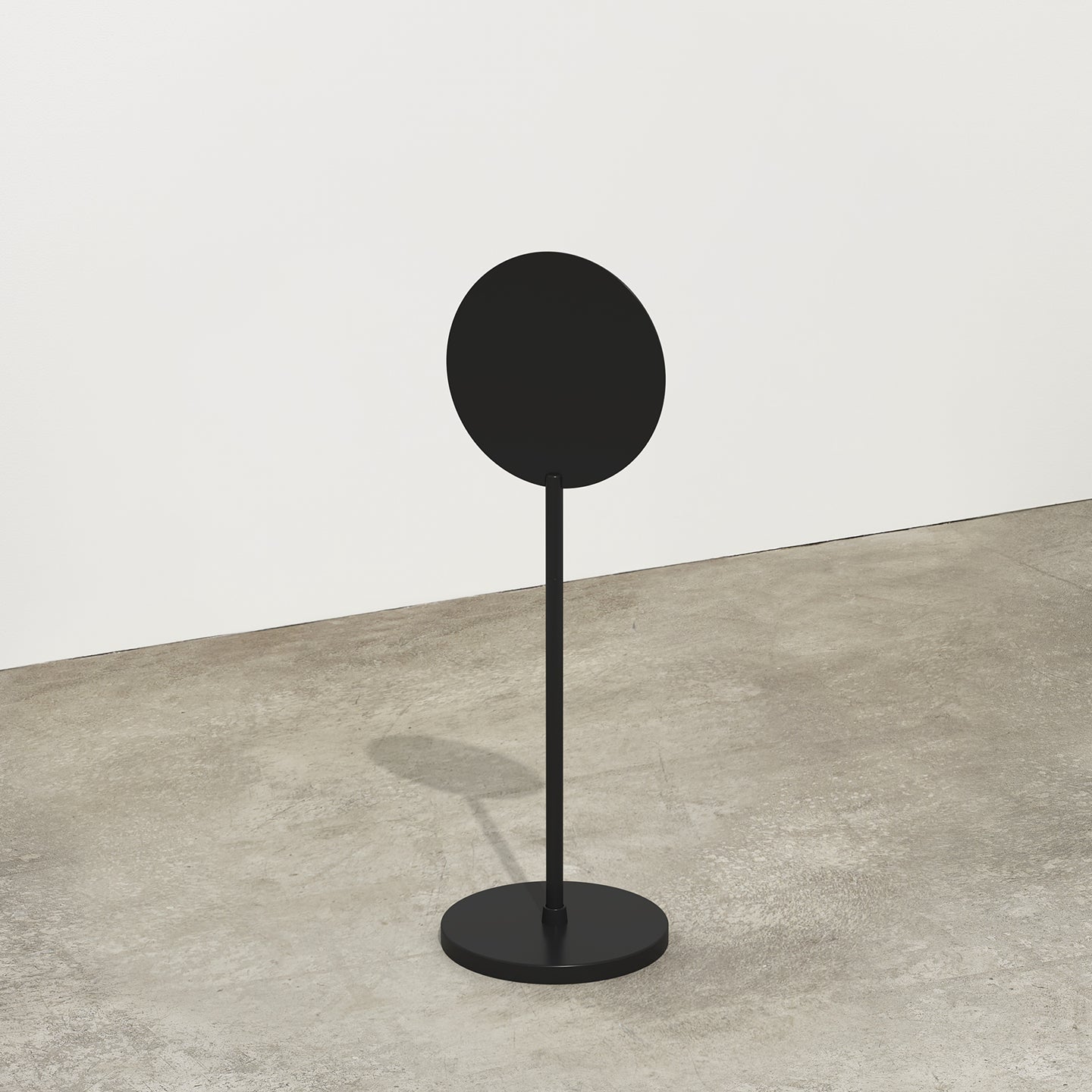
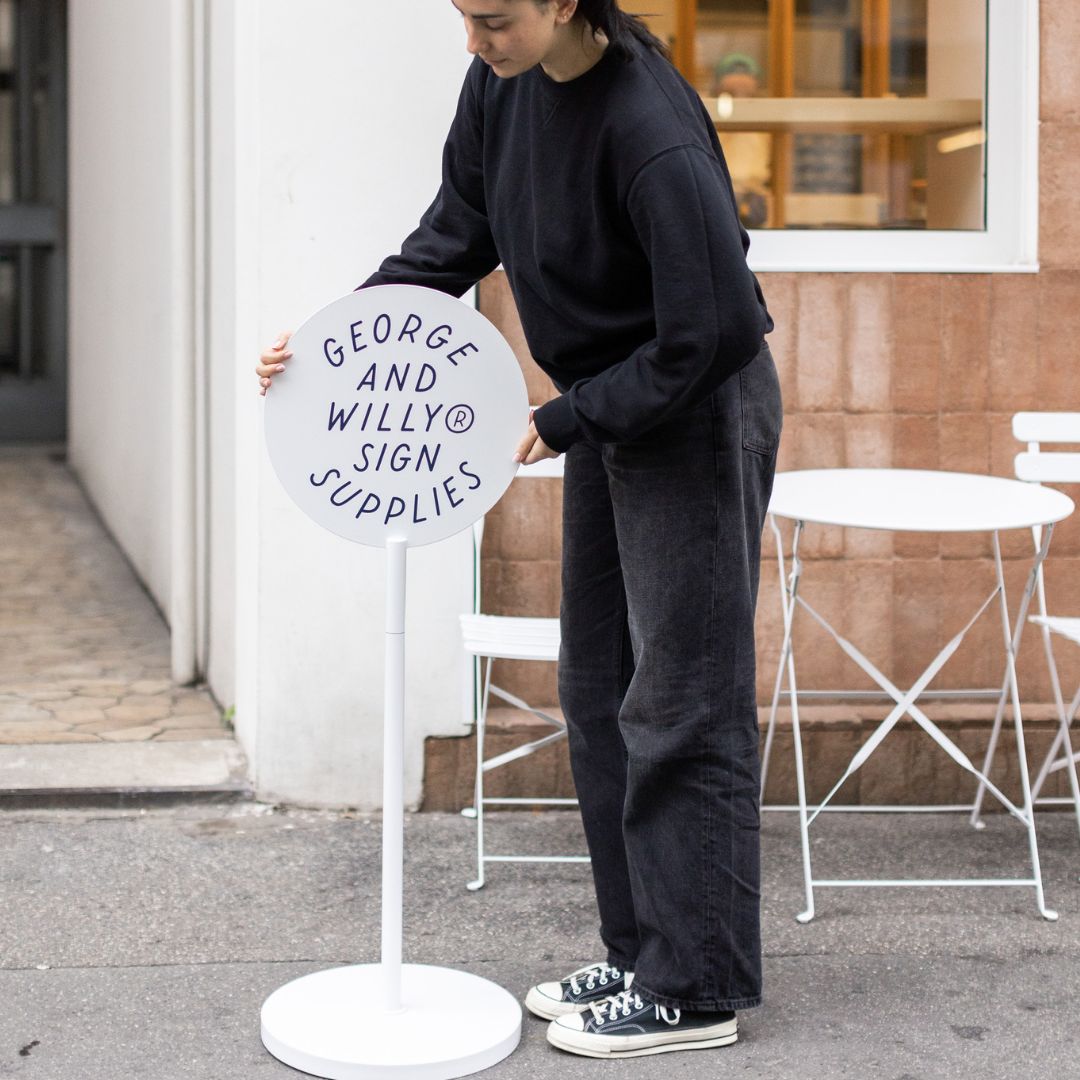
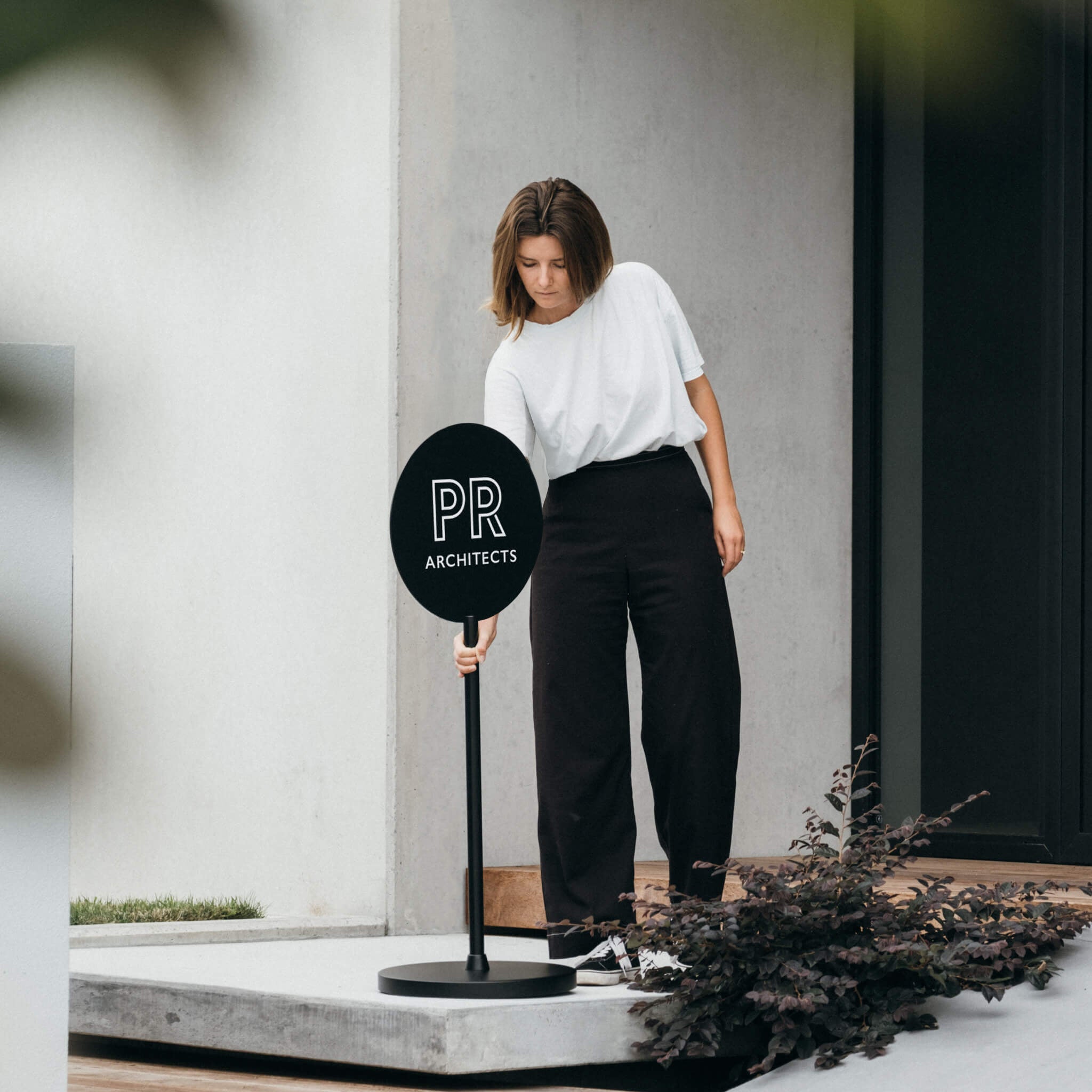
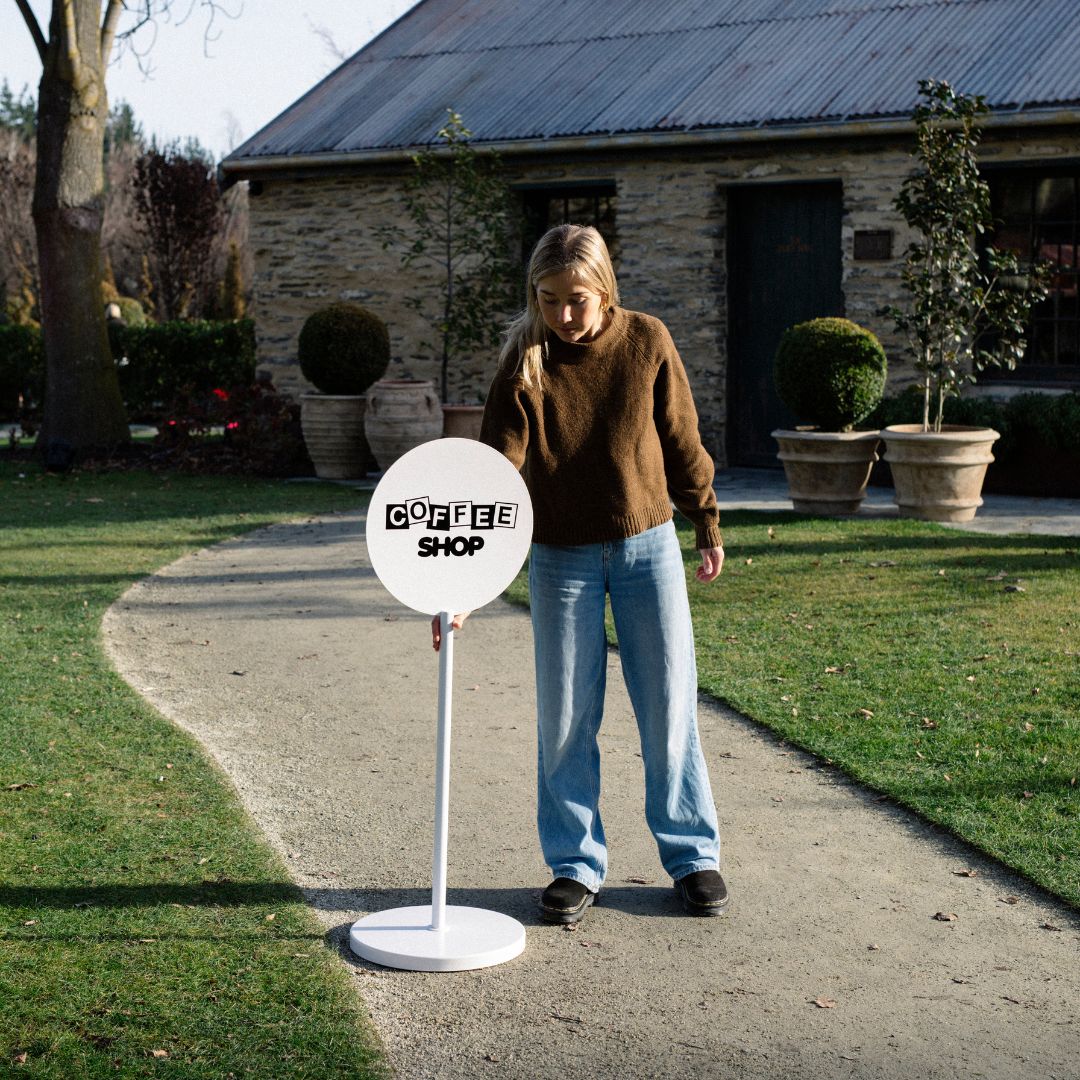
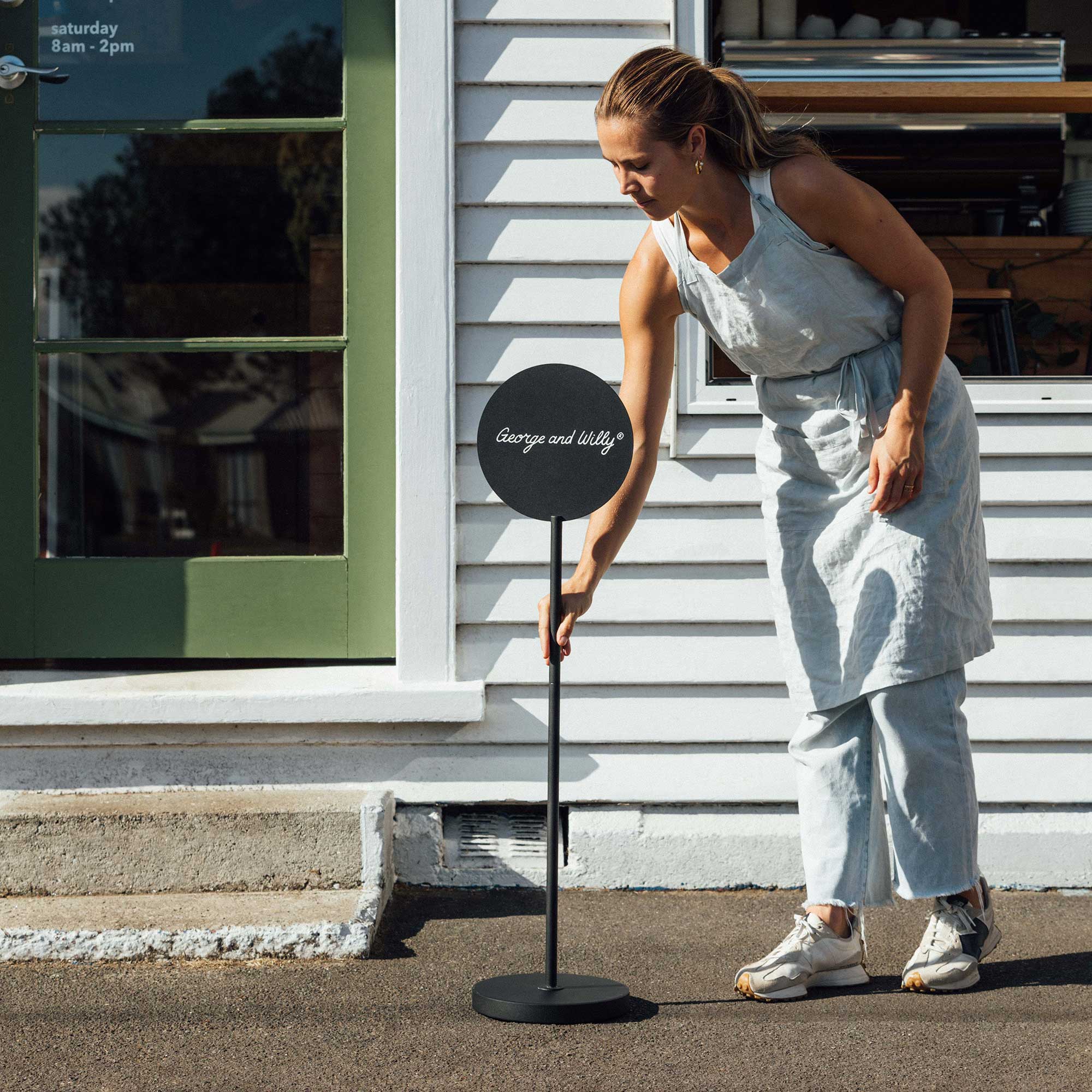
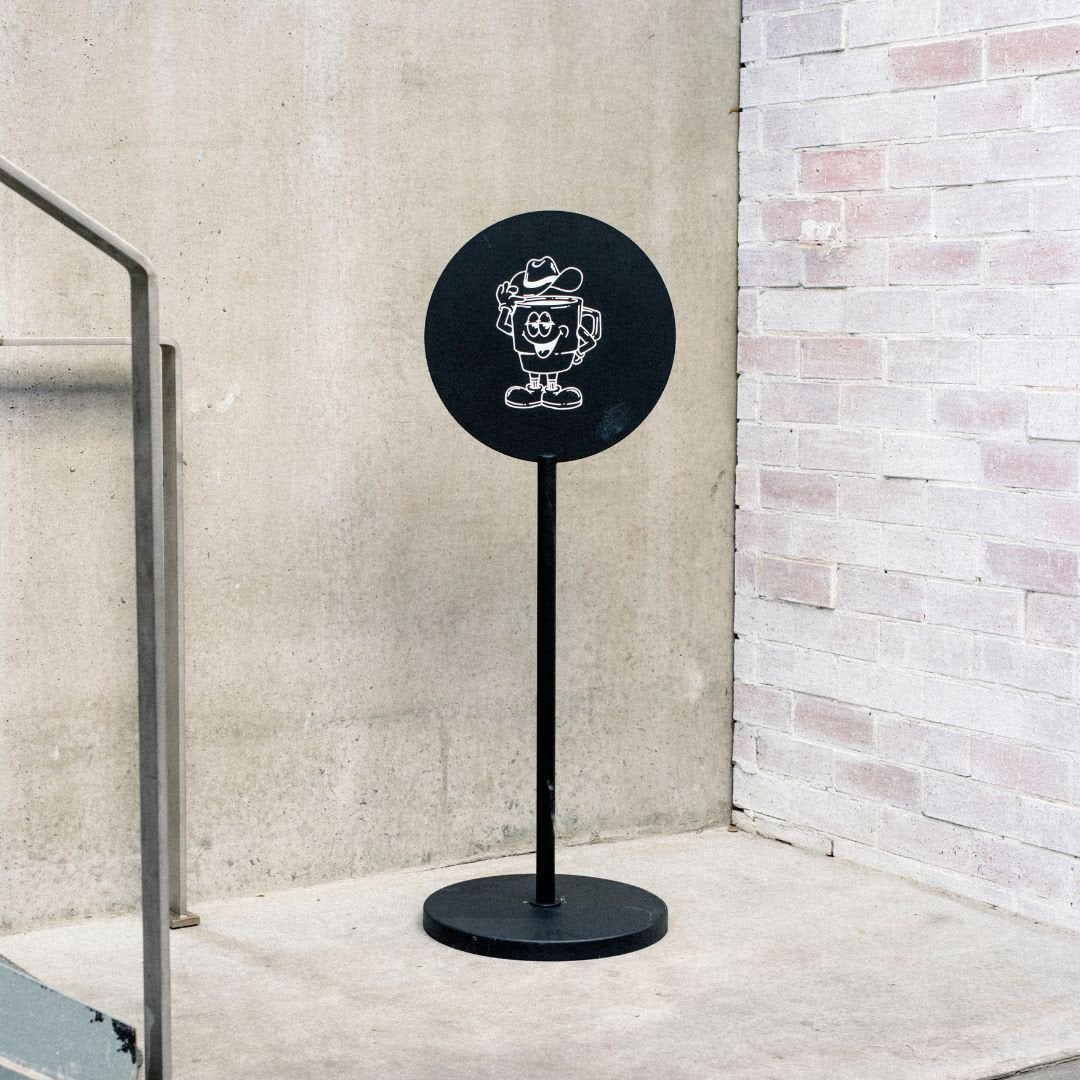
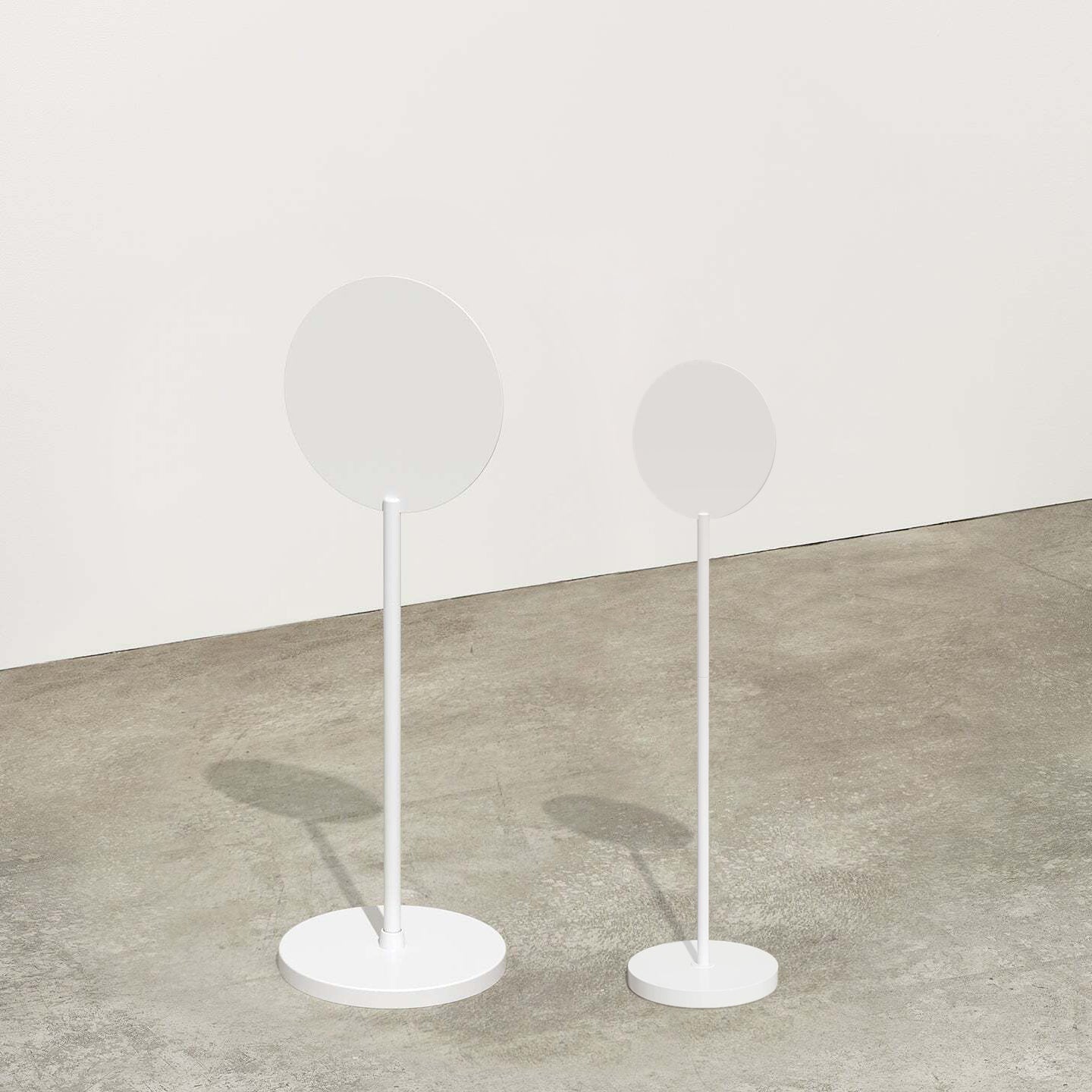
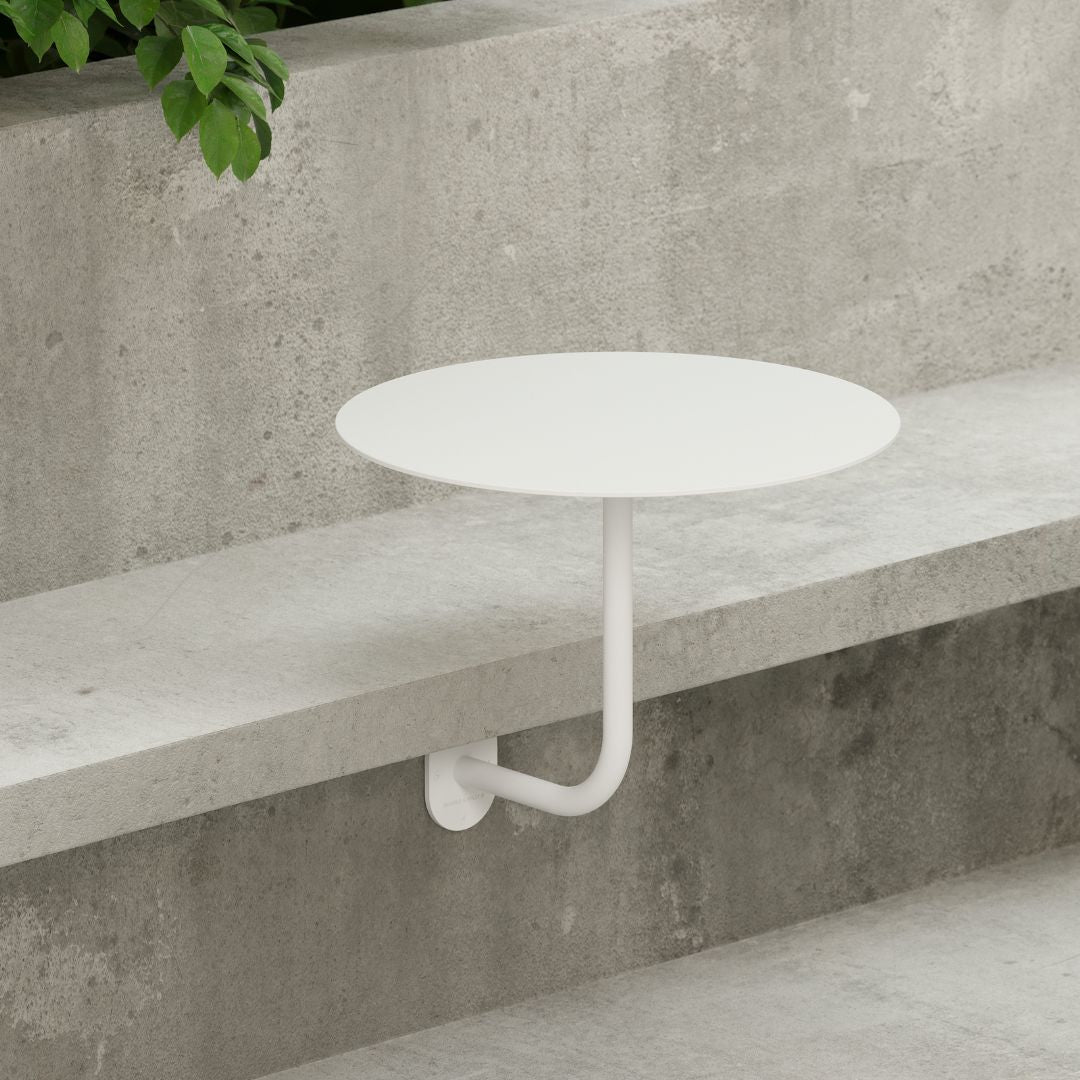
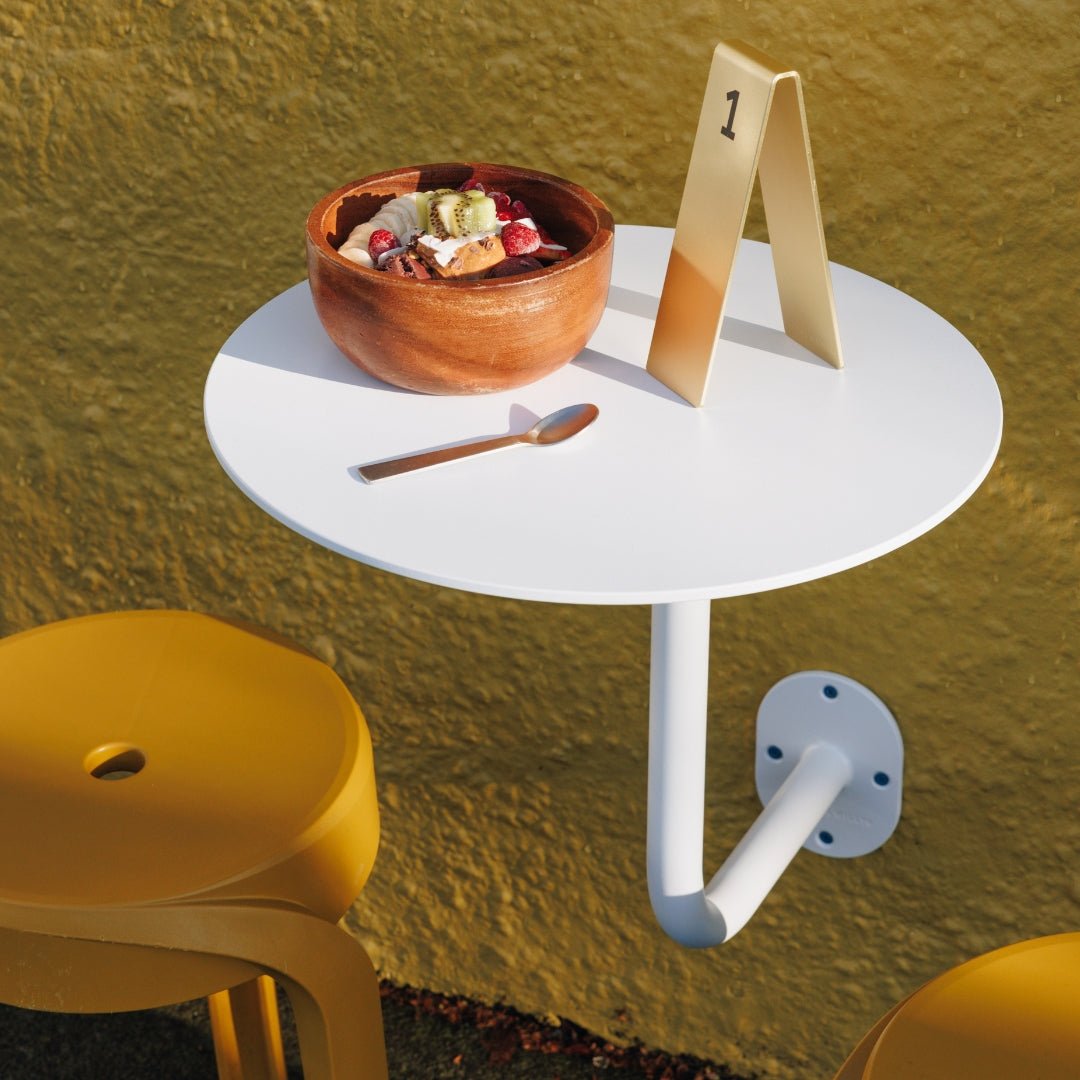
Because of its durability and modern look, aluminum is a top contender for the best material for outdoor signs. Plus, it’s 100% recyclable, making it a sustainable choice. The Round Outdoor Shop Sign is a sleek example of this.
Stainless Steel
For a sleek, modern look that exudes strength, stainless steel is an excellent choice. Its secret weapon is chromium, an element that creates a passive, self healing layer on the surface to prevent rust. This makes it incredibly durable for dimensional letters, logos, and hardware.
There are different grades, with Type 304 being common for most environments. For coastal areas with salty air, Type 316 offers even greater corrosion resistance. While heavier and more costly than aluminum, stainless steel’s low maintenance and premium feel can last for decades.
Bronze
If you’re aiming for a timeless, prestigious look, nothing beats bronze. This classic alloy of copper and tin is synonymous with enduring quality. Bronze doesn’t rust away; instead, it develops a beautiful protective layer, or patina, that shields the metal from further weathering. This is why historical bronze plaques can easily last for over 100 years and still be perfectly legible. It’s a significant upfront investment, but for memorials, historic markers, or high end brands, its unparalleled durability makes it worth it.
The Versatile Plastics: Modern, Lightweight, and Budget Friendly
Plastic signage offers a fantastic combination of versatility, smooth finishes, and affordability. Modern plastics are engineered to be surprisingly tough, making them a great option for a variety of outdoor uses.
Acrylic and 3D Plastic Letters
Acrylic is a thermoplastic valued for its glass like clarity and impressive toughness. It’s highly impact resistant (unlike glass, it won’t shatter) and has fantastic UV resistance, meaning it won’t turn yellow or cloudy after years in the sun.
These qualities make acrylic ideal for 3D plastic letters, which add depth and a sophisticated architectural look to your building. These letters provide a high end appearance similar to metal but at a lower cost and weight, making installation much simpler. They are a weatherproof and eye catching way to make your brand literally stand out.
PVC
Polyvinyl chloride, or PVC, is a lightweight and cost effective plastic often used for sign boards. Its smooth, matte surface is perfect for printing or applying vinyl graphics. PVC is naturally waterproof, so it won’t swell or rot in the rain.
While it’s a fantastic choice for indoor or shorter term outdoor signs, standard PVC can become brittle or fade with prolonged, intense UV exposure. However, for many businesses, a PVC sign that lasts for a few years outdoors is a perfectly practical and affordable solution. Its performance can be boosted by adding a UV protective laminate.
Graphics and Customization: Bringing Your Sign to Life
The sign’s structure is only half the story. The materials used for your graphics play a huge role in its look and longevity.
Vinyl and Vinyl Mesh
Vinyl is the workhorse of sign customization. It’s a thin, flexible film with an adhesive back that can be cut into lettering or printed with full color graphics. You see it everywhere, from window decals to vehicle wraps.
- Standard Vinyl: Durability varies by grade. A budget friendly calendared vinyl might last 3 to 6 years outdoors, while a premium cast vinyl can last from 5 to 12 years.
- Vinyl Mesh: This clever material is a perforated vinyl banner designed for windy locations. The tiny holes allow air to pass through, reducing the “sail effect” and preventing the banner from tearing away from its mountings. A mesh banner can allow 25% to 50% of the wind to flow through, significantly increasing its lifespan in blustery conditions.
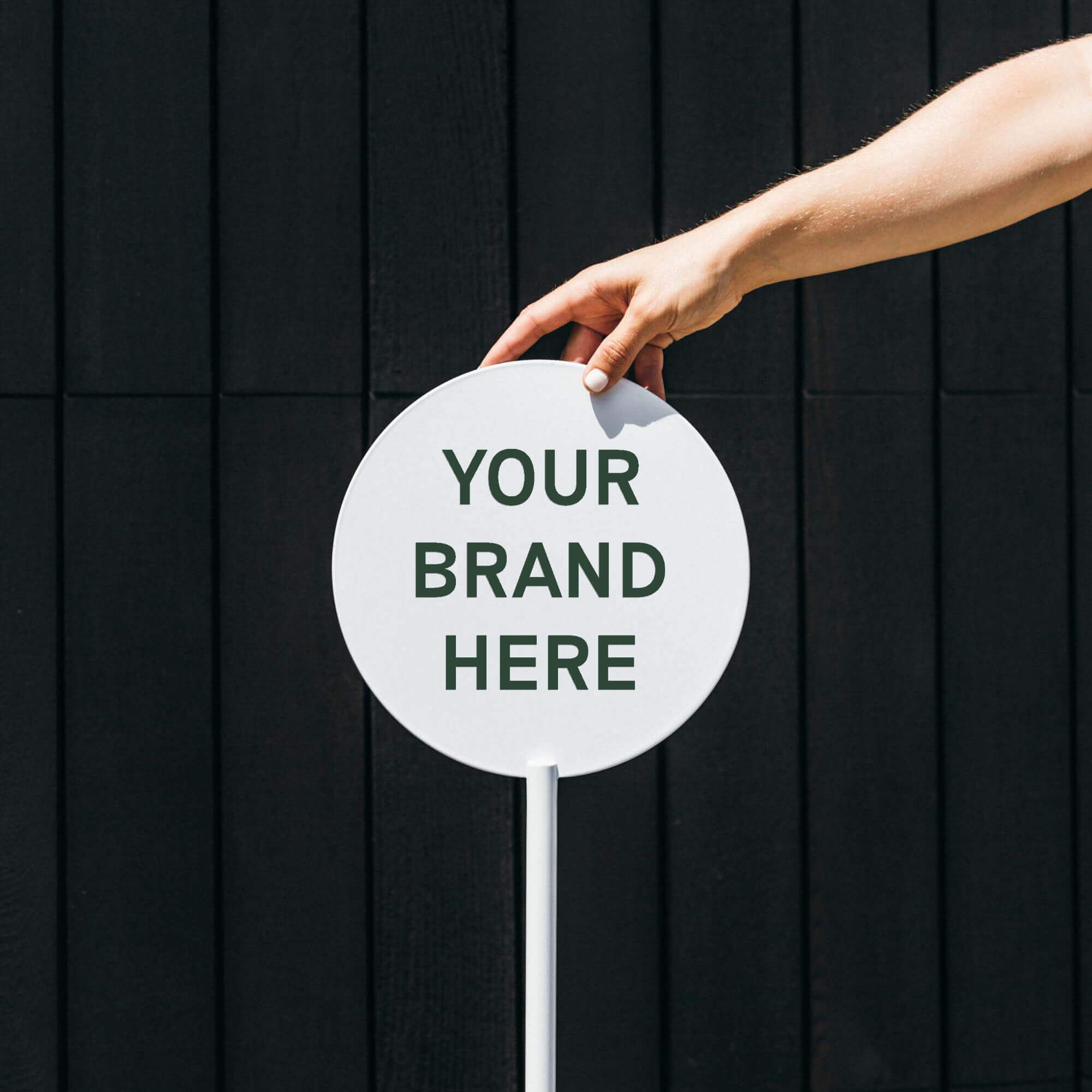
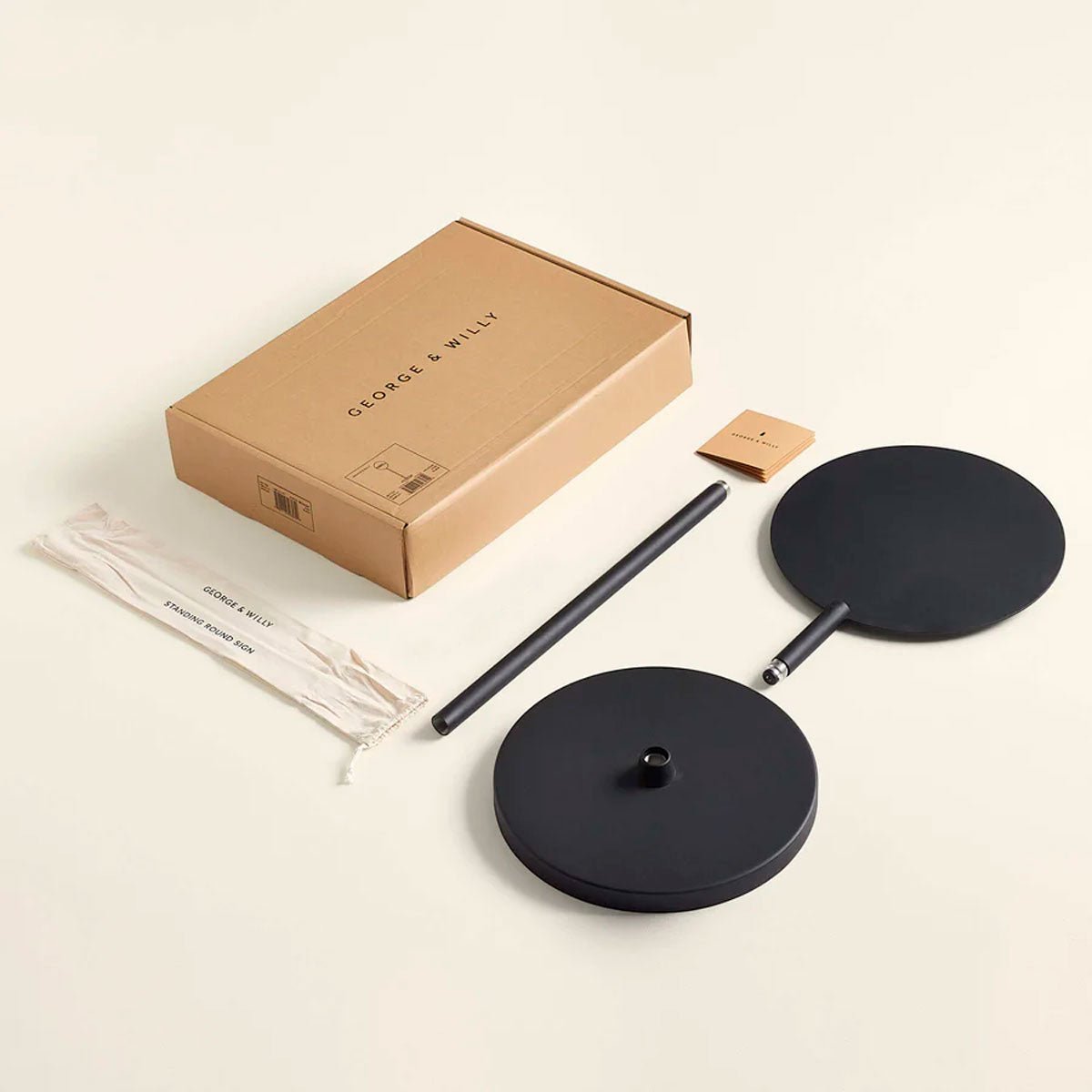
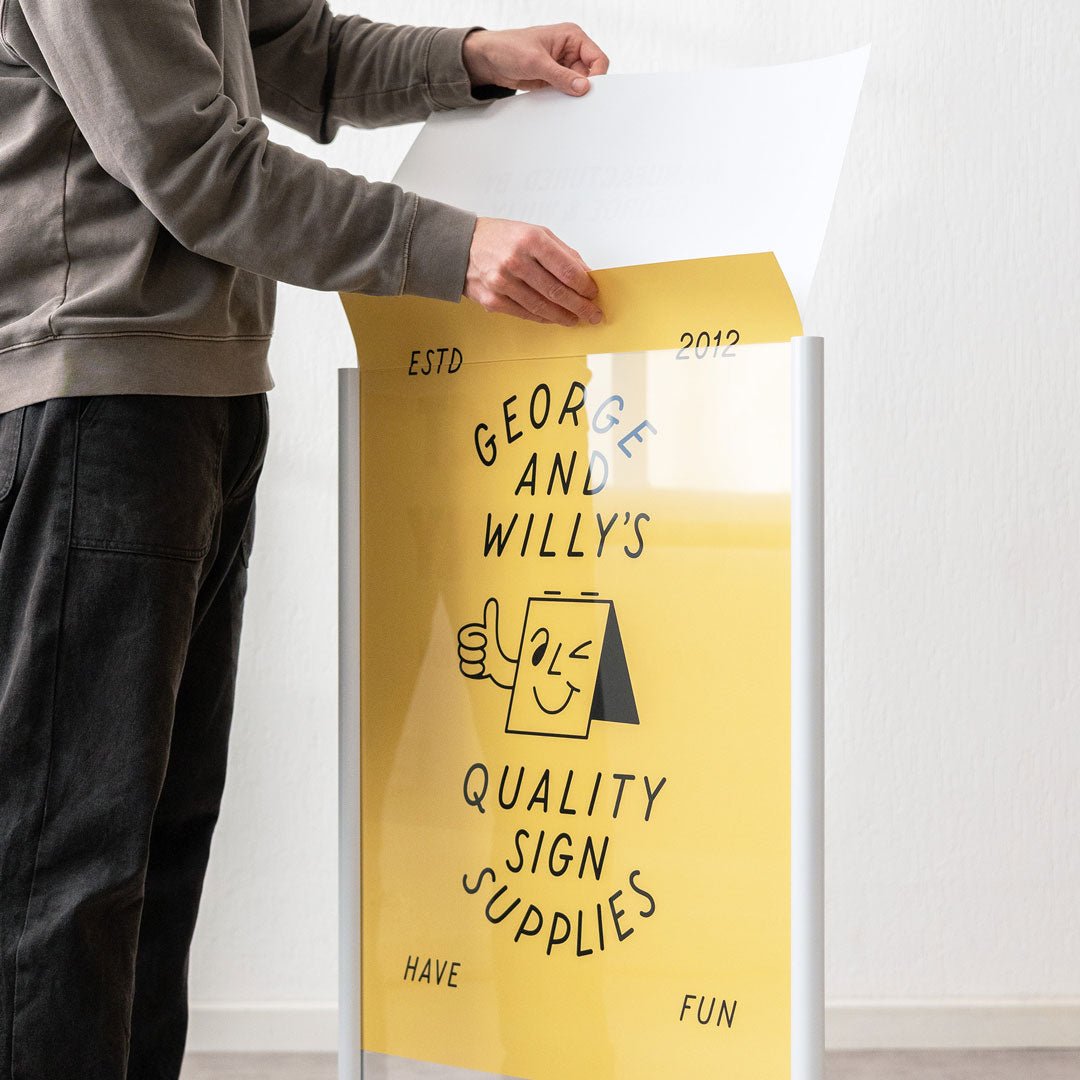
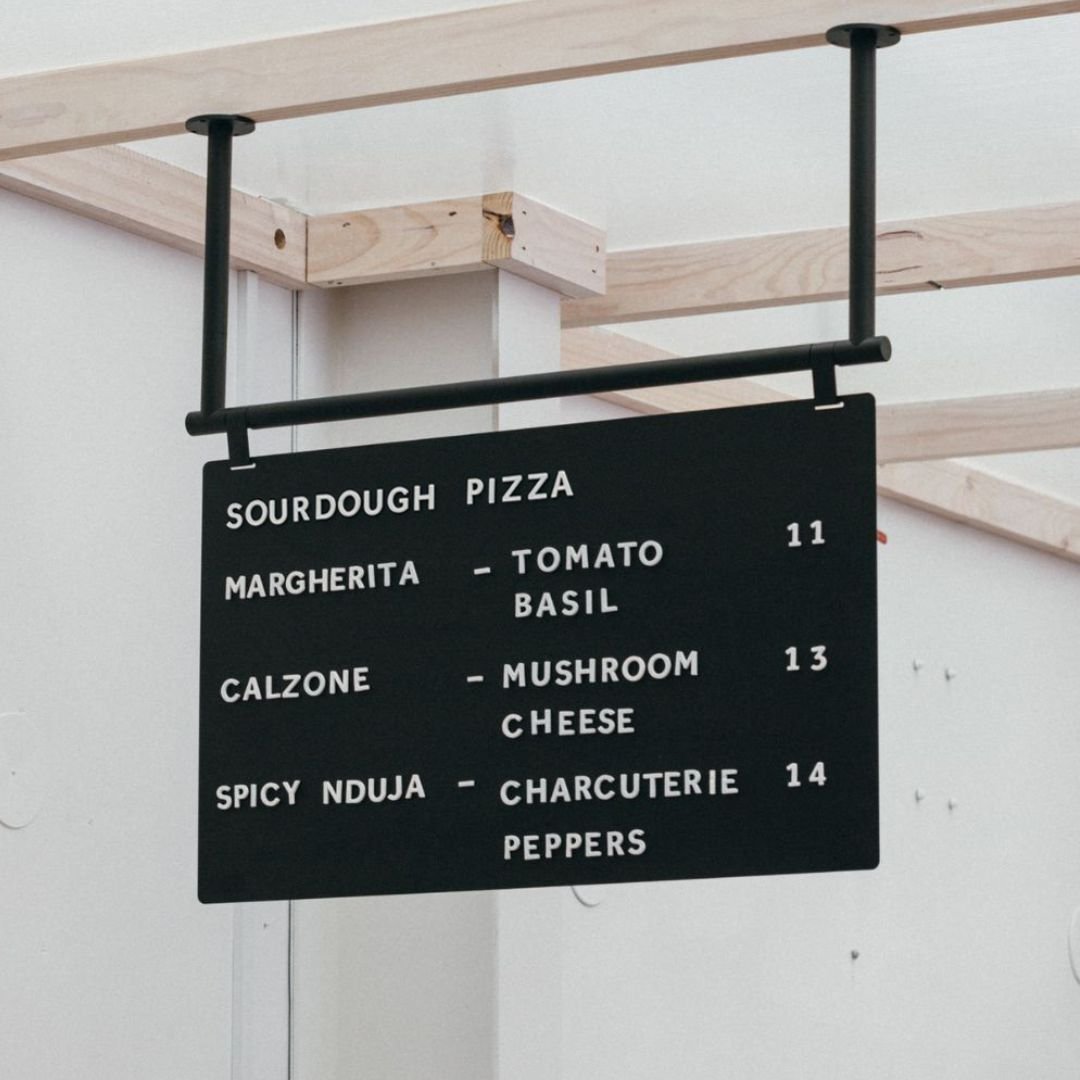
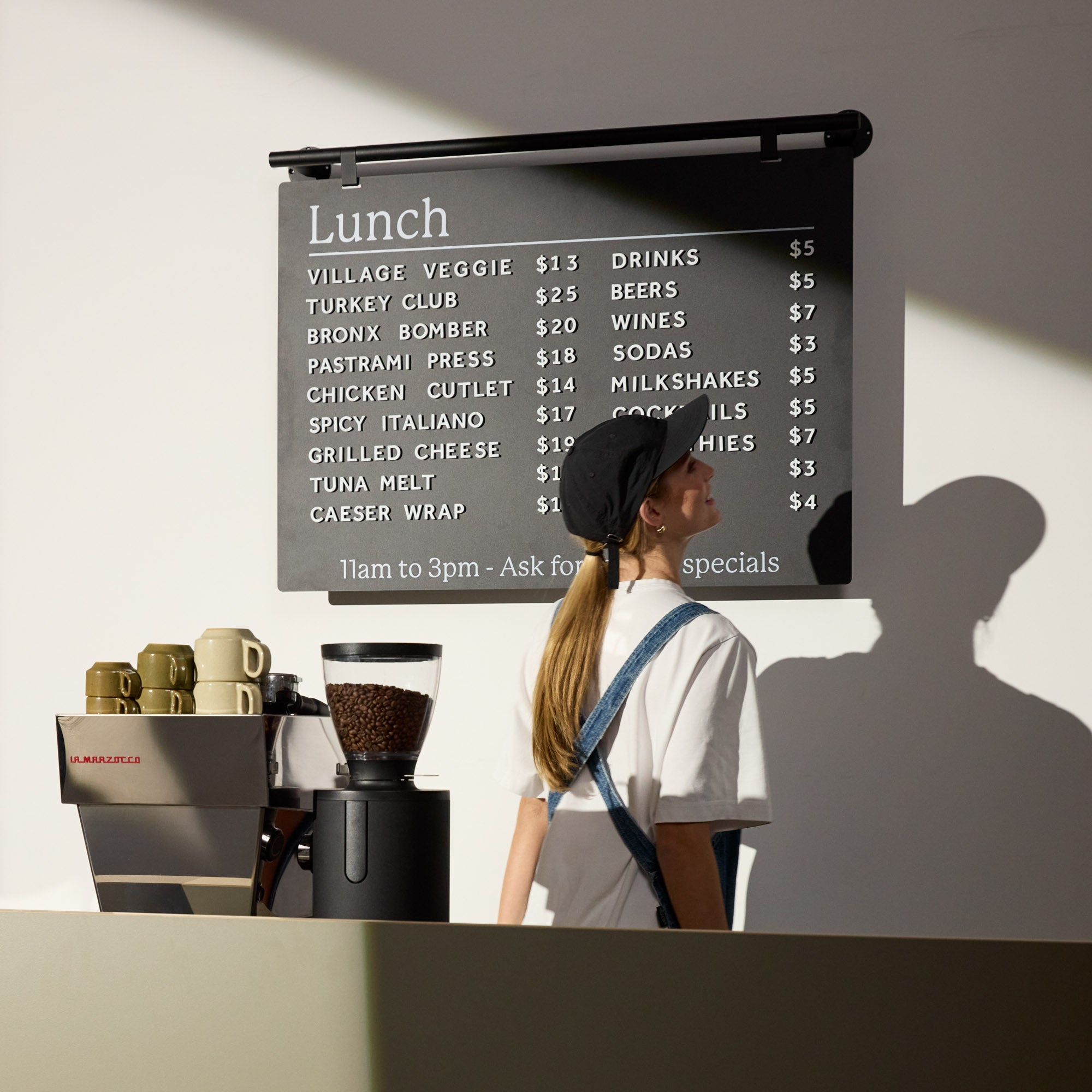
Many businesses, including George & Willy, provide beautifully crafted blank outdoor signs, allowing you to work with a local signwriter to apply custom vinyl graphics.
Backlit Film
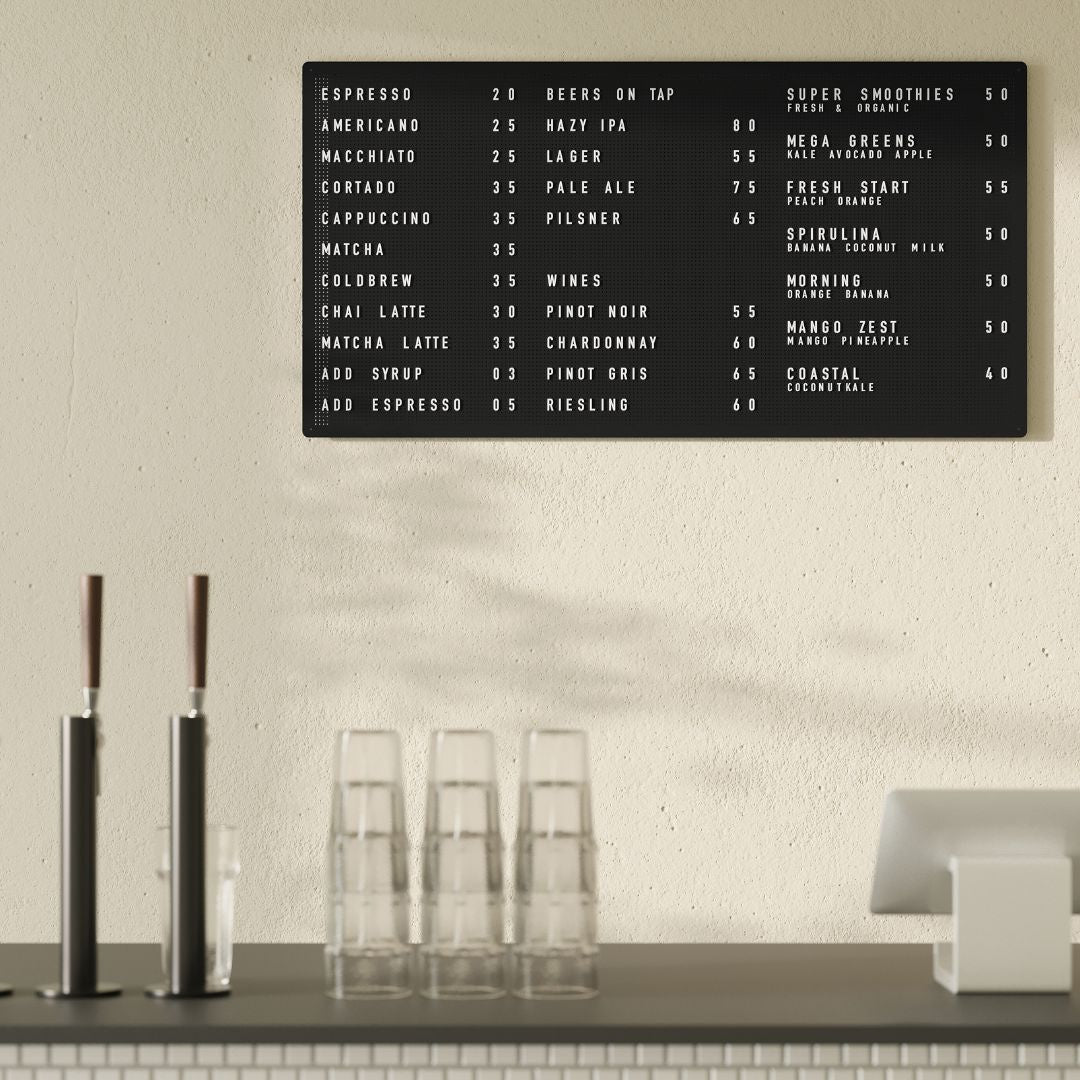
For illuminated sign boxes, backlit film is the go to material. This translucent polyester film is designed to be lit from behind, making graphics appear incredibly vibrant and eye catching, day or night. It’s engineered to diffuse light evenly and hold rich colors, perfect for menus in a light box or retail displays.
Key Factors in Choosing Your Sign Material
Deciding on the best material for outdoor signs involves more than just picking one from a list. You need to consider these crucial factors.
Durability and Lifespan
Durability is a sign’s ability to withstand wear and weather over time. A more durable sign might cost more upfront, but it saves you money in the long run by not needing frequent replacement. A study found that 68% of consumers believe a store’s signage reflects the quality of its products, so a durable, well maintained sign is a smart investment.
Lifespan varies wildly. A simple vinyl banner might last 3 to 5 years, while a quality aluminum sign could last over a decade. At the top end, a bronze plaque can survive for more than a century.
Weather and UV Resistance
A sign with good weather resistance can handle rain, wind, and temperature changes without warping, cracking, or corroding. Materials like aluminum and PVC are naturally waterproof. For aluminum storefronts, a projecting Flag Sign performs well in varied weather.
UV resistance is specifically about surviving sunlight. The sun’s UV rays can fade colors and make plastics brittle. Materials like acrylic are known for their excellent UV stability, while finishes like powder coating and UV protective laminates act like sunscreen for your sign, keeping it vibrant for longer.
Maintenance and Cost
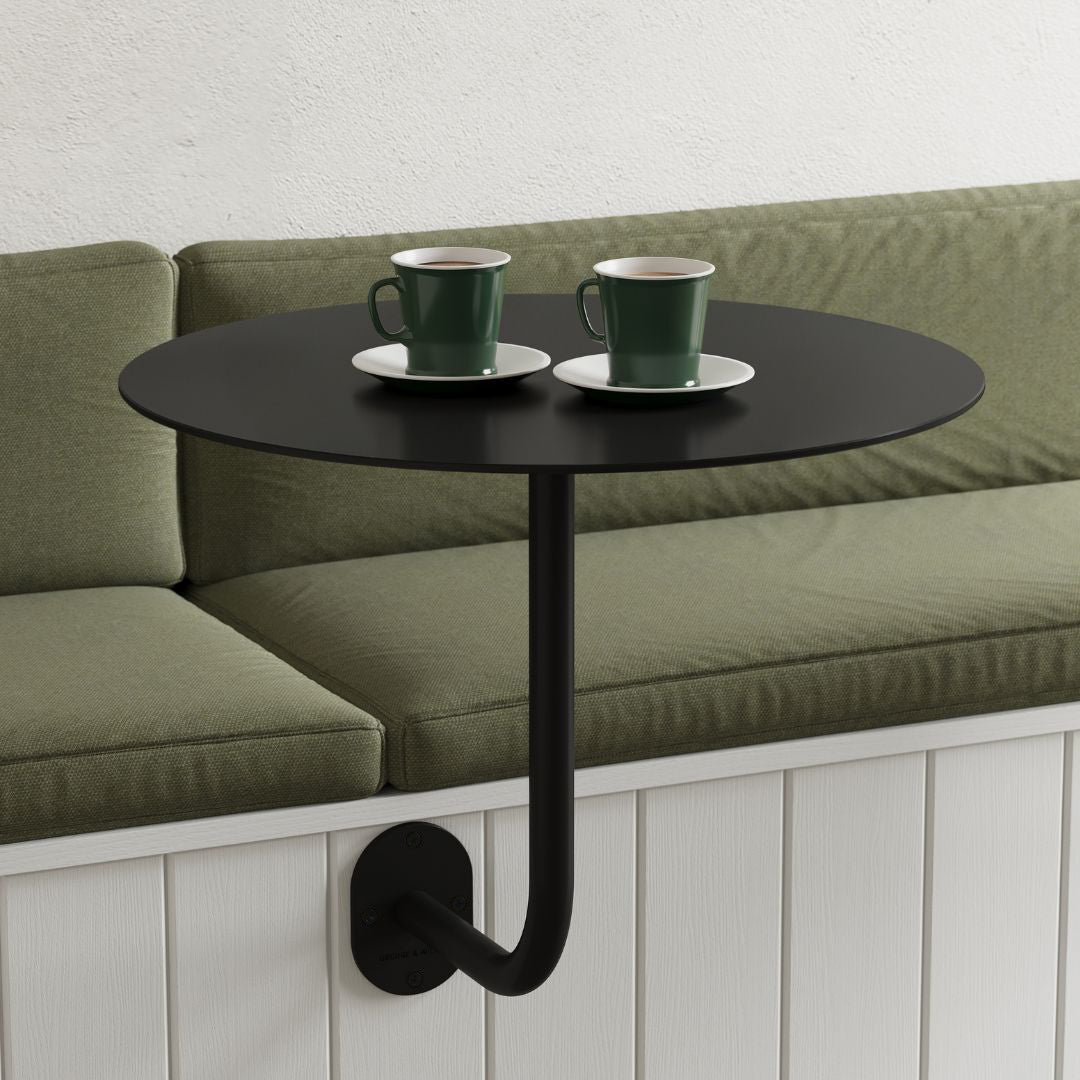
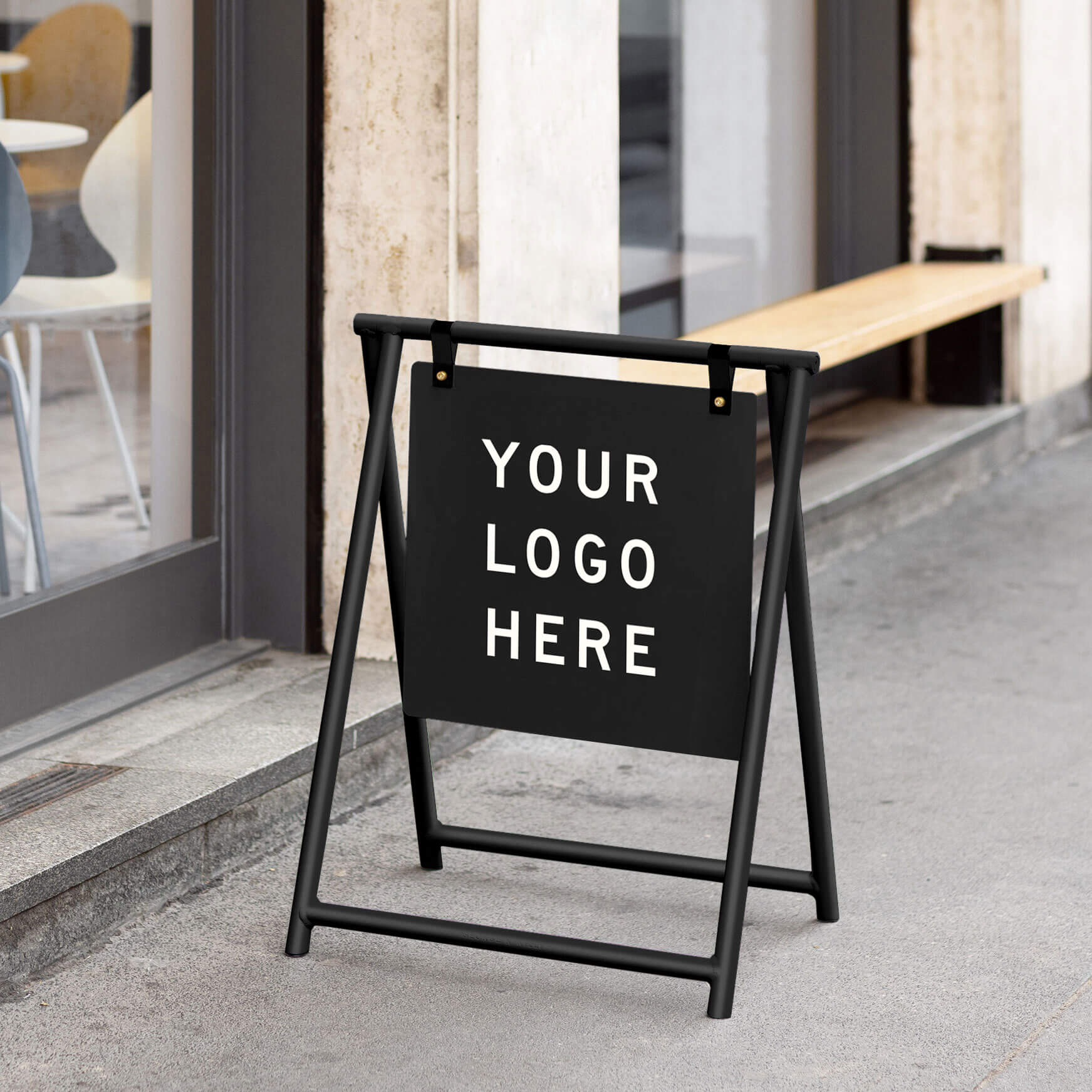
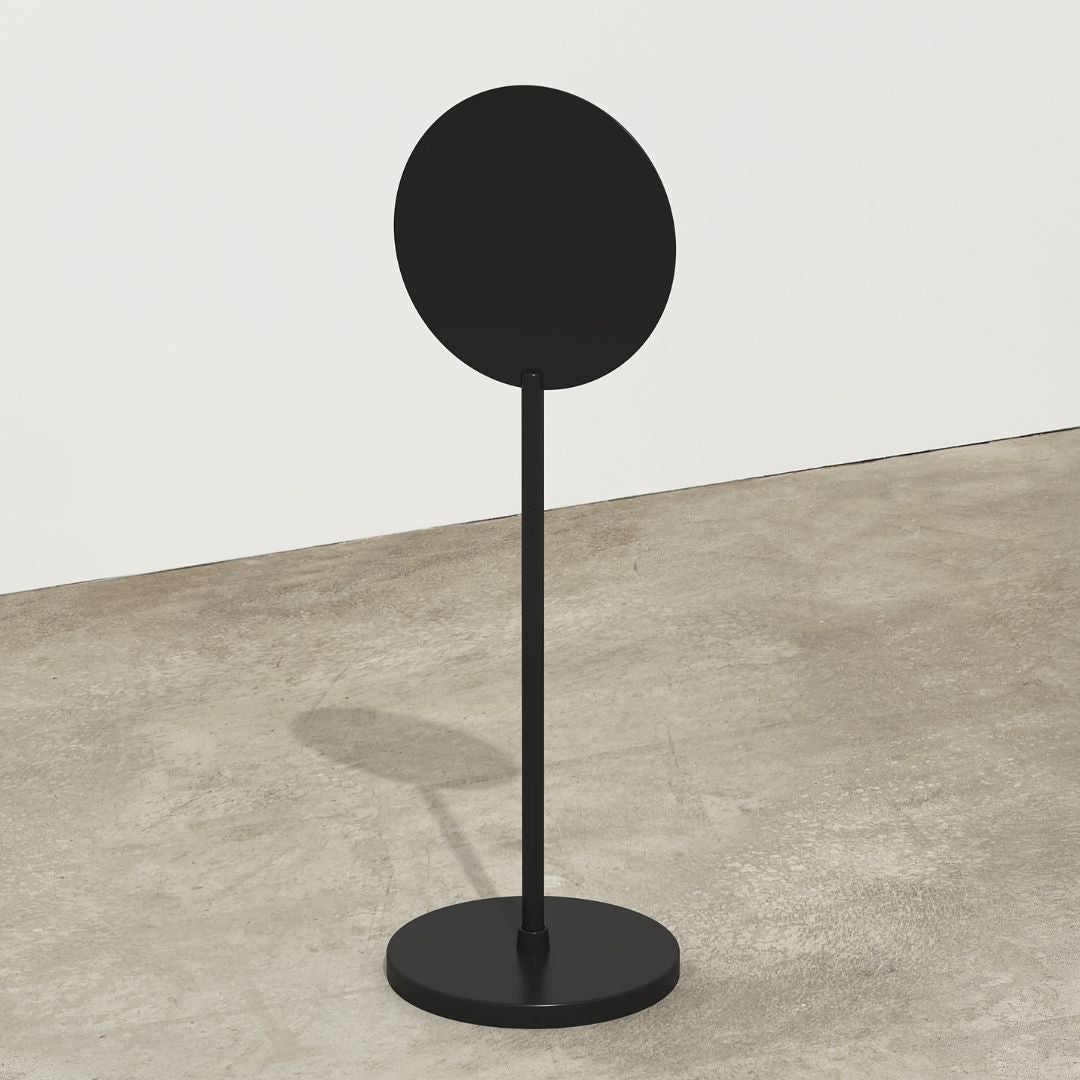
Consider how much upkeep you’re willing to do. Powder coated aluminum or stainless steel are virtually maintenance free, requiring only an occasional cleaning (for example, a Rounded Sidewalk Sign for curbside use).
Cost is always a factor, but think about the total cost of ownership. An inexpensive PVC sign might be perfect for a pop up event, but for a permanent storefront, a more durable material like aluminum often proves more economical over its lifespan.
Environmental Impact
Sustainability is an increasingly important consideration. Metals like aluminum are highly recyclable without any loss of quality. Wood, if sourced from sustainable forests, is a renewable resource. Choosing a durable sign that lasts for many years is also an eco friendly choice, as it reduces waste and the consumption of resources over time.
Frequently Asked Questions
What is the most durable material for outdoor signs?
For ultimate durability, metals like aluminum, stainless steel, and bronze are top choices. Aluminum Composite Material (ACM) is particularly popular because it offers incredible rigidity and weather resistance in a lightweight panel.
What is the most affordable material for outdoor signs?
PVC and vinyl banners are typically the most budget friendly options. They offer a great look for their price point and are perfect for temporary or shorter term signage needs.
How long do outdoor signs last?
The lifespan depends entirely on the material and conditions. A vinyl banner might last 3 to 5 years, a high quality wooden sign could last 15 to 20 years, an aluminum sign can last over a decade, and a bronze plaque can last for over 100 years.
What’s better for outdoor signs, PVC or aluminum?
For long term durability, aluminum is superior. It does not rust, is extremely weather resistant, and won’t warp in the heat. PVC is a great, lower cost alternative for shorter term use, but it can be susceptible to fading or becoming brittle from long term sun exposure. This makes aluminum the best material for outdoor signs intended to last many years.
How can I make my outdoor sign last longer?
Start by choosing a durable, weather resistant material. If your sign has printed graphics, ask for a UV protective laminate. Regular, gentle cleaning to remove dirt and grime also helps. For wooden signs, periodic reapplication of a protective sealant is key.
What is the best material for outdoor signs in windy areas?
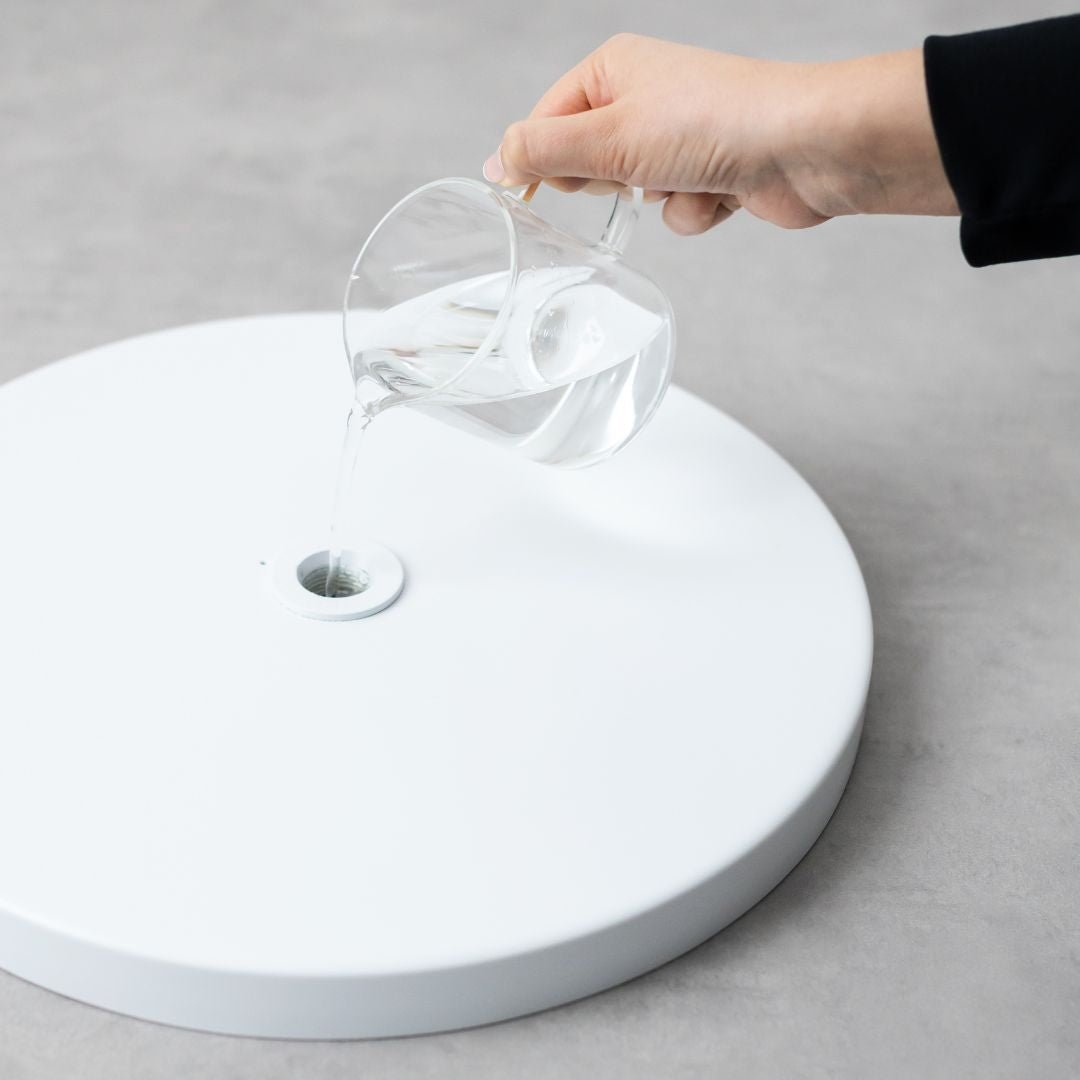
For banners, vinyl mesh is the ideal choice as it allows wind to pass through, reducing stress on the material and mountings. For rigid signs, a sturdy material like Aluminum Composite Material (ACM) installed with robust hardware is recommended. If you use an A‑frame, add a Sandbag for A‑Frame Signs to increase stability in gusty conditions.
Related reading: Steel vs. aluminum: the best metal for outdoor signs