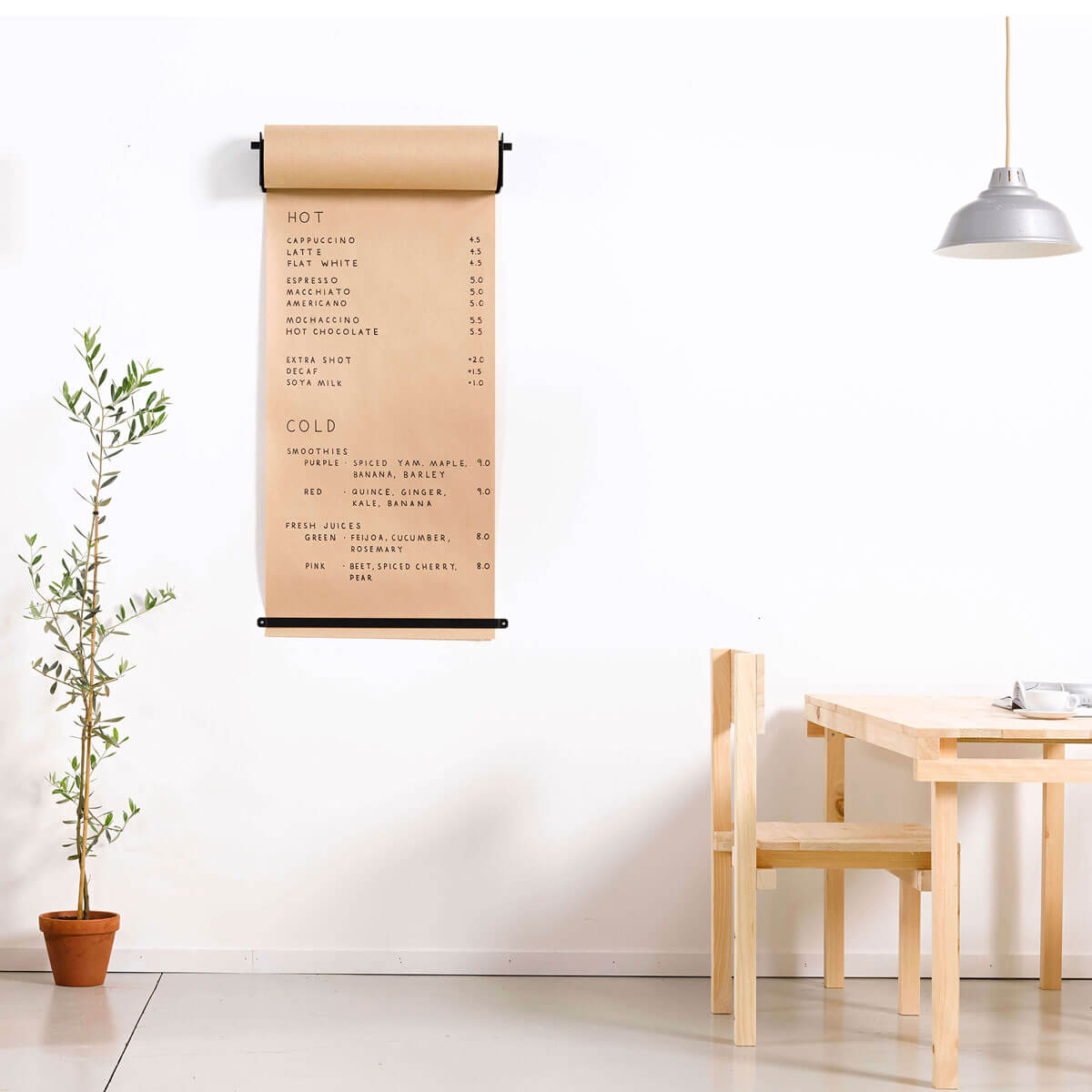




To order a custom sign that delivers real business impact, you must first define your goals, then choose the right sign type, create a clear design, select a reliable partner, and plan for installation. A powerful sign is more than a nameplate; with 76% of shoppers drawn into a store by signage alone, the right one can increase foot traffic and strengthen brand recognition. This guide walks you through every step to successfully order a custom sign that gets results.
Why a Great Sign Is Your Best Silent Salesperson
Your storefront sign is the first handshake with a potential customer, communicating quality and personality before you say a word. 68% of consumers believe a business’s sign reflects the quality of its products or services, and nearly 75% have told others about a business because of impressive signage. Conversely, 52% are less likely to enter if signs look sloppy. That's why it is so important to order a custom sign that is clear, creative, and well-crafted as an investment in reputation and revenue.
Choosing the Right Type of Custom Sign
When you order a custom sign, the best choice depends entirely on your goal and location. Are you attracting street traffic, guiding customers indoors, or announcing a temporary sale?
For Drawing in Foot Traffic (Exterior Signs)
If your goal is more walk ins, prioritize exterior signage. 67% of shoppers have made a purchase because an outdoor sign caught their attention. Consider these durable, long term options:
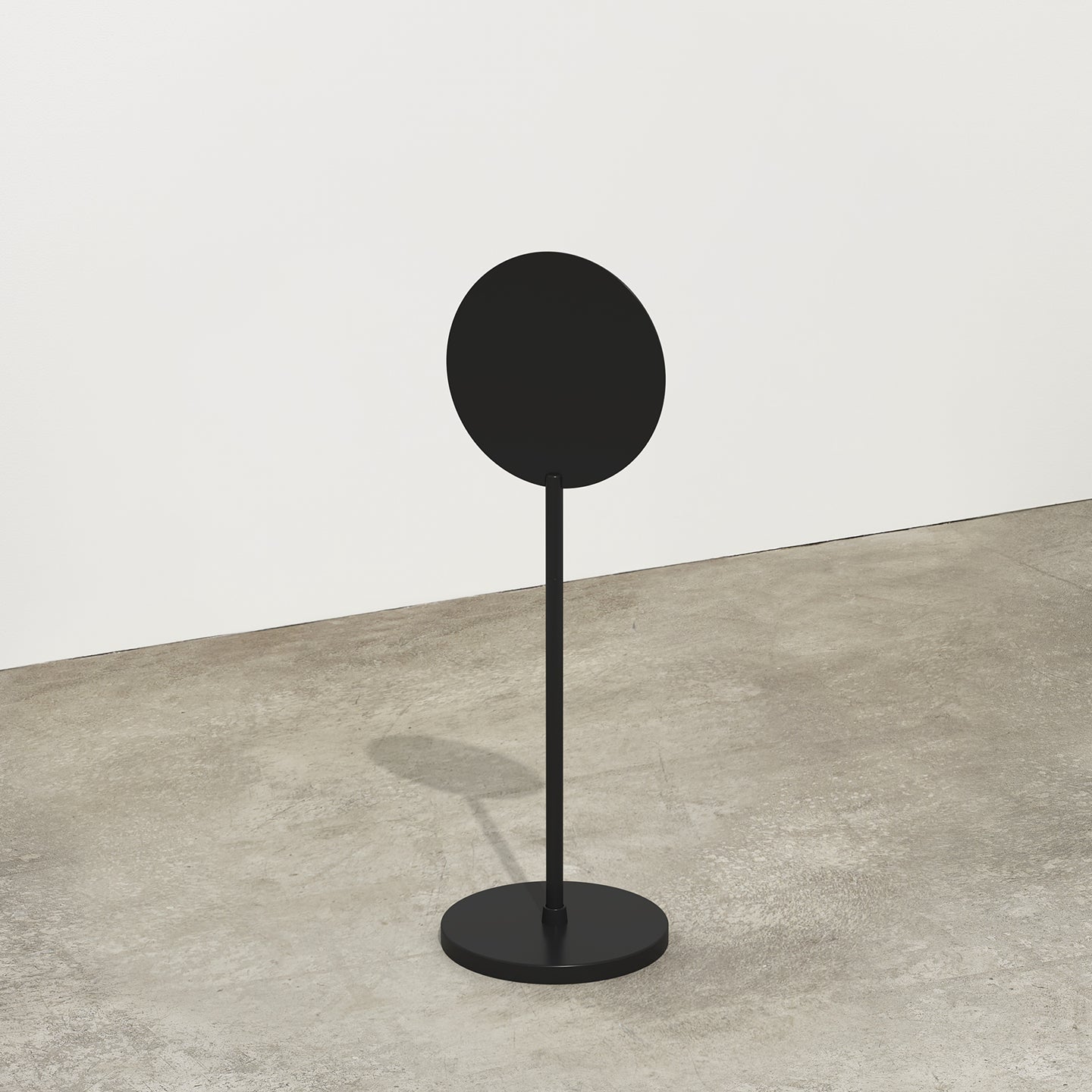
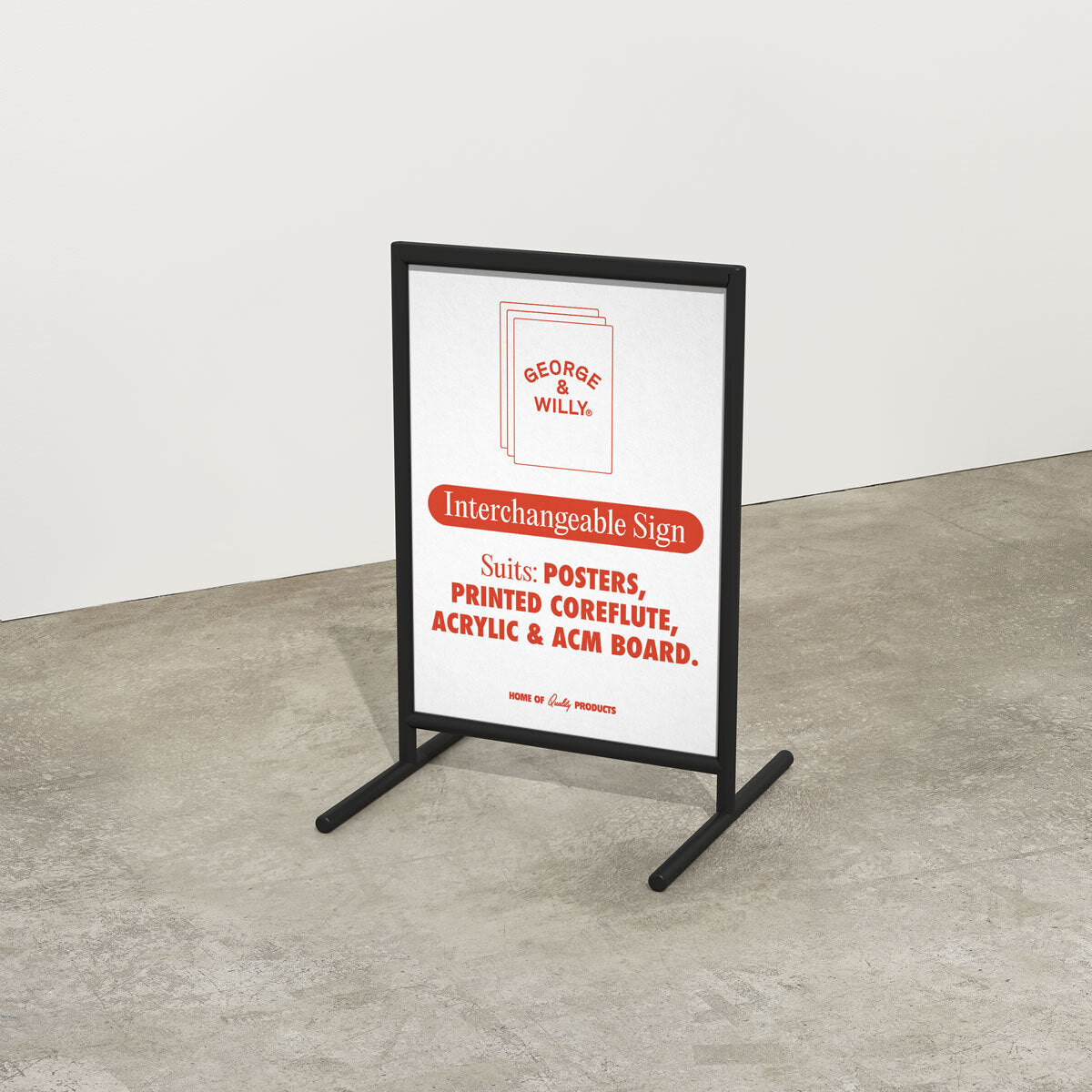
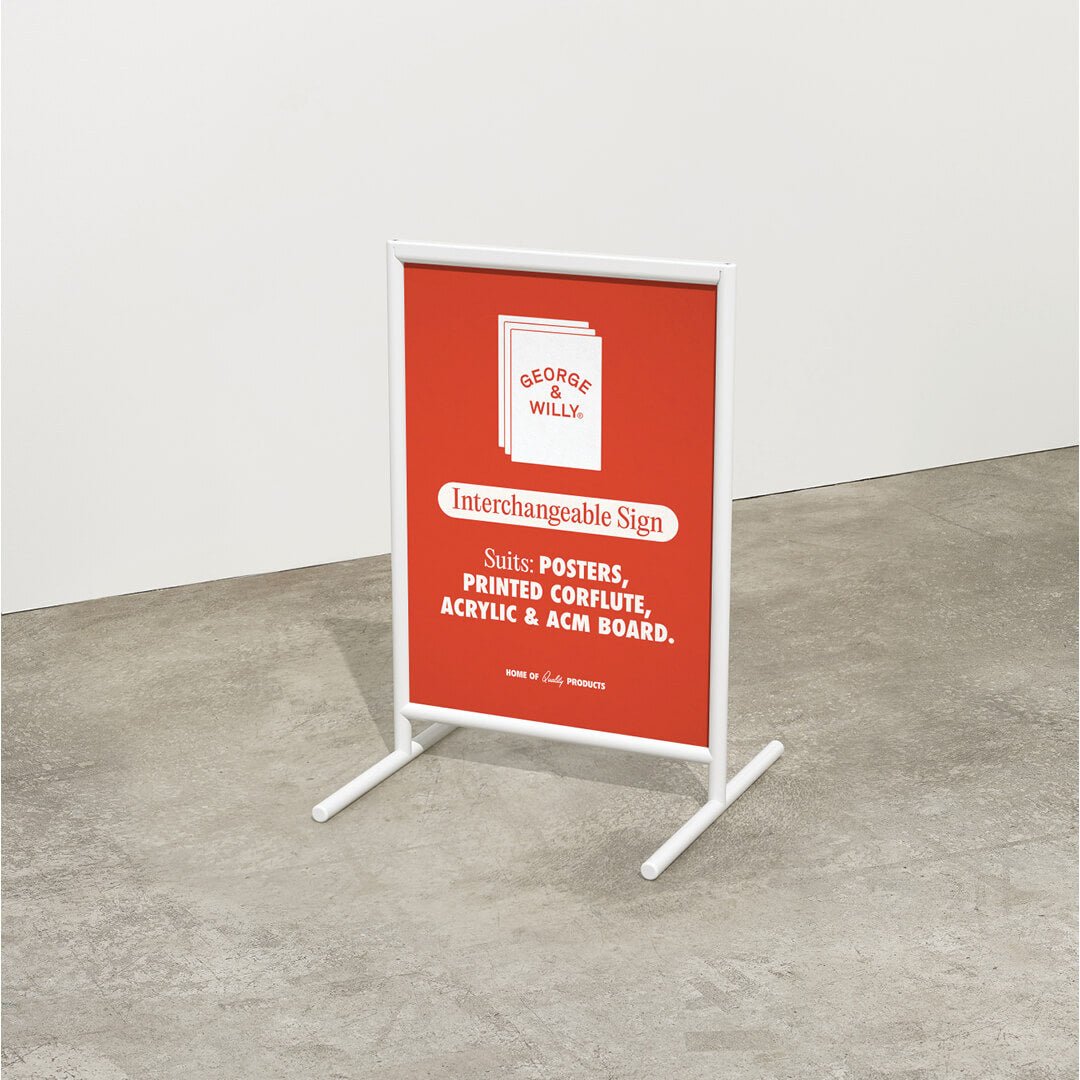
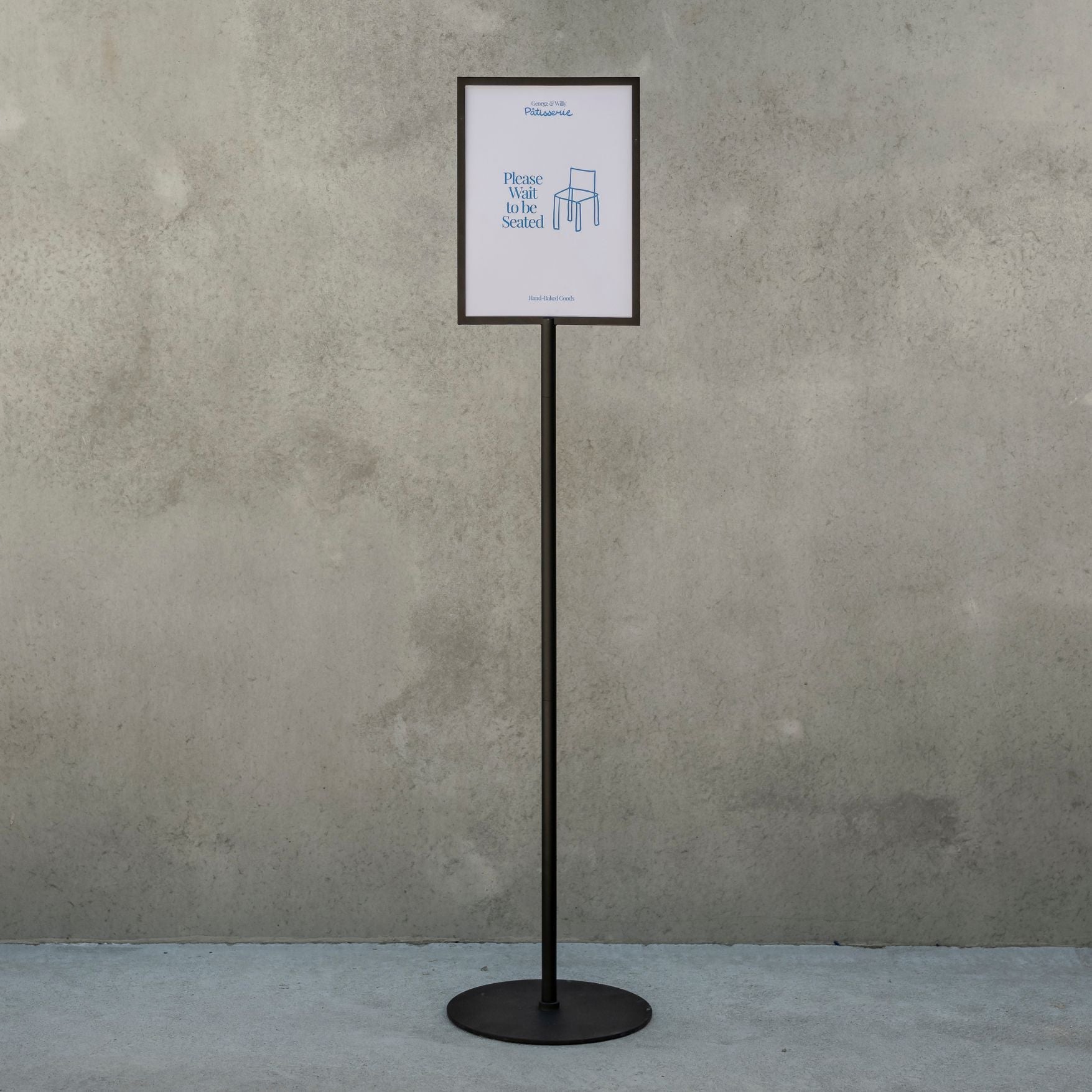
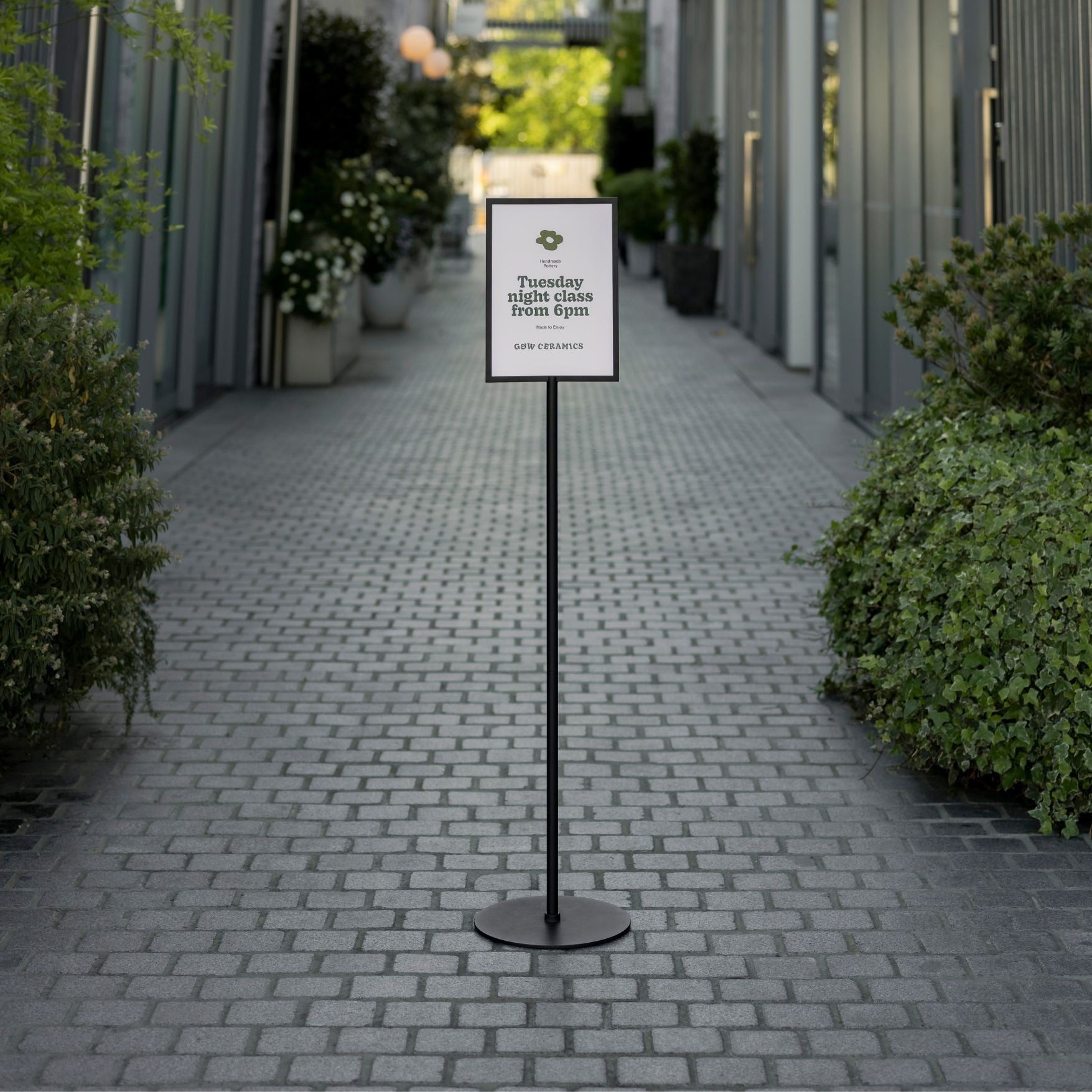
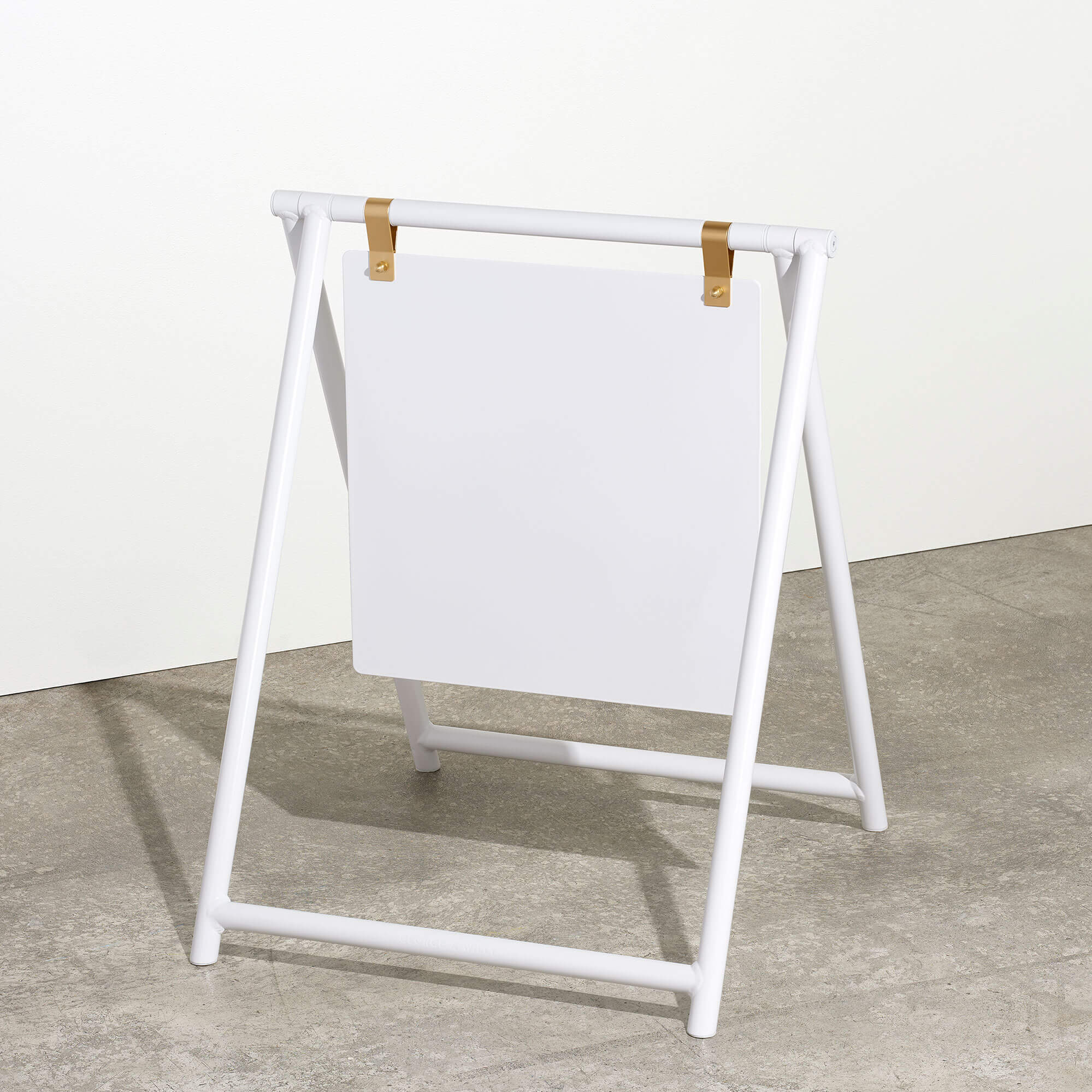
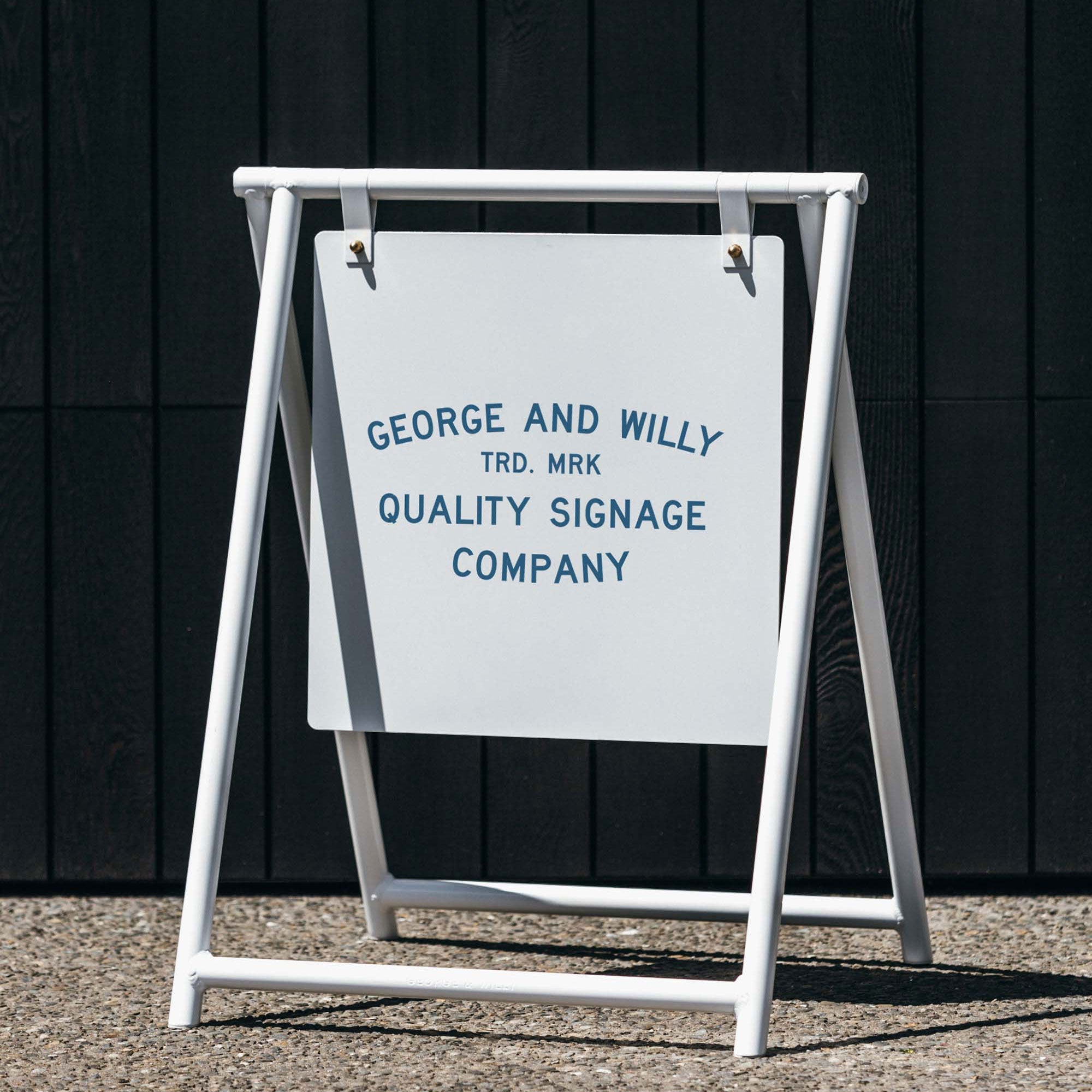
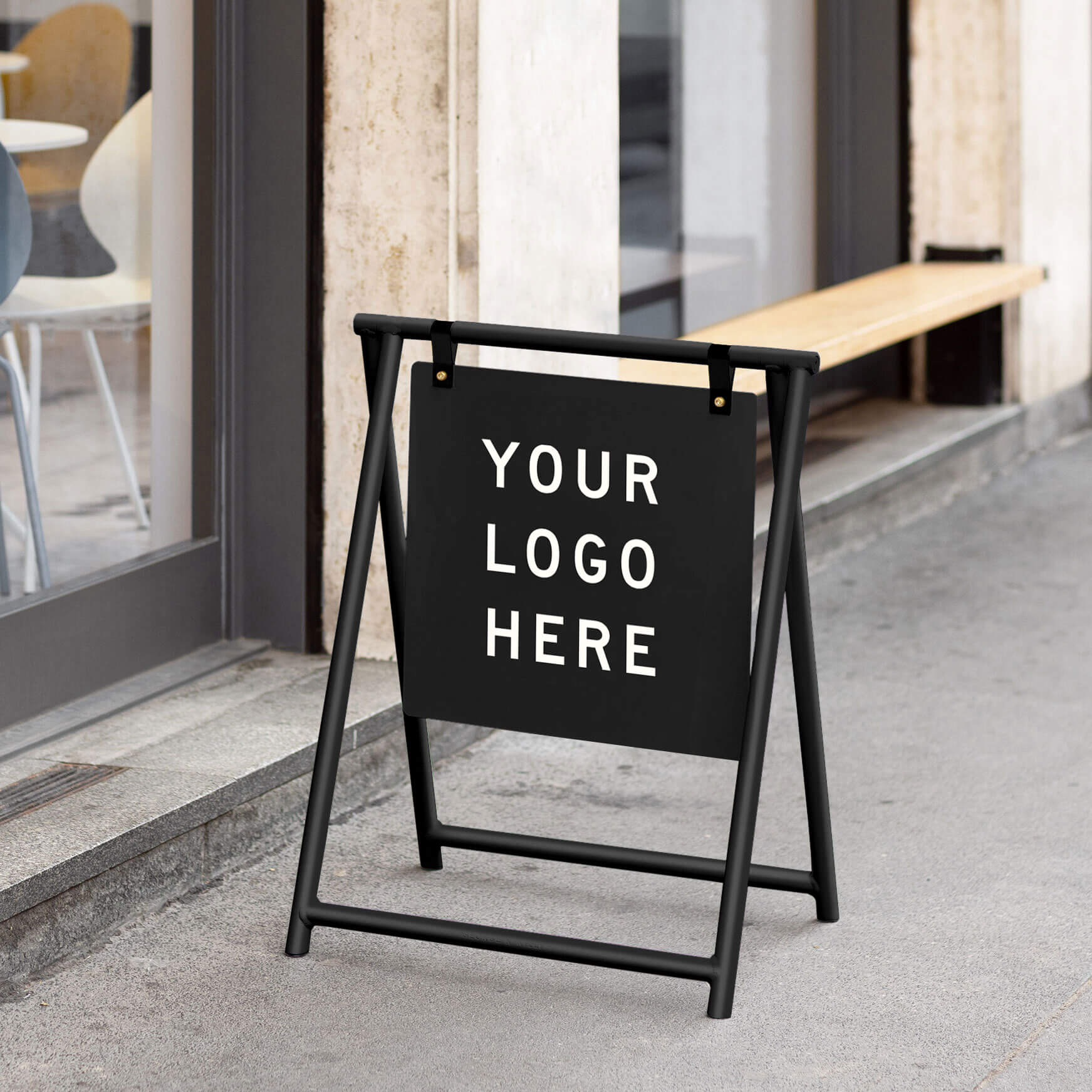
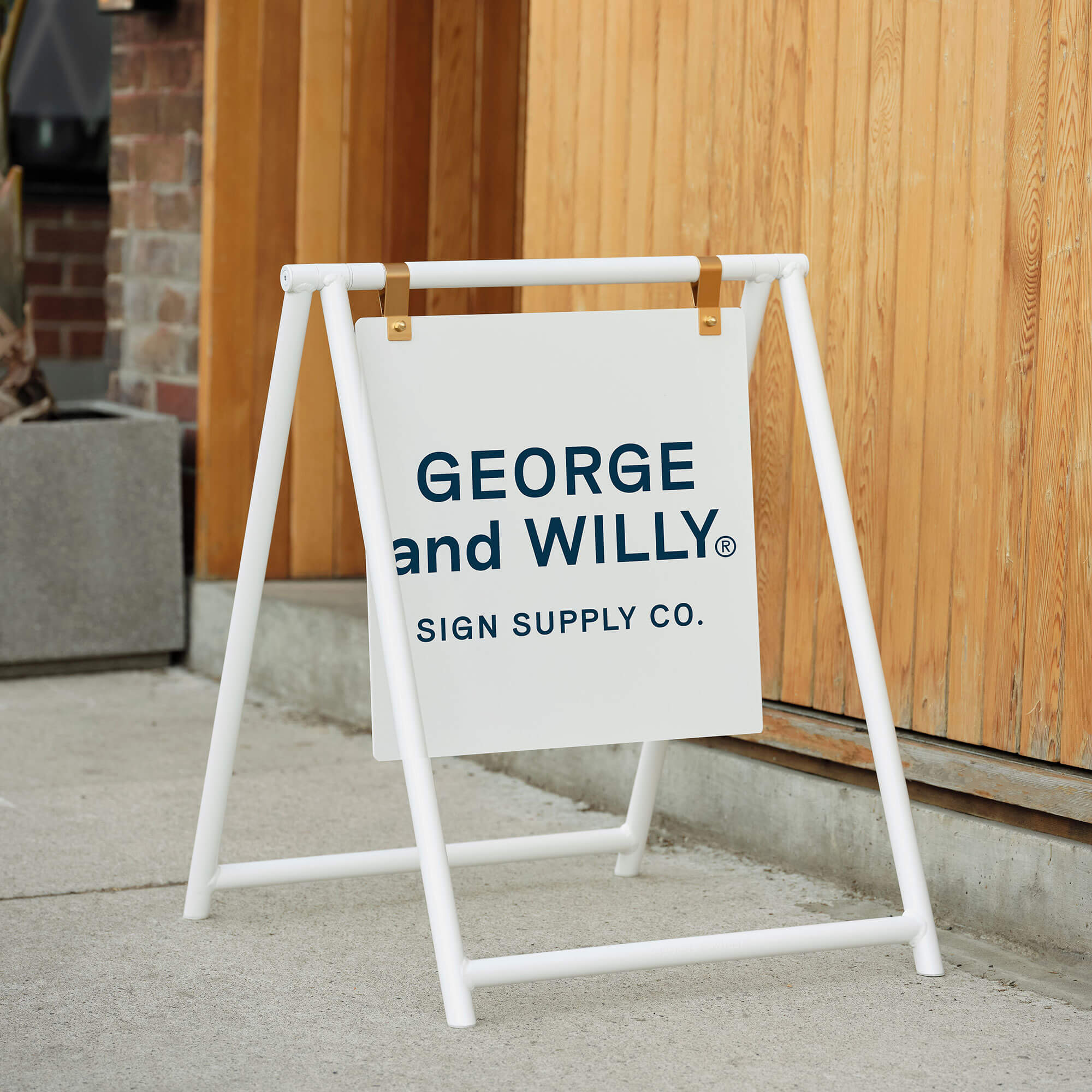
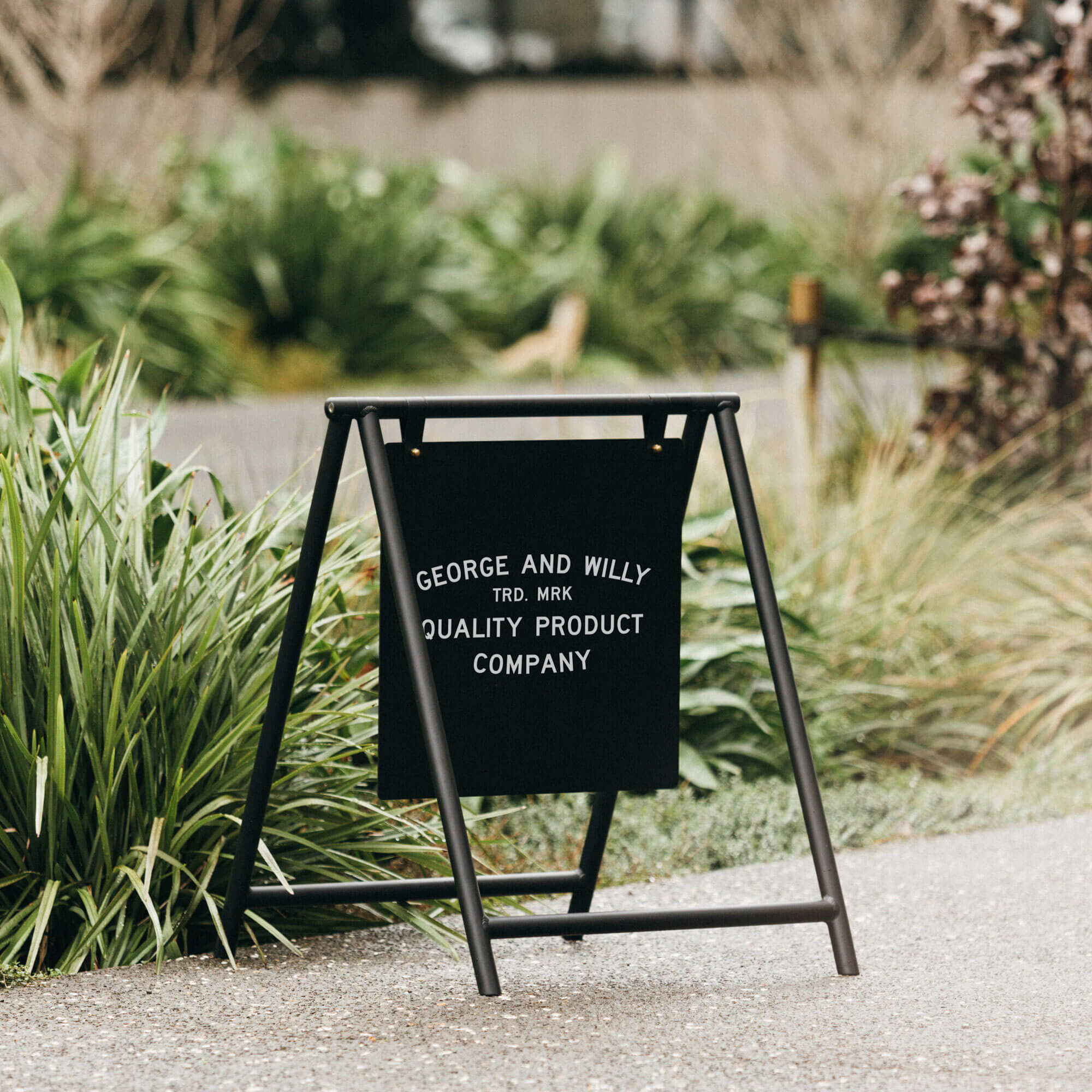
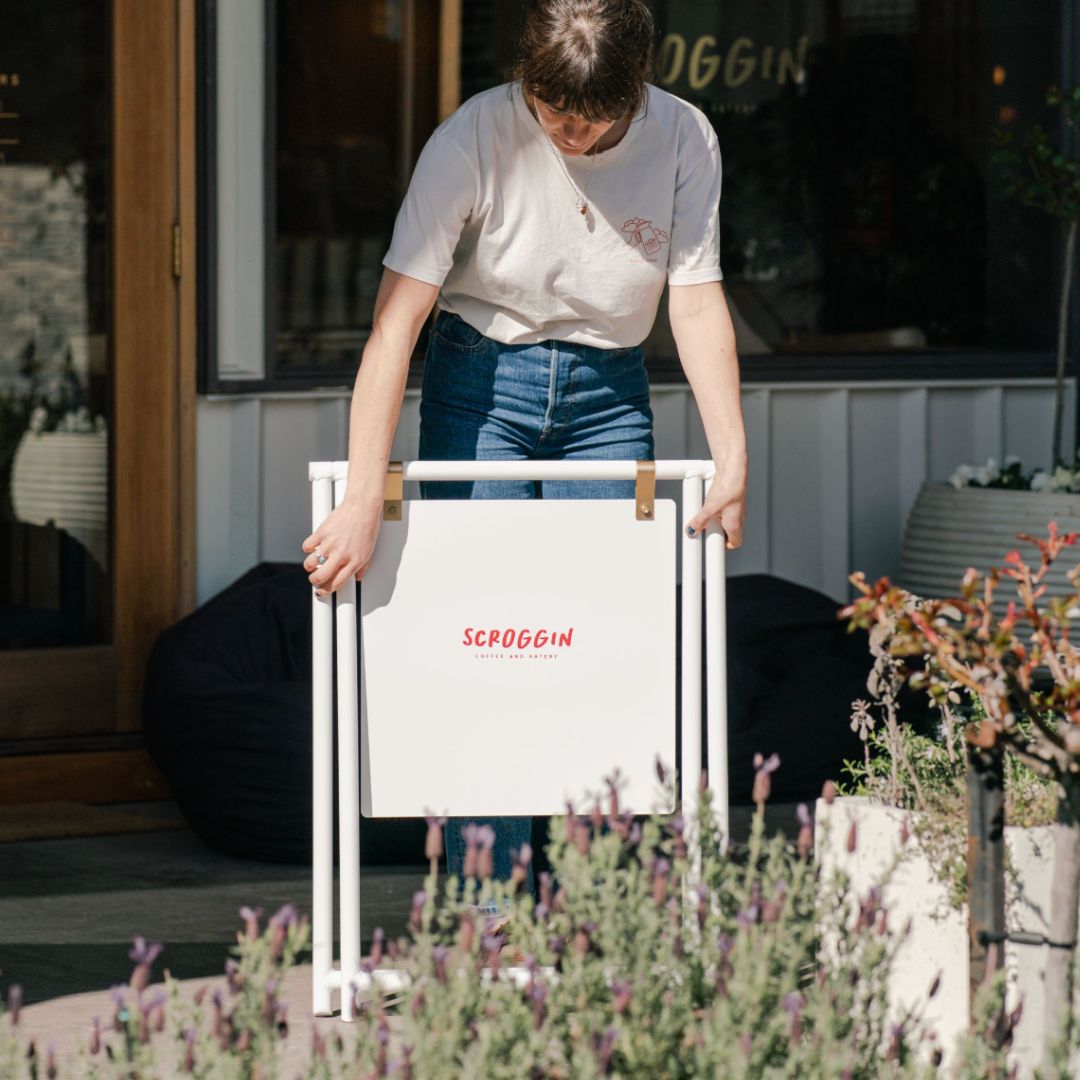
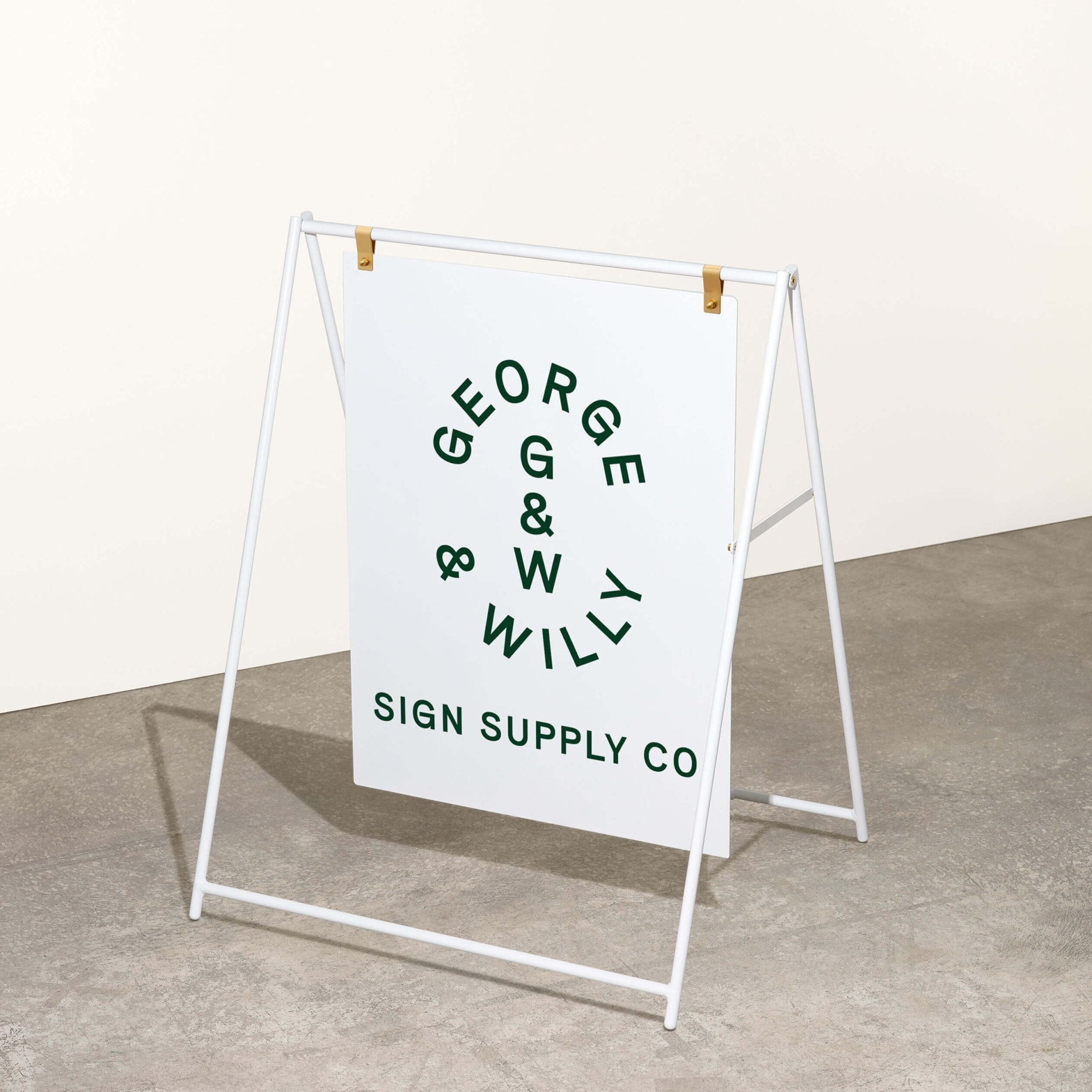
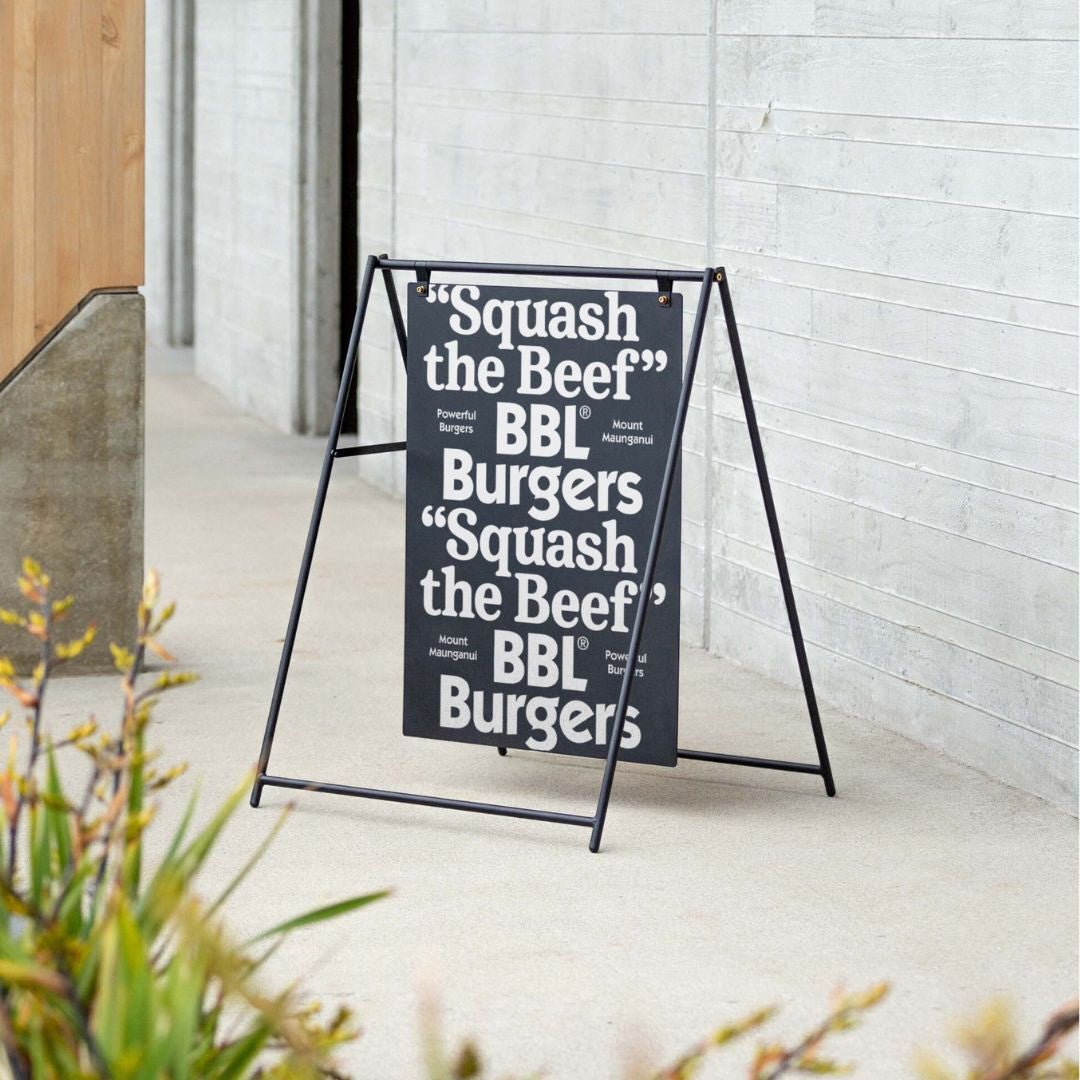
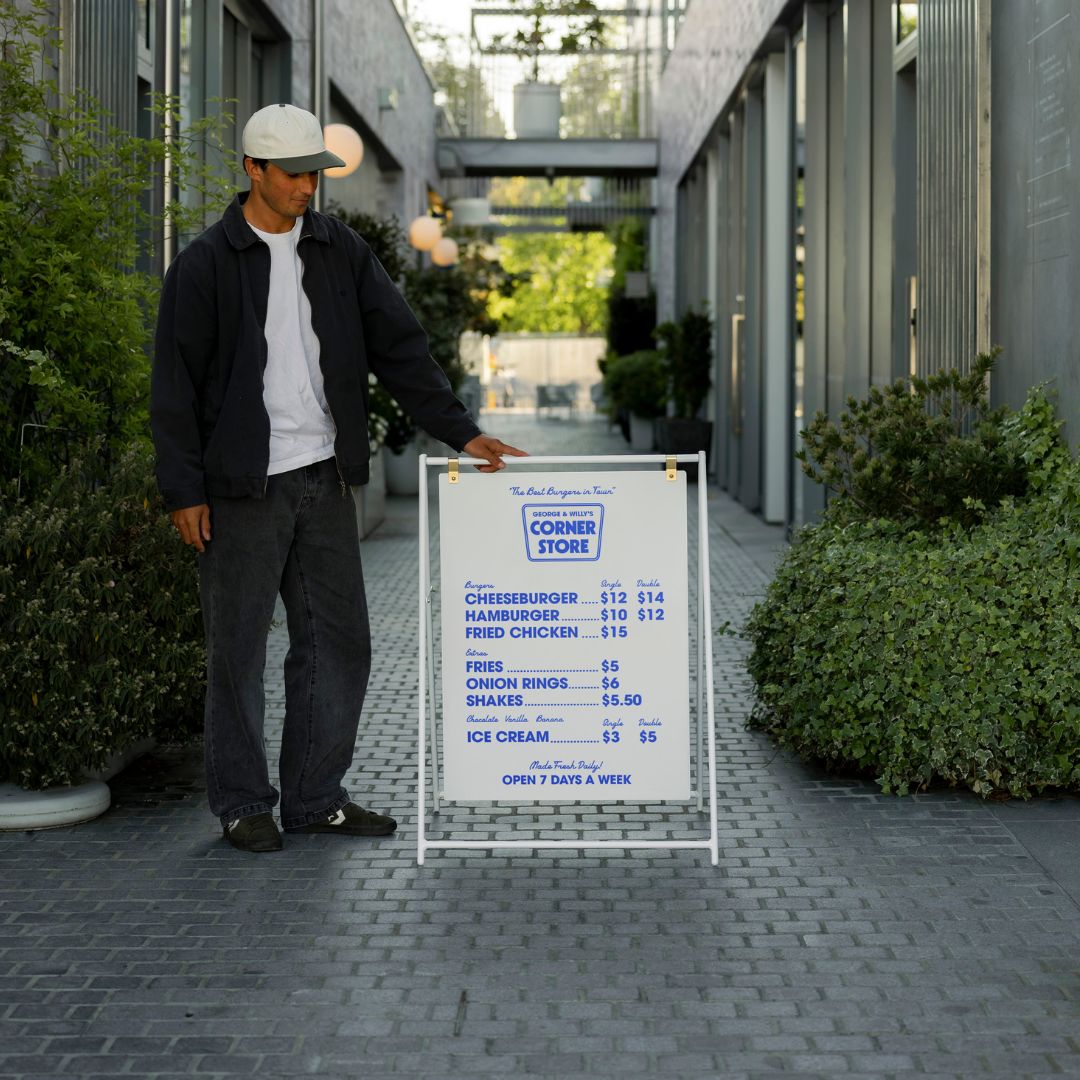
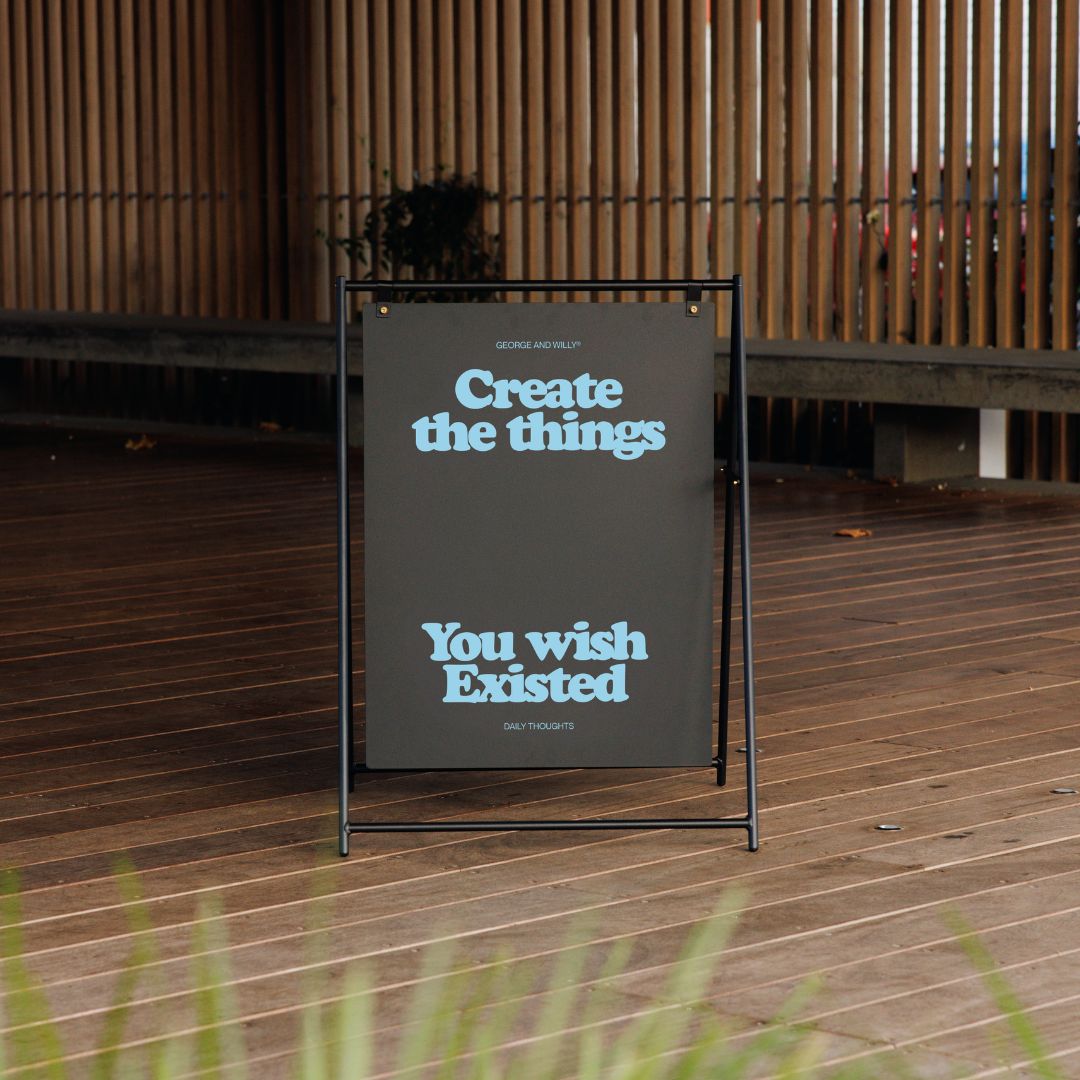
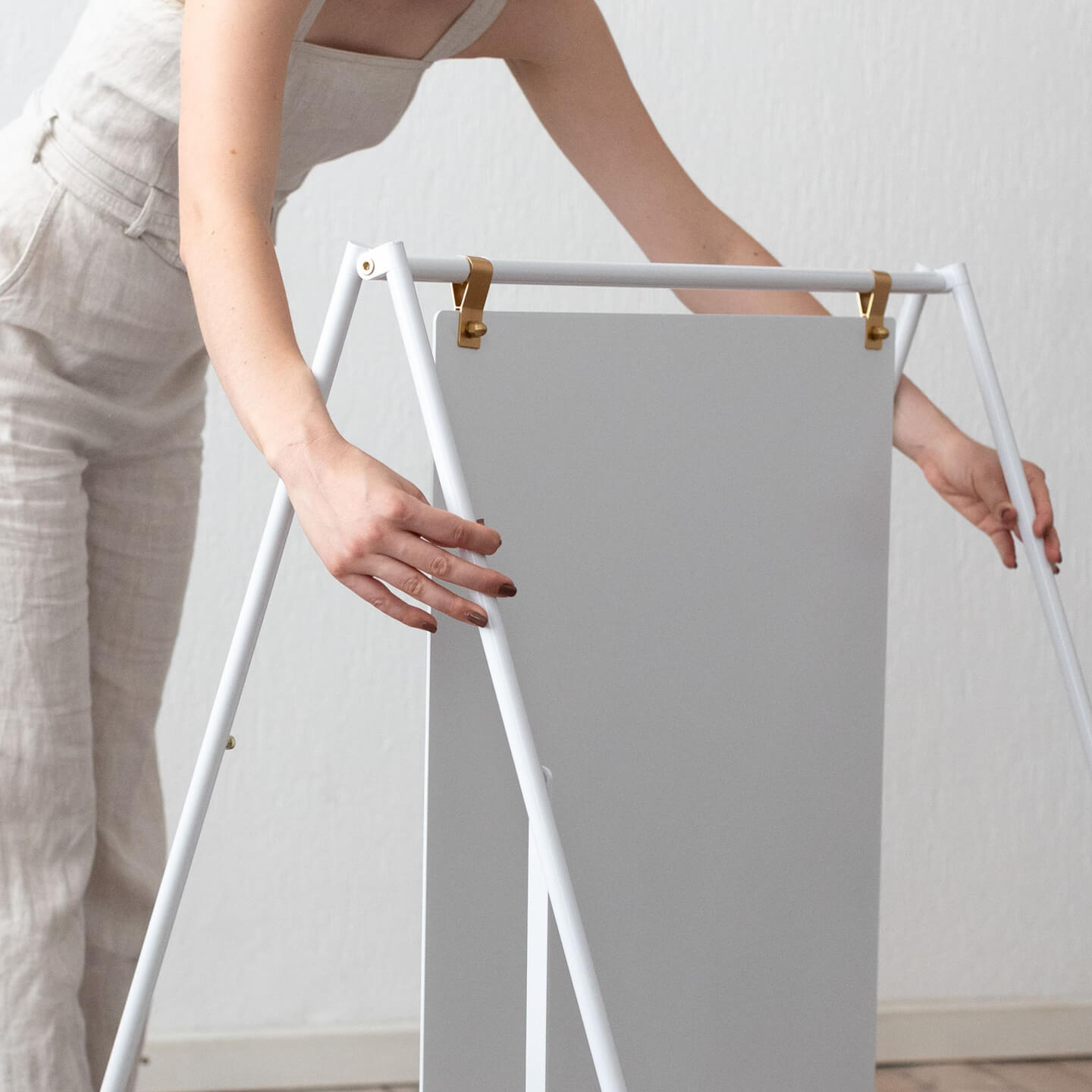
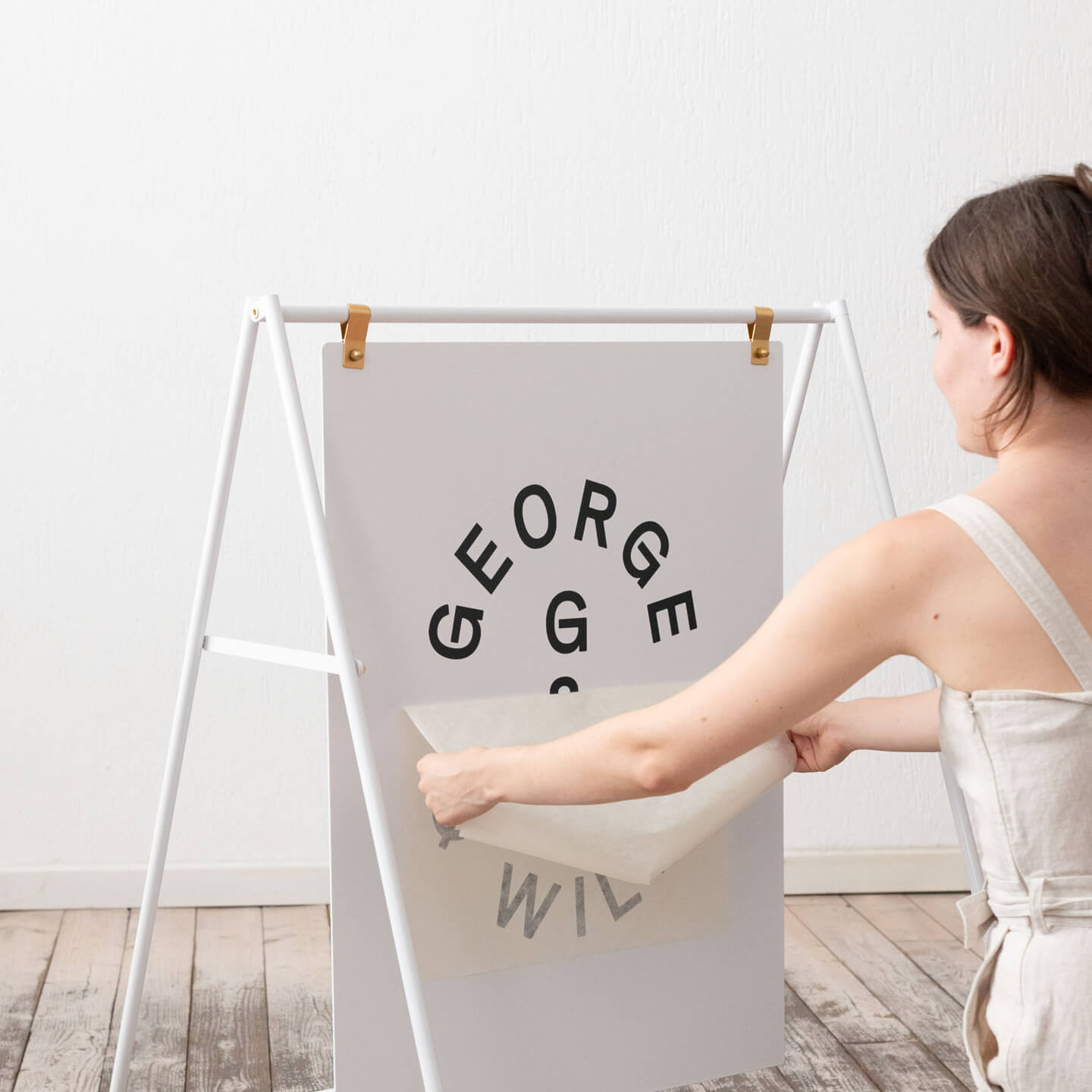
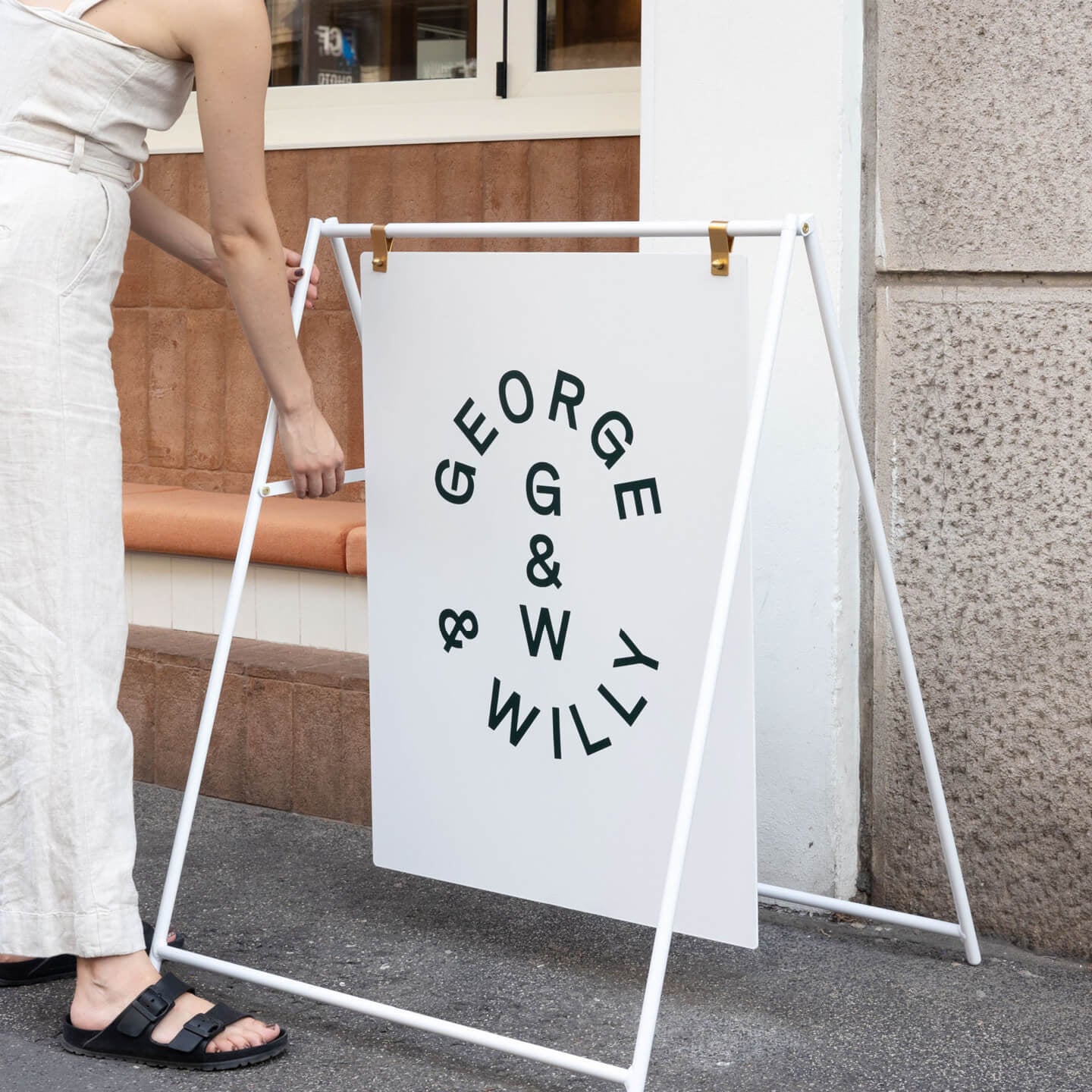
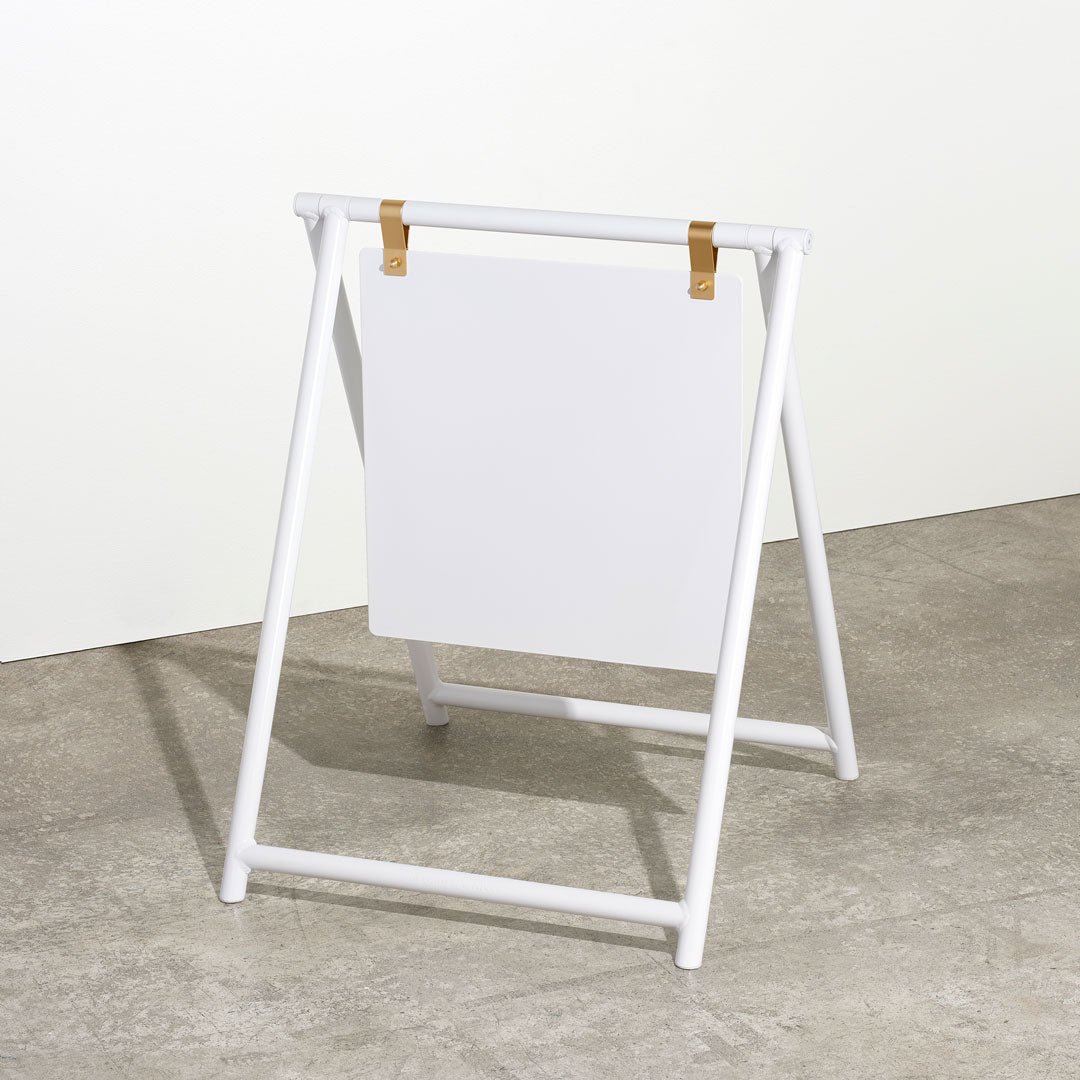
- A-Frame Signs: Ideal for daily specials, witty messages, or wayfinding. Lightweight and durable options like the A-Frame Sign are easy to move and update.
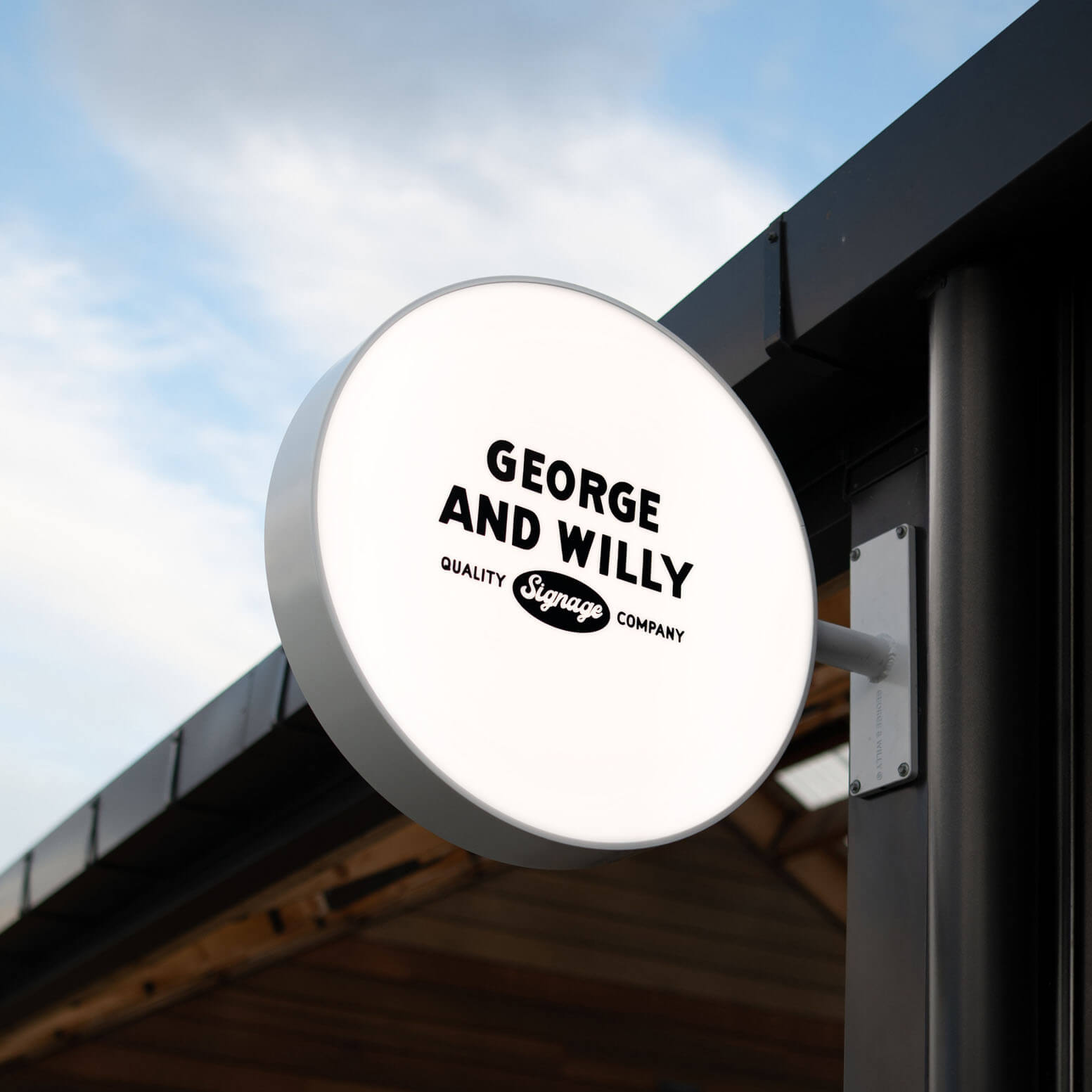
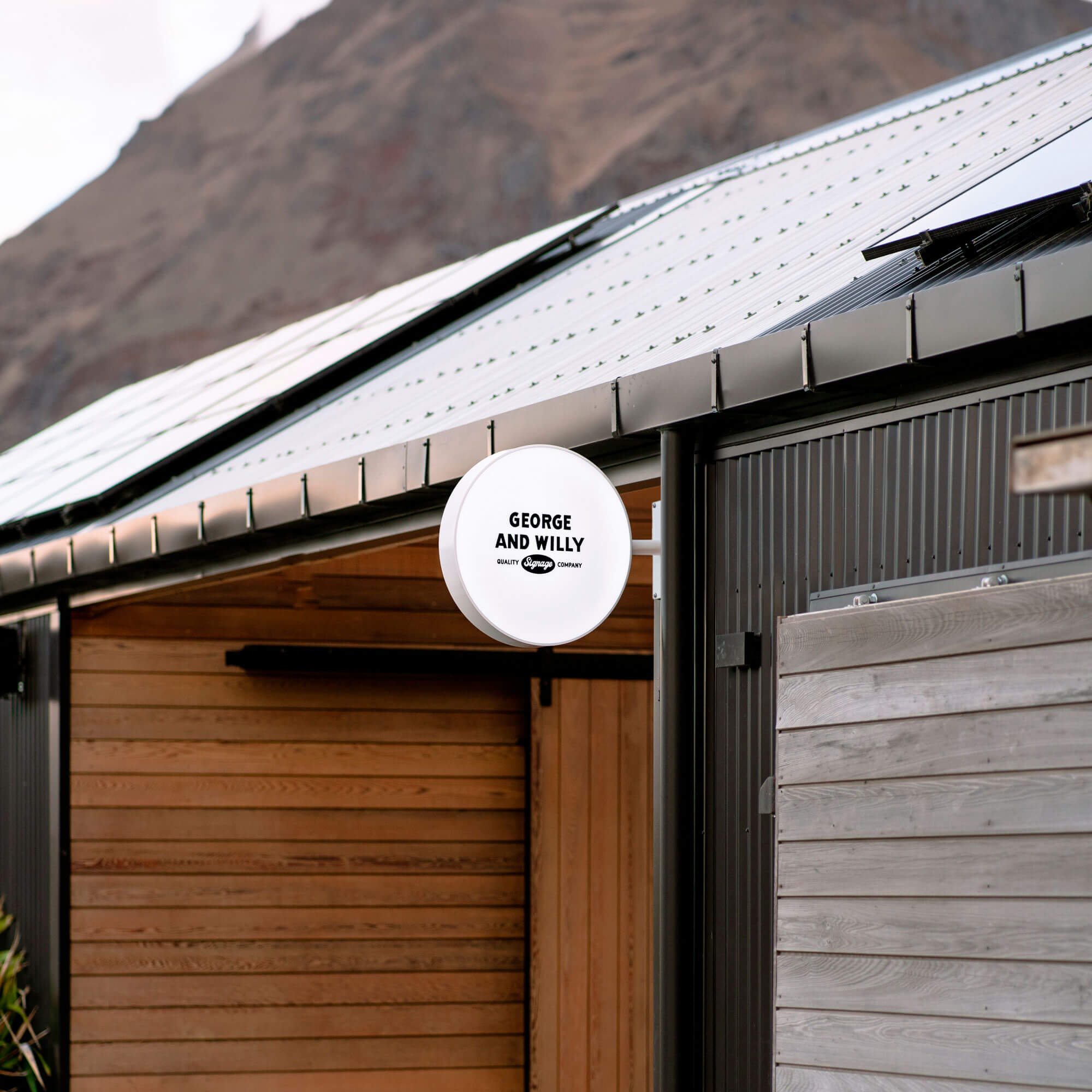
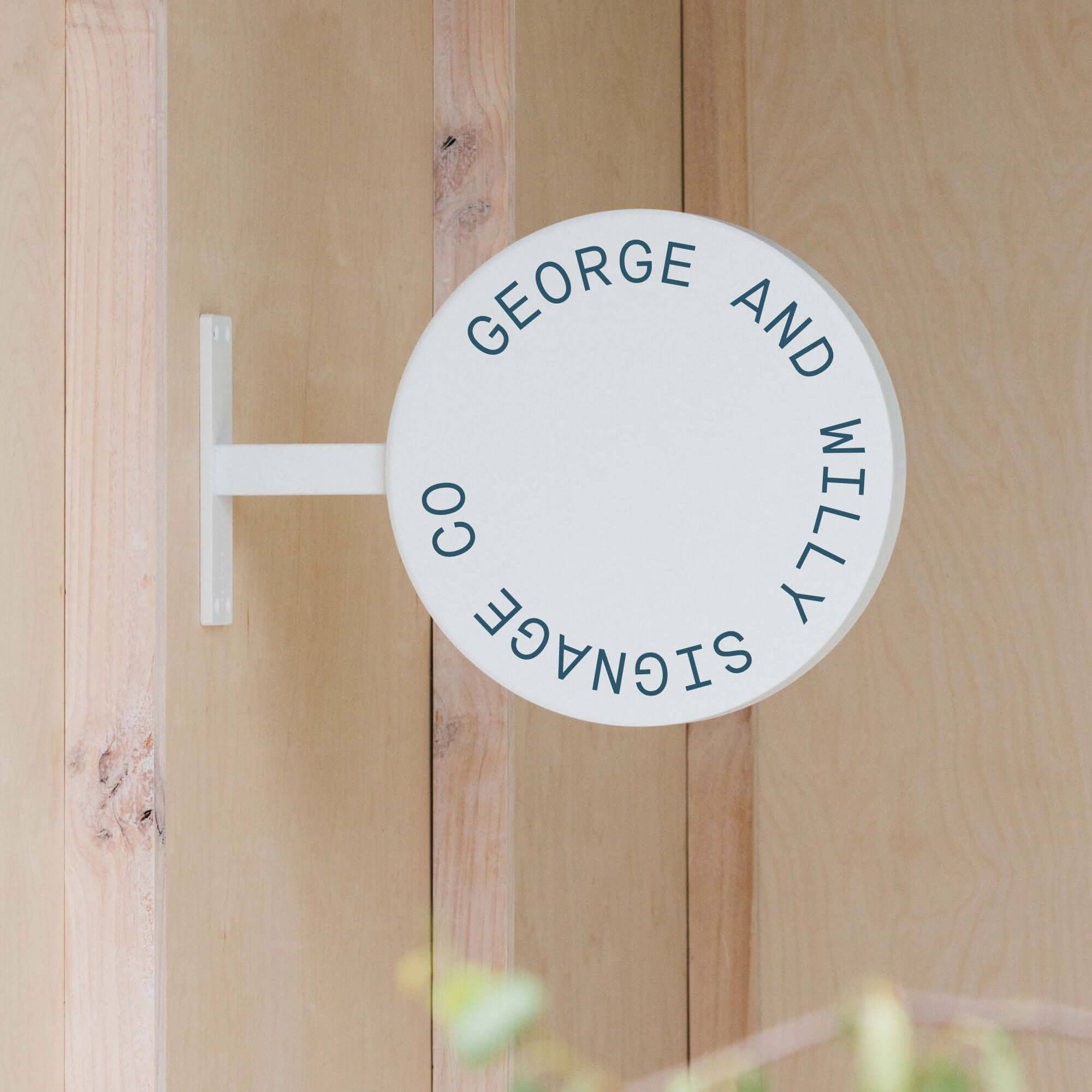
- Wall Signs: Project from your façade for visibility down the street. A clean, modern choice is the Rectangle Blade Sign.
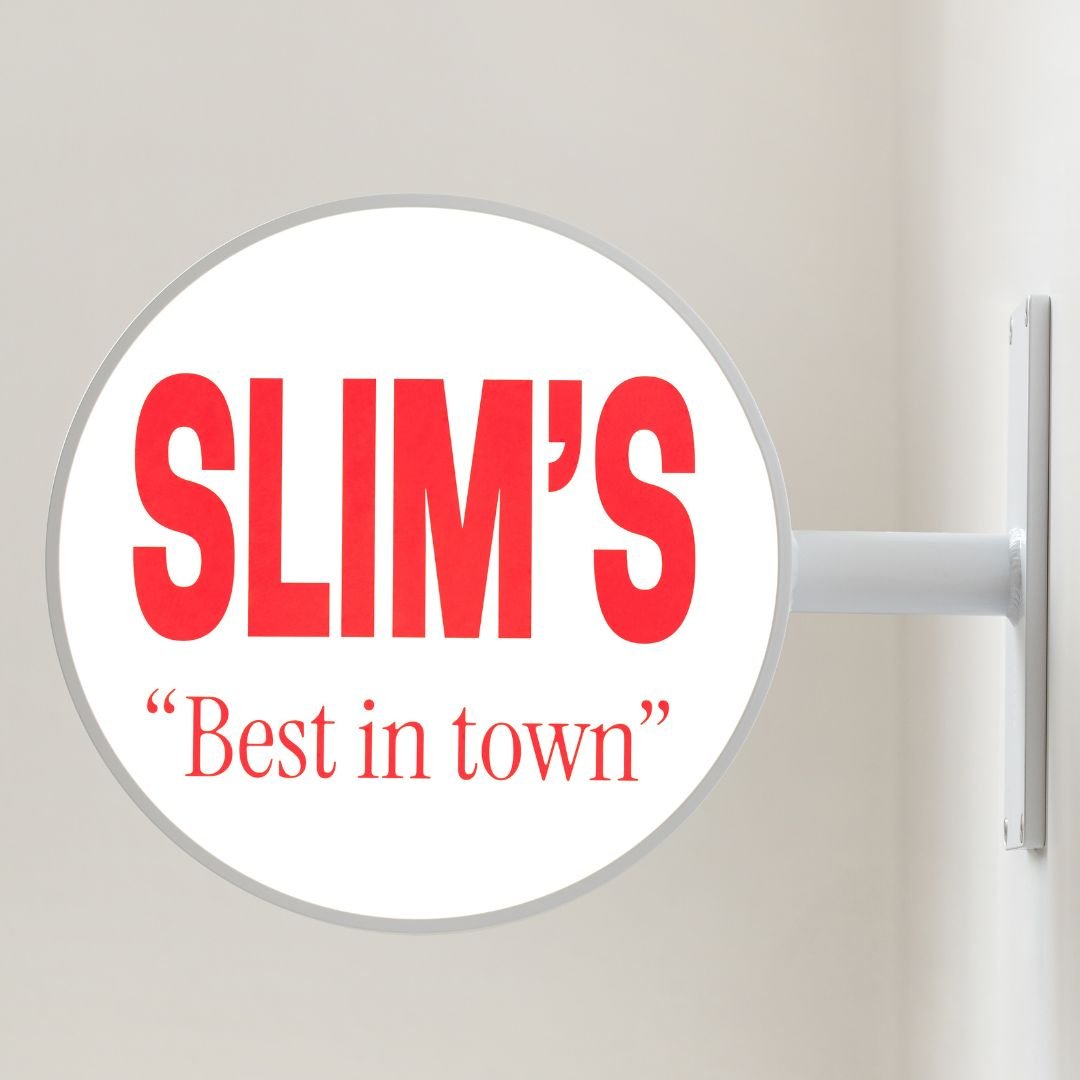
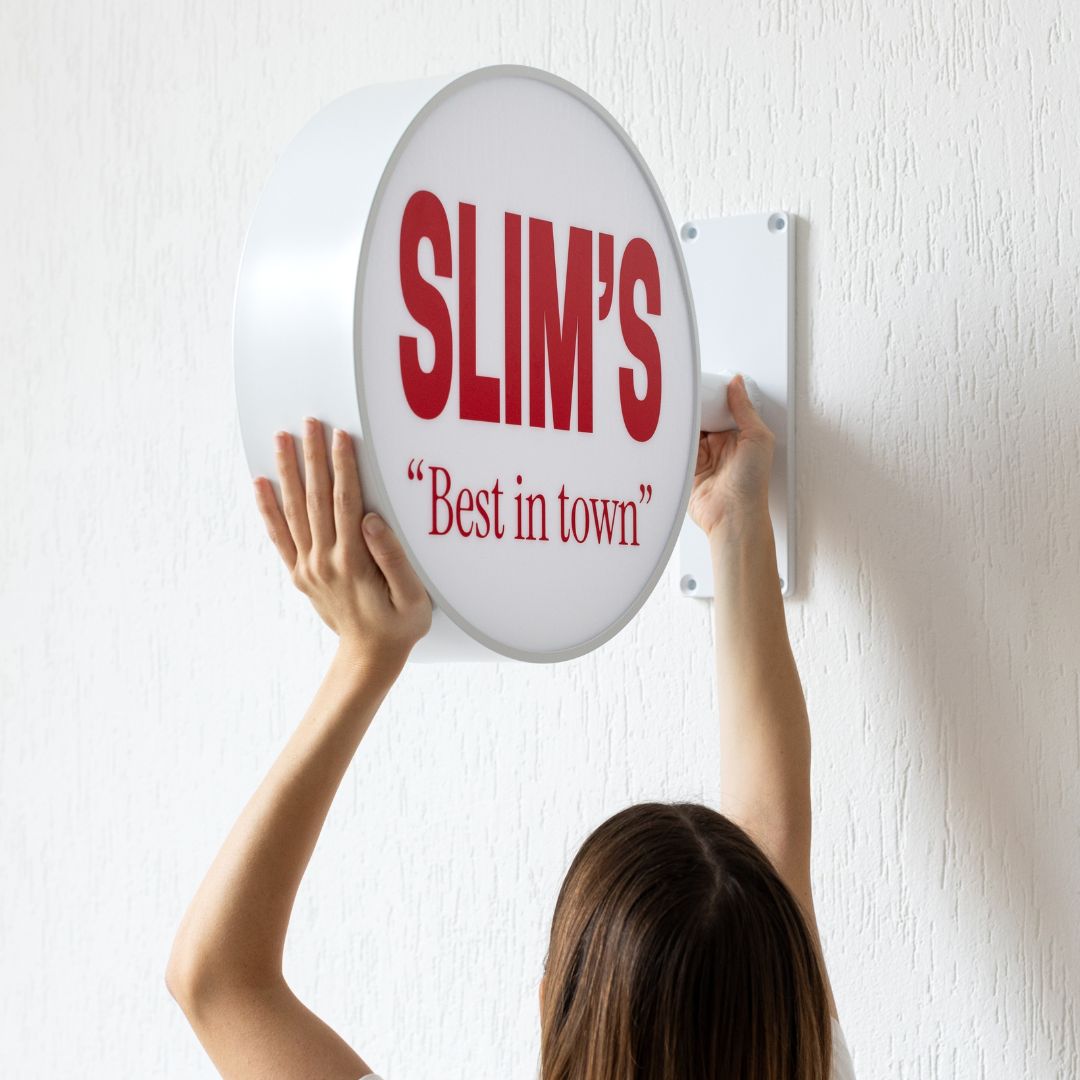
- Light Box Signs: Illuminated signs work day and night and can attract dramatically more views than unlit signage, making them a great investment for businesses with evening hours.
For Guiding and Selling (Interior Signs)
Once inside, effective interior signage supports buying decisions, a critical function since over 70% of those decisions happen in store.
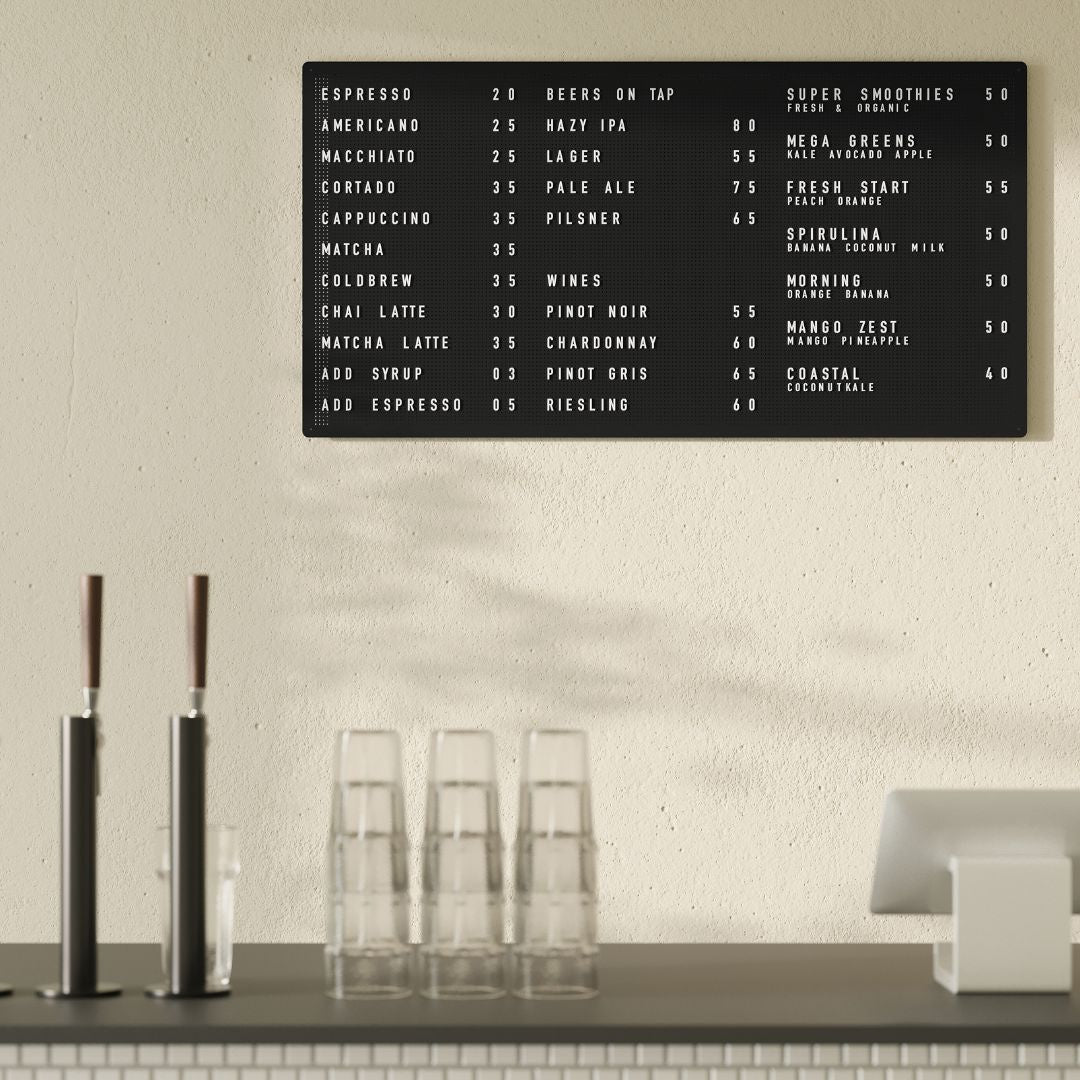
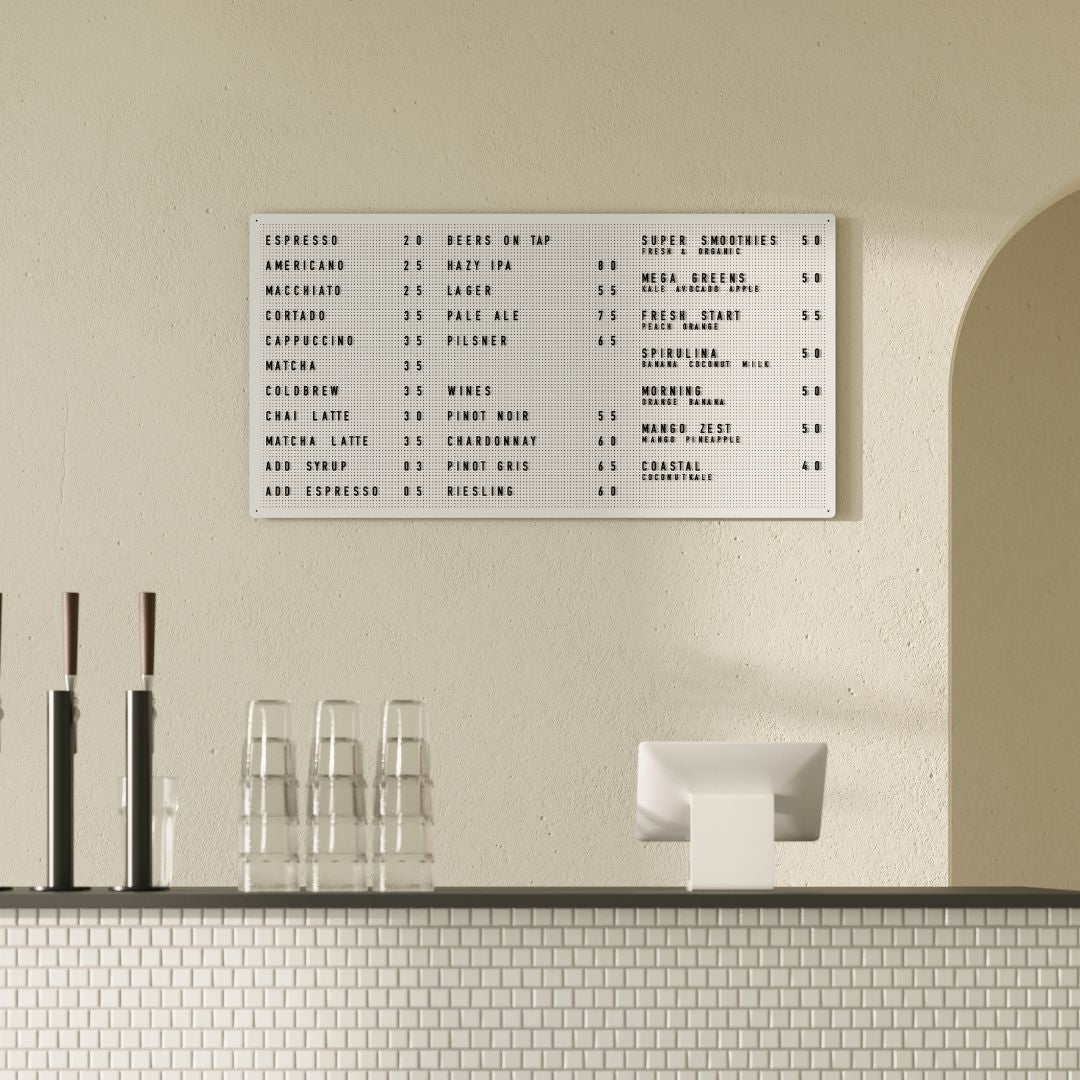
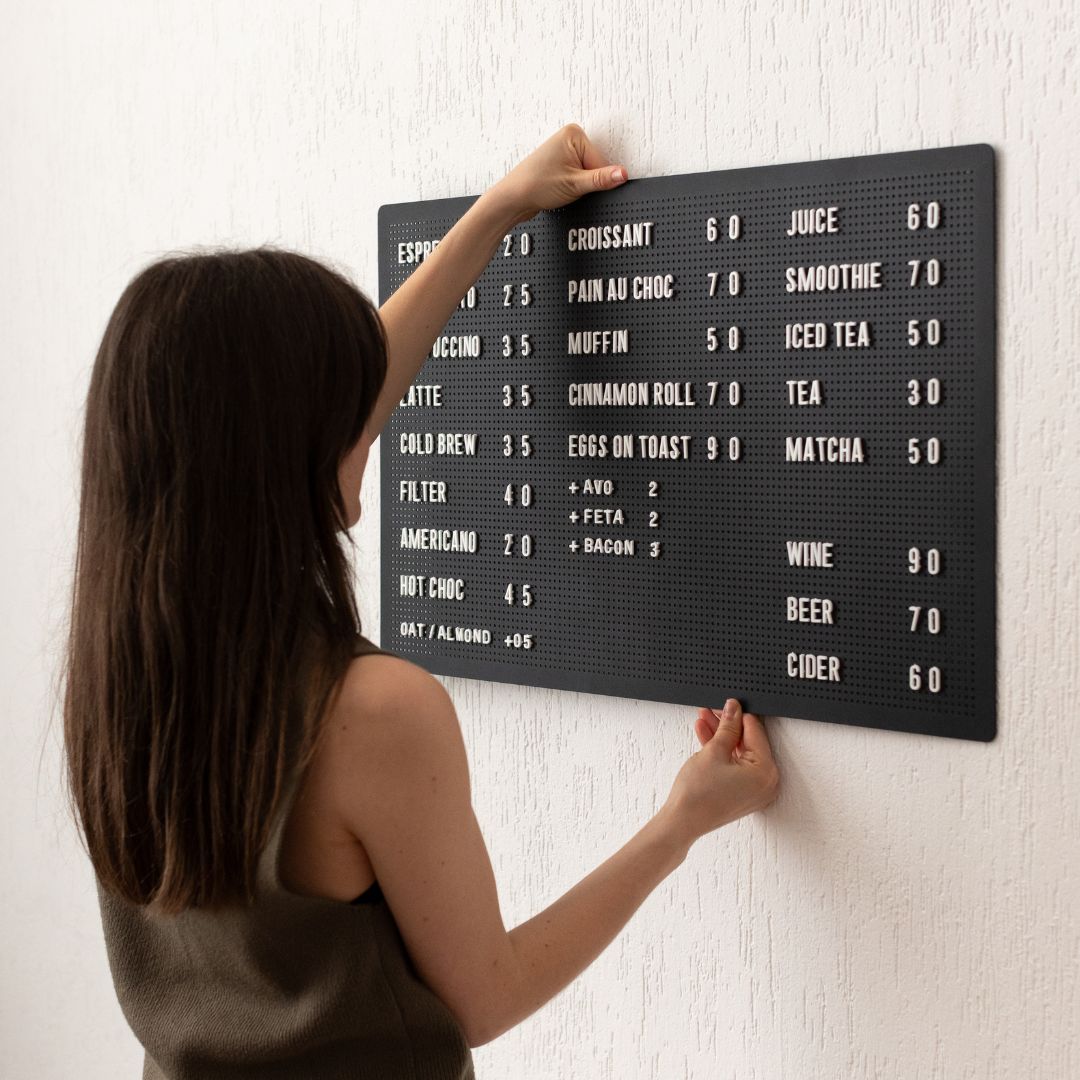
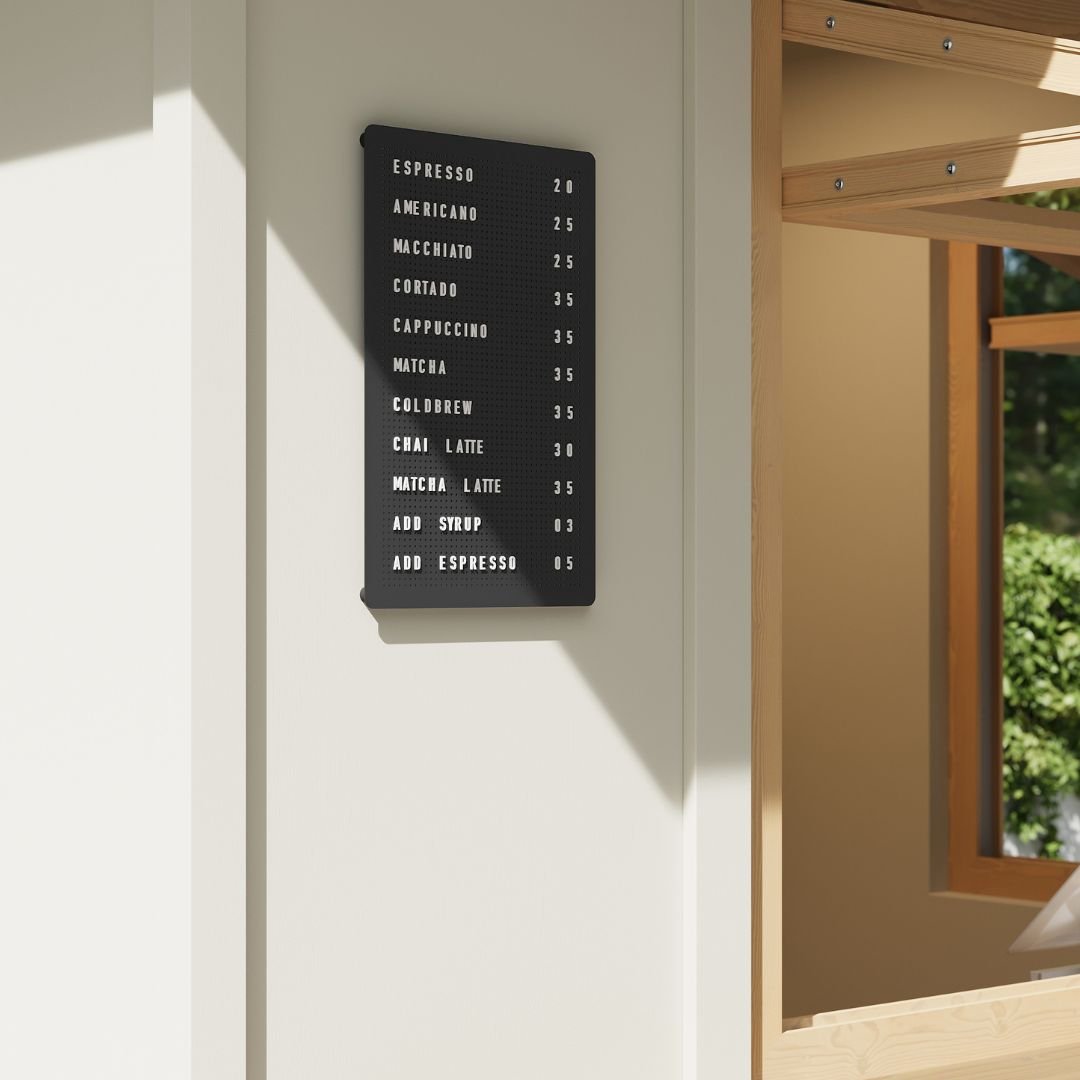
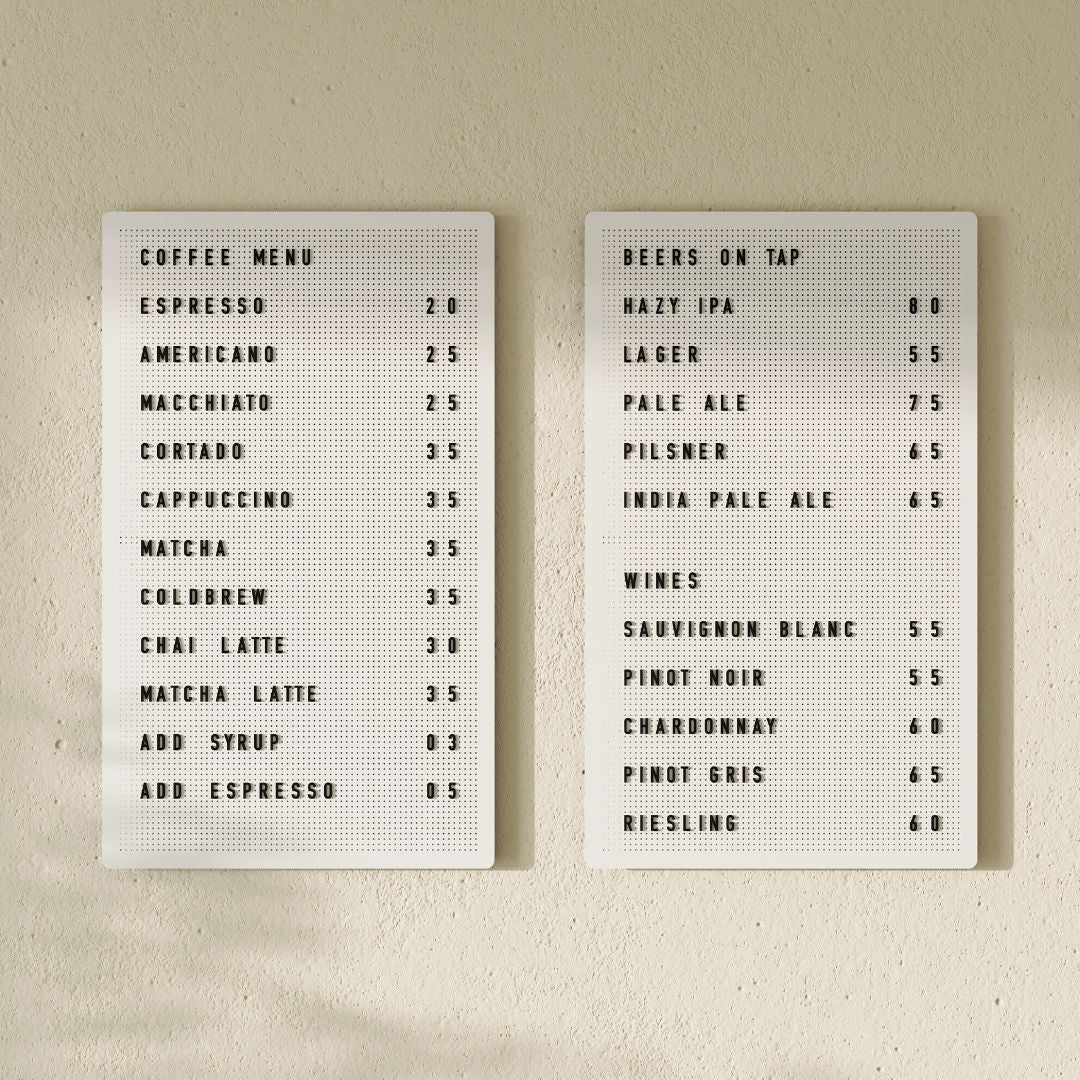
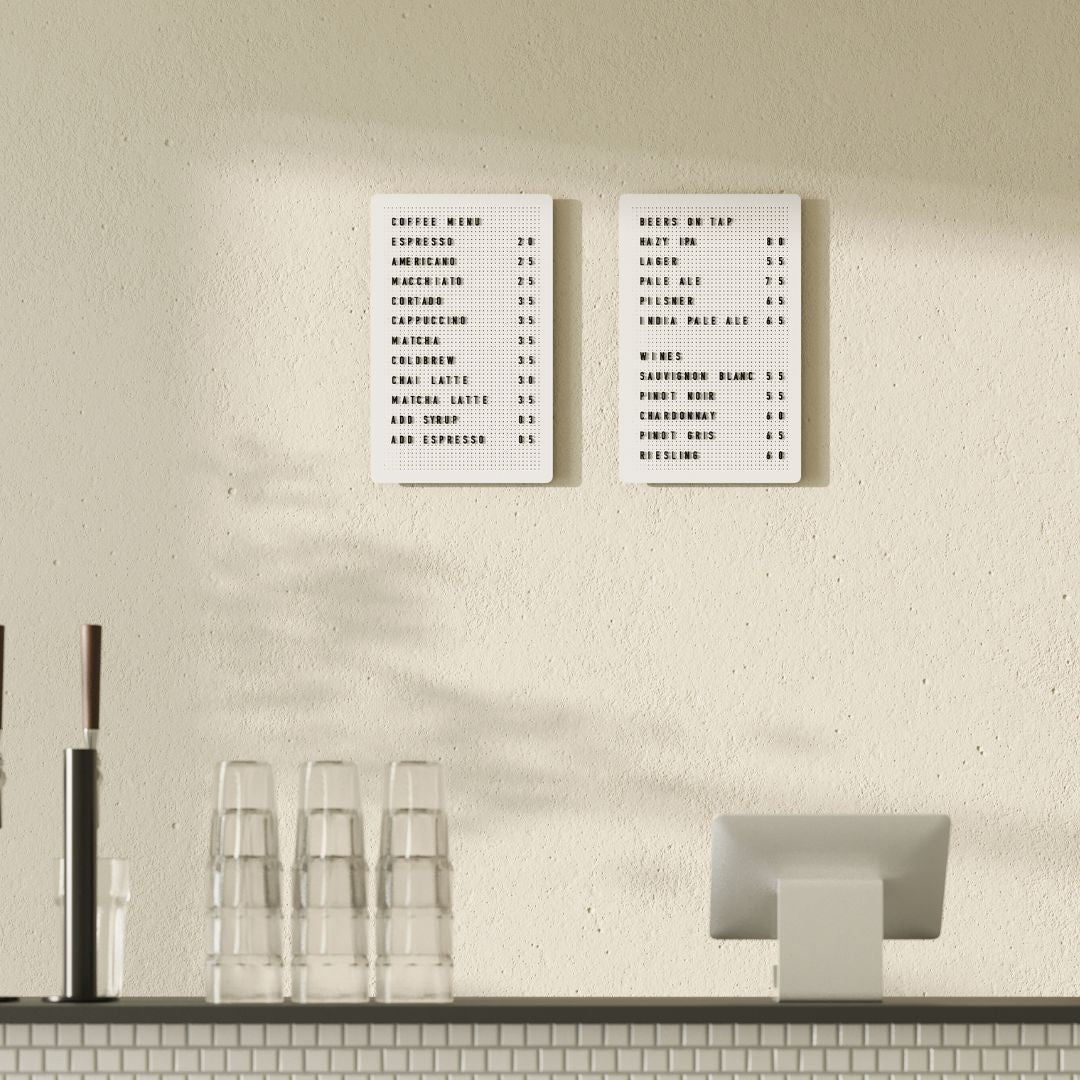
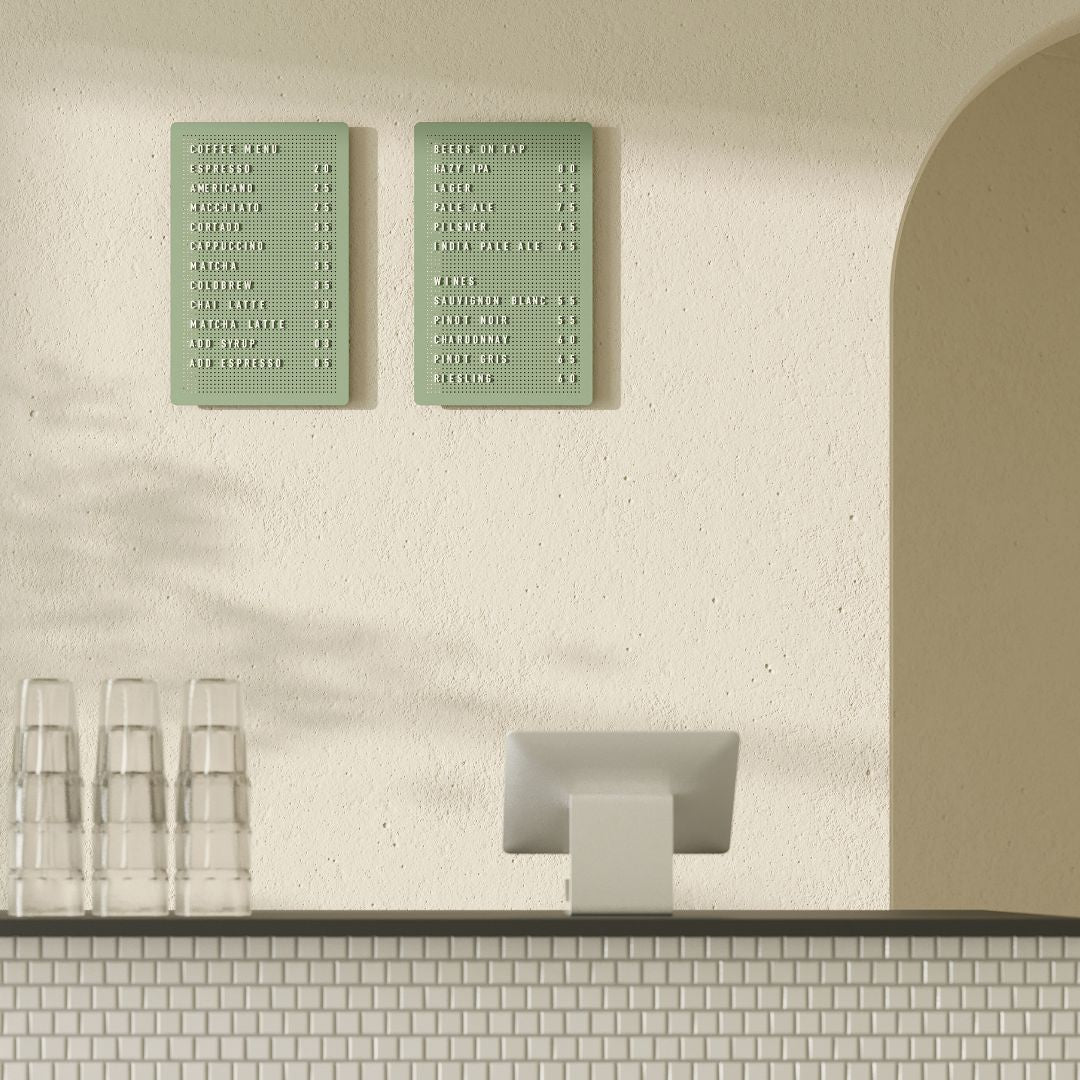
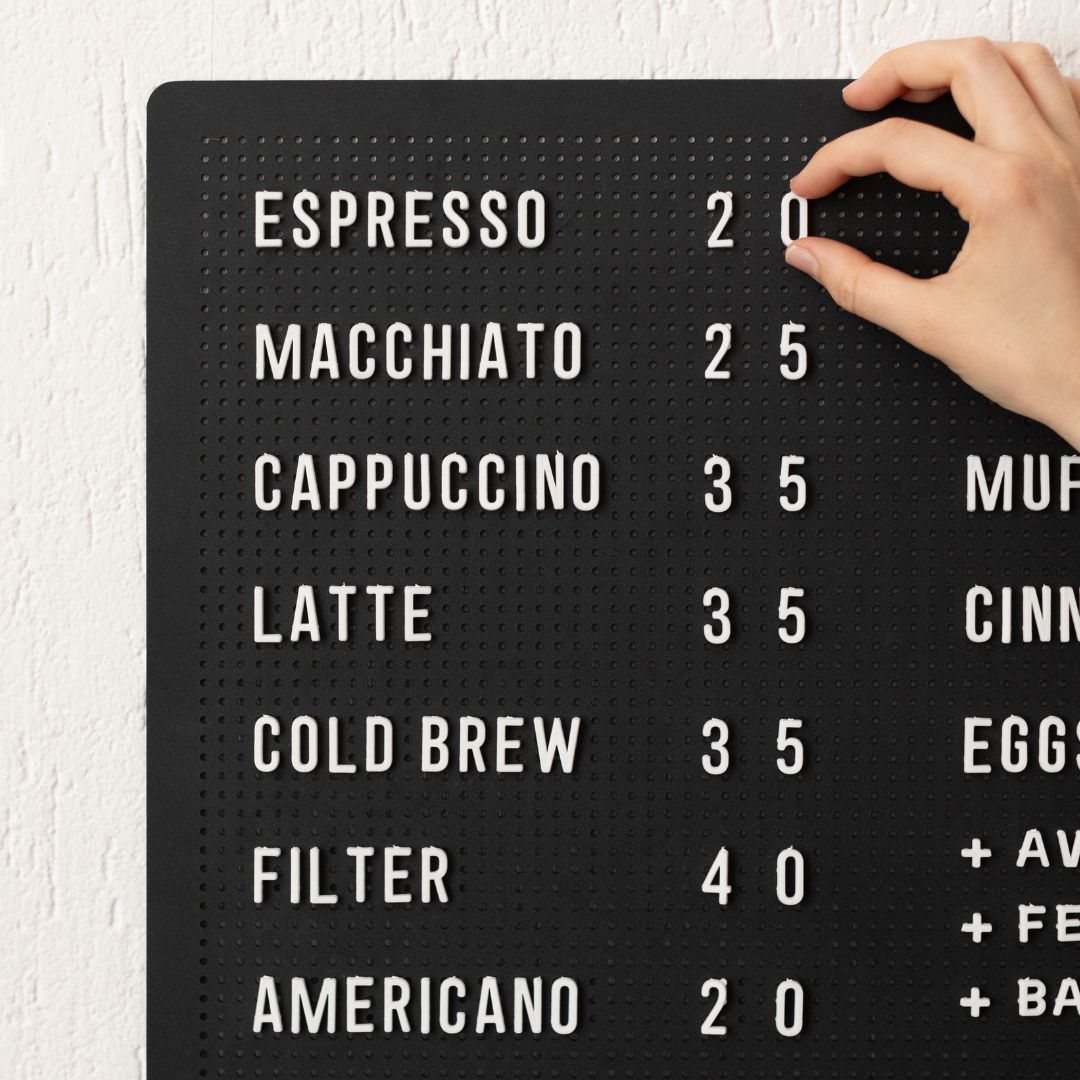
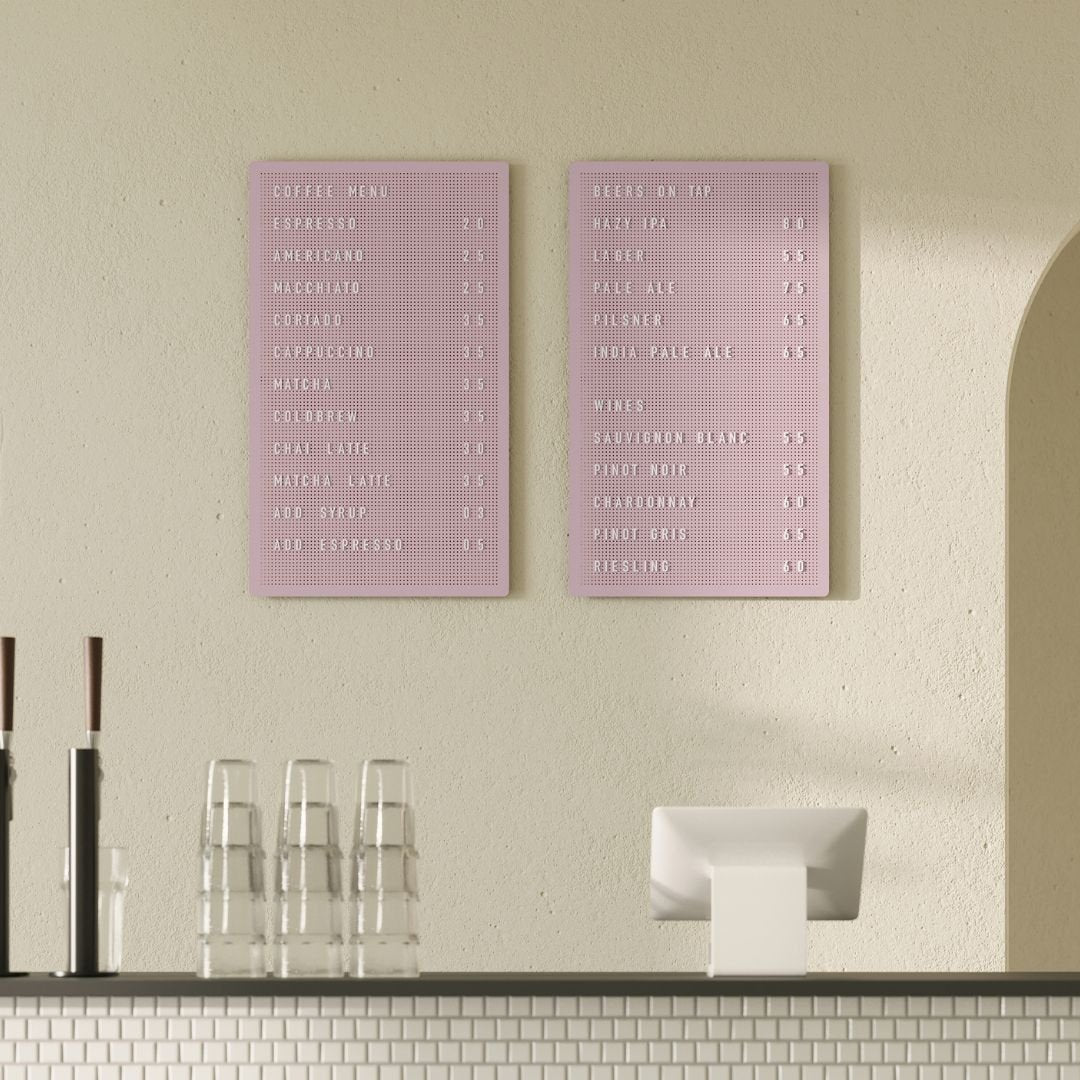
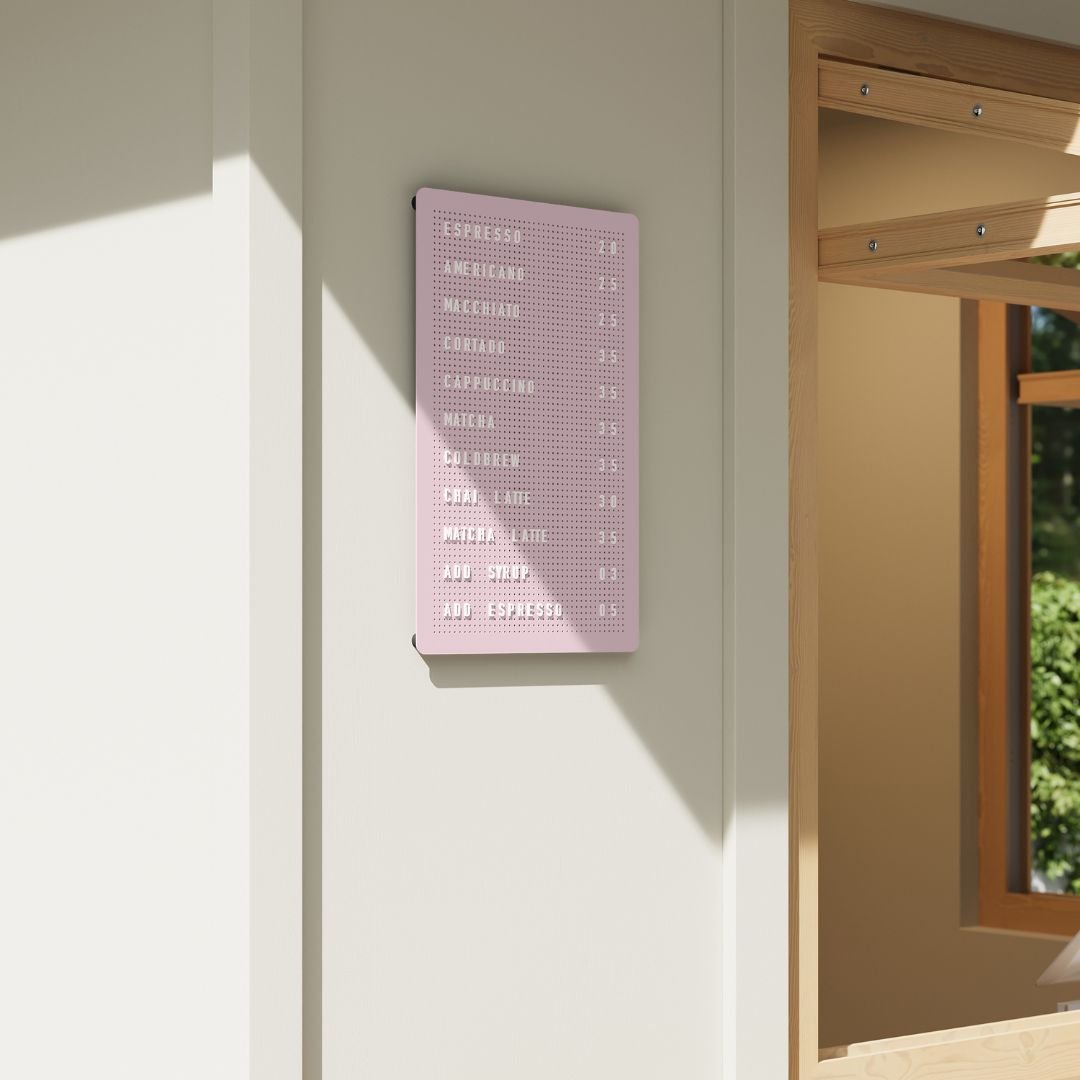
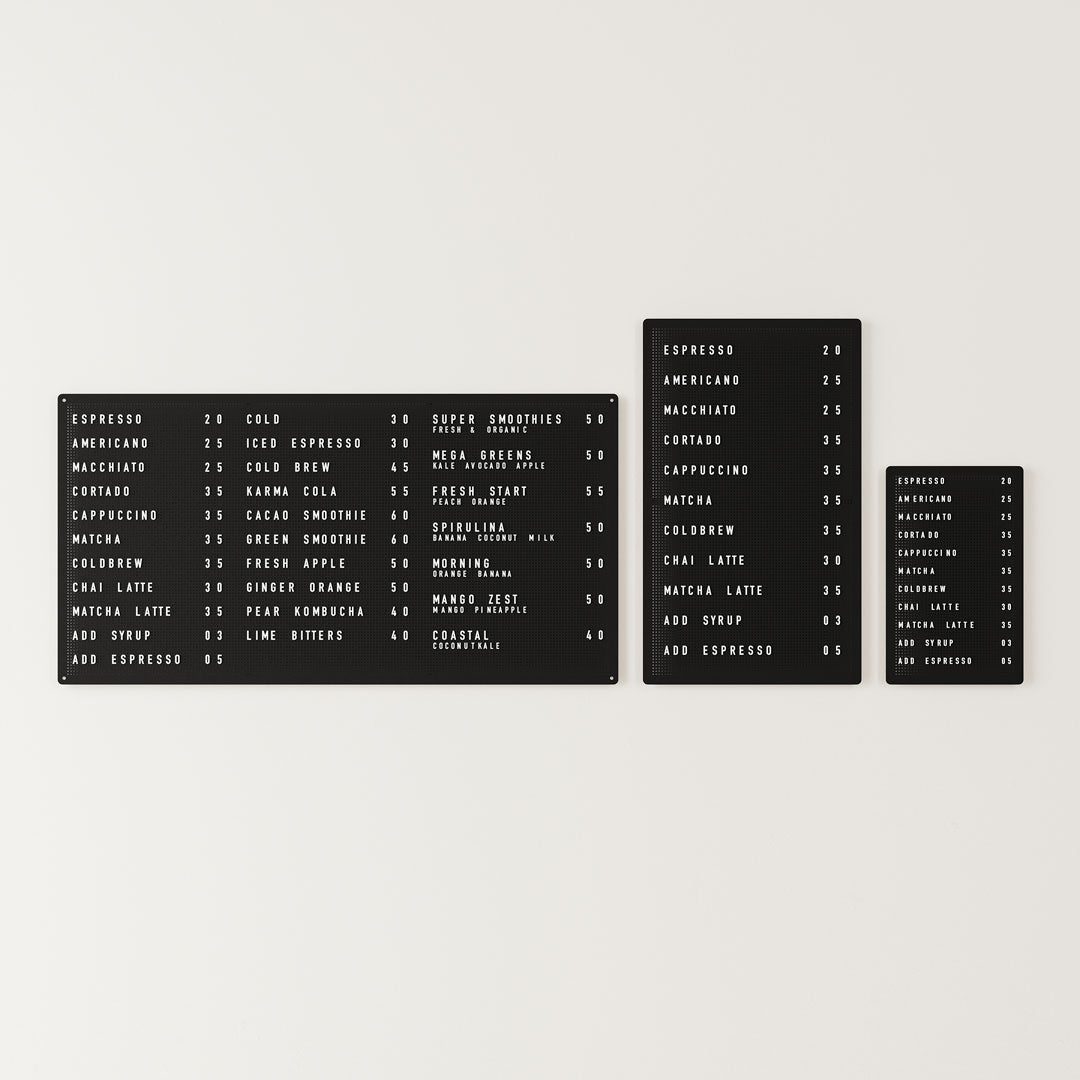
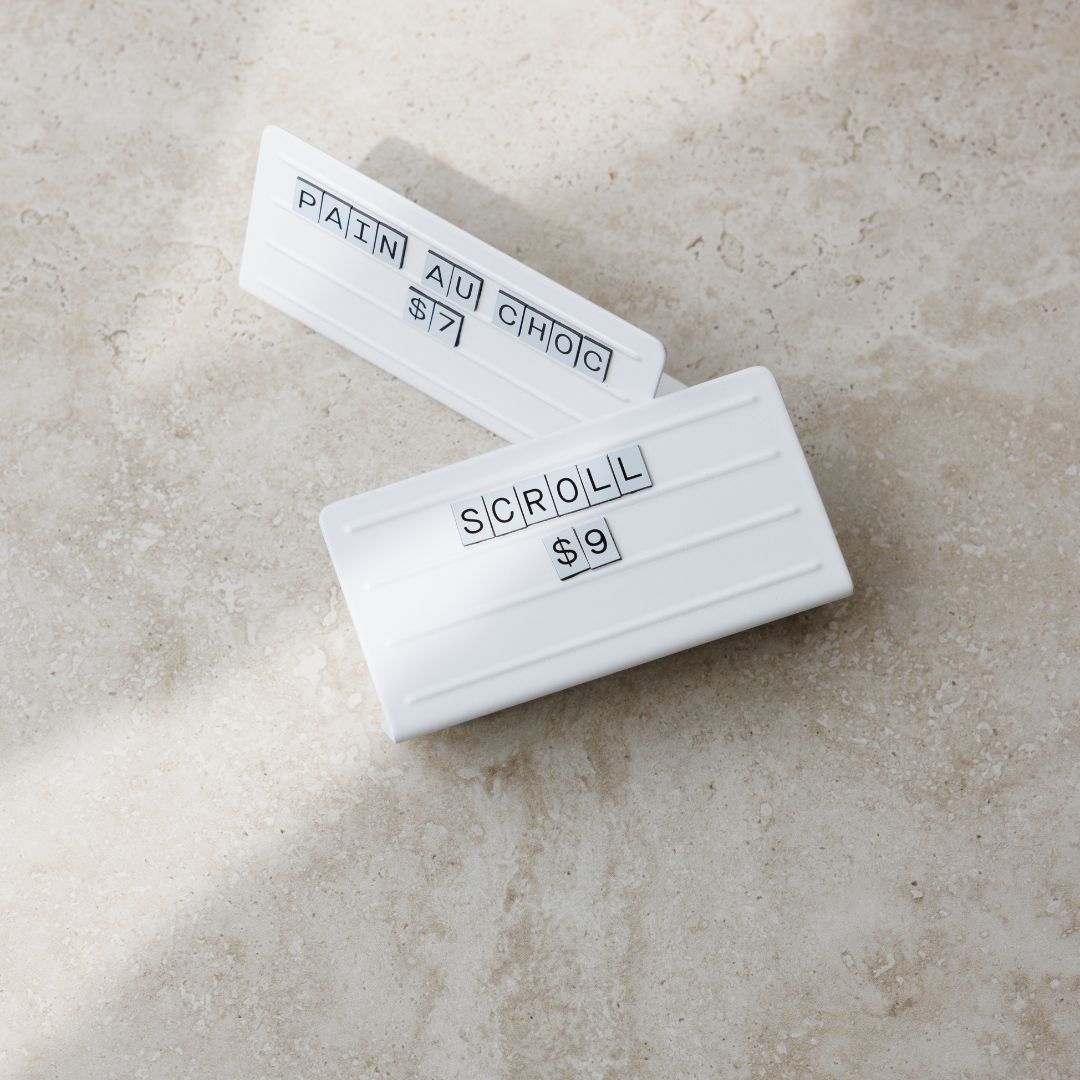
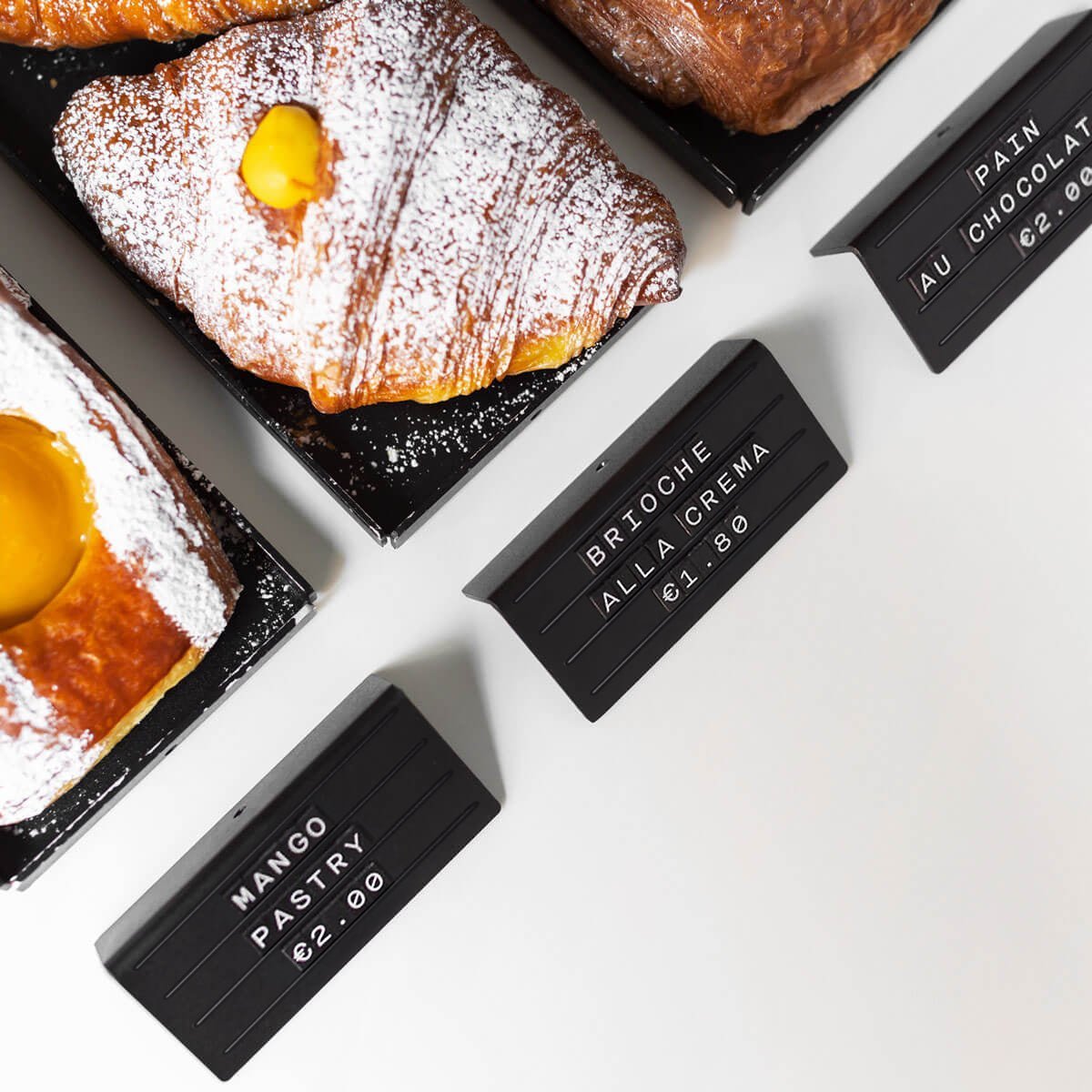
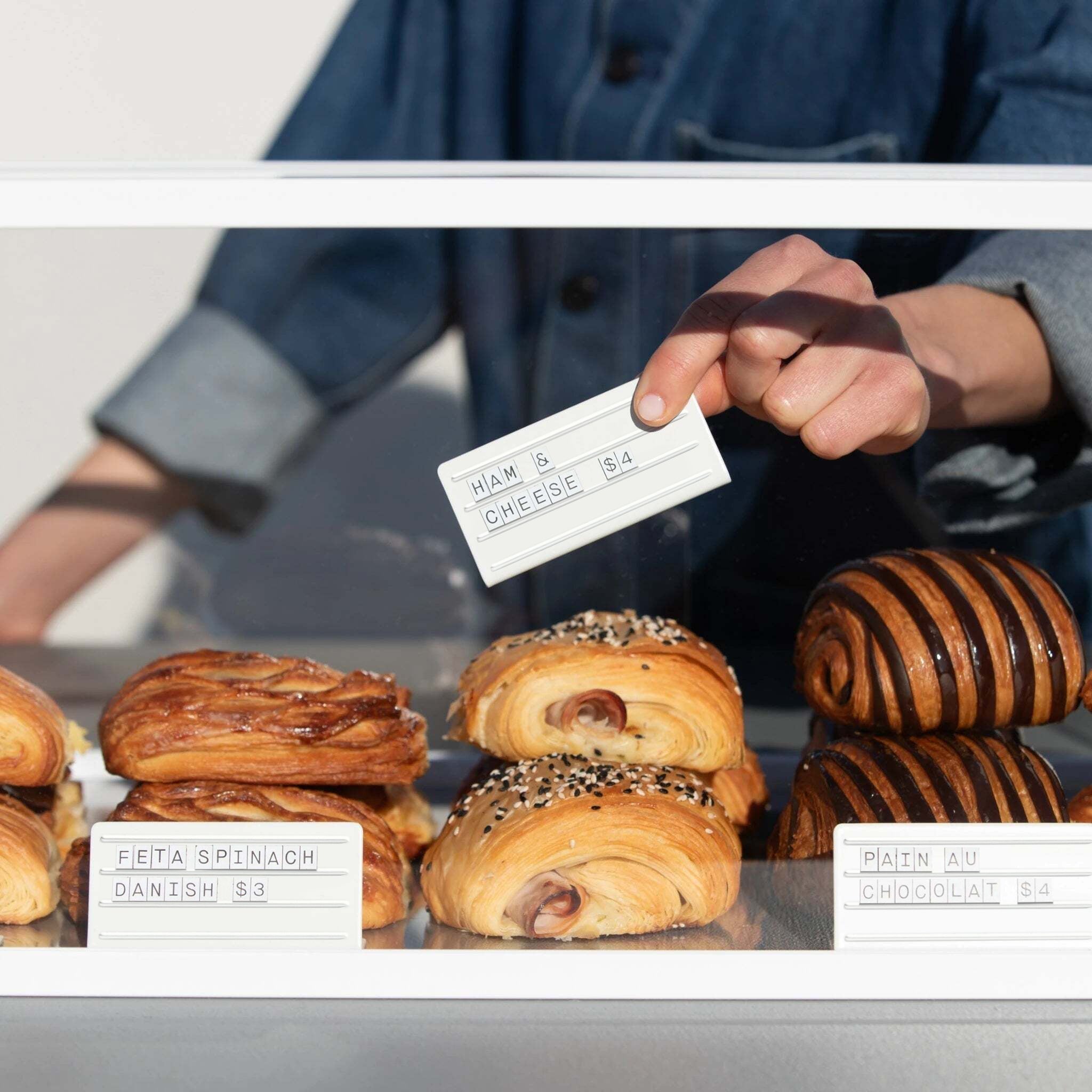
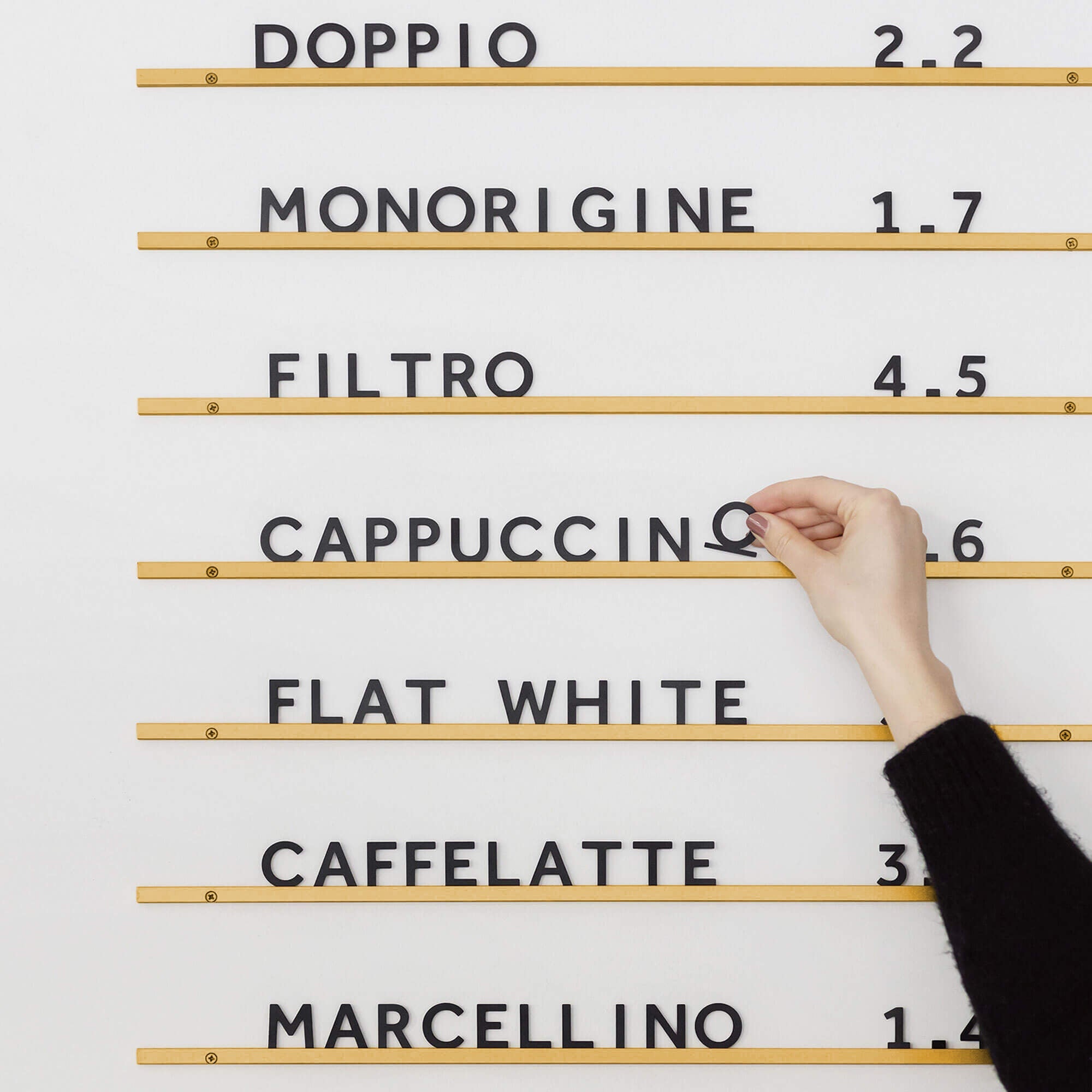
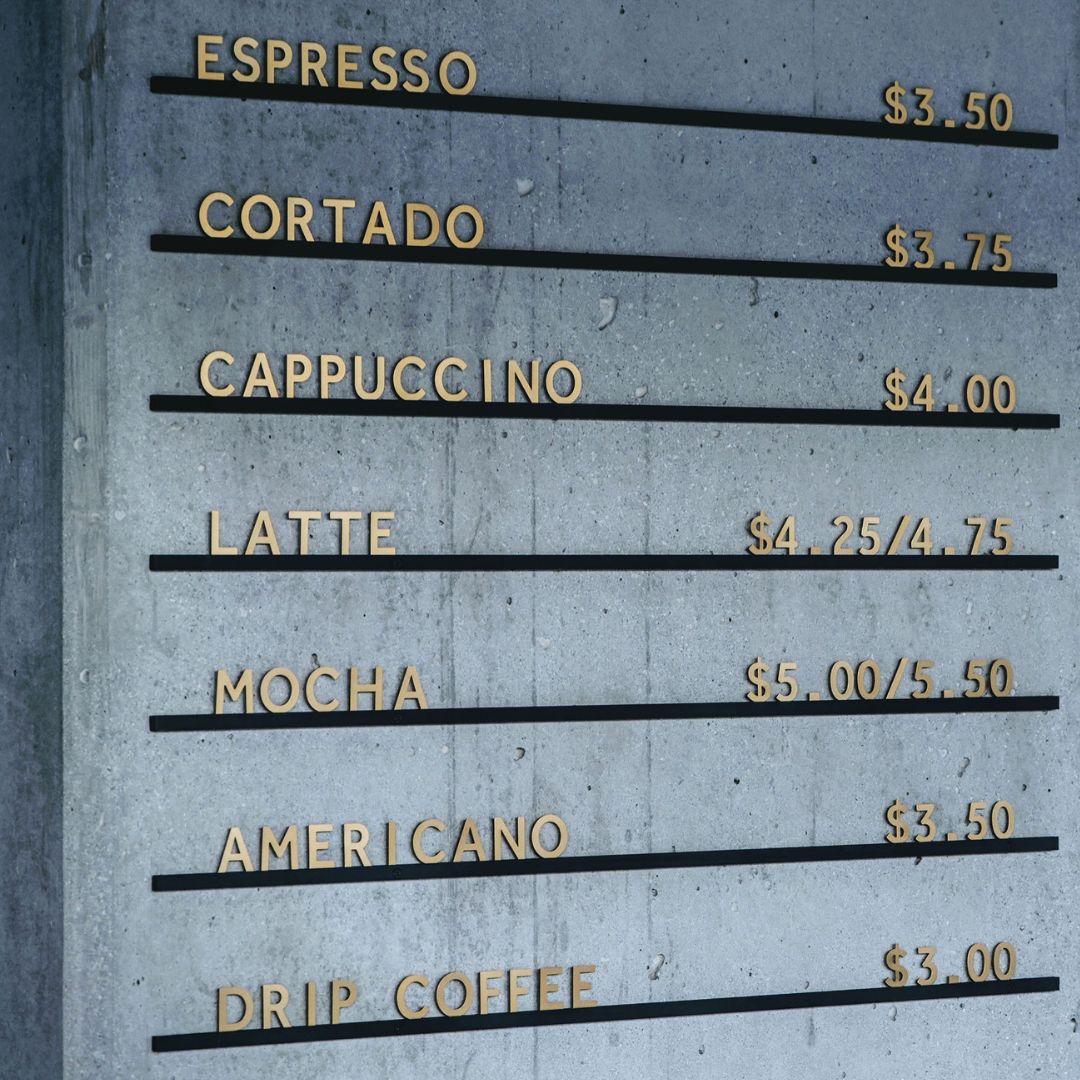
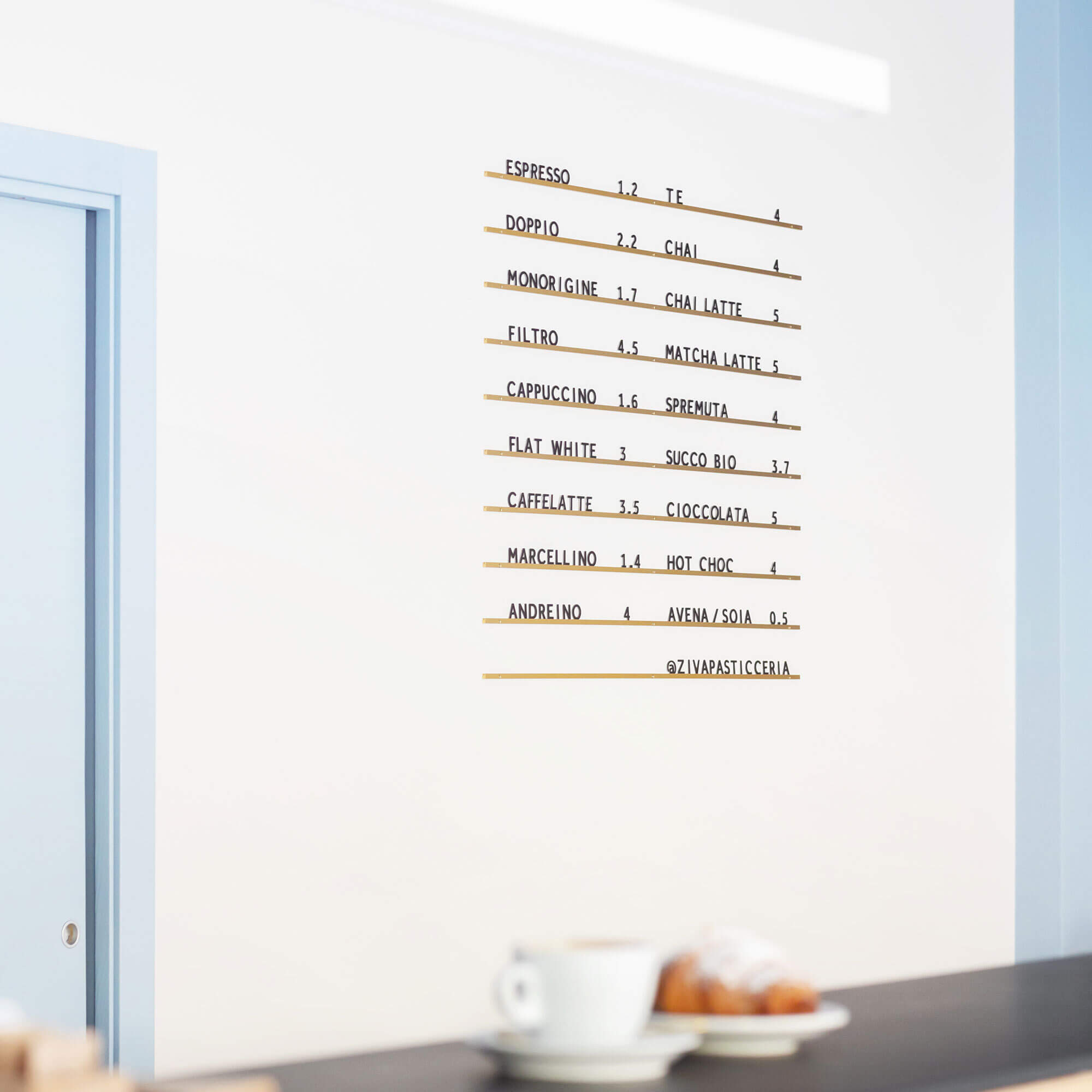
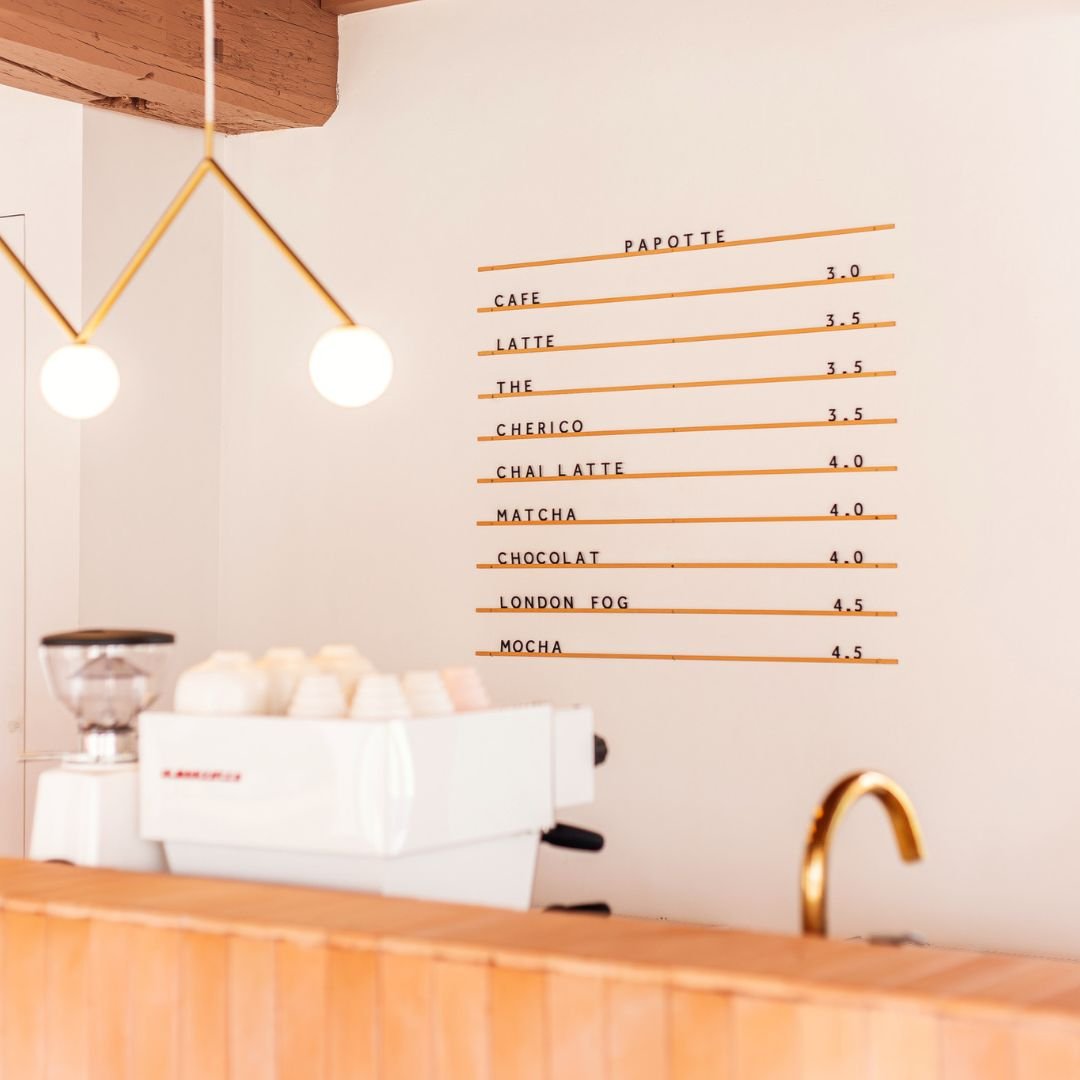
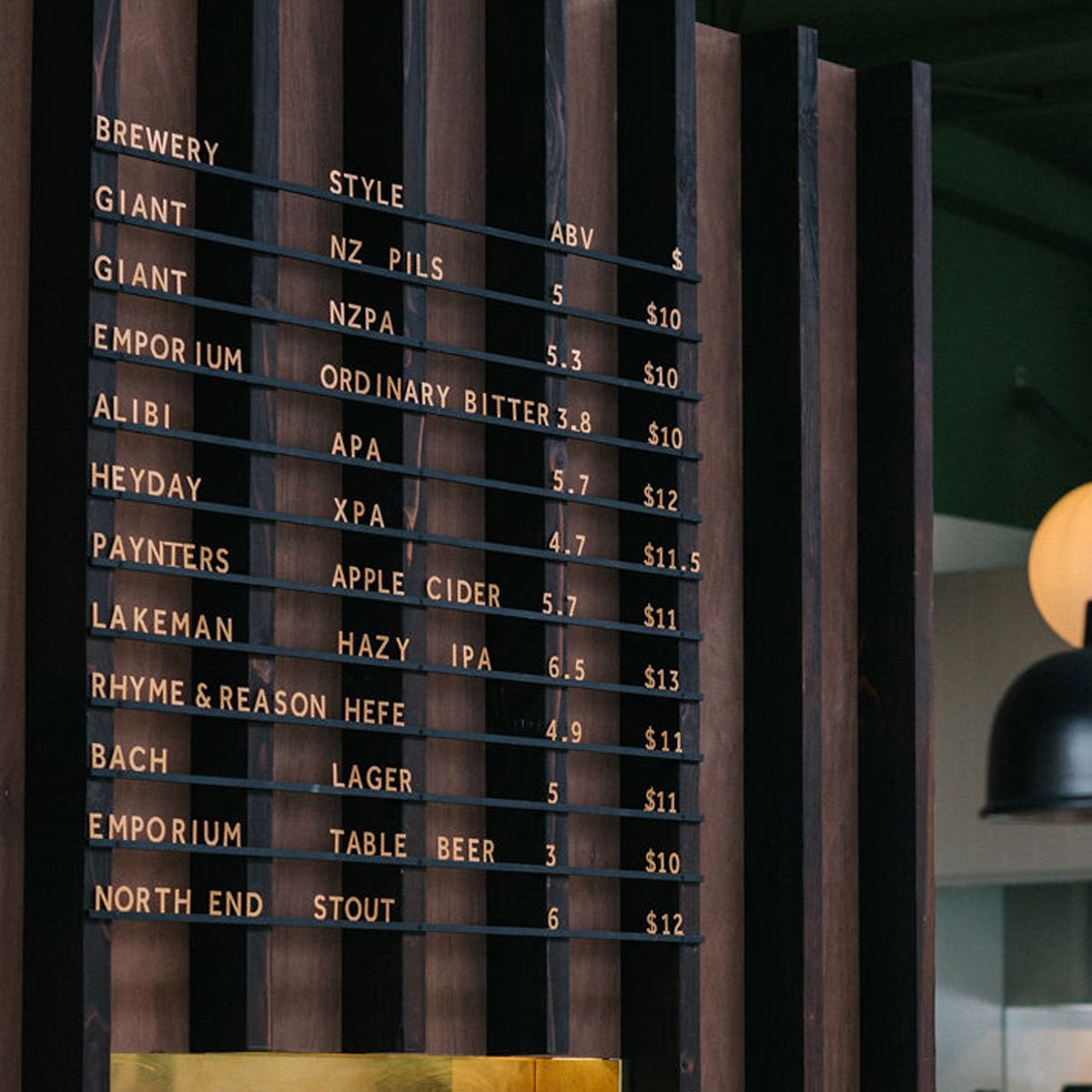
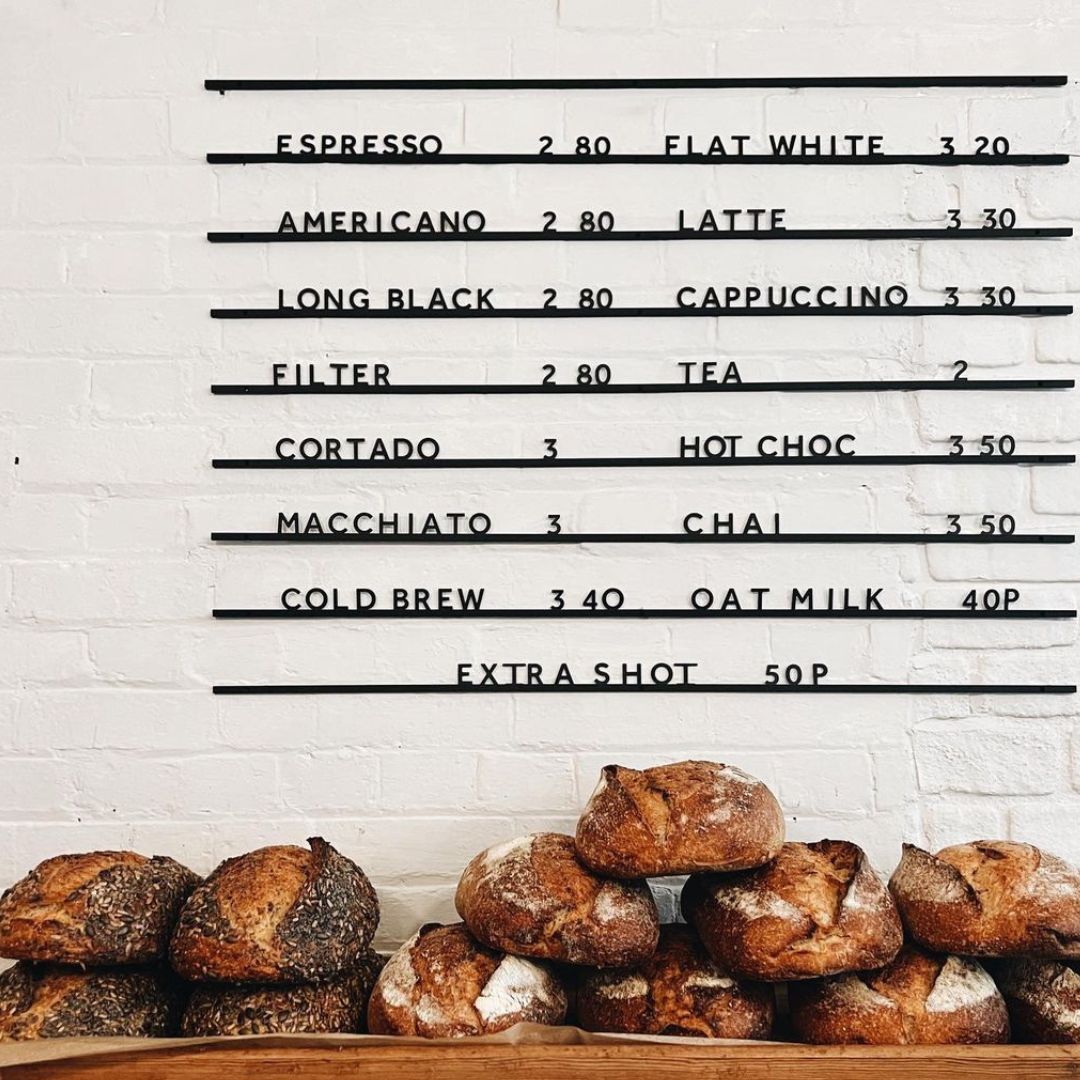
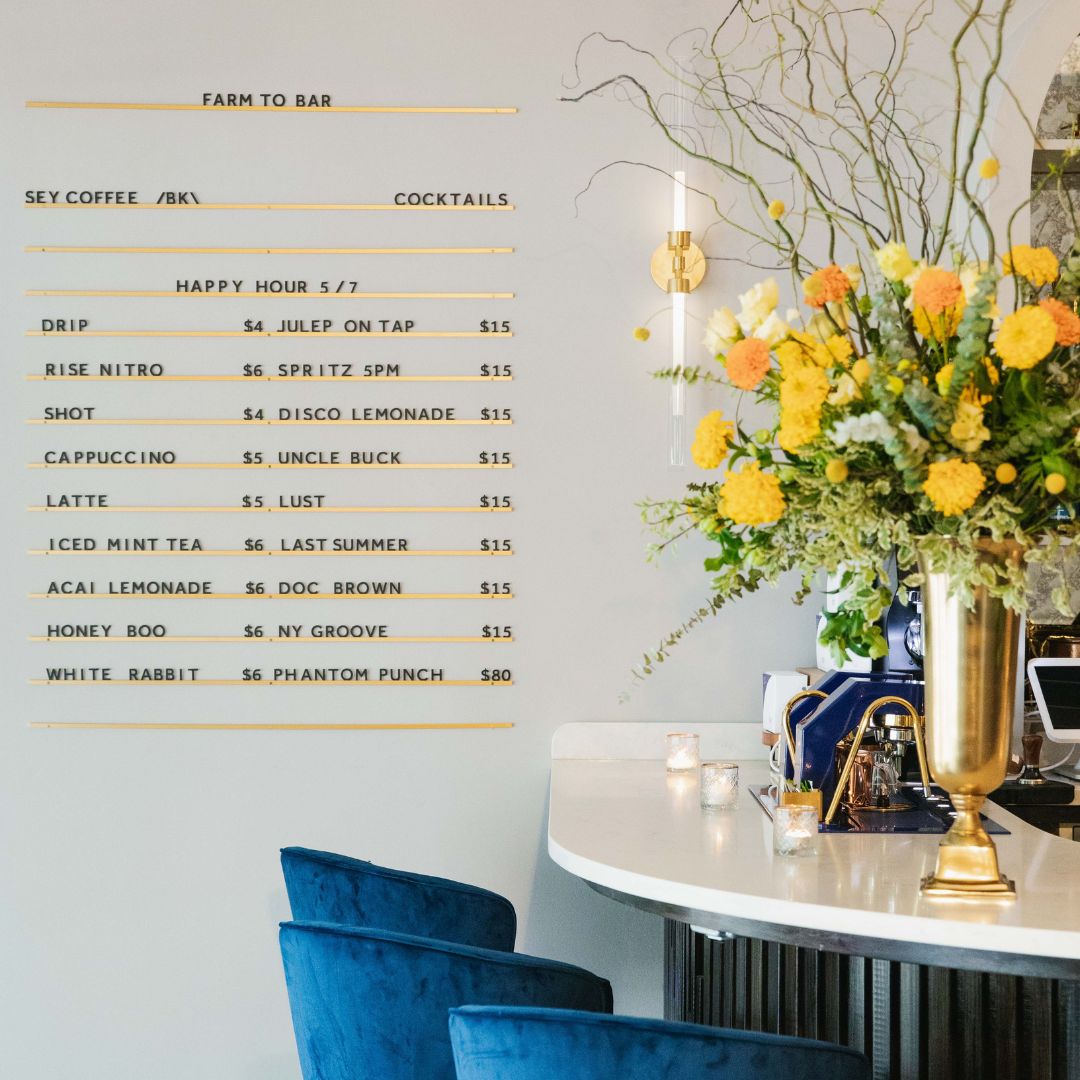
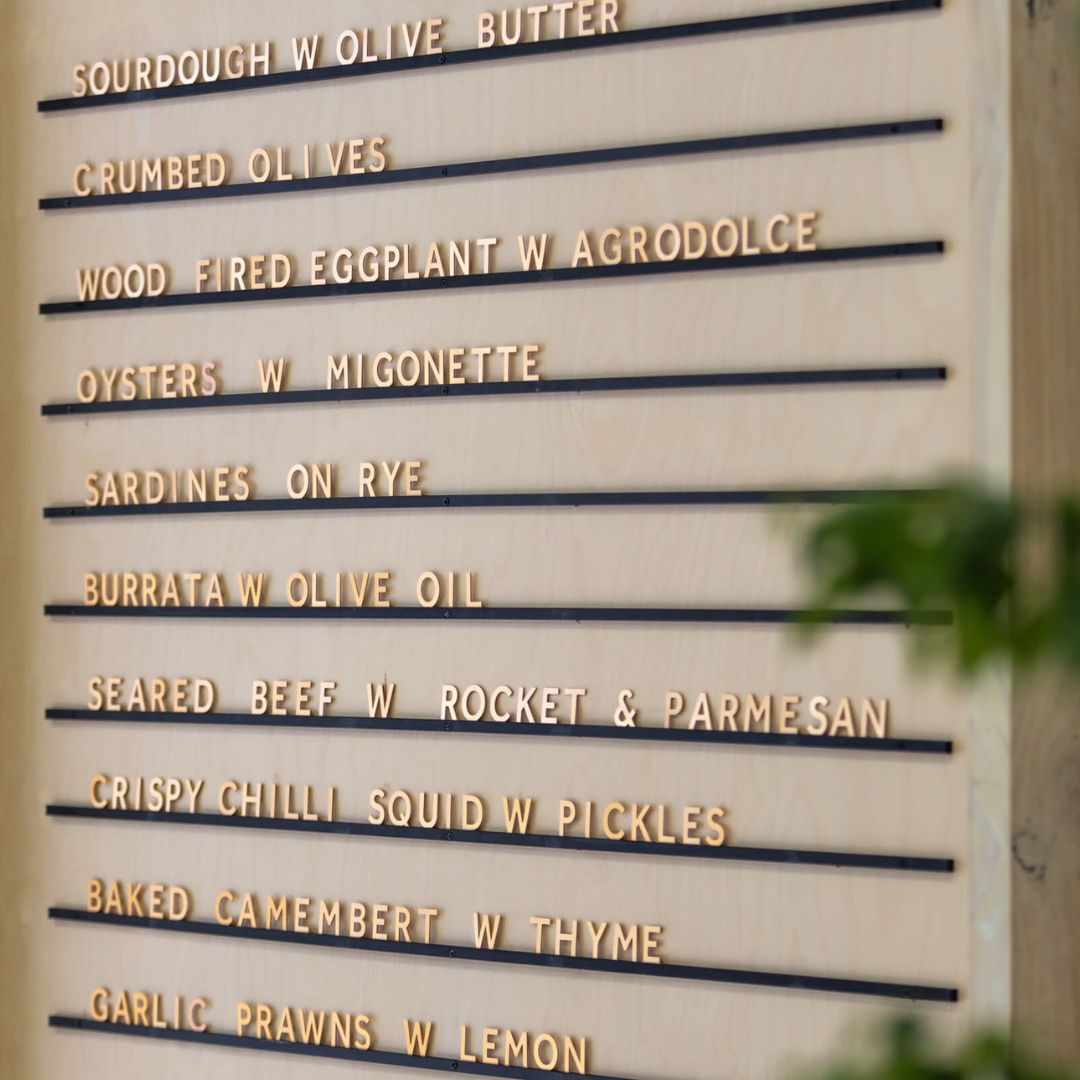
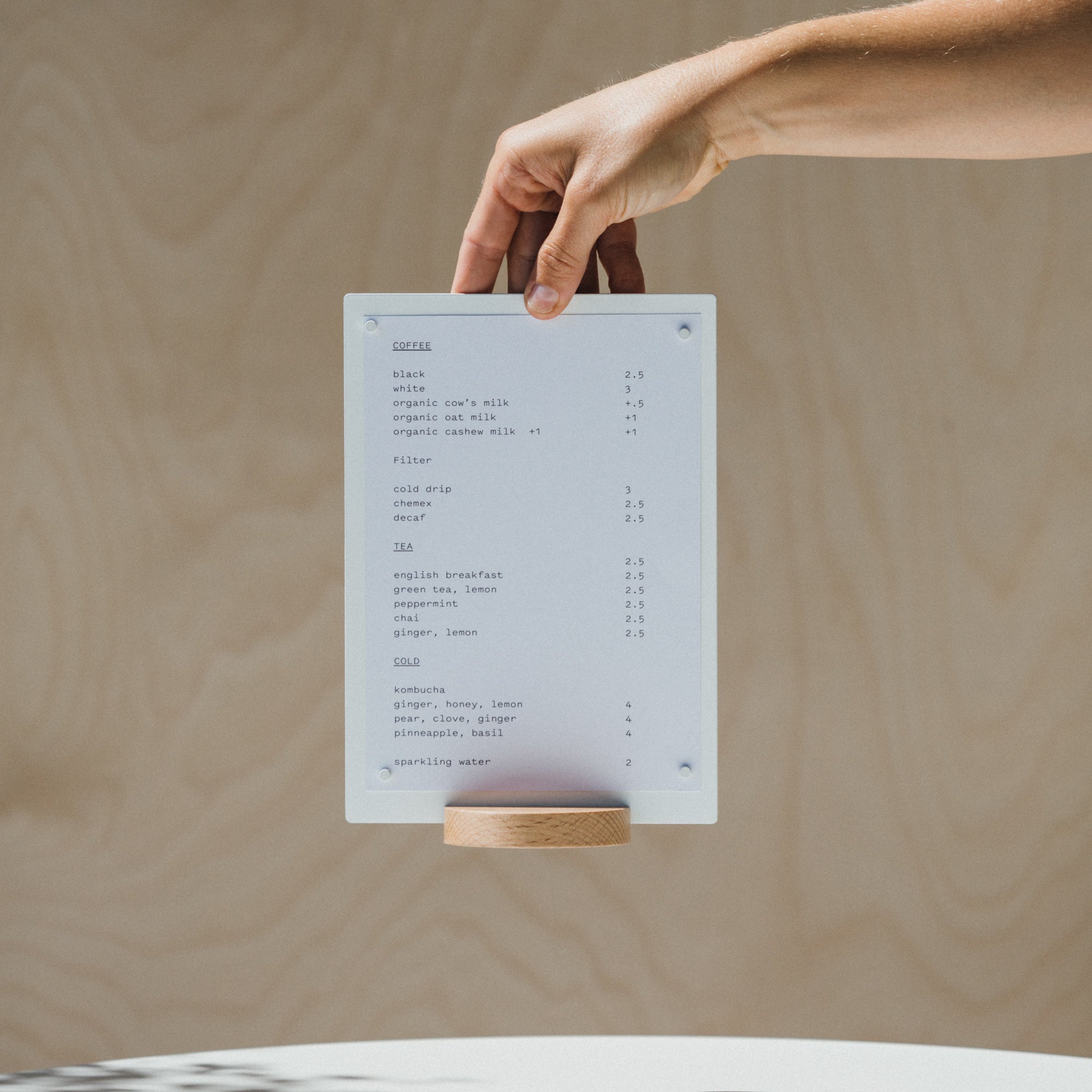
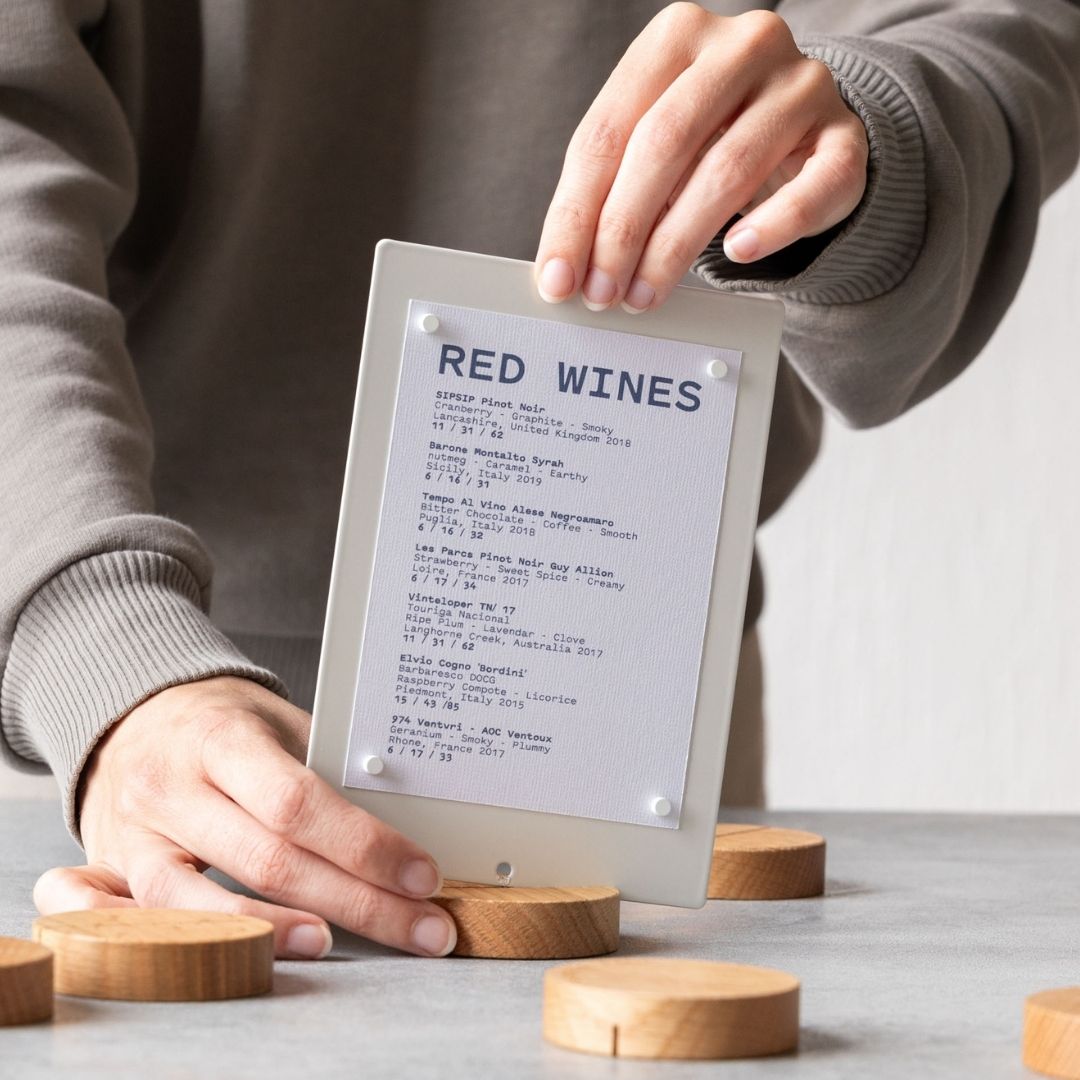
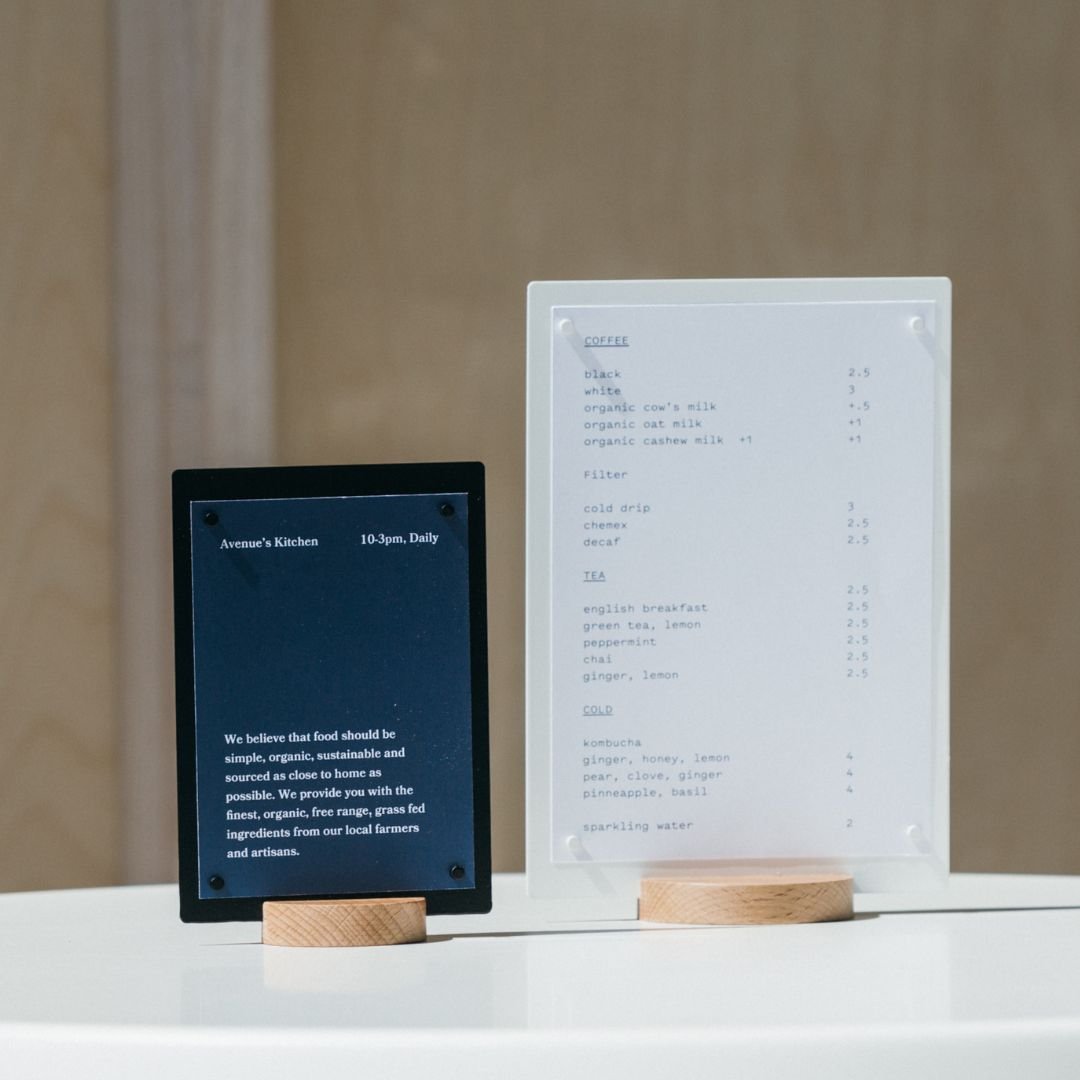
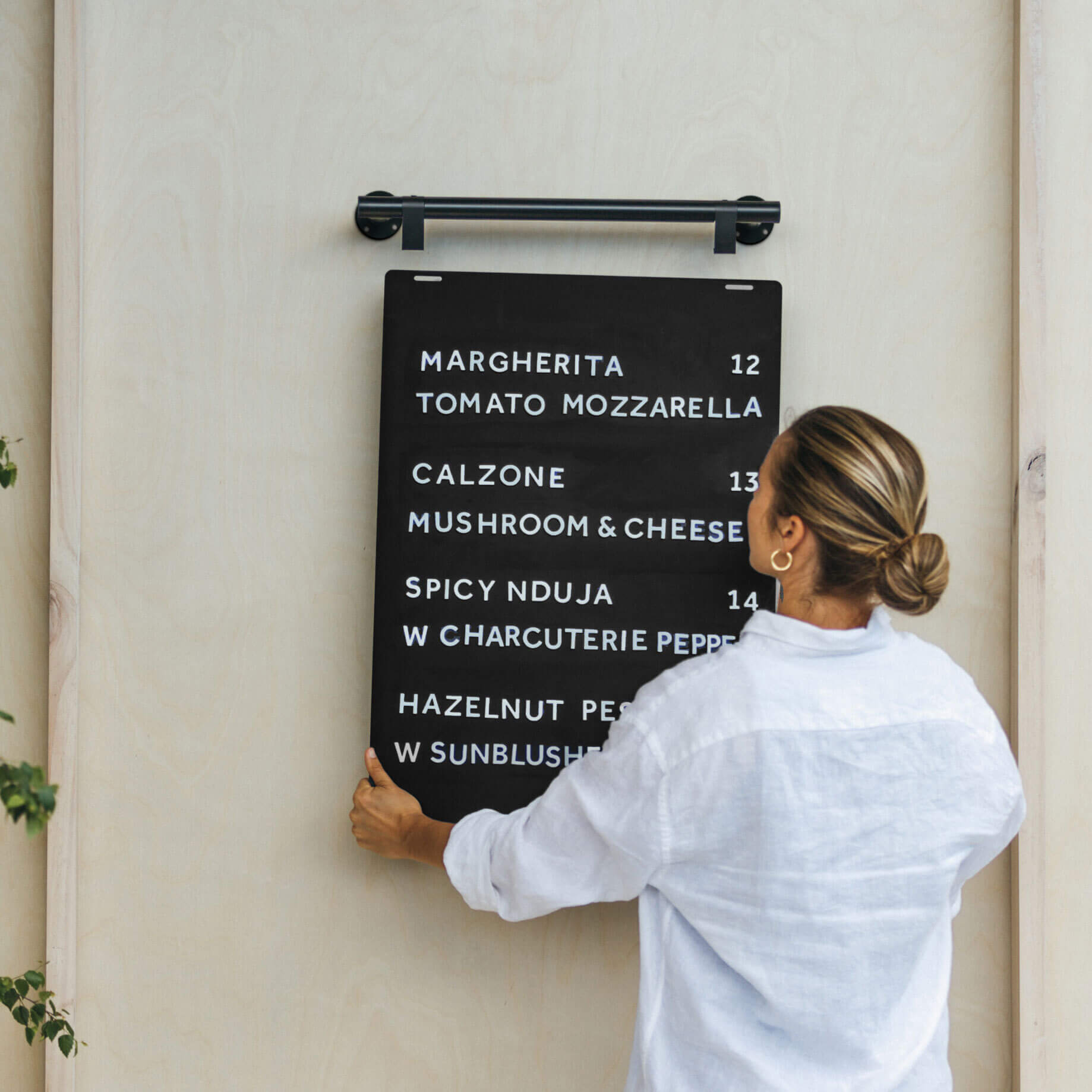
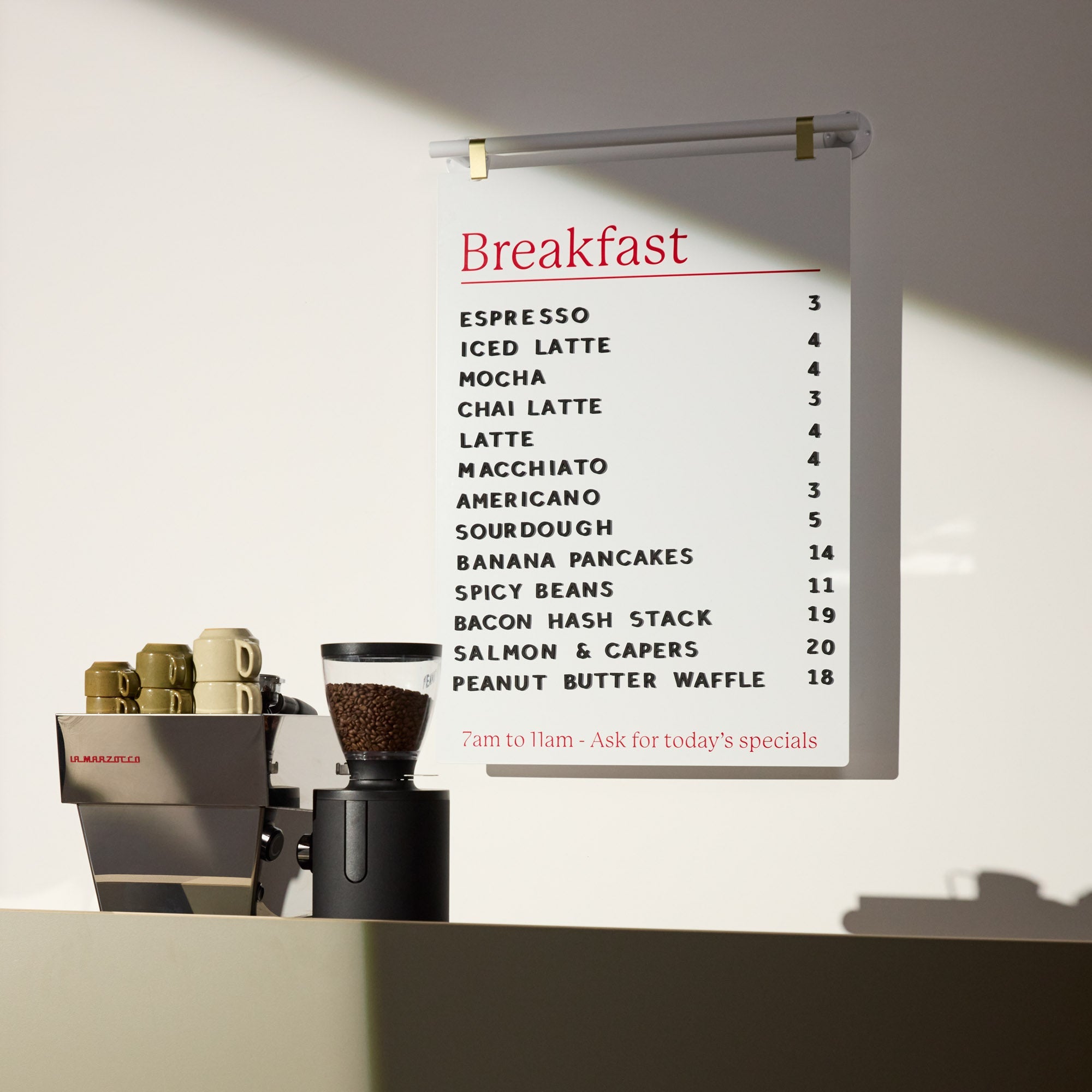
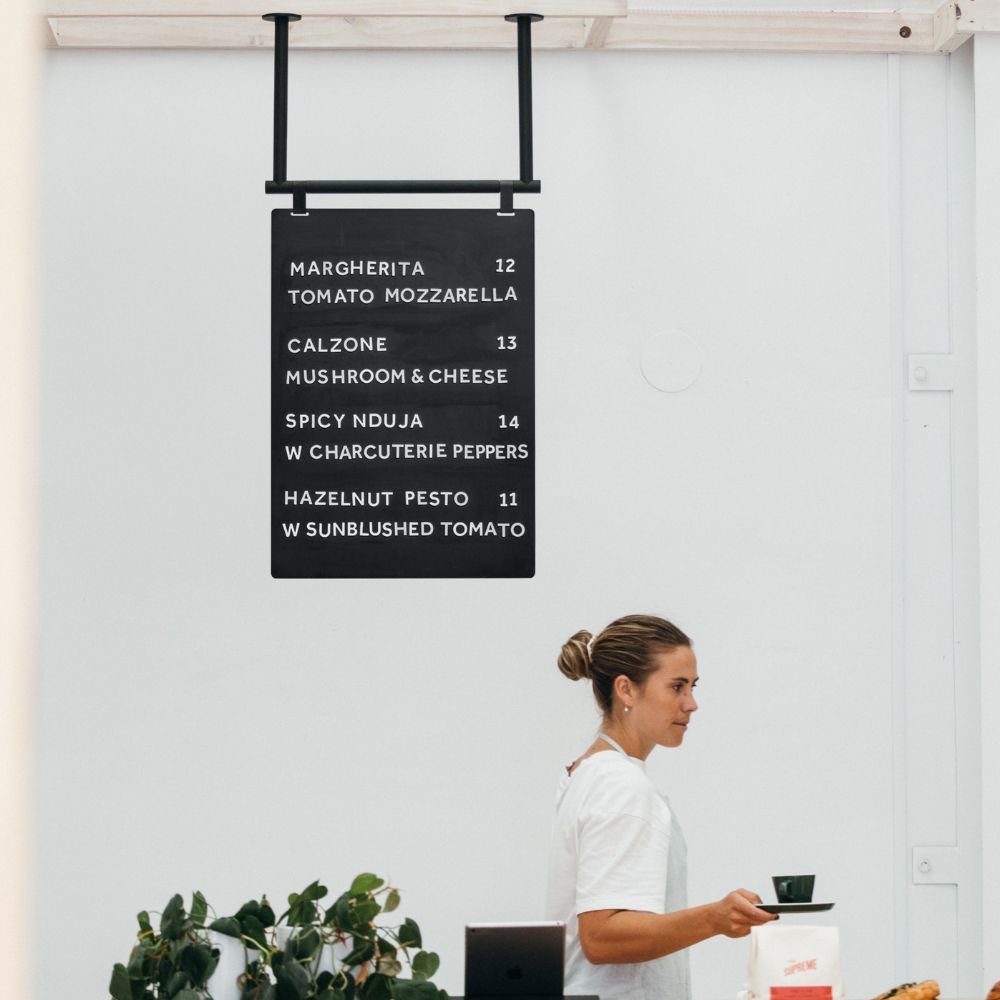
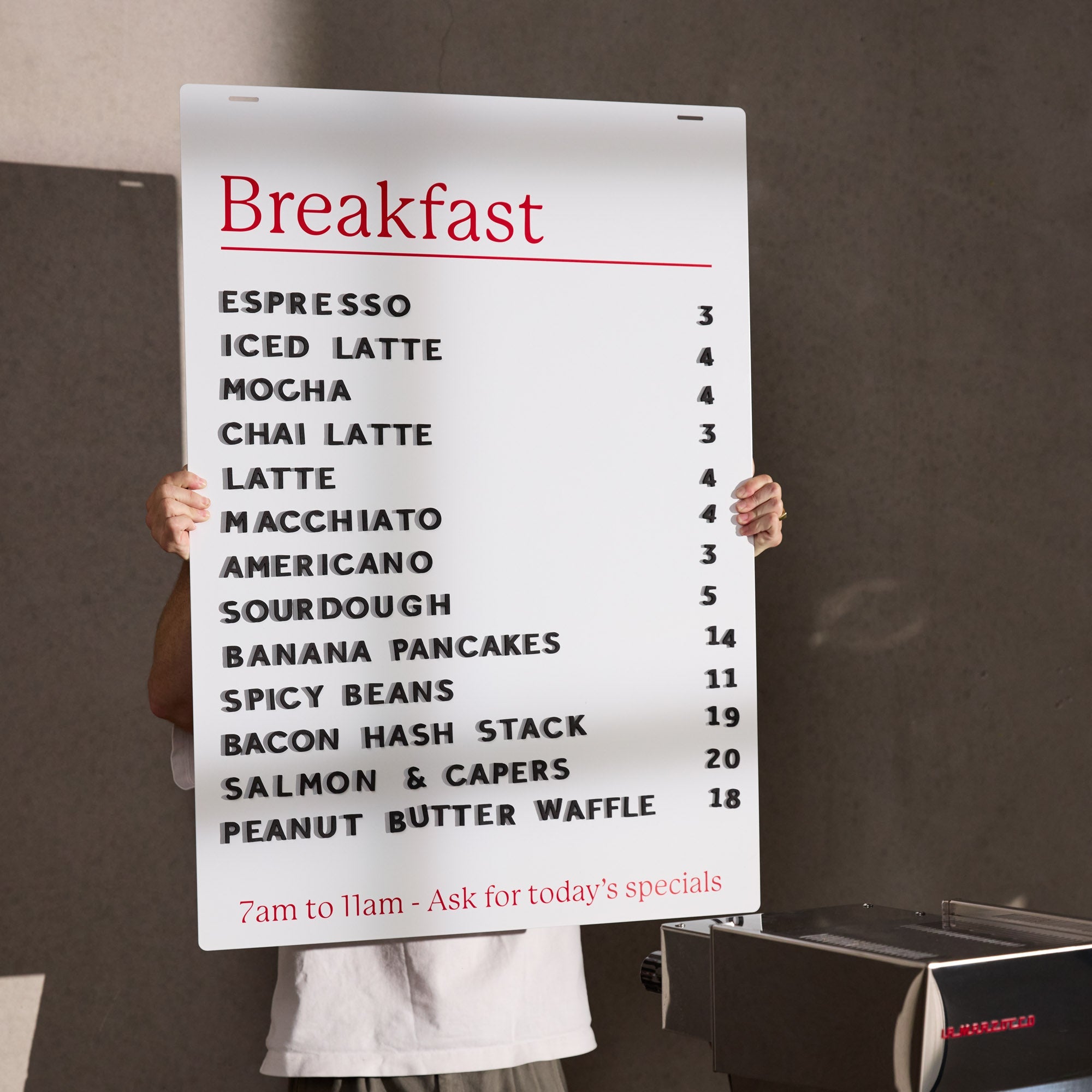
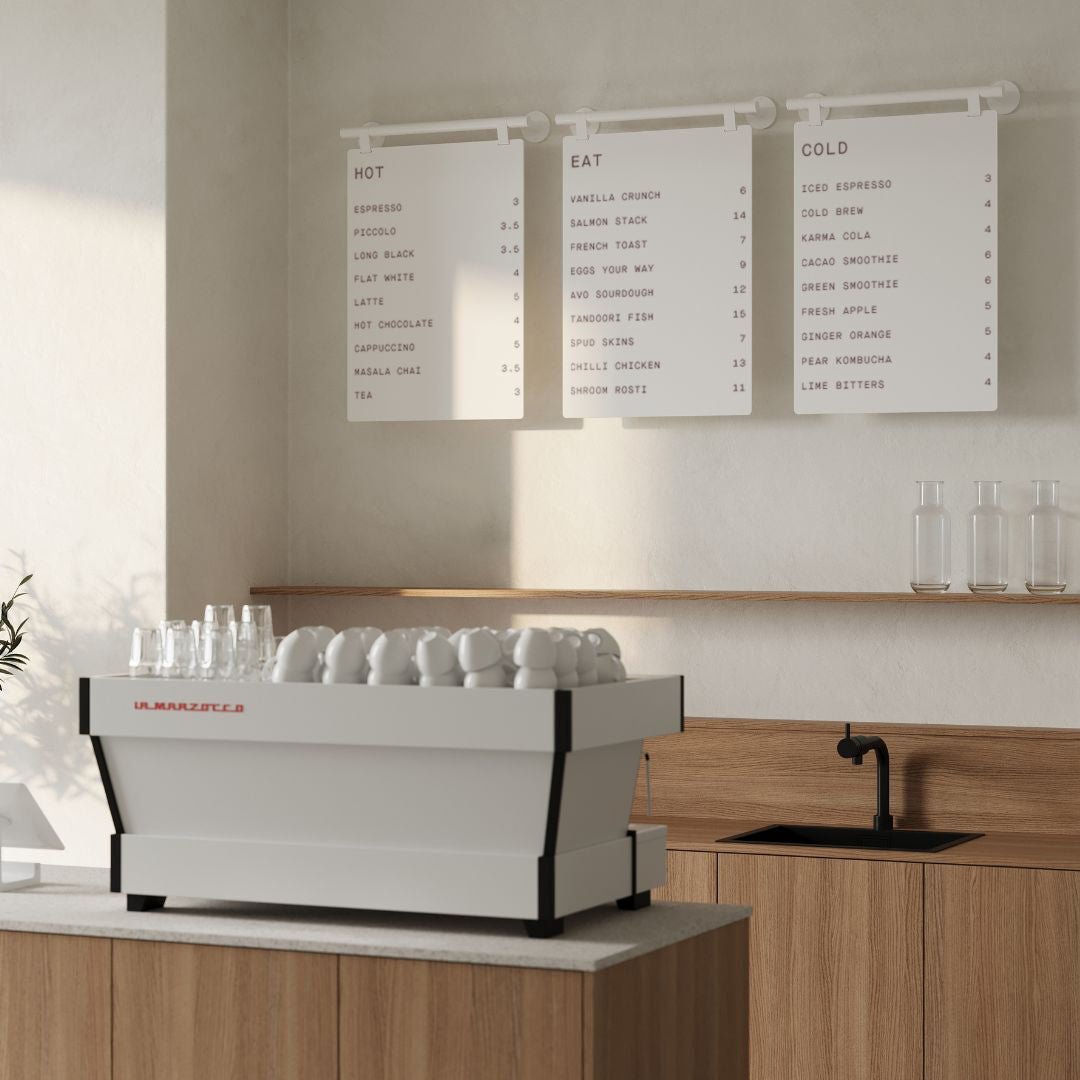
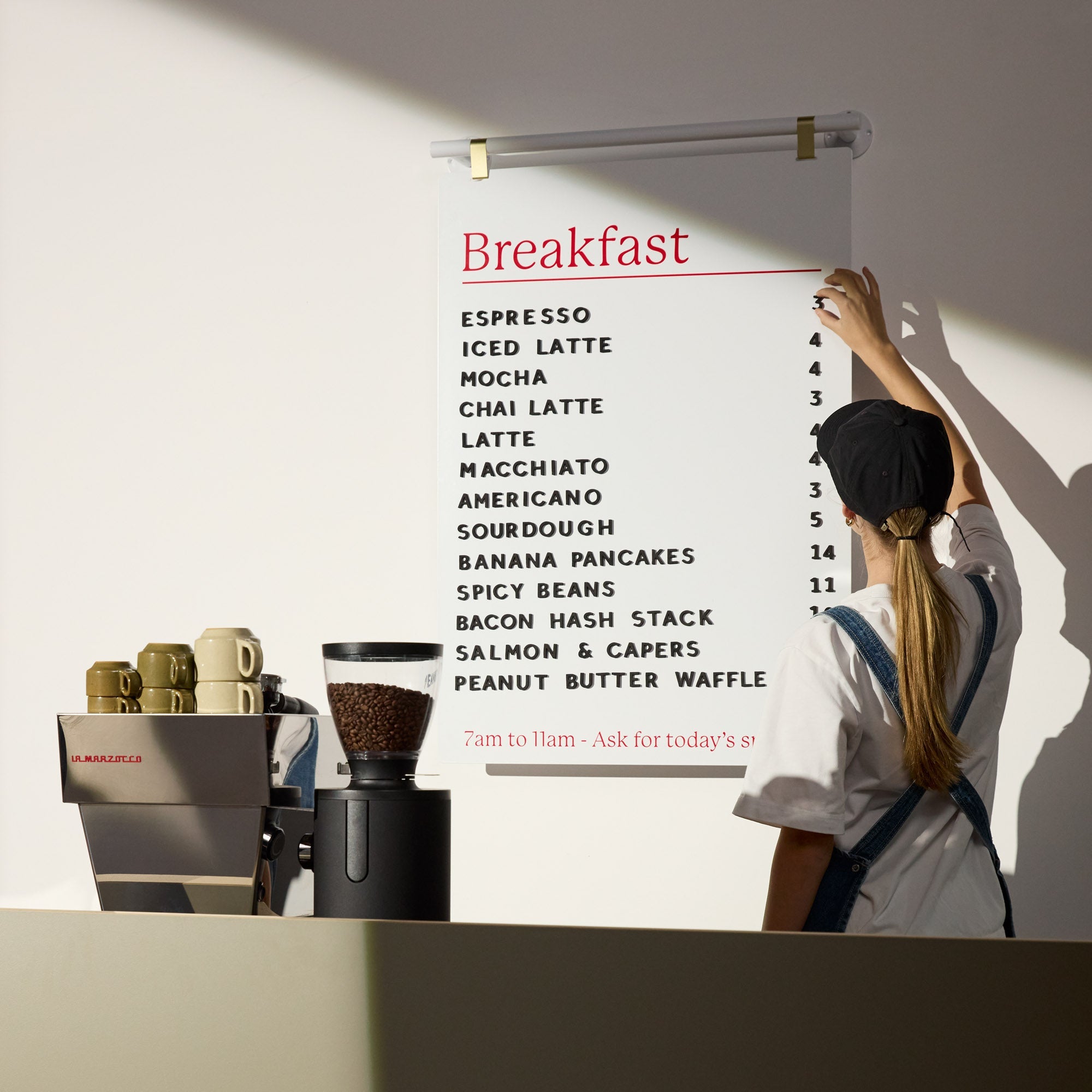
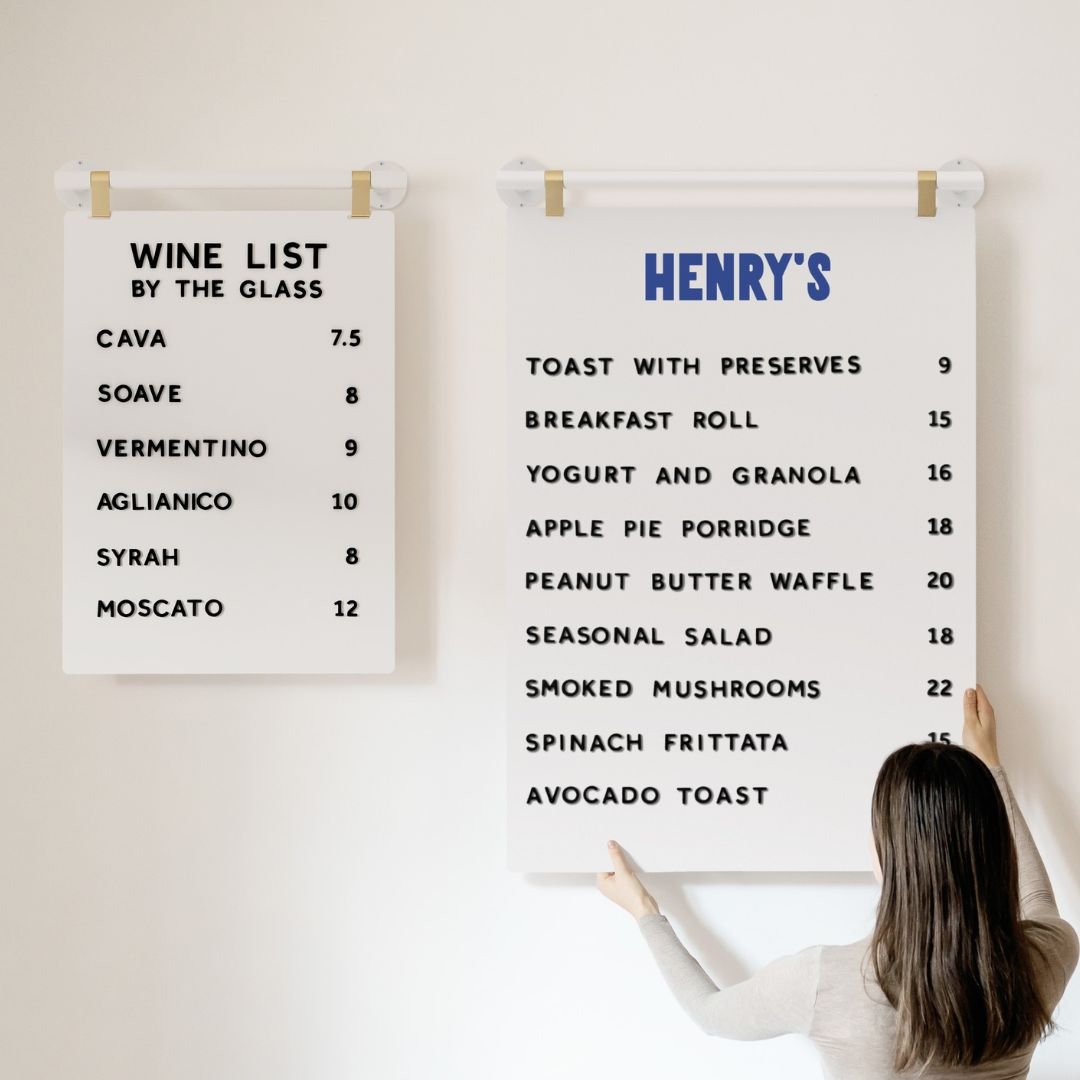
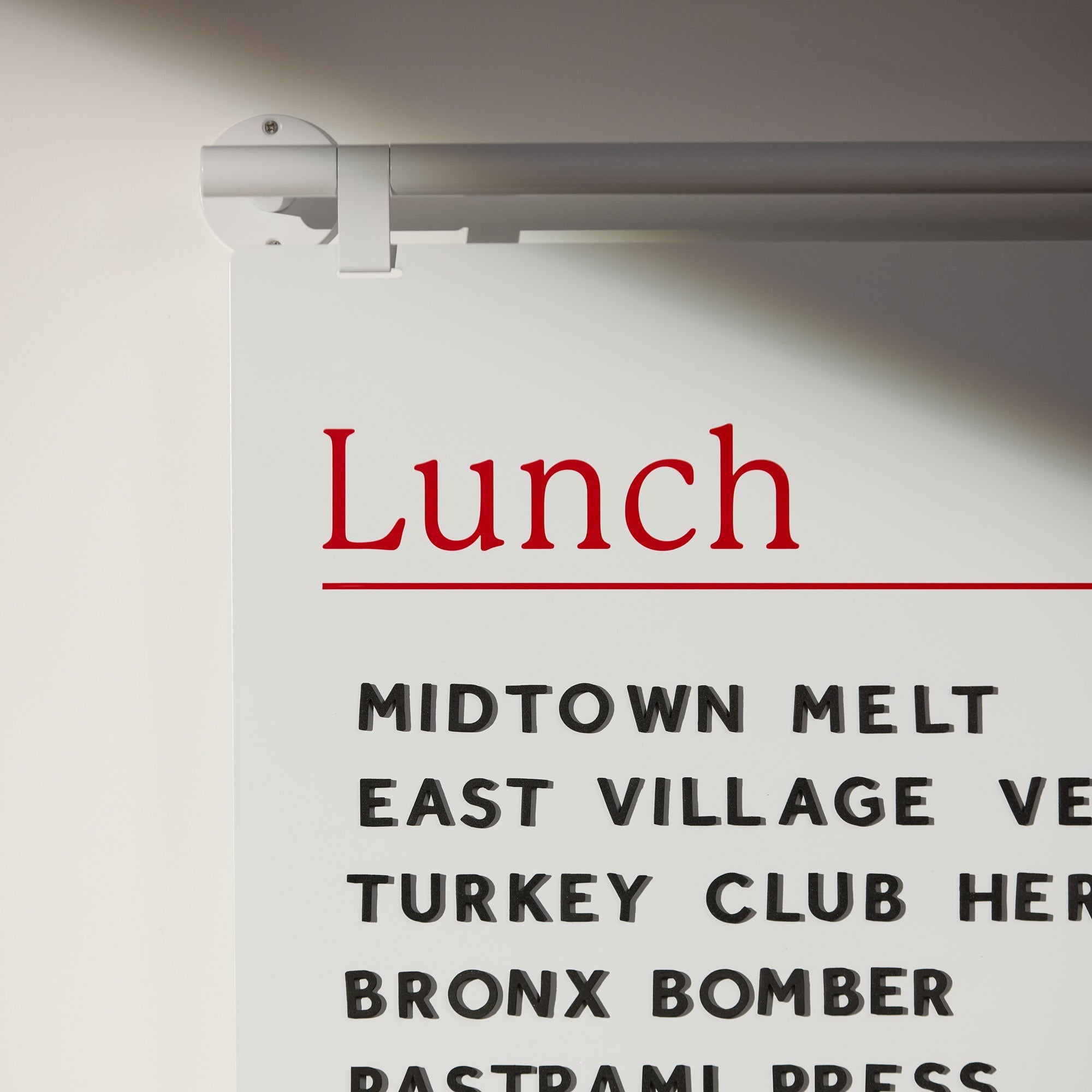
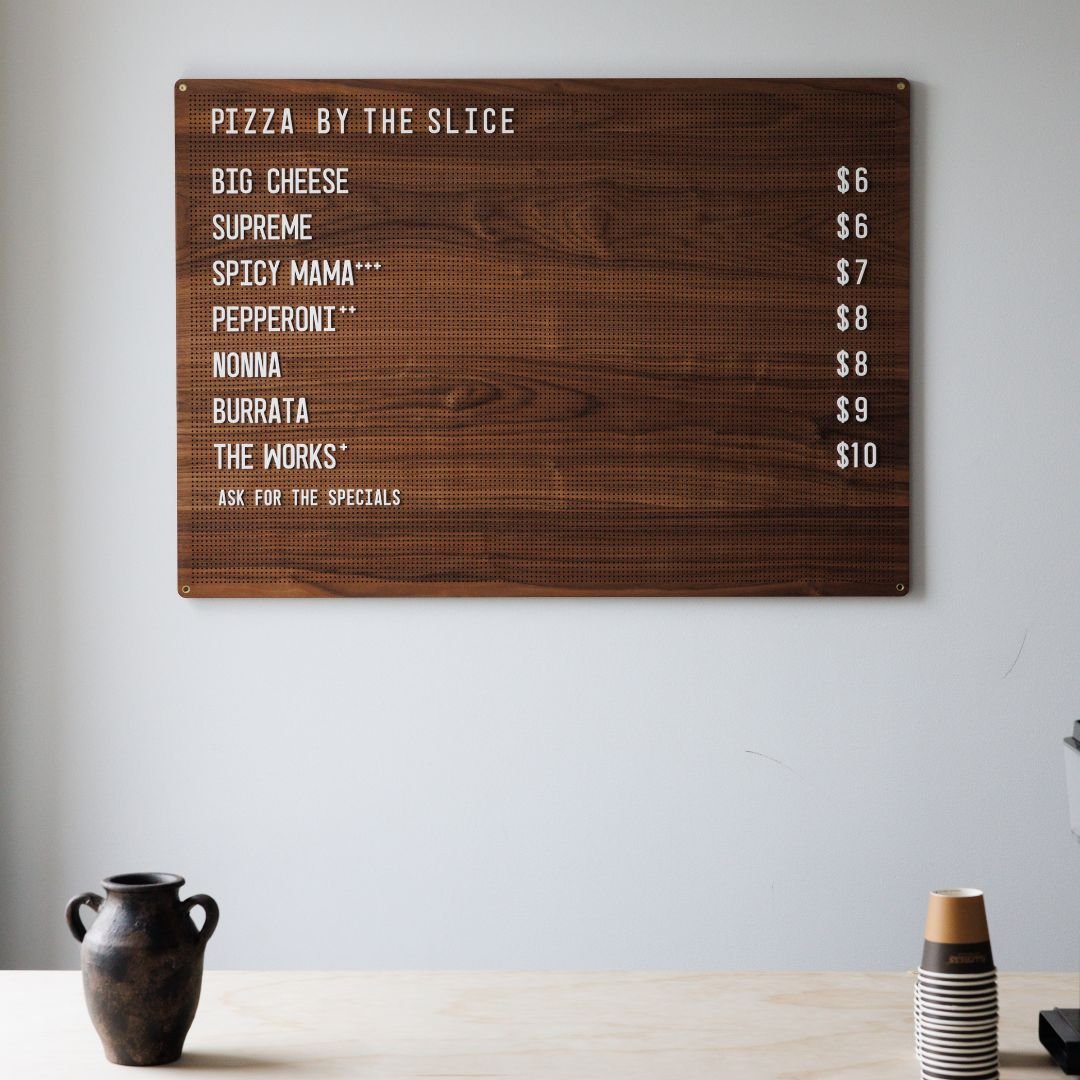
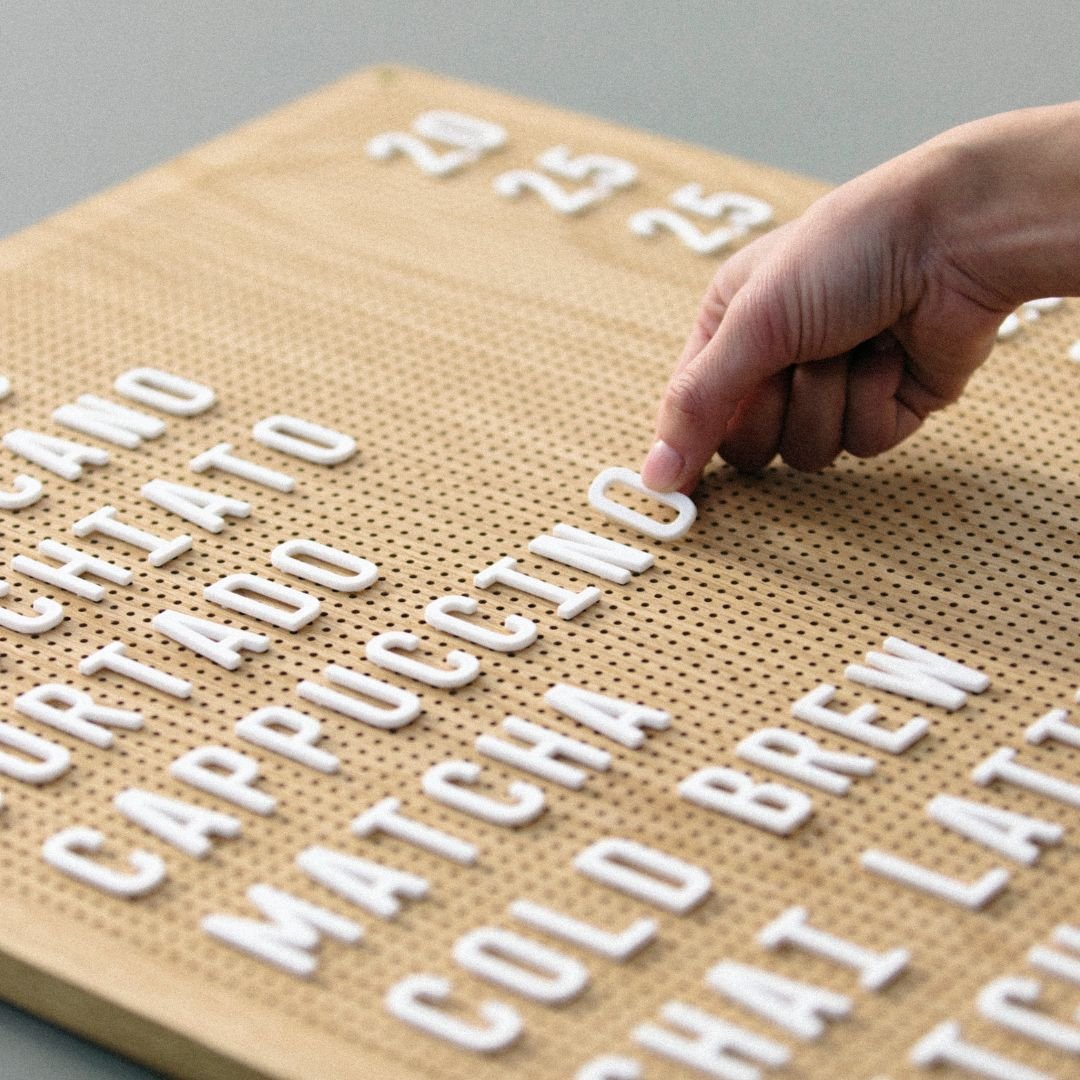
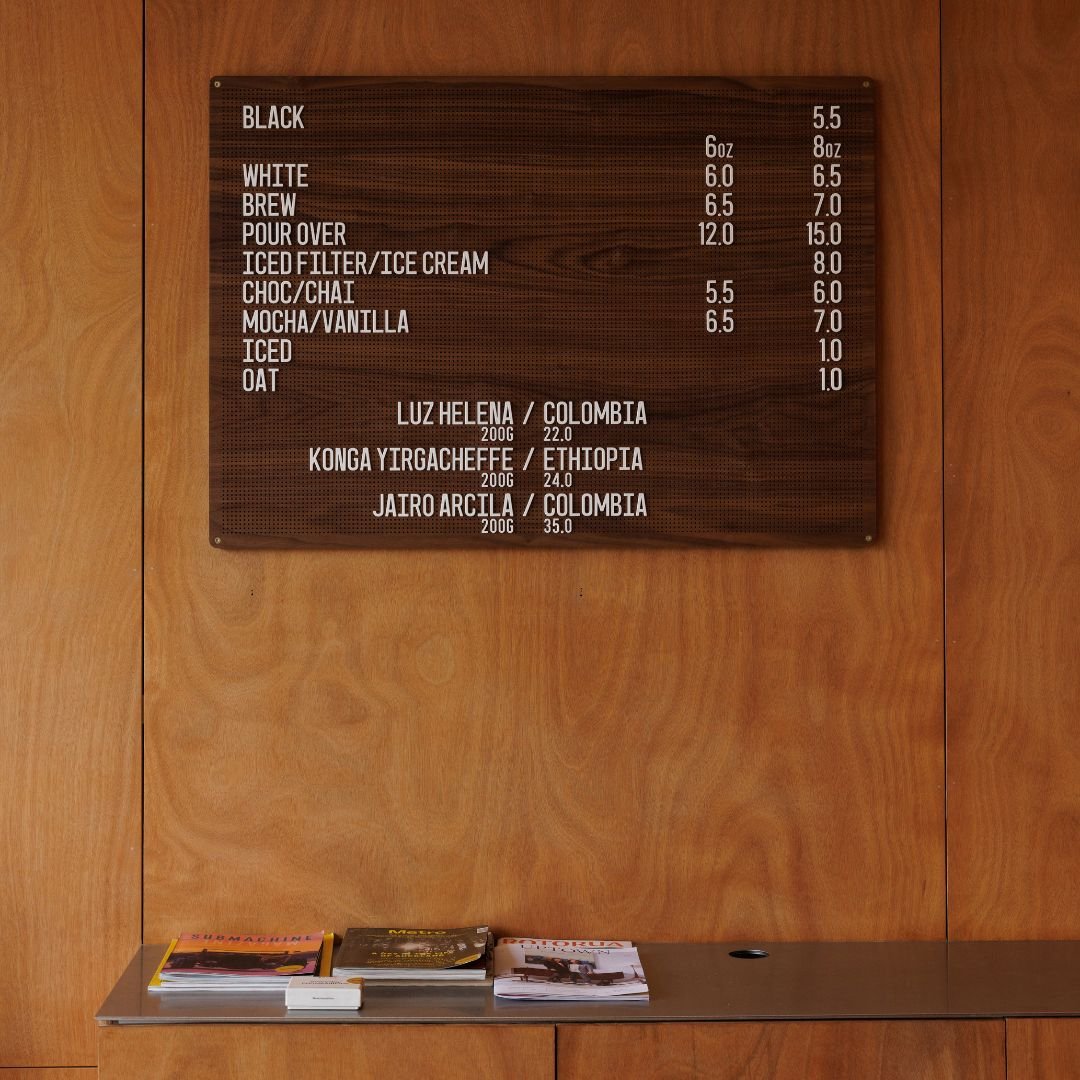
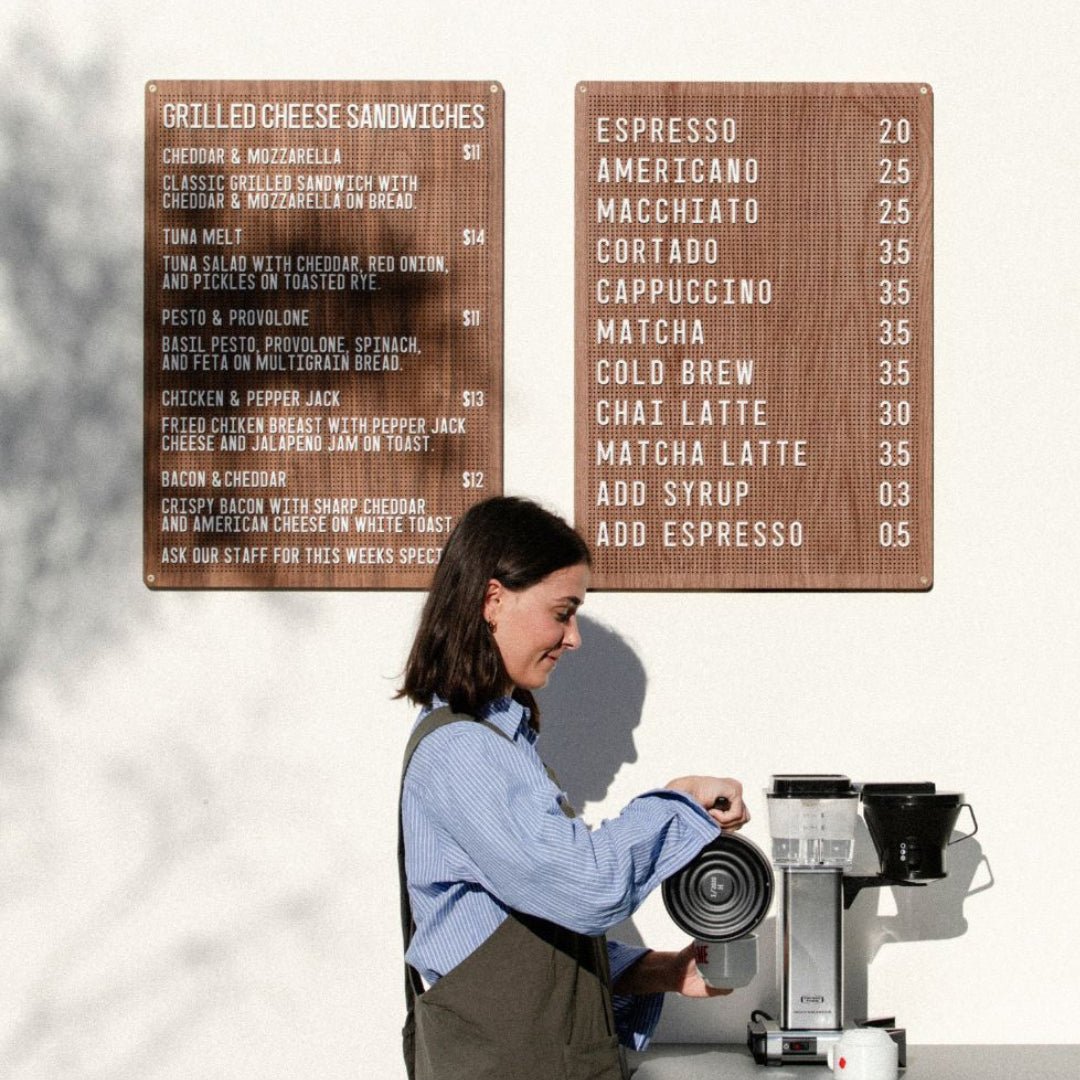
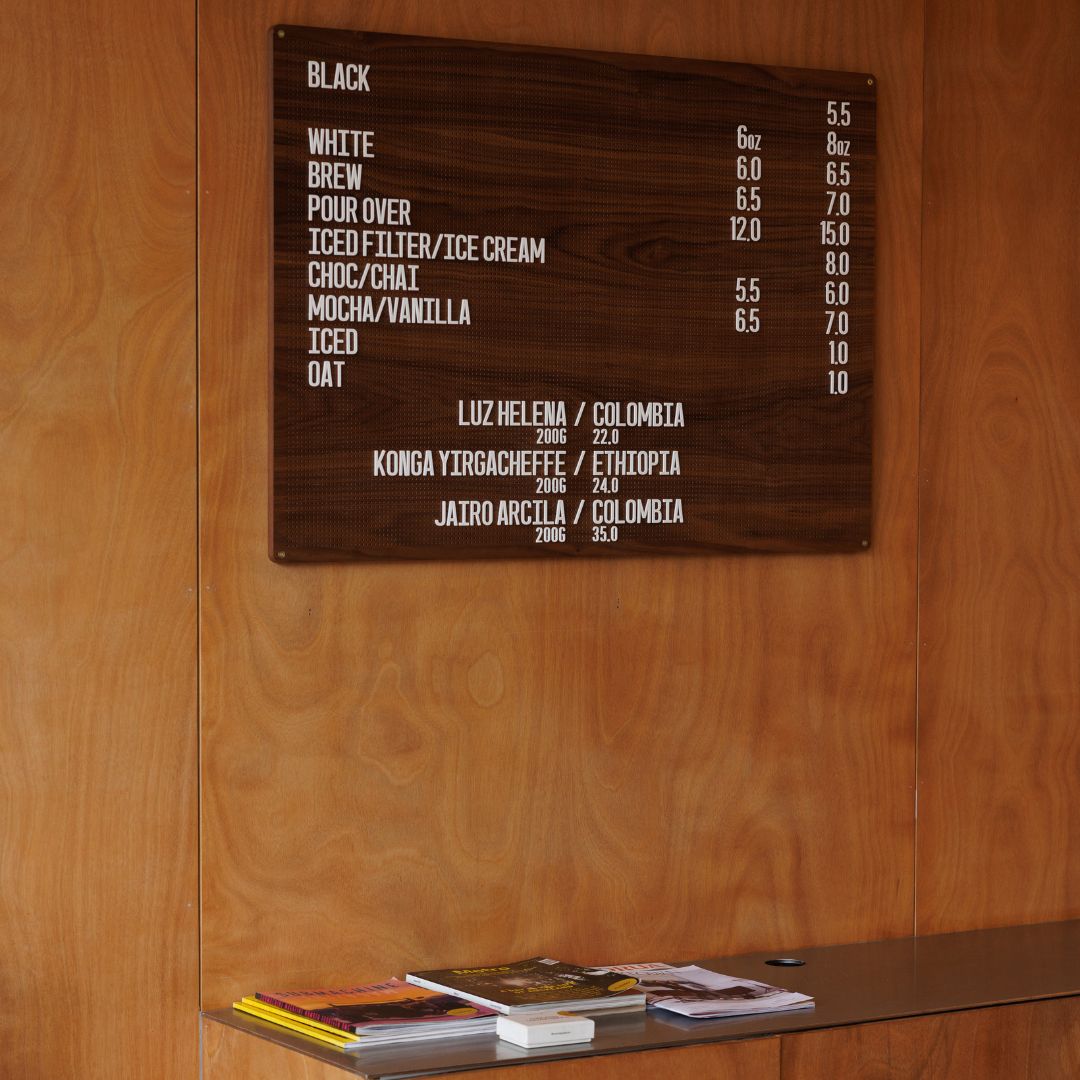
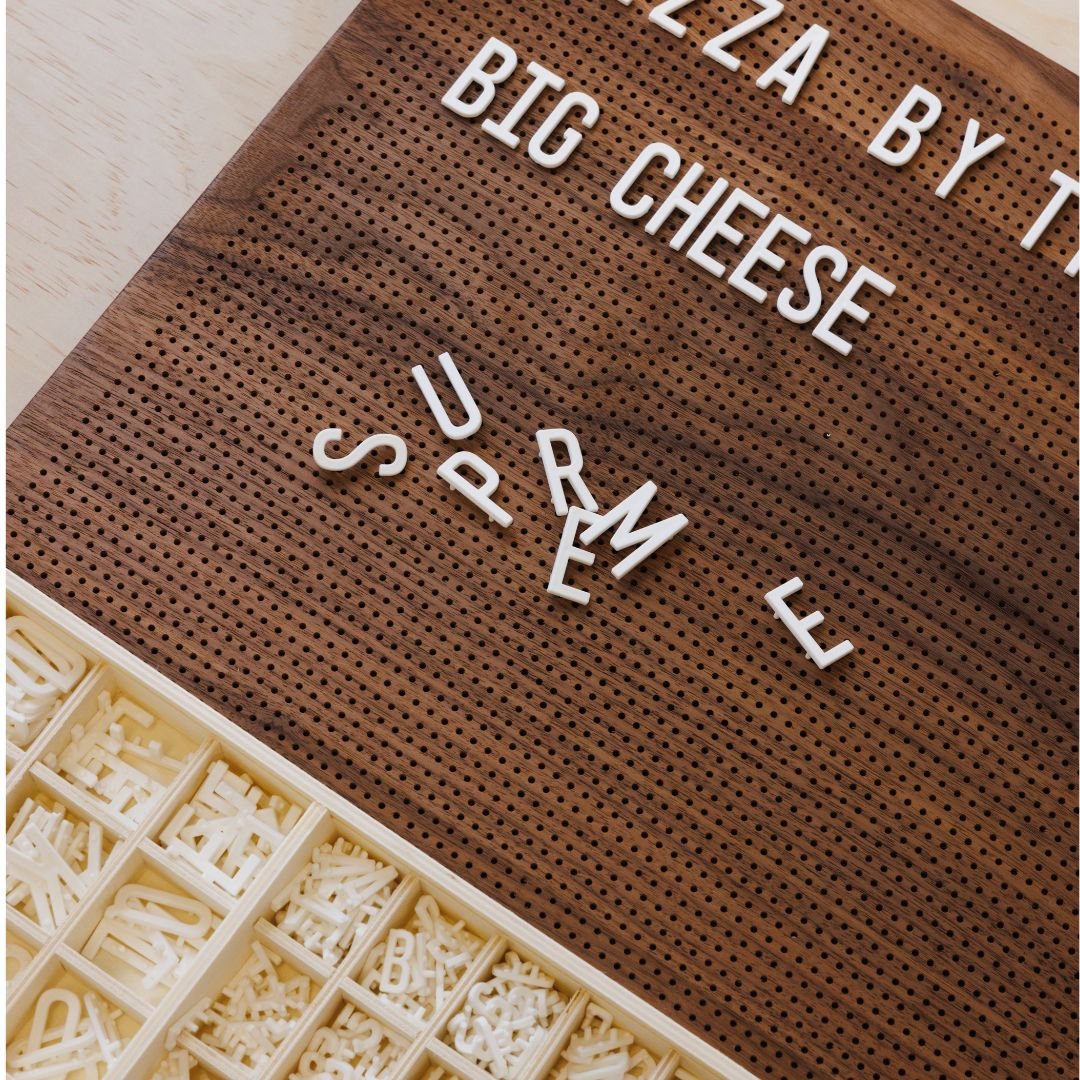
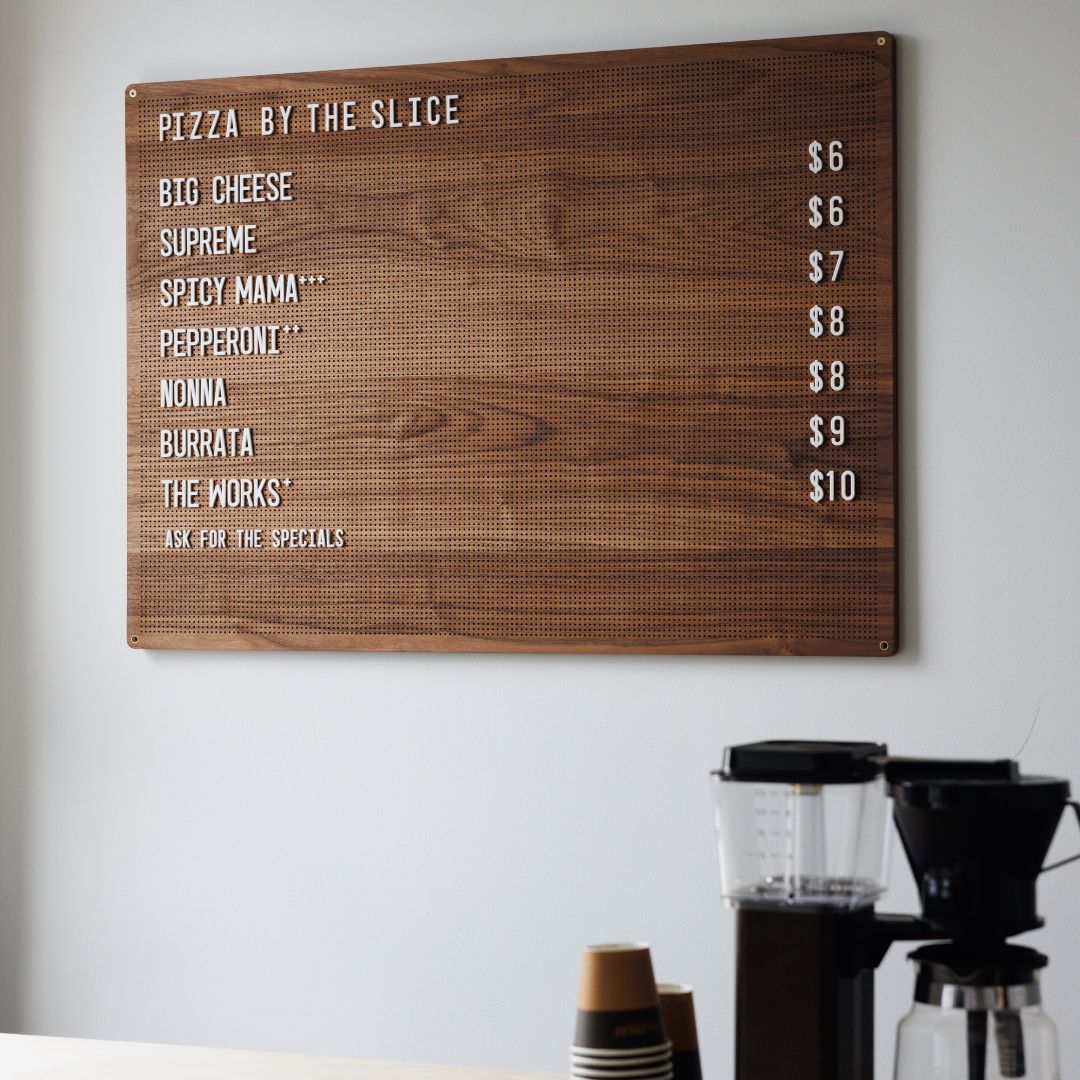
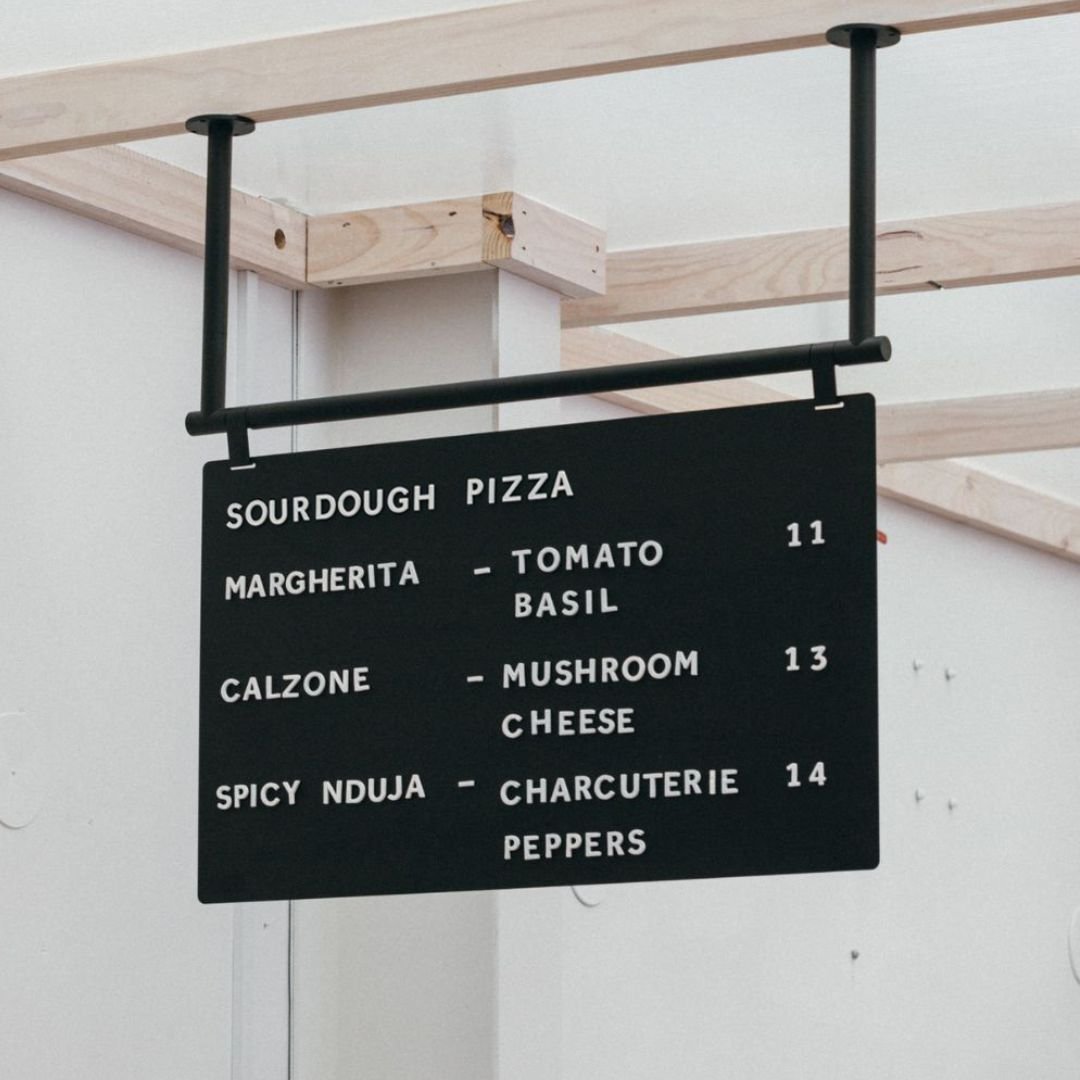
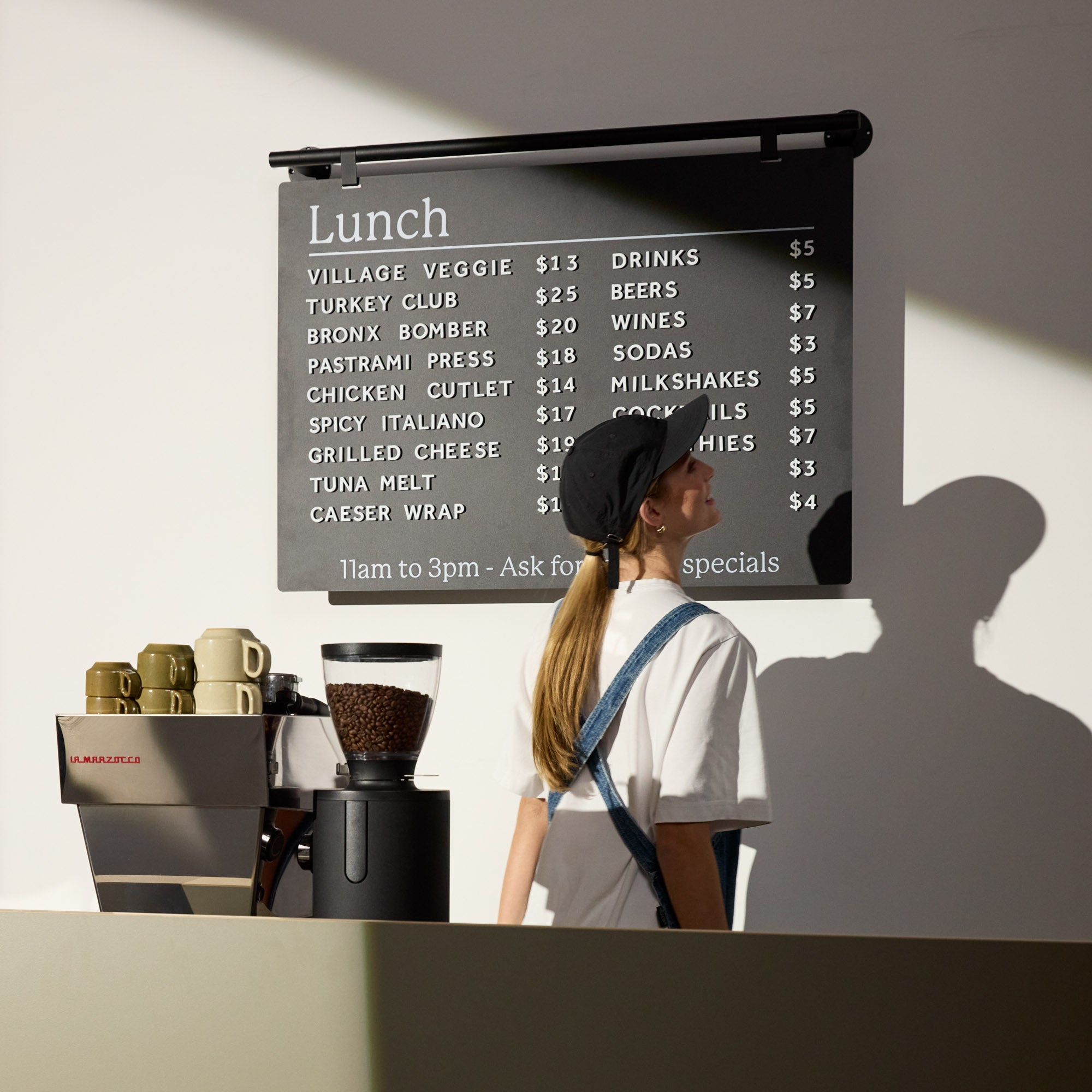
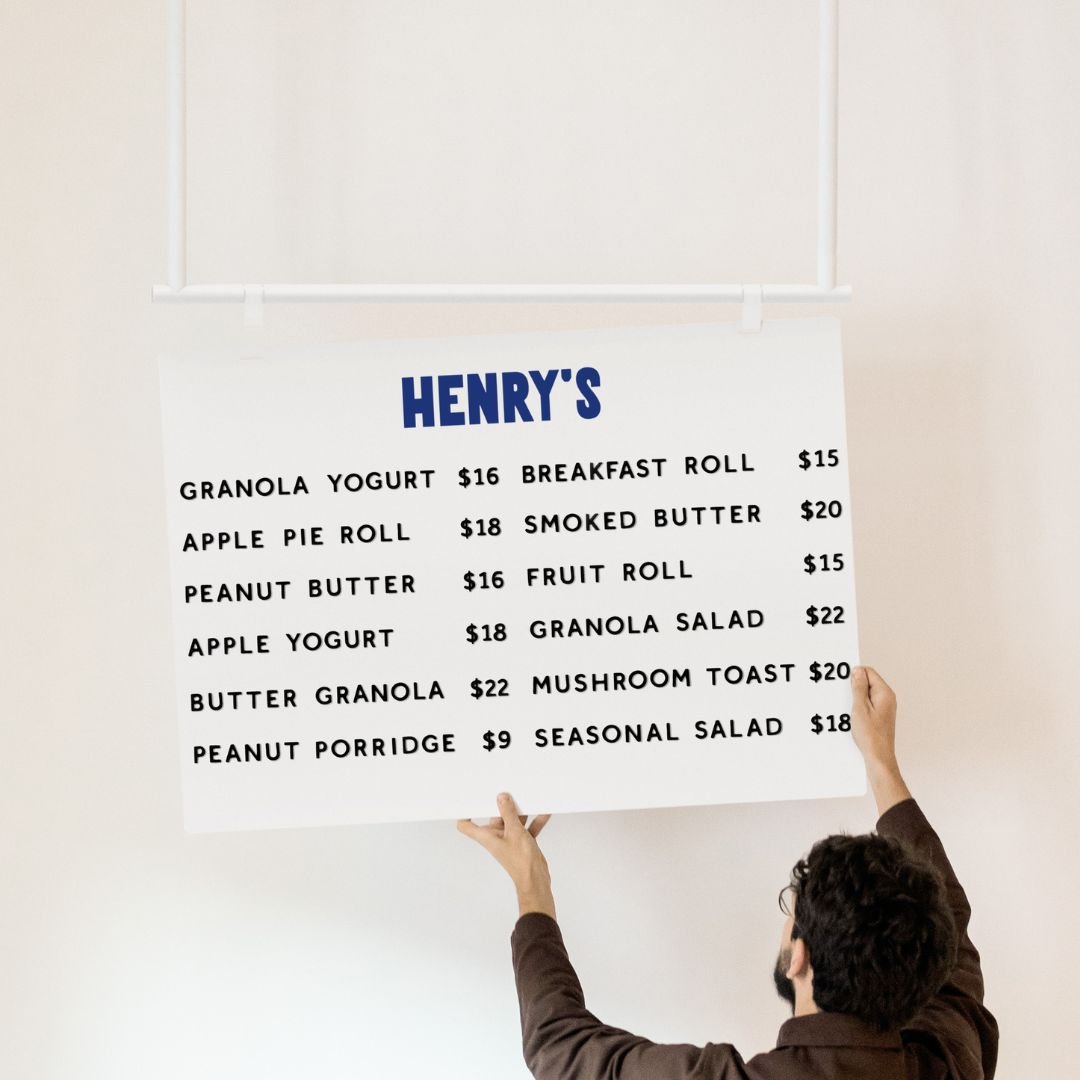
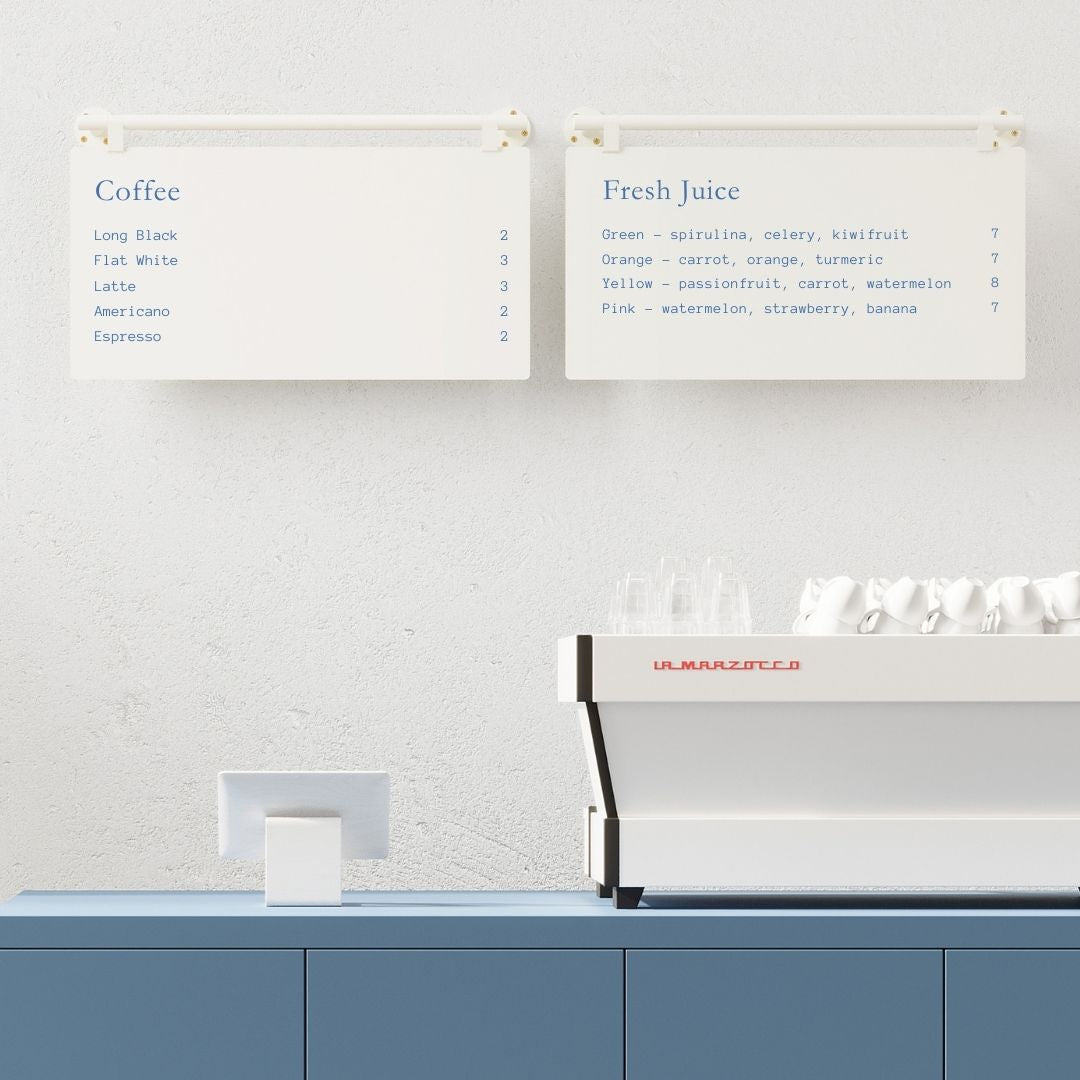
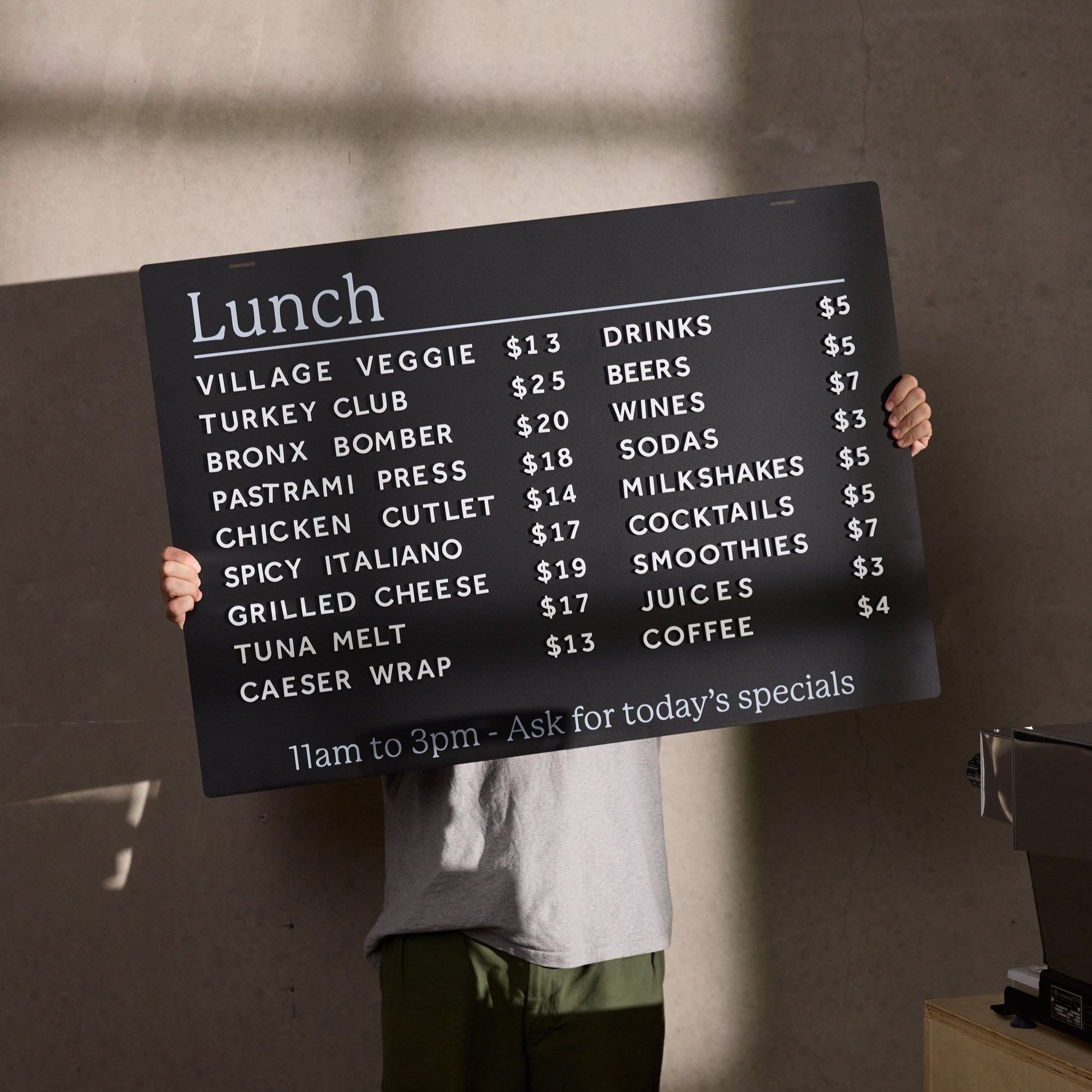
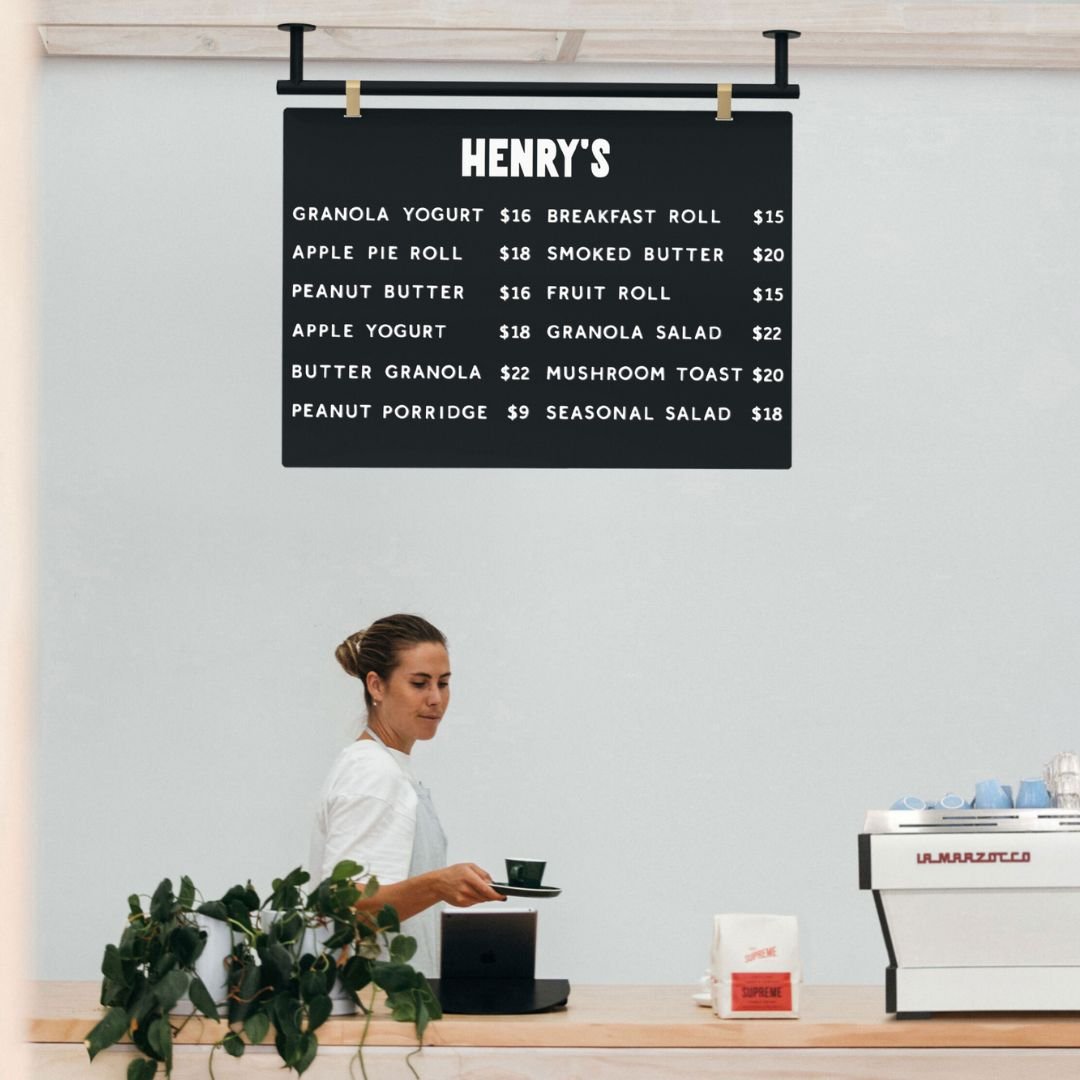
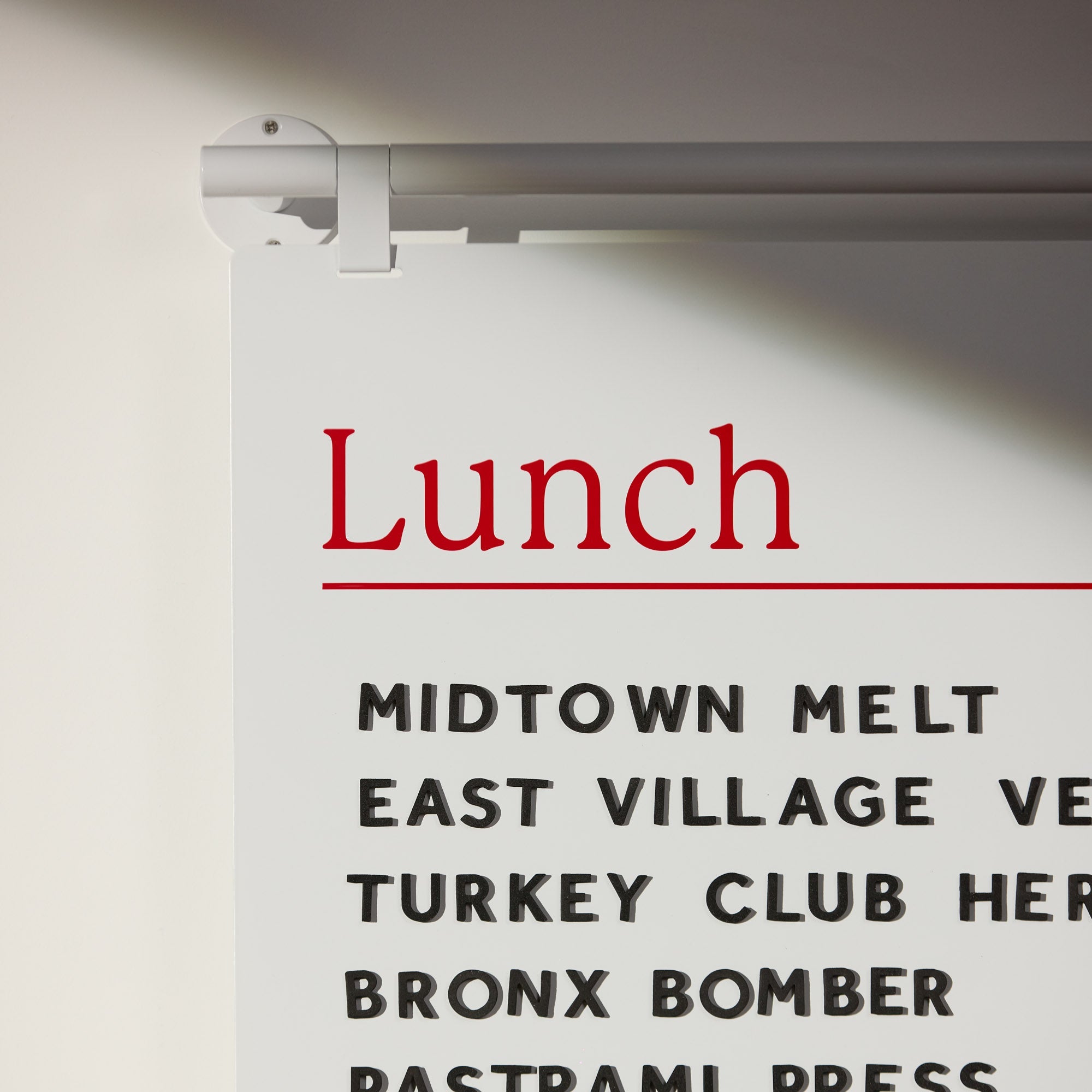
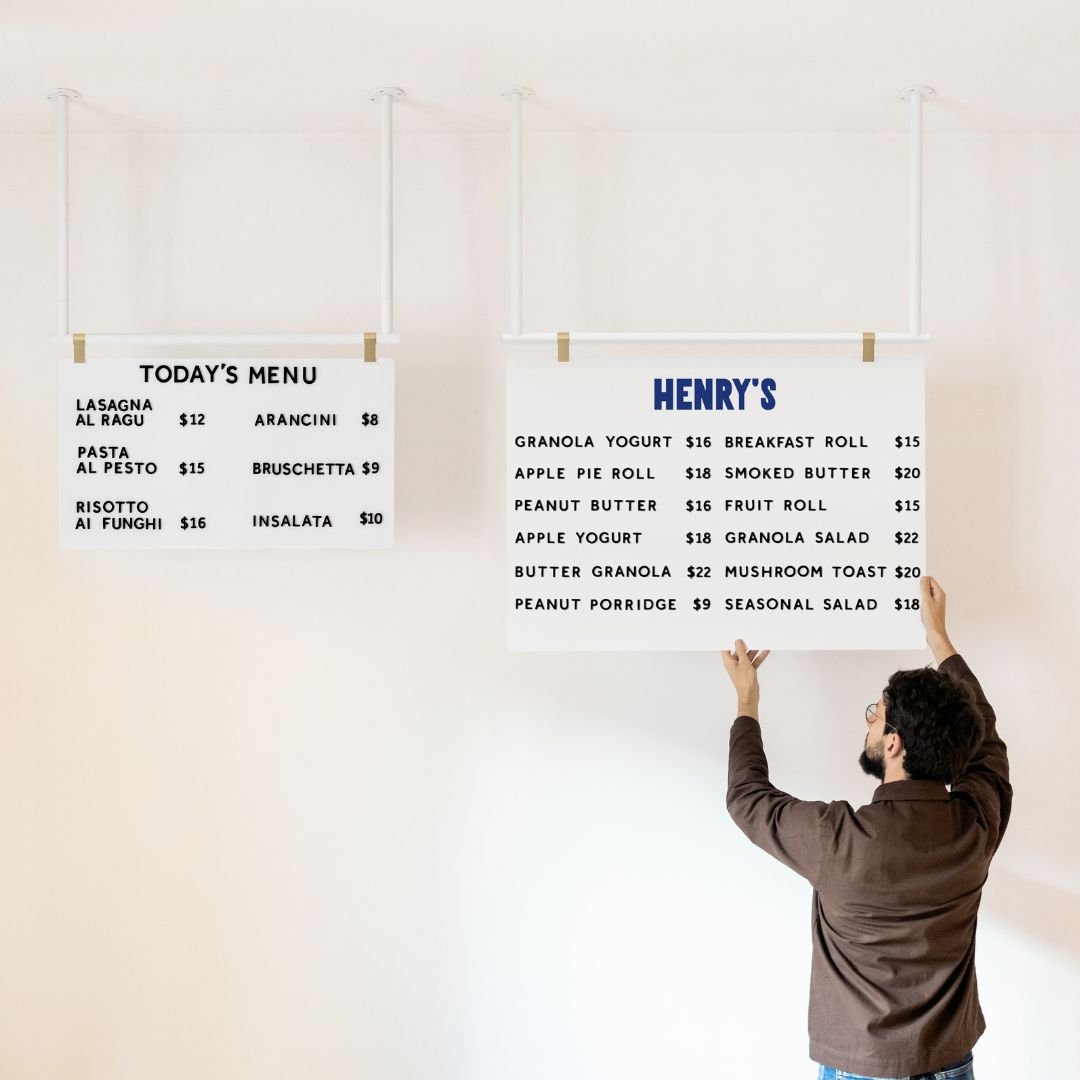
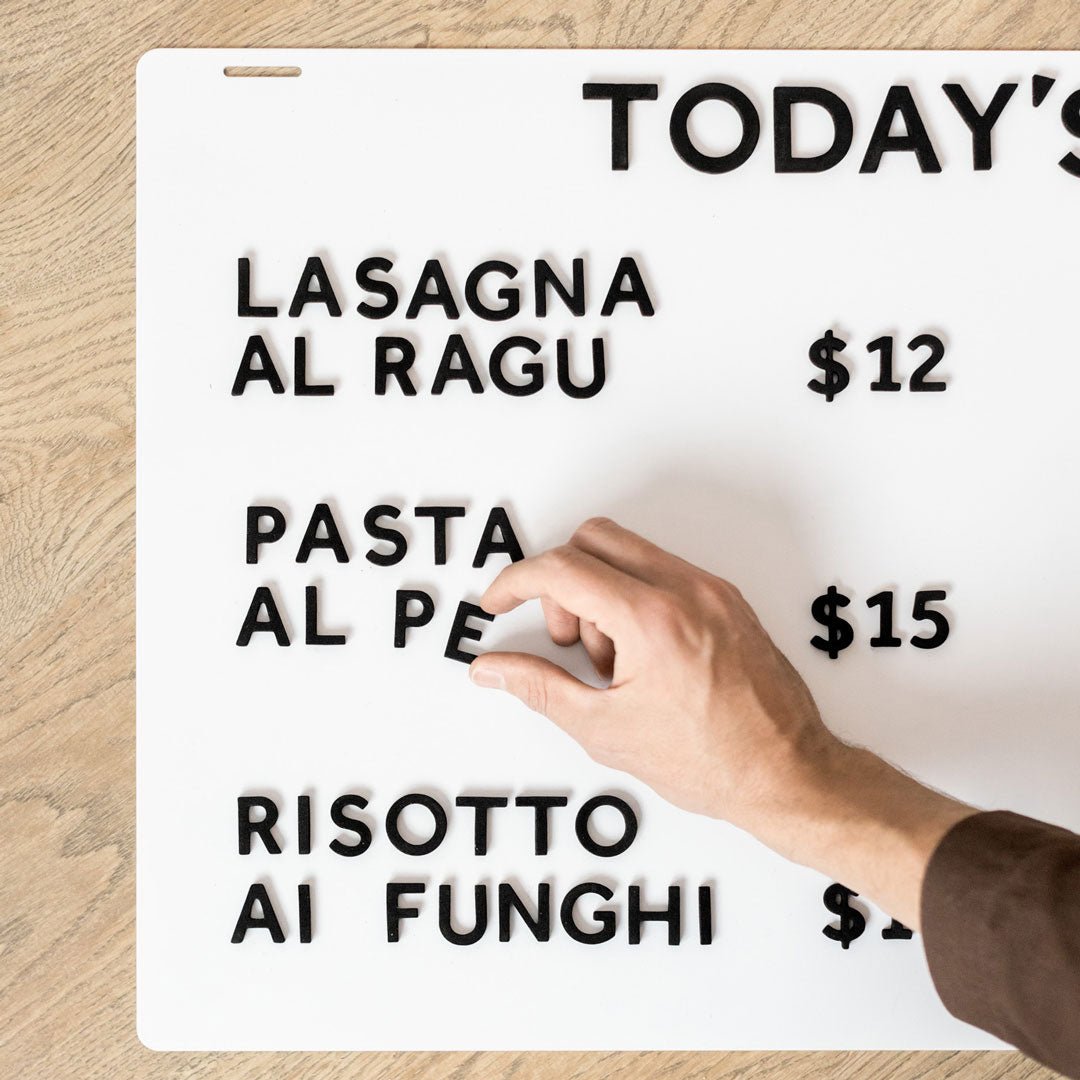
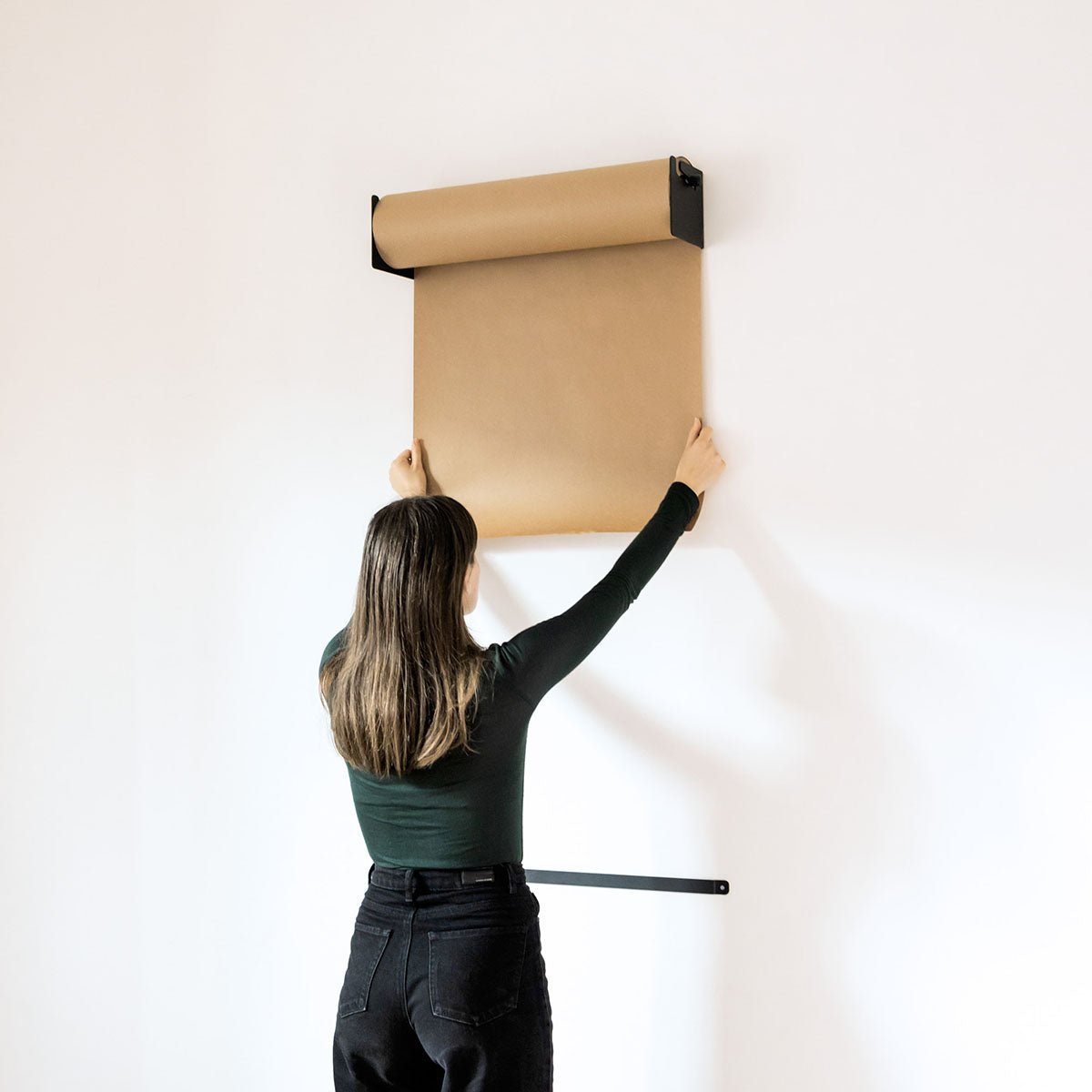
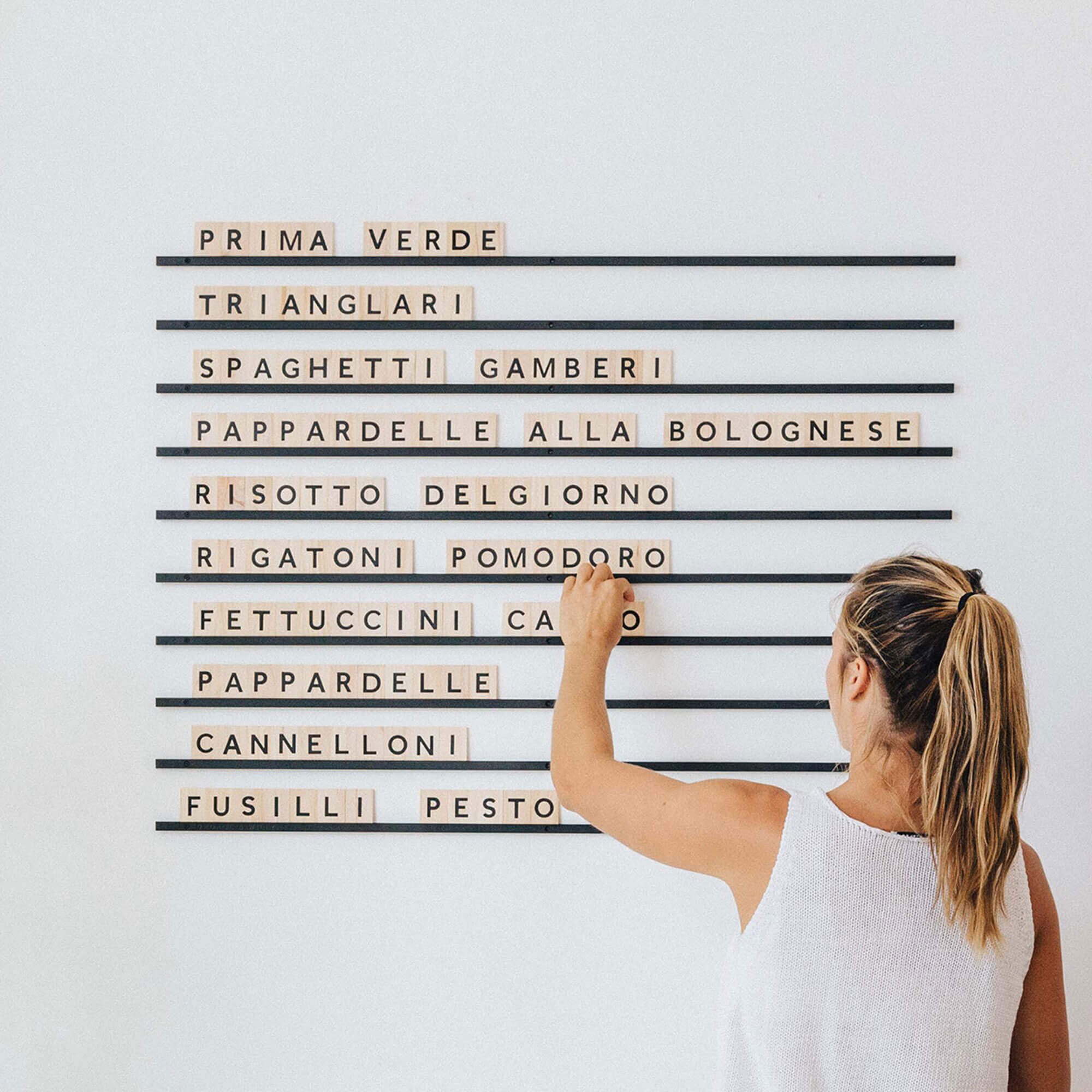
- Menu Boards: Essential for cafés and restaurants. Easy update systems like a Magnetic Menu Board speed up daily changes. A Ceiling Menu Board can keep information visible without crowding wall space.
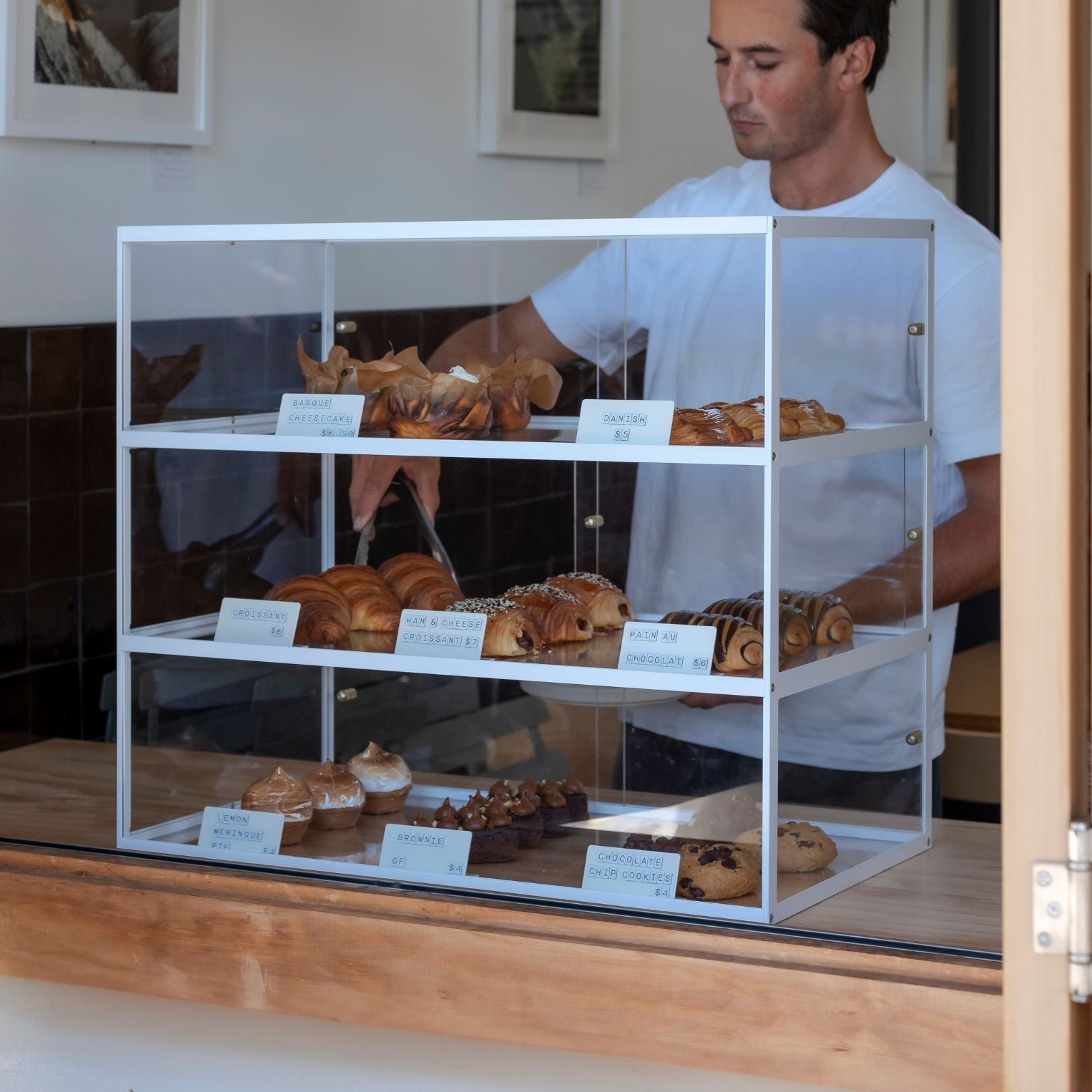
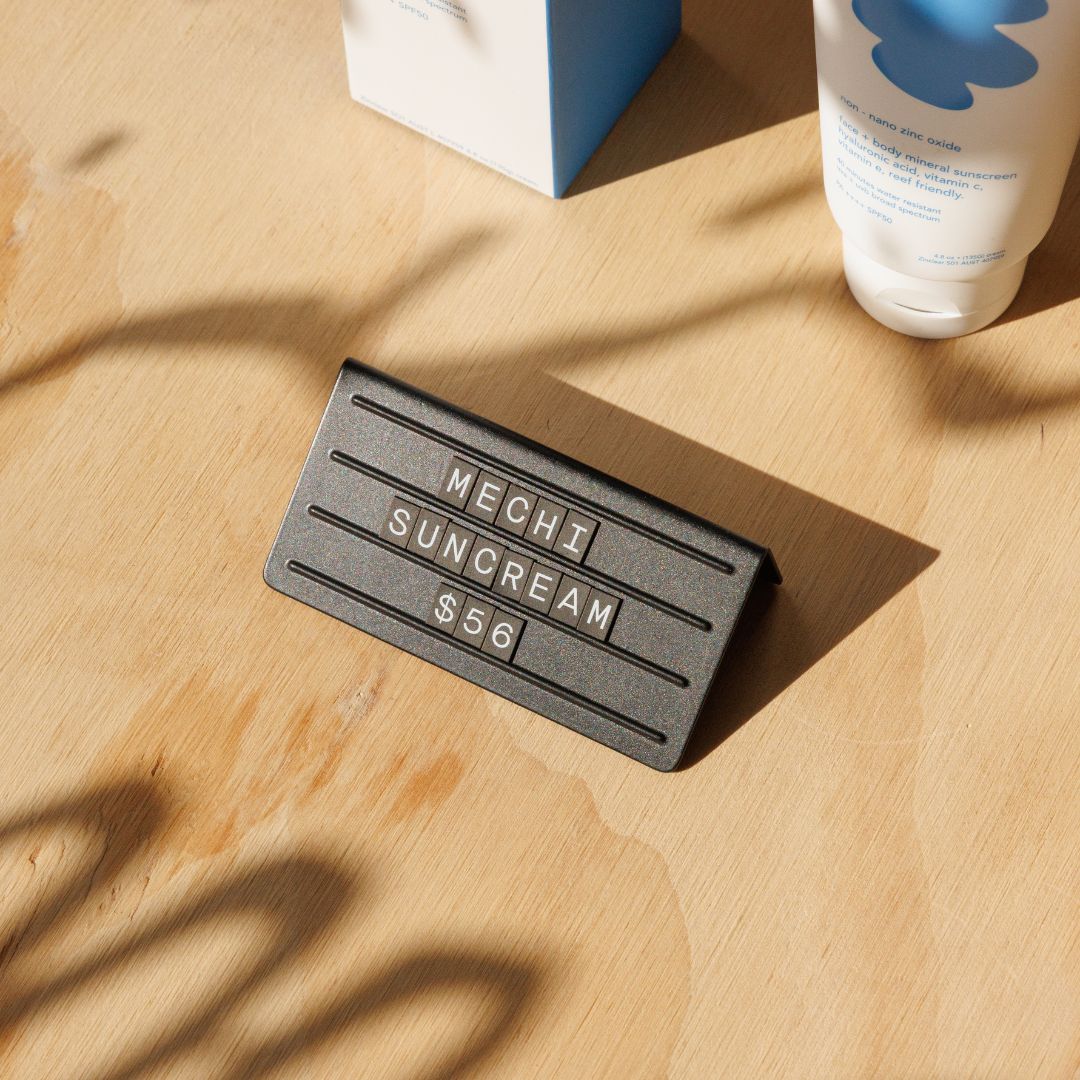
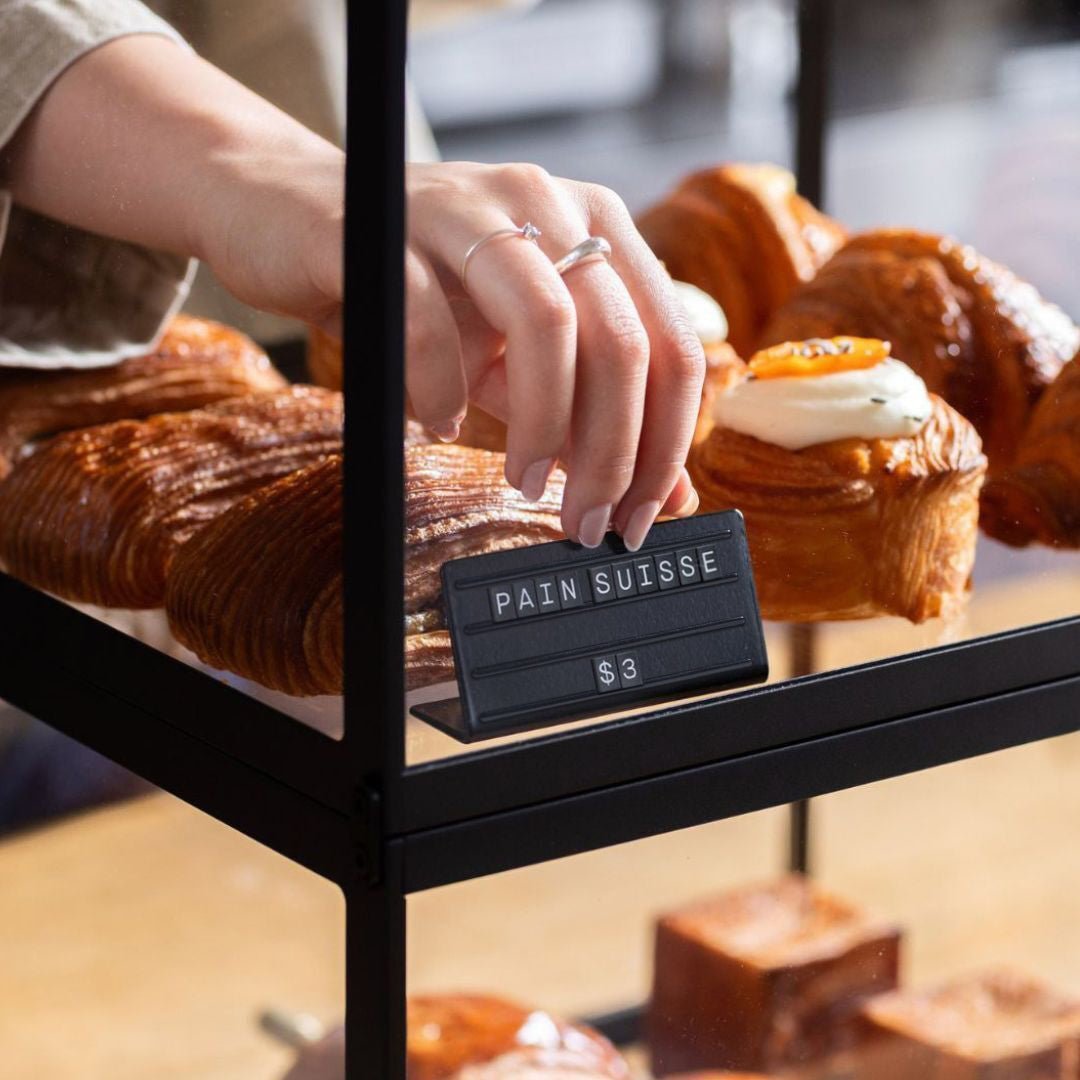
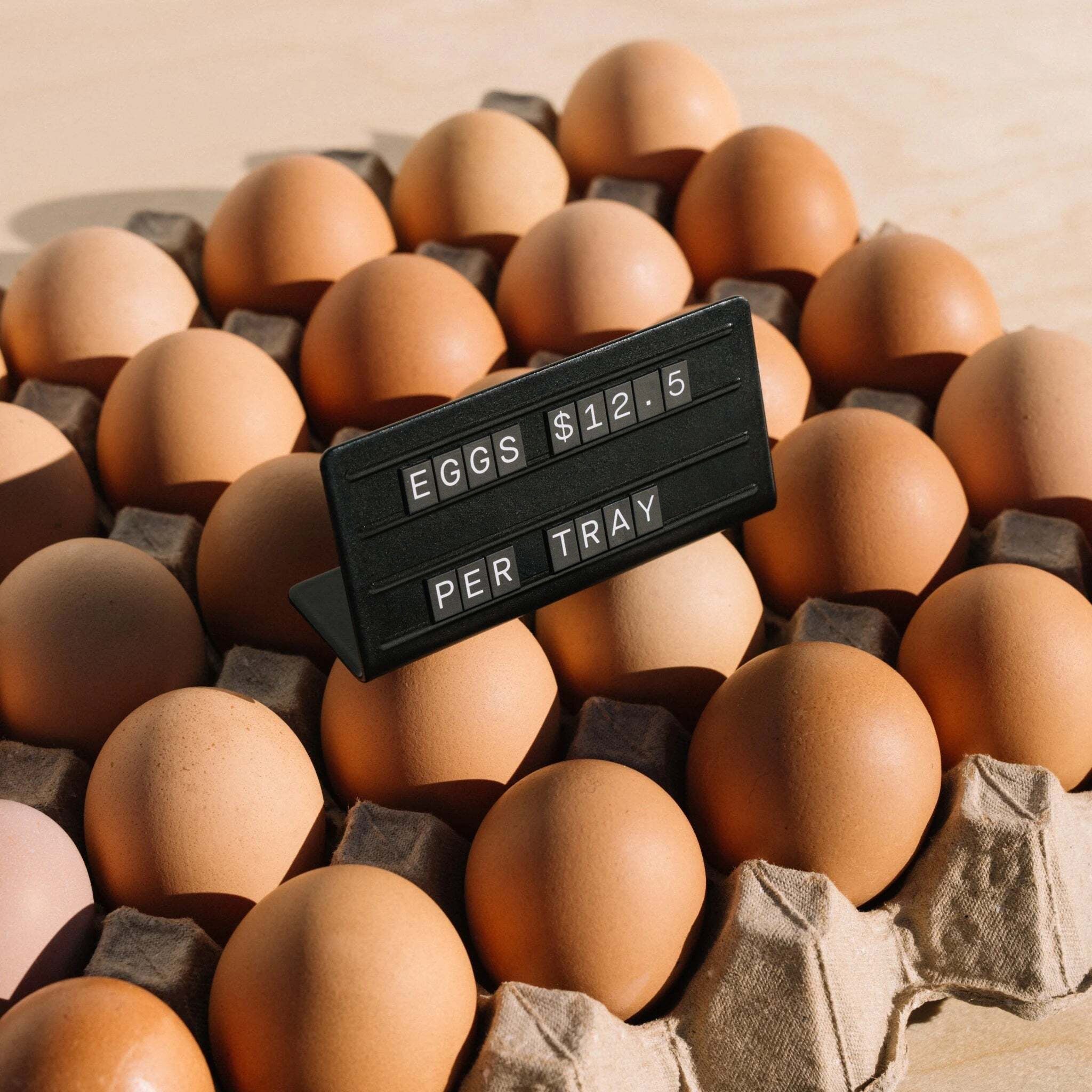
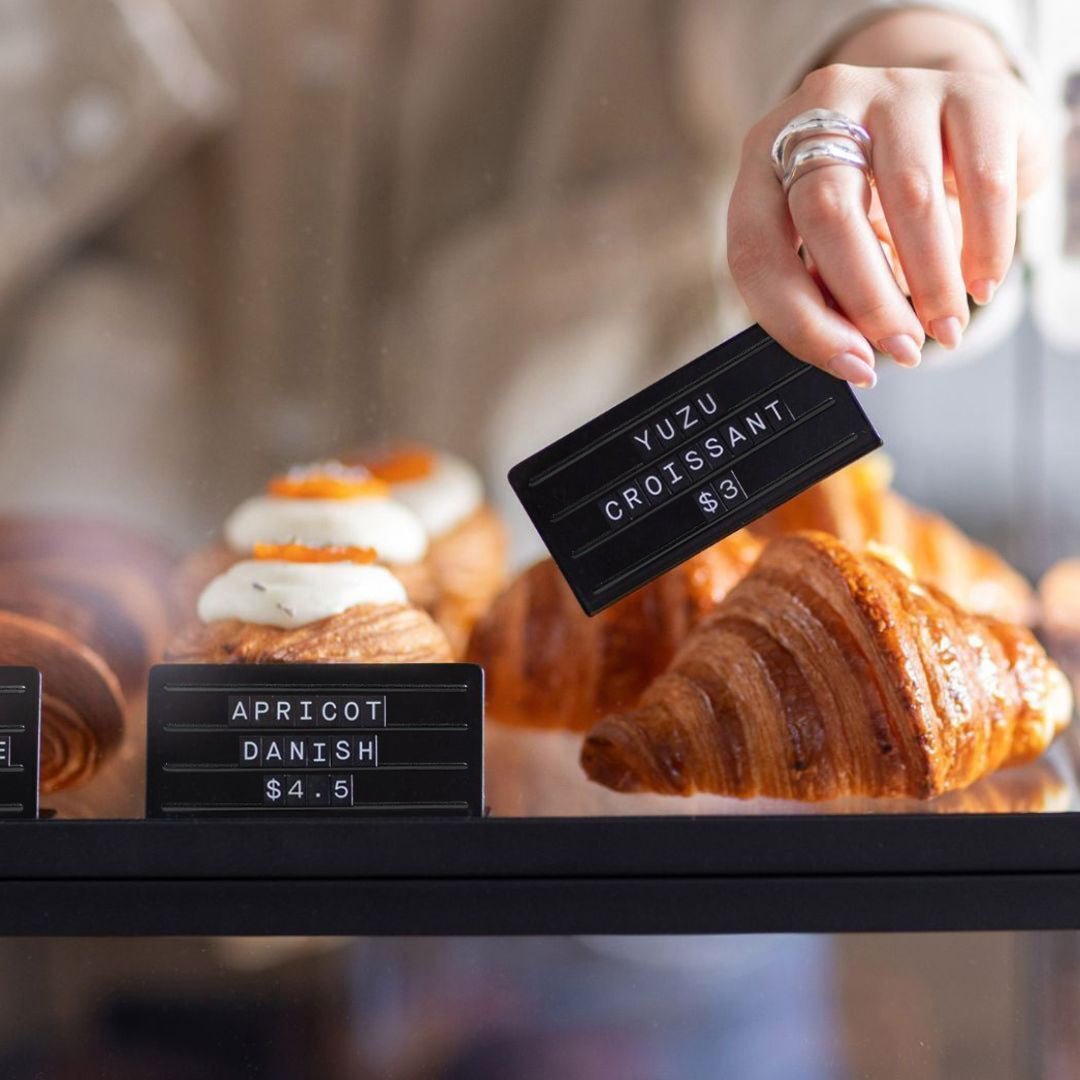
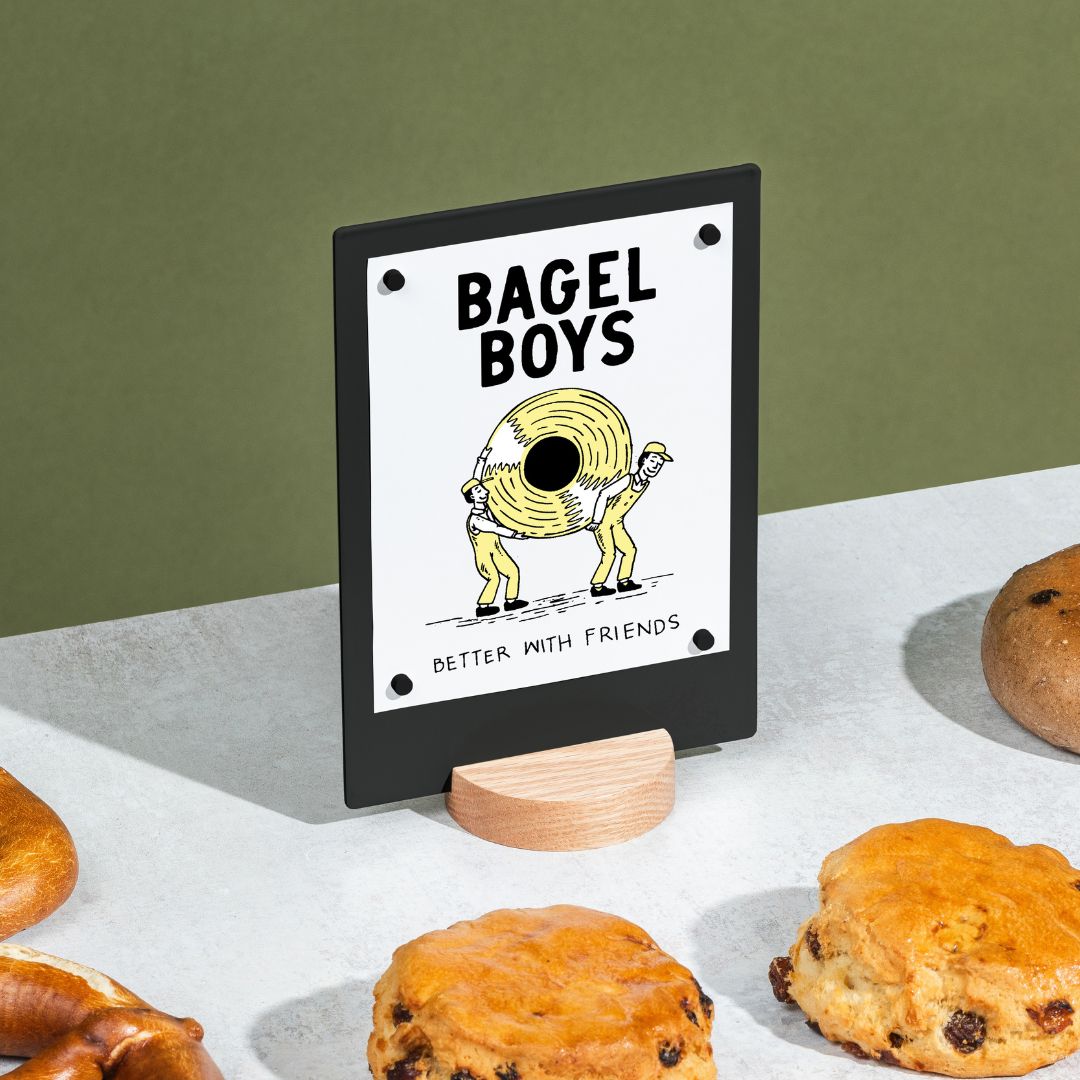
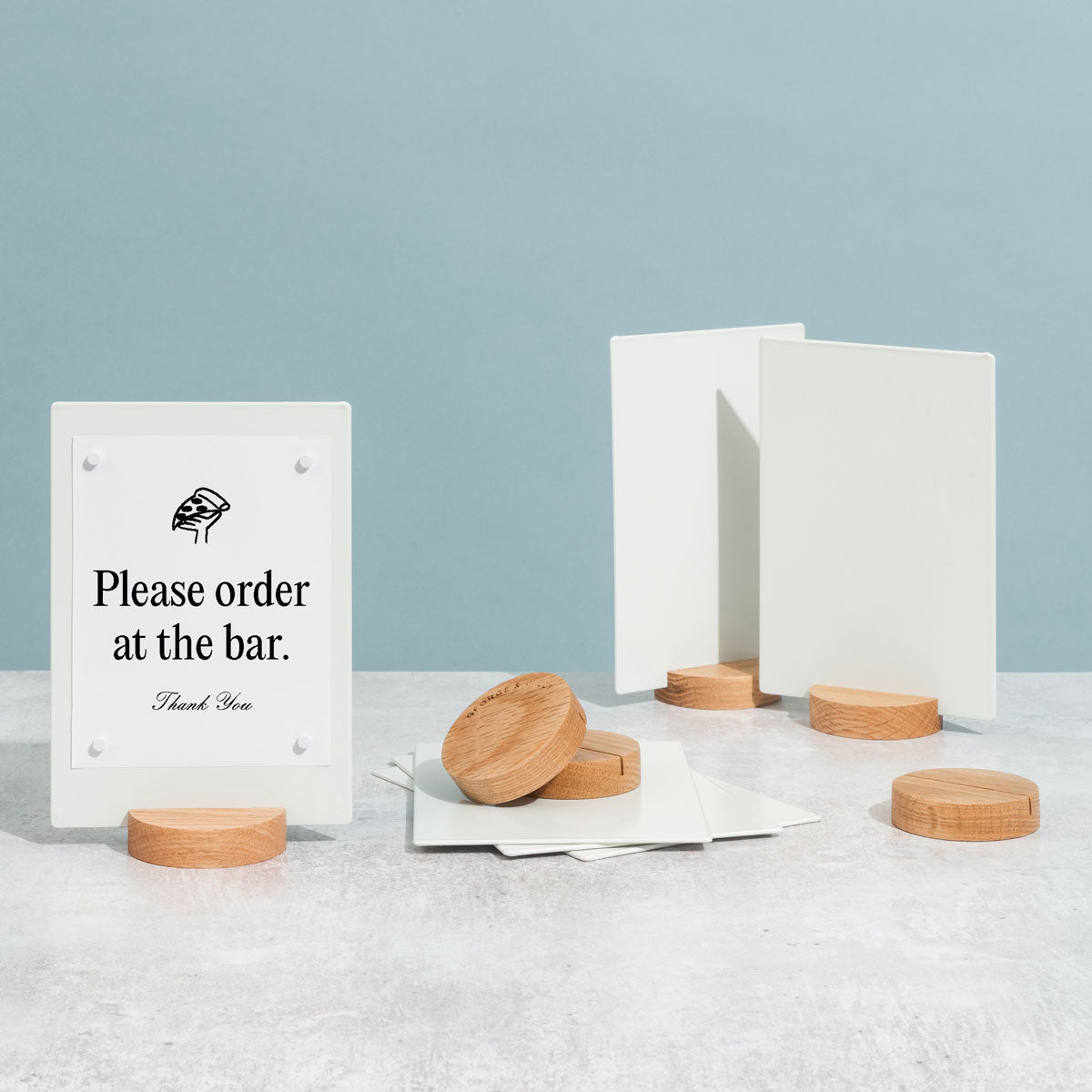
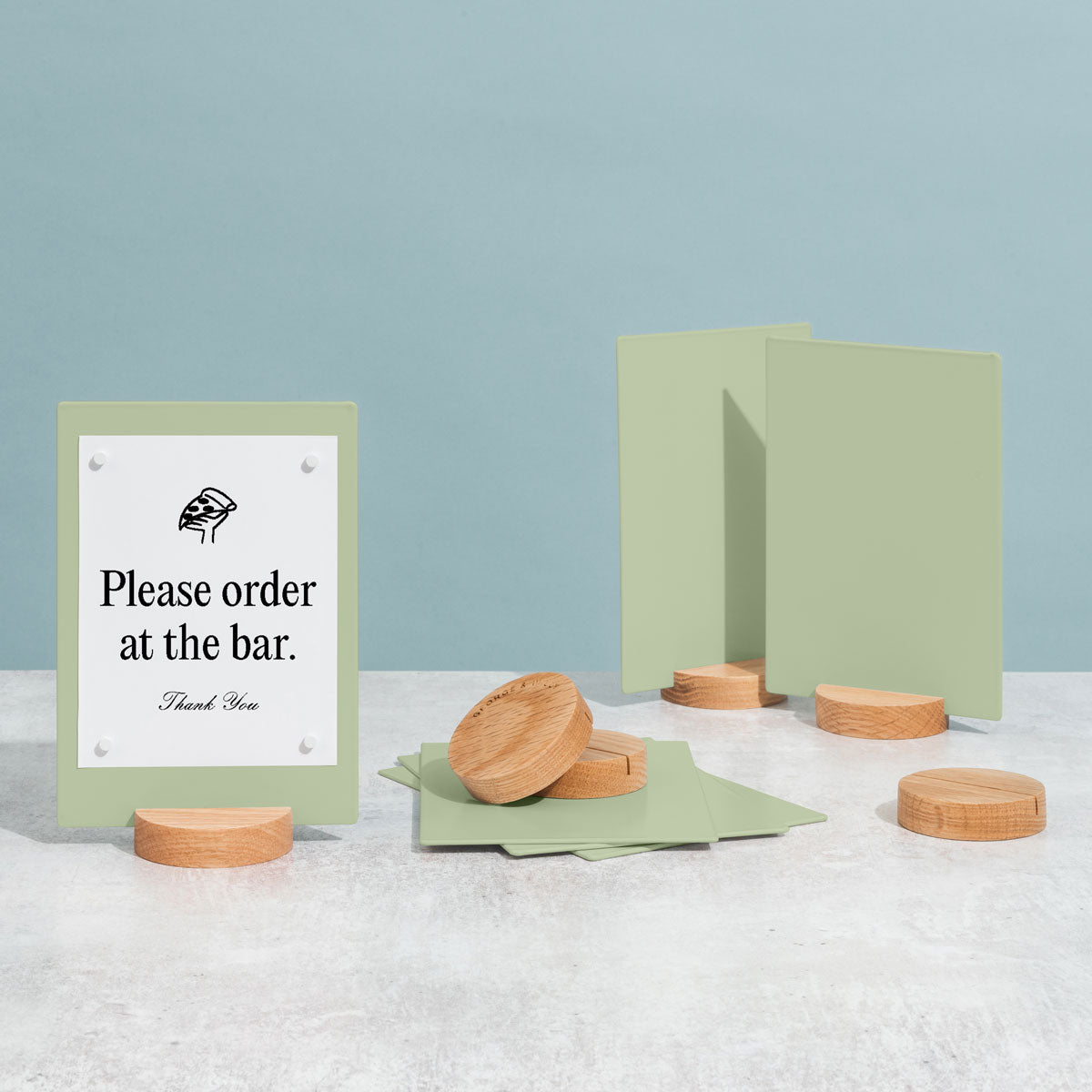
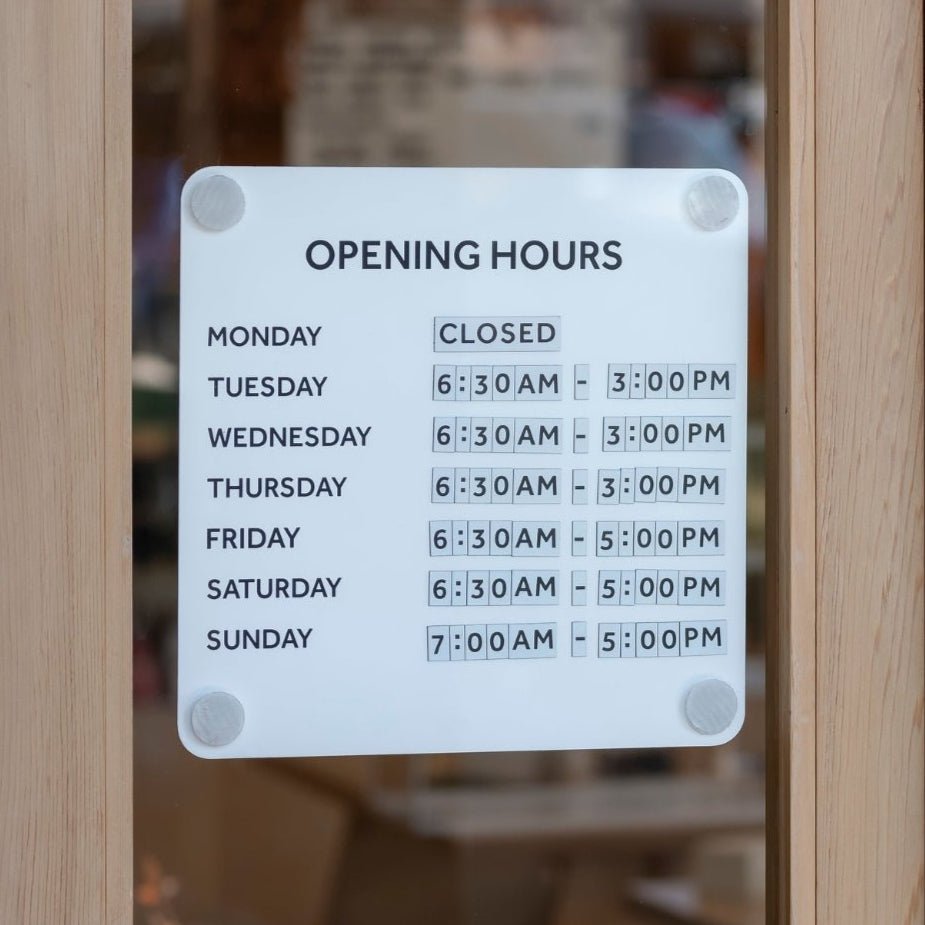
- Countertop Signs: Share Wi Fi, payment options, or promos without clutter. Simple Counter Signs keep your point of sale tidy and informative.
- Wayfinding: Clear pointers to restrooms, exits, or departments keep traffic flowing and reduce staff interruptions.
Other Common Sign Types
While durable signs are an investment, sometimes you need a different solution for temporary or specific needs. These are often sourced from local print shops:
- Vinyl Banners: A cost effective choice for grand openings, event promotions, or temporary sales. They are lightweight and weather resistant for short term outdoor use.
- Acrylic Signs: Offer a modern, glossy finish for lobby signs, logos, and directional signage. They are durable indoors but can be more fragile than metal outdoors.
- Foam Board Signs: Very lightweight and affordable, making them perfect for temporary indoor displays, presentations, or event signage.
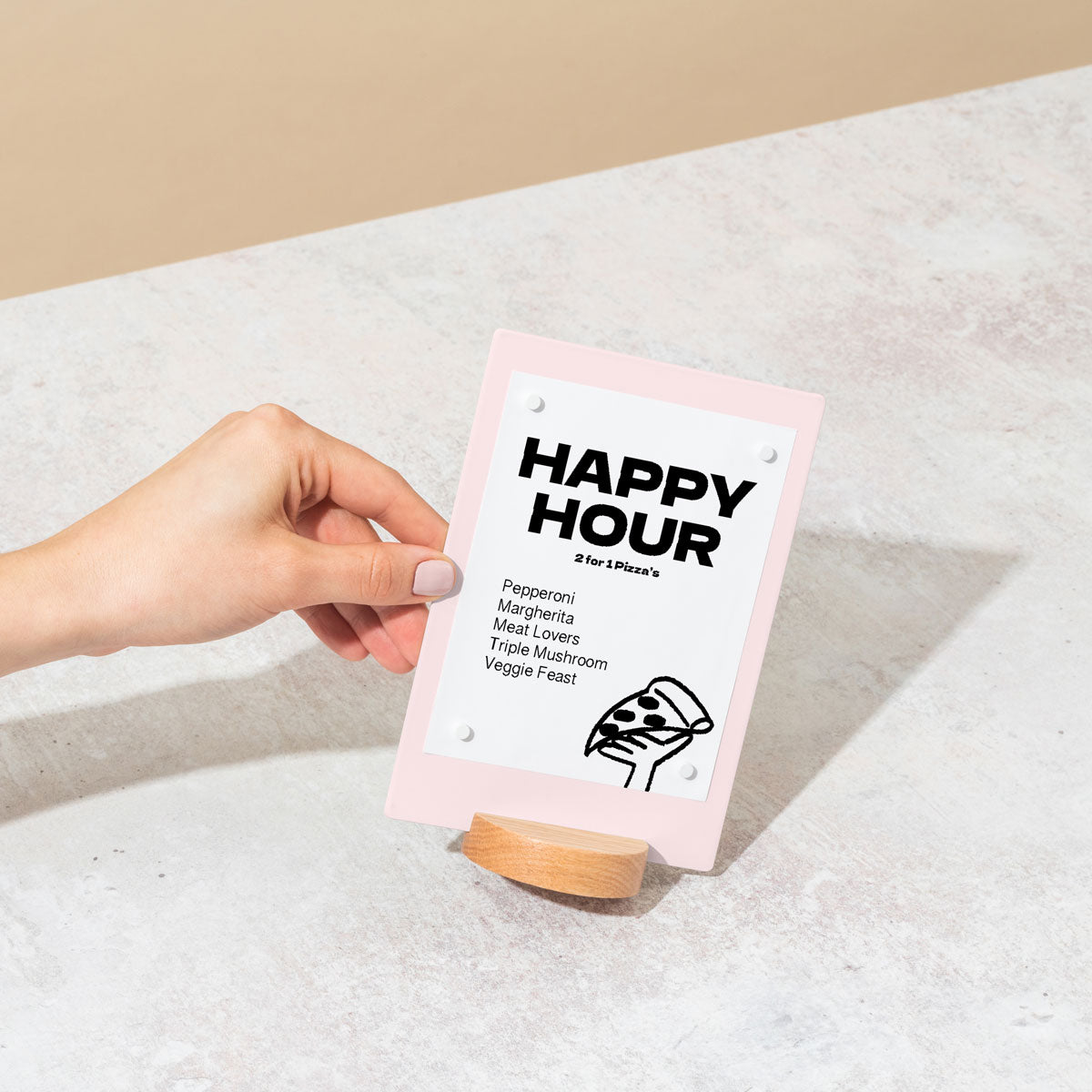
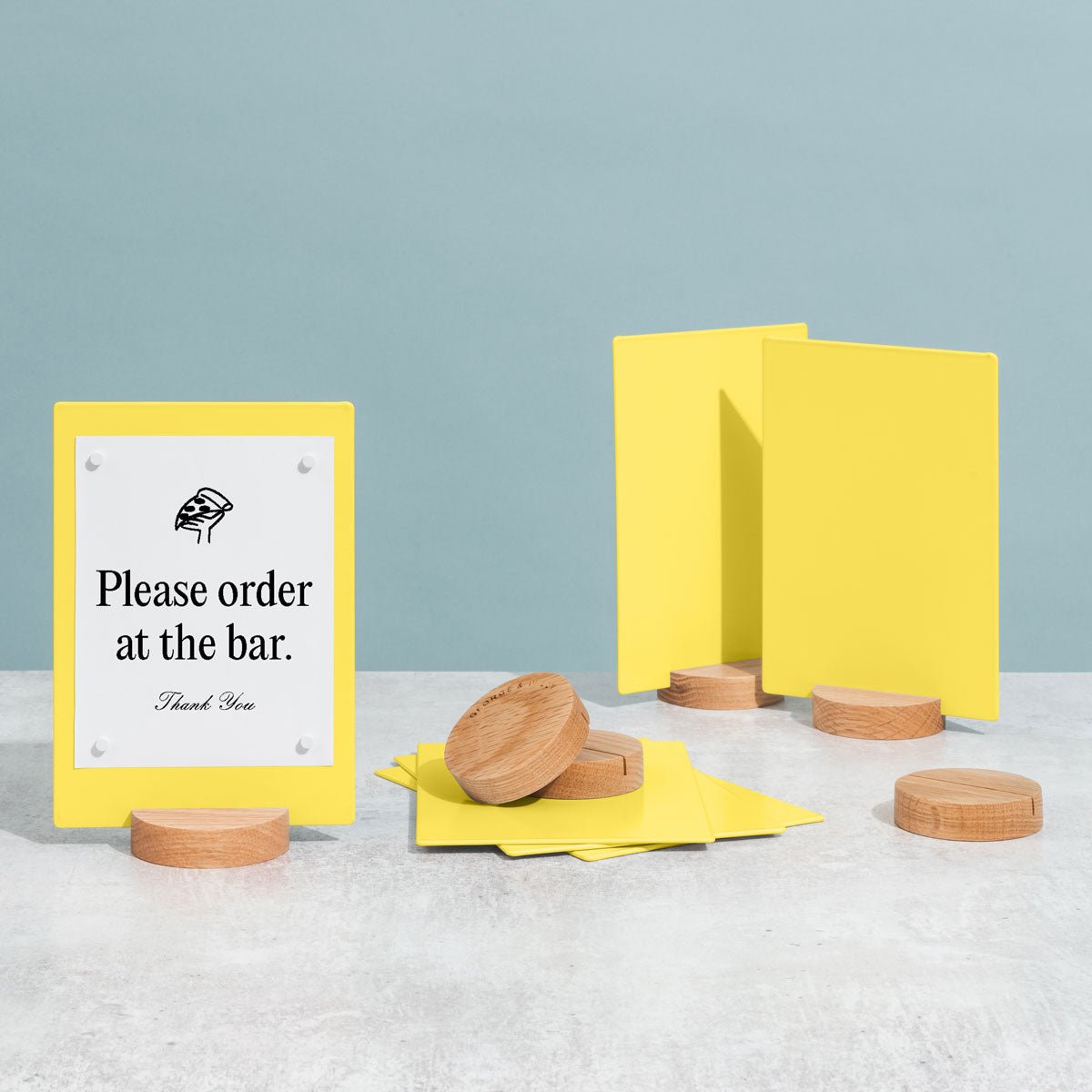
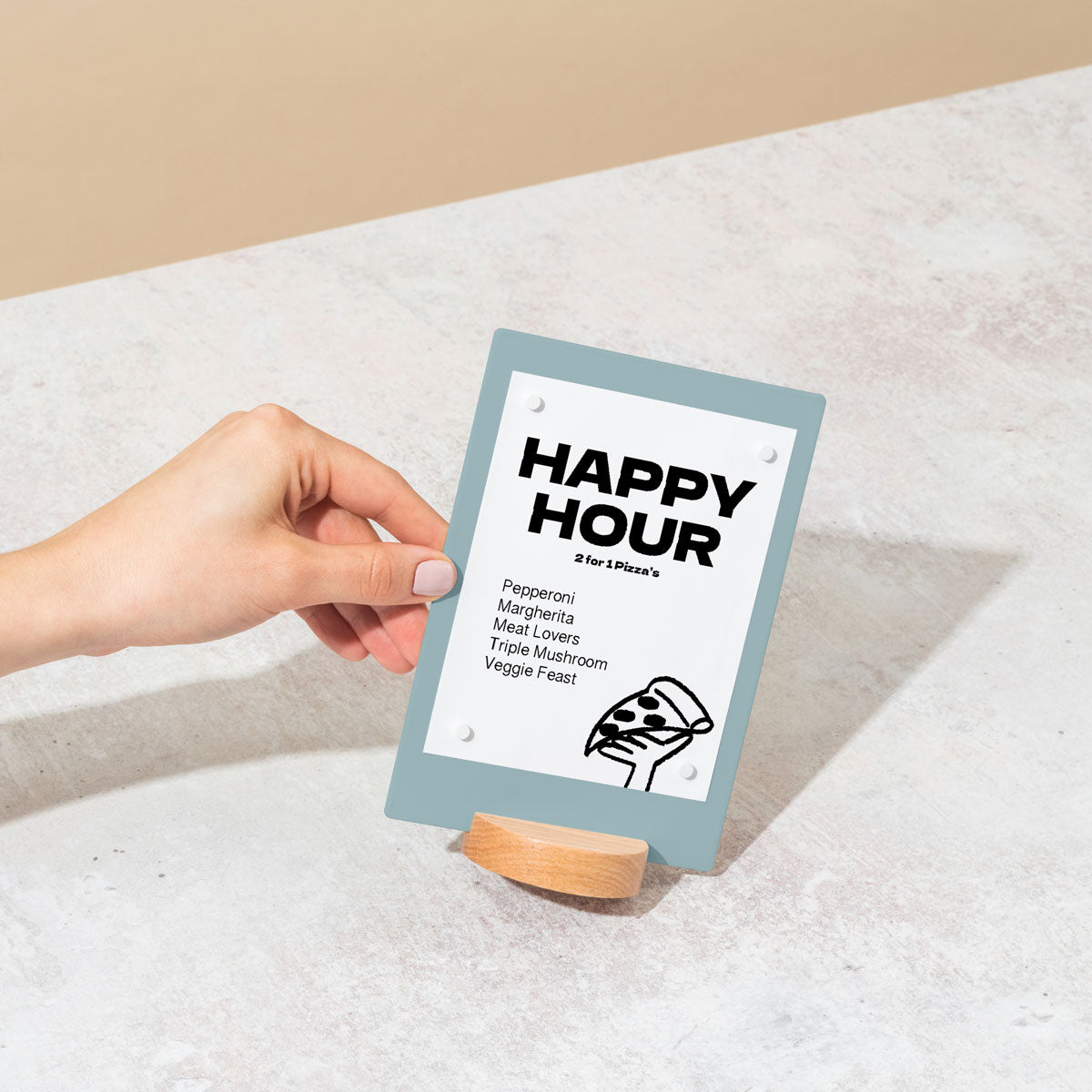
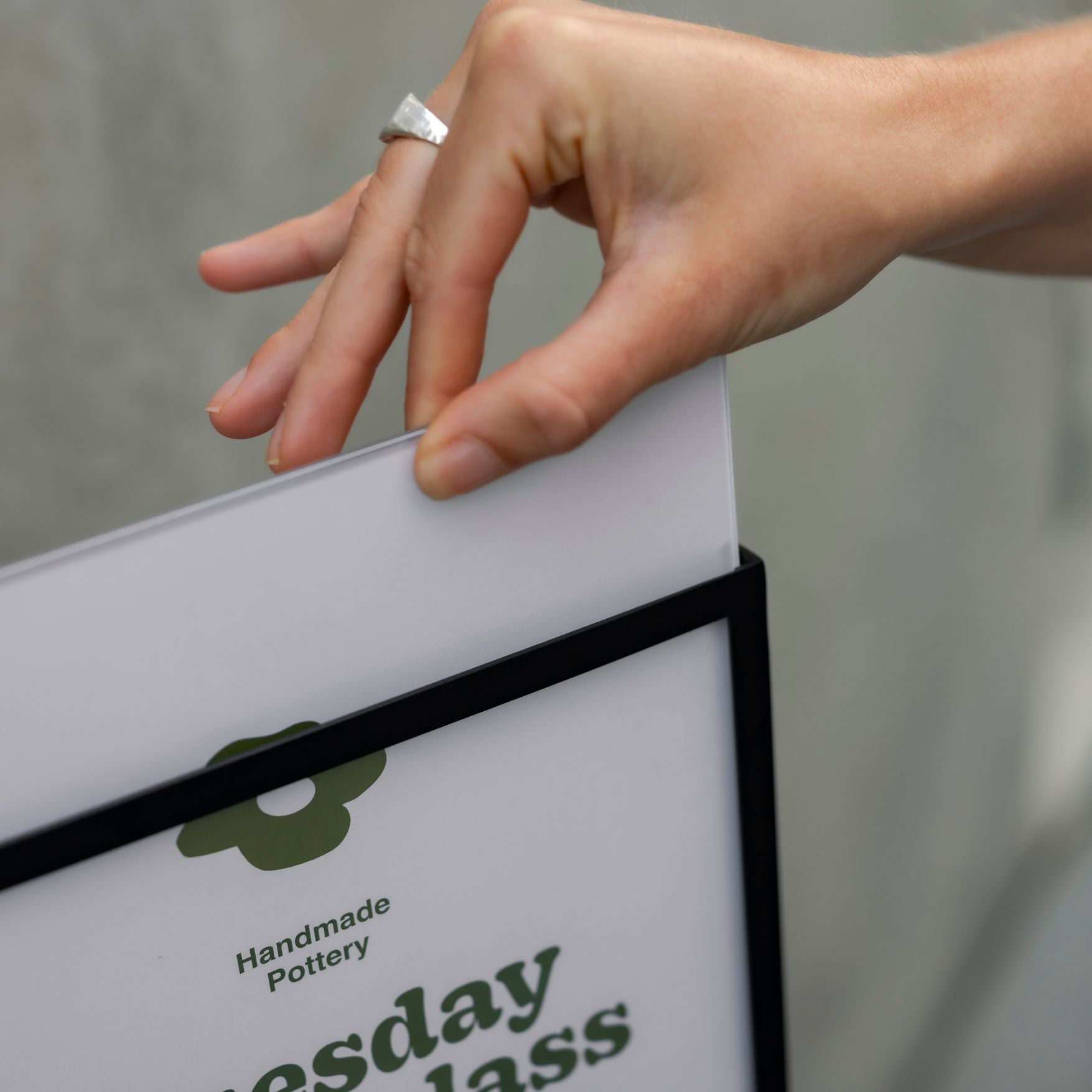
- Posters: A simple and effective way to promote events or specials inside. Pairing a poster with a quality holder elevates the presentation.
- Wall Graphics: Custom vinyl decals that apply directly to a wall, transforming an entire surface into a branded message or mural.
The Design Process: Key Elements for Success
A great sign starts with a thoughtful design, a crucial step when you order a custom sign. Focus on clarity, branding, and creating a piece that lasts.
Make It Legible
Readability is non negotiable. Use clean typefaces, high contrast colors, and concise copy. Your message needs to be understood in a single glance from the intended viewing distance.
Ensure Brand Consistency
Align the color, logo, and style of your sign with your overall brand identity. Consistent branding increases recognition and can lift revenue substantially by building a cohesive customer experience.
Design Templates vs. Uploading Your Own
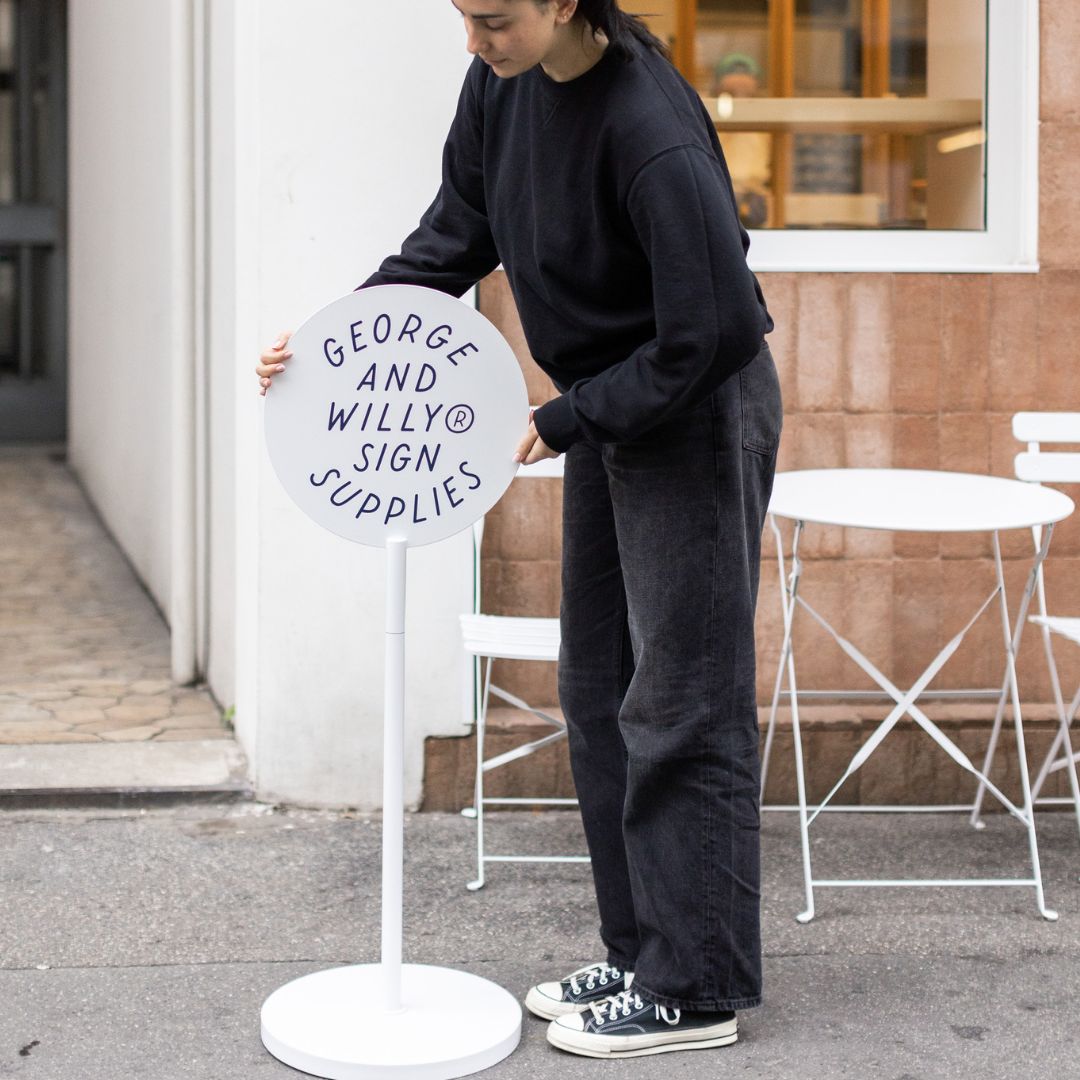
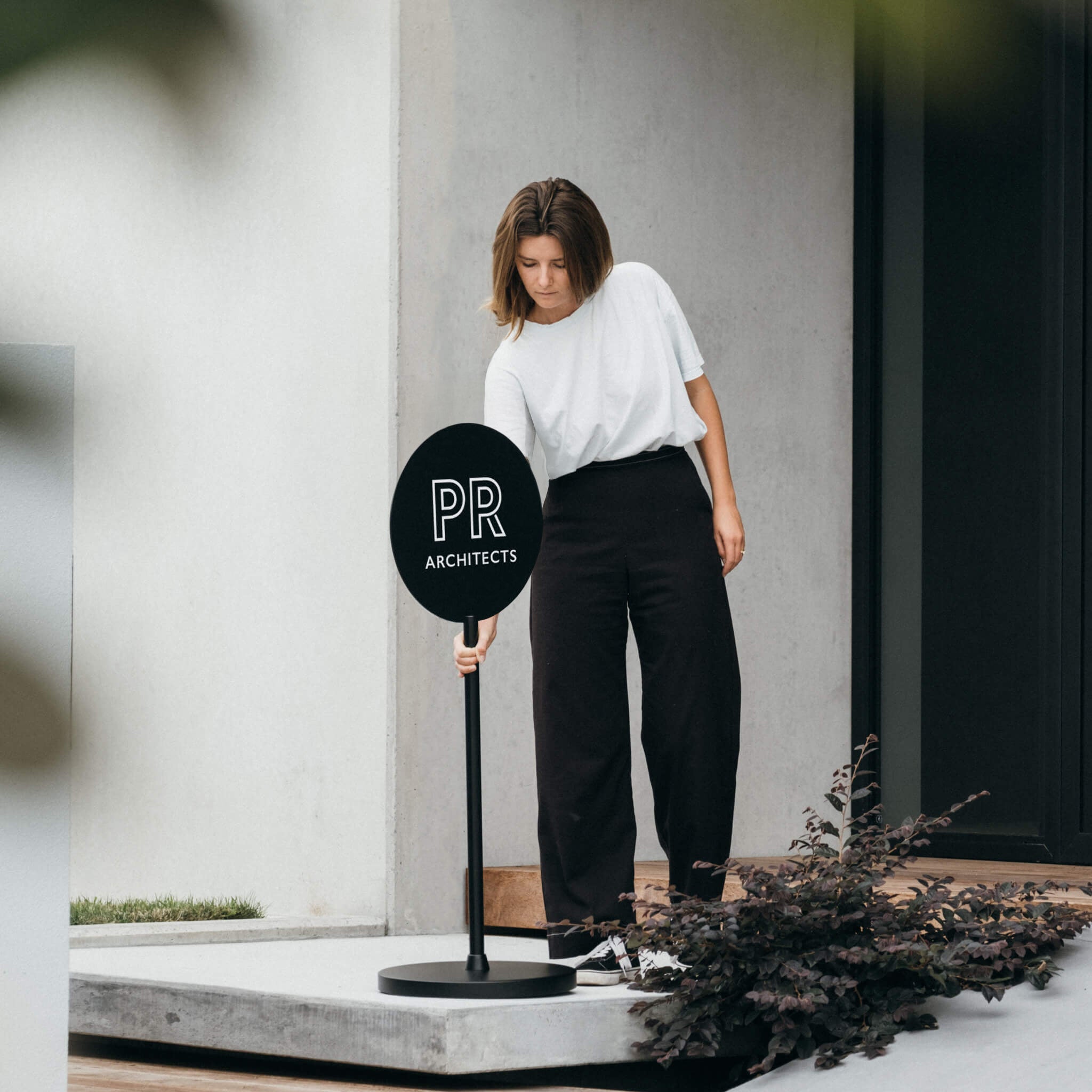
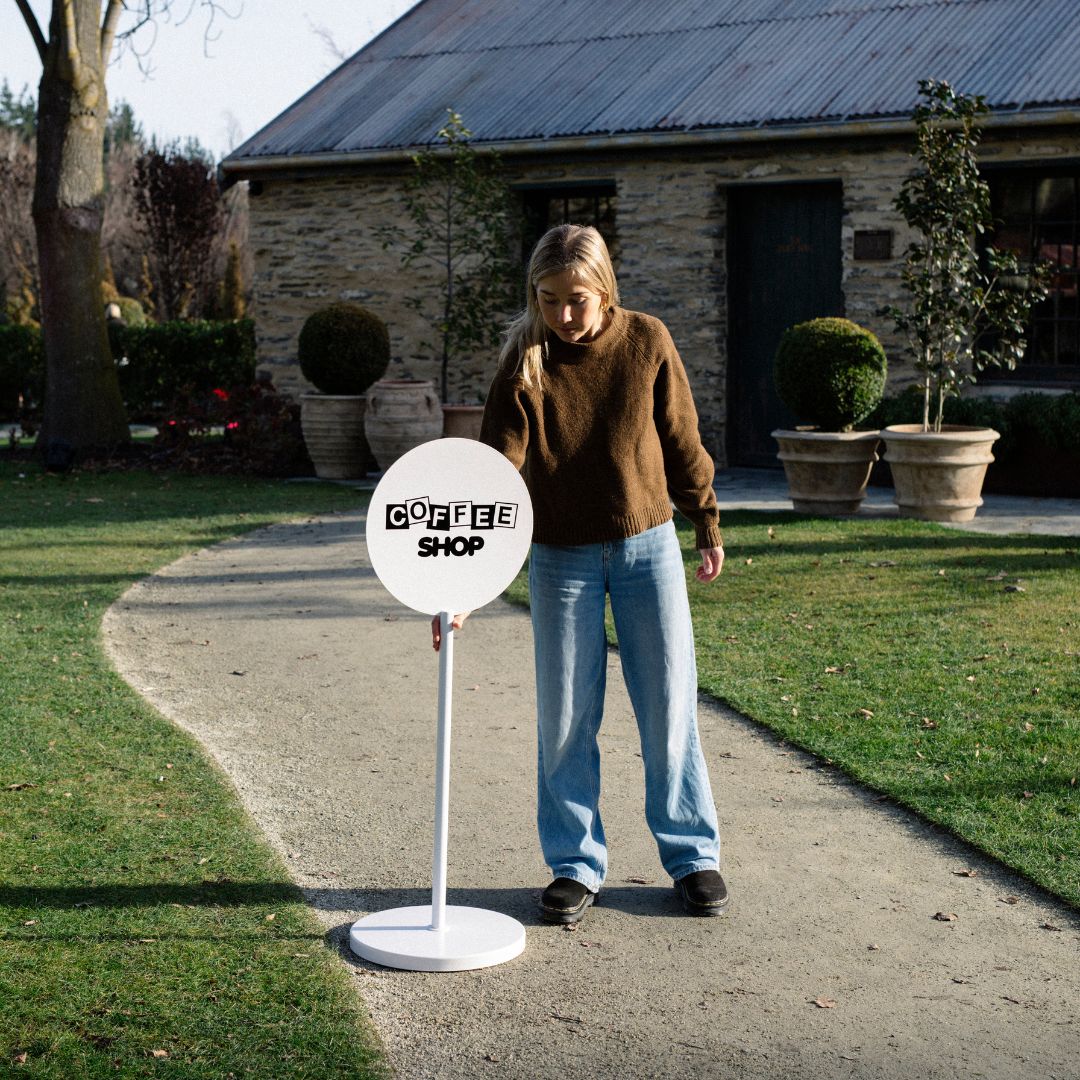
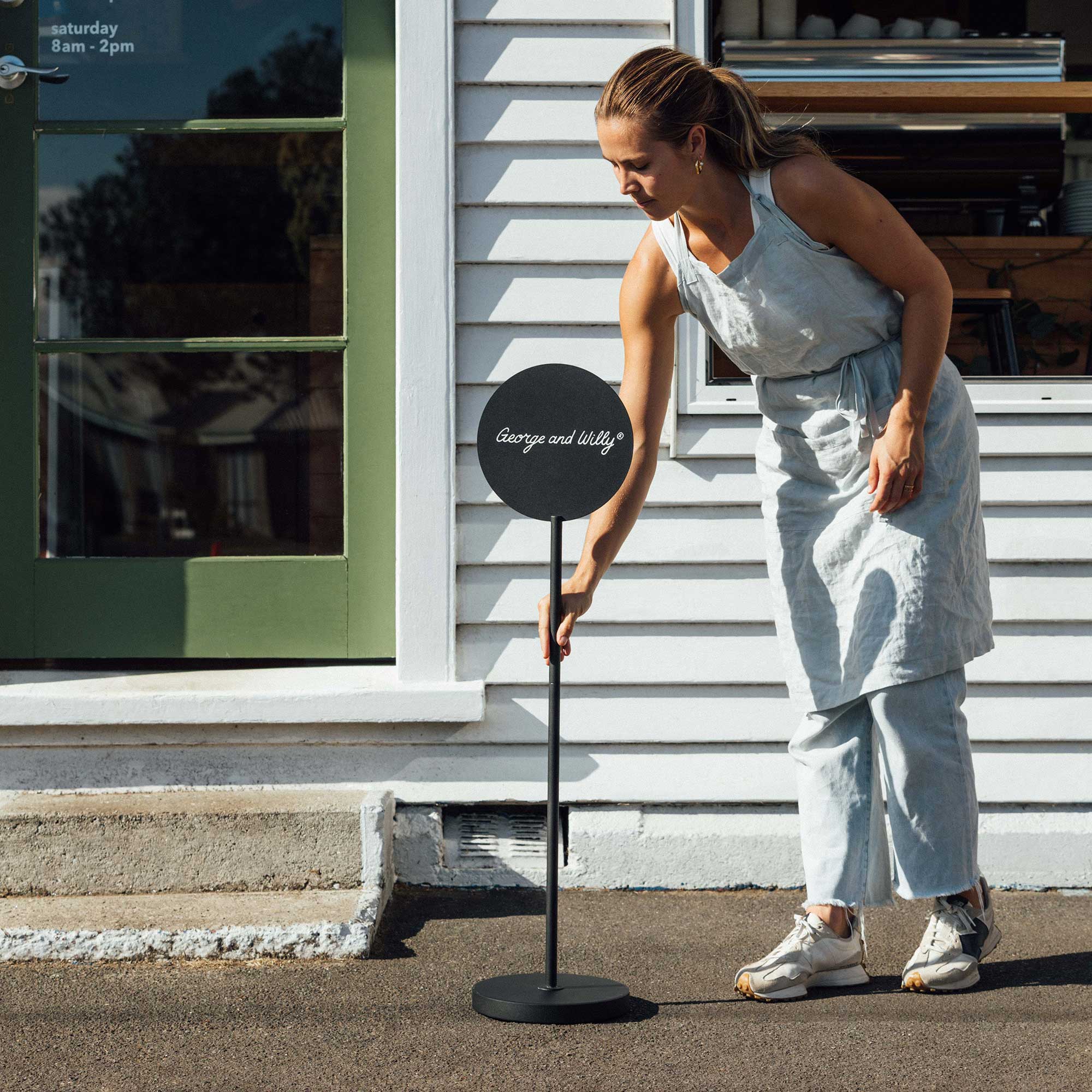
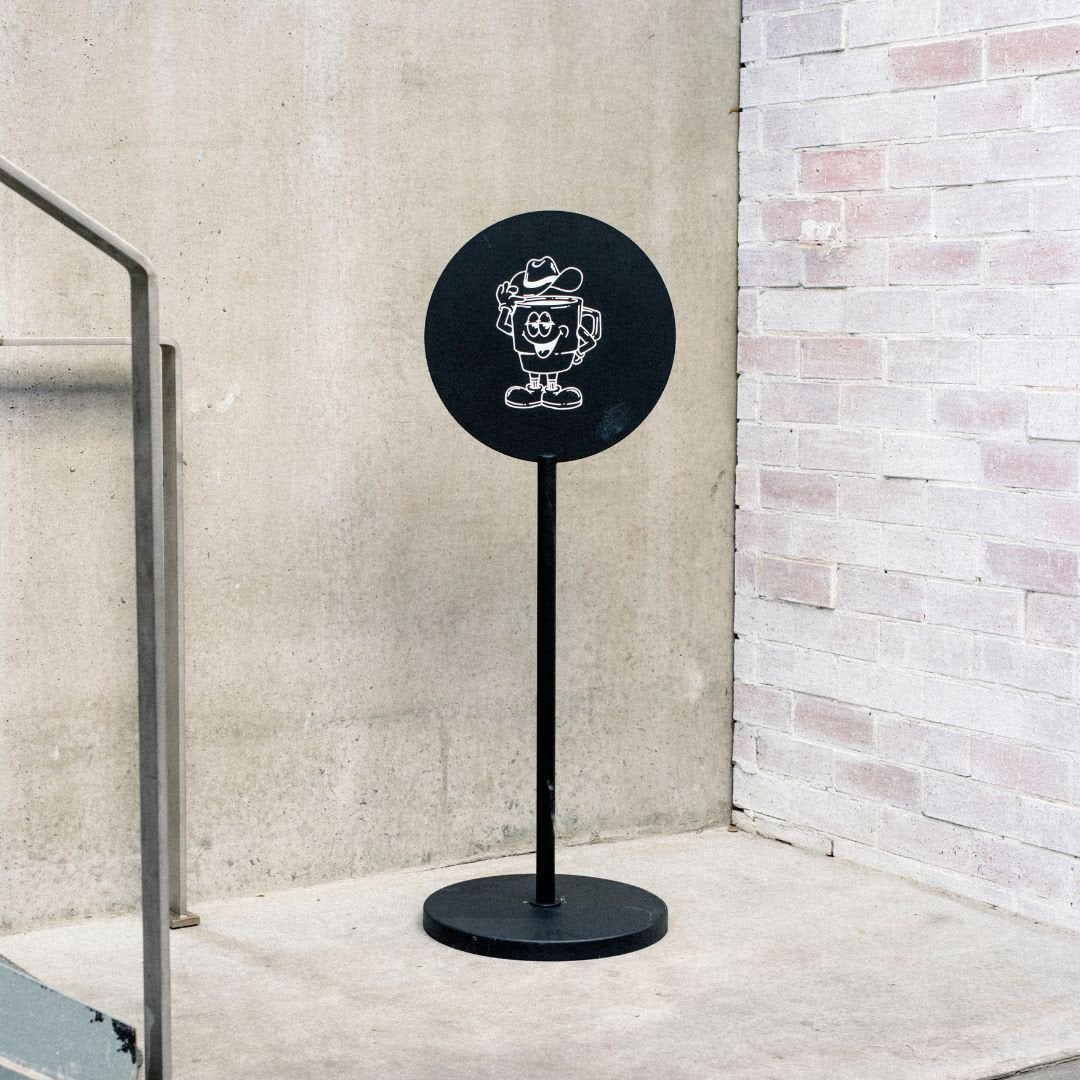
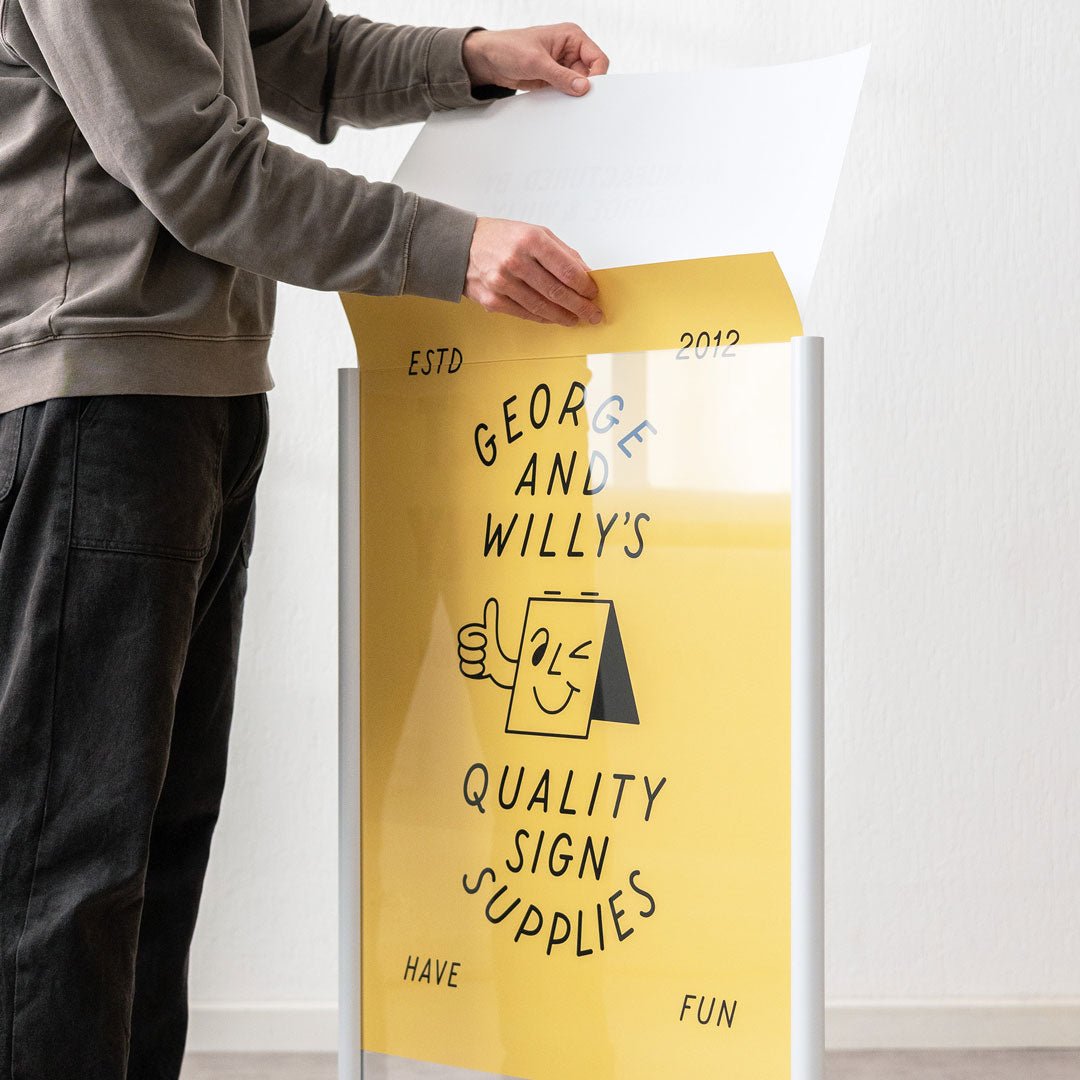
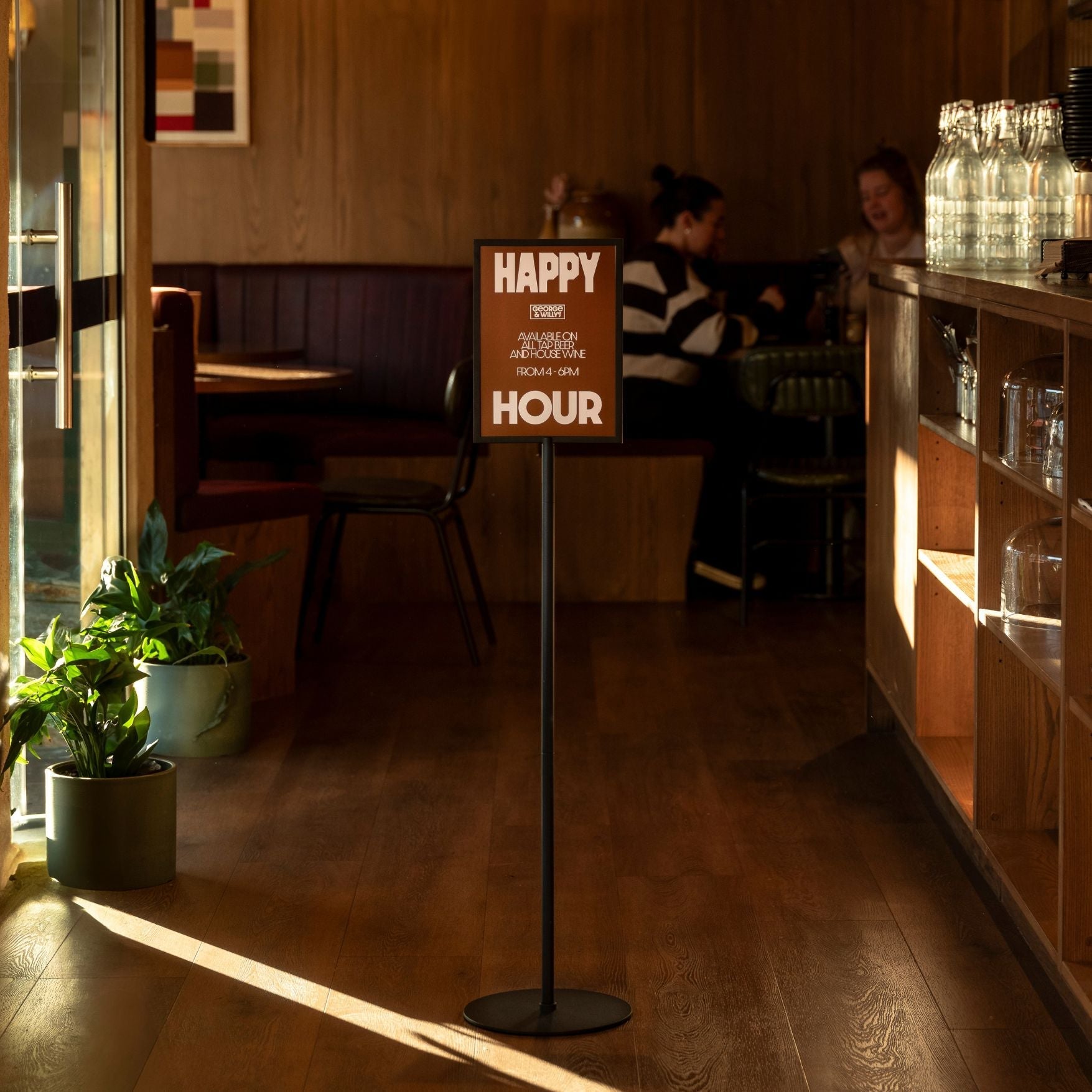
Many online printers offer design templates, which can be a quick solution for basic needs like a sales banner. For a more professional and unique result, it is better to upload a custom design created by you or a graphic designer. This approach works perfectly with premium blank signage, where a local signwriter applies your high resolution design as a vinyl decal for a polished, custom look.
Materials and Durability
The material you choose when you order a custom sign impacts its appearance, lifespan, and cost.
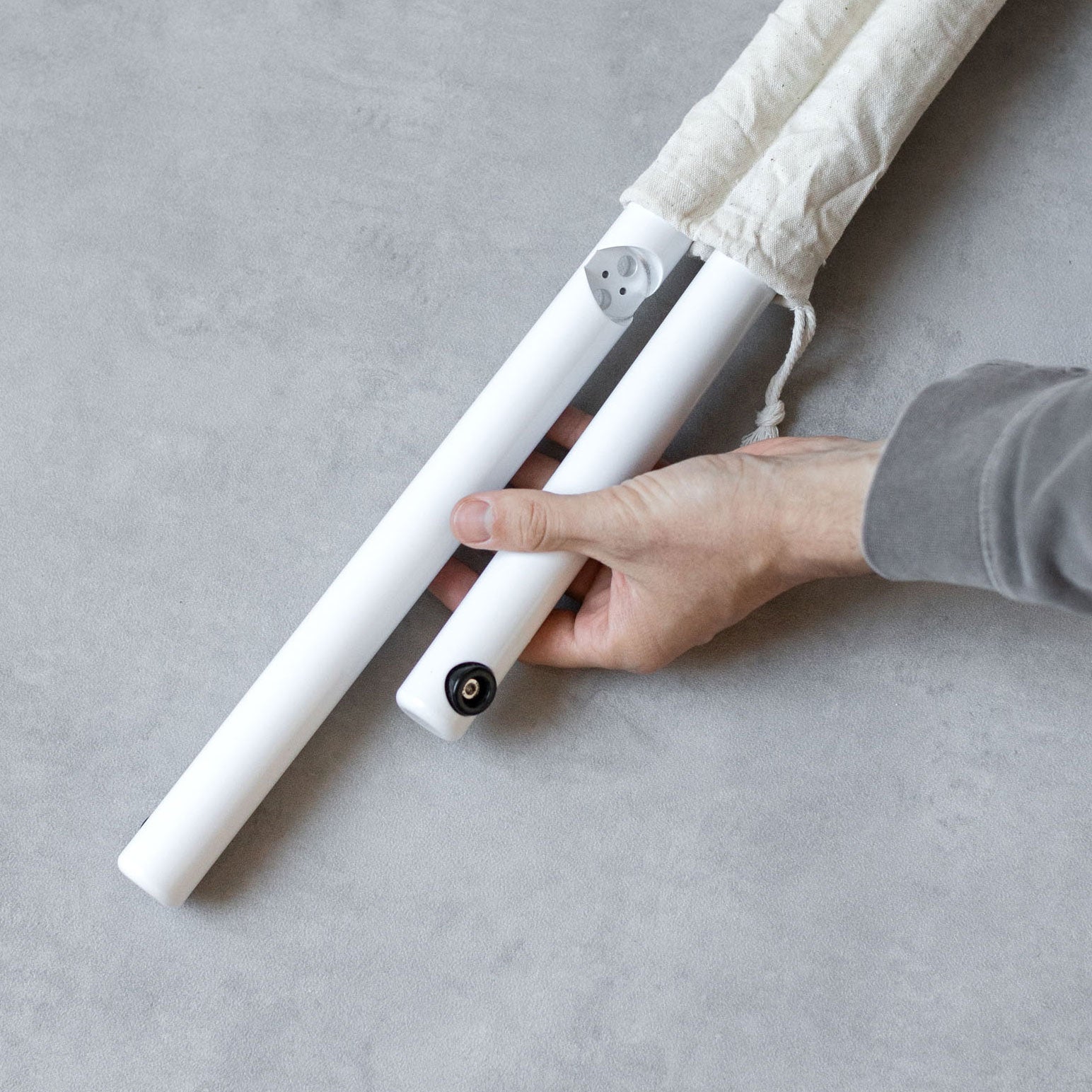
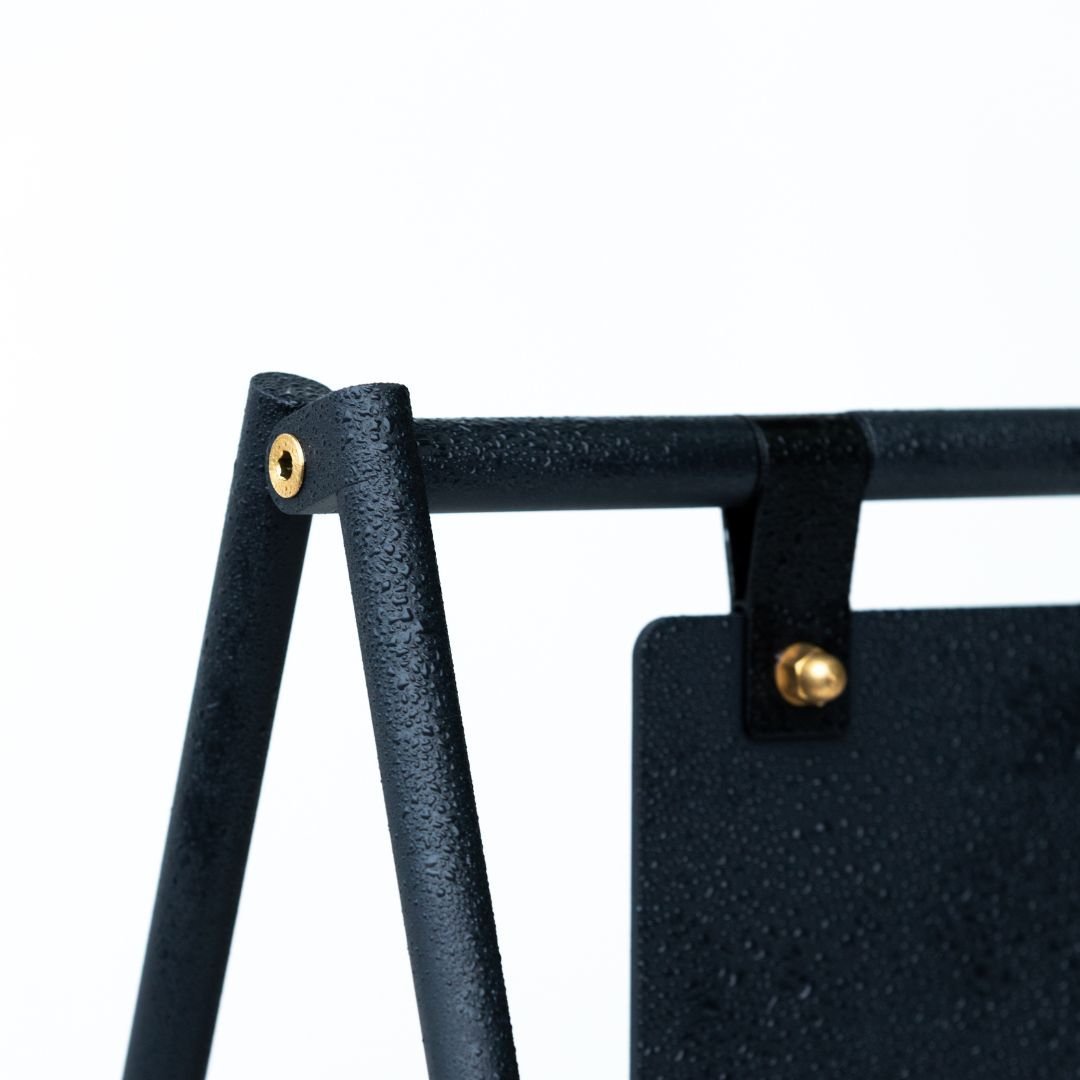
- For Outdoors: Prioritize longevity. Powder coated aluminum is an excellent choice as it is lightweight, strong, and will not rust. Stainless steel is another durable, premium option. For banners or temporary signs, outdoor grade vinyl is standard.
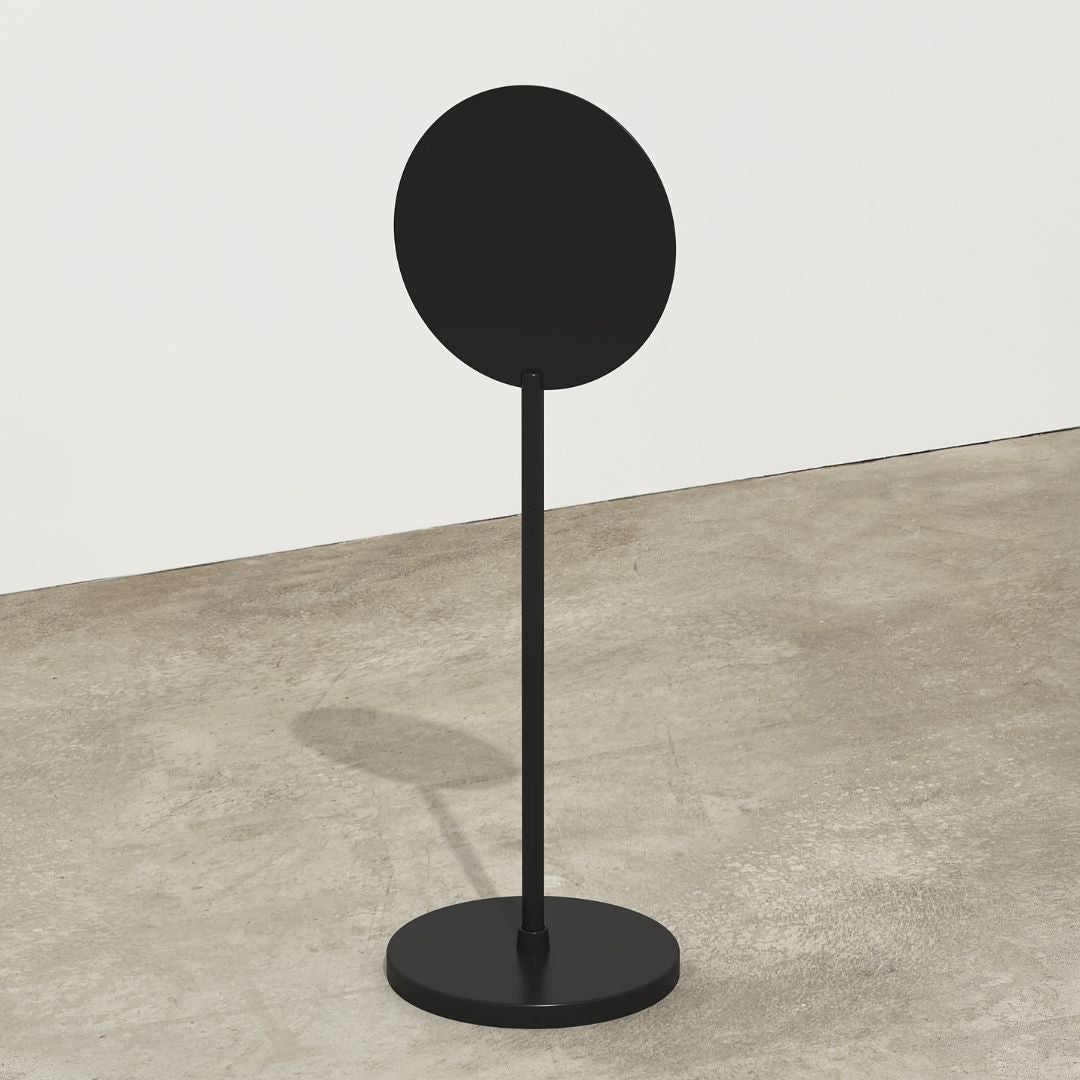
- For Indoors: You have more flexibility. Wood can add warmth, while materials like steel or aluminum create a modern, industrial polish. For high end interior logos, acrylic provides a sleek, glass like effect.
- Increasing Durability: For printed signs like banners or posters, ask your printer about an overlaminate. This clear protective layer can guard against scratches, moisture, and UV fading, extending the life of the sign.
Installation and Compliance
Proper planning ensures your sign is displayed safely and legally, a final but critical step when you order a custom sign.
Mounting Hardware
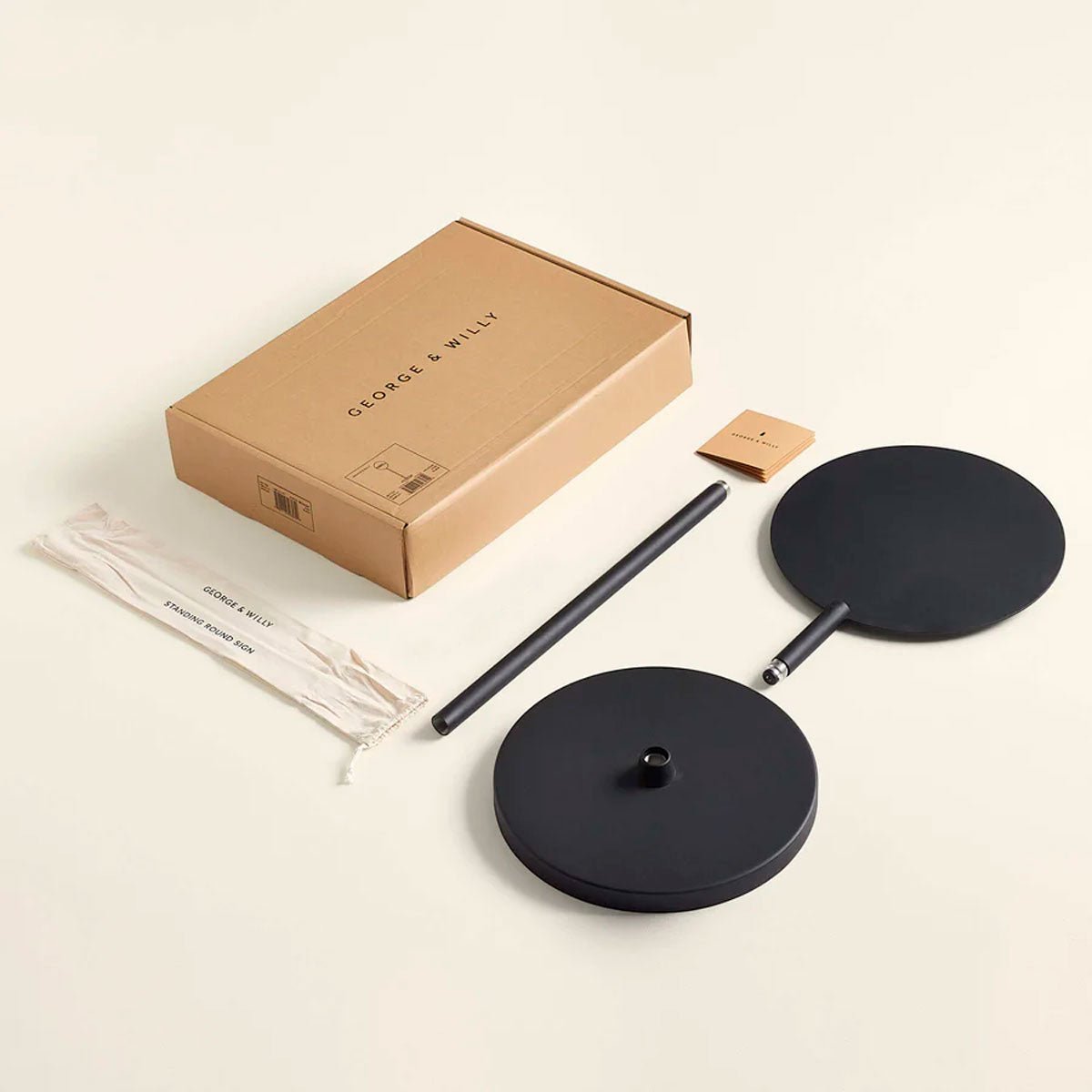
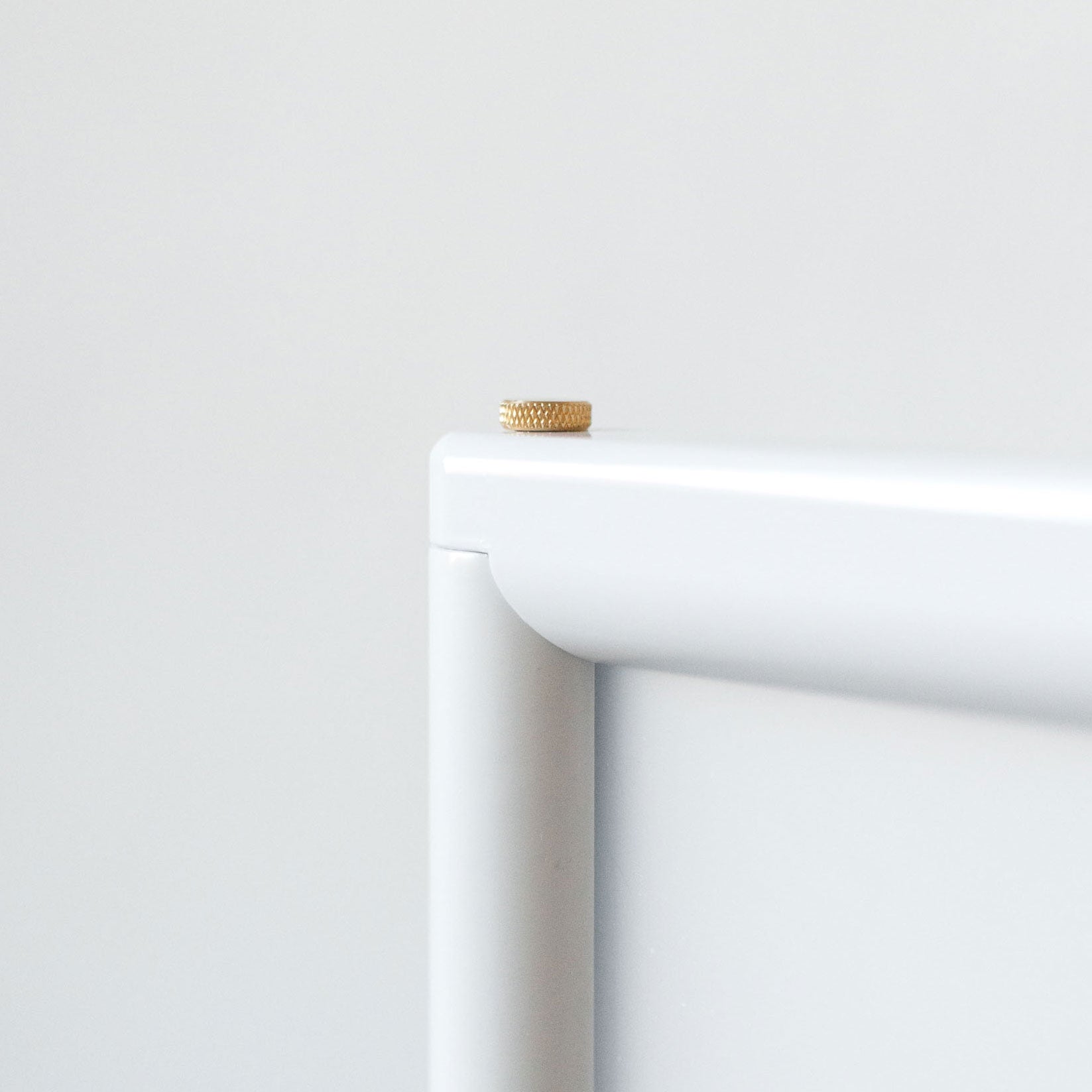
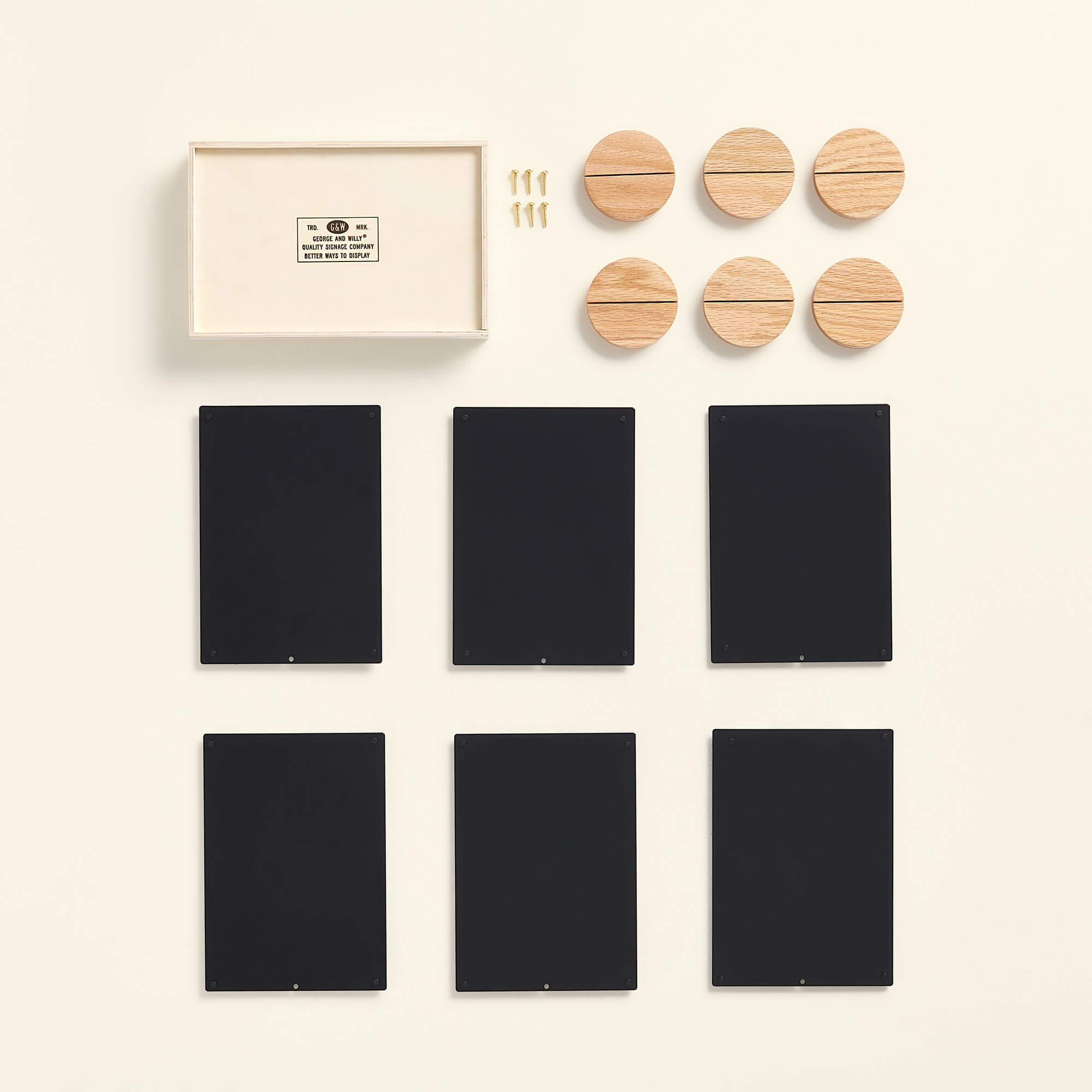
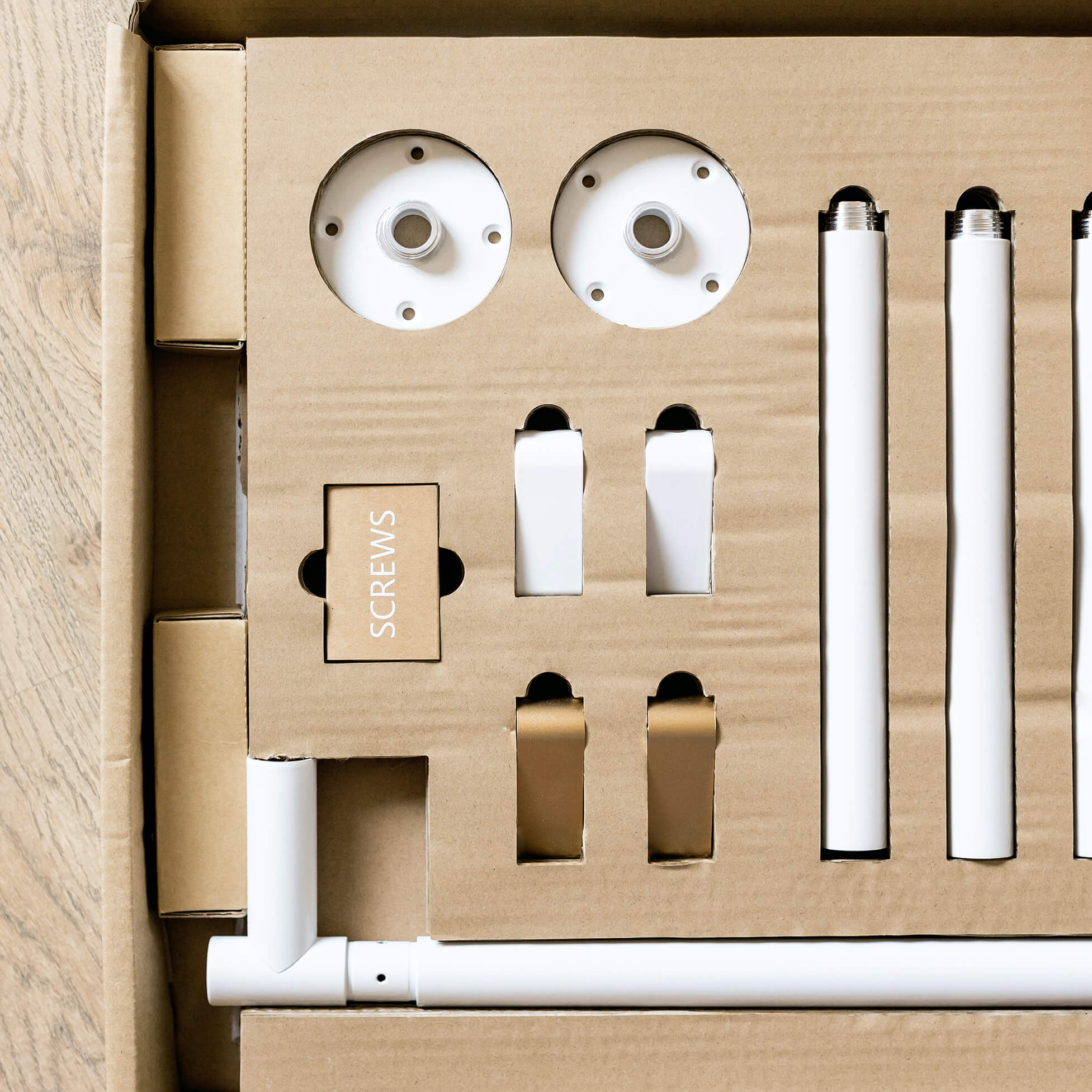
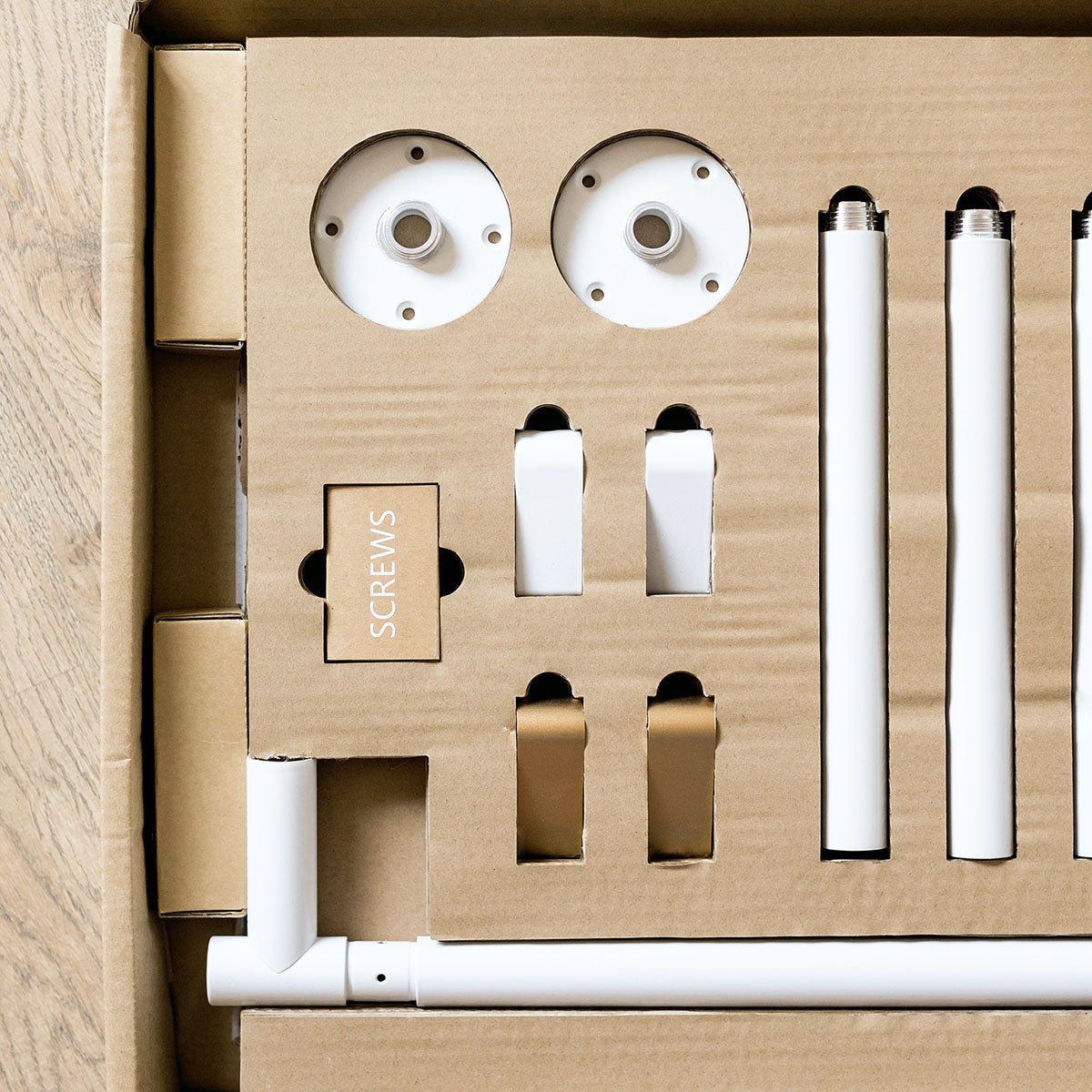
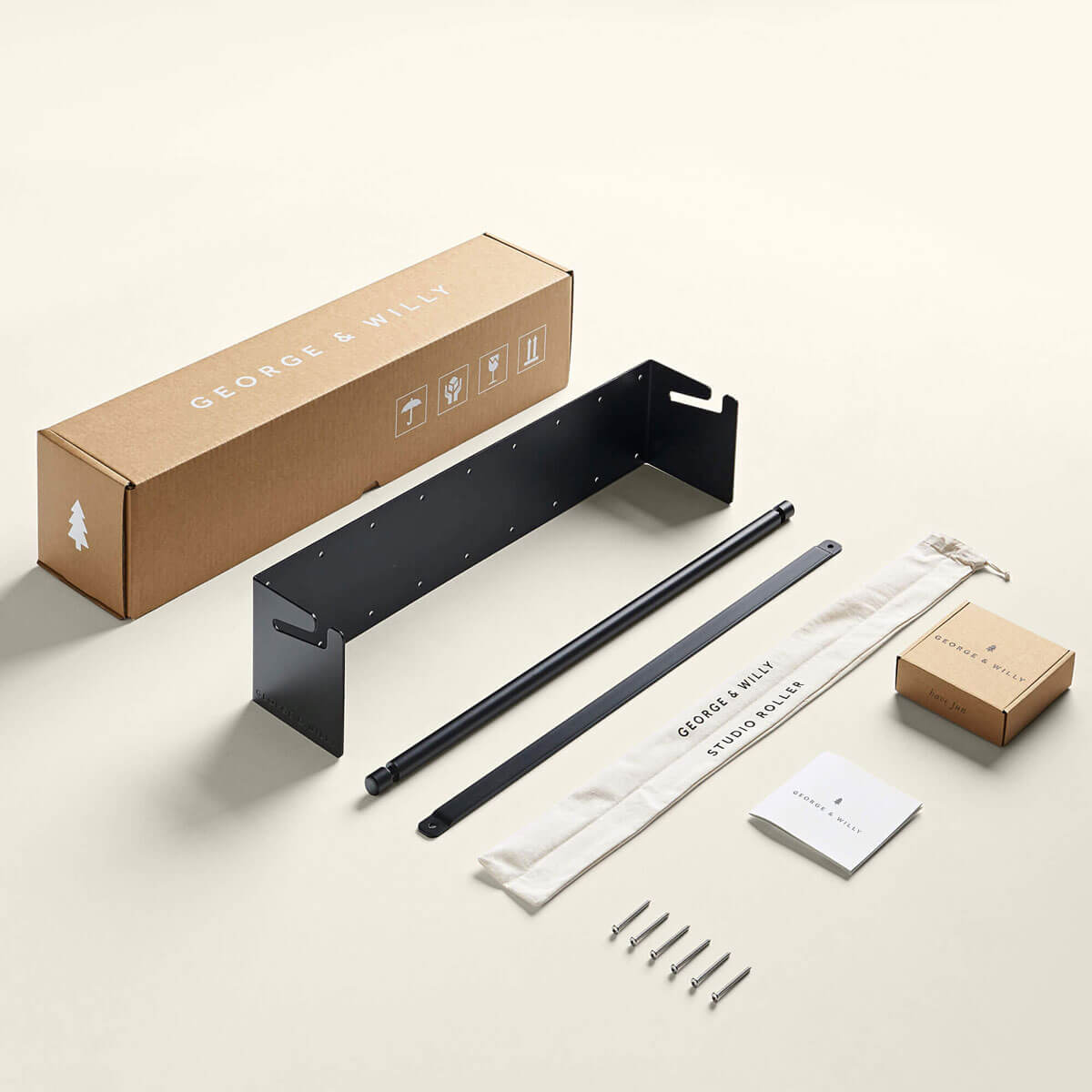
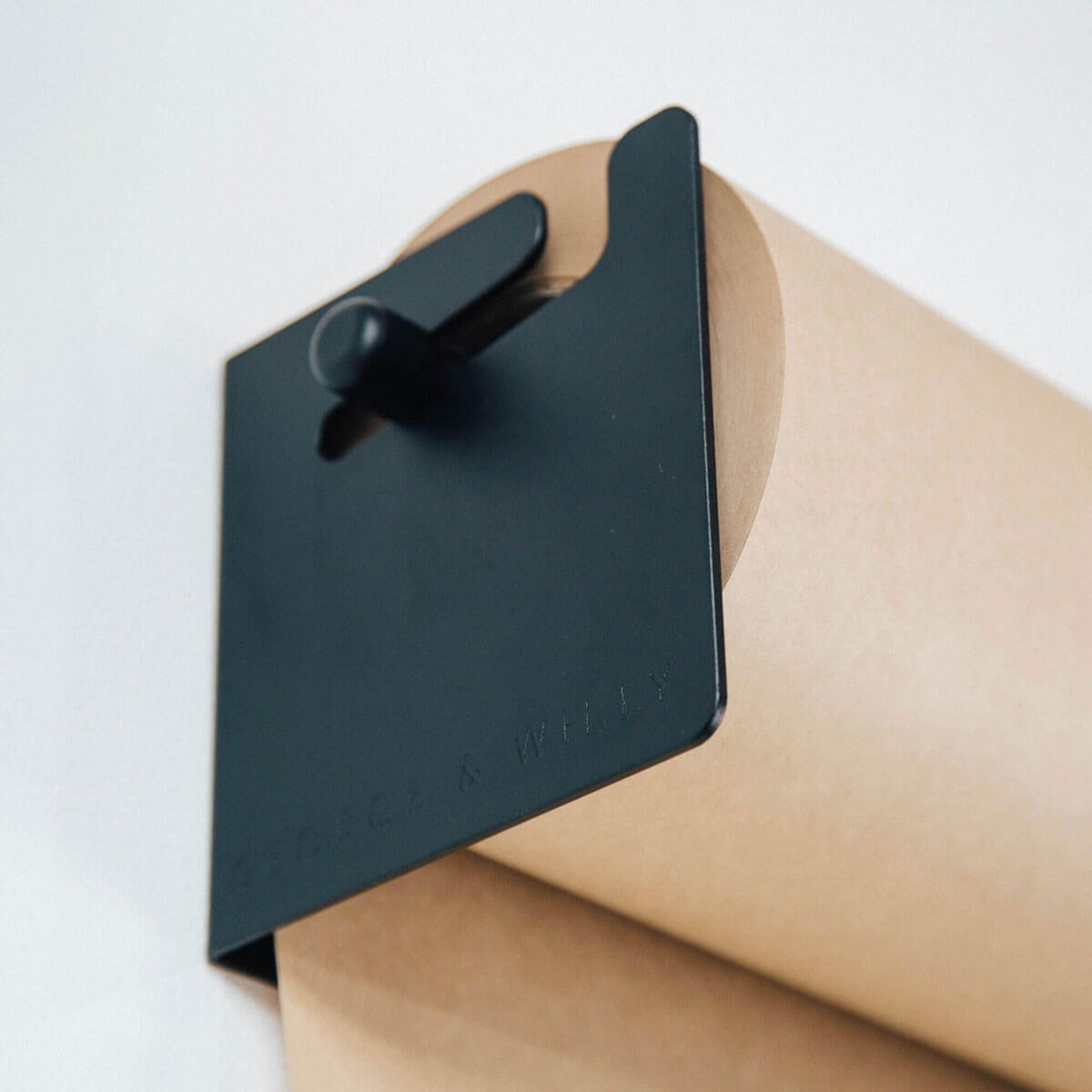
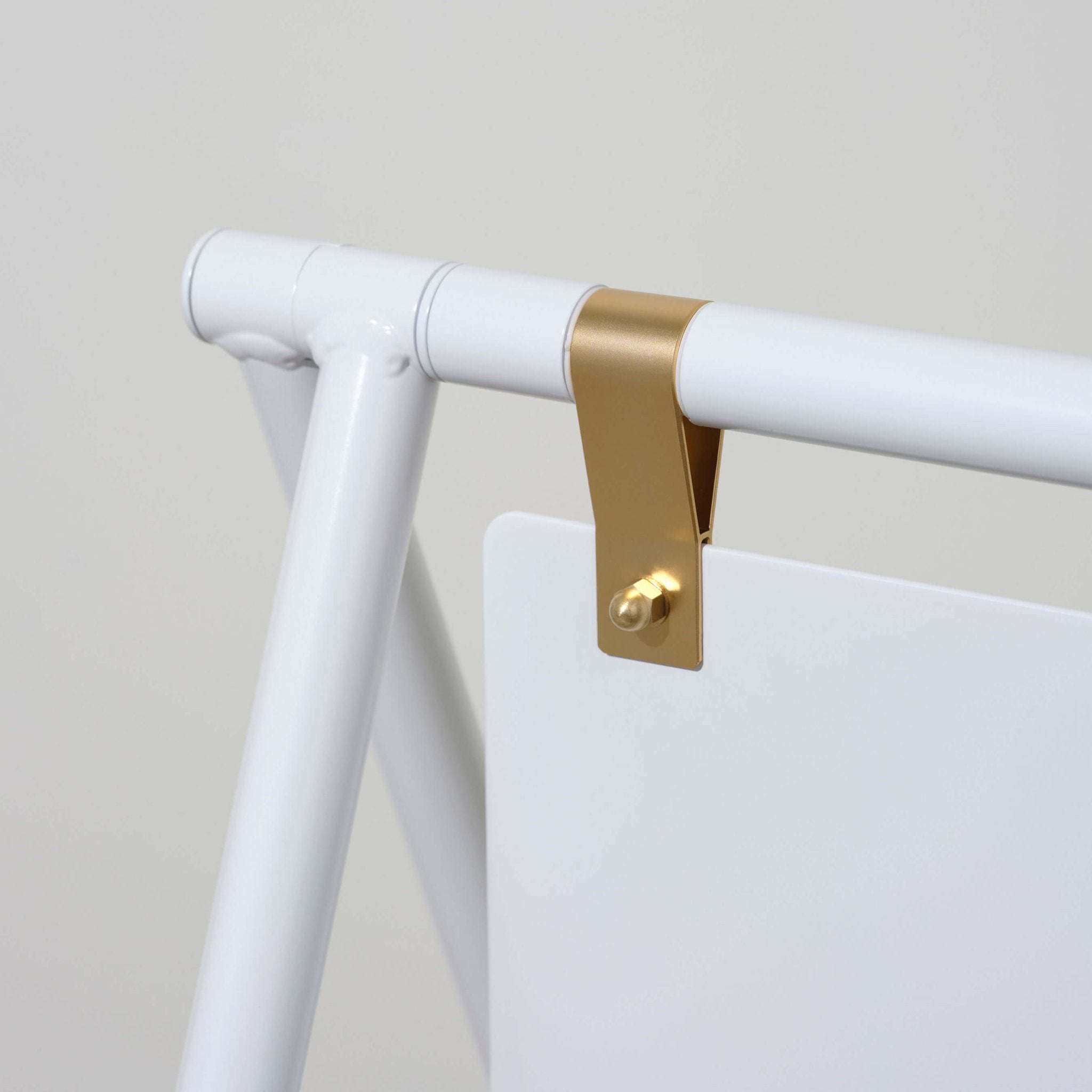
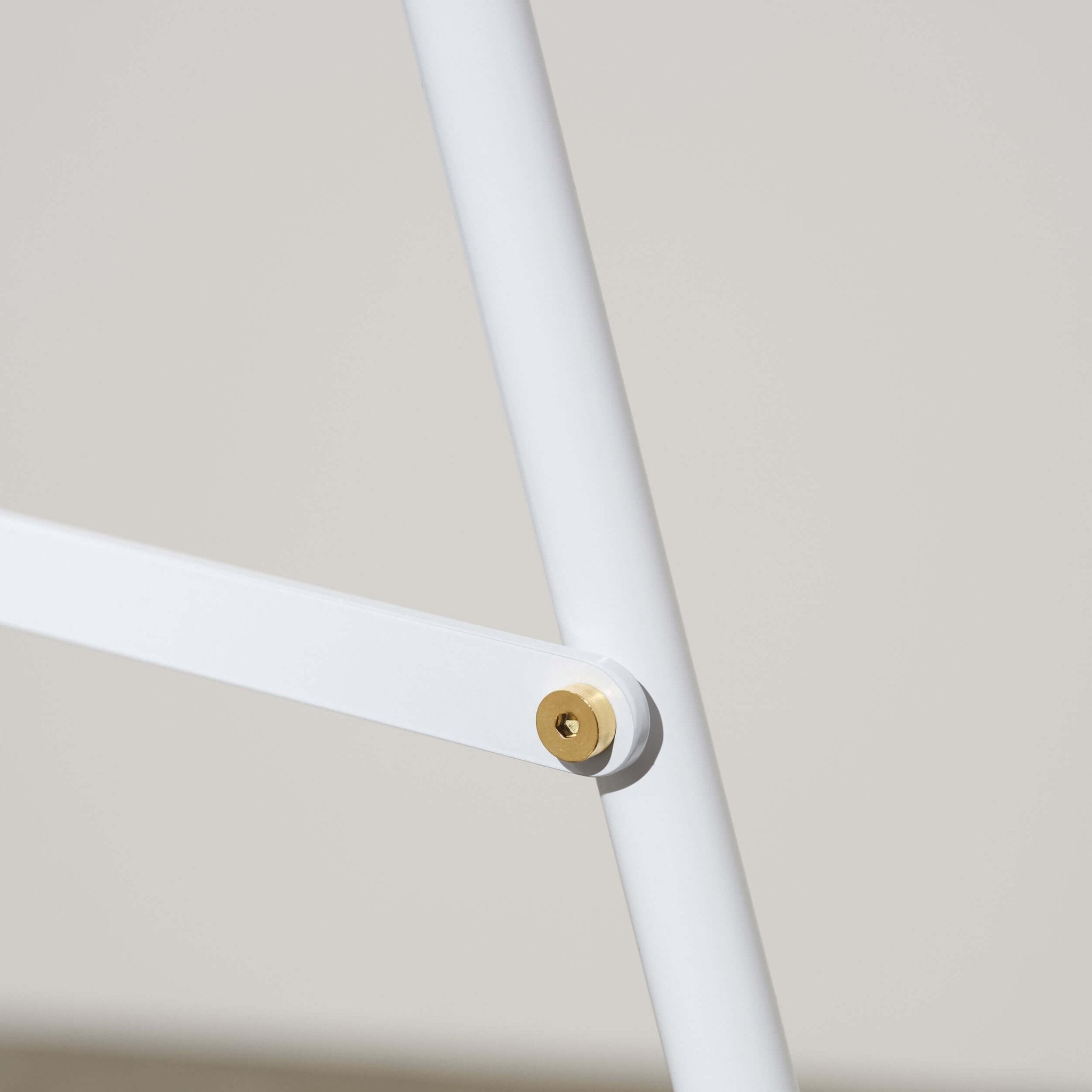
Check if your sign comes with the necessary mounting hardware. High quality signage providers typically include standoffs, brackets, or straps designed for a clean and secure installation. This saves you a trip to the hardware store and ensures a professional finish.
Permits and Regulations
Before you order a custom sign for a large exterior placement, always check with your local city or county government. Many municipalities have regulations regarding sign size, placement, and illumination. Securing the proper permits beforehand prevents costly fines and removal orders.
Accessibility and Safety Compliance
For certain types of signs, you must meet legal standards.
- Braille Compliance: The Americans with Disabilities Act (ADA) requires specific signs, like those identifying permanent rooms (e.g., restrooms), to have tactile lettering and braille.
- OSHA Header Compliance: In industrial or workplace settings, safety signs must use specific headers (like “Danger” or “Caution”) and color coding to comply with Occupational Safety and Health Administration (OSHA) standards.
For these specialized needs, it is best to work with a provider who understands the specific legal requirements.
How to Order a Custom Sign: A Step by Step Guide
- Define Your Goal and Location: First, determine what the sign needs to achieve. Is it for street level visibility, in store navigation, or a short term promotion? Its purpose and placement will dictate the best type, size, and material.
- Choose Your Sign Type: Based on your goal, select the right sign. Choose a durable A Frame or Blade Sign for long term branding and a vinyl banner for a weekend sale.
- Finalize the Design: Create a clean, on brand design. Decide whether a simple template works or if you need to provide a custom graphic to a printer or a signwriter.
- Select Your Vendor: Find a partner that matches your needs. For premium, design led hardware like menu boards and storefront signs, a specialist like George & Willy is ideal. For printed materials like banners and wall graphics, a local sign shop is your best bet.
- Plan for Installation: Confirm that you have the correct mounting hardware and have secured any necessary permits.
Finding Your Perfect Signage Partner
When you're ready to order a custom sign, look for more than a product; seek a cohesive ecosystem of design led signage built to last. George & Willy focuses on premium materials, timeless aesthetics, and thoughtful details, with fast global shipping and a 2 year warranty on all products.
Frequently Asked Questions
How much does it cost to order a custom sign?
Pricing varies widely by type, size, material, and illumination. A simple A Frame might be a few hundred dollars, while a large illuminated exterior sign can cost significantly more. Set a budget tied to your goals and the sign’s importance.
Can I put my own logo on your signs?
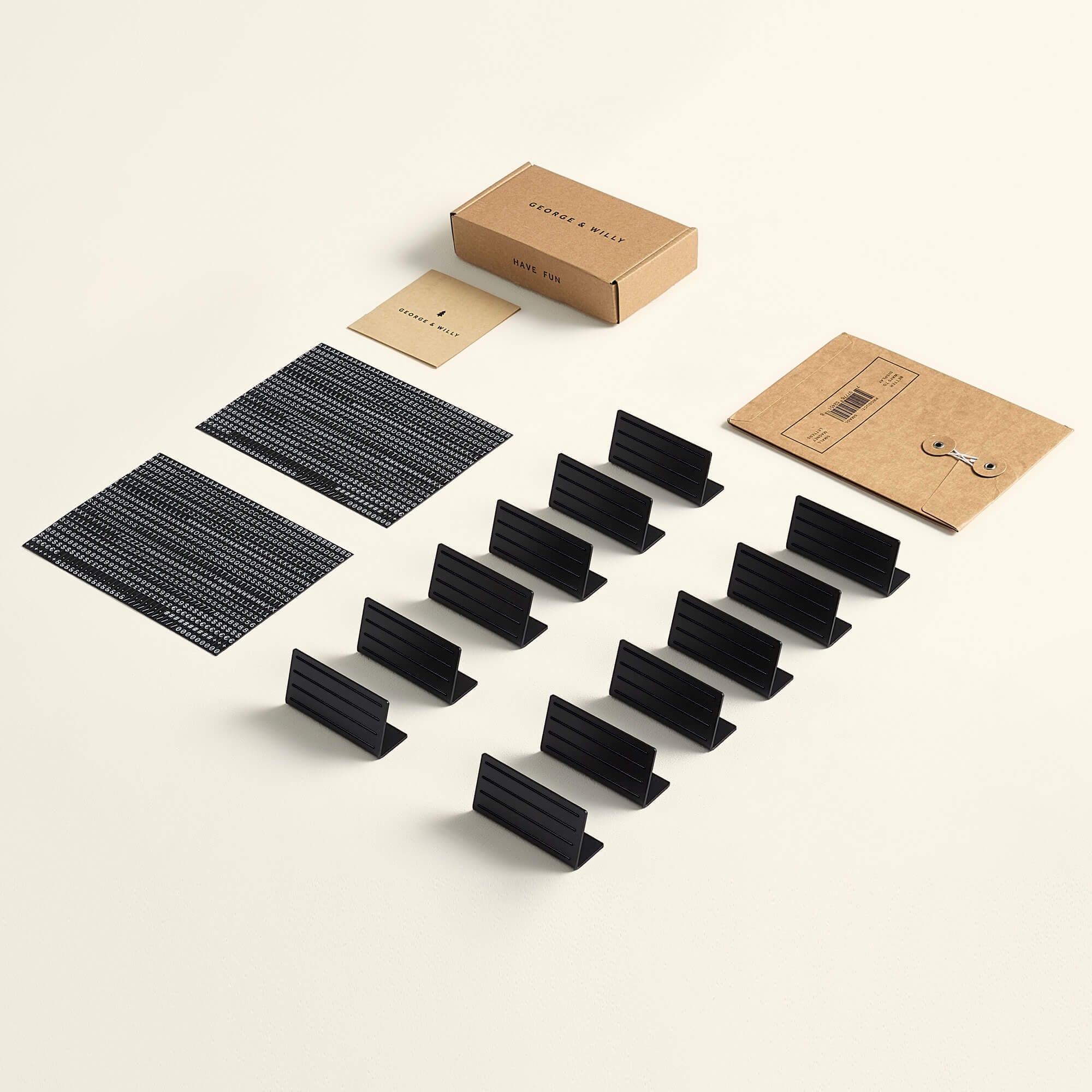
Yes. George & Willy signs ship as beautifully crafted blanks so you can apply your logo or lettering via a local signwriter’s vinyl decals. This allows for a fast, flexible, and highly custom result.
How long does it take to get a sign?
Production and shipping times differ when you order a custom sign. Ready made signs are fast. George & Willy typically processes orders in 1 to 2 business days, with express shipping often taking 1 to 5 working days. Custom printed signs may take longer.
What are the best materials for outdoor signs?
Powder coated aluminum is a top choice because it is lightweight, strong, and rust resistant. Stainless steel is another excellent, durable option.
Do I need a permit for my business sign?
It depends on local regulations, especially for large, permanent, or illuminated exterior signs. Always check with your city before installation to avoid any issues.
What if I am unhappy with the sign when it arrives?
Reputable makers offer customer friendly policies. George & Willy provides a 100 day return window on full priced items and a 2 year warranty covering faulty workmanship or materials, so you can order with confidence.